THIS POST MAY CONTAIN AFFILIATE LINKS. PLEASE READ MY DISCLOSURE FOR MORE INFO.
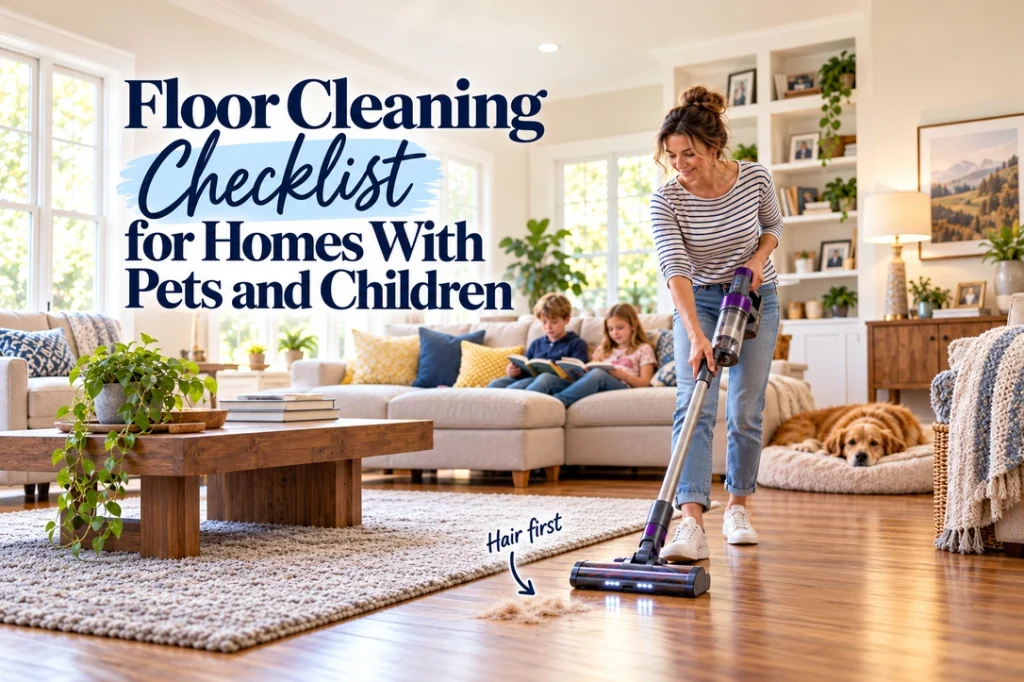
Pet hair near the couch, cereal under the table, muddy pawprints by the door: family floors collect several kinds of mess at once. A useful floor cleaning routine with pets starts with the places you actually walk, play, and eat. It does not require mopping the whole house every night.
Use this checklist to separate everyday dry pickup, prompt spill cleanup, and a more thorough weekly reset. The suggested times are planning estimates for a small area, not deadlines. Your floor manufacturer’s instructions and the cleaner’s label decide which products and methods belong on your floors.
The basic order: clear the path, collect dry dirt, treat spills appropriately, clean with a floor-compatible method, and let the area become ready for use before children or pets return.
Disclosure: This post may contain affiliate links. As an Amazon Associate, Clean Home Challenge earns from qualifying purchases. If you make a purchase through these links, we may earn a small commission at no extra cost to you. This helps us keep creating practical cleaning tips, routines and resources for busy families! 🧽
Prepare a Safe Floor-Cleaning Route
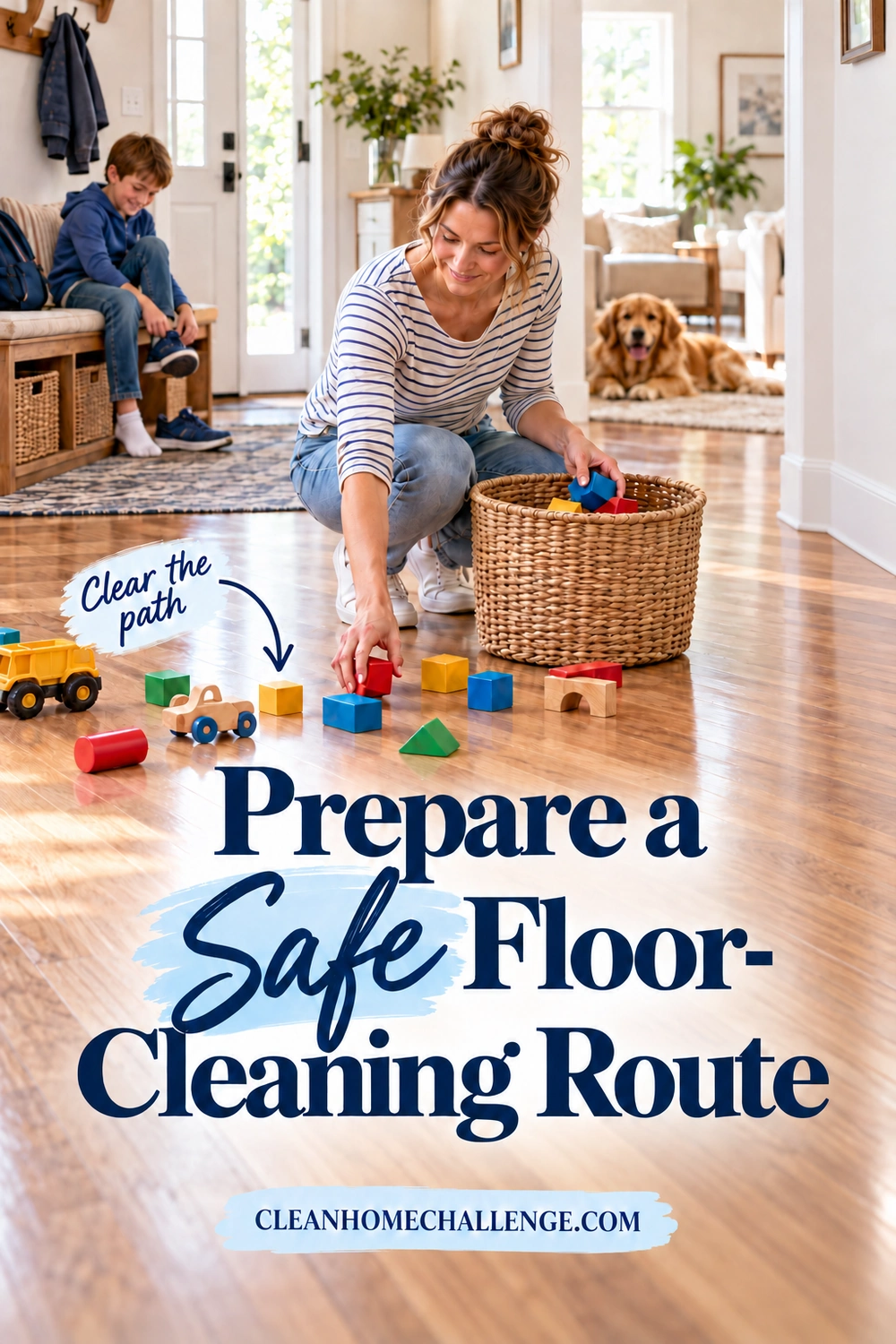
Start with one room or a short route from the entrance to the kitchen. Give children a dry place to read or play and settle pets elsewhere before switching on equipment or opening cleaning products. An adult should handle chemical cleaning; children can help collect ordinary toys in a dry, supervised area.
Gather a vacuum or soft broom suitable for the surface, a dustpan, absorbent white cloths, clean mop pads if your floor permits mopping, and the correct floor cleaner. Keep gloves nearby for messes or products that require them. A basket for loose toys saves repeated trips.
- Pick up blocks, cords, small objects, and anything a vacuum could catch. Do not vacuum unknown sharp debris.
- Put shoes and bags where they will not obstruct your route. Straighten a curled mat only if it can lie securely.
- Choose your exit. Work toward the doorway rather than leaving yourself stranded beyond a cleaned area.
- Keep supplies under adult control while working. Return chemicals to their original containers in secure storage afterward.
Allow about three to five minutes to clear a small room. If the whole room is overwhelming, clear one walking path first. You can stop after that useful step and tackle dry pickup later.
Remove Pet Hair and Grit Before Mopping
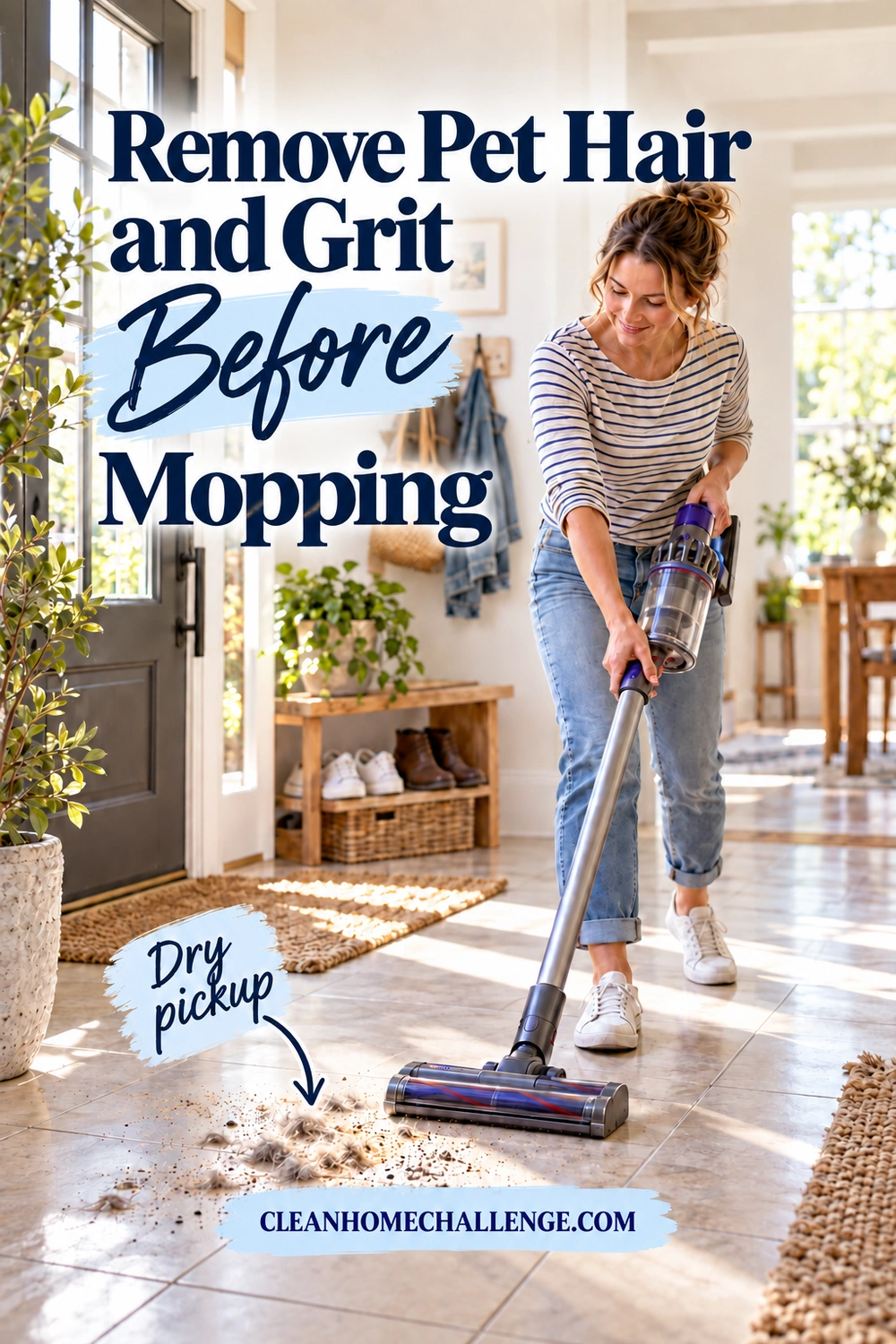
Dry debris is easier to collect before it becomes stuck in a wet pad. Concentrate on the entrance, the edges of pet beds, the dining area, and the routes between rooms. A small daily pickup can be more manageable than waiting for a large buildup.
Use your vacuum’s surface-specific attachment and setting. For example, Shaw’s laminate care guide recommends a hard-floor attachment without a beater bar. Carpet settings differ: check the carpet or rug guide as well as the vacuum manual instead of using one setting throughout the house.
Move steadily over a short strip, then overlap the next pass. Use a crevice tool along reachable baseboards and under the edge of a pet bed. If a brush roll is tangled, stop and disconnect the machine before maintenance, following its manual. Empty or clean it according to the manufacturer’s instructions.
A five-minute version: collect toys, vacuum the entry-to-kitchen route, and pick up visible fur around the pet bed. Leave quieter rooms for the weekly reset. During heavy shedding or rainy weather, revisit the busiest route as needed.
Do not run an ordinary dry vacuum over liquid spills, urine, feces, or vomit. Keep the equipment for dry debris and handle those messes separately. A vacuum full of wet contamination creates another cleanup job.
Match the Cleaning Method to the Floor
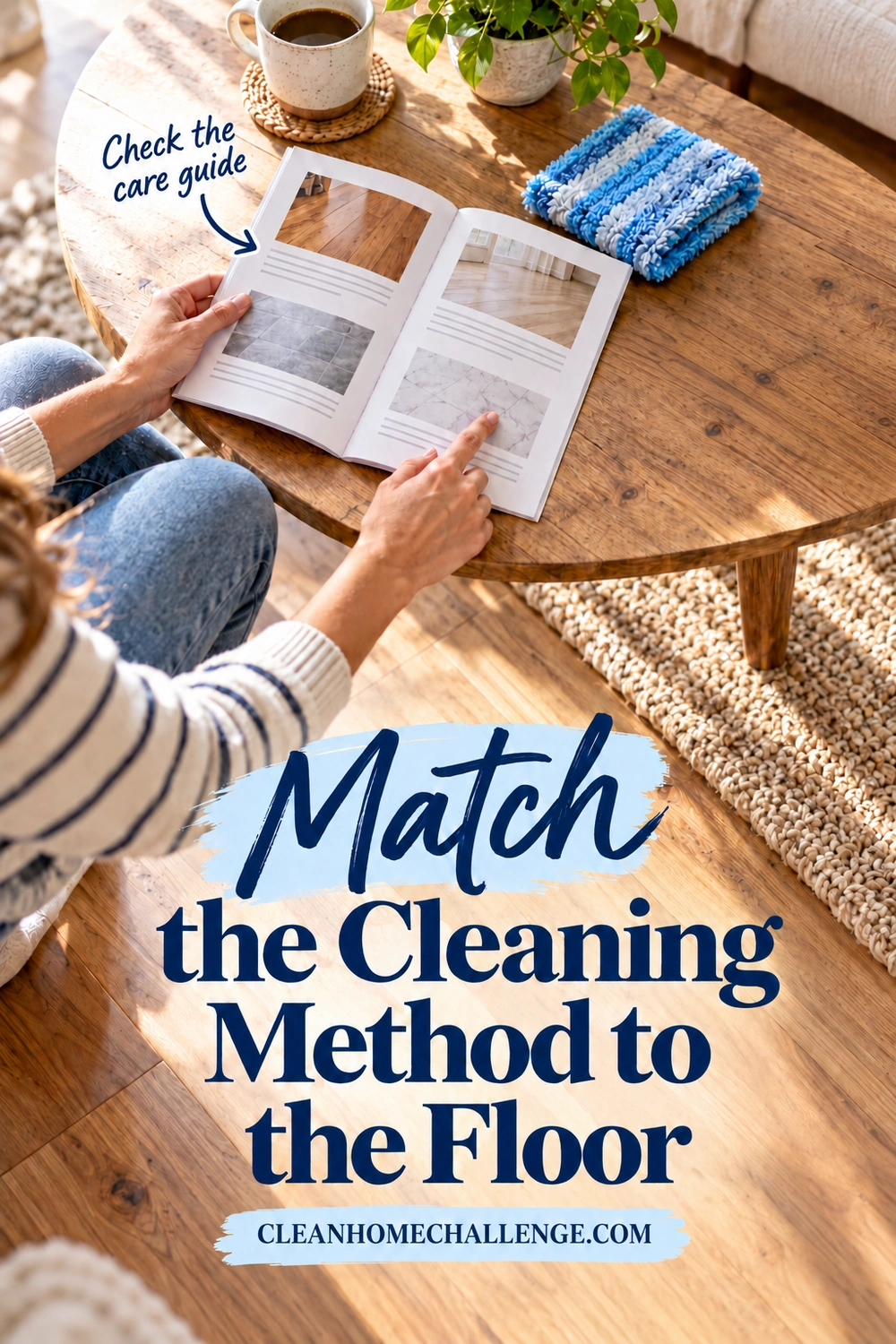
A floor that looks like wood might be hardwood, laminate, or vinyl. Identify the material and finish using your care booklet, installer, or manufacturer before selecting a cleaner. “Natural,” “pet friendly,” and “waterproof” do not replace surface instructions or label precautions.
| Surface | Practical starting point | Important limit |
|---|---|---|
| Hardwood | Remove grit and use the cleaner and application method approved for its finish. | Shaw hardwood guidance excludes wet and steam mops; do not assume they suit another wood floor. |
| Laminate | Dry pickup first; use the specific laminate care method and cleaner. | Shaw advises against wet washing. A water-resistant product name is not permission to soak seams. |
| Luxury vinyl | Remove loose soil, then follow that product’s cleaning guide. | Shaw vinyl guidance excludes vinegar-based and abrasive cleaners. Requirements vary by product. |
| Tile or stone | Check the tile, stone, sealer, and grout instructions together. | A cleaner suitable for one component may be unsuitable for another. |
| Carpet or rugs | Choose the approved vacuum setting; spot clean or launder only as the care guide permits. | Do not assume a decorative rug can go in the washer or tolerate a rotating brush. |
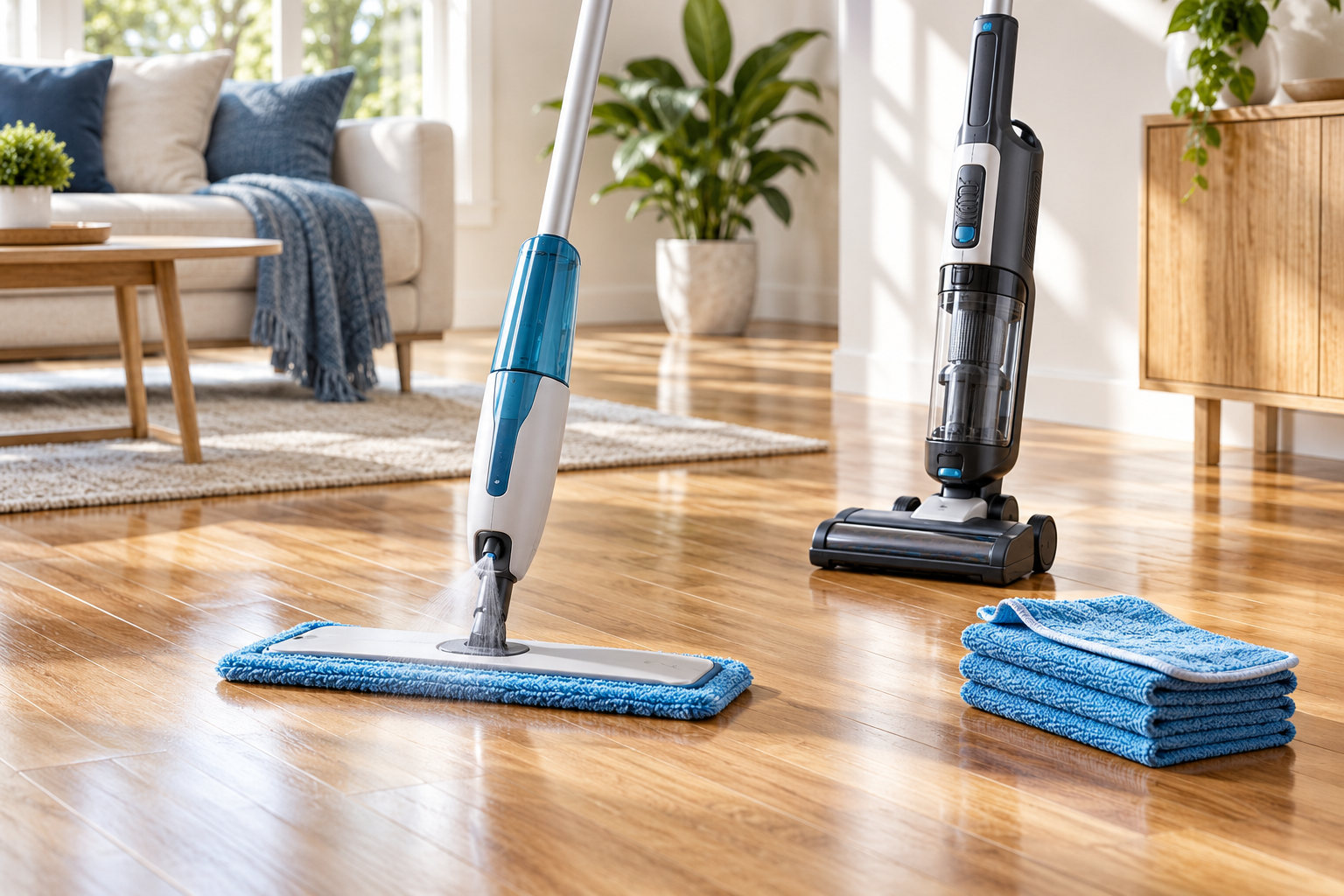
For a hard floor that permits damp mopping, begin with a clean pad and the labeled amount of compatible cleaner. Work in manageable sections; replace a pad when it becomes loaded rather than spreading collected soil through the next room. Follow any required rinse step. Do not increase the dose to compensate for missed dry pickup.
If you do not know what the floor is, pause chemical treatment and find its instructions. Use a small dry pickup only if you already know the tool is suitable. For a permitted mopping method, our guide to mopping without sticky residue explains why cleaner amount and pad changes matter.
Clean Spills and Pet Accidents Promptly
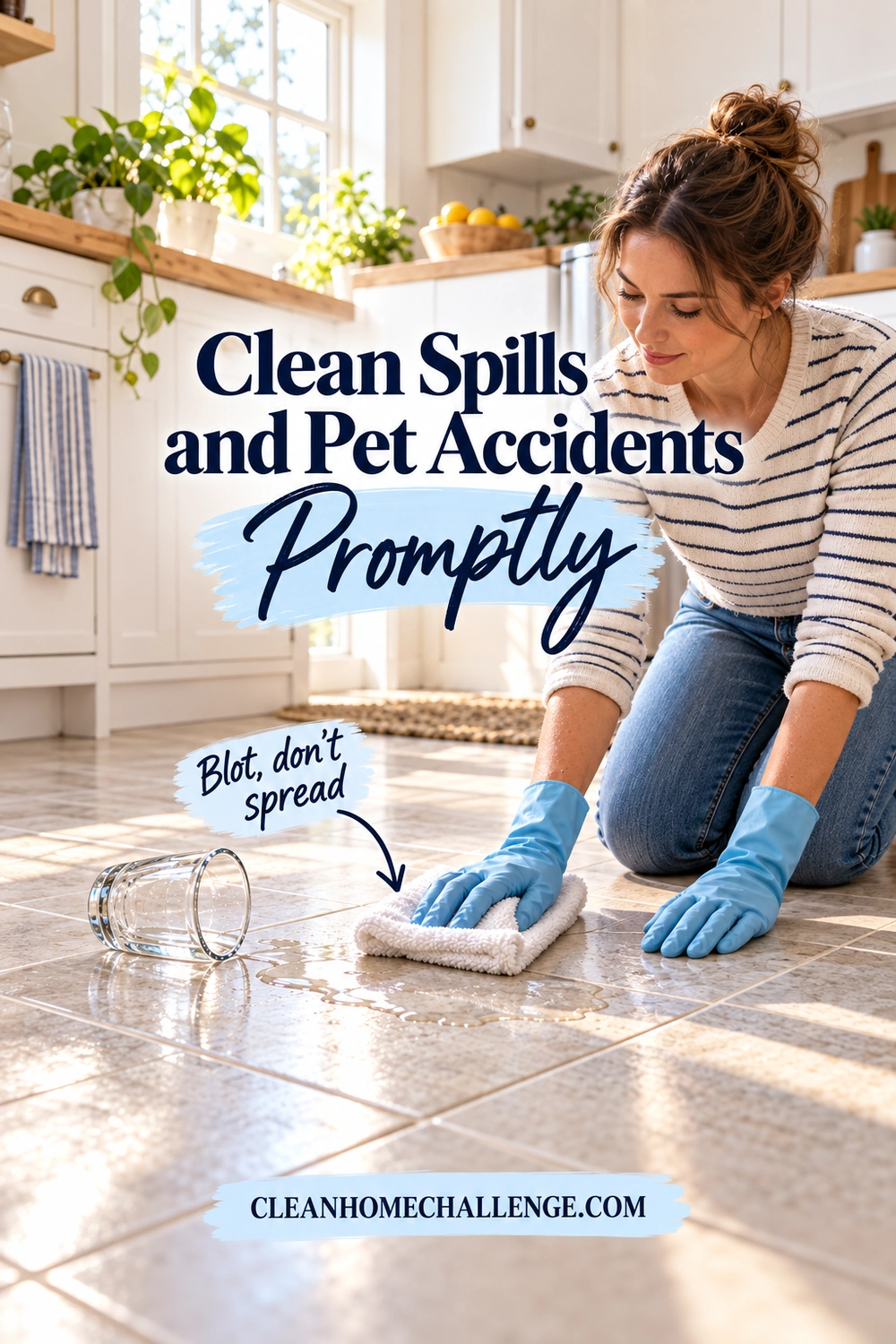
Keep children and animals away from the mess while an adult deals with it. For an ordinary spill, absorb the liquid with a clean white cloth, then follow the floor’s spot-cleaning guidance. On carpet, Shaw advises blotting rather than abrasive rubbing. Check beneath a removable rug if liquid may have reached the floor below.
For a pet accident, use this separate sequence:
- Contain it. Put on appropriate gloves, remove solid waste with disposable material, and absorb liquid without spreading it across the room.
- Clean the affected surface. Select an accident-treatment product compatible with that floor or rug, and follow its label. Test only where the care instructions permit.
- Address disinfection when appropriate. CDC cat guidance advises cleaning pet urine, feces, and vomit promptly and disinfecting afterward. Use a product labeled for the particular surface and purpose; clean first. An odor-treatment product is not automatically a disinfectant.
- Finish the instructions. Follow labeled contact time, rinsing, disposal, and return-to-area directions. Keep the area unavailable until it is ready.
- Clean up yourself and your tools. Dispose of waste securely, handle used cloths separately from everyday cleaning cloths, and wash your hands.
Do not improvise a stronger mix. If contamination has soaked into carpet backing, underlay, or damaged seams, seek a qualified cleaner or the flooring manufacturer’s advice rather than repeatedly wetting the surface. Ask your veterinarian about new or repeated unexplained accidents.
Keep Children and Pets Away Until Floors Are Ready
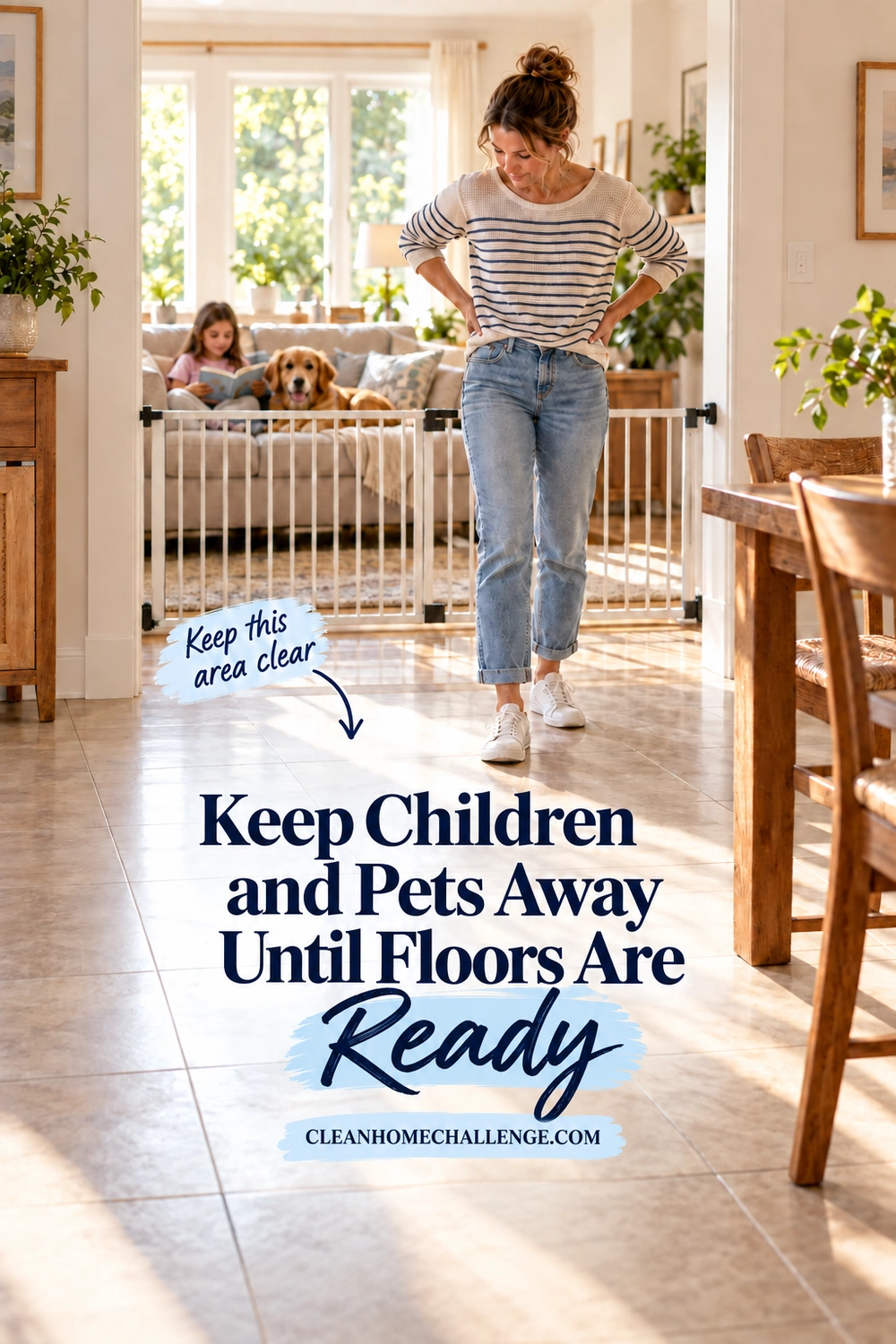
Dry-looking is not the only return-to-use check. Complete any label-required rinse, contact time, and waiting period, then let the surface dry fully. Use another room or a suitable closed gate while you work; make sure the barrier does not block a necessary exit. Tell the other adults which area is unavailable.
CDC household cleaning guidance says routine cleaning is usually sufficient in most situations, with disinfection important when someone is sick or at higher risk. Follow product instructions, ventilate as directed, and never mix cleaning chemicals. Do not apply disinfectants to pets.
Check the following before reopening the area:
- The required product steps are complete and the floor is fully dry.
- Bottles, dirty cloths, and equipment have been removed from the walking route.
- Cleaners are securely stored out of children’s and pets’ reach.
- Rugs and mats are dry and lie securely before you put them back.
Species matter. CDC pet-supply guidance notes that birds are sensitive to fumes and warns against phenol-containing disinfectants around cats. Check species-specific advice and the label; a reassuring scent is not evidence of suitability.
There is no universal “safe after five minutes” rule for floor cleaners. Plan around the actual product, floor, ventilation, and drying conditions. If you need the room immediately, choose an appropriate dry task elsewhere and leave chemical cleaning for a time when the area can stay clear.
Build a Daily and Weekly Floor Checklist
Use the routine below as a starting point and adjust it to shedding, weather, traffic, and the care requirements of your surfaces. Friday can be your floor reset day, but any repeatable day works. You do not need to clean every room to the same depth every day.
| When | Check or task | Small-step option |
|---|---|---|
| Each day or as needed | Clear walking paths; collect visible hair and grit on busy routes; check for spills. | Finish one doorway-to-room path in about five minutes. |
| Immediately after a spill or accident | Keep the area clear; absorb and clean using the appropriate surface instructions. | Treat this mess before optional routine cleaning. |
| Weekly reset | Vacuum accessible floor areas and edges; clean hard floors as their guide permits; check mats and beneath removable rugs. | Complete one room, then continue with another when time allows. |
| After the cleaning session | Care for pads and cloths according to their instructions; let them dry; maintain the vacuum; store chemicals securely. | Put a clean spare pad with your floor kit. |
| When conditions change | Reassess rainy entrances, heavy shedding, illness, persistent odors, or a damaged floor. | Add attention where needed instead of increasing every task. |
A practical weekly order: clear loose items, dry-clean each suitable surface, deal with spots, clean compatible hard floors, and finish equipment care. Budget roughly 15 to 25 minutes for a small room, plus whatever drying and product waiting time is required. Large rooms or interrupted family days may need several shorter sessions.
A washable entry mat, a towel for muddy paws, and a place for shoes can reduce how far dirt travels. Follow the mat’s care label and check that its backing suits the floor. Avoid putting a wet mat onto a moisture-sensitive surface.
If you miss the reset: start again with one clear path and the mess that needs prompt attention. There is no backlog to “repay” by mixing stronger cleaner or rushing through a wet floor.
Download the printable floor checklist (PDF) to record your own floor method and review the daily and weekly steps. For more routine support, the Cleaners Clubhouse invitation below links to practical cleaning resources you can fit around family life.
*Care and safety sources checked October 2, 2026. The routine and time estimates are adaptable planning suggestions; follow your specific floor guide and product label.*

CLEANERS CLUBHOUSE
Stay on Top of Floors Without Cleaning All Day
Give your floors a focused Friday reset instead of chasing every mark all week. The Cleaners Clubhouse helps you build a realistic routine with practical guidance, printables and monthly challenges.