THIS POST MAY CONTAIN AFFILIATE LINKS. PLEASE READ MY DISCLOSURE FOR MORE INFO.
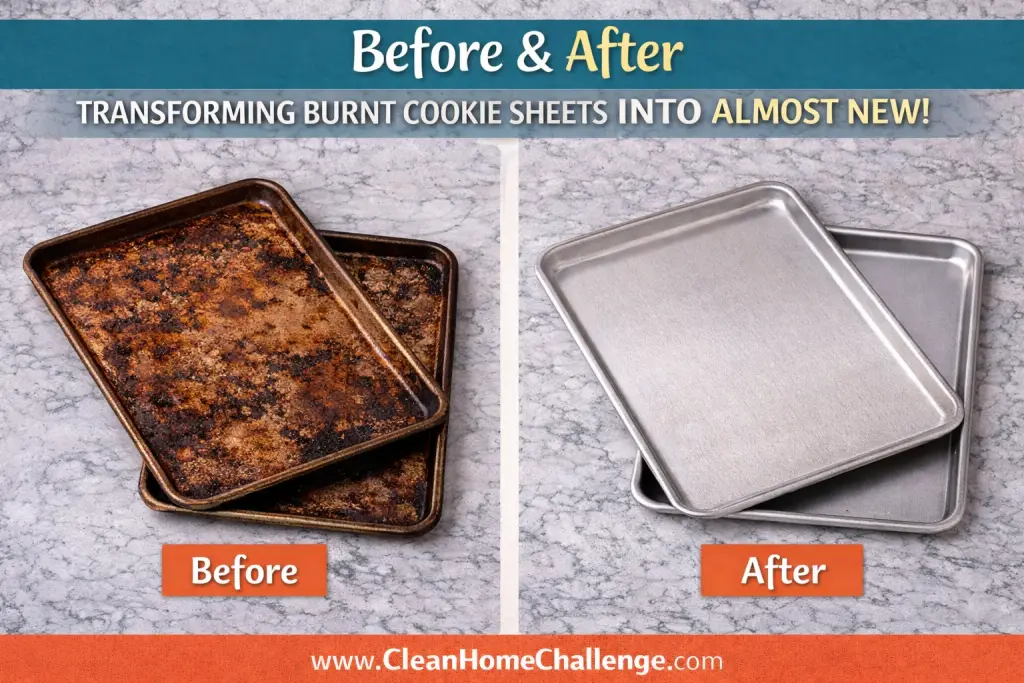
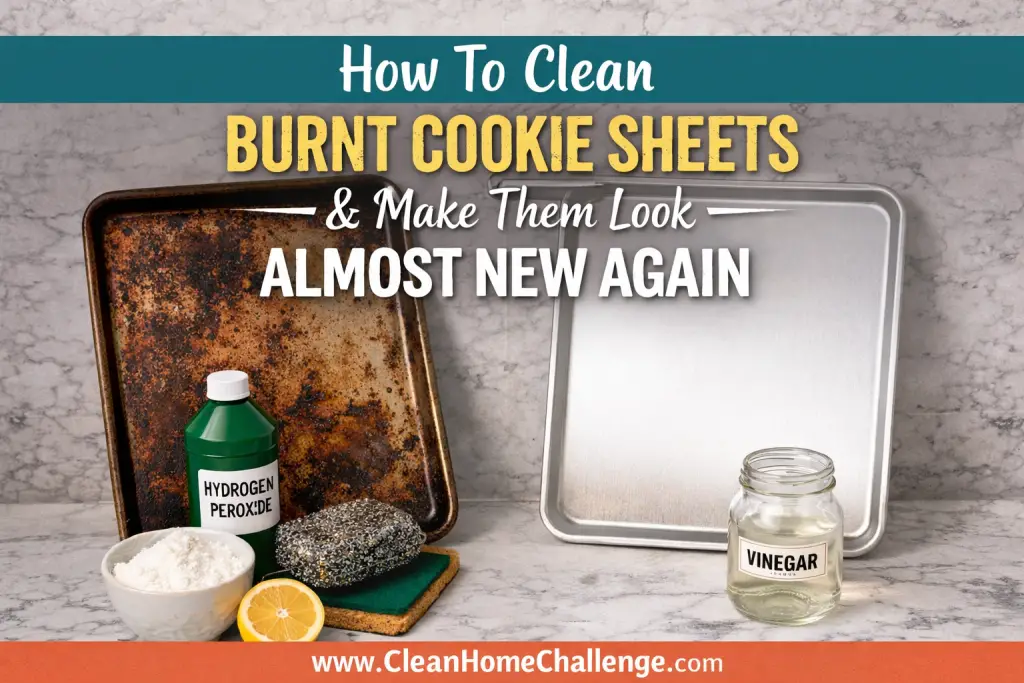
How To Clean Burnt Cookie Sheets (And Make Them Look Almost New Again)
If you bake regularly, you’ve probably looked at your cookie sheets one day and thought…
“Wow… when did these get so burnt?”
Dark stains, sticky grease, and baked-on food can slowly build up over time. Even if you wash your pans after every use, those brown marks still appear.
The good news?
Most burnt cookie sheets can be cleaned and restored using simple household ingredients. With the right method and a little patience, you can remove years of grease and grime without throwing your pans away.
Let’s walk through the best ways to clean burnt cookie sheets, plus some smart habits that help prevent them from getting dirty again.
Why Cookie Sheets Get Burnt In The First Place
Before cleaning them, it helps to understand why those dark stains appear.
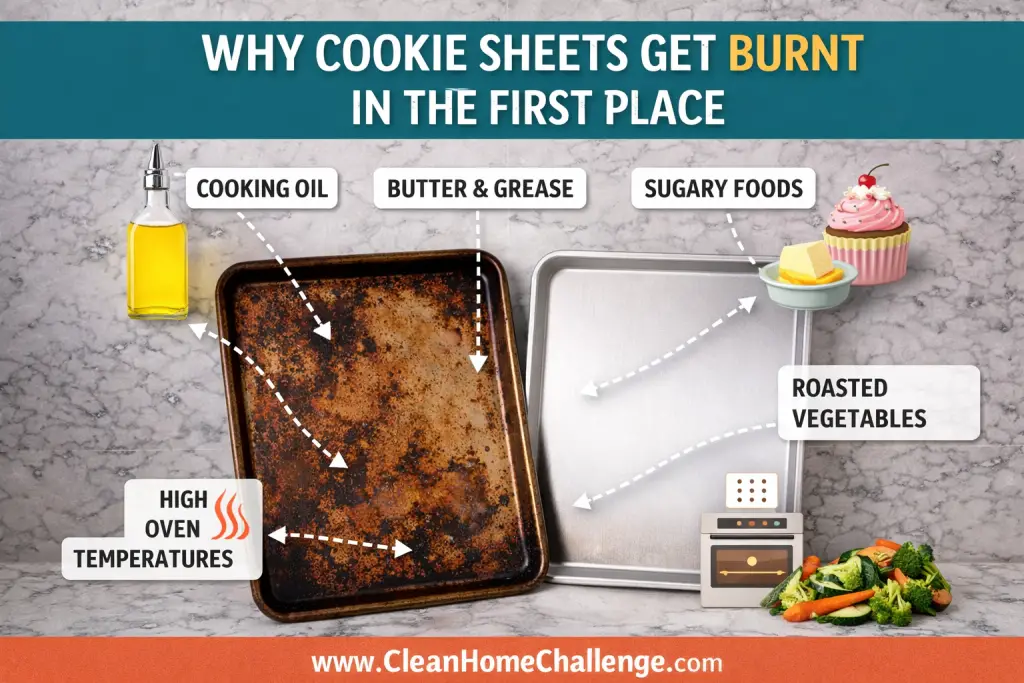
Most burnt marks on baking sheets come from polymerized oil — when cooking oils get overheated and turn into a sticky, hardened layer that doesn’t dissolve easily in water.
Over time, this layer builds up from:
- cooking oils
- butter and grease
- sugary foods
- roasting vegetables
- repeated high oven temperatures
Soap alone often won’t remove this buildup because the residue has essentially bonded to the metal surface.
That’s why stronger cleaning methods — like baking soda, vinegar, or hydrogen peroxide — work better.
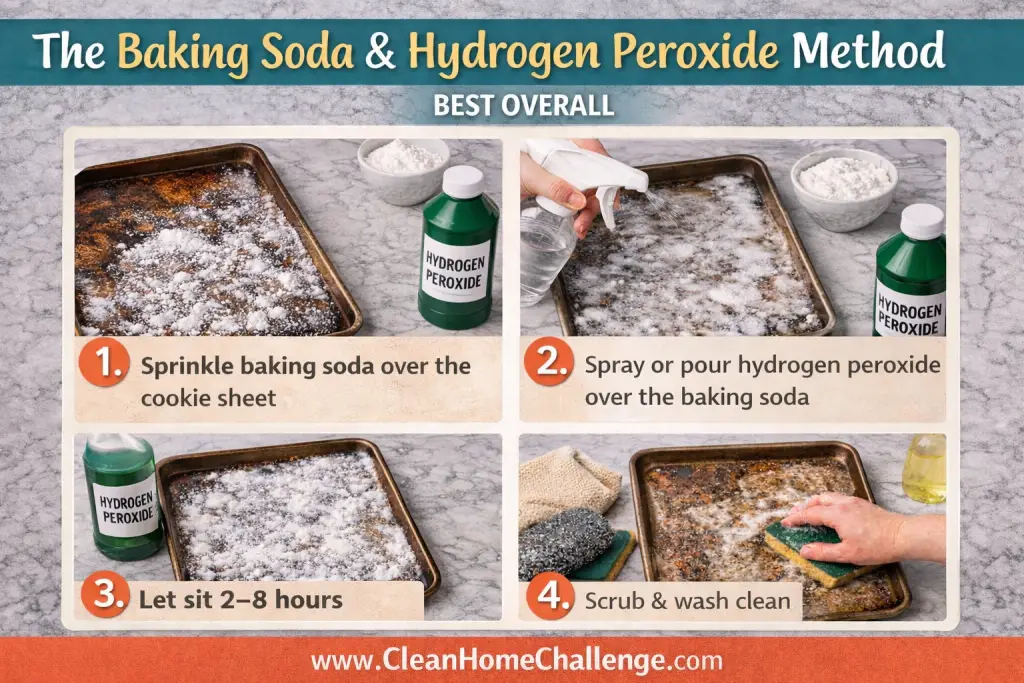
Method 1: The Baking Soda & Hydrogen Peroxide Method (Best Overall)
This is one of the most recommended ways to clean burnt baking sheets because it lifts grease without harsh scrubbing.
What You Need
- Baking soda
- Hydrogen peroxide
- Scrub sponge
- Dish soap
Steps
- Sprinkle a generous layer of baking soda over the cookie sheet.
- Spray or pour hydrogen peroxide over the baking soda until it forms a paste.
- Add another light layer of baking soda on top.
- Let the mixture sit for 2–8 hours (overnight works best).
- Scrub with a sponge or scrub brush.
- Wash with warm soapy water and rinse.
As the mixture sits, it slowly loosens the baked-on grease so it wipes away more easily.
Many people notice the baking soda turning brown as it pulls grime from the pan.
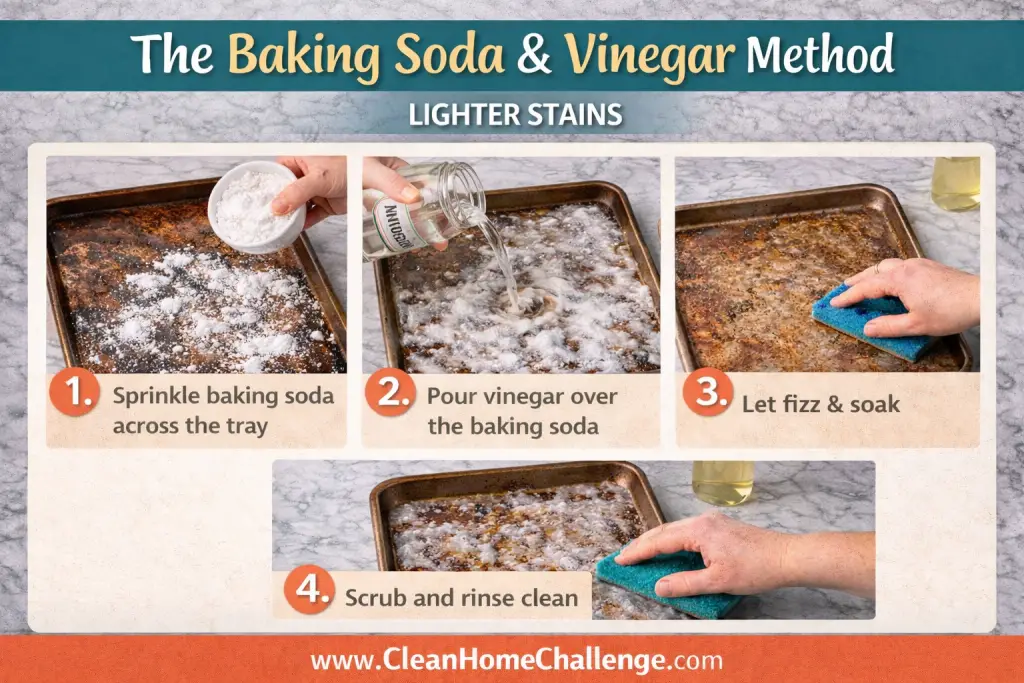
Method 2: Baking Soda & Vinegar Fizz Clean
This method works well for lighter stains and grease buildup.
What You Need
- Baking soda
- White vinegar
- Dish soap
- Sponge
Steps
- Sprinkle baking soda across the tray.
- Pour vinegar over the baking soda.
- Let the mixture fizz for a few minutes.
- Leave it for 30 minutes to overnight.
- Scrub gently and rinse.
The fizzing reaction helps break down grease and loosen residue.
Vinegar’s natural acidity helps cut through stubborn stains on baking sheets.
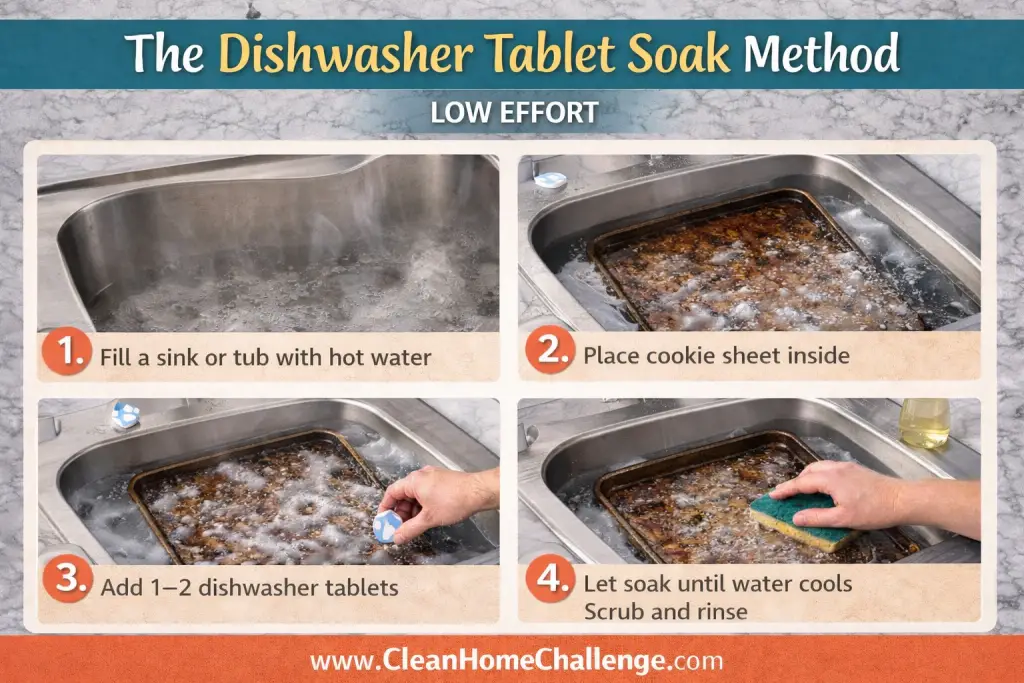
Method 3: Dishwasher Tablet Soak (Low Effort Option)
If you don’t want to scrub much, this trick works surprisingly well.
Dishwasher tablets contain powerful grease-cutting enzymes designed to break down baked food residue.
Steps
- Fill a sink or tub with hot water.
- Place the cookie sheet inside.
- Add 1–2 dishwasher tablets.
- Let it soak until the water cools.
- Scrub lightly and rinse.
This works especially well for greasy roasting trays and oven sheets.
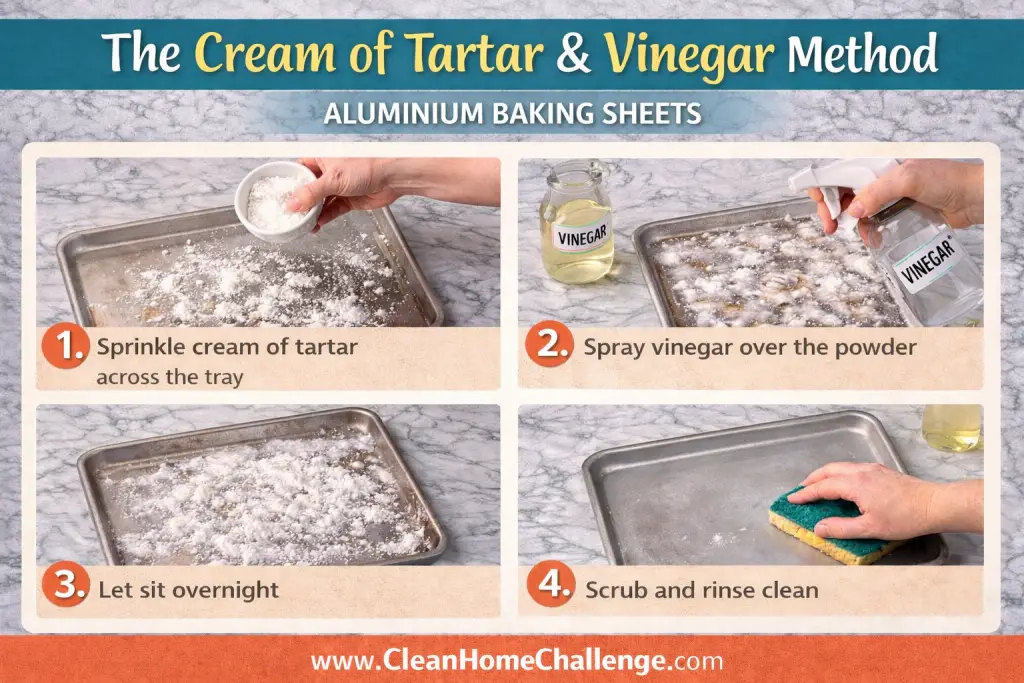
Method 4: Cream of Tartar & Vinegar
Cream of tartar is a natural acid that works well for lifting stains.
What You Need
- Cream of tartar
- White vinegar
- Sponge
Steps
- Sprinkle cream of tartar across the tray.
- Spray vinegar over the powder.
- Let the mixture sit overnight.
- Scrub and rinse.
This method works well for aluminium baking sheets with heavy staining.
Method 5: Steam Cleaning In The Oven
This is one of the least known cleaning tricks.
Steam helps loosen baked-on grease without chemicals.
Steps
- Pour 1–2 cm of water into the tray.
- Add ½ cup vinegar.
- Place the tray in the oven at 190°C (375°F).
- Allow the water to boil and create steam.
- Turn off the oven and leave for 30–60 minutes.
- Remove and wash normally.
The steam softens stubborn grime so it wipes away easily.
Method 6: Bar Keepers Friend (For Really Bad Trays)
If your cookie sheet looks beyond saving, a powdered cleaner like Bar Keepers Friend can help.
This cleaner contains mild acids that dissolve stubborn residue and rust.
Steps
- Wet the baking sheet.
- Sprinkle the cleaner across the stains.
- Rub gently with a sponge.
- Rinse thoroughly.
⚠️ Avoid using this on non-stick trays, as it can damage the coating.
Method 7: The Aluminum Foil Scrub Trick
This is a clever kitchen shortcut.
Instead of a scrub brush, you can use a ball of aluminium foil.
Steps
- Add dish soap to the tray.
- Crumple foil into a loose ball.
- Scrub the tray with the foil.
- Rinse and wash.
This method works well for stainless steel or aluminium trays.
When You Should NOT Try To Make Them Look New
Here’s something many people don’t realize.
Some dark stains are actually seasoning — similar to a cast-iron pan.
A thin layer of baked oil can help prevent sticking.
If your tray still works well and food isn’t sticking, you may not need to remove every mark.
A perfectly shiny pan isn’t always necessary.
How To Keep Cookie Sheets From Getting Burnt Again
Cleaning them once is great…
But preventing buildup is even better.
Here are some simple habits that make a huge difference.
Use Baking Paper
Lining trays with parchment paper prevents oil and sugar from sticking directly to the pan.
Wash Immediately After Use
Warm grease is easier to remove than hardened grease.
Avoid Cooking Spray Build-Up
Many sprays leave sticky residue that burns onto pans over time.
Use Silicone Baking Mats
These reusable mats protect your trays and make cleanup incredibly easy.
Do A Quick Monthly Deep Clean
Just 10 minutes once a month can prevent years of buildup.
A Simple Cleaning Routine For Busy Families
Instead of letting cleaning pile up, it helps to add small tasks into a routine.
For example:
Kitchen Reset Day
- wipe benches
- clean microwave
- wipe oven door
- clean cookie sheets
When small jobs are done regularly, your kitchen stays fresh without needing big deep cleans.
That’s why simple weekly routines work so well for busy homes.
Final Thoughts
Burnt cookie sheets are one of those things that slowly happen over time.
But with a few simple ingredients and the right method, you can remove years of buildup and make them look almost new again.
Try starting with the baking soda and hydrogen peroxide method, since it’s the most reliable for tough stains.
Then keep things simple moving forward by lining your trays, washing them regularly, and adding small kitchen cleaning tasks into your weekly routine.
Your future self will definitely thank you.