
THIS POST MAY CONTAIN AFFILIATE LINKS. PLEASE READ MY DISCLOSURE FOR MORE INFO.
You wipe the table after breakfast, wash a muddy floor, and reach for disinfectant when someone comes down with a bug. Are those all the same job? Not quite, and understanding the difference can make your cleaning routine more manageable.
Cleaning removes dirt and many germs. Sanitizing reduces bacteria on suitable surfaces, while disinfecting targets the bacteria and viruses listed on a product’s label. You do not need to work through all three steps on every surface every day.
The useful question is: what does this particular mess, surface, and situation need? Here is how to make that decision without turning an ordinary family home into an endless cleaning project.
Disclosure: This post may contain affiliate links. As an Amazon Associate, Clean Home Challenge earns from qualifying purchases. If you make a purchase through these links, we may earn a small commission at no extra cost to you. This helps us keep creating practical cleaning tips, routines and resources for busy families! 🧽
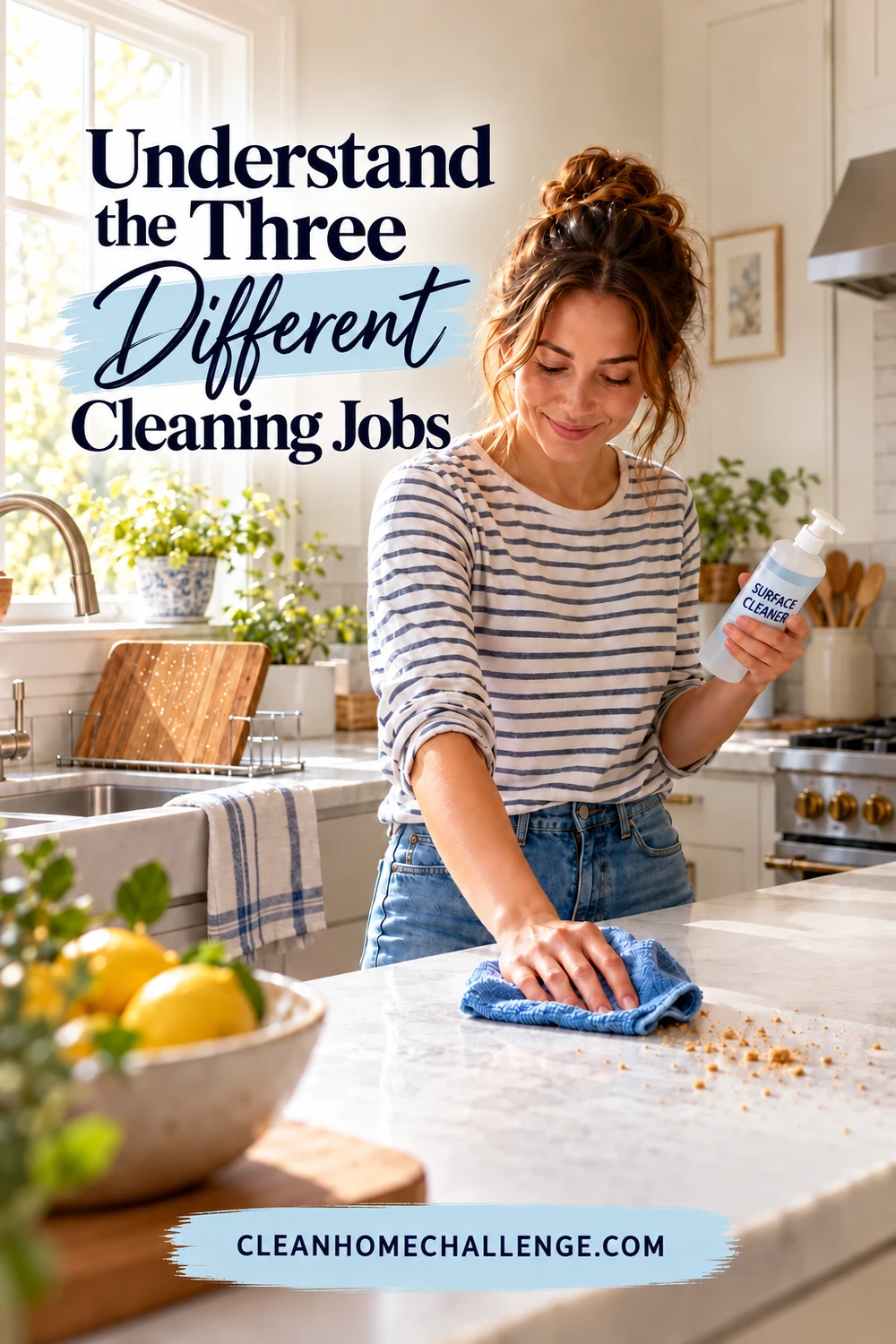
Understand the Three Different Cleaning Jobs
These terms describe different results, rather than three levels of effort. A hard scrub is not automatically disinfecting, and a quick mist is not necessarily sanitizing.
Cleaning removes the mess
Cleaning uses an appropriate cleaner, water where suitable, and physical action to remove dirt and organic material. Washing a sticky table or wiping toothpaste from a sink is cleaning. It also removes germs; it is not merely making things look better.
Sanitizing has a specific germ-reduction purpose
In the United States, EPA-registered surface sanitizers are tested for bacterial reduction. A sanitizing claim alone does not mean a product kills viruses. Food-contact sanitizers also have directions for the places where food touches, such as an approved cutting board or preparation surface.
Disinfecting targets listed germs
Disinfectants have tested claims against particular bacteria and viruses on specified surfaces. The label determines what the product does, where it can be used, and how to apply it. Some products have both sanitizing and disinfecting directions, with different requirements for each job. EPA explains these product distinctions.
Think of three ordinary situations:
- Crumbs and jam on the dining table call for cleaning.
- A suitable food-preparation surface contaminated by raw chicken juices needs cleaning followed by appropriate sanitizing.
- A shared bathroom during household illness may need cleaning followed by targeted disinfecting.
Choosing a job first is more useful than choosing the strongest-sounding bottle. Keep those three examples in mind when the product aisle starts to feel unnecessarily complicated.
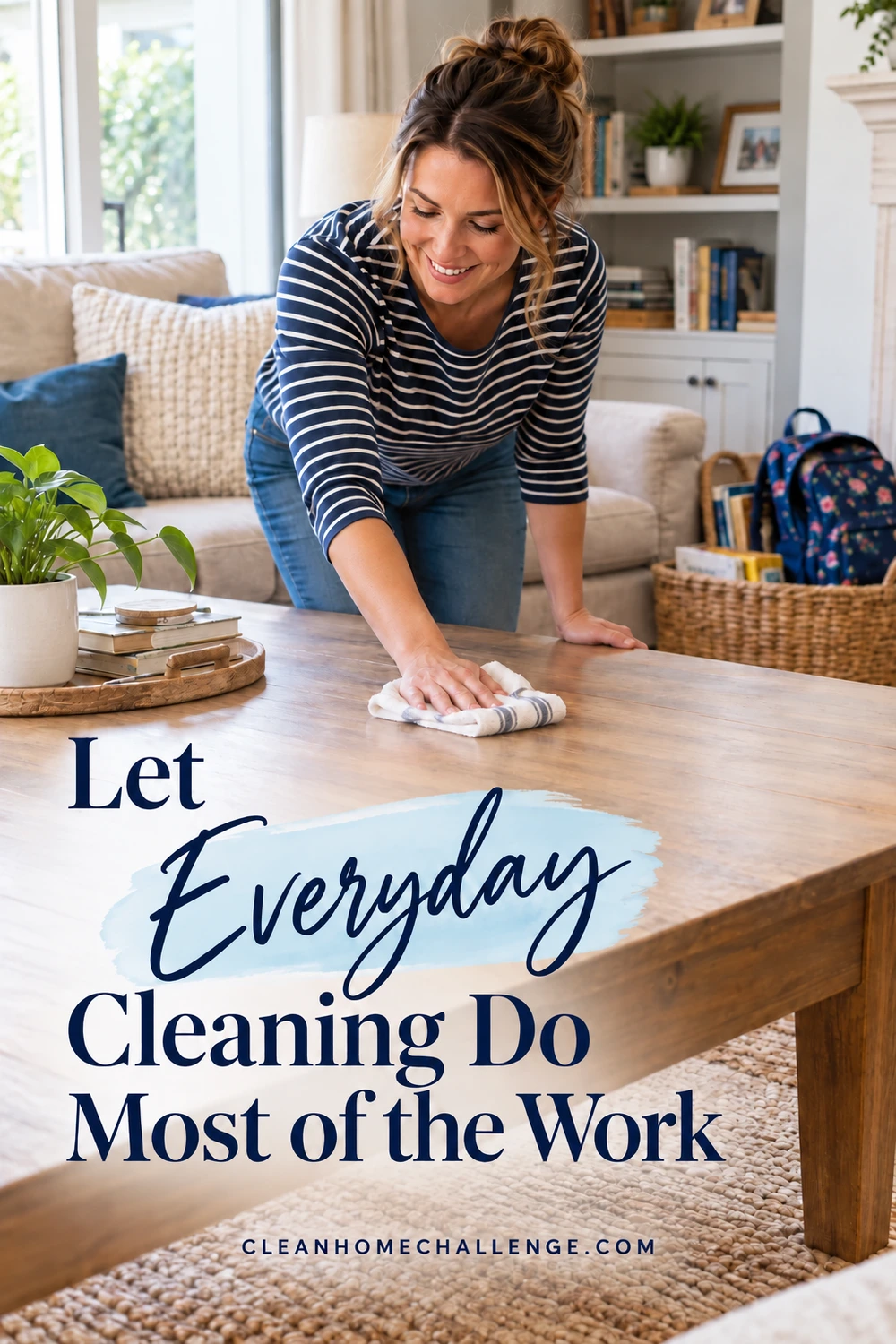
Let Everyday Cleaning Do Most of the Work
For most ordinary home situations, regular cleaning is enough. CDC recommends cleaning frequently touched surfaces regularly and other areas when dirty or as needed. Disinfecting becomes more important when someone is sick or has a weakened immune system. See CDC’s household cleaning guidance.
Start with the mess that is actually in front of you. Breakfast crumbs do not require a whole-room disinfecting session. A sticky handprint needs to be washed away, rather than repeatedly sprayed over.
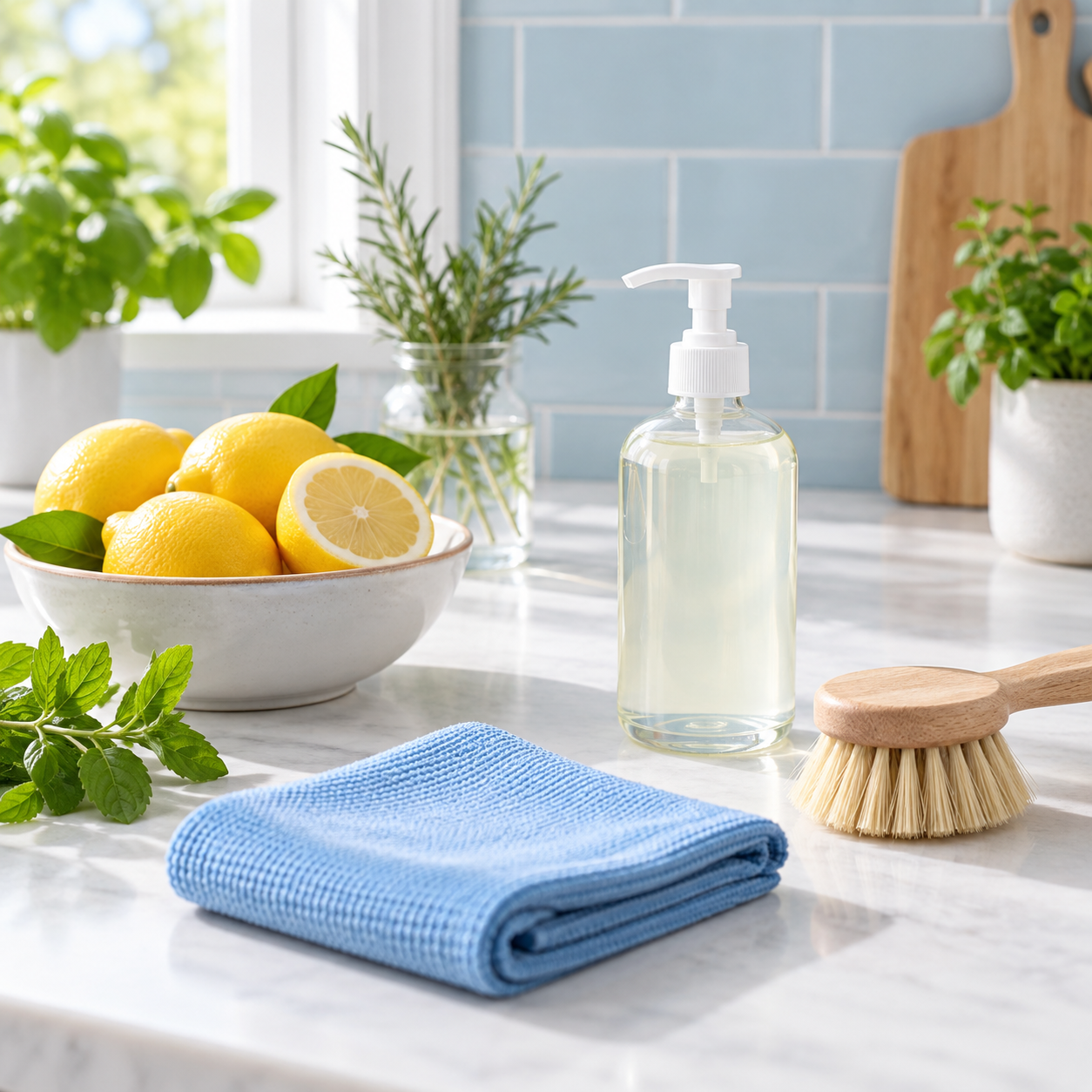
A small everyday kit might include:
- A cleaner appropriate for the surface
- Several clean, washable cloths or suitable disposable towels
- A small brush for awkward edges
- A container for used cloths
- Gloves if the product instructions require them
Keep the selection small enough that you know what each item is for. If you cannot remember whether a bottle belongs on wood, glass, or a food-preparation surface, check before starting.
For an ordinary wipe-down, clear enough space to reach the surface. Remove loose debris, apply the suitable cleaning method, and work across the area rather than chasing individual marks. Finish any rinsing and drying required by the cleaner and surface instructions.
For easier organization, give bathroom and kitchen cloths separate colors or storage spots. Keep several clean cloths ready so replacing a grubby one does not interrupt the job. This is a practical household system, not a requirement to buy a particular microfiber set.
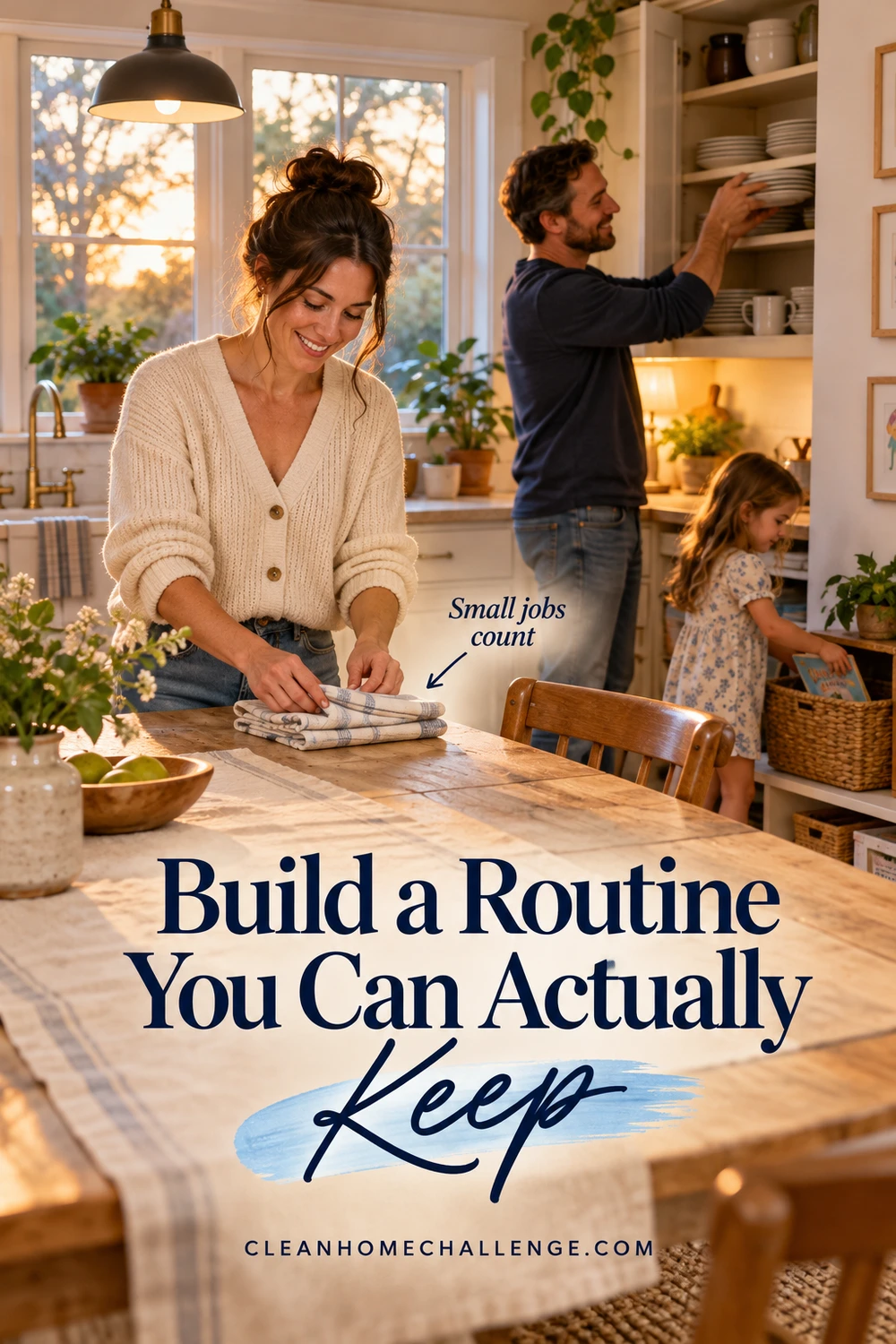
Pick a convenient anchor for each small job: wipe the dining table after the meal, check the bathroom sink after the bedtime routine, and deal with muddy footprints when they appear. You can still have toys on the sofa and a basket of unfolded laundry. Neither means that the useful cleaning you have done does not count.
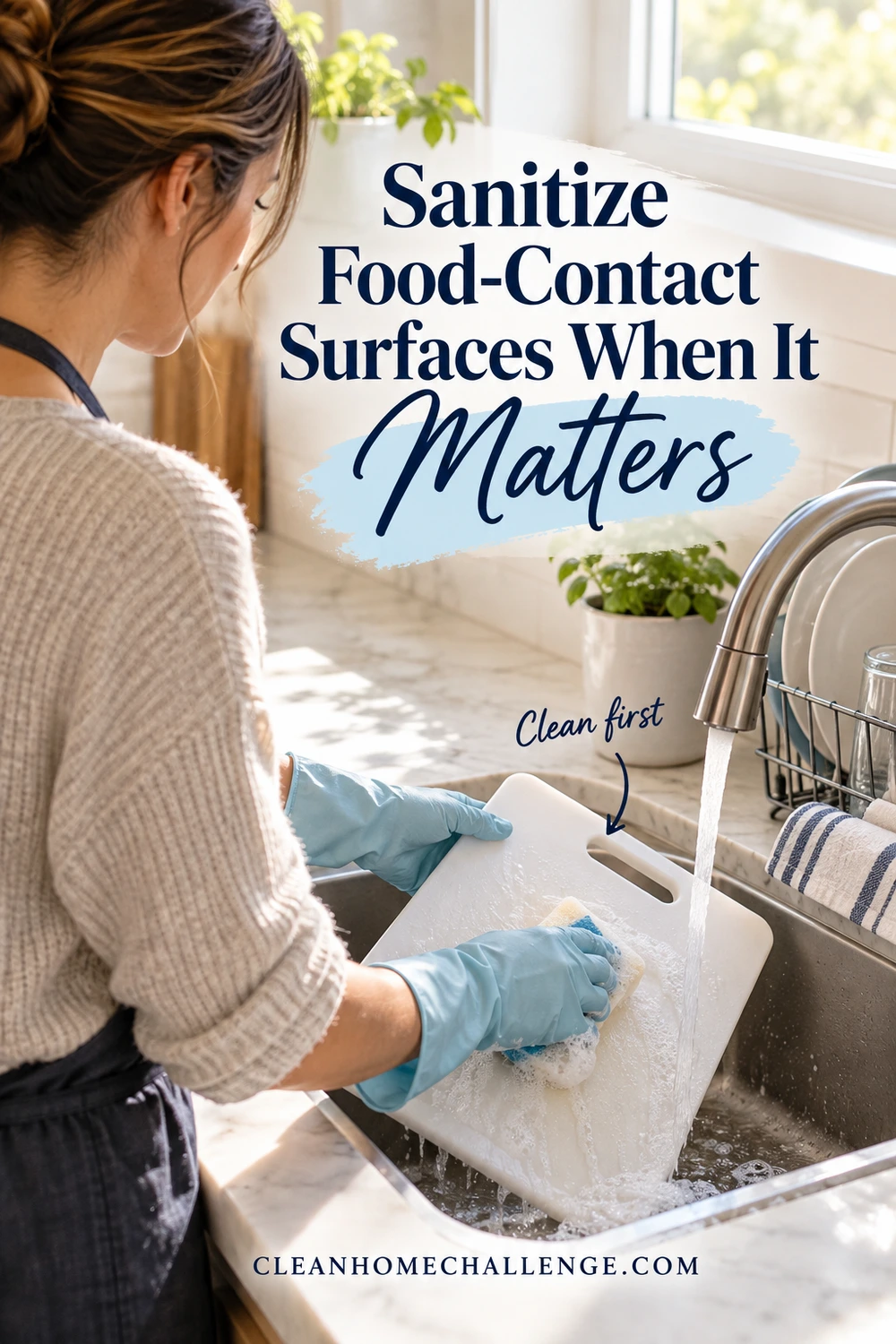
Sanitize Food-Contact Surfaces When It Matters
The kitchen needs an extra decision because a surface can pass contamination to food. After raw meat or poultry preparation, clean and sanitize affected utensils and suitable food-preparation surfaces, including the sink if contaminated. USDA distinguishes the washing stage from the sanitizing stage in its food-safety cleaning advice.
An empty cutting board can look clean while still needing that next step. Equally, a counter used only to set down the mail does not automatically need the same treatment after every use.
Use this sequence for a surface that needs sanitizing:
- Move food and clean equipment away. Give yourself an uncluttered working area.
- Wash away food and grease. Use a method suitable for the item, and complete the cleaning product’s rinsing instructions.
- Select the correct sanitizing directions. Confirm that the product is labeled for the particular food-contact surface. Non-food-contact sanitizing instructions are not interchangeable.
- Apply it exactly as directed. Follow the specified dilution, coverage, and wet contact time. Do not estimate a stronger mixture.
- Complete the finish. Rinse with drinking-quality water if required, or follow the no-rinse and drying instructions when that exact use permits it.
The words “disinfectant” or “kitchen cleaner” on the front do not settle the food-contact question. EPA’s product listings distinguish food-contact uses that require a post-rinse from those that do not. Some disinfectants permit food-contact use; others are limited to non-food-contact surfaces. EPA’s surface-type categories show why the full instructions matter.
For example, the manufacturer’s directions for Clorox Free & Clear Disinfecting Mist specify a one-minute wet time for sanitizing hard, nonporous food-contact surfaces and state that rinsing is not required when used as directed. That is one particular product, not a rule for all sanitizers.
Keep food-contact work separate from your general bathroom wipe-down. Read the directions before a busy meal-prep session so the final step is straightforward when dinner is ready.
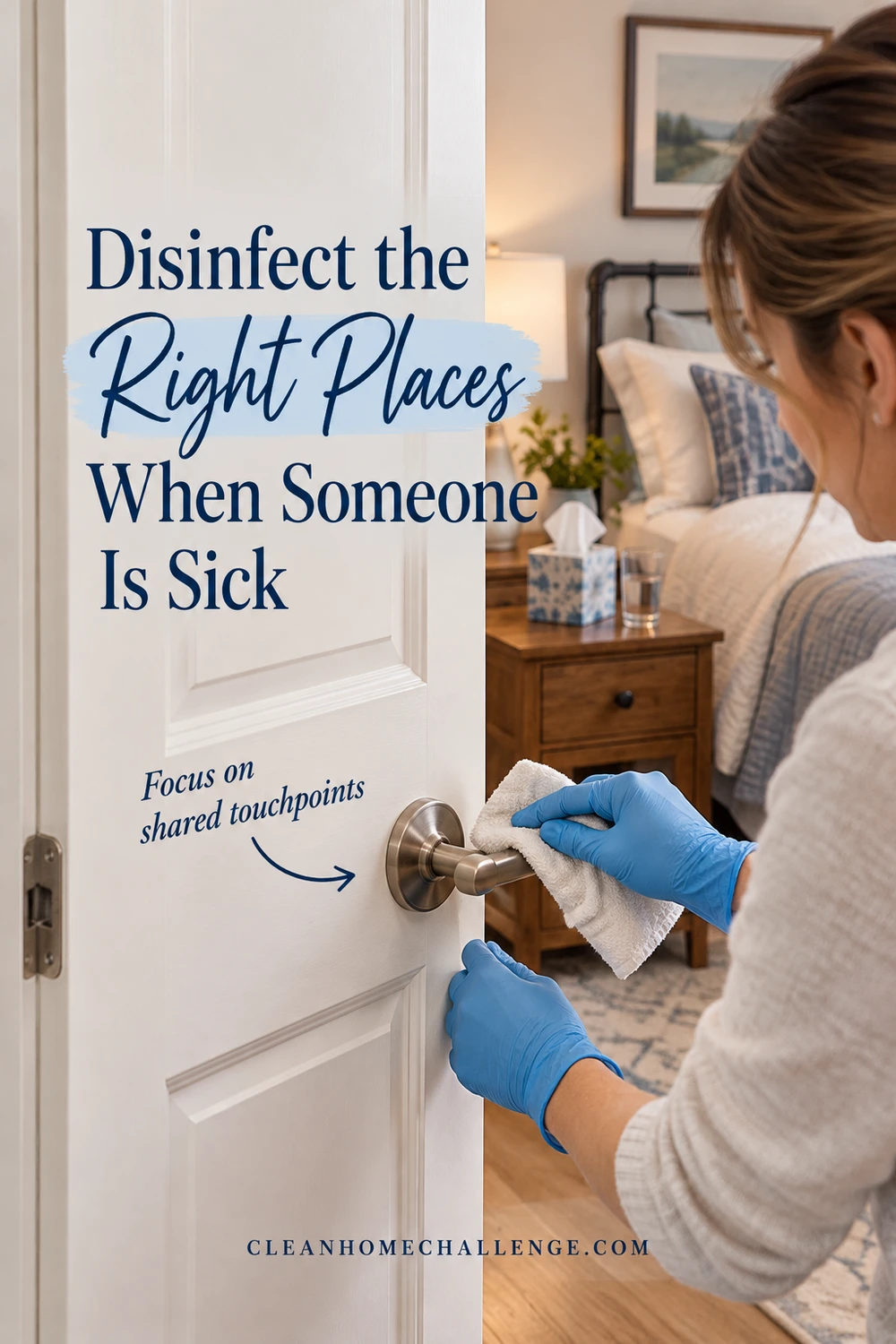
Disinfect the Right Places When Someone Is Sick
When illness changes the household routine, narrow the cleaning plan to the spaces and surfaces involved. If a household member has weakened immunity, follow their healthcare team’s advice alongside the product instructions; individual needs can differ.
Make a short list based on how your family uses the home. Possible priorities include the bathroom used by the sick person, faucet handles, toilet touchpoints, nearby door handles, and shared hard surfaces they have handled. A bedside table may be more relevant than an untouched bookshelf across the room.
Prepare the job before opening a bottle: find the right product, check compatible surfaces, gather cleaning materials, and arrange for children and pets to stay elsewhere. Then clean visible soil and follow the disinfectant’s full directions. Work on a few manageable areas so you can keep track of which ones still need their wet contact time.
A stomach bug needs more specific guidance
Do not assume any antibacterial wipe covers norovirus. After vomiting or diarrhea, CDC recommends promptly cleaning and disinfecting the affected area with an appropriate product, including an EPA-registered disinfectant effective against norovirus. Gloves, careful waste handling, and attention to contaminated laundry are part of the process. Follow the complete CDC norovirus cleanup guidance, rather than applying an ordinary quick-wipe routine to that mess.
Handwashing also matters. CDC emphasizes soap and water for norovirus because hand sanitizer alone does not work well against it. Surface work is one part of the household response, not a guarantee that nobody else will become ill.
On sick days, put decorative tidying and optional deep-cleaning jobs lower on the list. Concentrating your effort on the relevant tasks is a sensible way to conserve energy while caring for someone.
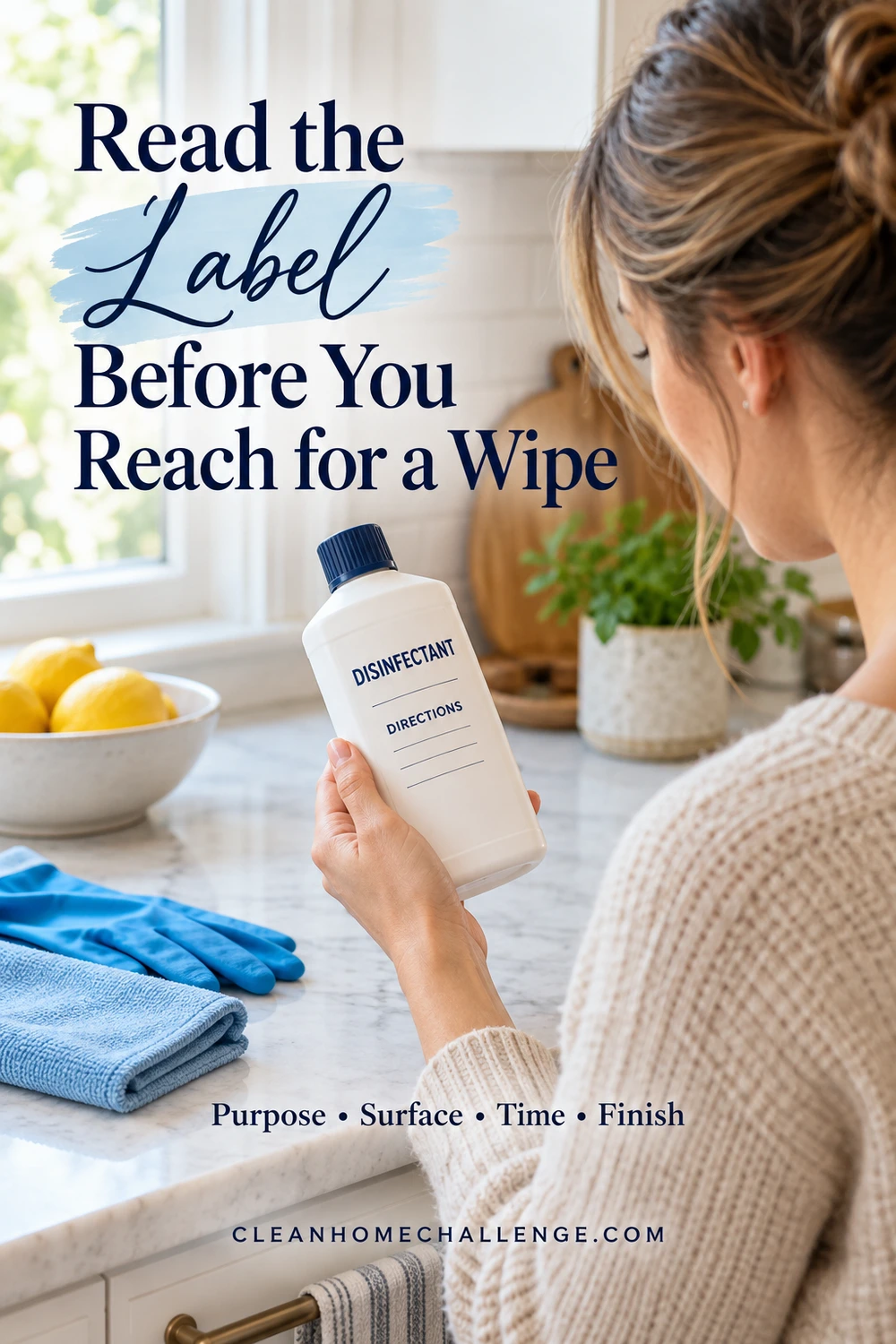
Read the Label Before You Reach for a Wipe
The most useful instructions are usually on the back of the package. Before using a sanitizer or disinfectant, find the directions for your specific job, not simply the largest claim on the front.
Check these seven things:
- The purpose. Are you cleaning, sanitizing, or disinfecting?
- The surface and use site. Is the product allowed on that material, in a home, and on food-contact surfaces if relevant?
- The germ claim. Does it cover the organism you need to address?
- Preparation. Is precleaning necessary? Is the product ready to use or a concentrate?
- Contact time. How long must the treated surface stay wet?
- Finishing. Does the surface need air-drying, wiping, or a water rinse afterward?
- Precautions. What ventilation, protective equipment, storage, and disposal instructions apply?
EPA’s safe disinfectant-use checklist emphasizes approved uses, precleaning, and keeping the surface wet throughout the contact time. A surface that dries early has not completed a direction requiring continuous wetness. Use the quantity and application method instructed on the label, including additional application where directed.
Timing varies. The current directions for Clorox Disinfecting Cleaning Wipes specify four minutes of visible wetness for disinfecting hard, nonporous, non-food-contact surfaces. The Free & Clear Mist mentioned earlier specifies two minutes for hard-surface disinfecting. Neither time can be borrowed for a different product or use.
A phone timer can make the waiting easier, but stay aware of the surface. Do not start a timer and immediately wipe everything dry. Plan the finishing step too, especially if a food-contact rinse is required.
Finally, do not rely on an improvised vinegar mixture for a disinfectant claim. EPA does not verify the effectiveness of common household ingredients in the way it evaluates registered surface disinfectants. Its household-substances explanation makes that distinction clear. A pleasant smell or a familiar ingredient cannot replace tested directions.

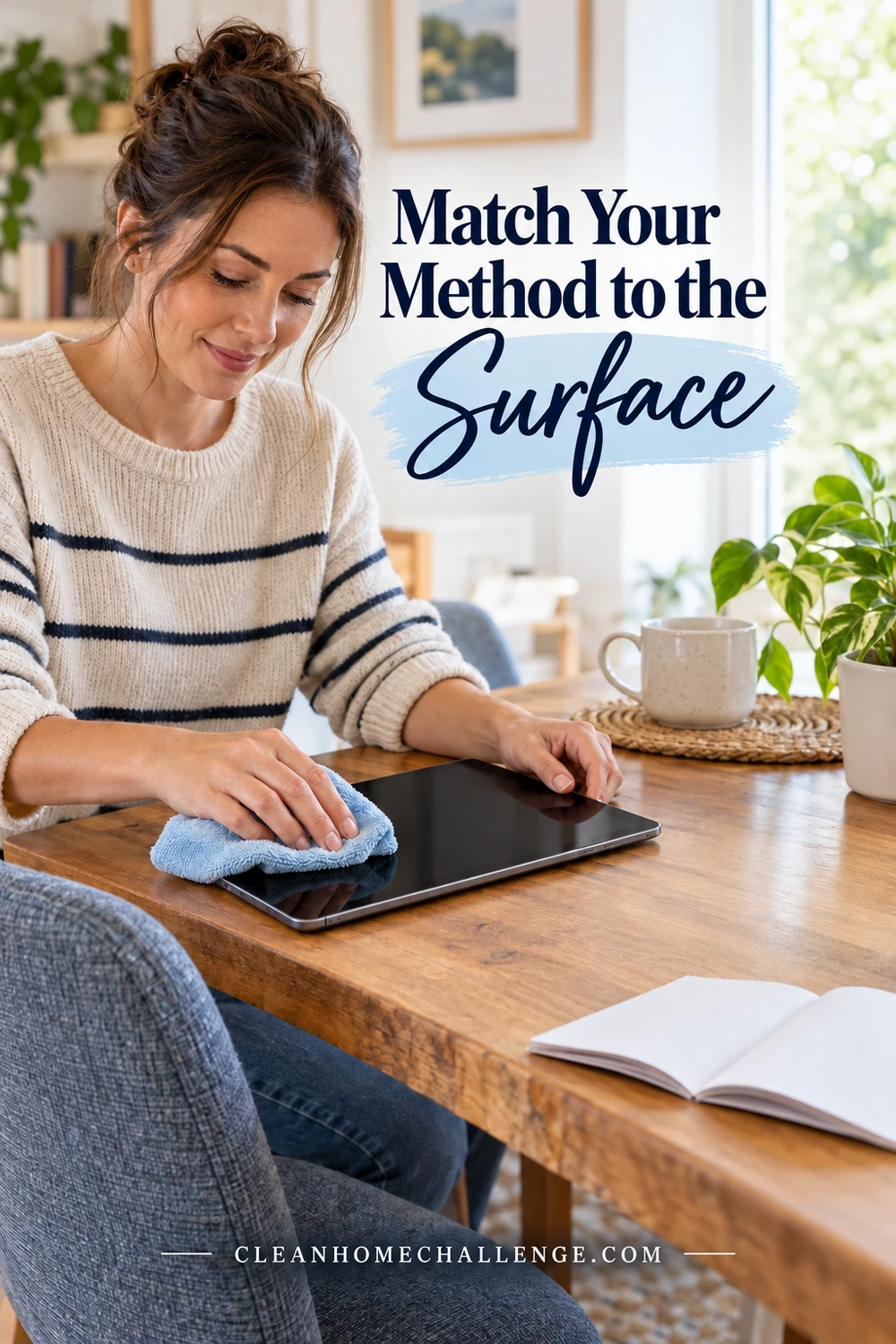
Match Your Method to the Surface
A suitable germ-control method still has to be compatible with the thing you are treating. Check both the cleaning product and the item’s care instructions. When they do not fit together, choose another approved method rather than shortening contact time or risking damage.
Floors, counters, and furniture
Wood, laminate, stone, quartz, and specialty finishes are not interchangeable. For example, Bona’s lacquered-floor instructions call for limited cleaning solution without puddles. That does not support soaking a wood floor with a household disinfectant.
Caesarstone’s quartz and mineral-surface guidance recommends compatible products, an inconspicuous test, and care around strong chemicals. Use the guidance for your own surface and finish. A successful patch test checks for visible problems; it does not make an unapproved disinfecting use valid.
Screens and electronics
Read the instructions for the exact device. Apple, for instance, permits certain wipes on specified hard, nonporous surfaces but warns against bleach, hydrogen peroxide, liquid in openings, and direct spraying. There are device-specific exceptions. Follow Apple’s product-cleaning instructions, or your device maker’s equivalent, rather than treating a screen like a bathroom counter.
Fabric and washable items
Use the care label for laundering and dry items completely. A hard-surface disinfecting claim does not automatically apply to upholstery, carpet, or a stuffed toy. CDC’s household guidance treats laundry, soft surfaces, and electronics separately for this reason.
Feeding equipment and mouthed items
Check the item maker’s washing and sanitizing methods. For infant feeding equipment, CDC advises daily sanitizing for babies younger than two months, babies born prematurely, or those with weakened immunity. For dishwasher-safe items, hot water with heated drying, or a sanitizing setting, can remove the need for a separate sanitizing step. Follow the complete infant-feeding-item instructions, including cleaning first and thorough air-drying, instead of using an ordinary surface wipe on a bottle or nipple.
Keep Cleaning Products Away From Children and Pets
A useful cleaning routine includes what happens before and after the wiping. Plan where the bottle, used towels, and treated items will go, especially if interruptions are likely.
Never improvise a chemical mixture
Do not combine cleaning products. In particular, never mix bleach with ammonia, vinegar or other acids, alcohol, or another cleaner. Dangerous vapors can result. If you choose a bleach method, follow the product’s exact dilution and surface instructions instead of borrowing a recipe for another purpose. CDC also recommends ventilation, appropriate protective equipment, and freshly prepared diluted bleach solution each day. See its bleach safety guidance.
Rinse away a previous cleaner when directed before moving to a compatible next step. Do not add a splash of something else because a stain remains.
Give children different jobs
EPA says children should not apply disinfectants, including disinfectant wipes. Keep those tasks with an adult. Children can still help by gathering books, putting toys in a basket, or matching clean socks. EPA’s advice about children and disinfectants also warns against applying surface disinfectants to skin or food.
Make storage part of finishing
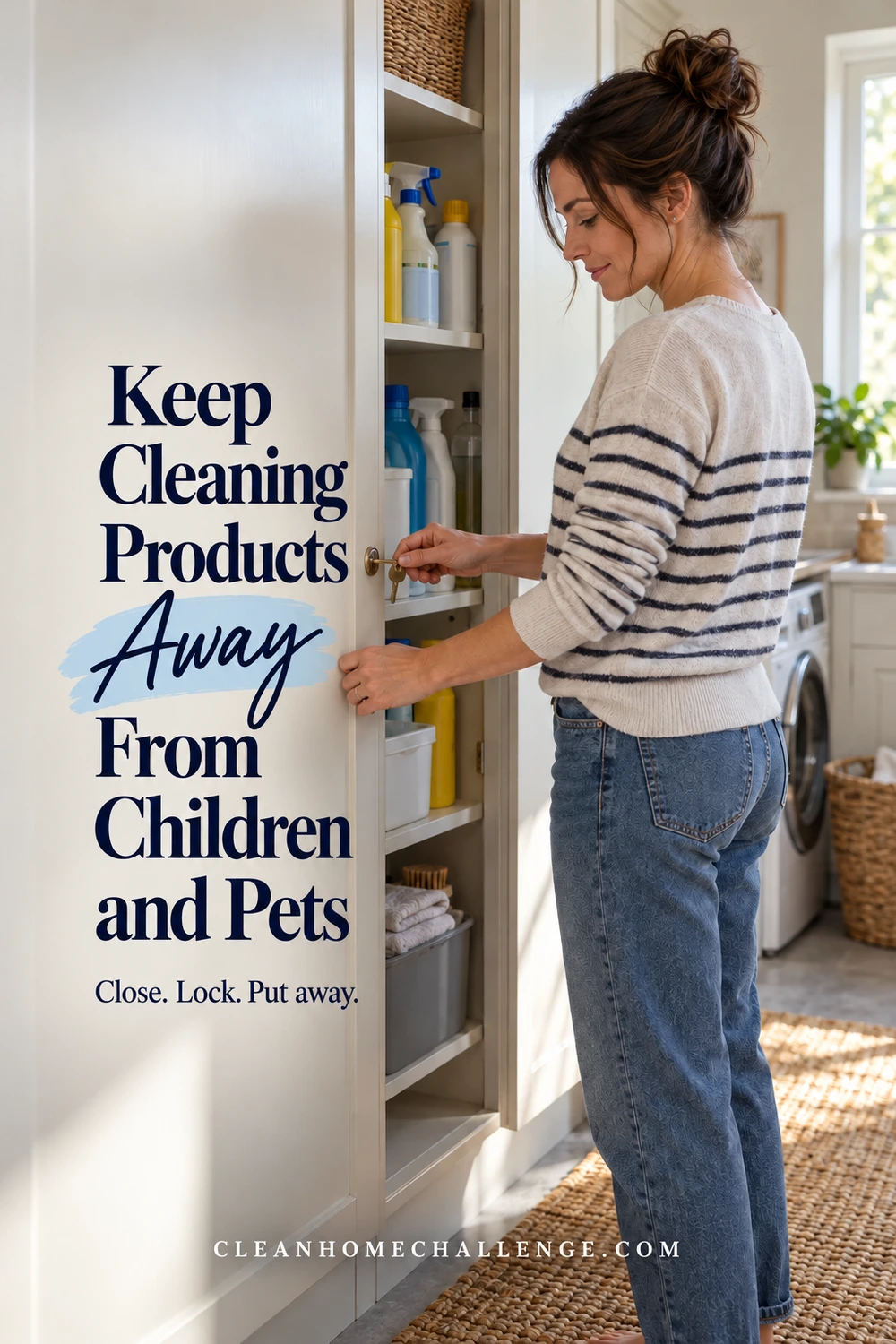
Keep chemicals in their original labeled containers, close them securely, and store them out of reach, preferably in a locked cabinet. Never use a drink bottle for cleaning products. Move children and pets away during use and keep them away until treated areas are dry or for the longer interval specified on the label. EPA’s household chemical safety tips cover these precautions.
If the doorbell rings halfway through, secure the products before answering. A cleaning caddy sitting on the floor is not safe storage just because you intend to return quickly.
Build a Routine You Can Actually Keep
The best plan is one you can understand on a tired evening. Separate your ordinary cleaning habits from the extra steps needed for food contamination or illness, and let that distinction simplify the week.
Try a five-minute everyday reset
This is a flexible planning example, not a promised completion time or a substitute for a product’s contact time:
- First minute: collect trash, dishes, and obvious clutter from one useful surface.
- Next two minutes: clean that surface with the appropriate method.
- Fourth minute: check one nearby frequently touched spot and clean it if needed.
- Last minute: put used cloths aside for washing, return products to secure storage, and wash your hands.
Adjust the timing to your space and energy. If a job needs sanitizing or disinfecting, allow its full additional process rather than squeezing it into the remaining seconds.
Give each day a manageable focus
The Clean Home Challenge weekly pattern can help: kitchen on Monday, bathrooms on Tuesday, bedrooms on Wednesday, living areas on Thursday, floors on Friday, and laundry catch-up on Saturday. Those are organizing prompts, not a timetable for leaving spills or contamination until later.
Keep a short list of your family’s actual priorities. In one home that might be a shared bathroom and dining table; in another, feeding equipment and the handles everyone touches on the way outside. Review the list when circumstances change rather than adding more jobs indefinitely.
Use a smaller plan on low-energy days
Choose the most important immediate task, complete it properly, and leave a clear starting point for tomorrow. Ask another adult to take a specific job if help is available. “Please clean the dining table and put the supplies away” is easier to act on than “Can you help with the house?”
You do not need a perfect home or a cupboard full of specialist bottles. Know the job, respect the surface, follow the label, and build small cleaning habits you can repeat. That is a workable foundation for a comfortably clean family home.
CLEANERS CLUBHOUSE
Build a Safer, Simpler Cleaning Routine
Clean confidently with practical guidance that helps you choose sensible products and use them correctly. The Cleaners Clubhouse combines safer cleaning support with realistic routines, worksheets and challenges.