THIS POST MAY CONTAIN AFFILIATE LINKS. PLEASE READ MY DISCLOSURE FOR MORE INFO.
You are halfway through wiping the kitchen when the cleaner smells stronger than you expected. Adding some water to the bottle can seem like an easy way to make it gentler, help it last longer, and get back to the rest of your day.
Diluting a ready-to-use cleaner does not reliably make it safer. Unless that exact product’s directions tell you to dilute it for your task, use it as supplied. A concentrate is different: it needs the measured preparation its label specifies. Neither a familiar brand name nor a large refill bottle tells you which type you have.
This guide helps you make that decision without guessing a homemade ratio. There is a copyable bottle-check card below, plus practical next steps if someone has already added water. You do not need to become a chemist to keep a sensible family cleaning routine; you need readable directions and a product that suits the job.
Disclosure: This post may contain affiliate links. As an Amazon Associate, Clean Home Challenge earns from qualifying purchases. If you make a purchase through these links, we may earn a small commission at no extra cost to you. This helps us keep creating practical cleaning tips, routines and resources for busy families! 🧽
Check Whether the Product Is Ready to Use
Start with the exact bottle in your hand. Read the front, back, peel-back panel, and any supplied directions. Look for ready to use, RTU, use undiluted, or do not dilute. These indicate a product intended for use at its supplied strength for the stated application. EPA’s disinfectant-testing terminology distinguishes ready-to-use products, which need no activation or dilution, from concentrates that require dilution before use.
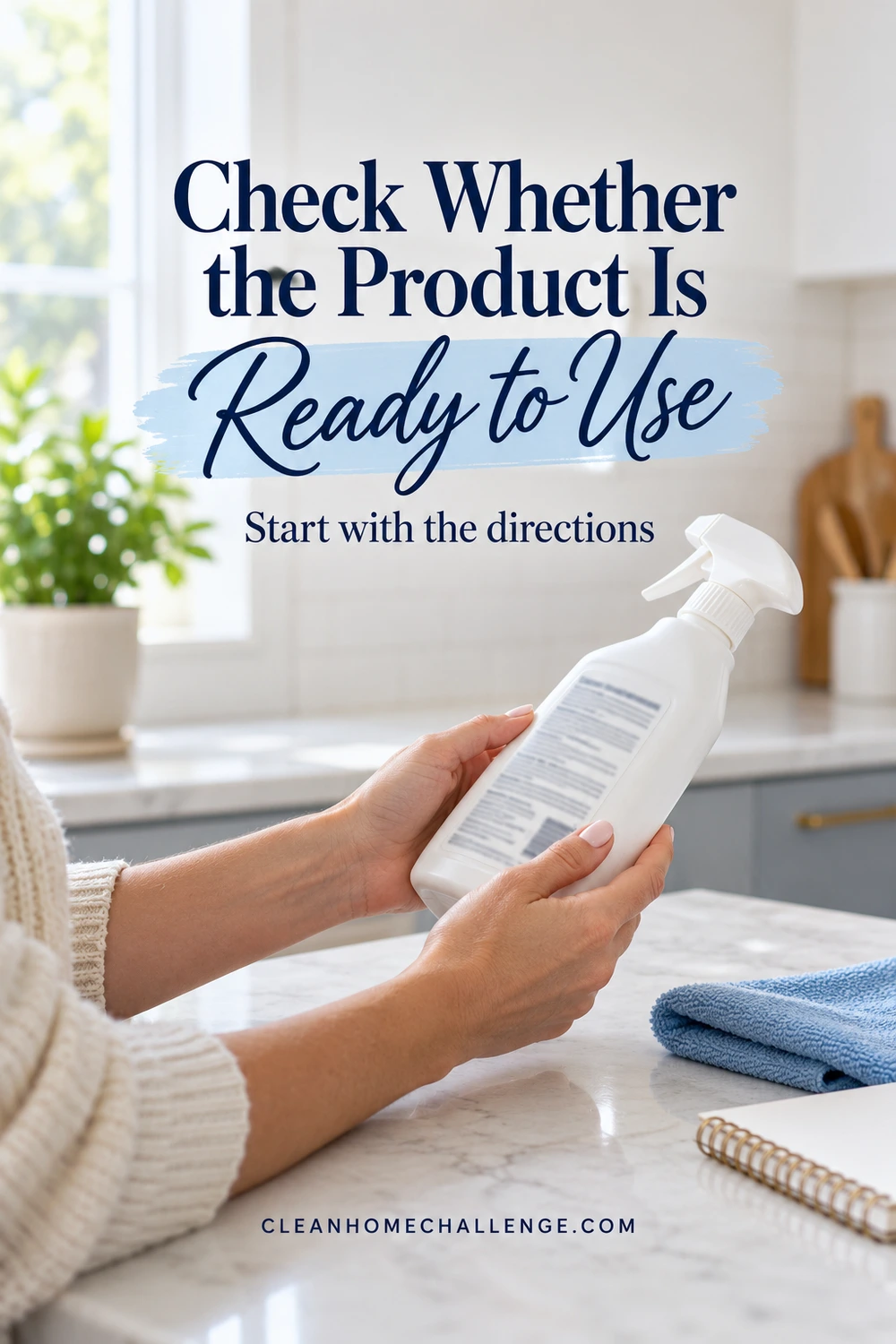
Then look for a specific measuring instruction. A concentrate may tell you to add a stated amount to a stated volume of water, fill a manufacturer’s bottle to a mark, or use a dedicated dosing system. Follow that instruction for the particular task. A label may give different methods for cleaning and disinfecting; one set of directions is not permission to improvise the other.
Refill does not necessarily mean concentrate
A large refill can contain exactly the same ready-to-use liquid as the smaller spray bottle. Other refill products contain concentrate, tablets, or cartridges designed for a particular bottle and preparation process. Packaging size and the word refill cannot settle the question. Check the instructions on the refill itself and the compatible bottle.
Do not combine leftovers from different products, even if their colors or scents match. Do not assume an older bottle’s directions apply to a newly purchased formula. Keep the original label and use the product’s current instructions.
| What the directions say | What to do | What to avoid |
|---|---|---|
| Ready to use; use undiluted | Apply as supplied for the listed task | Adding water to stretch the bottle |
| Concentrate with a measured dilution | Measure exactly as directed | Guessing by color, smell, or bottle cap size |
| Refill with no clear preparation information | Check the full directions or ask the manufacturer | Assuming every refill is concentrated |
| Directions missing or unreadable | Pause and identify the exact product | Using a similar-looking bottle’s recipe |
| Different instructions for different tasks | Follow the directions matching today’s task | Transferring a cleaning dilution to disinfection |
If a label is too small to read, use your phone’s magnifier or find the manufacturer’s instructions for the exact product and version. Check that the name and formulation match. When you cannot confirm them, choose another clearly labeled, suitable product for the task.
Understand What Extra Water Changes
Water lowers the concentration of ingredients in the liquid you apply. That simple fact does not establish how well the changed product will clean, whether it will remain suitable for storage, or whether your surface will tolerate it. A formulated cleaner contains more than the ingredient highlighted on the front of the bottle.
For example, if equal volumes of an ordinary liquid product and water are combined, the product is roughly half its original concentration. That arithmetic is an illustration, not a usable cleaning recipe. It does not tell you that half strength is adequate, that the product is now harmless, or that twice the time will restore its performance.
Less concentrated does not mean safe for every use
An unsuitable cleaner does not become approved for stone, wood, acrylic, food-contact surfaces, or toys just because it has extra water in it. Follow both the cleaner label and the item’s care instructions. Even a permitted spot test does not establish that an unapproved chemical is suitable over time.
Extra water can also mean extra moisture on a surface. If you respond to weaker cleaning by spraying more, you may wet seams, edges, electrical parts, or flooring more than intended. Avoid soaking a surface to compensate for a product that is no longer being used according to its directions.
Smell is not a measuring tool
A strong smell can be a reason to stop and improve the setup or choose a different suitable product. A weak smell does not prove a cleaner is safe, correctly diluted, or effective. Fragrance strength cannot tell you the concentration of a disinfectant’s active ingredient.
If a product bothers you, stop using it and follow any label precautions. Ventilate as directed, keep the nozzle away from your face, and use only the permitted application method. Do not modify a spray into a homemade air freshener, add essential oils, or combine it with another cleaner. For ongoing sensitivity concerns, seek advice appropriate to your situation and select a product that fits your needs rather than trying to redesign one at home.
Storage after modification is another unknown
Do not assume that a watered-down bottle has the same storage instructions or usable life as the original formula. Do not invent a rule that every modified cleaner lasts a week or a month. If dilution is allowed, follow the specified container, preparation, labeling, storage, and use period. If it is not allowed, avoid creating a stored mixture in the first place.

Keep Disinfectant Strength and Contact Time Together
Cleaning removes dirt and impurities; disinfecting is a separate process intended to kill germs under specified conditions. You cannot judge disinfection by a surface looking clean or smelling fresh. A product may be a cleaner, a disinfectant, or both, with different directions for each purpose.
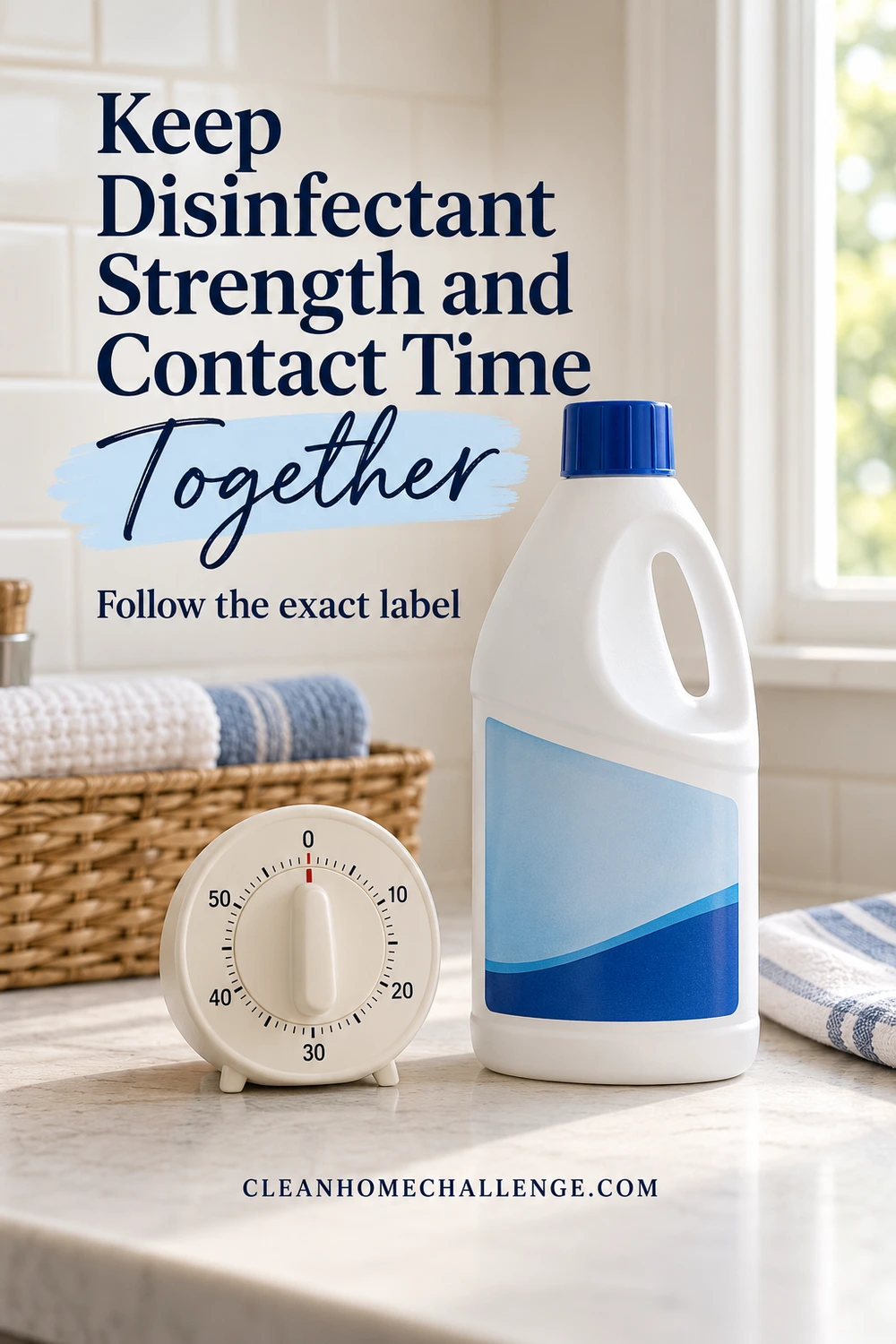
For a ready-to-use disinfectant, added water takes the product away from its stated preparation. Do not rely on its labeled germ-killing claims after an unauthorized dilution. Do not attempt to compensate with extra sprays or an invented longer contact time.
Use the label’s directions for the surface and intended task. Remove visible soil or preclean when required, apply by the permitted method, and keep the surface visibly wet for the specified contact time. Follow any required rinse, drying, ventilation, and protective-equipment steps. Food-contact surfaces deserve particular attention: do not assume every disinfectant is suitable for a counter where food will be prepared, and do not omit a required rinse.
The EPA label for XHC-IA, registration 1677-249, provides a concrete example: its directions explicitly specify ready-to-use application without dilution. That is an example of why the exact label matters, not a recommendation for families to buy a cleanroom product or copy its timings. Your household product’s directions govern your job.
Do you need to disinfect this time?
For many ordinary household messes, routine cleaning with a surface-appropriate product is the useful starting point. CDC guidance distinguishes everyday cleaning from situations where disinfection may be needed, including illness or a household member at higher risk. Follow any applicable food-safety or health guidance for the situation you actually have.
You do not need to turn every crumb wipe into a disinfection task. But when disinfection is required, prepare and use a suitable product exactly as directed. Making a ready-to-use disinfectant weaker is not the same as choosing a legitimate routine-cleaning method.
Handle an Accidentally Diluted Bottle Without Guessing
If someone topped up a ready-to-use bottle with water, pause its use. You have caught a household mistake; there is no need to rush into a second one trying to correct it.
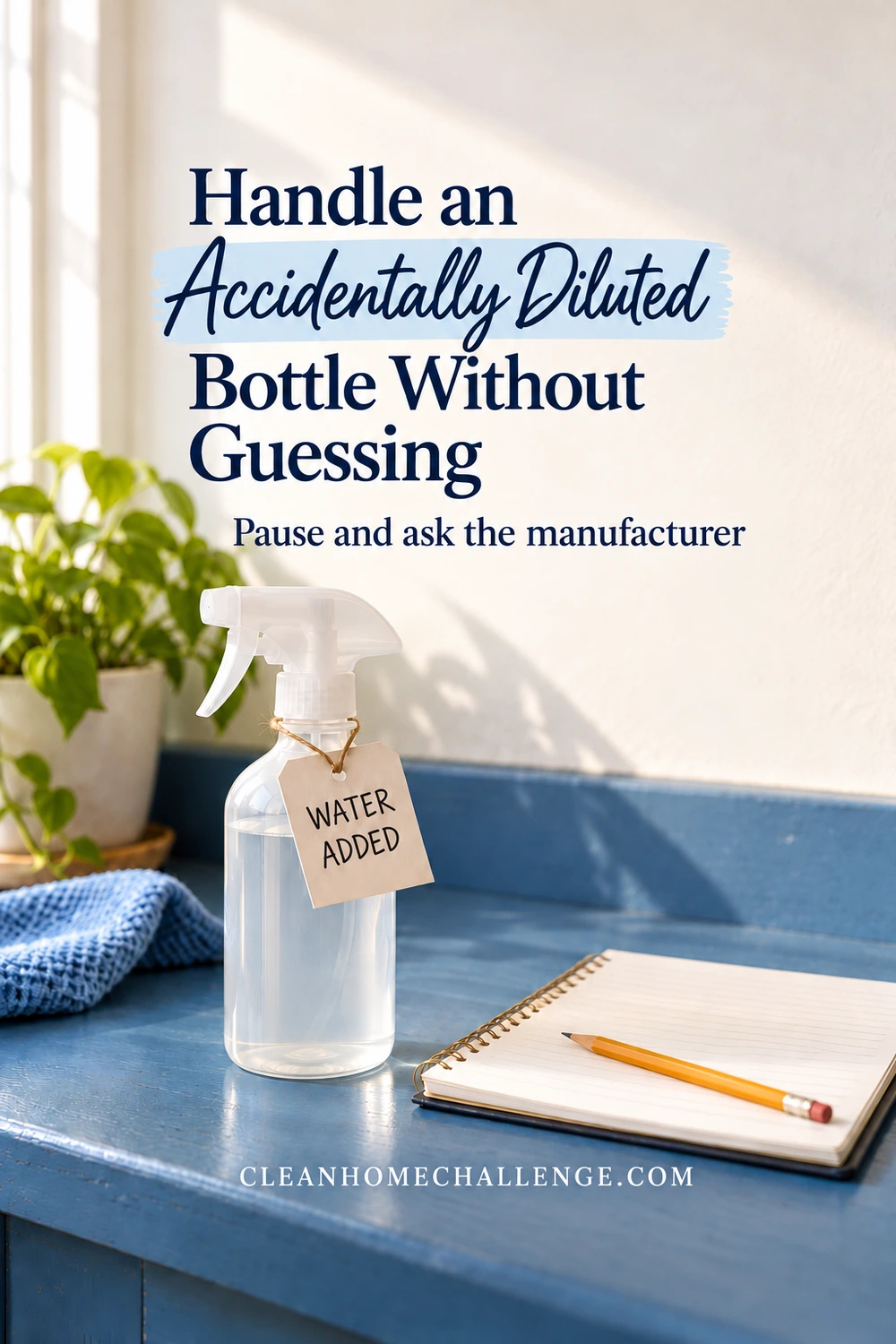
- Secure the bottle. Close it and keep it away from children and pets, separate from products ready for normal use. Preserve the original label and add a clear note that water was added. Do not leave a changed formula looking like an untouched product.
- Write down what you know. Record the exact product, roughly how much remained, how much water was added if known, and when. Be honest if the amounts are uncertain.
- Ask the manufacturer. Use the contact details on the label. Ask whether there is any supported next step for that exact product. Do not treat an online recipe for another formula as the answer.
- Use a correctly prepared alternative for today’s job. If you need disinfection, do not rely on the altered bottle’s original claims. Choose an appropriate product and follow its full directions.
- Follow disposal instructions. Use the product’s label and local household-chemical guidance if the mixture cannot be used. Do not assume every cleaner can go down the sink or into general trash.
Do not add concentrate, bleach, vinegar, alcohol, or another product to try to restore the bottle. Do not pour it into a newly purchased bottle. Do not judge it by shaking, foaming, or sniffing. If a mixture’s contents are unknown, keep it secured and seek product-specific advice rather than experimenting.
What if you already wiped a surface?
Check the surface-care guidance and original product directions. If the altered product was being relied on for disinfection, that process is unverified. Follow appropriate cleaning and disinfection instructions for a correctly prepared, compatible product; do not layer different chemicals on top of each other. Ask the manufacturer how to remove the first product if that is unclear.
An ordinary water-addition mistake is different from a spill, exposure, or accidental mixture of chemicals. If anyone has been exposed or develops symptoms, stop the cleaning task and seek appropriate local medical or poison advice. Keep the original container available to identify the product. Do not use this article as a treatment guide.
Build a Simple Label-Led Cleaning Routine
The easiest approach for a busy home is one that another adult can understand without asking which mystery spray you mixed last week. Keep a small number of suitable, clearly labeled products and store them as directed, secured away from children and pets. Use original containers unless the manufacturer specifically provides a permitted refill or dilution system.
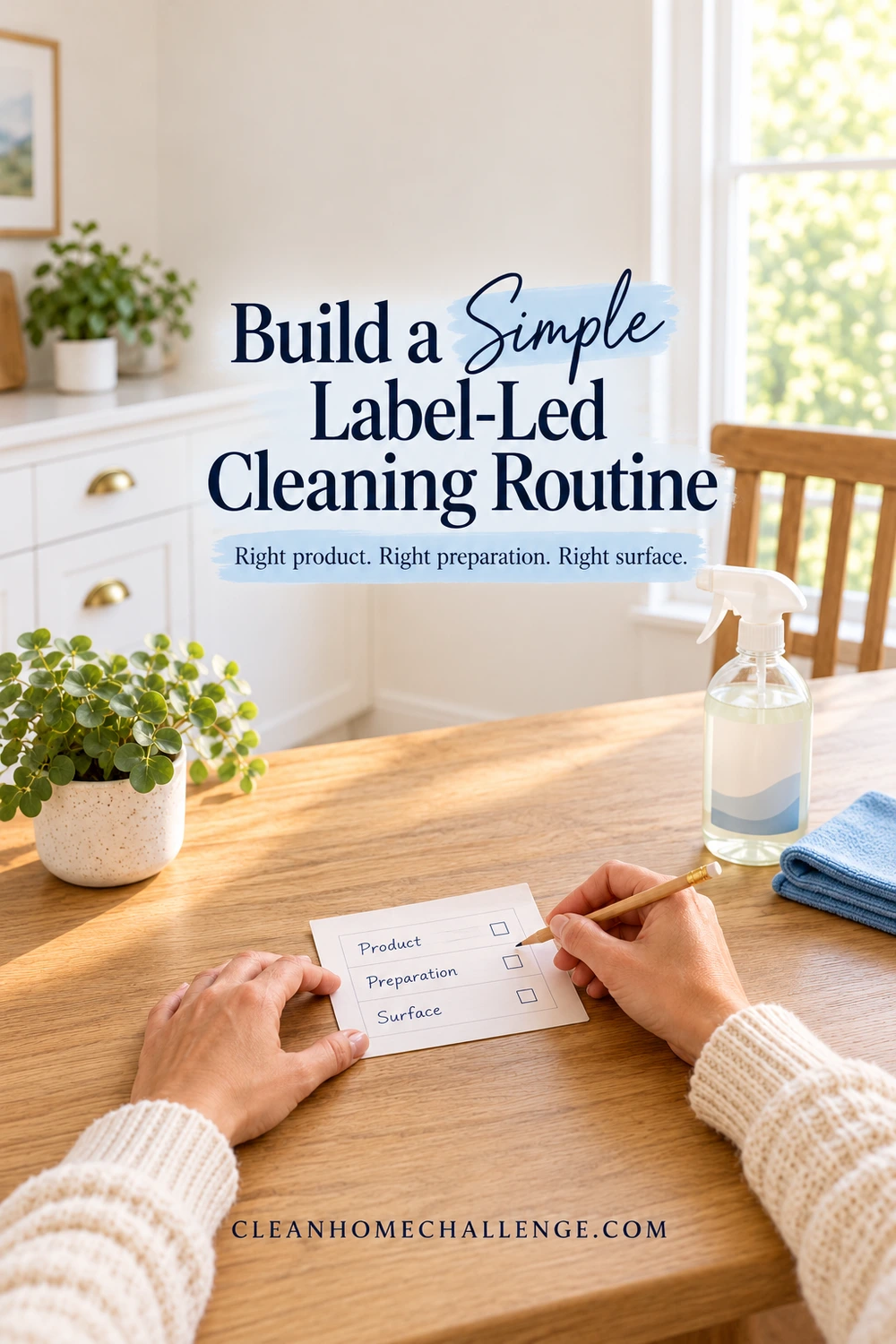
Copyable bottle-check card
Save this with your cleaning plan or copy it into a household note. It is a directions reminder, not a replacement label.
| Check | Write your answer |
|---|---|
| Exact product and version | ____________________ |
| Intended job and surface | ____________________ |
| Ready to use, concentrate, or unclear? | ____________________ |
| Exact preparation directions, if any | ____________________ |
| Required application and contact time | ____________________ |
| Rinse, drying, and surface restrictions | ____________________ |
| Protective equipment and ventilation | ____________________ |
| Storage, use period, and disposal directions | ____________________ |
| Manufacturer contact if unclear | ____________________ |
Before you start, make three checks: right product, right preparation, right surface. When finished, close the container, put it away securely, deal with cloths according to their care instructions, and wash your hands.
If you only have five minutes, check one bottle rather than emptying the entire cleaning cupboard. Confirm its directions, remove any ambiguous handwritten recipe from your household routine, and tell the other adults which product is for which job. Repeat with another bottle next time.
For reducing waste, start by avoiding unnecessary products and using the labeled amount. Choose a clearly identified concentrate only if its measuring and storage routine works for your household. A ready-to-use product can be a sensible choice when it removes measuring errors. Neither format is automatically the best option for every family.
The helpful habit is simple: do not add water to a ready-to-use cleaner unless its own directions permit it for that use. If the formula does not suit you or the surface, choose an appropriate alternative. A short label check is easier to repeat than fixing an uncertain bottle later.
Sources and scope
- CDC: When and How to Clean and Disinfect Your Home, dated January 31, 2025; checked October 20, 2026. Household cleaning context, following preparation directions, contact time, ventilation, and storage.
- EPA: Disinfectant Product Preparation and Sampling SOP MB-22-03. Definitions of ready-to-use and concentrated liquid products; laboratory procedures are not presented here as household instructions.
- EPA: XHC-IA label, registration 1677-249, accepted October 2, 2025. Example of explicit no-dilution directions; not a household product endorsement or transferable recipe.
The bottle-check card and five-minute routine are original practical resources. Product formulas and directions differ. Always use the instructions for your exact product and surface.
CLEANERS CLUBHOUSE
Build a Safer, Simpler Cleaning Routine
Clean confidently with practical guidance that helps you choose sensible products and use them correctly. The Cleaners Clubhouse combines safer cleaning support with realistic routines, worksheets and challenges.