
THIS POST MAY CONTAIN AFFILIATE LINKS. PLEASE READ MY DISCLOSURE FOR MORE INFO.
Some days, the hardest part of cleaning is not the work itself. It is getting started when the room feels too messy, your energy is low, or every task seems connected to five more. The five-minute cleaning rule gives you a much smaller decision: choose one visible job, set a timer for five minutes, and stop when it rings unless you genuinely want to continue.
This is not a race and it is not a promise that your whole home will be clean in five minutes. It is a gentle boundary that makes the first step feel more manageable. The goal is to create a little visible progress without turning a tired day into an all-day cleaning marathon.
Disclosure: This post may contain affiliate links. As an Amazon Associate, Clean Home Challenge earns from qualifying purchases. If you make a purchase through these links, we may earn a small commission at no extra cost to you. This helps us keep creating practical cleaning tips, routines and resources for busy families! 🧽
What the Five-Minute Cleaning Rule Actually Is

The rule is simple:
- Pick one small, specific cleaning job.
- Set a timer for five minutes.
- Work at a comfortable, safe pace.
- Stop when the timer rings, or continue only if you want to.
The important part is the boundary. You are not secretly signing up to clean the entire kitchen once you touch the counter. You are agreeing to five minutes and one clearly defined finish line.
That finish line could be putting toys into one basket, clearing one section of a counter, loading the top rack of the dishwasher, or gathering laundry from one room. A task that is small enough to complete gives your brain a clear endpoint. Even if you do not finish, the five minutes still count because you kept the promise you made to yourself.
Small repeated actions can also become easier to start when they happen in a consistent context. Habit research suggests that repeating an action in the same situation can strengthen the cue-and-response link over time. That does not mean every day will feel effortless, but it does mean a tiny routine can become more familiar with repetition.
Pick One Small Job Before You Start the Timer

“Clean the living room” is too broad for a five-minute reset. “Put the toys into the basket” is clear. Before you start the timer, name the one thing you will work on.
Try a finish line such as:
- Put away the shoes by the door.
- Clear one bathroom counter.
- Load five dishes.
- Fold the clean towels.
- Collect trash from one room.
- Wipe one kitchen counter.
- Return books to one shelf.
If the job has several steps, shrink it again. Instead of “do the laundry,” gather one load. Instead of “organize the pantry,” put away the groceries on one shelf. You can always choose another five-minute job later, but you do not need to decide that now.
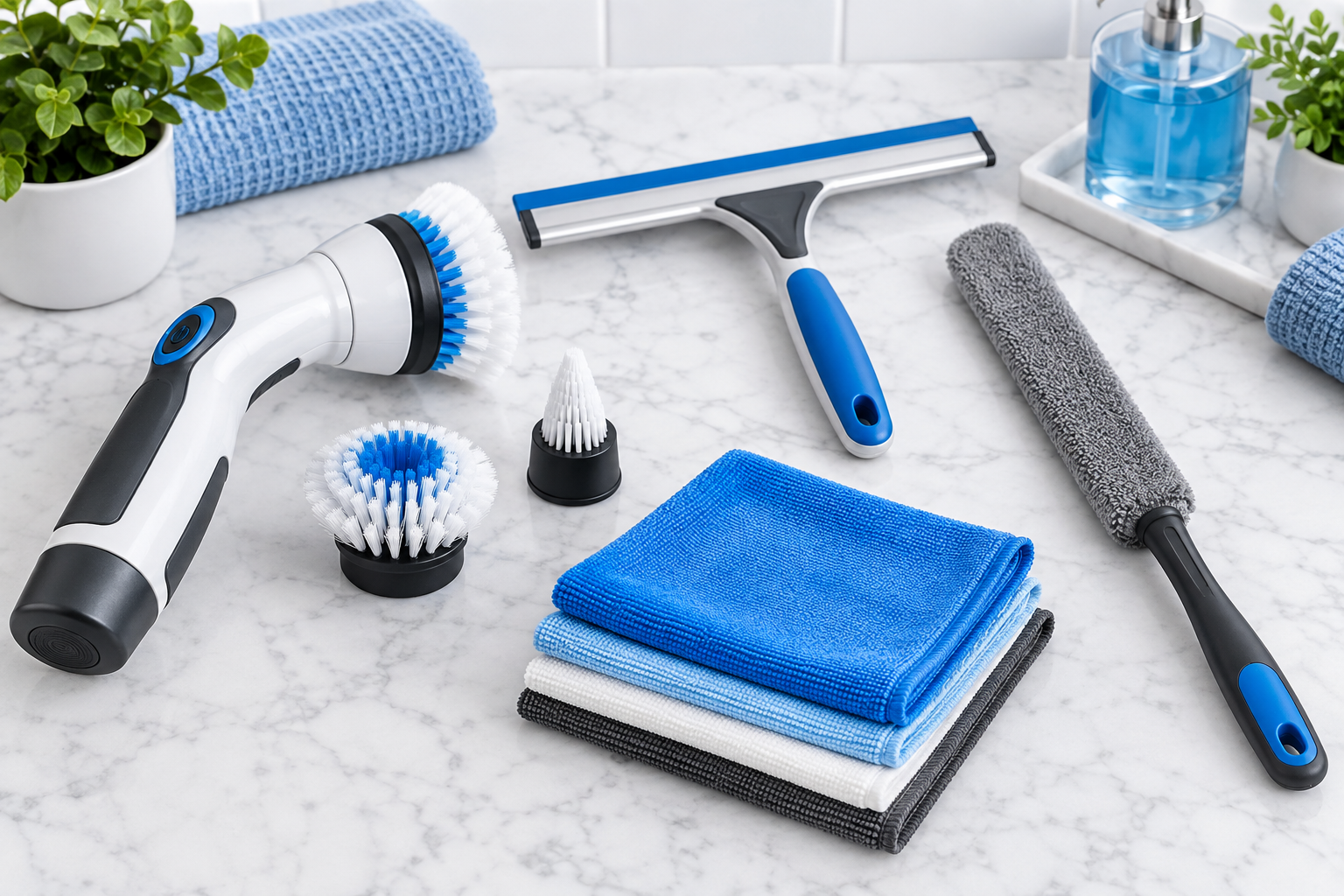
Keep supplies close to the task so setup does not use the entire timer. A small basket with a microfiber cloth, trash bag, and room-safe cleaner can help, but only use products according to their labels. Never mix cleaning products, and use ventilation or protective equipment when the label calls for it.
A Five-Minute Reset for Every Room

The best five-minute jobs make a visible difference without requiring a complicated system.
Kitchen: Load the dishwasher, clear one counter, wipe the table, or return food to the pantry.
Living room: Put soft items back in place, gather toys, recycle papers, or collect cups and dishes.
Bedroom: Put dirty clothes in the hamper, clear the nightstand, fold three items, or make the bed.
Bathroom: Put products back in one tray, wipe the sink, replace hand towels, or empty the trash.
Entryway: Pair shoes, hang bags, sort the day’s mail, or straighten one basket.
Family zone: Ask each person to choose one tiny task. One child can gather blocks while another returns books to a shelf. Keep the tone light and stop together when the timer ends.
Choose actions that fit the room as it is today. If the kitchen needs a full clean, a five-minute counter reset can still make breakfast easier tomorrow. Small progress does not have to solve the whole problem to be useful.
How to Use a Visual Timer Without Racing

A visual timer can make the boundary easier to trust because you can see the remaining time. Place it where you can glance at it, choose five minutes, and work at a normal pace.
Do not try to beat the timer. Rushing with wet floors, sharp objects, heavy loads, or cleaning products creates unnecessary risk. The timer is there to limit the session, not to pressure you.
If five minutes feels like too much, set two minutes. If alarms feel stressful, use a quiet visual timer, a familiar song, or the end of a short podcast segment. The structure matters more than the exact device.
For children, keep the task age-appropriate and supervise as needed. Young helpers can place toys into a basket or match socks, while adults handle chemicals, sharp tools, breakable items, and anything requiring climbing.
Stop at Five Minutes—or Continue Gently

When the timer rings, pause. Look at what changed. Then choose one of two valid options:
- Stop and enjoy the progress.
- Continue because you have the energy and want to, not because the five minutes “didn’t count.”
Stopping is what makes the rule believable on low-motivation days. If five minutes always turns into an hour, you may start avoiding the timer because it no longer feels like a real limit.
If you want to continue, set another short timer or choose a second small finish line. Keep the decision separate from the first round. That way, extra effort feels optional instead of compulsory.
Before you leave, put away the cloth or supplies you used. A 20-second closeout prevents the cleaning tools from becoming the next bit of clutter.
Make the Rule Easier on Low-Energy Days

Low energy calls for smaller expectations, not harsher self-talk. You can adapt the rule without abandoning it.
- Sit down while folding three items.
- Use a basket to gather things without walking back and forth.
- Choose a task at waist height instead of bending or reaching.
- Work in the room you are already in.
- Pick a dry tidying task if getting out cleaning products feels like too much.
- Stop after one minute if that is today’s realistic limit.
If pain, dizziness, breathing difficulty, or another health concern makes cleaning unsafe, stop and rest. The five-minute rule is a housekeeping routine, not medical advice or a measure of your worth.
It can also help to separate “tidying” from “cleaning.” Tidying means returning items to their places. Cleaning means removing dirt or germs. On a depleted day, you may only have energy for one category. Choosing either one still improves the space.
Turn Five Minutes Into a Repeatable Cue

The rule is easier to remember when it follows something that already happens. You might do a five-minute reset after morning coffee, before the school run, after dinner, or before you brush your teeth at night.
Keep the cue specific: “After I put my coffee cup in the sink, I will clear the breakfast counter for five minutes.” A precise cue removes one more decision from the routine.
Use the same small basket, timer, or playlist if it helps the routine feel familiar. You do not need a perfect streak. If you miss a day, return to the cue the next time it appears. Habit research often emphasizes consistency over intensity, and the original UCL research on everyday behaviors found that automaticity developed gradually rather than overnight.
Track the routine only if tracking encourages you. A simple check mark can be satisfying, but a complicated chart can become another obligation. The useful question is not “Did I do enough?” It is “Did this make starting easier?”

CLEANERS CLUBHOUSE
Turn Small Daily Habits Into a Cleaner Home
Make cleaning feel more achievable by sharing simple routines and building habits that stick. The Cleaners Clubhouse includes the 7-Day Daily Habits Bootcamp, printable support and motivating monthly challenges.
A Simple Five-Minute Routine to Keep

Here is a repeatable sequence for days when you do not want to plan:
- Choose one zone. A counter, basket, chair, sink, or patch of floor is enough.
- Choose one action. Put away, collect, wipe, fold, or load.
- Set five minutes. Use a visible timer and keep a comfortable pace.
- Stop and reset your supplies. Put the cloth, basket, or cleaner away.
- Notice the win. Name the visible change before you move on.
For example: choose the coffee table, gather everything that belongs elsewhere into one basket, stop at five minutes, and place the basket by the doorway for your next pass. You have not cleaned the whole living room, but you have made the surface usable and created a clear next step.
That is the heart of the five-minute cleaning rule. It lowers the entry point, protects your energy, and gives you a way to care for your home without demanding a perfect day. Five calm minutes can be enough for today.
Sources
- American Cleaning Institute: Fast and Effective Home Cleaning Guide
- Centers for Disease Control and Prevention: When and How to Clean and Disinfect Your Home
- National Institutes of Health News in Health: Creating Healthy Habits
- University College London: How long does it take to form a habit?
- Gardner et al.: Making health habitual