
THIS POST MAY CONTAIN AFFILIATE LINKS. PLEASE READ MY DISCLOSURE FOR MORE INFO.
If keeping the house tidy feels like a job you have to restart every morning, the problem may not be effort. It may be that too many cleaning decisions still depend on memory, energy and motivation. Daily cleaning habits make those decisions smaller. A familiar cue starts a tiny task, the task creates a visible win, and repetition gradually makes the sequence feel more automatic.
That change usually takes longer than the popular “21 days” promise. Habit research has found wide differences between people and behaviors, with one well-known study reporting an average of 66 days to reach strong automaticity. The encouraging part is that you do not need a perfect streak. What matters most is repeating a manageable action in a stable context.
The goal is not to clean the whole house every day. It is to build a few small housework habits that stop mess from gathering momentum.
Disclosure: This post may contain affiliate links. As an Amazon Associate, Clean Home Challenge earns from qualifying purchases. If you make a purchase through these links, we may earn a small commission at no extra cost to you. This helps us keep creating practical cleaning tips, routines and resources for busy families! 🧽
Choose One Tiny Habit to Start

Begin with one action that takes two minutes or less. Wipe the kitchen counter after breakfast, put shoes in the basket when you come home, or load cups into the dishwasher after the evening drink. A tiny task is easier to repeat on busy days, which gives the behavior more chances to become familiar.
Choose the place that causes the most daily friction. If clutter by the door makes mornings harder, start there. If crumbs and sticky spots make the kitchen feel untidy, choose one counter. Avoid starting with a vague goal such as “clean the kitchen.” Your brain needs a clear finish line.
Write the habit in a simple sentence: “After I finish breakfast, I will wipe this counter.” That wording identifies the cue, the action and the location. It also makes success easy to recognize.
Choose a habit that leaves an obvious result. A cleared chair, an empty sink, or shoes lined up by the door gives your brain quick feedback that the action is finished. If you cannot tell exactly when the task is done, make it smaller and more specific.
Attach Cleaning to a Reliable Daily Cue

A cue is something that already happens with little thought. Finishing your morning coffee, brushing your teeth, putting a child’s lunchbox away, or turning on the dishwasher can all work. Researchers call this context consistency: doing the same behavior in the same situation helps the action become easier to start.
Pair one cue with one task. For example:
- After the breakfast dishes go into the dishwasher, wipe the main counter.
- After brushing your teeth at night, wipe the bathroom sink.
- After hanging up your keys, put shoes and bags in their homes.
- After starting the dishwasher, sweep the busiest part of the kitchen floor.
Pick a cue that happens at the right place and time. “After dinner” may be too broad; “after I press Start on the dishwasher” is specific. If the cue is often skipped, choose another one rather than blaming yourself.
Avoid cues that compete with urgent family moments. The school-run rush may happen every day, but it is rarely a calm place to add a new task. A cue after the rush, such as hanging up your keys when you return, gives the habit a better chance to happen consistently.
Make the First Version Almost Too Easy

The first version of a habit should fit your hardest ordinary day, not your best one. Clear one surface, fold three blankets, or put away five items. Stopping after the tiny version still counts. You are practicing the start, and starting is the part you want to make automatic.
If you naturally keep going, that is a bonus. Do not quietly turn the minimum into a bigger rule. When “wipe one counter” becomes “clean the entire kitchen,” the habit becomes harder to repeat and easier to avoid.
A useful test is whether you can do the action when you are tired, running late, or managing interruptions. If not, shrink it again. The smallest repeatable behavior is more valuable than an ambitious routine you abandon after three days.
Prepare the Tools Before You Need Them

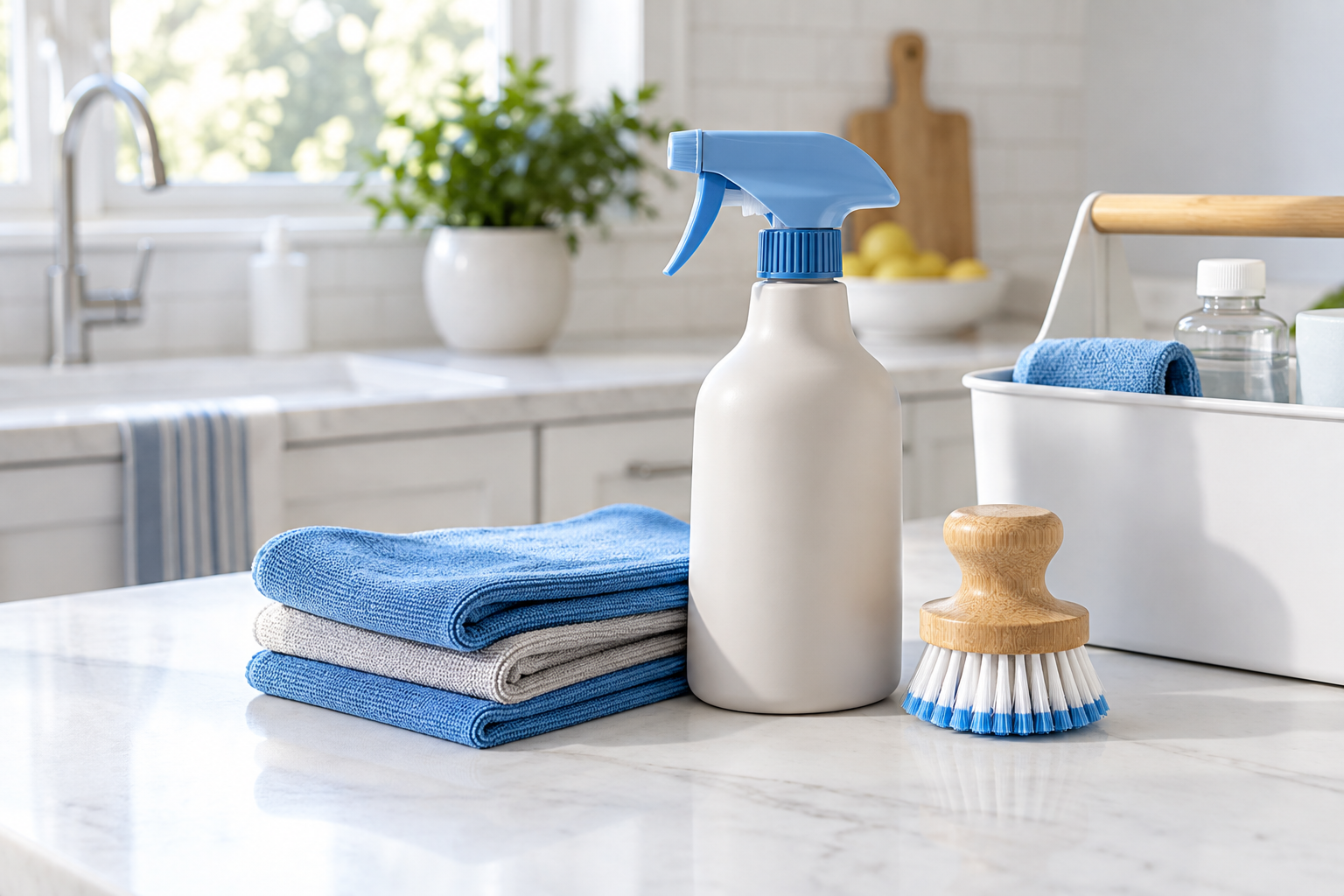
Friction can stop a habit before it starts. If the cloth is in another room or the basket has no clear home, a two-minute task becomes a scavenger hunt. Store the necessary tool where the action happens.
Keep a clean microfiber cloth near the kitchen sink, a small hamper where clothes are usually dropped, or a dry duster in the room where you use it. A portable caddy can help with tools that move between rooms. Store cleaning products safely, follow their labels, and keep them out of children’s reach.
Preparation should be simple and unobtrusive. You do not need a collection of gadgets. You need the right cloth, basket, or brush to be easy to see and easy to return.
Use a Simple Habit Loop You Can See

A practical cleaning habit has three parts: a cue, a quick action and a satisfying finish. The cue might be a mug going into the dishwasher. The action is wiping the sink. The finish is seeing the clear surface and hanging the cloth back in place.
Make the loop visible while it is new. Put a small note near the cue, set a two-minute timer, or mark a check on a weekly card. These are temporary supports, not tests of character. Once the cue reliably starts the action, you can remove the reminder.
Keep the reward immediate and modest. Pause to notice the clean counter, enjoy turning off the timer early, or make the next cup of tea in a calmer space. The visible result helps the behavior feel worthwhile now, instead of only promising a cleaner home later.
Digital reminders can be useful for the first week, but they should point to the same real-world cue. A phone alert that appears at random may be dismissed. A small reminder beside the coffee maker works because it is present where the action belongs.
Recover From Missed Days Without Starting Over

Missing a day does not return you to zero. In the UCL habit study, a single missed opportunity did not materially derail the habit-building process. Life changes, children get sick, work runs late, and energy dips. The useful response is to return at the next normal cue.
Avoid catching up with an oversized cleaning session. If yesterday’s sink wipe did not happen, do today’s tiny version after today’s cue. A calm restart protects the association you are building and prevents guilt from becoming another barrier.
If the habit keeps disappearing, investigate the design. Is the cue inconsistent? Is the action too large? Is the tool hard to reach? Change one element and try again. A habit that needs redesign is not a personal failure.
Look for patterns rather than keeping score. If the habit works on weekdays but not weekends, give the weekend version a different cue. If it works only when you are home alone, shrink it so it can survive interruptions.
Add One New Habit Only When the First Feels Easy

Give the first behavior time to settle before stacking on more. You are ready to add a second habit when the first starts with little debate on most days. That may take several weeks or longer, and the timeline can differ for every action.
Add the next smallest task beside an existing success. After wiping the breakfast counter feels normal, you might water one plant or put stray dishes away. Keep the original cue clear and make sure the sequence still fits the time you actually have.
If the routine begins to feel heavy, remove the newest step. A short rhythm you can maintain is better than a complicated checklist that makes you avoid the whole routine.
CLEANERS CLUBHOUSE
Make Your Cleaning Routine Easier to Follow
Stop wondering what to clean next. Inside the Cleaners Clubhouse, you’ll get a practical 12-month cleaning calendar, printable worksheets and monthly challenges to help you keep moving without trying to do everything at once.
Build a Five-Minute Evening Reset

Once one or two tiny habits feel familiar, bring them together in a five-minute evening reset. This is not a deep clean. It is a gentle closing routine that makes tomorrow easier.
Try this order:
- Return cups and dishes to the kitchen.
- Straighten sofa cushions and fold one blanket.
- Put shoes, bags and toys into their usual baskets.
- Wipe the most-used kitchen surface.
- Set out anything the household needs in the morning.
Use a timer and stop when it ends. Invite family members to own one visible task rather than asking everyone to “help clean.” A child can return shoes to the basket while an adult wipes the counter. Clear ownership makes the routine easier to repeat without constant reminders.
Keep the evening reset flexible. On a hard night, choose only the step that will help most in the morning. On an easier night, complete all five. The cue and the familiar order matter more than finishing every item perfectly.
Keep the Rhythm Realistic
Daily cleaning habits work because they reduce the number of decisions between seeing a small mess and handling it. Start with one cue and one task, keep the first version tiny, and make the tools easy to reach. When you miss a day, return at the next cue instead of starting over.
Over time, those small actions can create a home that feels easier to reset. The change is not dramatic on any one day. It is the quiet result of making the useful action the easy, familiar next step.
Trusted Sources
- University College London: How long does it take to form a habit?
- Systematic review and meta-analysis of health behavior habit formation
- Habit formation and context stability research