
THIS POST MAY CONTAIN AFFILIATE LINKS. PLEASE READ MY DISCLOSURE FOR MORE INFO.
To remove smoke smell from a house, start with the source, then work through the surfaces and fabrics holding the odor. A scented candle might change what you notice for a while, but it will not clean the curtains, sofa, or walls.
This guide gives you a manageable order for cleaning a room after a small, resolved smoke incident. It also explains when an ordinary household reset is the wrong approach. Fire damage, ash, soot, repeated indoor smoking, and an unexplained burning smell need more care than a quick deodorizing trick.
You do not need to wash everything at once. Choose one safe, useful first step, match each cleaning method to the material, and reassess after everything has dried. Most importantly, a room smelling better does not prove that smoke contamination has been removed.
Disclosure: This post may contain affiliate links. As an Amazon Associate, Clean Home Challenge earns from qualifying purchases. If you make a purchase through these links, we may earn a small commission at no extra cost to you. This helps us keep creating practical cleaning tips, routines and resources for busy families! 🧽
Check the Smoke Source Before You Start
Before reaching for a spray, decide what happened. A throw that picked up a little odor from a brief cooking mishap is a different job from a sofa used for years in a smoking household.
Deal with an active or unknown problem first
If there is active smoke, an alarm, a suspected electrical problem, or a burning smell you cannot explain, stop cleaning and follow local emergency guidance. Do not cover the smell or stay in the room trying to locate it by sniffing appliances. If you suspect a fire, get out and contact emergency services from a safe place.
Recurring smoke from a fireplace or stove also needs its cause checked by a qualified professional. Repeatedly washing the soft furnishings will not fix an appliance, chimney, or ventilation fault.
Carbon monoxide has no smell, so a fading smoke odor cannot rule it out. If a CO alarm sounds or you suspect CO poisoning, get outside immediately and call emergency services. Do not reenter until responders allow it. The Consumer Product Safety Commission explains what to do.
After a house fire or major wildfire event, return only when the authorities say it is appropriate. Ask about professional smoke and fire restoration before disturbing soot-covered belongings. The U.S. Fire Administration’s after-fire guidance is a useful starting point.
Separate tobacco residue from an ordinary stale smell
Tobacco residue can remain in dust, on surfaces, and inside materials after smoking stops. This is often called thirdhand smoke. Longstanding cigarette odor in a rental, secondhand sofa, or previously smoked-in home may need a more detailed assessment and decisions about porous belongings.
A study of cleaning in smoke-affected homes found that the treatment reduced some nicotine markers without fully or permanently removing contamination. That is a reason to avoid promises such as “one wash makes it safe.” The Thirdhand Smoke Resource Center explains the limits of household cleanup.
For ongoing indoor smoking, the most useful change is a smoke-free home. Opening windows or running a purifier does not eliminate secondhand smoke exposure, according to the CDC.
Check outdoor conditions before opening windows
Fresh air can help after a minor indoor smoke incident when the air outside is cleaner. During wildfire smoke or another outdoor pollution episode, opening everything can bring more pollution in. Check AirNow in the U.S., or your local air-quality service elsewhere, and follow local instructions. When outdoor air is cleaner and opening windows is safe, open them to ventilate. Close them again if outdoor smoke or pollution returns.

Gather Supplies and Set Up the Room
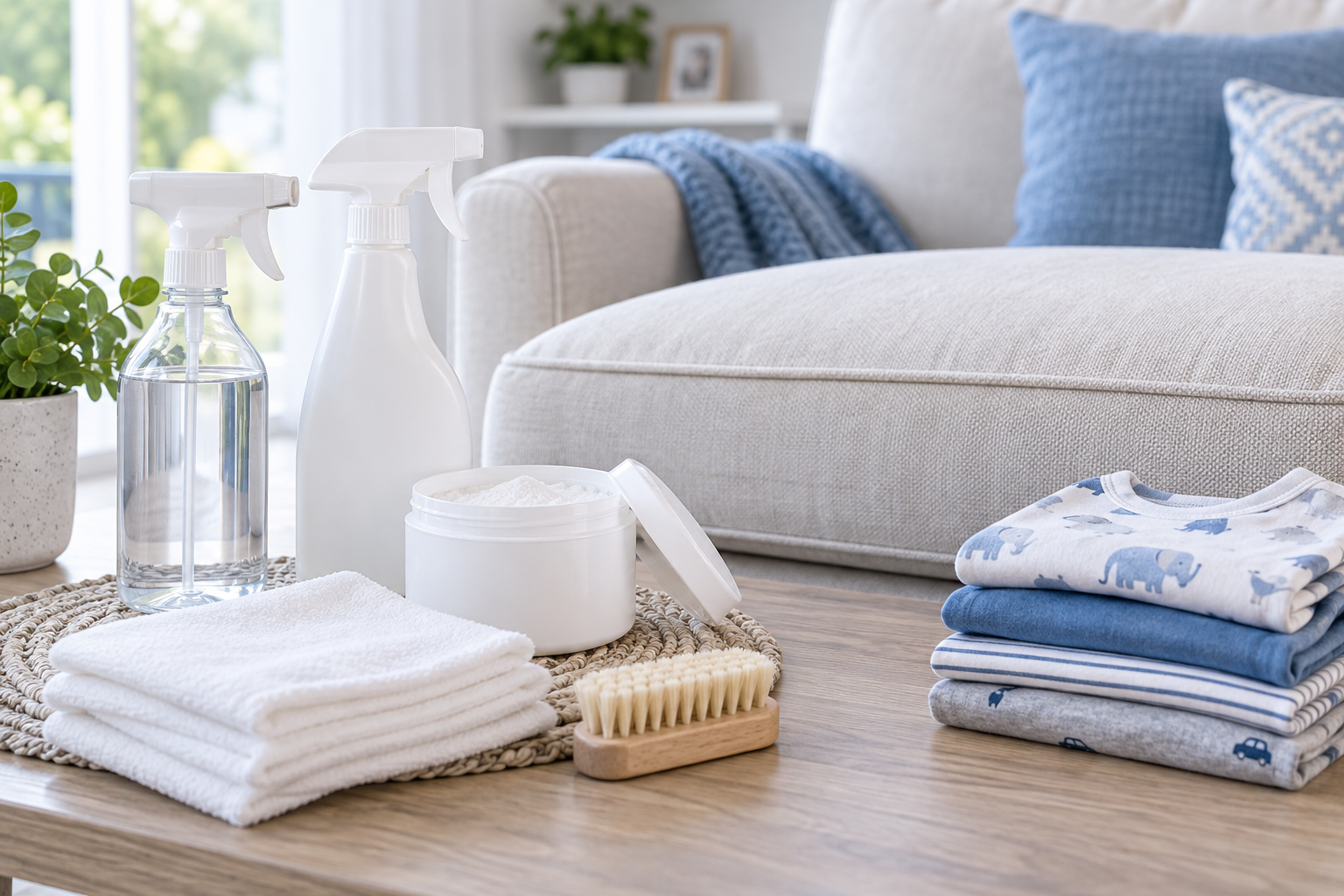
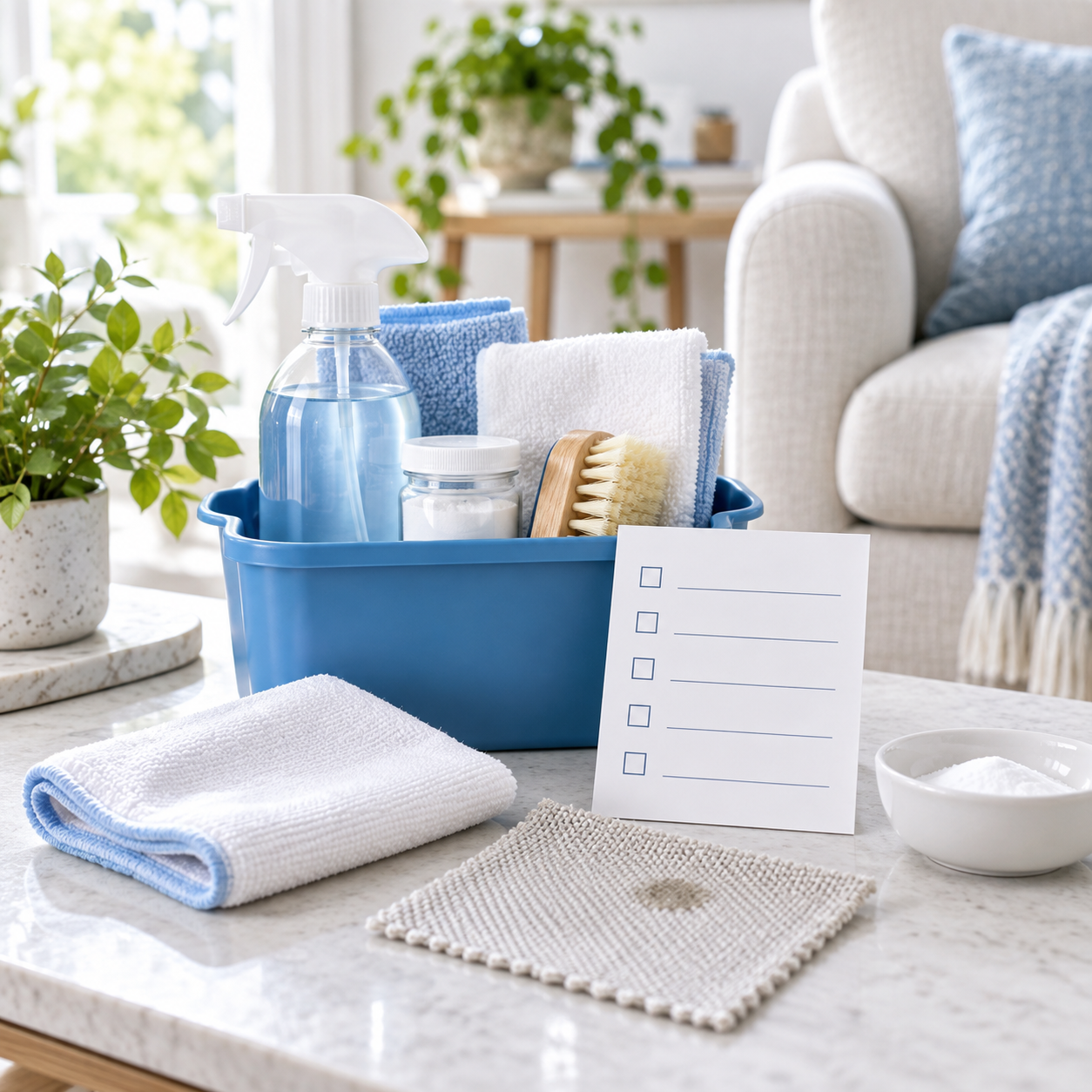
For a mild lingering odor with no fire debris or heavy contamination, keep your kit simple:
- Several clean, soft cloths
- A small bucket or bowl for the surface-care method you choose
- A surface-compatible cleaner, used according to its label
- Laundry detergent and a basket for washable fabrics
- Gloves if the product label recommends them
- A suitable vacuum and the attachments approved for your furnishings
- A drying rack or another care-label-approved drying space
You may already own everything you need. Avoid buying a strong deodorizer before you have checked the care labels and identified which items actually need attention.
Read the room in layers: washable fabrics, hard surfaces, upholstery, and flooring. Make three short lists: “I can clean this,” “I need to check the label,” and “I need advice.” This keeps one uncertain sofa from holding up an easy load of washable throws.
Keep children and pets away from the cleaning area, open containers, and drying materials. Leave a clear route through the room. Keep cleaning products in their original labeled containers and close them between tasks. Never mix cleaners, even when each one seems familiar.
Follow each product’s ventilation and protective-equipment instructions. If you cannot provide the required ventilation because outdoor air is smoky, postpone that treatment or ask for help rather than using it in a closed room.
For ordinary dust on a lightly affected furnishing, use its approved vacuum attachment gently. Fire ash and soot are a separate situation: an ordinary household or shop vacuum can redistribute fine ash. Do not dry-sweep or brush fire residue into the air. Follow the EPA’s specific wildfire cleanup guidance, including equipment and protection advice, rather than applying the routine below to fire debris. Children, older adults, and people with heart or lung conditions should not participate in wildfire-ash cleanup.
If you only have ten minutes, use that time to check the source, read two or three care labels, and choose one washable item. This is a planning suggestion, not a promise that ten minutes of cleaning removes the odor or makes the room safe.

Clean Hard Surfaces Without Spreading Residue
Once you have established that routine household cleaning is appropriate, clean accessible hard surfaces that may be holding residue. Think about side tables, shelves, washable doors, window frames, and the outside of furniture. Use the care instructions for each finish.
Do not automatically apply a wall-cleaning mixture to unfinished wood, natural stone, wallpaper, leather, or electronics. A cleaner suitable for one surface can mark another. Follow the product label, test a small inconspicuous area where appropriate, and let the test dry before judging it.
Work in small sections
- Move washable items out of the way so you are not putting them back onto an uncleaned surface.
- Prepare only the cleaning solution specified by the surface or product instructions. More concentrate is not a shortcut.
- Wring the cloth well. Wipe gently without flooding joints, edges, or seams.
- Fold to a clean part of the cloth frequently. Replace the cloth and water when they become dirty instead of carrying the same residue around the room.
- Remove cleaner residue if the label requires it, then dry the surface as its care instructions allow.
Keep liquid out of outlets, switches, lamps, and electronic openings. Do not spray a room indiscriminately or dismantle electrical fittings for an odor cleanup. Accessible exterior dusting or wiping should follow the equipment maker’s directions.
Be gentle with painted walls
Paint finish matters. Flat and matte coatings can mark more easily, and recently painted walls may need time to cure before washing. Sherwin-Williams recommends a gentle approach with nonabrasive cloths, restrained moisture, and a test area in its painted-wall cleaning guide. Follow the directions for your actual paint.
Stop if color transfers, the sheen changes, or the finish softens. Heavy yellow-brown tobacco staining, residue across several rooms, or odor that persists in building materials deserves professional advice. Repainting over the problem is not evidence that contamination underneath has been removed.
There is no need to disinfect every surface simply because it smells smoky. Disinfectants target particular microbes when used correctly; they do not provide a general solution for smoke chemicals.

Wash Curtains, Throws, and Removable Covers
Fabrics deserve their own pass through the room. Start with items whose care instructions clearly allow washing: perhaps a throw, washable curtain, cushion cover, or blanket. Check each one rather than treating similar-looking fabrics as identical.
A zipper does not mean a sofa cover is machine washable. Some covers are removable for manufacture or repair, and the upholstery instructions may require them to remain in place. Lined curtains, velvet, structured fabrics, and dry-clean-only items need the treatment their labels specify.
A practical laundry sequence
- Read the wash and drying instructions before removing hooks, unzipping covers, or choosing a machine setting.
- Take off hardware only as the manufacturer directs. Keep small parts together so they are easy to replace later.
- Give the item enough room to move in the machine. Avoid packing a bulky throw into an overloaded drum.
- Use the appropriate detergent dose and a permitted wash temperature. The CDC’s household cleaning guidance emphasizes care instructions and complete drying for washable soft furnishings.
- Dry the item thoroughly using its allowed method. Do not return damp cushions or folded throws to the room.
- Reassess when the fabric is dry. If an odor remains, check the care guidance before repeating a treatment or increasing its strength.
Wash affected items separately from clean household laundry when that makes the job easier to manage. Keep a separate basket for items awaiting treatment so they do not get mixed back in by accident. Do not shake ash- or soot-covered textiles through the house; those belong in the fire-cleanup assessment.
Outdoor drying is an option only when the label permits it and outdoor air conditions are suitable. During a smoke event, an outdoor line can expose clean fabrics again. Indoors, spread items out and allow adequate drying space.
For a busy day, one complete wash-and-dry cycle is more useful than stripping every curtain and leaving a pile of damp fabric. Leave heavy curtains in place until you have help and a safe way to remove them. Avoid balancing on a chair or overreaching with a wet armful of fabric.

Treat Upholstery and Carpet With Care
A sofa can hold odor in its fabric and deeper filling, so a quick surface spray may not reach the cause. Start by finding the care code and reading the manufacturer’s instructions. If the tag is missing, contact the maker or ask a qualified upholstery cleaner before applying liquid.
Understand the upholstery code
Ashley’s furniture care guide describes these common codes:
- W: use an appropriate water-based upholstery cleaner within the item’s directions.
- S: use the specified solvent-based approach, not water. A qualified cleaner is the sensible choice for a smoke-odor problem.
- WS or SW: certain water-based or solvent-based methods may be allowed. The actual product and furniture instructions still apply.
- X: vacuum or lightly brush as directed; do not apply a liquid cleaner.
The code is a starting point, not permission to soak a cushion, put the cover in the washer, or use a steam cleaner. Treat the whole instruction label as the authority.
Keep moisture controlled
For an approved DIY treatment, test a concealed area and check it after drying. Apply only the amount the cleaner directions specify, work gently, and prevent excess moisture entering the filling. Avoid hard scrubbing, which can disturb the fabric texture or spread a mark.
Allow the upholstery to dry completely before replacing cushions, throws, or protective covers. If drying is slow, do not keep adding treatments on top. A persistent smell may come from deeper material, and more liquid can create a second problem.
For leather, suede, antique upholstery, or valuable furnishings, seek item-specific advice. Do not assume a fabric product is also suitable for leather or its finish.
Give carpet and rugs their own care check
For the mild-odor scenario, vacuum according to the carpet or rug manufacturer’s instructions, using the right brush setting and attachment. A delicate rug may need a different approach from ordinary wall-to-wall carpet.
Professional cleaning can be a useful next step when ordinary care does not resolve the problem. Shaw’s carpet care guidance includes manufacturer-appropriate cleaning and professional care; your rug’s fiber, backing, and construction still govern what is suitable.
Avoid soaking the carpet or treating every rug with a rented extractor. Odor can involve the pad or material underneath, especially after longstanding tobacco use or a fire. Ask the professional what can reasonably be cleaned, what remains uncertain, and whether replacement should be considered. Do not donate an affected item while concealing its smoke history.

Use Air Cleaning Without Hiding the Problem
Air cleaning can support source removal and surface cleaning, but it cannot wash a sofa or remove all deposits from a wall. Choose equipment for the actual problem rather than assuming every filter treats every part of smoke.
A HEPA filter targets particles. The particle clean air delivery rate, or CADR, should suit the room size, but that number does not measure gas removal. Some gaseous pollutants and odors need media such as activated carbon, and a substantial amount of that media is more useful than a token layer. No household filter removes every pollutant.
The EPA’s home air-cleaner guide explains those distinctions. Place the unit with clear airflow, follow its instructions, and replace filters as directed. Check system compatibility before changing HVAC filter types. A filter that restricts the system is not an improvement simply because its rating is higher.
Skip ozone and scented cover-ups
Do not use a DIY ozone generator to deodorize the room. Ozone can harm the lungs and can react with indoor chemicals to create other irritating pollutants. Leaving the room empty and airing it out afterward is not a suitable household workaround. See the EPA’s ozone-generator guidance.
Candles, incense, perfume sprays, and scented oils are also poor substitutes for finding and cleaning the source. During wildfire smoke episodes, avoid adding more indoor particles. The EPA’s wildfire indoor-air guidance explains when to keep polluted outdoor air out and when ventilation can help.
What about vinegar or baking soda?
Neither is a universal room or upholstery treatment. Vinegar can damage some finishes. Check the textile and vacuum instructions before using any cleaning powder. Bowls of pantry ingredients do not replace cleaning smoke-affected surfaces and fabrics. Do not combine vinegar and baking soda expecting a stronger smoke-removal cleaner, and never combine bleach with other cleaners.
There is no reliable one-size-fits-all purifier runtime, number of washes, or overnight trick for this job. The source, exposure history, materials, and extent of contamination all matter.

Build a Manageable Reset and Know When to Get Help
For a minor, resolved incident, split the reset into complete tasks rather than trying to finish every surface in one exhausting session.
First session: set up and start one useful job
- Confirm that the smoke source has stopped and routine cleaning is appropriate.
- Check outdoor air conditions before ventilating.
- Read the labels on the most affected fabrics and furniture.
- Start one washable load, or clean one compatible hard-surface area.
- Put a drying plan in place before making anything wet.
Next session: follow the remaining materials
Finish the hard surfaces, treat the other washable items, and follow the correct upholstery and floor-care instructions. Keep untreated fabrics separate from clean ones. If you need a professional for the sofa, you can still complete other appropriate tasks without experimenting on it.
Reassess after drying
Notice whether the odor is coming from one item, returning when a room warms up, or arriving again from an outside source. These observations can help you explain the problem to a cleaner, property manager, or repair professional. They are not a home safety test.
If the room keeps smelling smoky, ask for help rather than cycling through stronger products. Useful reasons to get an assessment include:
- A house fire, wildfire ash, visible soot, or smoke-damaged building materials
- Repeated or longstanding indoor tobacco exposure
- An unexplained or recurring burning smell
- A sofa, mattress, rug, or other porous item with persistent deep odor
- A delicate or unknown material whose safe treatment is unclear
- Irritation or other symptoms that make remaining in the space a concern
For health concerns, move away from the exposure and seek appropriate medical advice. For a medical emergency such as difficulty breathing or severe chest pain, call 911 in the U.S., or your local emergency number elsewhere. For fire-related cleanup, follow local public-health and recovery instructions. Los Angeles County’s recovery guidance illustrates why assessment needs to consider the property as a whole rather than rely on a single smell check or test result.
To reduce repeat work, keep indoor smoking out of the home, address appliance or fireplace faults, and clean washable items as their care instructions recommend. Add an occasional check of curtains, sofa care labels, and air-cleaner filters to your existing room routine. You do not need to turn odor prevention into a daily deep clean.
Start with the part of the job you can safely finish today, and leave specialist problems to the right person. A clear plan can make the work feel more manageable, one finished task at a time.

CLEANERS CLUBHOUSE
Get Step-by-Step Help With Tricky Cleaning Jobs
When a stain, smell or stubborn cleaning problem has you stuck, a clear plan makes all the difference. The Cleaners Clubhouse gives you practical guidance, useful printables and routines you can actually follow.