THIS POST MAY CONTAIN AFFILIATE LINKS. PLEASE READ MY DISCLOSURE FOR MORE INFO.
When clutter keeps returning, it is easy to assume you need a free weekend and a burst of motivation to fix it. Most busy families do not have either. A smaller method works better: choose one finishable zone, give it 20 focused minutes, and stop before the job spreads.
The 20-minute decluttering method is not a race to remove as much as possible. It is a way to make clear decisions inside a safe boundary, create one useful result, and move unwanted items toward the door.
This guide gives you the exact routine, a seven-day plan, quick areas to tackle, and a realistic way to involve the family without expecting a perfect home.
Disclosure: This post may contain affiliate links. As an Amazon Associate, Clean Home Challenge earns from qualifying purchases. If you make a purchase through these links, we may earn a small commission at no extra cost to you. This helps us keep creating practical cleaning tips, routines and resources for busy families! 🧽
What the 20-Minute Decluttering Method Is
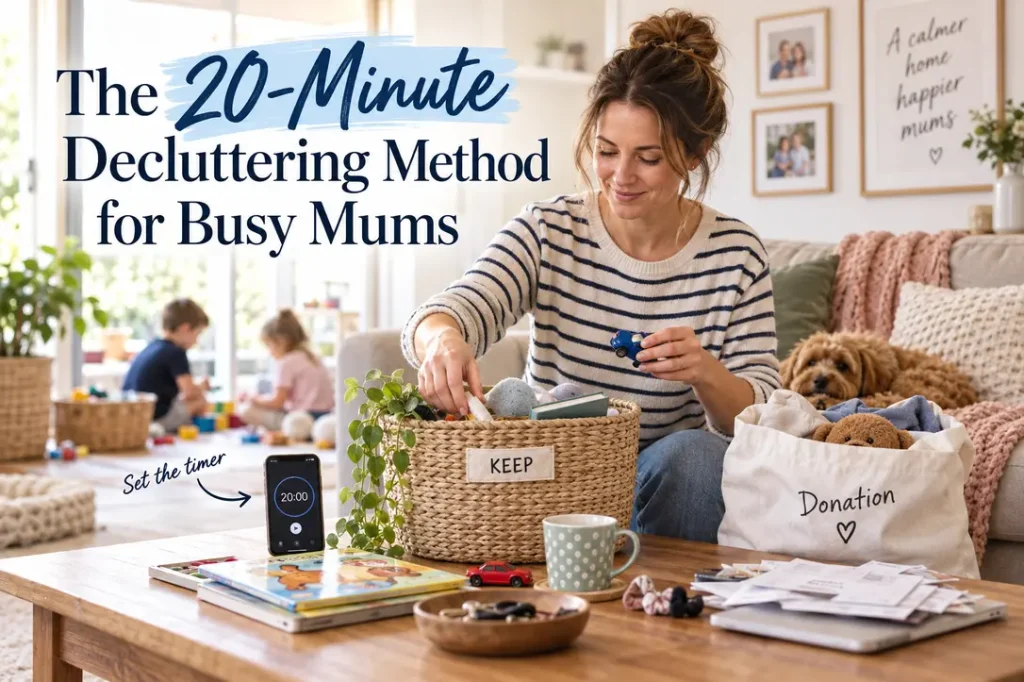
The 20-minute decluttering method is a short, contained session with a firm beginning and end. You choose one small area, set a timer for 20 minutes, sort what is there, and finish by moving rubbish, donations, and out-of-place items toward their proper destinations.
The goal is not to finish a room. It is to complete one useful boundary without turning the rest of the house upside down. That boundary might be one drawer, one shelf, half a kitchen counter, the shoes beside the front door, or the surface of a bedside table.
Twenty minutes is long enough to create a visible change but short enough to fit between school runs, dinner, work, appointments, or a tired evening. When the timer ends, you stop expanding the job and close the loop. Repeating these completed sessions is more helpful than beginning a huge clear-out that remains unfinished for days.

Gather Four Containers Before You Start
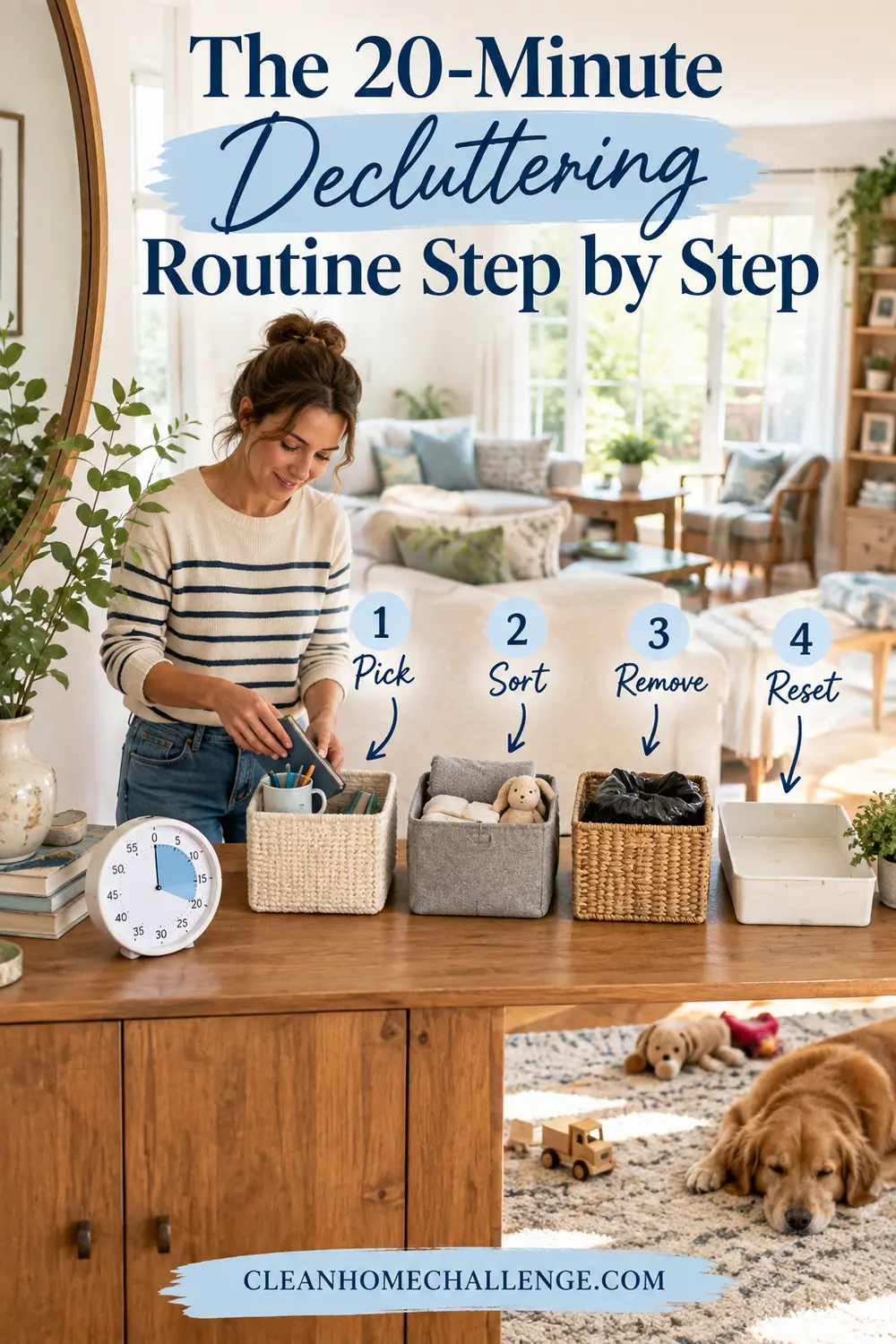
You do not need matching storage tubs. Use a laundry basket, cardboard box, reusable shopping bag, or any container already in the house. Set out four destinations:
- Keep here: items that belong in the zone.
- Put away: items that belong elsewhere in the home.
- Donate or sell: useful items that can leave.
- Rubbish or recycle: waste, damaged items, and appropriate recycling.
The containers stop you wandering into other rooms every time you find something out of place. They also prevent loose piles spreading across the floor. Keep the categories broad; too many sorting options create more decisions than a short session can hold.
Do not buy permanent organizers yet. Reduce the volume first, then choose storage only for the belongings that remain and have a sensible home.

Choose One Small Zone, Not a Whole Room
A good 20-minute zone has a visible edge. “The kitchen” is too large, while “the utensil drawer beside the stove” is clear. “The bedroom” can become “the top drawer of the bedside table.” A defined boundary tells you when the job is finished.
Choose a place that causes everyday friction. Clearing the chair where clothes collect, making room on the counter used for lunchboxes, or sorting the shoes that block the doorway will improve daily life immediately.
If the area contains sentimental papers, old photos, legal documents, or another slow category, make the boundary smaller. You can also begin with five obvious items. A short session should build confidence, not demand every difficult decision at once.

The 20-Minute Decluttering Routine Step by Step
Use the same order each time so you spend less energy deciding what to do next.
- Minutes 0-2: Pick and prepare. Define the boundary, take a quick before photo if it motivates you, and place the four containers nearby.
- Minutes 2-6: Remove the obvious. Collect rubbish, empty packaging, broken items you will not repair, and anything that clearly belongs elsewhere.
- Minutes 6-14: Make keep-or-release decisions. Handle one item at a time. Put it straight into a container rather than starting side piles.
- Minutes 14-17: Group what stays. Put similar items together and return the most frequently used things within easy reach.
- Minutes 17-20: Close the loop. Empty rubbish, move donations toward the exit, and return the put-away basket.
Leave a little time for the finish. A session feels successful when the zone is usable and the sorted items are moving, even if another zone waits for tomorrow.
What to Do When the Timer Ends
When the timer sounds, stop taking new things out. Finish the item in your hands, put the keep items back, and spend the final moments dealing with your containers.
Tie the rubbish bag and place it in the appropriate bin. Put recycling where your local service accepts it. Carry the put-away basket on one deliberate trip through the house. Place the donation bag beside the exit, in the car, or at another location linked to a real drop-off plan.
If the chosen zone was bigger than expected, keep the unfinished items together in one container and add a note naming the next action. Do not scatter the contents back across the room. Stopping on time is part of building trust that decluttering will not consume the day.

A 7-Day 20-Minute Decluttering Plan
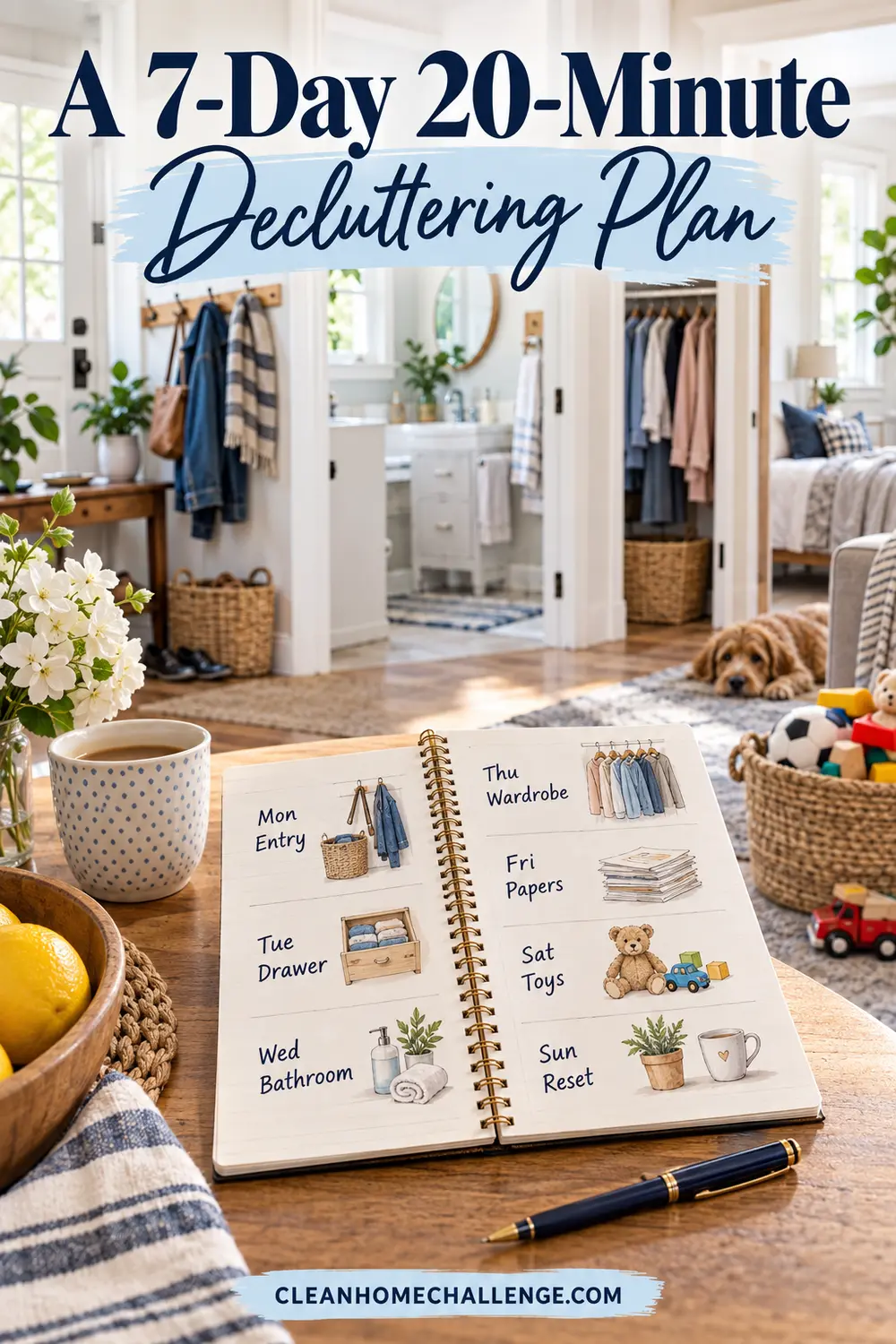
Try one short zone a day for a week:
- Monday: entryway shoes, bags, and keys.
- Tuesday: one kitchen or junk drawer.
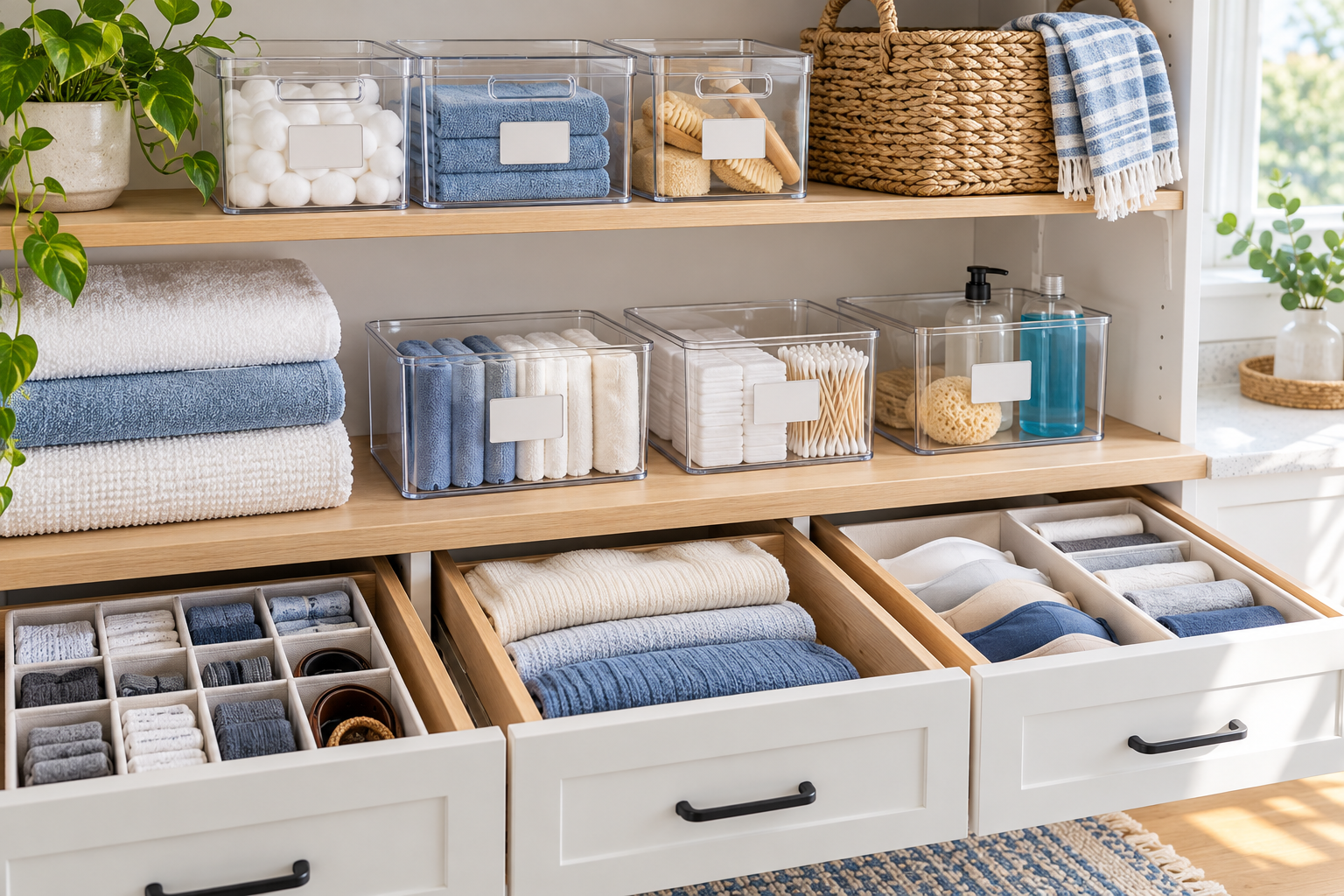
- Wednesday: one bathroom drawer or toiletry shelf.
- Thursday: one wardrobe rail or clothing category.
- Friday: the household paper inbox.
- Saturday: one toy basket, game shelf, or craft tub.
- Sunday: return out-of-place items and take donations out.
Missed a day? Continue with the next suitable session. There is no need to double the work. The plan is a menu, not a test. You can repeat the same high-friction zone next week or swap tasks to suit your household.
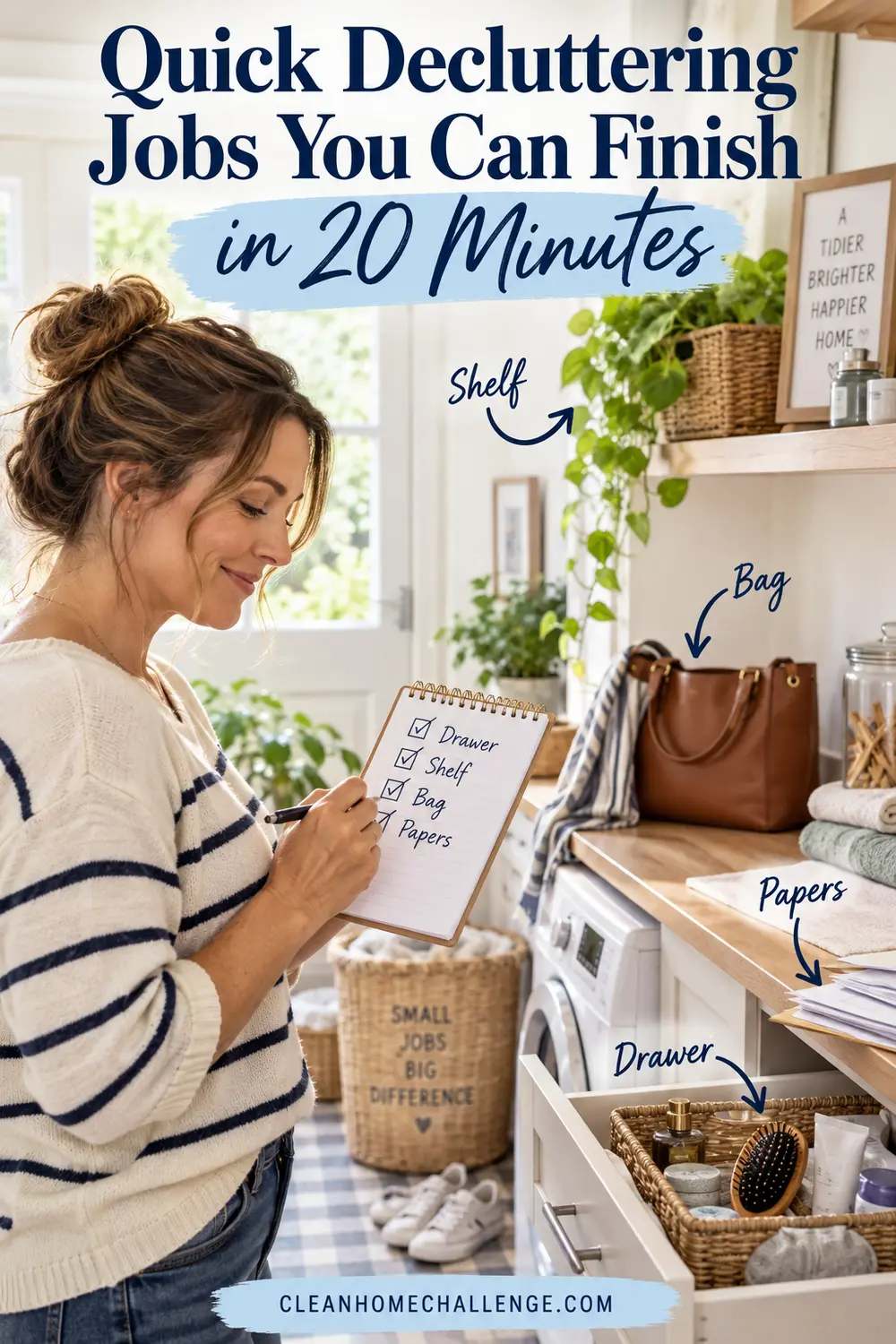
Quick Decluttering Jobs You Can Finish in 20 Minutes
Keep a list of small jobs so you do not waste your limited time choosing one:
- empty old receipts and rubbish from your handbag;
- remove expired or empty products from one bathroom drawer;
- sort one shelf of mugs, containers, or pantry food;
- clear the dining table or coffee table;
- match food-storage containers with their lids;
- remove outgrown children’s clothing from one drawer;
- sort one pile of mail;
- clear the car’s front passenger area;
- remove broken toys from one basket; or
- return items from the stairs or hallway to their proper rooms.
Choose jobs by boundary rather than item count. “One shelf” is easier to see and finish than “get rid of 30 things.”
How to Make Decisions Without Getting Stuck
Ask practical questions:
- Do we use this now?
- Would I choose or buy it again today?
- Do we own something that does the same job better?
- Does it fit the space available?
- Is it worth the time needed to clean, store, maintain, or move it?
- Would replacing it later be genuinely difficult or expensive?
Do not force quick decisions about sentimental or shared belongings. Place genuinely difficult items in one small “decide later” container and write a review date on it. The container limit stops uncertainty spreading.
Selling can also become long-term storage. Set a minimum value and a short listing deadline. If an item is not listed or sold by that date, decide whether donating it would free more time and space.

Common Mistakes That Turn Decluttering Into a Bigger Mess
Emptying an entire room
Hundreds of exposed items create hundreds of decisions. Work inside one boundary and finish it before expanding.
Organizing before reducing
Storage products cannot solve excess volume. Decide what deserves space before measuring for containers.
Walking away to put each item back
Repeated trips invite distractions. Use one put-away basket and return everything together.
Creating an endless sell pile
Unlisted items remain clutter. Give selling a value threshold and deadline.
Leaving donation bags inside
A donation still occupies your home until it leaves. Add the drop-off to an existing trip.
Using shame as motivation
Busy seasons, illness, caring, growing children, moving, and ordinary life all create clutter. A workable system helps more than criticism.

How to Get the Family Involved
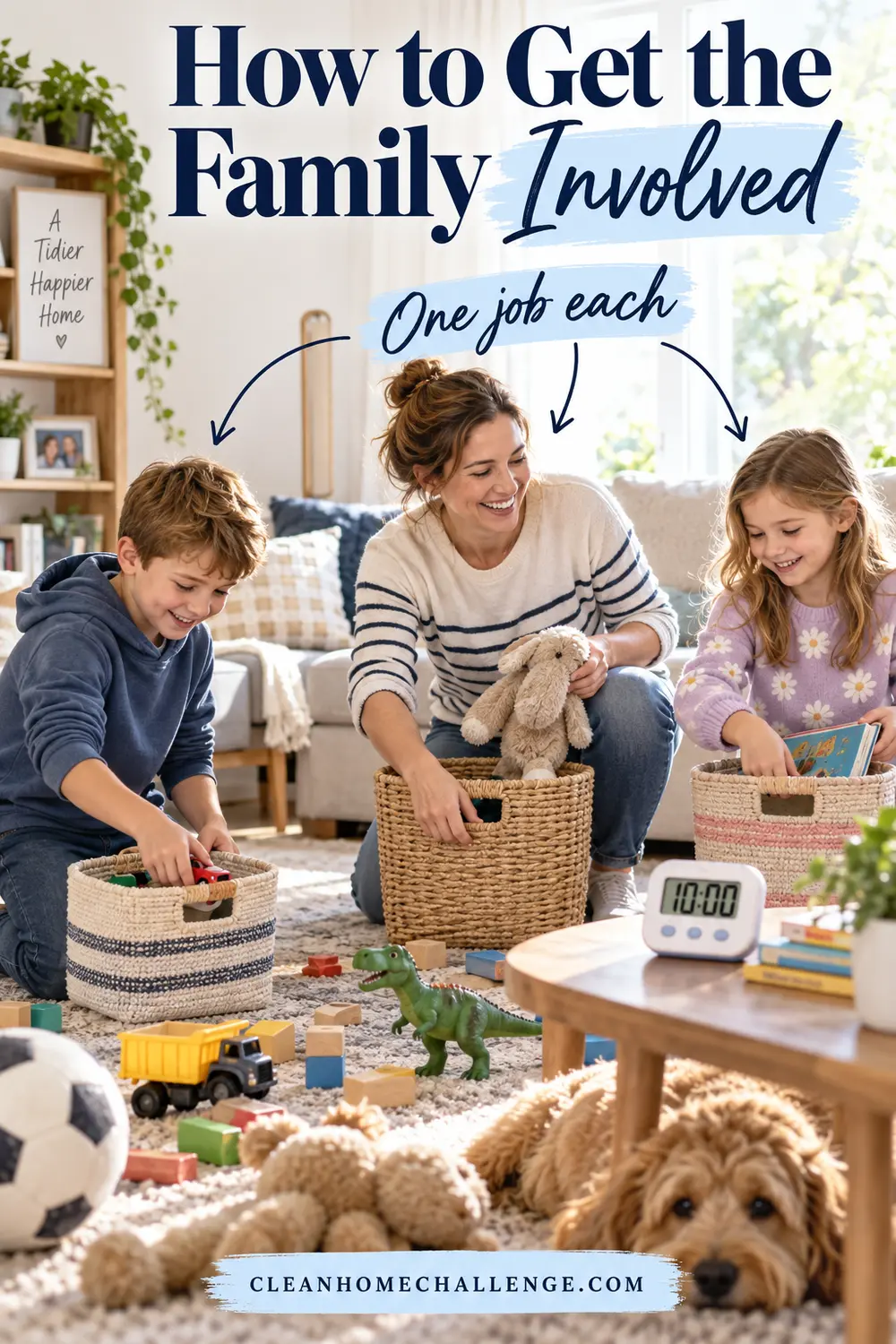
Give each person one concrete job rather than saying, “Clean this room.” A young child might collect toy cars, place books in a basket, or find rubbish. An older child can sort one clothing drawer or return items to another room. Adults can handle decisions about donations, paperwork, medicines, electronics, and disposal.
Use a shared 20-minute timer and stop together. Do not discard another person’s meaningful belongings without their involvement. For shared spaces, agree on the amount of storage available and which items need to stay accessible.
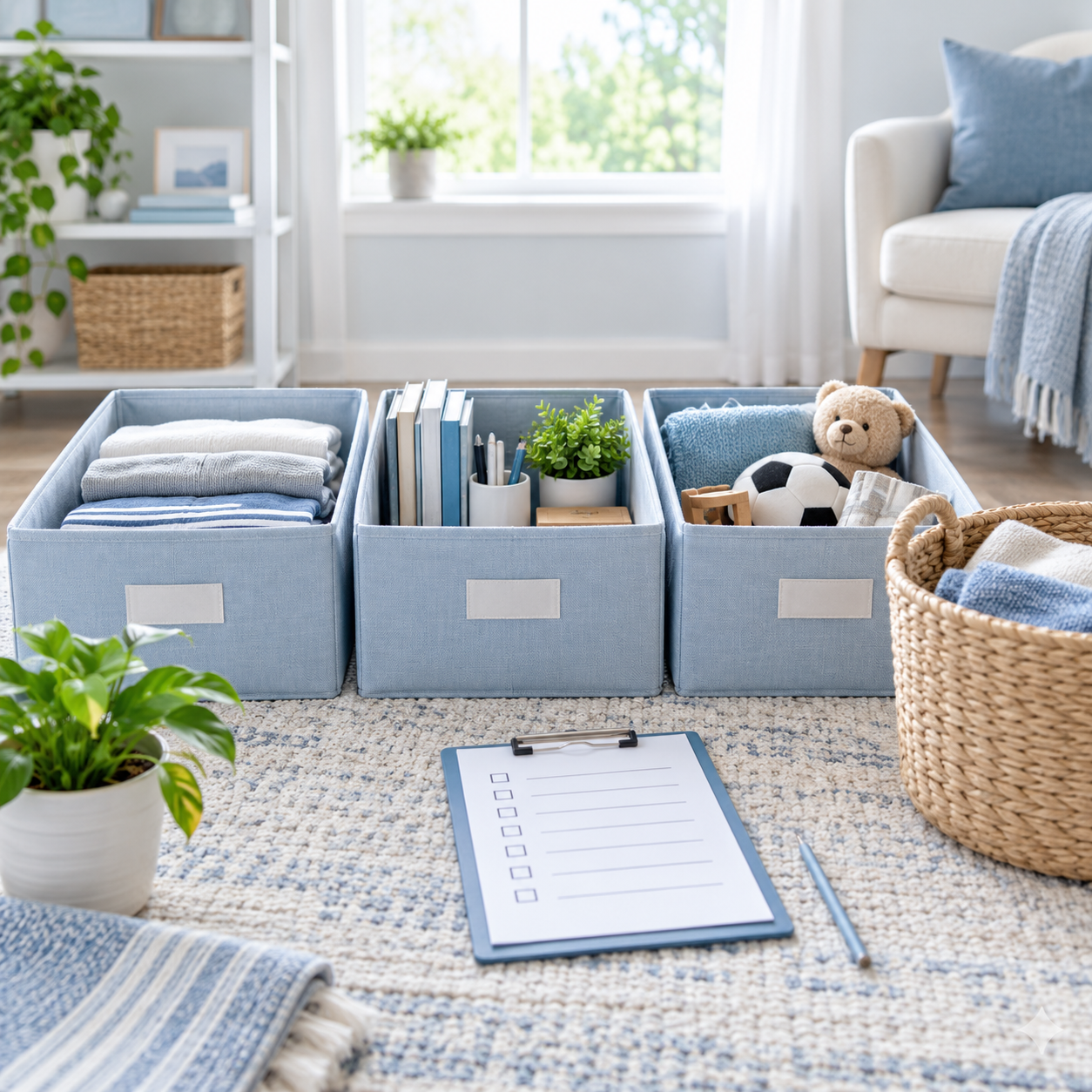
Make the finished system easy to follow: open baskets for frequently used toys, hooks at a reachable height, one tray for school papers, and simple labels where they help. The easiest system to maintain is usually the one with the fewest steps.
CLEANERS CLUBHOUSE
Ready to Clear the Clutter One Step at a Time?
Join the 30-Day Declutter Challenge and work through your home in small, achievable steps. The Cleaners Clubhouse includes the plan, printable support and encouragement to help you keep going.
How to Keep Clutter From Building Up Again
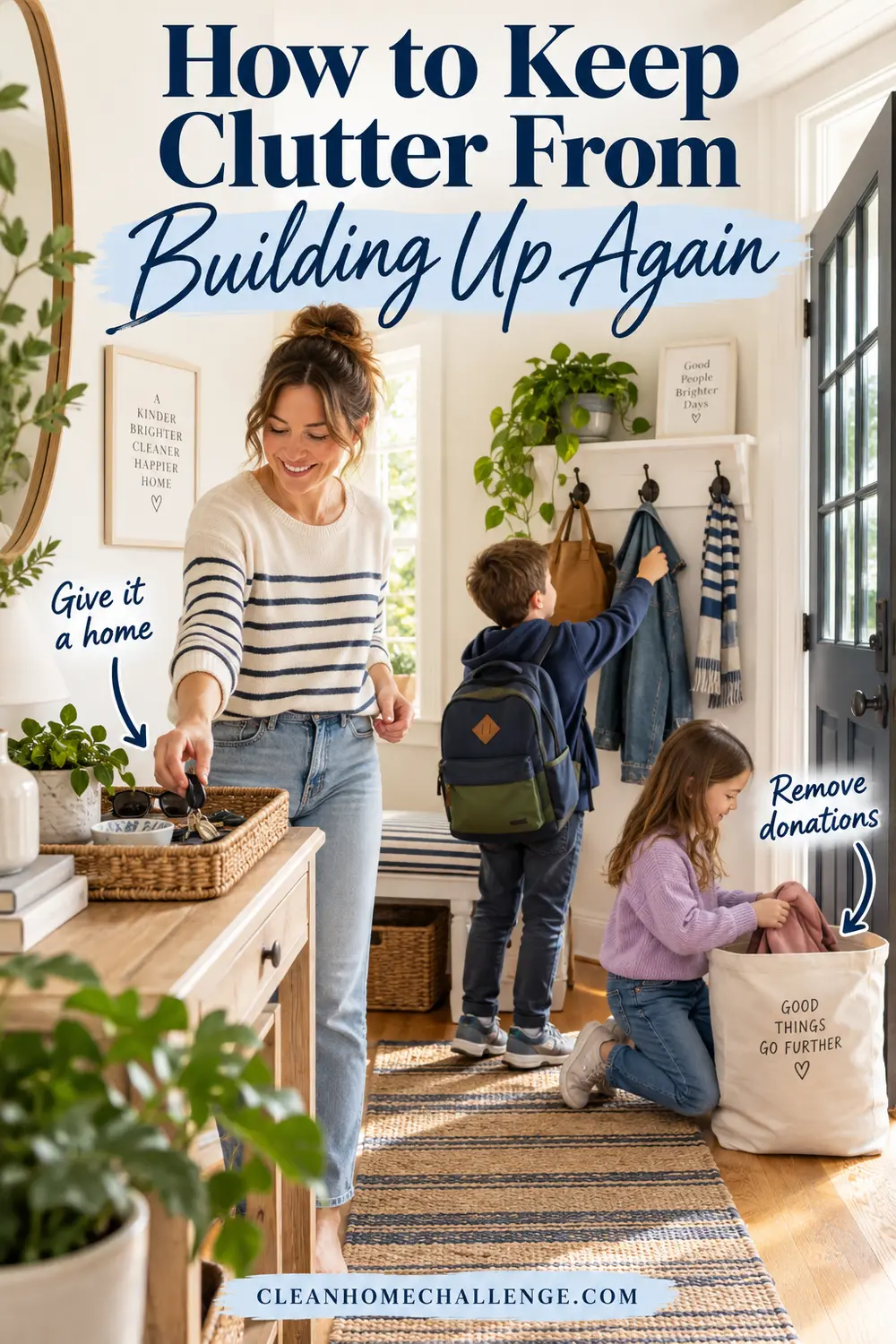
After reducing a zone, give every remaining category an obvious home near where it is used. Put keys beside the entry, paper into one inbox, shoes in one basket, and everyday bags on sturdy hooks.
Add a five-minute family pickup to the evening routine. Move items toward their homes rather than aiming for a perfect reset. Keep one donation bag in a consistent place and remove it when full.
Be careful with “just in case” shopping and free items. Before bringing something home, ask where it will live and whether it replaces anything. A one-in, one-out rule can help with fast-growing categories such as mugs, toys, reusable bottles, and children’s clothing, but it does not need to apply rigidly to everything.
Start With One 20-Minute Win Today
Choose one small space that would make today easier. Set out four containers, start the timer, and work in a simple order. When the timer ends, close the loop and stop.
A clear chair, usable counter, safer walkway, or easier-to-open drawer is a worthwhile result. You do not need a perfect home or an empty weekend. You need a method small enough to repeat.
If the 20-minute session leaves you with energy, schedule another one tomorrow. If it leaves you tired, enjoy the completed zone and rest. Progress is still progress when it happens one drawer, shelf, or basket at a time.