

THIS POST MAY CONTAIN AFFILIATE LINKS. PLEASE READ MY DISCLOSURE FOR MORE INFO.
Bathroom grout can make a clean room look tired surprisingly quickly. Because cement-based grout is porous, it catches soap residue, body oils, dust, and dirty mop water. Add bathroom moisture and pale grout can turn gray or patchy long before the tiles themselves look dirty.
The good news is that you rarely need to attack the whole bathroom with the strongest cleaner you can find. Start with the gentlest method that suits both the grout and the tile, work in small sections, rinse properly, and dry the surface. That usually gives you a brighter result with far less scrubbing.
If you only have ten minutes today, clean the grout beside the shower entrance or around the toilet. One small finished section is more useful than spraying the entire room and running out of time.
Disclosure: This post may contain affiliate links. As an Amazon Associate, Clean Home Challenge earns from qualifying purchases. If you make a purchase through these links, we may earn a small commission at no extra cost to you. This helps us keep creating practical cleaning tips, routines and resources for busy families! 🧽
Check Your Grout and Tile Before You Clean
Before choosing a cleaner, identify what you are working with. Traditional cement-based grout feels slightly rough and may darken when wet. Epoxy grout is usually smoother and less absorbent. Natural stone, marble, limestone, and some specialty tiles need gentler, pH-neutral products because acidic or abrasive cleaners can mark the tile even when the grout appears unharmed.
Look for cracks, loose areas, missing grout, hollow-sounding tiles, or damp staining that returns. Cleaning cannot repair failed grout or stop water entering behind tile. If the area is damaged, pause and arrange repair before soaking or aggressively scrubbing it.
Always read the tile, grout, sealer, and cleaner instructions. Test your planned method in a hidden spot, let it dry, and check for color change, dulling, or surface damage.

Gather the Right Grout-Cleaning Supplies
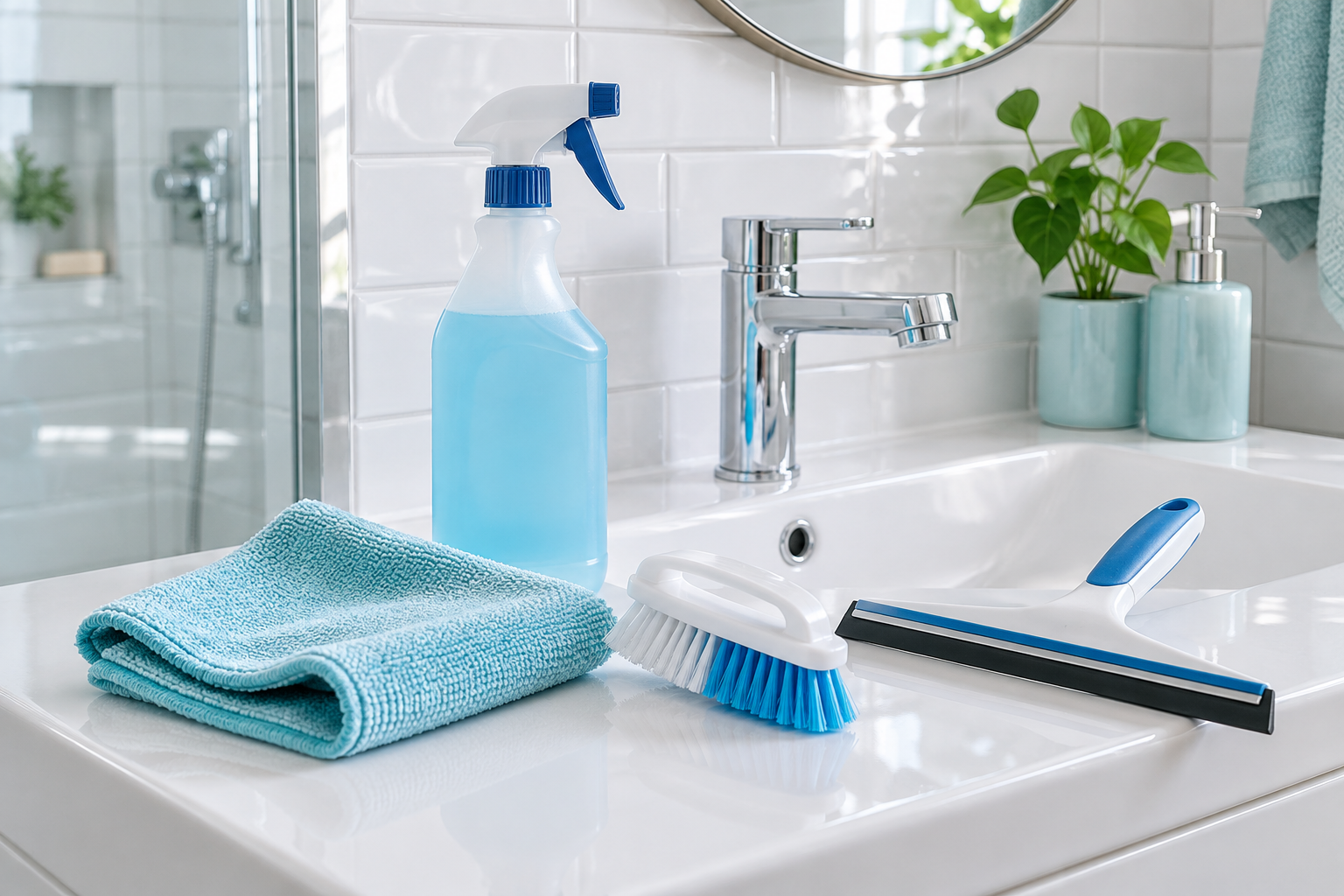
You do not need a cupboard full of specialist products. For most routine bathroom grout cleaning, gather:
- a soft or medium nylon grout brush;
- a surface-appropriate cleaner, ideally pH-neutral when the tile type is uncertain;
- warm water in a small bucket;
- microfiber cloths;
- gloves;
- a vacuum or dry microfiber mop for floor grout;
- a squeegee for shower walls; and
- a kneeling pad or long-handled grout brush for floors.
Avoid wire brushes. They can scratch tile, erode grout, and leave tiny metal fragments that later rust. Keep cleaning products in their original containers, follow the label, ventilate the room, and never mix products.

The Gentle Everyday Grout-Cleaning Method
This is the best starting method for sound ceramic or porcelain tile with ordinary soap film and surface dirt.
- Remove loose dirt. Vacuum floor grout or wipe wall tiles with a dry microfiber cloth. This prevents grit turning into muddy residue.
- Apply a suitable cleaner. Lightly wet a small section. Use enough product to contact the grout without flooding it.
- Allow the label dwell time. Give the cleaner time to loosen soil. Do not let it dry on the surface.
- Scrub gently. Move the nylon brush along the grout line using short strokes. Excess pressure is usually less useful than a little extra dwell time.
- Rinse thoroughly. Wipe with clean water, changing the water when it becomes cloudy.
- Dry the area. Use a fresh microfiber cloth. Dry grout lets you judge the true color and prevents leftover cleaner from attracting more soil.
For a busy-week clean, set a ten-minute timer and complete one shower wall or a small floor zone. Continue with the next section another day.

How to Clean Bathroom Floor Grout
Floor grout usually holds hair, dust, and dirty water as well as bathroom residue. Vacuum first, including corners and along the vanity. Then begin at the far side of the room and work toward the door so you do not kneel or step on the section you have just cleaned.
Apply cleaner to a small area, follow the label dwell time, and scrub with a narrow brush. A long-handled grout brush can reduce bending, while a kneeling pad makes detail work more comfortable. Rinse with clean water and dry the floor rather than leaving it to air-dry with loosened soil sitting in the grout lines.
If the floor is natural stone, use only a cleaner approved for that stone and its grout or sealer. Acidic products can etch calcium-based stone.

How to Tackle Dark or Stubborn Grout Stains
If ordinary cleaning does not lift the discoloration, let the area dry before deciding it is still dirty. Wet grout often looks much darker.
For sound, light-colored cement grout beside compatible ceramic or porcelain tile, a labeled oxygen-based grout cleaner may help with organic staining. Patch-test first, wear gloves, follow the exact dilution and dwell time, keep the area ventilated, and rinse completely. Do not use a stronger concentration or combine it with another product.
Persistent discoloration may be absorbed pigment, old sealer, mildew below the surface, or the grout’s natural color rather than removable dirt. Repeated aggressive scrubbing can wear the joint away. When cleaning no longer changes the dry grout, consider professional assessment, grout colorant, or repair instead of escalating indefinitely.

How to Handle Mildew and Mold Safely
Small areas of surface mildew can sometimes be cleaned with a product specifically labeled for the tile and grout. Open a window or run the exhaust fan, wear gloves, keep children and pets away, and follow the label. Never mix bleach with vinegar, ammonia, acids, alcohol, or any other cleaner.
If growth covers a large area, keeps returning quickly, follows a leak, sits behind loose tile, or affects a person with health concerns, stop treating it as a simple cleaning problem. The moisture source and damaged materials may need professional attention. Cleaning the visible surface alone will not correct water entering behind the wall.

Clean Epoxy Grout Without Damaging It
Epoxy grout is less porous than cement grout and often resists stains well, but it can still collect soap film. Use the grout manufacturer’s recommended cleaner or a compatible pH-neutral option. Wipe with a soft cloth or nylon brush, rinse away residue, and dry.
Avoid assuming that every strong grout cleaner is suitable. Abrasive pads, harsh solvents, and excessive heat may affect the finish or nearby tile. Manufacturer instructions matter more than a one-size-fits-all recipe.

What Not to Use on Bathroom Grout
Skip methods that create more work or risk surface damage:
- Wire brushes: they can scratch tile and erode grout.
- Undiluted or off-label chemicals: stronger is not automatically better.
- Mixed cleaning products: combinations can create toxic gases or unpredictable reactions.
- Frequent acidic cleaning: acid can weaken cement grout and damage natural stone.
- Abrasive powders on delicate finishes: they may dull glazed or polished surfaces.
- Heavy soaking on cracked grout: water may travel behind tile.
- Steam without approval: heat and moisture may affect some sealers, adhesives, tiles, or damaged joints.
If you are unsure, use a compatible pH-neutral cleaner and check the surface manufacturer’s care guide.

When Grout Needs Repair, Not More Scrubbing
Cleaning is the wrong job when grout is cracked, crumbling, missing, or pulling away from the tile. Repeated dampness, soft wall material, loose tiles, staining that spreads, or a musty smell can also suggest a moisture problem.
Stop saturating the area. A small isolated joint may be suitable for regrouting once the cause is understood, but movement cracks, widespread failure, or suspected water damage should be assessed by a qualified professional. New grout placed over loose material will not solve the underlying problem.

Should You Seal Bathroom Grout?
Many cement-based grouts benefit from a compatible penetrating sealer, while epoxy grout and some modern grouts may not require one. Check the grout manufacturer’s instructions rather than assuming every joint should be sealed.
Clean and repair the grout first, rinse away all cleaner, and allow it to dry for the time specified by the sealer manufacturer. Apply the correct product carefully, remove excess from the tile, and observe curing instructions before using the shower. Sealer can make routine cleaning easier, but it does not make grout waterproof or remove the need for ventilation and drying.

A Five-Minute Weekly Grout Routine
Small moisture-control habits reduce how often you need a full scrub:
- Rinse soap and shampoo residue from shower walls.
- Squeegee the tile and glass after the final shower.
- Spot-clean one visibly dull grout line during the Tuesday bathroom routine.
- Run the exhaust fan during bathing and afterward according to its guidance, or open a window when conditions allow.
- Hang towels and bath mats so they dry fully.
Once a month, inspect corners, the shower entrance, the toilet base, and the vanity splashback. Early attention to a small spot is quicker than restoring the entire room.

CLEANERS CLUBHOUSE
Take the Guesswork Out of Bathroom Cleaning
Use Tuesday as your bathroom reset day and work through the job in a sensible order. Inside the Cleaners Clubhouse, you’ll find practical routines, printable support and challenges that make deeper cleaning easier to manage.
Bathroom Grout Cleaning FAQs
How often should bathroom grout be cleaned?
Wipe or squeegee wet shower surfaces after use and spot-clean visible marks weekly. A deeper grout clean may be needed monthly or seasonally depending on household size, ventilation, water hardness, and how quickly residue builds up.
Can I use bicarbonate of soda and vinegar together?
They fizz, but the acid and base largely neutralize one another. Vinegar can also harm cement grout and natural stone. A surface-appropriate cleaner used according to its label is a more reliable choice.
Can I use a steam cleaner on grout?
Only if the tile, grout, sealer, adhesive system, and steam-cleaner manufacturer all allow it. Avoid steam on damaged joints or surfaces where heat and moisture could penetrate.
Why is my grout still dark after cleaning?
It may still be wet, naturally darker than expected, permanently stained, affected by old sealer, or damaged below the surface. Let it dry completely before judging it. If the color remains uneven and cleaning no longer helps, investigate repair or a compatible grout colorant.
Is bleach necessary for white grout?
No. Routine soil often lifts with a compatible cleaner and nylon brush. If you use a bleach-containing product for a specific compatible surface, follow its label exactly, ventilate, protect skin and eyes, and never combine it with another cleaner.
Clean grout stays manageable when you use the right method early. Begin gently, finish one small section, rinse well, and focus on keeping the bathroom drier between cleans. That is usually faster—and kinder to the surface—than waiting for a marathon scrub day.