
THIS POST MAY CONTAIN AFFILIATE LINKS. PLEASE READ MY DISCLOSURE FOR MORE INFO.
You can love having people stay and still feel worn out by the extra cups, towels, and breakfast dishes. Asking for a little help is reasonable. The useful starting point is one small, clear request that fits the visit and the person, rather than a hint that leaves everyone guessing.
Try: “Could you bring your mug to this side of the sink when you’re finished? Thanks—that keeps the breakfast space clear.” Name the task, show where things go, and let the guest respond. A short visit calls for a lighter touch than a stay lasting several days.
This guide includes phrases for everyday moments, a simple way to explain your household setup, and a copyable Houseguest Help Card. You do not need a new set of baskets or an impressive cleaning routine to make any of it work.
Disclosure: This post may contain affiliate links. As an Amazon Associate, Clean Home Challenge earns from qualifying purchases. If you make a purchase through these links, we may earn a small commission at no extra cost to you. This helps us keep creating practical cleaning tips, routines and resources for busy families! 🧽
Choose Help That Fits the Visit

Start by deciding what would make hosting easier today. Choose something connected to the guest’s own use of the house: returning a cup, hanging up a towel, or gathering their belongings before dinner. Resist turning that useful request into a tour of everything that needs doing.
The Emily Post Institute’s houseguest guidance encourages visitors to look after their own space and offer assistance, particularly in the kitchen. That supports a conversation about pitching in; it does not mean every family has the same expectations. Your guest may have been taught that touching a host’s dishes or entering the kitchen is intrusive. Explain what works here instead of treating a different habit as rudeness.
Use this visit-size guide as a starting point, then adjust together:
| Visit | A modest request | What to settle separately |
|---|---|---|
| Coffee or an afternoon playdate | Bring an empty cup to the counter or gather toys used during the visit | Whether the visiting parent can stay for a short shared tidy |
| Dinner | Pass napkins, return a place setting, or carry a light serving item | Whether kitchen help is welcome and where used dishes should go |
| One or two nights | Keep personal belongings together and hang used towels | Breakfast arrangements and where laundry belongs |
| Several days | Agree on one recurring contribution, such as clearing breakfast places | Meal planning, timing, household limits, and any changes to the stay |
These are suggestions, not a tally of what hospitality is owed. Someone recovering from illness, managing fatigue, traveling with a baby, or visiting during a difficult time may have very little spare capacity. Ask what would be comfortable. Do not require an explanation of someone’s health or disability before accepting a no.
Keep private rooms, paperwork, medications, laundry sorting, and unfamiliar equipment off the casual help list. Adults in the household should retain jobs involving cleaning chemicals, knives, hot cookware, heavy lifting, or electrical equipment unless a capable adult has explicitly agreed to a suitable task and knows the setup. Guests should not need to learn your deep-cleaning methods to feel welcome.
If your own energy is low, make the request smaller rather than postponing it until you are exhausted: “Could you put your plate here? I’m leaving the rest until tomorrow.” Choosing sandwiches, fewer serving dishes, or a shorter visit can reduce the work more than finding additional jobs for people.
Make One Clear Request and Show the Setup
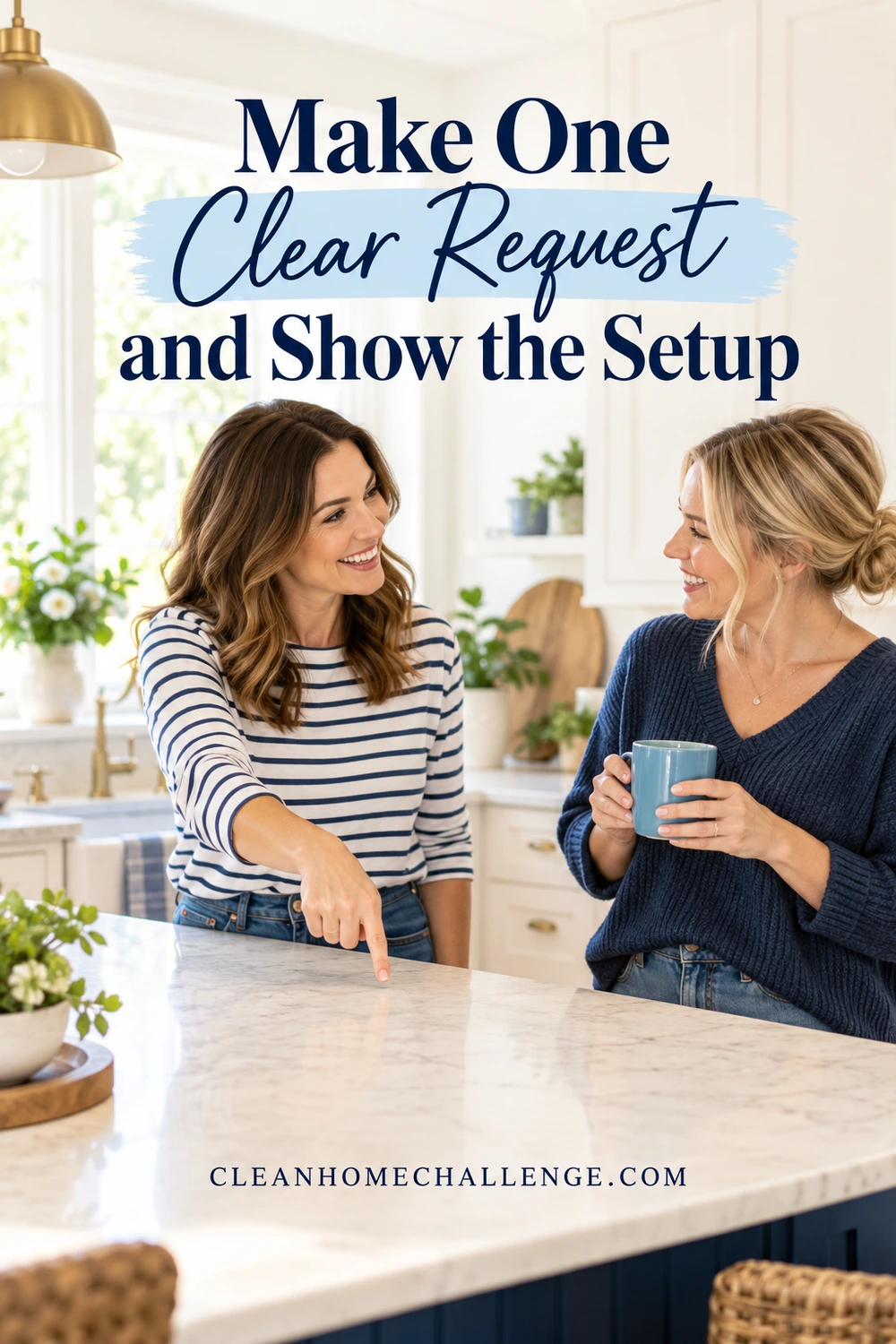
A helpful request gives the guest enough information to finish without searching cupboards or asking five follow-up questions. Use this simple sequence:
- Get their attention at a calm moment. Ask before the meal ends or while you are both standing near the counter. Avoid calling out a complaint from another room.
- Name one action. “Please put your used mug beside the sink” is easier to follow than “Can everyone be a bit tidier?”
- Show the place or finish point. Point to the counter, basket, hook, or shelf. Explain anything unusual once.
- Give a real choice when the task is optional. Ask whether they would prefer to gather napkins or sit and chat while you finish. Accept either answer.
- Thank them and stop adding jobs. Completing one favor should not unexpectedly turn into being responsible for the whole kitchen.
You might say, “Would you mind putting the breakfast bowls on this counter when you’ve finished? I’ll load them later.” That identifies the objects, destination, and end of the job. You are not asking the visitor to guess your dishwasher arrangement.
Avoid vague tests such as “You know where everything goes by now” or “I shouldn’t have to ask.” A guest may remember where clean mugs live but have no idea whether your dishwasher contains clean or dirty dishes. State the useful detail: “The dishwasher is clean, so used cups can stay here for now.”
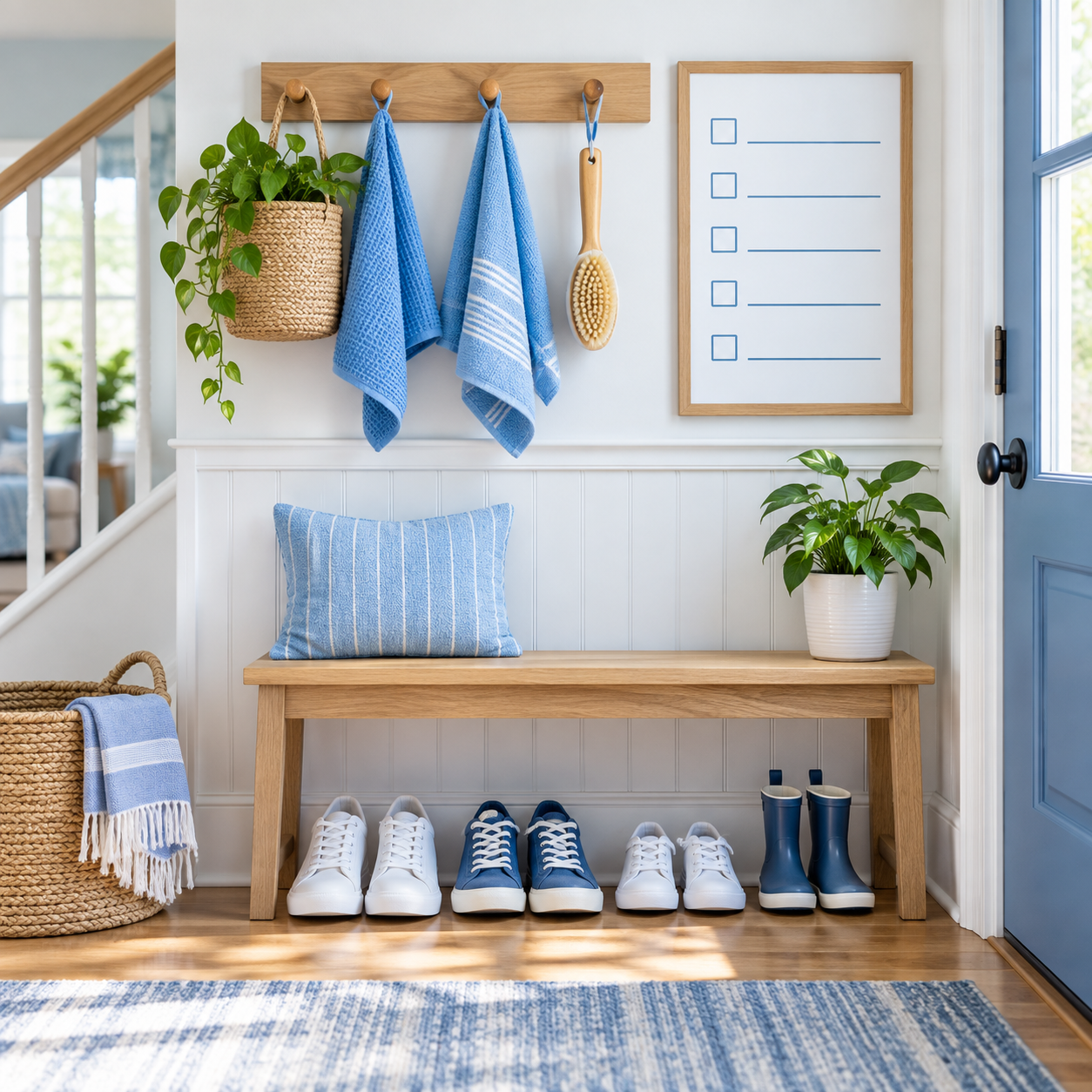
For an overnight stay, offer a brief orientation after the guest has settled in. Show the towel hook, a spot for luggage, drinking glasses, and the place to leave used dishes. Ask before moving personal items. An existing chair, shelf, or section of counter is enough; you do not need to buy matching storage.
Make the arrangement accessible. A high hook may be awkward for a child or a person with limited reach. A basket on the floor may be difficult to bend toward. Ask where a reachable place would work and keep walking routes clear. For a guest with low vision, describe the location precisely and avoid moving their belongings or familiar items without telling them. Offer orientation instead of assuming either help or independence is unwanted.
If you invite a choice, make both options acceptable. “Would you rather carry these light napkins or help me decide where we’ll sit?” can include someone comfortably. “Do the dishes or buy dinner” creates a different conversation and should not be disguised as a small favor.
Use Welcoming Phrases for Everyday Moments

You can be direct without sounding formal. Choose words that resemble your usual voice and adjust them to your relationship. The phrases below are original examples, not rules that guarantee a particular response.
When someone asks what they can do: “Thanks! Could you put these napkins on the table? Everything else can wait.” Giving an offered helper one useful job often makes the moment simpler than refusing automatically and then feeling frustrated later.
At the end of breakfast: “Before we head out, could everyone bring their own cup and bowl to this counter? I’ll take care of the washing.” Keep the request shared across adults rather than assuming one visitor will clear everyone else’s things.
When towels are piling up: “Your towel can go on this hook so it has space to dry. If the hook is awkward to reach, let’s find a better spot.” Explain your setup without commenting on how the guest handles towels at home.
When bags spread into a walkway: “Could we move the bags to this empty corner so we can get through? Would you like me to carry anything?” Ask before handling belongings and avoid putting luggage on someone’s bed or chair without checking.
Before a playdate ends: Ask the visiting adult first: “Could we leave a few minutes for the kids to put the blocks in this bin together?” Show the single destination and help with the task. Do not use the last minute to announce a full-room cleanup. The American Academy of Pediatrics recommends clear tasks, realistic expectations, and support when children help at home. Adapt that principle to the visiting child’s ability and their caregiver’s guidance; a visit is not the place to enforce your own reward or consequence system on someone else’s child.
When a guest does not know your system: “I forgot to show you—used dishes go here. Please leave the sharp utensils for me.” A short explanation is more useful than correcting where each object went after the guest has already tried to help.
When you really do not want kitchen help: “Thank you for offering. The kitchen is crowded, so please enjoy your drink. If you feel like helping later, bringing the napkins through would be lovely.” Do not say “Nothing!” if you actually want one specific thing, but it is also fine to decline sincerely.
When someone says no: “No problem. I’ll leave that for later.” If the job matters immediately, ask another willing adult or change the plan. Do not keep renegotiating until the person agrees.
When help is done differently: Thank them for the contribution. If an immediate safety or damage issue exists, explain it calmly: “That shelf is loose; let’s use this one.” If it is simply a different arrangement of napkins, let it go. Your precise folding style does not need to become a house rule.
When a longer visit is becoming too much: Arrange a private conversation away from the busy moment. “I’m happy you’re here, and I’m finding the extra breakfast cleanup hard to manage. Could we agree that everyone clears their own breakfast things each morning?” For a stay lasting weeks, agree on meals, shared spaces, and practical limits explicitly. A succession of small requests cannot replace a conversation about an arrangement that no longer works.
If your limit is firm, do not describe it as optional. “We need to keep this doorway clear” is a household safety boundary. “Would you like to fold these napkins?” is an invitation. You can welcome a guest warmly while explaining a genuine limit without criticism or guilt.
Keep the Visit Manageable With a Simple Help Card
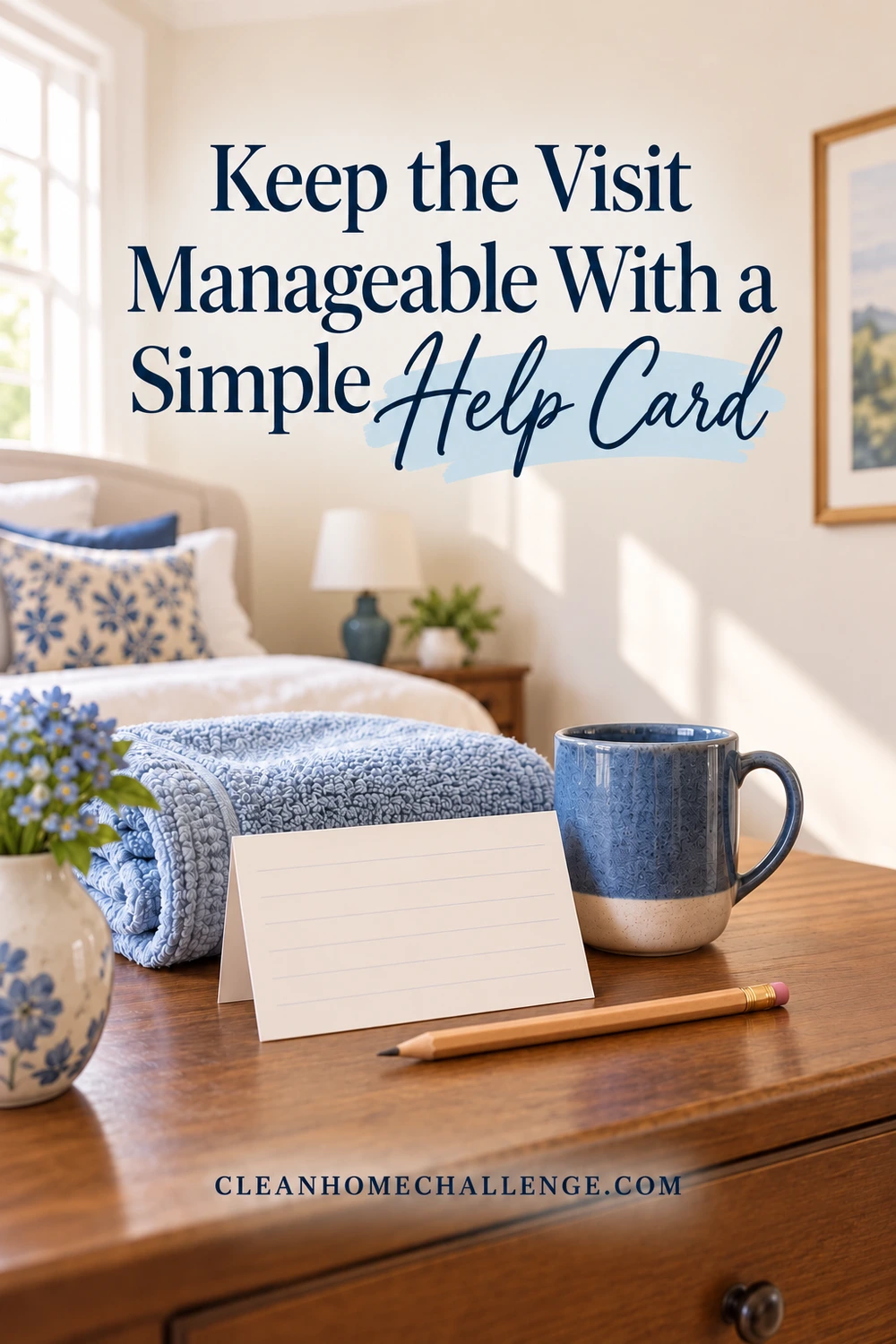
A short written reminder can be useful for a repeat guest or a household hosting several people. Ask whether it would help before putting it in the guest’s room. Keep it friendly and limited to information they actually need, rather than posting a notice that reads like an inspection checklist.
Copy the Houseguest Help Card below onto plain paper or into a note on your phone. Fill it in with the guest where useful. Leave optional contributions blank if none are needed.
Houseguest Help Card
- We’re glad you’re here. Ask if you need anything or if a setup does not work for you.
- Used cups and plates go: ____________________
- Your towel can hang: ____________________
- Your bags and personal things can stay: ____________________
- One optional way to pitch in: ____________________
- A job we’ll handle ourselves: ____________________
- Our simple shared-space request: ____________________
- A good time to check in about plans: ____________________
For example, the optional contribution might be setting out napkins before dinner. The host-handled job might be loading the dishwasher. The shared-space request might be leaving the hallway clear. Keep expectations visible without writing down private information such as medical needs, access codes, or travel plans where other visitors can read them.
Try a small end-of-meal reset together: gather your own place setting, return personal items to their spot, and leave the remaining dishes for the household’s usual routine. If a guest is willing, give them one agreed task while you do another. Stop at the finish point you described. Time estimates depend on the meal and the people involved; this is a short shared reset, not a race.
If you have only enough energy for one thing, clear a safe route and a place to prepare the next meal. Leave decorative tidying, guest-room styling, and nonurgent cleaning. A visit can still be enjoyable while dishes wait.
After guests leave, note one adjustment for next time: an easier towel spot, a clearer breakfast plan, fewer dishes, or asking for a small contribution earlier. Avoid scoring people’s effort or circulating complaints about who helped least. If a repeated visit consistently exceeds what you can manage, offer a shorter stay or a different plan rather than quietly hoping the next visit will fix itself.
You are aiming for a home people can comfortably share. One specific request, an easy-to-find destination, and a genuine thank-you are a useful place to begin.
Sources and reading
- Emily Post Institute, The Golden Rules for Houseguests: guest consideration, personal tidiness, and offering help.
- American Academy of Pediatrics, Age-Appropriate Chores for Children, updated February 9, 2024: clear expectations, support, and avoiding overload. Advice here is adapted to short visits, with the visiting caregiver involved.
Sources reviewed October 22, 2026. Scripts, visit-size guide, help card, and suggested household arrangements are Clean Home Challenge editorial examples; they are not tested behavioral outcomes.
CLEANERS CLUBHOUSE
Turn Small Daily Habits Into a Cleaner Home
Make cleaning feel more achievable by sharing simple routines and building habits that stick. The Cleaners Clubhouse includes the 7-Day Daily Habits Bootcamp, printable support and motivating monthly challenges.