
THIS POST MAY CONTAIN AFFILIATE LINKS. PLEASE READ MY DISCLOSURE FOR MORE INFO.
Microfiber cloths are one of the most useful tools in a cleaning kit, but they are not all interchangeable. A thick, plush cloth that picks up crumbs and dust beautifully can leave lint on a mirror. A smooth glass cloth can polish stainless steel, yet feel frustratingly slow on a greasy countertop. The best microfiber cloths for cleaning are the ones matched to the surface, the mess, and the way your household actually works.
You do not need a cupboard full of expensive specialty cloths. A small, color-coded collection of general-purpose, glass, low-pile, and bathroom cloths will cover nearly every routine job. The key is choosing useful textures, giving each cloth a clear role, and washing it in a way that preserves the fibers.
This guide shows you what to look for, which weave suits each job, how many cloths a busy family needs, and how to build a simple set without overbuying.
Disclosure: This post may contain affiliate links. As an Amazon Associate, Clean Home Challenge earns from qualifying purchases. If you make a purchase through these links, we may earn a small commission at no extra cost to you. This helps us keep creating practical cleaning tips, routines and resources for busy families! 🧽
What Makes a Good Microfiber Cleaning Cloth?
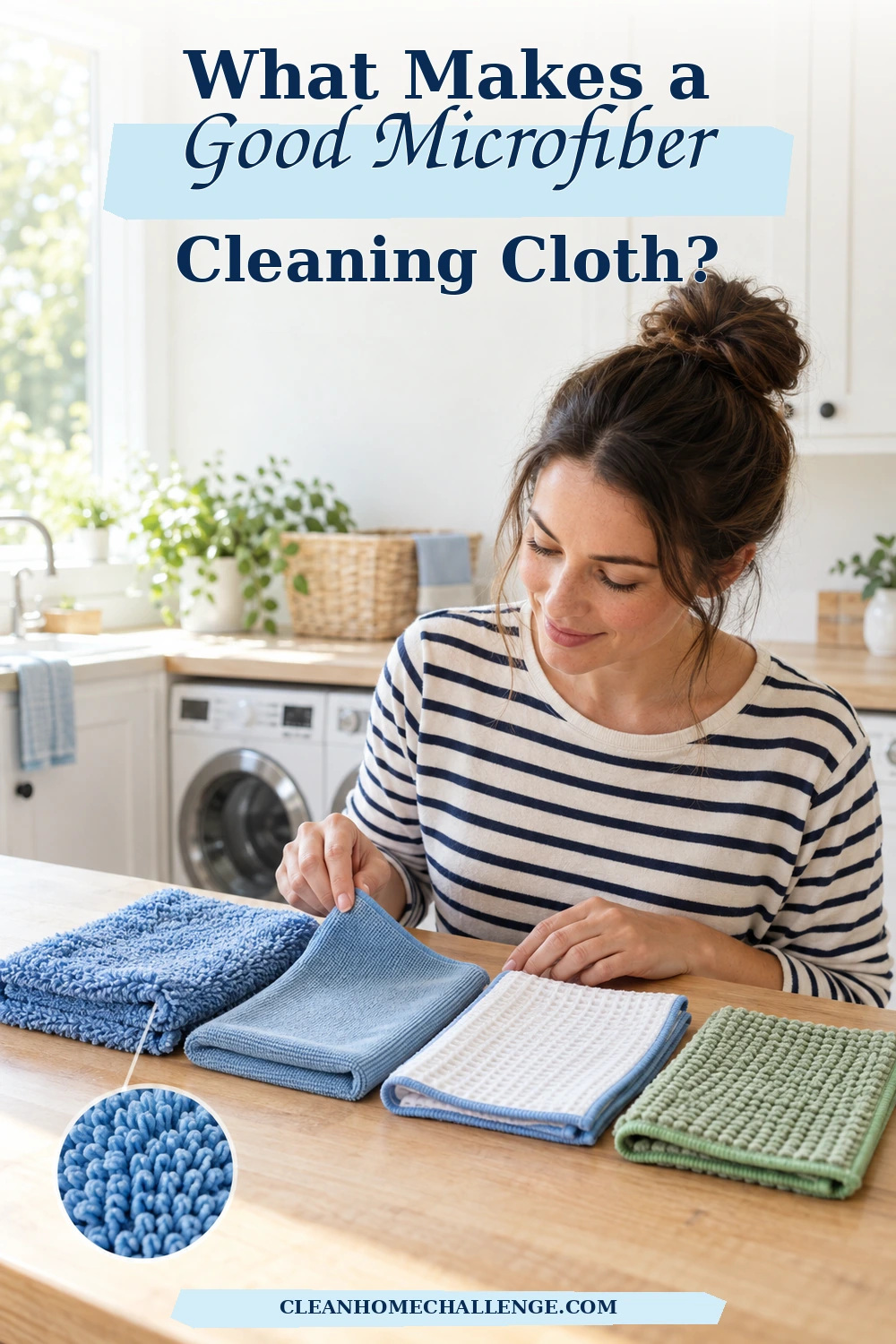
Microfiber is a synthetic material made from very fine fibers, usually polyester and polyamide. Those fine fibers create a large surface area that can lift and hold dust, moisture, and soil. However, the label “microfiber” alone does not tell you how a cloth will perform.
Start with the weave and pile. A plush cloth has longer, softer fibers and is useful for dusting, wiping countertops, and handling everyday spills. A low-pile cloth has a flatter surface that glides smoothly and is less likely to leave fuzz on screens, stainless steel, or glossy finishes. Waffle-weave cloths absorb water quickly and make good drying or glass cloths. Textured cloths add gentle scrubbing power for stuck-on grime.
Also check the edges. A well-finished hem should lie flat without hard, scratchy seams. If you clean delicate surfaces, look for a soft edge or an edgeless design. Before using any new cloth on a valuable finish, test it in an inconspicuous area and follow the surface manufacturer’s instructions.
Size matters less than usefulness. Cloths around 12 to 16 inches square are easy to fold into quarters, hold comfortably, and rotate to a clean side. Very large cloths can become heavy when wet, while very small cloths need constant rinsing.
The Best Microfiber Cloth for Each Cleaning Job
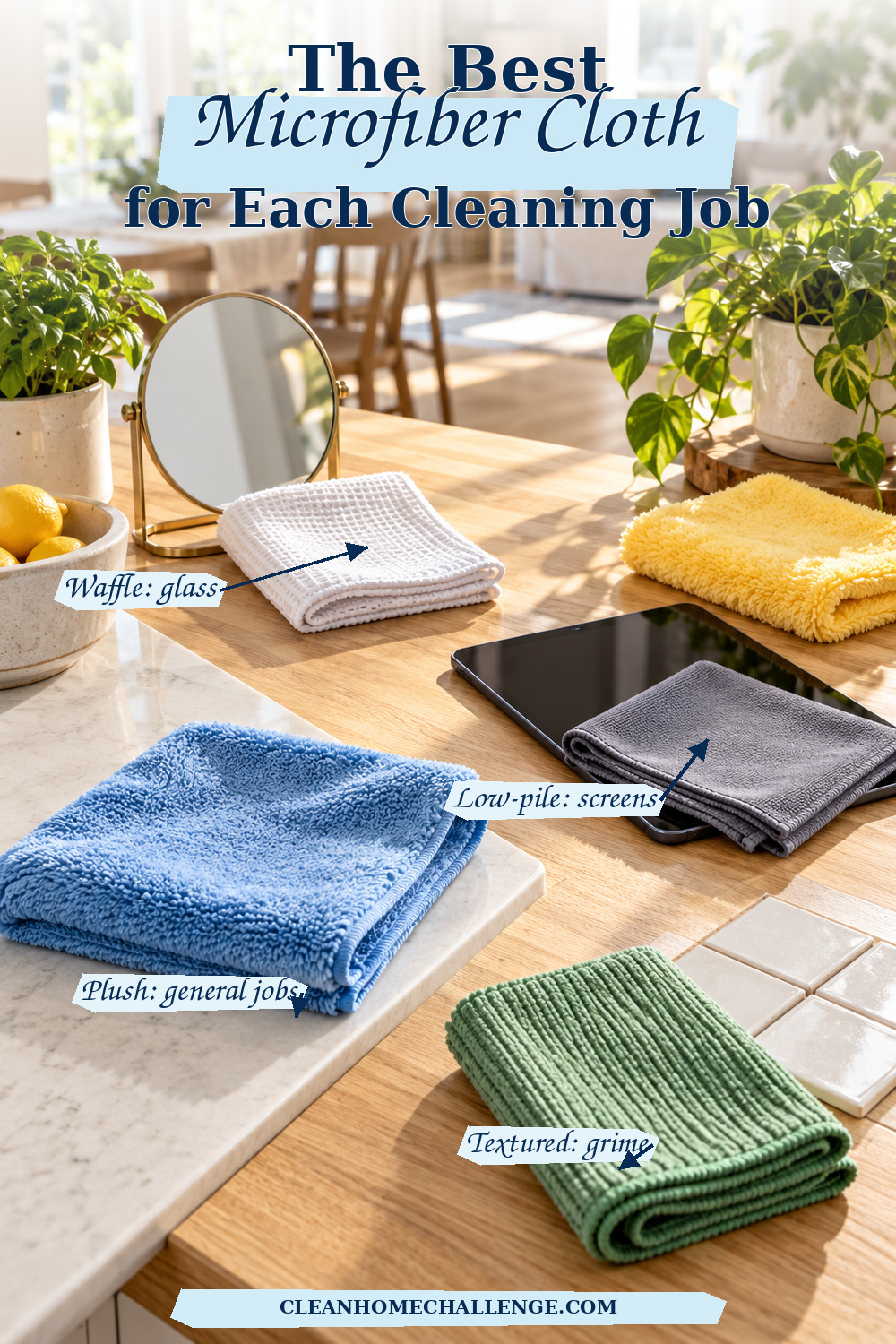
The easiest way to choose a cloth is to start with the job rather than the color or price.
- Everyday wiping: Choose a medium-weight plush cloth that feels soft but not overly fluffy. It should pick up crumbs, dust, fingerprints, and light spills without becoming saturated immediately.
- Glass and mirrors: Use a clean waffle-weave or tightly woven low-pile glass cloth. A flatter weave leaves fewer fibers behind and is easier to polish dry.
- Screens and electronics: Use a clean, dry, lint-free low-pile cloth. Check the device manufacturer’s instructions before adding moisture or cleaner.
- Stainless steel: A low-pile cloth works well for controlled wiping with the grain. Keep a second dry cloth for the final buff.
- Bathrooms: Choose a dedicated cloth with enough texture for soap residue, but keep it separate from kitchen cloths.
- Heavy soil: Use a textured microfiber cloth that can loosen grime without relying on aggressive scrubbing.
Avoid judging quality only by thickness. An extremely plush cloth can be excellent for dusting and poor for glass. A thin cloth can be exactly right for polishing. The best set contains a few purposeful textures rather than twelve identical cloths.
General Cleaning Cloths for Kitchens and Living Areas
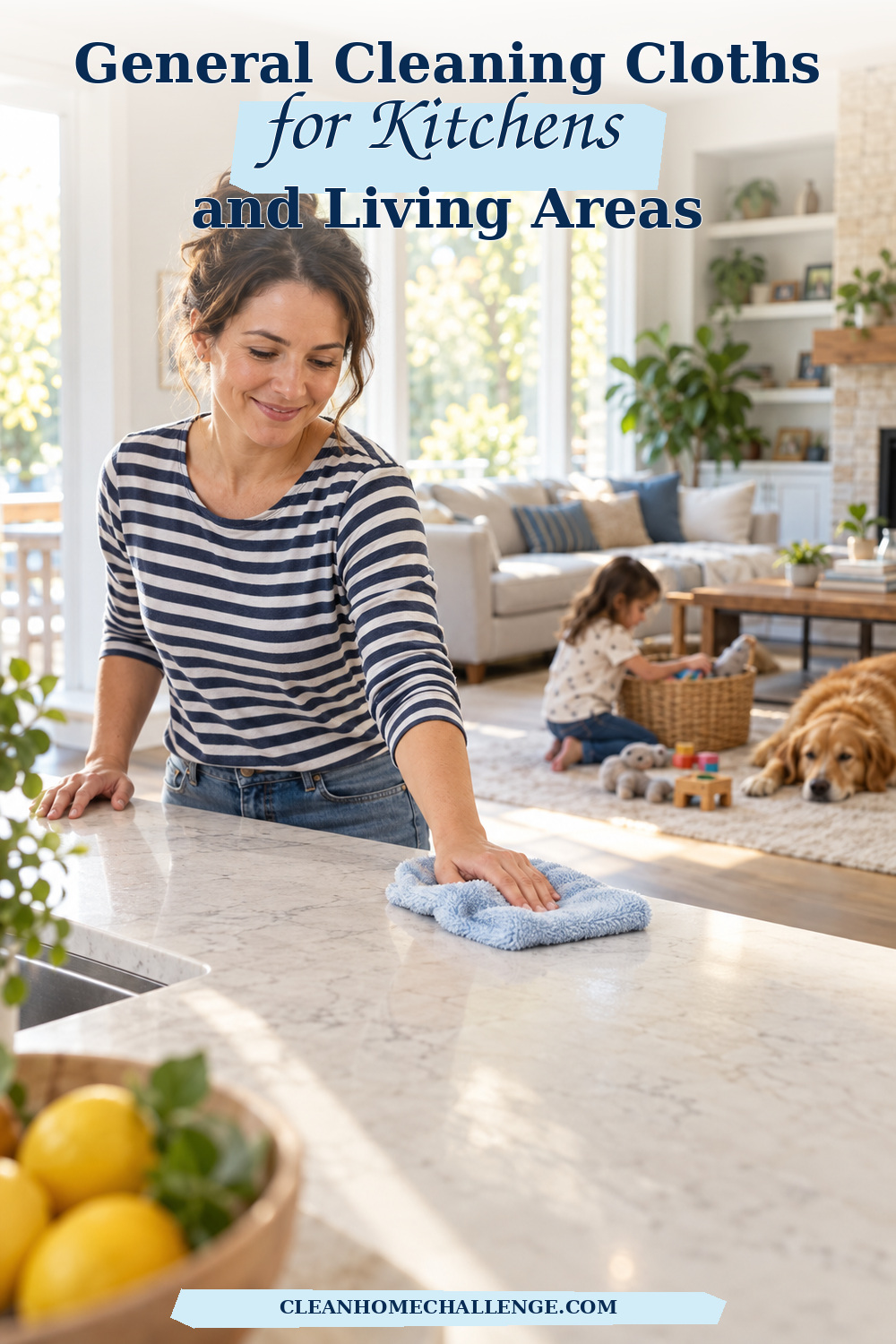
A medium-plush general cloth will do most of the work in a family home. Use it for sealed countertops, cabinet fronts, tables, shelves, baseboards, and quick spill cleanup. Fold the cloth into quarters before you begin. That gives you eight usable cleaning faces, so you can turn to a fresh section instead of spreading soil across the room.
For dry dusting, use the cloth dry or very lightly dampened. For routine wiping, apply the cleaning solution according to its label and the surface instructions. Do not soak the cloth simply because microfiber is absorbent; too much liquid can create streaks and may be unsuitable for wood, laminate, or electronics.
Keep several general cloths in rotation. Once a cloth looks dirty, feels loaded, or starts pushing debris around, place it in the laundry. A fresh cloth usually cleans faster than repeated rinsing of an overloaded one.
Kitchen cloths should also have a clear retirement point. If a cloth has handled raw food residue, a significant spill, or a particularly greasy job, move it straight to the wash rather than using it on the dining table or refrigerator handle.
Glass, Mirrors, Stainless Steel, and Screens
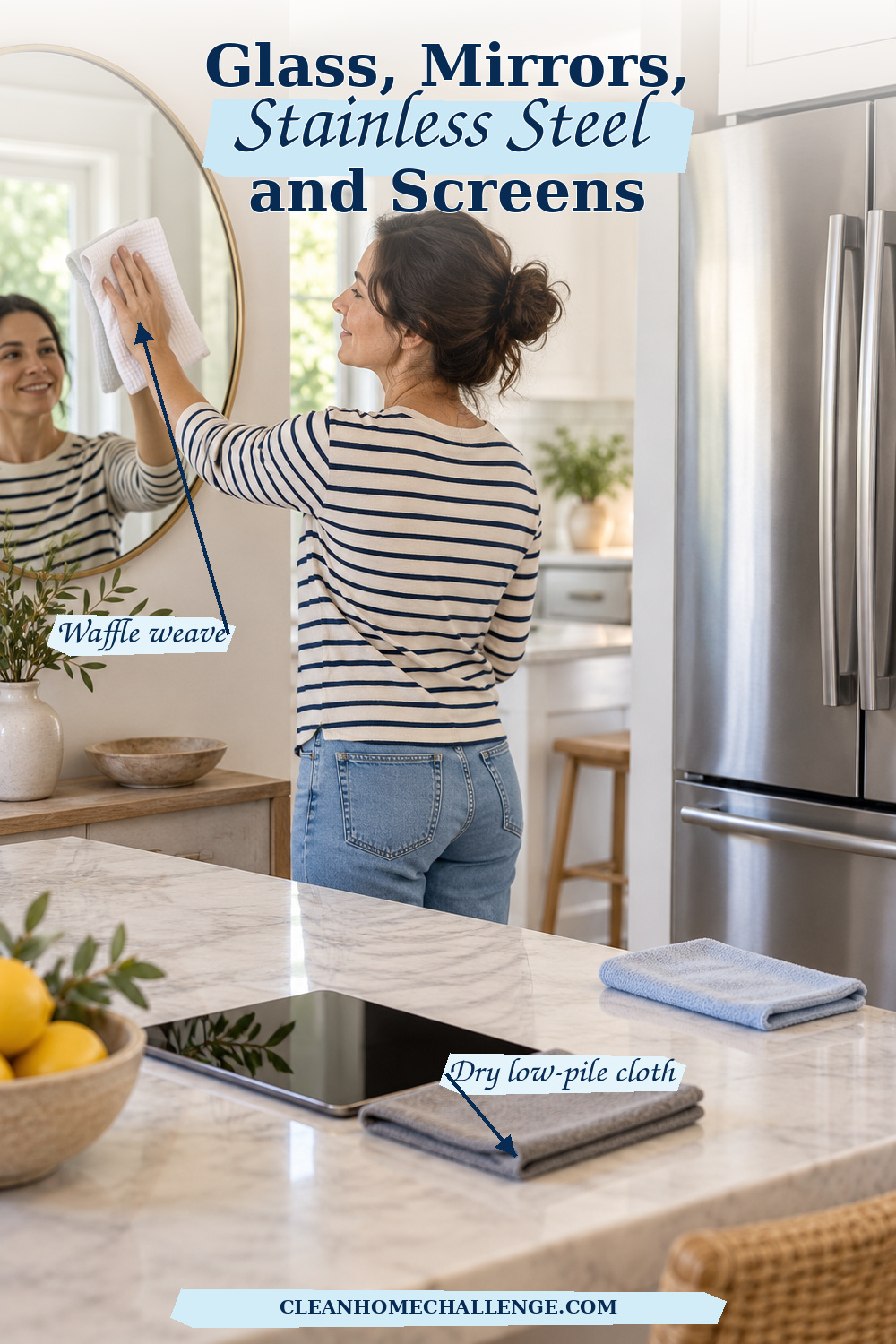
Streak-free surfaces depend as much on the cloth as the cleaner. For glass and mirrors, use a clean waffle-weave or smooth low-pile cloth. Start with very little moisture, then polish with a dry section or a second cloth. If streaks remain, the cloth may be carrying detergent residue or grease from a previous job.
For stainless steel, wipe in the direction of the visible grain. A damp low-pile cloth can remove fingerprints; a second dry cloth can buff away remaining moisture. Avoid abrasive pads, and always follow the appliance manufacturer’s guidance when a protective coating is present.
Screens need extra care. Apple and other device manufacturers commonly recommend a soft, lint-free cloth and caution against applying liquid directly to the device. Turn the device off, let it cool, and use a clean dry cloth first. Only use moisture or an approved product when the manufacturer specifically allows it.
The nonnegotiable rule for these jobs is cleanliness. A cloth that previously held grit, grease, or cleaner residue can scratch, smear, or leave a film. Store glass and screen cloths separately so they stay ready for delicate work.
Color-Code Cloths to Reduce Cross-Contamination
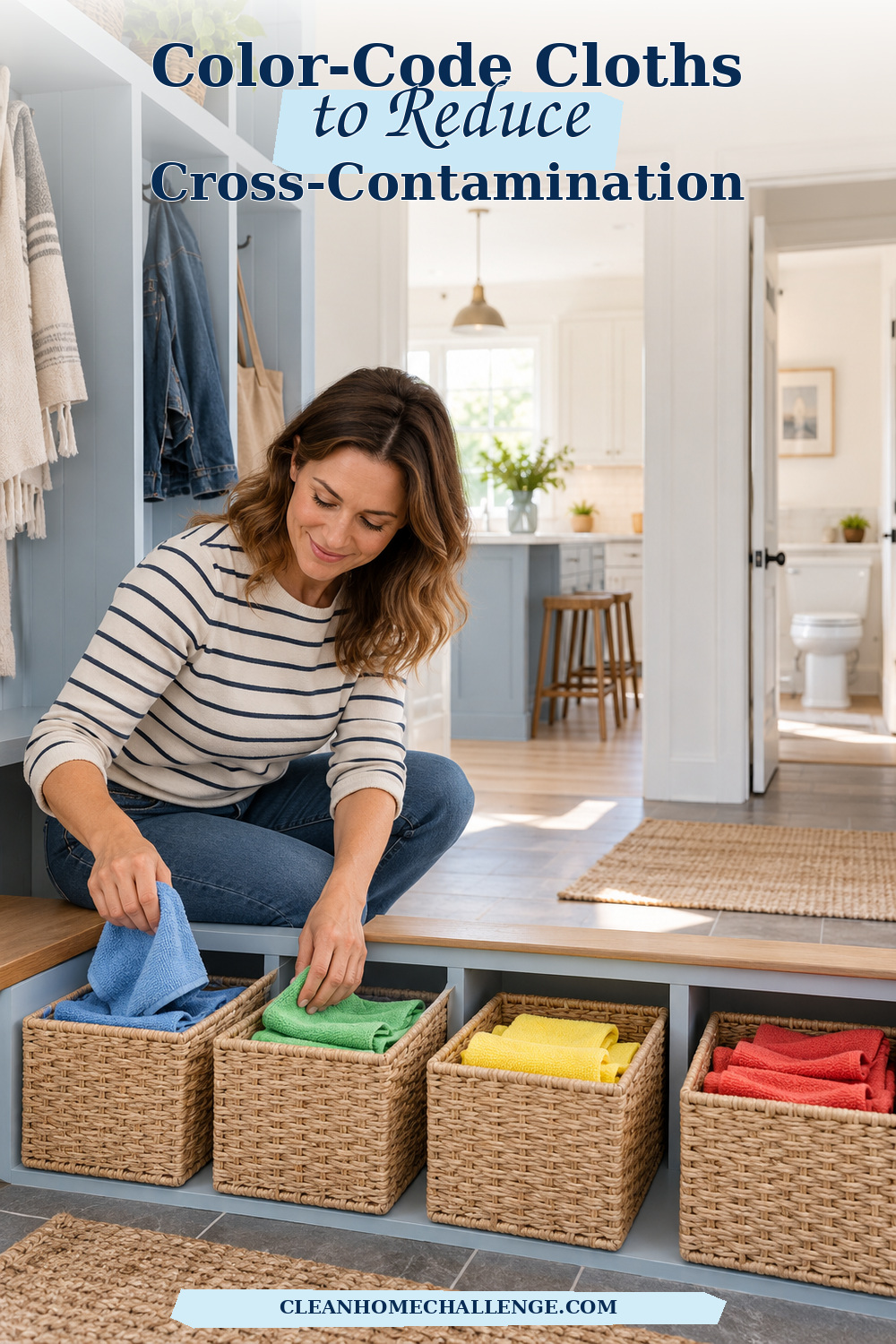
Color coding makes it easy to see where each cloth belongs. Professional cleaning systems often use color to separate tasks and reduce the chance of moving soil from one area to another. Your home system does not need to match anyone else’s; it only needs to be consistent.
A simple starting plan is:
- Blue: glass, mirrors, and low-risk general surfaces
- Green: kitchen counters and food-preparation areas
- Yellow: dusting and living spaces
- Red: toilet zone and high-soil bathroom jobs
Post the color key inside the cleaning cupboard until everyone remembers it. If your cloths are all the same color, label baskets or use small washable tags instead. The system is more important than the palette.
Color coding does not replace good laundering or handwashing. A cloth should still go to the wash when it is dirty, after a high-risk task, and between cleaning zones when appropriate. The CDC recommends using a fresh cleaning cloth for each cleaning zone in health-care environmental cleaning; the same separation principle is a practical safeguard at home.
How Many Cloths Does a Busy Home Need?

Most households can start with about 12 useful cloths and adjust after two laundry cycles. A practical set might include six plush general cloths, two glass or waffle-weave cloths, two low-pile screen and stainless cloths, and two dedicated bathroom cloths.
That number is not a rule. A larger family, frequent pet messes, or a weekly laundry schedule may justify 16 to 20 cloths. A small home where laundry runs every few days may need fewer. You have enough when a clean cloth is available for each routine job without forcing you to reuse a dirty one.
Do not confuse quantity with convenience. Twenty identical cloths can be less useful than twelve thoughtfully chosen ones. Begin with the jobs you perform every week, then add only what solves a real shortage.
Store clean cloths by type or zone and keep used cloths in a ventilated container. Do not leave damp cloths balled up in a sealed basket; spread them out to dry before laundry day when practical.
How to Wash Microfiber Cloths Without Ruining Them

The safest care instructions are the ones on the product label, because fiber blends and finishes vary. In general, wash microfiber separately from lint-producing cotton towels and heavily soiled items. This reduces lint transfer and keeps cleaning cloths away from oily work rags.
Use an appropriate amount of detergent. More detergent does not make cloths cleaner and can leave residue that causes smearing. Skip fabric softener because it can coat the fibers and reduce their ability to pick up soil and moisture. Kärcher and E-Cloth both advise avoiding fabric softener for microfiber products.
Choose a wash temperature permitted by the manufacturer. Some cloths tolerate warm or hot water; others specify lower temperatures. Air-dry when practical, or use the low-heat setting allowed by the care label. High heat can damage synthetic fibers over time.
Let cloths dry completely before storing them. If a clean cloth begins to smell, feels waxy, or leaves streaks, check for detergent buildup, softener exposure, or incomplete drying. A cloth used with wax, polish, or heavy oil may need to be retired from glass and screen work even after washing.
Build a Simple Microfiber Cloth Kit
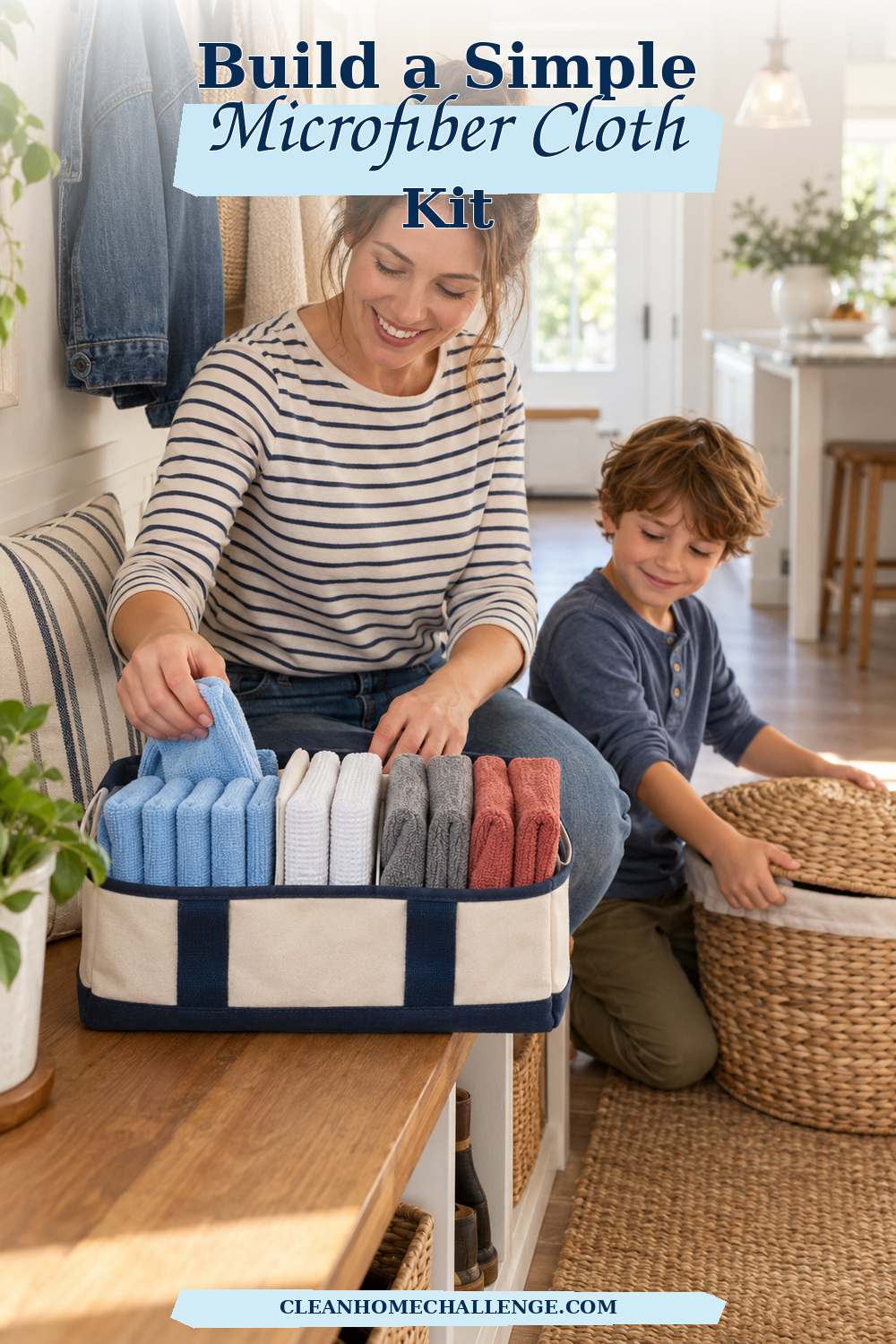
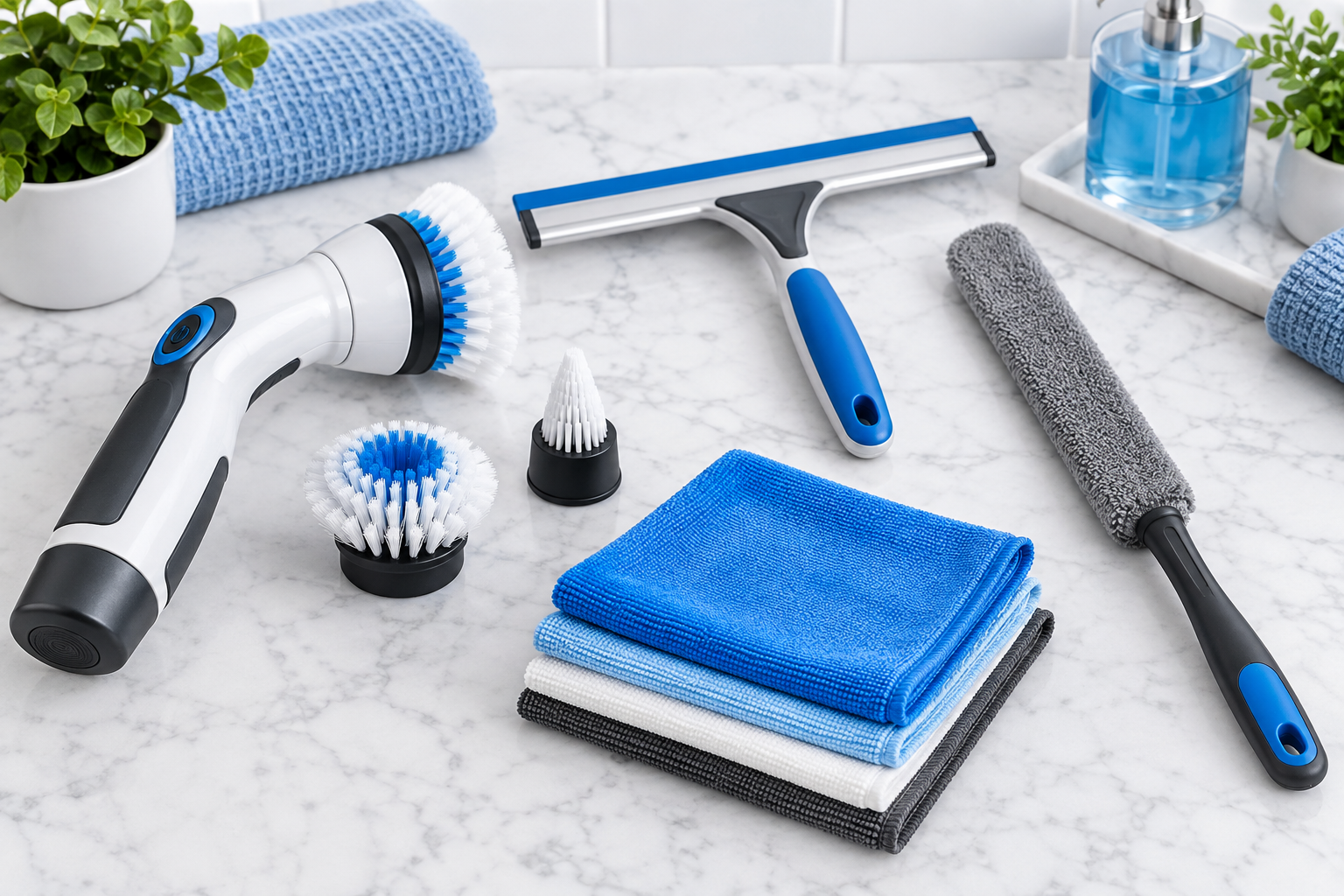
Begin with a compact kit rather than a giant multipack. Look for six medium-plush general cloths, two waffle-weave glass cloths, two smooth low-pile cloths, and two clearly separated bathroom cloths. Add a mesh laundry bag or ventilated basket and a simple color key.
When comparing products, check the weave, edge finish, size, care label, and whether replacement cloths are easy to buy. Reviews are most useful when they mention repeated washing, lint, streaking, and edge durability—not just softness straight from the package.
Keep one or two clean general cloths where messes happen most often, but store specialty cloths in their assigned basket. Fold cloths consistently so anyone in the household can grab the right one. When a cloth becomes stained but still functional, demote it to rougher jobs such as baseboards, outdoor furniture, or garage surfaces.
The best microfiber cloths for cleaning are not necessarily the most expensive. They are the cloths that suit the job, stay separated by zone, survive regular washing, and are easy enough to use that your family reaches for them. Build a small system, watch what gets used, and expand only when the routine shows you a genuine gap.
CLEANERS CLUBHOUSE
Use the Right Tools With a Routine That Works
Good cleaning tools work best when you know where and when to use them. Inside the Cleaners Clubhouse, recommended products sit alongside practical routines, printable worksheets and monthly challenges.
Sources
- CDC: Cleaning and Disinfecting with Microfiber Cloths
- CDC: Environmental Cleaning Procedures
- Apple: How to Clean Apple Products
- Kärcher: How to Wash Microfiber Cloths
- E-Cloth: Product Care
- Rubbermaid Commercial: Microfiber and Color-Coded Cleaning