
THIS POST MAY CONTAIN AFFILIATE LINKS. PLEASE READ MY DISCLOSURE FOR MORE INFO.
Laminate floors look their best when they are cleaned with very little moisture and very little product. The reliable order is simple: remove dry grit, use a clean microfiber pad that is only barely damp, move with the plank direction, and dry or buff any lingering moisture or haze. Standing water, excess cleaner, dirty pads, and unapproved steam are the habits most likely to leave streaks or damage vulnerable seams.
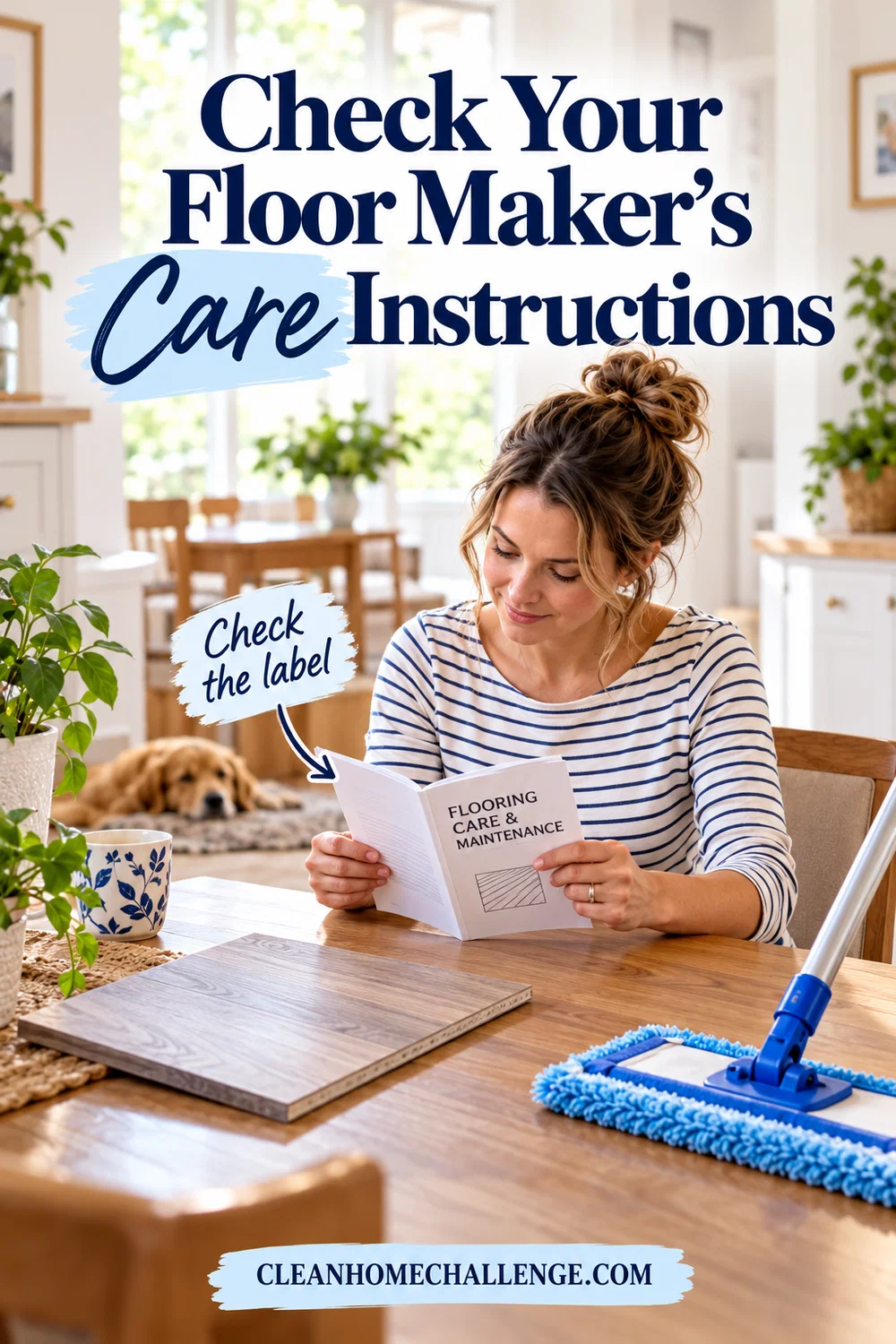
Before you start, check the care guide for your specific flooring. Laminate products vary, and labels such as “water-resistant” do not mean that every plank can tolerate soaking, steam, or the same cleaner. If the installation paperwork is gone, look for a brand name on spare boards, receipts, or product boxes and contact the manufacturer.
This guide shows you how to clean laminate floors without streaks, how to protect the edges from swelling, and how to build a quick routine that works in a busy home.
Disclosure: This post may contain affiliate links. As an Amazon Associate, Clean Home Challenge earns from qualifying purchases. If you make a purchase through these links, we may earn a small commission at no extra cost to you. This helps us keep creating practical cleaning tips, routines and resources for busy families! 🧽
Why Laminate Floors Show Streaks and Swelling
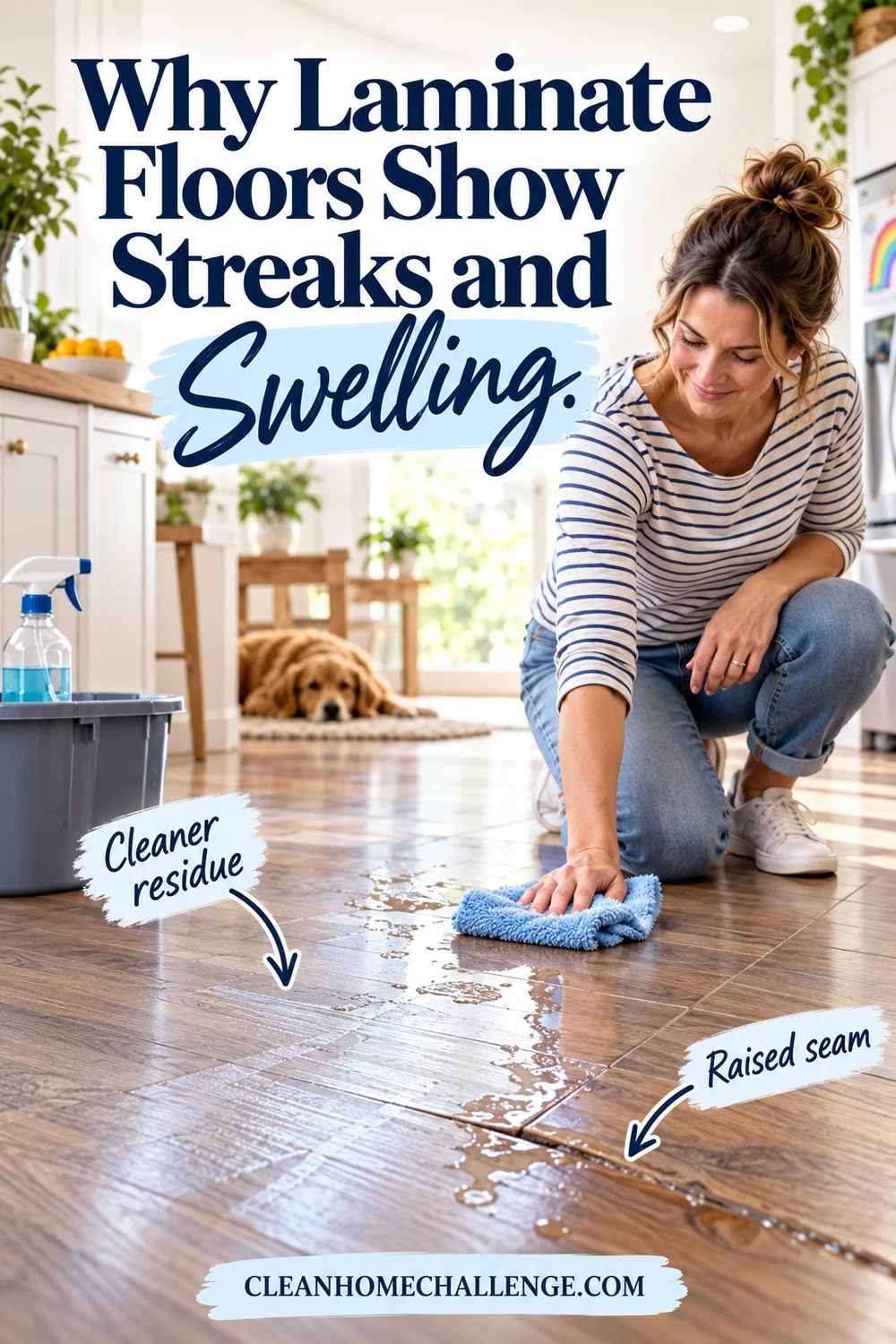
Laminate flooring usually has a decorative surface over a dense wood-fiber core. The top wear layer is designed for everyday traffic, but the joints and cut edges can be more sensitive to moisture. Water that sits at a seam may work into the core and cause an edge to lift, peak, or swell. Once the core has expanded, cleaning will not shrink it back to its original shape.
Streaks are a different problem. They are normally something on the surface: too much cleaner, a dirty mop pad, soil that was made wet before it was removed, or repeated passes with contaminated water. Bright window light makes the film easy to see, especially across long plank lines.
The fix is not a wetter mop or a stronger mixture. Start with less product and a cleaner pad. If the floor still looks hazy after it dries, buff a small section with a dry microfiber cloth. Persistent haze may be old cleaner buildup or a coating that needs manufacturer-specific advice.
If cleaner buildup is affecting more than the laminate area, use the companion Clean Home Challenge guide, “How to Mop Floors Without Leaving Sticky Residue,” to identify the residue before changing products.
Check Your Floor Maker's Care Instructions
Find the manufacturer’s maintenance page before using a new product or machine. Pergo, for example, recommends regular vacuuming with a suitable hard-floor attachment and a well-wrung damp mop, while Shaw tells owners to use a laminate-specific cleaner and avoid wet mopping, soap, oil soap, abrasives, and strong ammoniated or chlorinated products. Those details matter more than a generic recipe.
Check four things in the care guide:
- Whether the floor can be damp-mopped and how much moisture is allowed.
- Which cleaners are approved and whether they are ready to use or concentrated.
- Whether steam cleaning is specifically permitted. Do not assume it is.
- How spills, stains, or residue should be handled without affecting the warranty.
Patch-test a new cleaner in an inconspicuous area. Let it dry completely before judging the result. Stop if the finish clouds, changes color, feels rough, or if a seam begins to lift.
If you prefer products with reviewed human-health and environmental criteria, the EPA’s Safer Choice label can help you identify options that meet its ingredient and performance standards. It does not replace the flooring manufacturer’s approval, so check both.
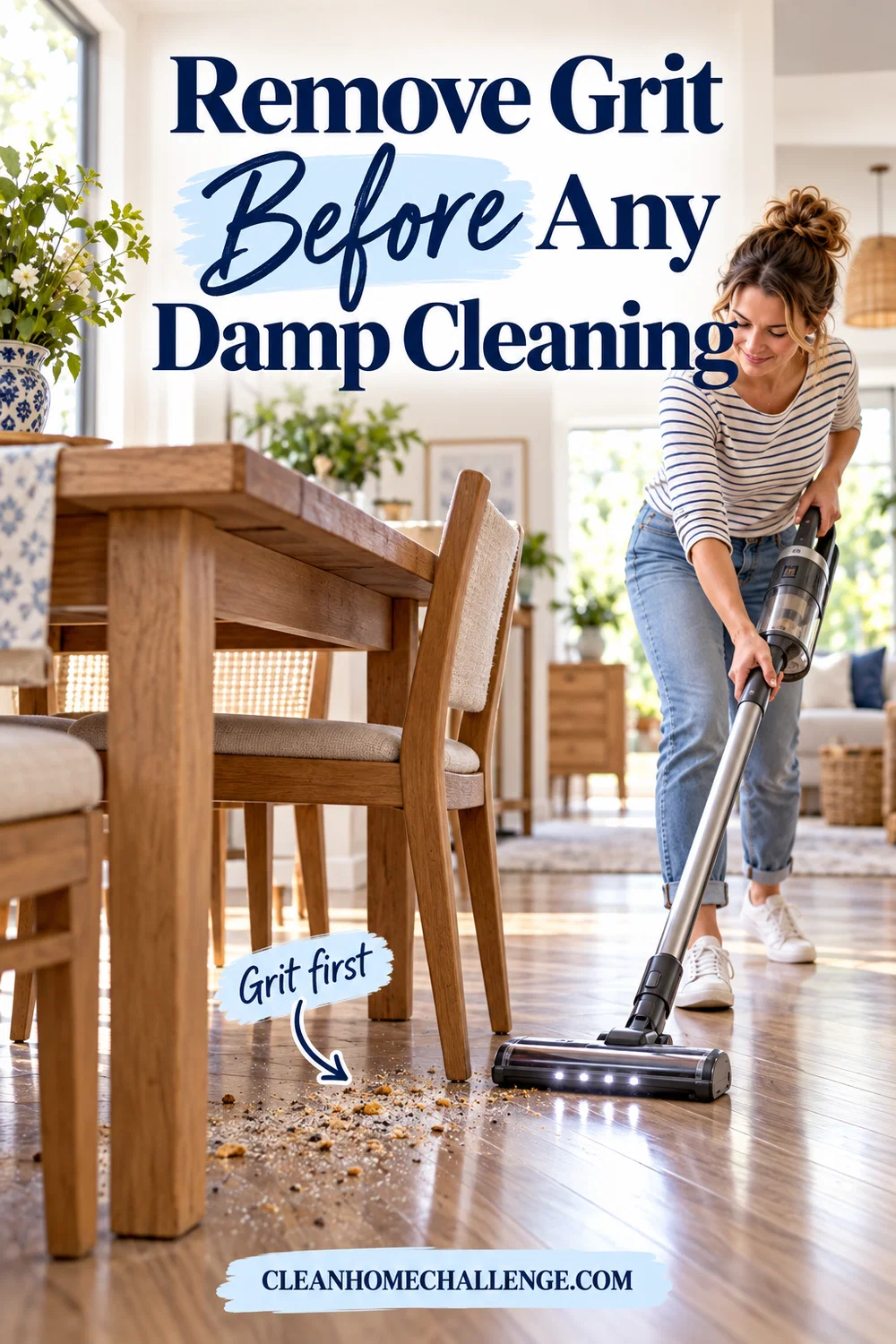
Remove Grit Before Any Damp Cleaning
Dry soil is the first thing to remove. Fine sand and crumbs can scratch when they are dragged under a damp mop, and hair or dust can turn into muddy lines once wet.
Use a vacuum with a hard-floor or parquet attachment and switch off the beater bar unless your floor maker says it is safe. A soft broom or dry microfiber dust mop also works. Clean along the room edges, under the table, around pet bowls, and across entrances where grit collects.
Move light chairs and baskets, but do not strain to shift heavy furniture. Use felt protectors under movable furniture and replace any pad that has trapped grit. At outside doors, shake out or vacuum the mat before you start so debris is not carried back across the clean floor.
Vacuuming first may feel like an extra job, but it shortens the damp-cleaning stage and prevents the mop pad from becoming overloaded immediately.
Use a Barely Damp Microfiber Mop
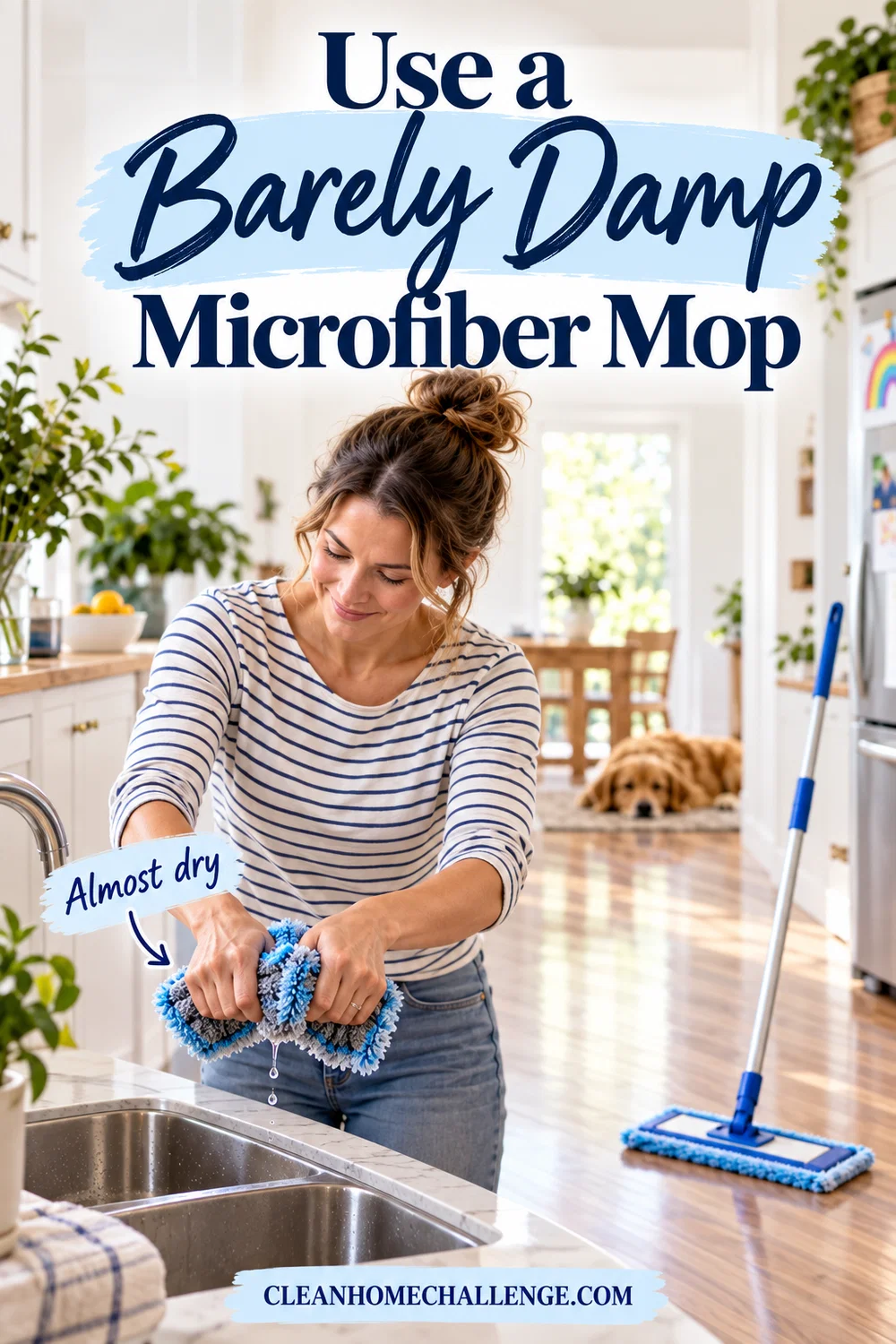
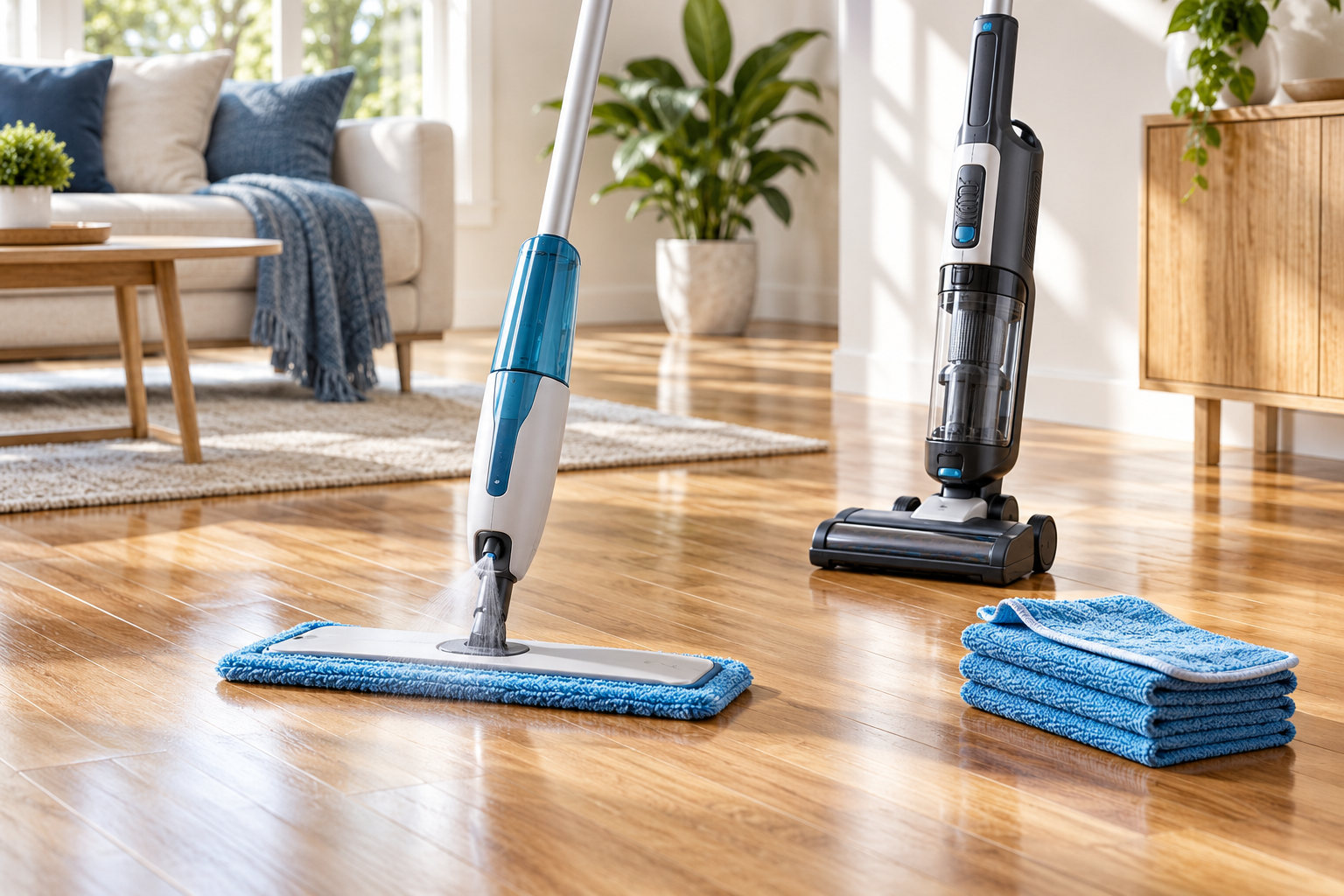
A flat microfiber mop gives you control over moisture. If you rinse the pad, wring it until it feels damp rather than wet and no water drips when you squeeze it. For a ready-to-use laminate cleaner, apply only the amount on the label—often a light mist on the floor or pad is enough.
Work in small sections so moisture does not sit while you clean the rest of the room. The floor should not have puddles, a wet sheen that lingers, or water collecting at seams. Blot any excess immediately with a dry cloth.
Use several clean pads for a large or busy area. Change the pad when it looks gray, leaves lines, or stops gliding easily. Rinsing a dirty pad in already cloudy water only puts that soil back on the floor.
Never mix cleaning products. Do not add dish liquid, vinegar, bleach, ammonia, oil soap, polish, or essential oils unless the flooring manufacturer explicitly approves that product and method. A homemade mixture that works on tile may damage or coat laminate.
Clean in the Direction of the Planks
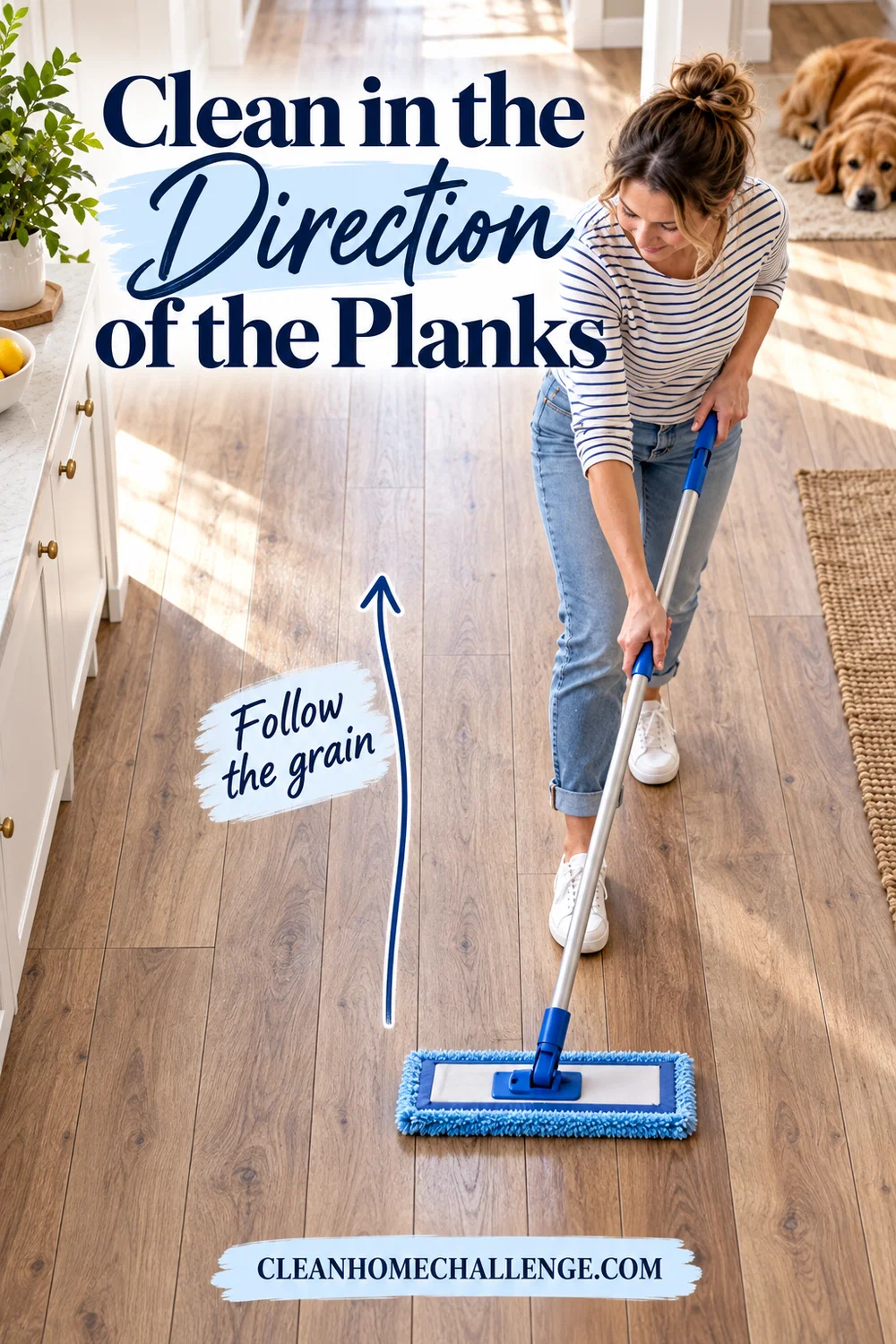
Move the mop along the length of the planks rather than making random circles across them. Following the plank direction helps you collect soil from the shallow texture and makes any remaining wipe marks less obvious.
Start at the far side of the room and work toward the exit. Use overlapping passes, keeping the mop head flat. Lift and reposition the mop when you change direction rather than twisting grit beneath it.
Check your work from the side where window light hits the floor. If you see a wet line, turn to a clean side of the pad or replace it. If a few areas remain damp, dry them with a clean microfiber cloth rather than waiting for pooled moisture to evaporate.
Keep children and pets out of the section until it is dry. That prevents footprints, slips, and fresh dirt from being tracked into the damp finish.
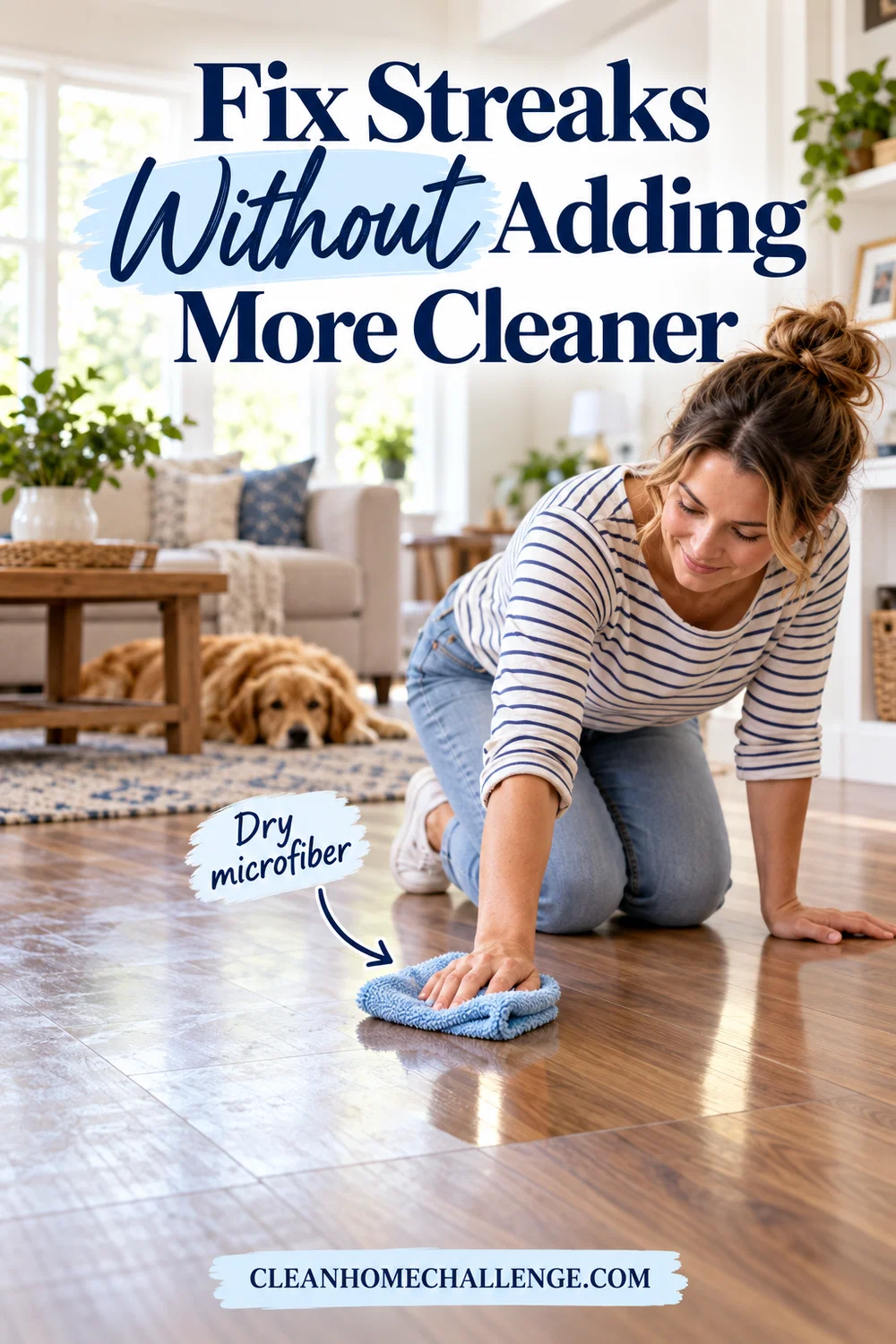
Fix Streaks Without Adding More Cleaner
When a newly cleaned laminate floor dries streaky, do not pour on another layer of product. First let the floor dry fully, then buff a small test area with a clean, dry microfiber cloth. If the haze lifts, continue with fresh cloth sections.
If dry buffing is not enough, review the cleaner label and the floor maker’s instructions. Where both permit a plain-water pass, use a separate pad that is very well wrung and work over one small section. Dry it immediately and compare it with the untreated area. Several light passes are safer than one soaking pass.
Streaks that keep returning may be older buildup, polish, oil soap, or an incompatible product. Contact the maker of the product that caused the residue and the flooring manufacturer before using a remover. Stop experimenting if the surface becomes cloudy, tacky, soft, rough, or discolored.
For future cleans, measure concentrate precisely, use fresh pads, and avoid spraying a large area before you are ready to mop it.
Deal With Spills and Sticky Spots Fast
Blot spills promptly so liquid does not reach the joints. Press a dry absorbent cloth onto the spill instead of spreading it over a wider area. Then use the floor maker’s approved spot-cleaning method and dry the section.
For a sticky food mark, lift loose material gently with a soft cloth or a non-scratching tool approved for the surface. Avoid soaking the spot and do not scrub with steel wool, abrasive pads, or scouring powder. Never use a razor blade unless the flooring manufacturer specifically instructs you to do so.
If liquid has already reached a seam, dry the surface and monitor it. A raised edge that remains after the area is dry can indicate swelling beneath the wear layer. Document the location and contact the manufacturer, installer, or a flooring professional. Do not try to flatten it with heat or by flooding it again.
Pet accidents need the same fast response. Blot, clean with an approved product, dry thoroughly, and keep pets away until the surface is dry.

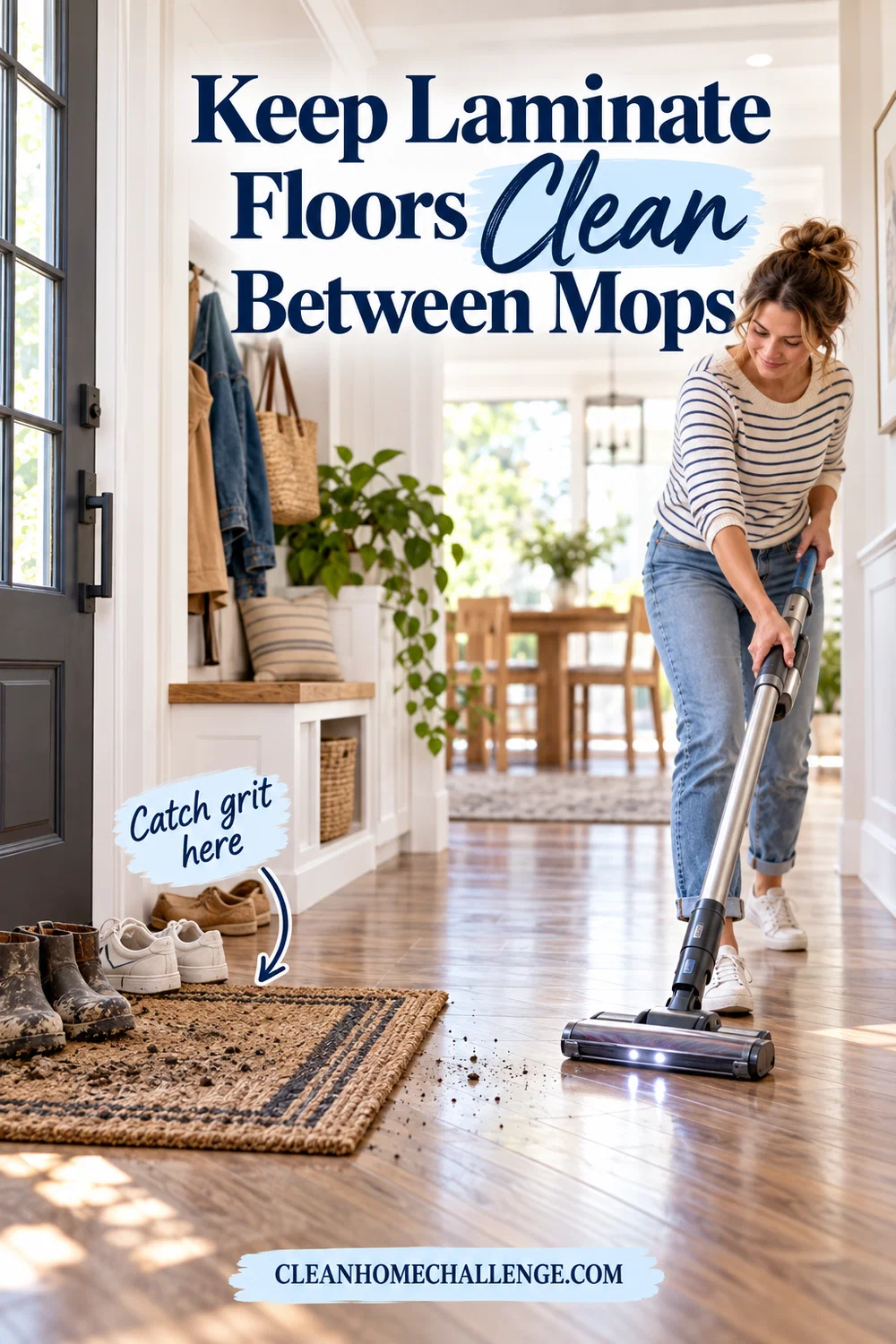
Keep Laminate Floors Clean Between Mops
Most laminate floors do not need a full damp mop every day. A small amount of prevention keeps grit and sticky marks from turning into a bigger Friday job.
- Use good entrance mats and clean them often.
- Vacuum or dry-mop high-traffic paths before grit spreads.
- Blot drink and food spills as soon as you notice them.
- Keep felt pads under chair and furniture legs.
- Trim pets’ nails and wipe muddy paws at the door.
- Use only one compatible cleaner at the correct strength.
- Store several clean microfiber pads with the mop.
For the Clean Home Challenge Friday floor routine, pick up obstacles, vacuum the busiest rooms, and damp-mop only the laminate areas that genuinely need it. On an overloaded week, removing grit and spot-cleaning spills is enough. The whole-house mop can wait.
Frequently Asked Questions
Can I use a steam mop on laminate flooring? Only if the flooring manufacturer explicitly permits it for your exact product and installation. Many laminate care guides warn against steam because heat and moisture can reach seams and the core.
Why does my laminate floor look worse after mopping? The common causes are too much cleaner, a dirty pad, wet dust, or water that was left to dry on the surface. Let the floor dry, test a clean dry microfiber cloth, and use the manufacturer’s residue-removal advice if haze remains.
Is vinegar safe for laminate floors? Do not treat vinegar as a universal laminate cleaner. Use only a method approved by the floor maker, because finishes and warranties vary.
How often should laminate floors be damp-mopped? Follow the manufacturer’s schedule and clean according to traffic. Regular dry soil removal and prompt spot cleaning can reduce how often a full damp mop is needed.
What should I do if a seam is already swollen? Dry the area and seek advice from the manufacturer, installer, or a flooring professional. Swelling in the core is damage, not surface dirt, and more cleaning will not reverse it.
Clean laminate floors come from restraint: remove grit first, use a barely damp clean pad, measure the right product, and dry any lingering moisture. That routine prevents most streaks and gives vulnerable seams the best chance of staying flat.
CLEANERS CLUBHOUSE
Stay on Top of Floors Without Cleaning All Day
Give your floors a focused Friday reset instead of chasing every mark all week. The Cleaners Clubhouse helps you build a realistic routine with practical guidance, printables and monthly challenges.