
THIS POST MAY CONTAIN AFFILIATE LINKS. PLEASE READ MY DISCLOSURE FOR MORE INFO.
You clear the couch, sit down for a minute, and discover a fresh layer of fur on your pants. Living with pets can make hair removal feel like a job with no finish line. A small, well-chosen toolkit makes it easier to keep the places your family uses comfortable.
The best pet hair remover depends on the surface. A reusable upholstery roller is a sensible first choice for a sturdy fabric sofa; a compatible vacuum attachment handles seams and everyday debris; an adhesive roller makes clothing touch-ups simple. Rubber tools can help on suitable fabrics and rugs, while laundry aids belong at the end of a good prewash routine.
This is a research-based buying guide using current manufacturer instructions and material-care guidance, checked in October 2026. It is not a hands-on product test, and the examples below are options to compare rather than a laboratory ranking. Start with what you own, then buy for the job that still takes too much effort.
Disclosure: This post may contain affiliate links. As an Amazon Associate, Clean Home Challenge earns from qualifying purchases. If you make a purchase through these links, we may earn a small commission at no extra cost to you. This helps us keep creating practical cleaning tips, routines and resources for busy families! 🧽
Match the Tool to the Surface
Before shopping, choose your biggest nuisance: the sofa where the dog naps, the rug that holds short hairs, or the black clothes that collect everything. Buying for that one problem is more useful than ordering a bundle of similar gadgets.
Here is a practical shortlist:
- Reusable upholstery roller: Best starting point for frequent touch-ups on compatible, firmly supported fabric cushions. Look for comfortable handling and an easy-empty chamber. It will not reach every seam.
- Rubber brush, blade, or broom: Worth considering for stubborn hair on manufacturer-approved fabrics or rugs. A handheld tool suits a small area; a long handle reduces bending. Rubber still needs a surface check.
- Vacuum with an upholstery tool: The most useful foundation when fur shares the sofa or carpet with dust, crumbs, and grit. Check attachment compatibility before buying an accessory.
- Adhesive lint roller: A convenient finishing tool for suitable clothing and small patches of loose fur. Refills are an ongoing cost, especially if you use it on an entire sofa.
- Laundry hair-removal aid: An optional extra for compatible wash-and-dry loads. Check how it works, what additives it excludes, and whether you actually use a dryer.
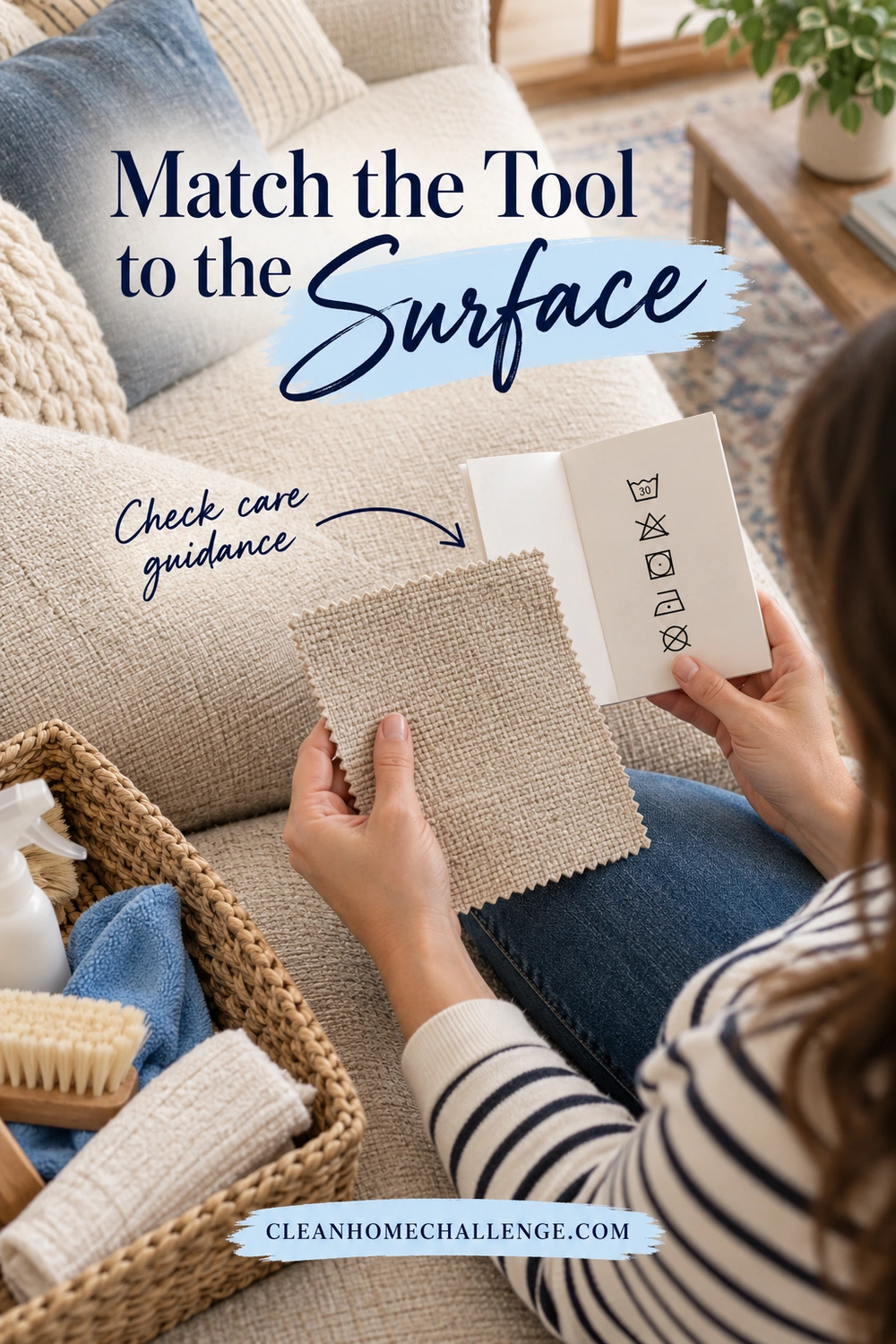
The furniture or rug maker’s instructions take priority over a tool advertisement. Check the care label, fabric construction, and any specific restrictions. A tightly woven cushion and a loose looped throw may look similar from across the room but need different handling.
For upholstery, the cleaning code mainly guides cleaning methods; it does not automatically approve every brush or scraper. For example, Ashley identifies X-coded fabric as suitable for vacuuming or light brushing, with no water- or solvent-based cleaner. Do not spray a sofa simply to make fur easier to gather. See the manufacturer’s fabric-care guidance.
Test any permitted tool on a hidden spot with light pressure. Stop if the fabric pulls, fuzzes, loses pile, changes appearance, or transfers color. If the label is missing or the material is valuable, delicate, or already damaged, ask its manufacturer before experimenting.
Choose a Reusable Sofa Roller
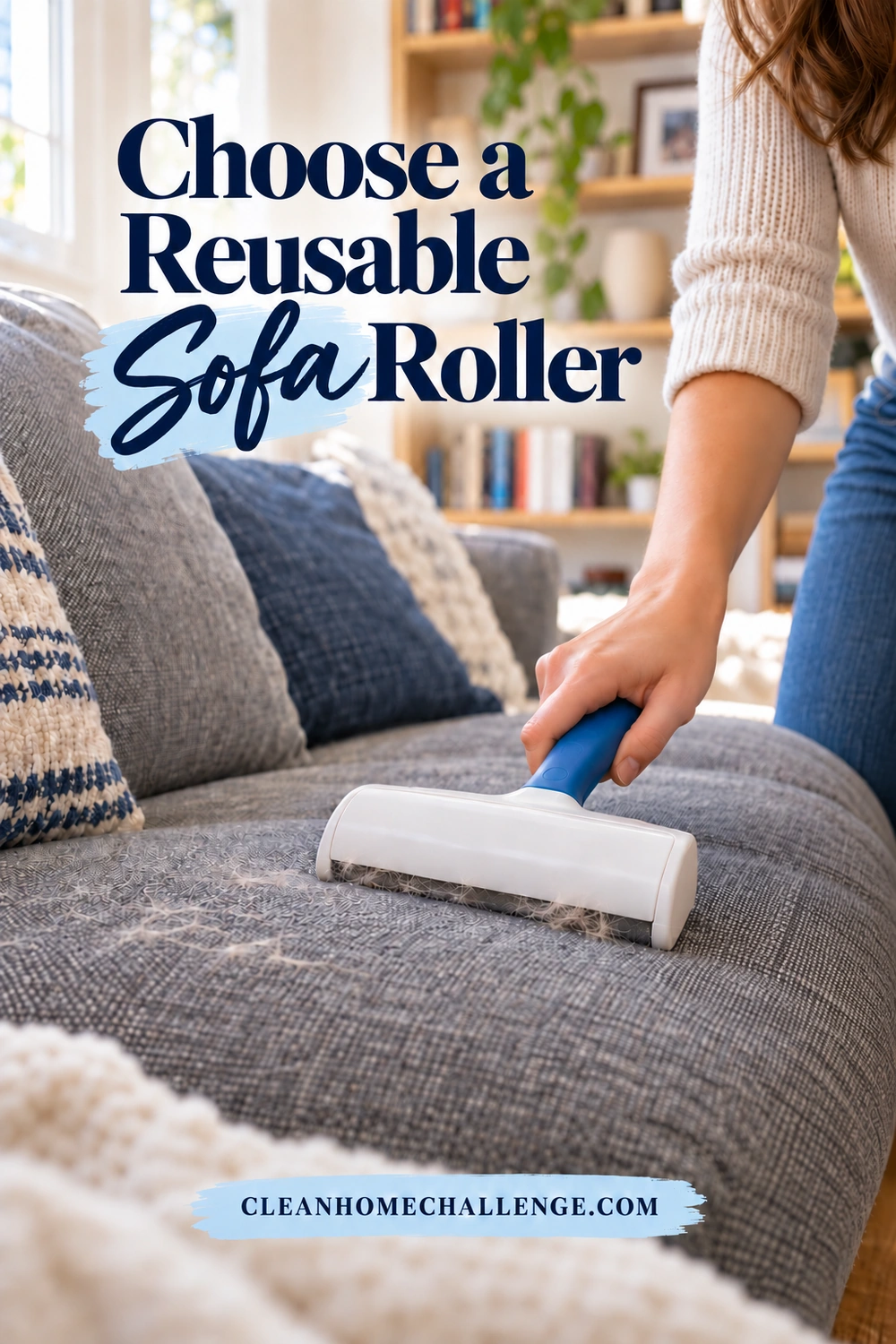
A reusable sofa roller is an appealing everyday choice when the same cushions need attention repeatedly. It avoids disposable sheets, stores easily near the room, and lets you deal with a small patch without setting up a vacuum.
One current example is the BLACK+DECKER Pet Hair Remover, model HMSCT0001. Its manufacturer specifies short, rapid push-pull movements, a collection chamber with a viewing window, and button-operated emptying. It uses no sticky tape; the product page advises wiping the tool with a damp cloth. These are practical features to compare with other reusable rollers, rather than proof that one model wins on every sofa. Check the official product details.
A simple cushion-by-cushion method
- Move blankets, toys, and other loose items. Pick up obvious grit before rubbing a tool across the fabric.
- Keep the cushion supported on the sofa or another stable surface. Smooth the fabric gently without stretching seams.
- After a hidden-spot test, use the roller’s instructed back-and-forth motion over one small area.
- Check the collection chamber and empty it before hair packs in tightly. Continue across the seat, then the arms and back cushions if their fabric allows it.
- Finish piping, gaps, and the area underneath removable cushions with the appropriate vacuum attachment.
Allow roughly five to ten minutes for an ordinary sofa touch-up; a heavily coated sectional can take longer. This is a planning estimate, not a measured product result. If you have only a minute, clear the cushion someone is about to use.
Before buying, consider the head width, your grip, how the chamber opens, and where the tool will live. A wider head covers a broad seat, but a bulky casing can be awkward around narrow cushion edges. A tool you can empty over the trash without scattering hair earns its storage space.
Avoid treating a reusable roller as an all-purpose fabric fixer. It does not wash stains, mend snagged fibers, or make a removable cushion cover machine washable. If repeated passes are not helping, pause and reassess the tool-surface match rather than pressing harder.
Use Rubber Tools with Care
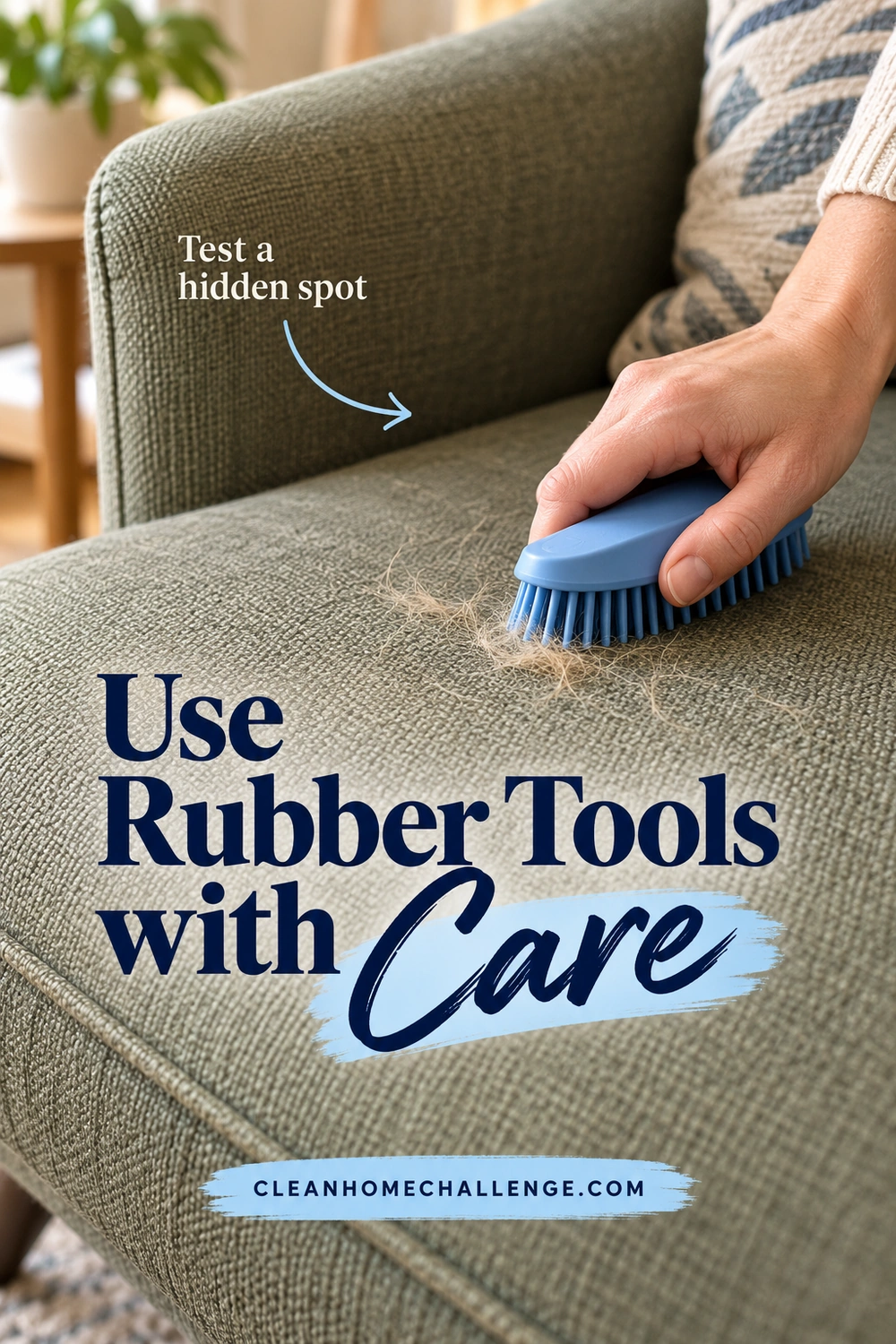
Rubber tools come in very different shapes. A small flexible blade helps reach a tight area; a rubber-bristled broom covers a larger patch while you stand. Neither should be confused with a sharp metal scraper.
FURemover’s rubber broom is a current example with a telescoping handle. Its maker describes short pulling strokes for carpet hair removal. A Lilly Brush Mini Blade is a compact alternative marketed for embedded short-to-medium pet hair on upholstery and carpet. Its care instructions describe cleaning the blade with mild soap and water. Consult the FURemover instructions and Lilly Brush product page before choosing.
For a sturdy, compatible rug, work on a small test area first. Pull gently toward yourself, gather the loosened hair, and put it in the trash before vacuuming. Keep the rug flat and secure. Work in manageable strips rather than scrubbing the same patch until it looks different from the rest.
A mini tool is useful when a broad roller cannot reach an upholstery seam. A long-handled broom may be more comfortable for an open rug, but it needs storage and can feel cumbersome on stairs. Try the shape that solves your actual access problem.
Check the rug before using a carpet rake
A low-pile rug is not automatically rake-safe. Low pile describes height, while cut pile and loop pile describe construction; a short rug can still contain loops that catch.
For looped, wool, hand-knotted, loosely woven, fringed, or otherwise delicate rugs, start with the rug maker’s approved vacuum method. Do not assume a rubber tool is harmless because it feels soft. Cormar specifically warns that brushes and beater heads can catch and lift loop-pile fibers; its recommended approach for those carpets is suction-only vacuuming. See its carpet-care guide.
Metal-toothed carpet scrapers deserve particular caution. Uproot, for example, explicitly excludes knitted clothing from its pet-hair remover’s uses. A tool’s broad marketing claim is not permission to scrape every rug or couch. Unless both the tool instructions and the surface maker support the method, skip it. Never judge success only by the size of the collected pile: damaged fabric fibers can look like lint. The Uproot product FAQ includes that knit-fabric restriction.
Vacuum Carpet and Upholstery Safely
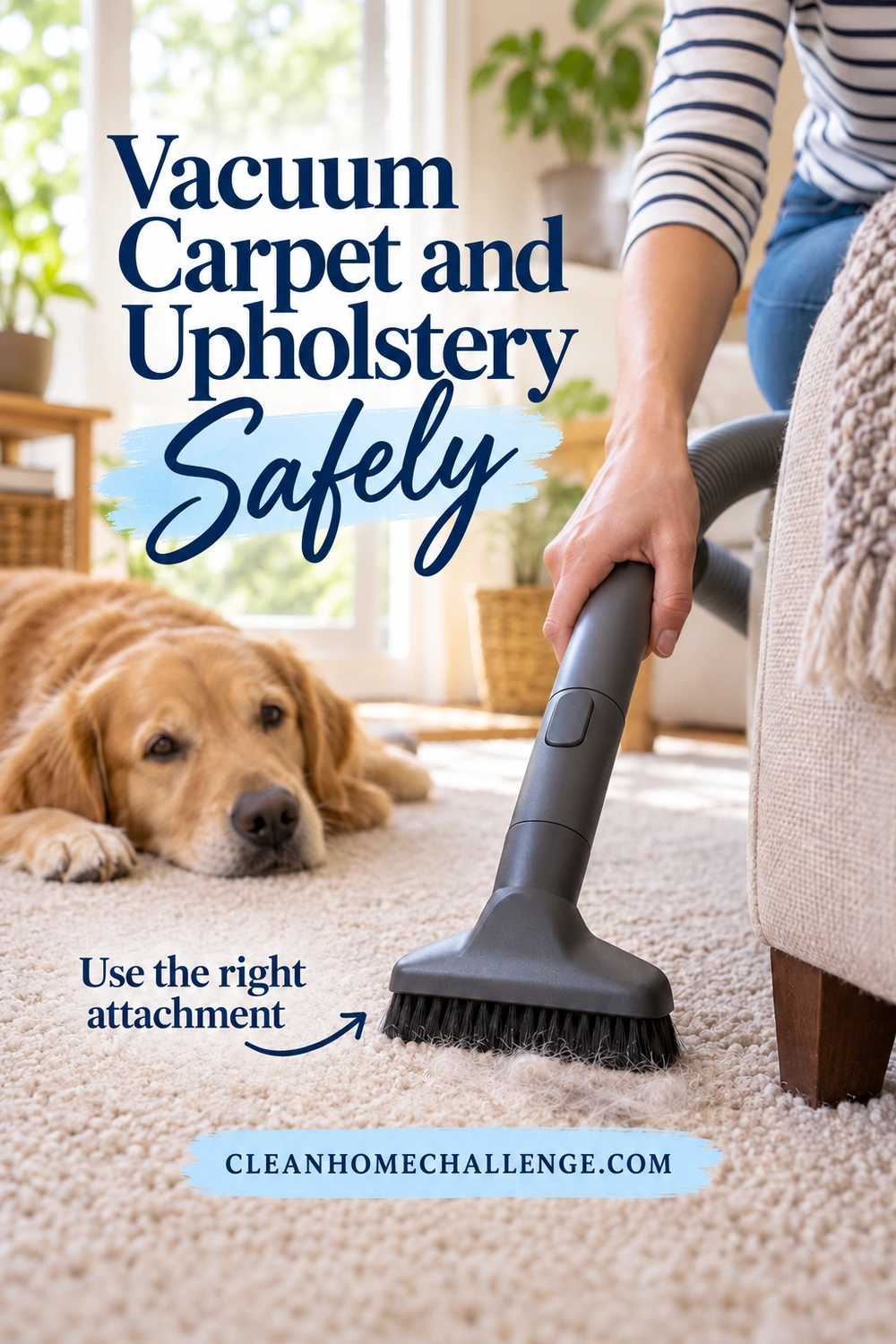
If you already own a working vacuum, inspect its attachments before buying a separate pet-hair machine. The right head and a clear airflow path may be the missing pieces in your routine.
For example, Shark’s Pet Multi-Tool, model 354CH1000, combines a bristle brush with a removable-bristle upholstery configuration. The official page lists the vacuum models it fits. That compatibility check matters: similar-looking accessories are not necessarily interchangeable. Read the specific Shark accessory listing, then match it to the model number on your machine.
A motorized mini brush may be useful on surfaces that permit it, but more agitation is not always better. Follow the upholstery and rug instructions when choosing suction, brush action, and head height. Keep rotating brushes away from fringe, loose loops, and unsupported delicate fabric.
Work from the sofa to the floor
- Clear the seat surfaces first, using the upholstery attachment in slow, overlapping passes.
- Lift removable cushions carefully and use the crevice tool in accessible gaps. Avoid forcing the nozzle against piping, buttons, or fragile lining.
- Clean the surrounding rug or carpet with its approved floorhead. On suitable cut-pile carpet, change direction for a second pass where needed.
- Check the curtain hem, pet bed edge, or fabric ottoman if these collect visible fur. Use each item’s care instructions, and support lightweight fabric so it cannot be drawn into the nozzle.
Allow ten to fifteen minutes for a small living-area maintenance session, with longer for stairs or heavy shedding. You can split it into the sofa one day and the rug the next.
If pickup suddenly worsens, check the bin or bag, filters, hose, and brushroll using your machine’s manual. Switch the vacuum off and unplug a corded model before maintenance. For cordless machines, follow the specified power-isolation and attachment-removal steps; do not handle a brush while it can start. Dyson’s Digital Motorbar maintenance instructions, for example, require power off and disconnection from the charger and state that this head and brush bar are not washable.
A full head of tangled hair is a maintenance task, not a reason to keep vacuuming harder. Replace only the parts or tools that your checks show you need.
Keep an Adhesive Roller Handy
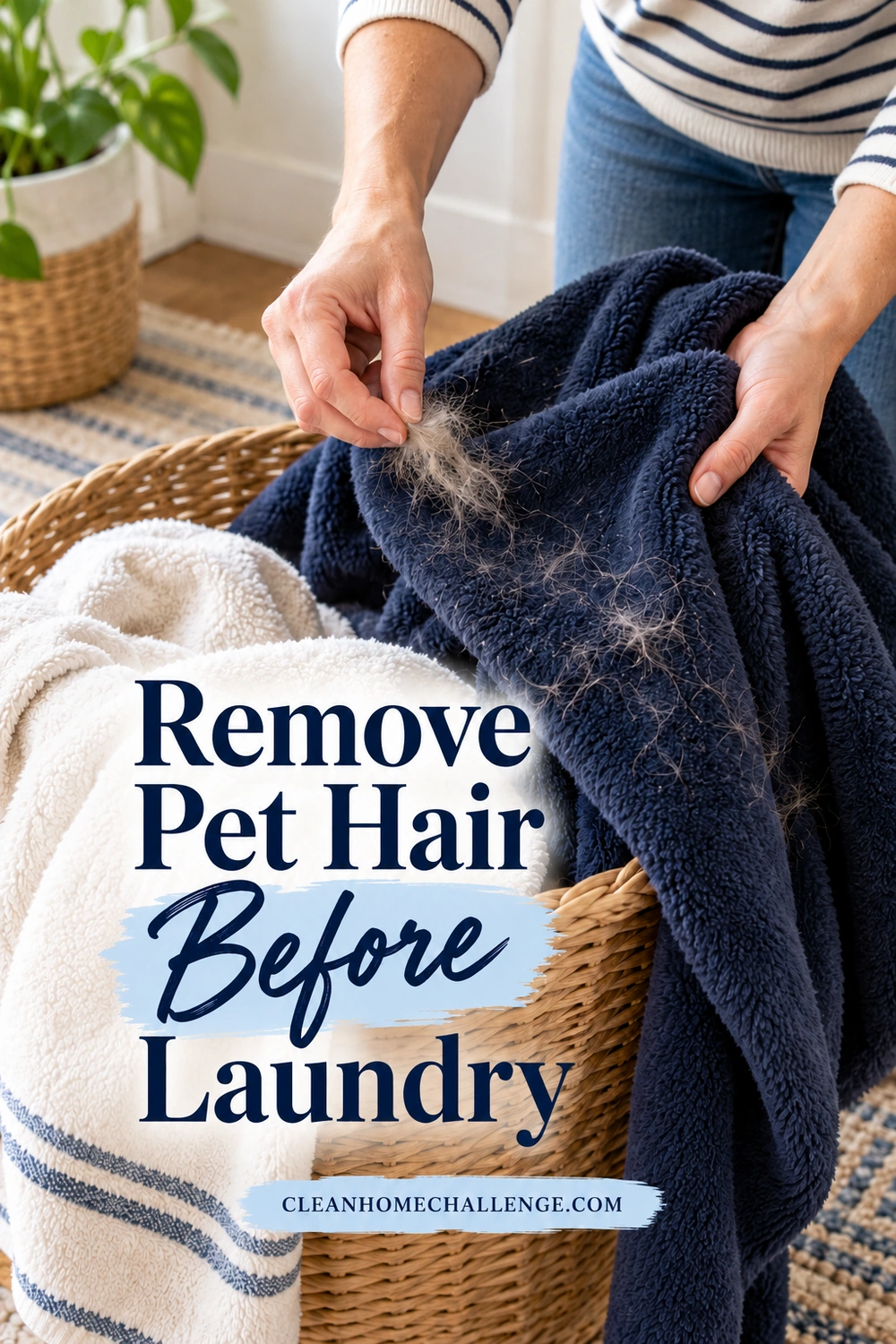
An adhesive roller makes sense for the last few hairs on a suitable coat, work pants, or a small fabric area before guests sit down. Keep one where you get dressed or near the door so the job does not become a search for supplies.
Scotch-Brite’s Pet Extra Sticky Large Surface Roller is an example intended for pet-hair pickup on clothes and household fabrics. Its handle accepts refills, but the used adhesive sheets are disposable. Compare refill availability and total sheet count as well as the price of the starter handle. The 3M product page describes the product’s intended uses.
Lay the garment on a clean, supported surface, smooth it gently, and use light rolling passes. Turn to the back and check sleeves, cuffs, and the area that rested against the sofa. Remove a used sheet once its adhesive is covered instead of repeatedly dragging collected hair over clean fabric.
Check the garment’s care guidance and test discreetly, particularly with a fragile finish, loose knit, embellishment, or easily lifted pile. Avoid substituting strong packing tape, abrasive hook-and-loop strips, or a metal scraper on clothing. A product designed for fabric gives you clearer instructions to follow.
For budgeting, think in jobs rather than pack sizes. A few clothing touch-ups may justify convenient disposable sheets. Repeatedly covering a large sofa can use them quickly; a suitable reusable tool is usually the more practical format for that daily task. No exact savings are promised because usage and refill prices vary.
Put clean laundry away promptly and avoid folding dark work clothes on the pet’s favorite cushion. A clean folding surface and a small roller within reach are easy changes that reduce last-minute frustration. Keep tools and discarded sheets away from pets and young children.
Remove Pet Hair Before Laundry
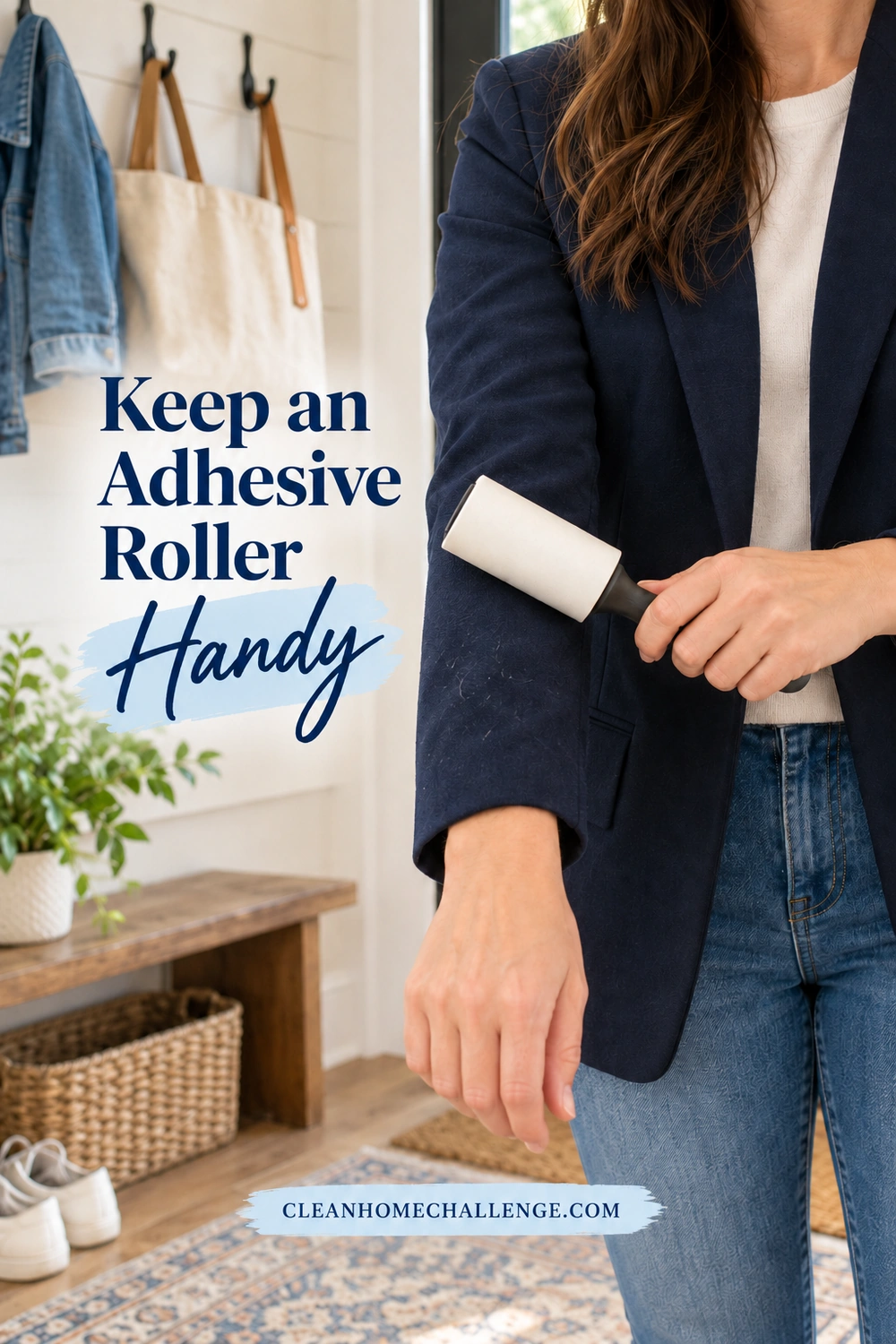
The most useful first step in a laundry fur remover routine happens before the washer starts: take off as much loose hair as reasonably possible. A blanket covered in fur should not go straight from the pet’s bed into a mixed load of work clothes.
Check the item’s washing and drying labels, remove loose hair with a compatible roller or vacuum, and wash heavily hairy pet throws separately from everyday clothing when practical. Do not pack the drum tightly. Follow the machine’s loading guidance, detergent directions, and the fabric’s approved cycle.
Maytag recommends removing hair before laundering and cleaning up hair left in the washer afterward. It also describes a no-heat tumble before washing as an option for suitable dry items. Only consider that extra step if the textile label and dryer manual permit it; skip items that cannot tumble dry, and never tumble solvent- or flammable-product-contaminated textiles. See Maytag’s pet-hair laundry guide and the Whirlpool dryer safety guidance.
Know what a laundry aid can and cannot do
FurZapper is a reusable laundry aid designed to move through the washer and dryer with the load. Its manufacturer warns that fabric softeners and dryer sheets can coat its surface and reduce tackiness. The FAQ advises washing away buildup with a little dish soap when needed. That is cleaning the tool separately, not adding dish soap to the washing machine. Follow the FurZapper instructions and keep it away from anyone who might chew or swallow it.
Bounce Pet Hair and Lint Guard Mega Sheets take a different approach as a dryer-sheet product. The current page directs one sheet per load and describes static reduction and easier pet-hair release. Check the package’s fabric exclusions and your dryer instructions before use, including restrictions for flame-resistant items. Do not combine these sheets with a FurZapper and expect both to work as intended. See Bounce’s product directions.
Treat either as an optional trial rather than a guarantee of hair-free laundry. Choose one compatible approach, keep your load size and routine reasonably consistent, and decide whether the improvement is worth its cost. Air-drying households may get more value from careful prewash removal and a final dry-fabric touch-up than from a dryer-focused product.
Keep the filter part of the routine
The U.S. Fire Administration advises cleaning the lint filter before and after each dryer cycle and keeping venting unobstructed. Follow your dryer manual for any additional filters or condenser maintenance. Never run it with a missing, damaged, or blocked lint screen. The USFA dryer fire-safety guidance explains why this matters.
After a hairy load, collect visible hair from the washer’s accessible drum and seal as the manual directs. Follow model-specific instructions for an accessible pump filter; do not open plumbing or dismantle the machine as an improvised cleaning step. Once the laundry is dry, use a suitable finishing roller on remaining hairs. Add no homemade chemical mixture or extra detergent in an attempt to dissolve fur.
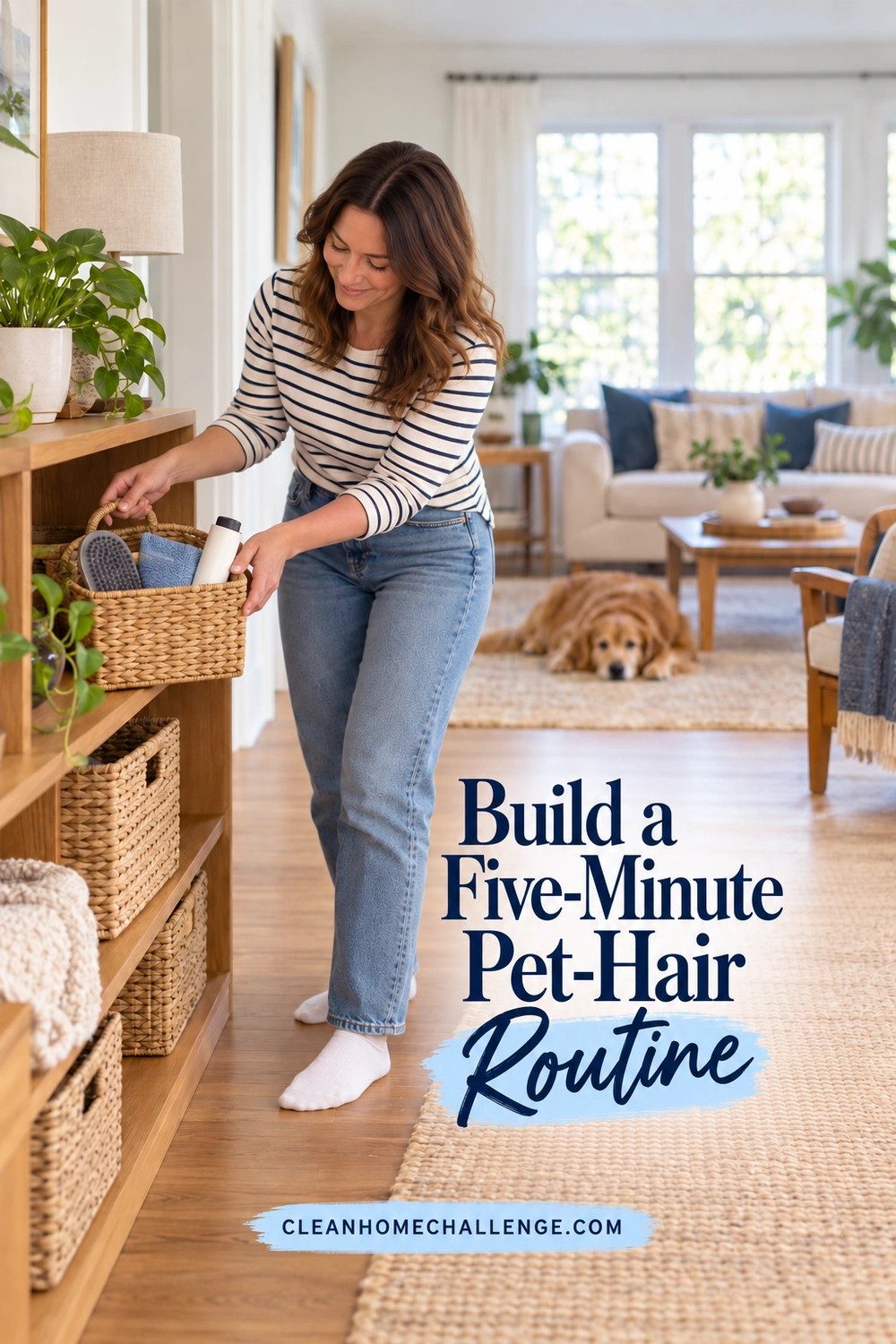
Build a Five-Minute Pet-Hair Routine
A manageable routine starts where the hair is concentrated. Give the pet’s favorite nap spot attention before trying to make the whole house look freshly cleaned.
Try this five-minute reset, adjusting the timing to your room:
- One minute: clear the spot. Move toys and fold the pet throw inward so loose hair stays contained as you carry it.
- Two minutes: tackle one cushion. Use the surface-approved roller or brush. Empty gathered fur into the trash.
- One minute: check the edges. Pick up visible clumps nearby or make a short vacuum pass if the machine is ready.
- One minute: reset the supplies. Put the tool back, check whether the throw needs washing, and leave one comfortable place to sit.
On a low-energy day, do only the cushion. That is useful progress. A room used every day will collect new hair, and the aim is a home that works for your family.
Tie the bigger jobs to an existing rhythm: living-area upholstery on Thursday, the relevant floors on Friday, and a care-label-approved pet-throw load during Saturday laundry catch-up. Increase attention to the nap spot during heavy shedding without turning every day into a deep clean.
Choose a washable throw only if its label, size, and drying needs fit your laundry setup. Before buying another gadget, ask: Does it suit the hardest surface I own? Will I actually store, empty, and use it? Do I already have a compatible attachment?
For many households, a surface-safe sofa tool, the right vacuum attachment, and a small clothing roller form a useful starting kit. Add a rubber broom or laundry aid only when it fills a clear gap. The best pet hair remover is the one that fits your materials and makes the next small cleanup easier to begin.
CLEANERS CLUBHOUSE
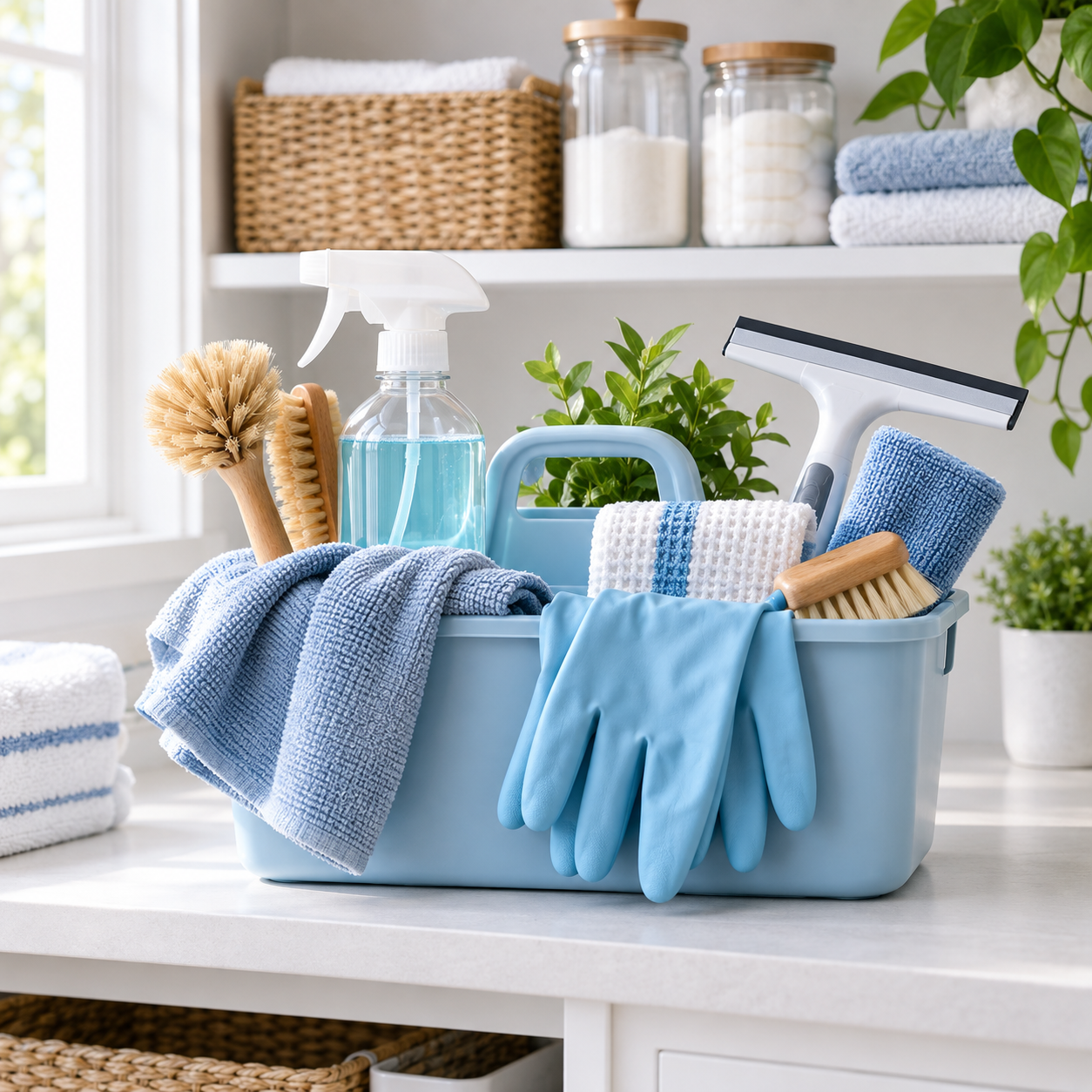
Use the Right Tools With a Routine That Works
Good cleaning tools work best when you know where and when to use them. Inside the Cleaners Clubhouse, recommended products sit alongside practical routines, printable worksheets and monthly challenges.