
THIS POST MAY CONTAIN AFFILIATE LINKS. PLEASE READ MY DISCLOSURE FOR MORE INFO.
A heated towel rail can collect the same dust, fingerprints, and stray splashes as the rest of the bathroom. The awkward part is that it is also a heating appliance, sometimes with a delicate coating. You do not need to turn an ordinary wipe-down into a major scrubbing project.
To clean a heated towel rail, follow its manual to switch it off and let it cool completely. Remove the towels, gently wipe the accessible bars with a soft cloth dampened with water, and dry the surface with a separate soft cloth. Keep moisture away from electrical connections, controls, and openings. If your model needs a different method, its instructions take priority.
This guide covers exposed exterior bars only. It does not cover electrical work, bleeding radiators, valve cleaning, opening covers, or removing the rail from the wall. A few minutes of hands-on work may be enough for light dust and marks, but allow separate time for cooling and drying; there is no universal safe waiting period.
Disclosure: This post may contain affiliate links. As an Amazon Associate, Clean Home Challenge earns from qualifying purchases. If you make a purchase through these links, we may earn a small commission at no extra cost to you. This helps us keep creating practical cleaning tips, routines and resources for busy families! 🧽
Check the Finish and Let the Rail Cool
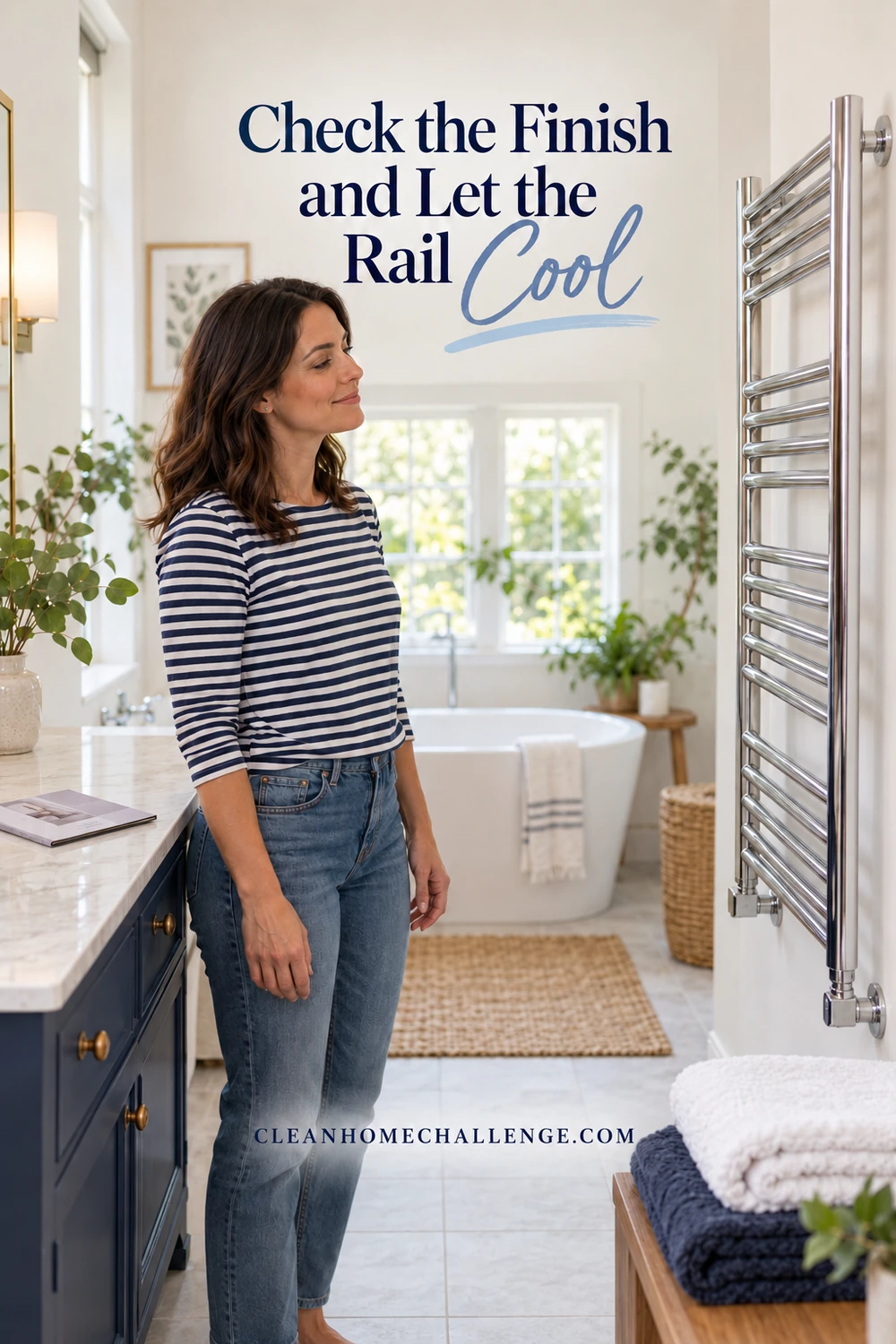
Start with the make, model, and care instructions. A shiny surface might be chrome plating or polished stainless steel, and a black or colored surface might have a coating that needs different care. Do not choose a cleaner simply because it worked on the bathroom faucet.
Manufacturer advice supports starting gently. Glen Dimplex’s TRM and CTR care guidance specifies switching the rail off, allowing it to cool, and cleaning with a damp cloth, without solvents or abrasive chemicals. That is model-specific guidance, rather than permission to use the same products on every rail.
For a powder-coated example, Eko Heat’s Gordon care advice describes a damp wipe followed by a soft dry cloth, while the unit is cold and unused. It also cautions against harsh cleaners and essential oils. A pleasant smell does not establish finish compatibility.
Prepare before you wipe:
- Read how your particular rail is switched off or isolated for cleaning. Follow those instructions, including unplugging a plug-in model when directed. Use dry hands and an accessible, dry control. Do not touch wiring or remove covers.
- Make sure a timer or another household member will not restart the rail during cleaning. Tell everyone it is being cleaned. Do not reprogram the installation as part of this job.
- Let the rail cool fully according to its instructions. Do not use a bare hand to test a potentially hot surface. If you cannot establish a safe cool condition, leave the job for later.
- Remove towels once safe to handle. Put clean towels somewhere dry and used towels in their usual laundry place.
- Check for loose fittings, damaged coatings, leakage, or damaged cables before starting. Stop if something looks wrong; cleaning is not a repair.
For a hydronic or dual-fuel rail, follow the maker’s shutdown and cooling procedure for that system. Do not turn unfamiliar valves, bleed it, drain it, or assume disabling an electric element stops heat from the plumbing. Ask the installer or manufacturer if you cannot identify the correct procedure.
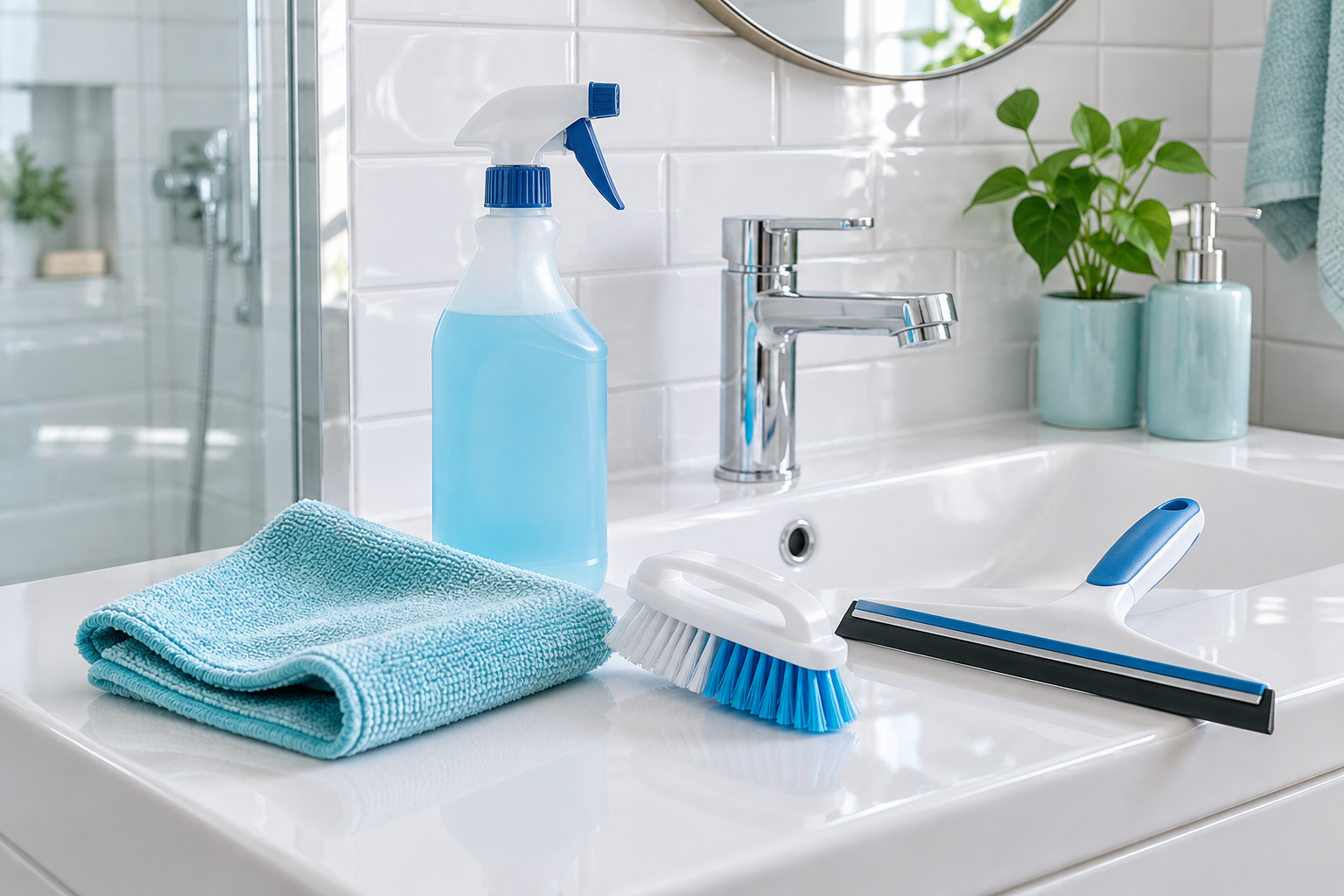
Gather two clean, soft, lint-free cloths: one for wiping and one for drying. Add a small amount of clean water at the sink, away from the rail. Check that the cloth has no grit, hard tag, or dried product on it. You usually do not need a spray bottle, scrub brush, polish, or a basket of bathroom chemicals for this small job.
If the finish is unknown: find the manual or ask the manufacturer before a damp clean. A dry, very gentle dusting of safe, accessible exterior bars may be all you can do for now. Do not experiment on a prominent patch.
Wipe the Bars Without Wetting Connections

Keep this as a controlled wipe, not a wash. Dampen the cloth away from the appliance and wring it out thoroughly. It should feel slightly damp and release no drips. Never spray the rail, rinse it with a shower hose, steam-clean it, or balance a bowl of water over its connections.
Work from the upper accessible bars downward so that you are not immediately moving dust onto a section you have just finished. This is a practical work-order suggestion, not a special manufacturer requirement.
- Gently lift loose dust from an accessible bar with the soft cloth. Use light pressure rather than rubbing gritty particles into the finish.
- Fold the cloth to expose a clean area and wipe the bar’s front and the sides you can reach comfortably. Keep your grip light; the rail is not a grab bar.
- For the underside or a narrow gap, guide a folded edge of the cloth through only if there is room. Do not force it through, pull hard behind the rail, or use a metal tool to push it.
- Work around visible mounts without loosening or tugging them. Leave electrical controls, cable entries, outlets, valves, and openings outside this wiping procedure.
- Refold or rinse the cloth away from the appliance when it becomes dirty, wring it out again, and continue with a clean section.
If a spot remains, pause rather than add pressure. A light fingerprint and a chalky deposit are different problems. Try another gentle water-only pass if the manual allows it, then dry. Leave persistent buildup for the manufacturer’s specific instructions.
Some manufacturers permit neutral soapy water or a particular cleaner; others restrict finishes to water. Only use a product expressly suitable for your exact model and finish. Follow its directions, test an inconspicuous area if appropriate, and remove any permitted residue with a separate barely damp cloth rather than pouring water over the rail. Never combine products.
Avoid the usual shortcuts: abrasive pads, steel wool, scouring powders, and melamine sponges can be too aggressive for a finish. Do not reach for vinegar, bleach, a toilet cleaner, grout cleaner, descaler, or metal polish without explicit model-specific permission. A cleaner approved for nearby tiles is not automatically suitable for the rail. Keep surrounding bathroom products off it while cleaning the room.
If the upper bars are beyond comfortable reach, stop at the reachable area. Do not stand on a toilet, bathtub edge, or slippery stool, and do not use the rail to steady yourself. A safe partial clean is useful progress.
Dry and Inspect Before Using It Again
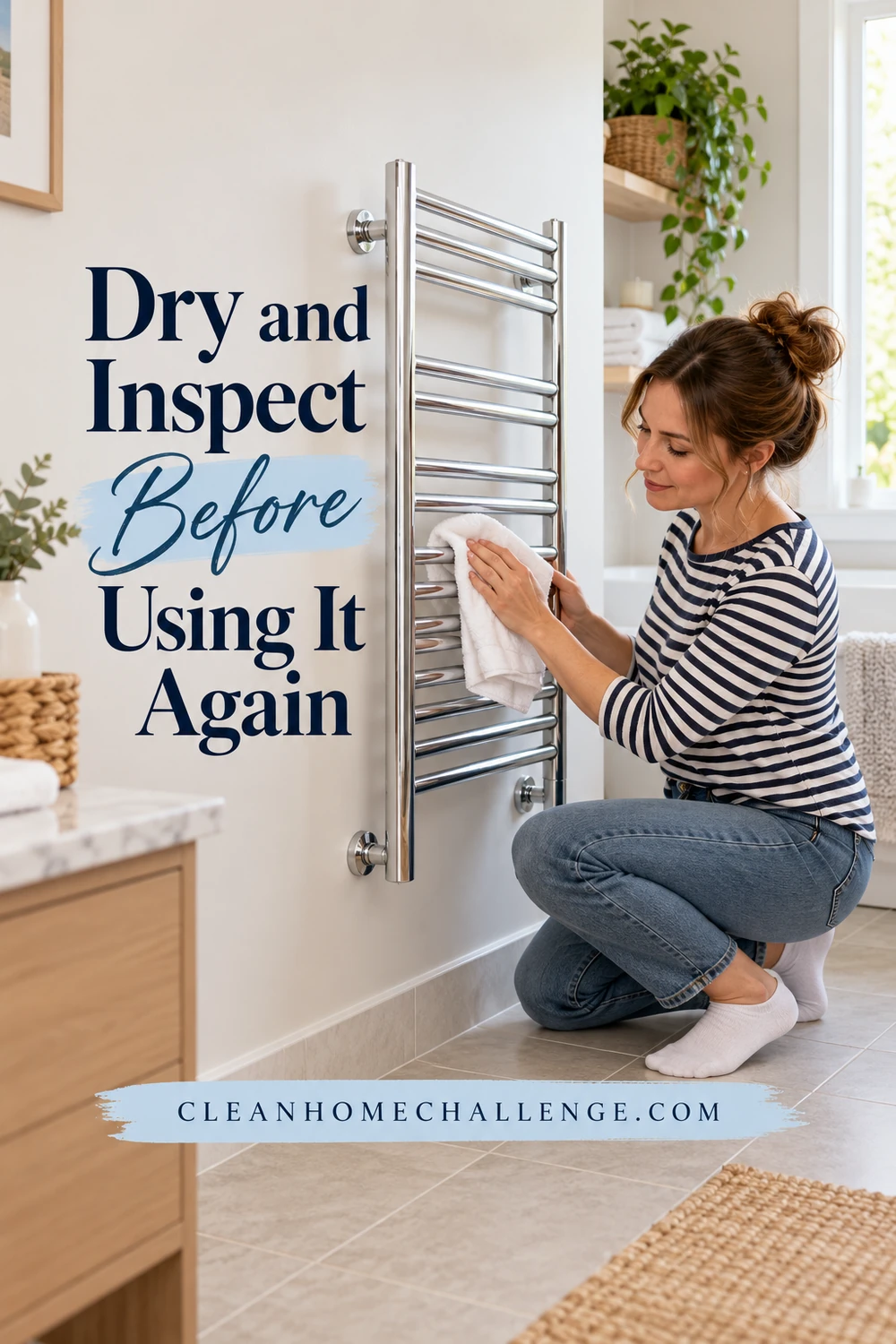
Use the second soft cloth to remove remaining surface moisture, working along the accessible bars with the same light touch. Check undersides and visible edges as well as the shiny fronts. Avoid rubbing repeatedly to chase a mirror finish, particularly on coated, brushed, or decorative surfaces.
Bathroom Butler’s care advice includes a damp wipe and drying with a clean cloth after switching off and cooling. Apply polishing or buffing advice only within the instructions for your finish; vigorous rubbing is not a universal final step.
Look at the rail in ordinary room light. Have you removed the loose dust and obvious smears? Is it dry? Are there marks that appear to be damaged plating or coating rather than dirt? Your stopping point is a gently cleaned, dry exterior, not the removal of every permanent imperfection.
Stop and seek appropriate help if you notice:
- Flaking, blistering, lifting, or scratched coating that worsens with wiping.
- Rust-colored spots or pitting that do not lift with the permitted gentle method.
- A loose rail or mount, a leak, a damaged cable, scorch marks, or unusual electrical behavior.
- Moisture entering an electrical part during cleaning.
Keep the appliance off if you suspect a fault or moisture ingress and contact the manufacturer or an appropriately qualified professional. Do not switch it on to see whether it still works or to dry a wet connection.
There are limits to what an exterior clean can fix. For example, Dimplex’s TDTR instructions describe a sealed unit and restrict work on its liquid-tight seal and bleed screw to service personnel. This guide does not override those restrictions or provide internal maintenance steps.
Before normal reuse, the exterior must be dry, any permitted cleaner residue removed, and the manufacturer’s requirements satisfied. Follow the manual for restarting and loading towels. Do not use the heat as a shortcut to evaporate cleaning moisture. If a mark remains but the finish is intact, note it for the manufacturer rather than repeatedly trying stronger chemicals.
Keep Towel-Rail Care Easy Between Cleans

Make this a small bathroom job that fits around the appliance, rather than cleaning it while it happens to be hot. On your bathroom cleaning day, first decide whether there is enough time to switch it off, let it cool, wipe it, and dry it. If not, choose a later window and do another bathroom task now.
A useful routine is to check the rail when changing towels. Look for visible dust, fingerprints, or splashes; clean when needed and according to the care schedule for your model. A weekly check is a planning suggestion, not a claim that every finish needs weekly cleaning.
For a lower-energy version, prepare the cloths and find the manual today, then do the cool-rail wipe on another day. Once the rail is safely off and cool, you can clean one reachable section and stop. Keep a note of where you finished so nobody assumes an incomplete check means the appliance is ready to restart.
Keep used cloths separate from towels and from cloths used on the toilet. Put away any cleaning products securely, wipe up floor drips, and return towels according to the rail’s loading instructions. Avoid leaving a damp cleaning cloth draped over the appliance.
Save the care instructions once. Write down the model, finish, manual location, permitted cleaning method, and any marks you want to ask about. It saves having to remember whether this particular black, brass-colored, chrome, or stainless-steel rail permits soap next time.
Download the heated towel rail care checklist (PDF) for a simple before-cleaning, wiping, and restart check, with space to record your model’s instructions. The free file is available directly; no membership is needed.
If a clear bathroom routine would help you fit these little jobs around family life, you can also explore the Cleaners Clubhouse below. Keep the useful habit small: identify the finish, cool the rail, wipe gently, dry it, and stop before a cleaning task becomes a repair.
CLEANERS CLUBHOUSE
Take the Guesswork Out of Bathroom Cleaning
Use Tuesday as your bathroom reset day and work through the job in a sensible order. Inside the Cleaners Clubhouse, you’ll find practical routines, printable support and challenges that make deeper cleaning easier to manage.