
THIS POST MAY CONTAIN AFFILIATE LINKS. PLEASE READ MY DISCLOSURE FOR MORE INFO.
A good cleaning checklist for house guests starts with the things they will actually use: a comfortable place to sleep, a clean bathroom, somewhere to put a bag, and a kitchen where everyone can find a glass of water. Those are useful priorities when you are fitting visitor prep around work, school runs, meals, and ordinary family life.
You can leave the untouched storage cupboard and the perfectly organized garage for another week. Work through the spaces your guests will use, give laundry enough drying time, and save a short final check for arrival day.
This checklist breaks the job into manageable stages, with room-by-room instructions and a 30-minute reset for the last stretch. The suggested times are planning guides for a reasonably maintained home, not deadlines. Larger rooms, built-up dirt, accessibility needs, and laundry cycles may need more time.
Disclosure: This post may contain affiliate links. As an Amazon Associate, Clean Home Challenge earns from qualifying purchases. If you make a purchase through these links, we may earn a small commission at no extra cost to you. This helps us keep creating practical cleaning tips, routines and resources for busy families! 🧽
Start With the Spaces Guests Will Use
Walk the route your guests will take, from the front door to their sleeping space, bathroom, kitchen, and main seating area. Note anything that would make those spaces awkward to use: a pile of bags beside the bed, a slippery bathroom floor, or a kitchen table covered in paperwork.
Put the essentials on a short list:
- Clean, fully dry sheets, pillowcases, and towels.
- A usable toilet, sink, and shower or tub.
- Clear walking routes and space for luggage.
- Clean food-preparation surfaces, dishes, and a place to eat.
- Hand soap, toilet paper, and a place to hang towels.
Ask about practical needs before you start. “Would anything make the sleeping setup, meals, or getting around the house easier for you?” leaves room for guests to share what matters without asking them for private medical details. Explain stairs, pets, shared bathrooms, or a sofa-bed arrangement so they can decide whether the setup works.
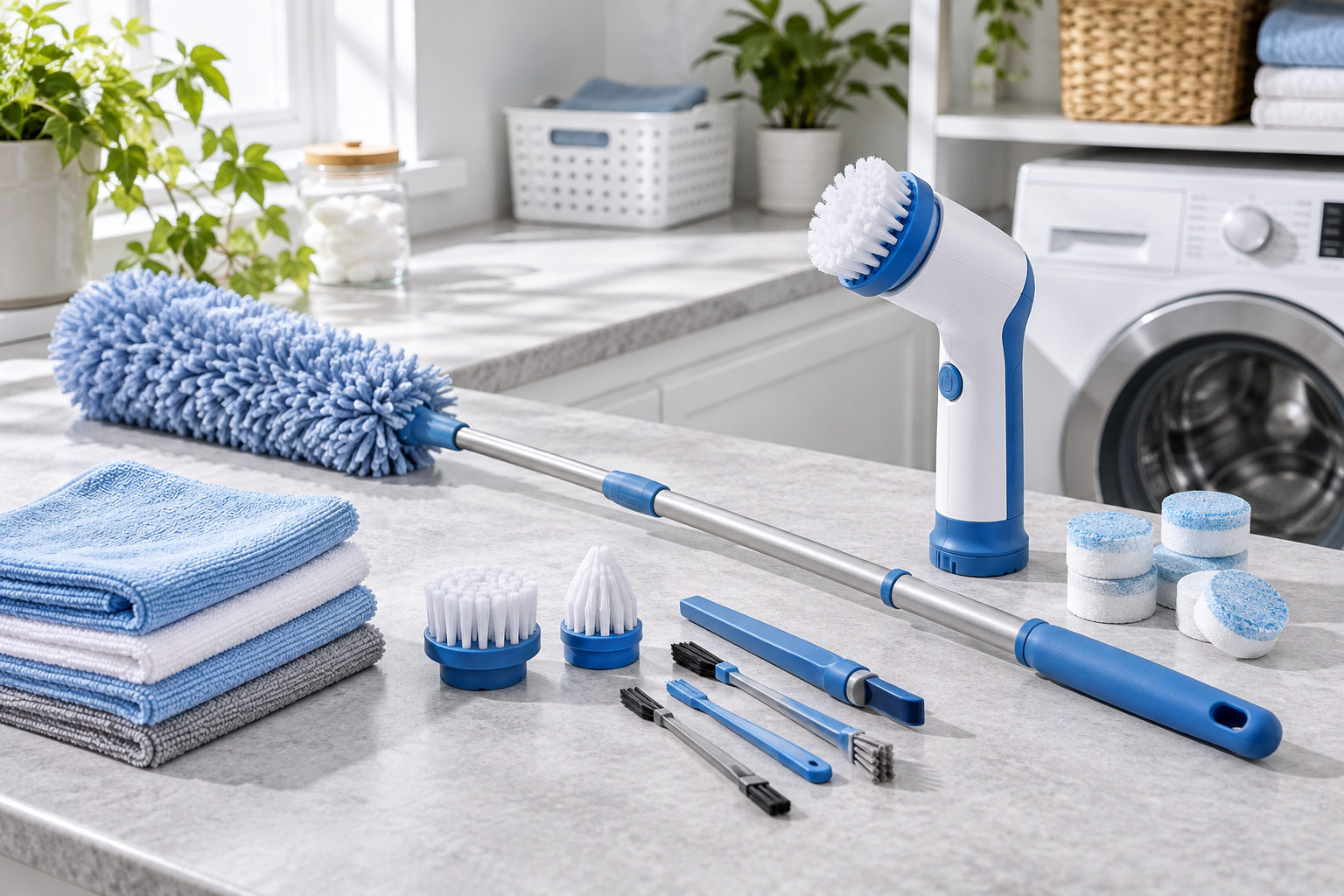
Gather a small cleaning kit: several clean cloths, a toilet brush, trash bags, laundry detergent, suitable surface cleaners, and your usual vacuum or broom. Use separate bathroom and kitchen cloths. Check product labels and material-care instructions; one cleaner may not suit every surface. Test an unfamiliar compatible product in a hidden spot first.
Keep the cleaning chemistry simple. Use products as directed, provide ventilation, wear any protection the label calls for, and keep supplies away from children and pets. Never combine bleach with vinegar, ammonia, toilet cleaner, or other cleaning products. Store products in their original labeled containers when you finish. Poison Control’s cleaning-safety advice explains the mixing and ventilation precautions.
Choose a stopping point before beginning. Once the essentials are usable, clean, dry, and stocked, decorative extras are optional. That makes it easier to finish the work and still have energy for the visit.

Spread the Cleaning Across the Week
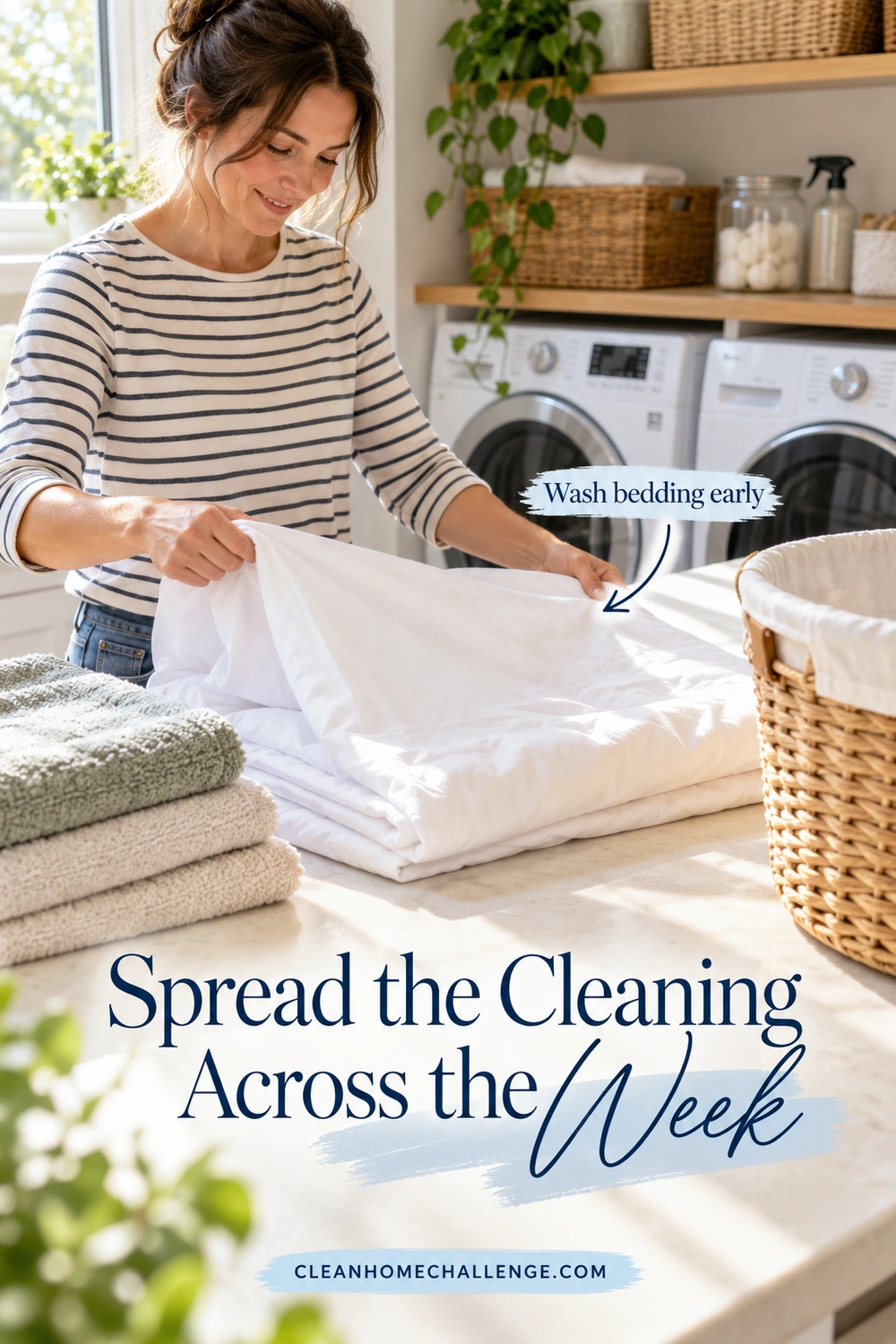
The easiest way to prepare your home for visitors is to put the longest or least predictable jobs first. Bedding that takes hours to dry should come before arranging the bedside table.
About one week before arrival: Confirm how many people are staying and which beds or sleeping spaces they will use. Find the right-size sheets, check spare blankets, and count towels. Open a sofa bed or inflate a temporary bed according to its instructions so a missing part does not become an arrival-night surprise. Clear accumulated storage from the sleeping area in one or two short sessions.
Check for practical problems while there is time to deal with them: a lamp that does not work, an empty soap dispenser, a slow drain, or a door that does not close properly. Add only genuinely needed supplies to your normal shopping list.
Two or three days before: Wash guest bedding and towels, allowing complete drying time. Clean the sleeping space and the bathroom guests will use. If the room is still needed as an office or playroom, put clean bedding aside and make the bed later. Tackle any suitable, necessary textile spot treatment now so it can dry before use.
The day before: Finish the bed, set out towels, clean kitchen surfaces, and make refrigerator space for the visit. Dust shared surfaces and vacuum or sweep the guest routes. If you mop, do it early enough for the floor to dry before the household walks through it again.
Arrival day: Put away breakfast dishes, empty any full trash cans, check the bathroom, and pick up items that have returned to the floor. Set out the essentials and stop before a “quick extra job” becomes a cupboard-clearout project.
For a busy family, give each helper a clear finish line. “Put the shoes on the rack” is easier to complete than “tidy downstairs.” Younger children can collect their own toys or arrange clean towels; an adult should handle cleaning chemicals and tasks beyond a child’s abilities.
If you already follow the Clean Home Challenge weekly areas, let normal kitchen, bathroom, bedroom, living-area, floor, and laundry days do some of this work. Move the guest priorities forward rather than adding a second whole-house routine.
Make the Sleeping Space Comfortable
Start by removing trash, dishes, and items that belong elsewhere. Give guests a clear section of floor for their luggage and at least one reachable surface for glasses, a phone, or a water bottle. An empty chair can be useful, provided it does not block the room.
Work from higher surfaces down. Dust reachable shelves, the headboard, and bedside furniture with a method suitable for the finish. Pay attention to surfaces next to the sleeper, then vacuum or sweep the floor, including accessible edges around the bed. Move only furniture you can handle safely.
Use this spare room checklist before making the bed:
- Check that the mattress, pillows, protector, and blanket are clean and dry.
- Put on clean sheets and pillowcases.
- Add an extra blanket where guests can reach it.
- Clear space for a bag and a few clothes.
- Check the bedside light and access to the room’s light switch.
- Clear the route from the bed to the bathroom.
Follow each textile’s care label for washing and drying, and measure detergent according to its label. Do not assume every pillow, comforter, or mattress cover can go through the same hot wash. The American Cleaning Institute’s laundry guide recommends matching laundry loads and settings to fabric-care instructions and putting items away only when fully dry.
A removable cover is not automatic permission to wash a mattress. Check the specific product first. For example, Tempur-Pedic’s product-care instructions say its TEMPUR material should not be washed or allowed to become wet. Follow your own mattress manufacturer’s directions and avoid starting a wet treatment shortly before guests arrive.
If you do not have a spare room, set up a defined sleeping corner. Clean the sofa bed or temporary bed according to its instructions, prepare the bedding, and decide where it will go during the day. A lidded storage basket or clean shelf can hold linens between uses. Test the full bed layout so doors, exits, and walking routes remain clear.
Offer a little privacy where practical and explain when the shared room is normally used. Guests will find that information more useful than extra decorative pillows. If pets normally use the sleeping area, remove visible hair from compatible surfaces and clean the bedding; avoid promising an allergen-free space.

Clean and Stock the Guest Bathroom
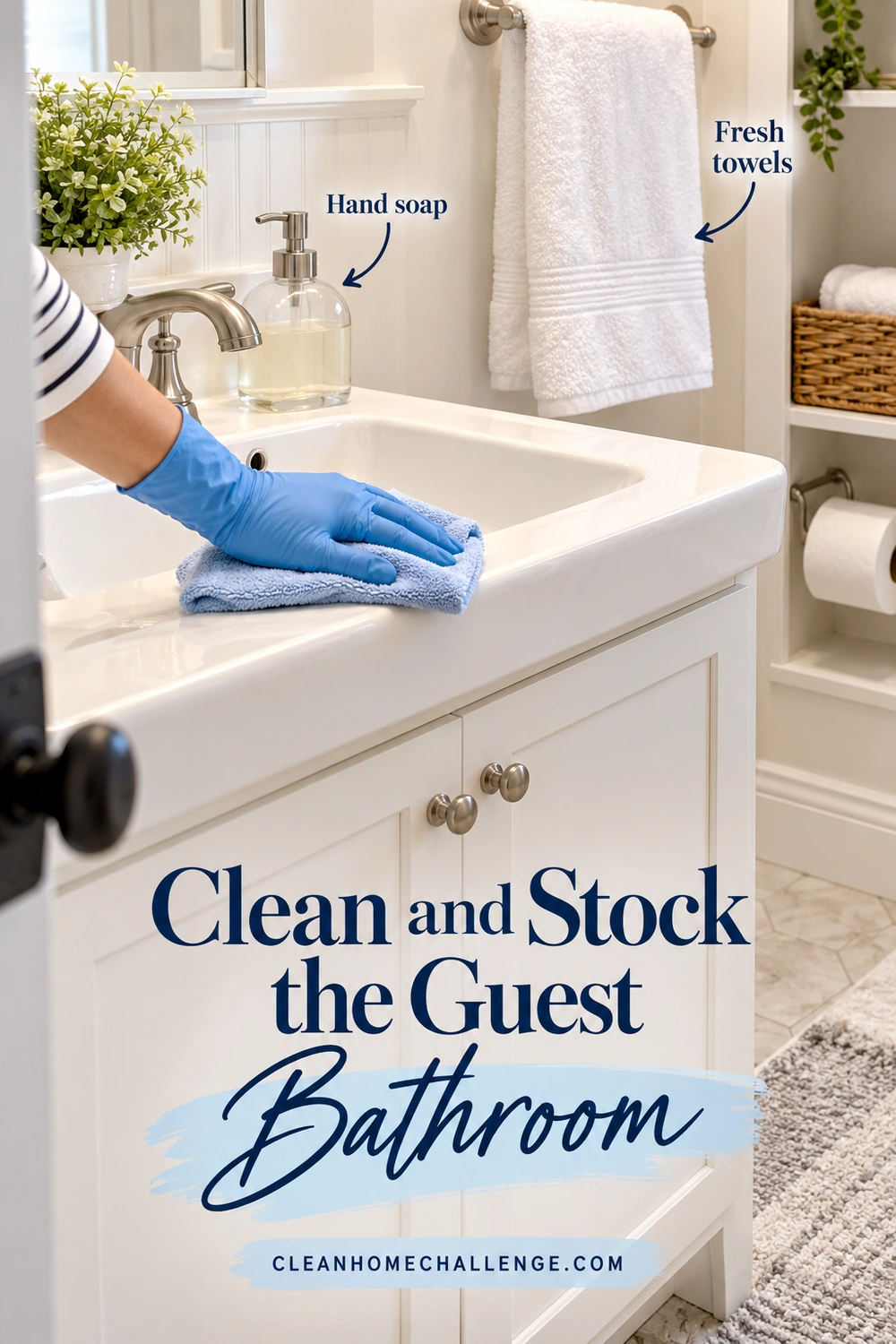
A useful guest bathroom clean covers the surfaces people touch and the facilities they need. Clear the counter first, remove used towels and the bath mat for appropriate laundering, and empty the trash. Leave guests enough space to set down their toiletries.
Clean in a sensible order so you are not taking a toilet cloth back to the sink:
- Dust reachable ledges and clean the mirror with a suitable product.
- Wash the sink and counter, including the area around the faucet and soap dispenser. Rinse or wipe away cleaner as its directions require.
- Clean the shower or tub with a product suitable for its surface. Remove loose hair and visible residue; rinse thoroughly where directed.
- Clean the toilet’s exterior, handle, seat, and bowl using dedicated tools or cloths. Keep toilet-bowl products inside their intended use area.
- Sweep or vacuum loose floor debris, then clean the floor with the appropriate product. Let it dry before replacing the clean bath mat.
Different bathroom finishes need different care. The Natural Stone Institute recommends suitable neutral cleaning products for stone and warns that acidic cleaners can etch some stones. Skip the vinegar shortcut on natural stone, and check the care instructions before using abrasives on fixtures or shower surfaces.
Routine cleaning is usually enough for an ordinary visit. Cleaning removes dirt and germs; disinfecting is a separate step that kills remaining germs. The CDC advises additional disinfection when someone is sick or has a weakened immune system. If illness is involved, follow the relevant guidance rather than assuming this hosting checklist covers every situation.
When a disinfectant is needed, choose one labeled for the surface and intended use. Follow the full wet contact time and any rinsing instructions instead of spraying and immediately wiping it dry. The EPA’s disinfectant-use guide explains why the label and contact time matter.
Finish with the supplies guests can find without asking: hand soap, toilet paper with a visible spare, a clean hand towel, and a bath towel for each person. Provide a towel hook, rail, or another place where damp towels can spread out to dry. Check that the wastebasket is lined if you normally use a liner.
A clean bathroom does not need a strong fragrance. Remove the source of ordinary odors, allow appropriate ventilation, and skip heavy room spray or scented extras unless you know they are welcome.
Reset the Kitchen for Easy Meals
Think about how the kitchen will work on the first morning. Guests should be able to find a cup, pour water, and sit down without needing you to reorganize the room around them.
Start with dishes and food. Put away clean dishes, wash the dirty ones or run an appropriate dishwasher cycle, and clear the sink. Check the refrigerator for spills and items that need discarding. Make a little space for guest food or leftovers without unpacking every shelf into a major sorting project.
Wipe counters and the dining table with a cleaner appropriate to their materials. Clean the sink and frequently handled spots such as refrigerator and cabinet handles. Remove visible stove splatters if that area will be used, following the appliance’s care guidance and waiting until surfaces are cool.
If raw meat or poultry, or their juices, have contaminated a food-contact surface, it needs the appropriate cleaning and sanitizing steps. Use a product labeled for that surface and follow its directions, including any required rinse. See the CDC’s guidance for kitchen surfaces.
The rest of this kitchen checklist can stay simple:
- Put out clean dish towels and replace a dirty cleaning cloth.
- Empty a full or smelly trash can and deal with visible spills inside it.
- Sweep or vacuum crumbs under the eating area.
- Group mugs, glasses, and breakfast basics where they are easy to find.
- Show guests where to put dishes and where recycling goes.
Ask about food preferences and any preparation requirements that guests want you to know. If you cannot meet a need reliably, discuss an alternative before shopping rather than guessing.
Plan where leftovers will go before serving a large meal. USDA food-safety guidance says to refrigerate perishable leftovers within two hours, or one hour when the temperature is above 90°F. Divide large amounts into shallow containers for prompt cooling; do not leave them out while you finish a long cleanup.
Unless an appliance actually needs attention to be usable, the evening before guests arrive is rarely the best time to begin an oven deep clean or take apart the refrigerator.

Tidy Shared Rooms and Arrival Routes
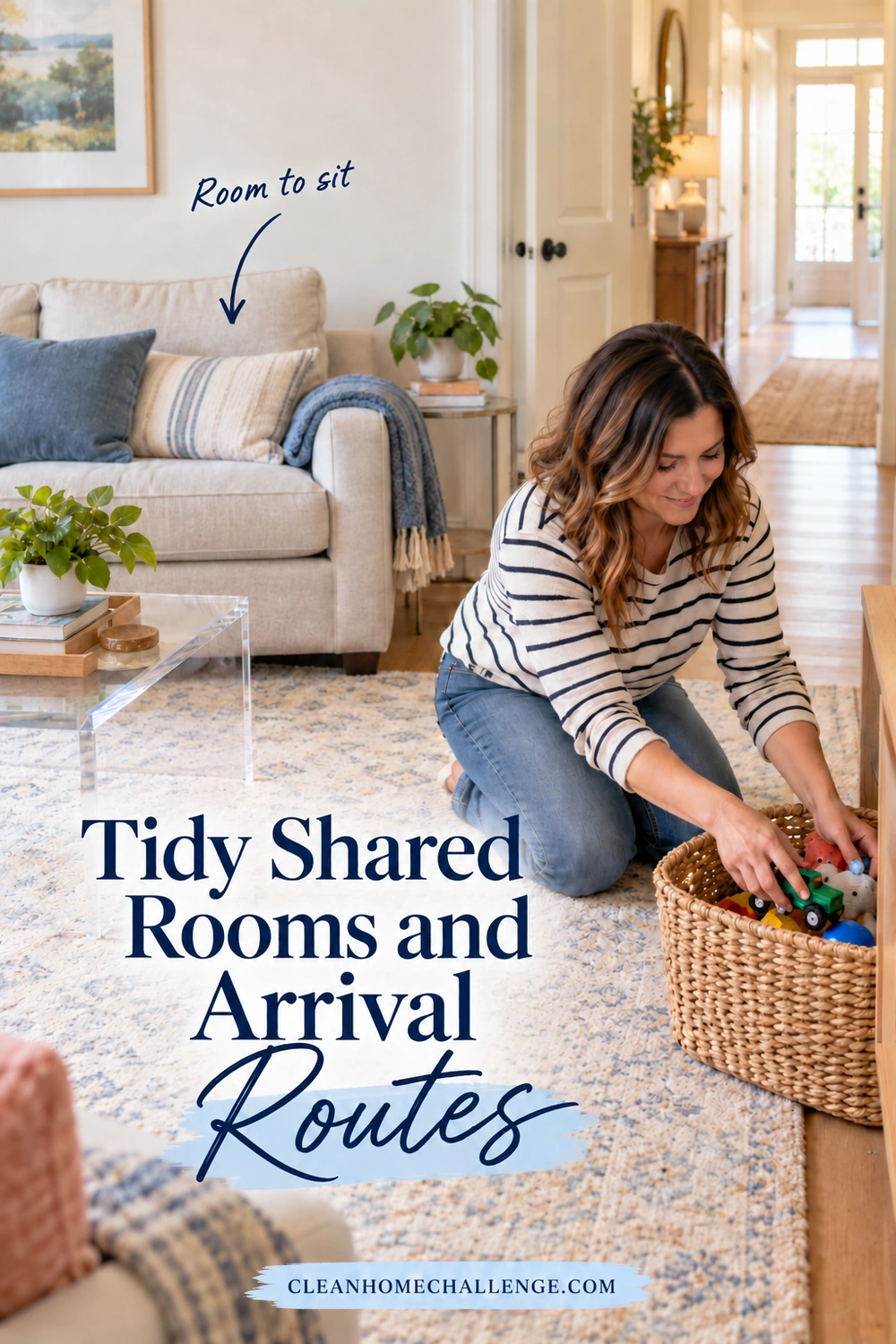
Clear enough seating for everyone and somewhere to put a drink. Collect stray dishes, fold throws, and return toys to their usual baskets. If a temporary basket helps gather scattered belongings, put it somewhere sensible and plan to empty it after the visit.
Dust the surfaces guests will use, including side tables and reachable shelves. Clean obvious marks using a method suitable for the material. For upholstered seating, follow the furniture’s care label before vacuuming or spot-cleaning. Some covers can be washed; others need a different treatment. A visible zipper does not establish that a cover is machine-washable.
Clean floors after the surfaces above them. Choose the vacuum attachment or broom appropriate to your flooring, then spot-clean sticky areas or mop as needed using the floor manufacturer’s directions. Avoid leaving excess moisture, and give floors time to dry before moving furniture back or opening the route to guests.
At the entry, make room for coats, shoes, and a bag. Check that a suitcase can move through without catching on floor clutter. Walk from the sleeping space to the bathroom after dark to see whether the available lighting is easy to find. Keep cords and stored items out of the route.
Put away private paperwork and any medicines or cleaning products left in shared spaces. If children are visiting, discuss the setup with their parent or caregiver and keep adult-only items securely stored.
For ordinary stale-room odors, look for the source: trash, damp towels, old food, or pet mess. Clean the affected item appropriately instead of layering fragrance over it. Fresh flowers, elaborate displays, and coordinated cushions can wait until the practical work is finished.
Use a 30-Minute Arrival-Day Reset
This short plan is a final touch-up for rooms that are already basically usable. It cannot replace laundering dirty bedding, cleaning a neglected bathroom, or allowing wet surfaces to dry. If one essential needs more time, give it that time and drop the optional jobs.
Minutes 0–5: Clear the guest route. Collect trash and stray dishes, put shoes and toys away, and clear space for luggage. Keep the focus on the entry, sleeping area, bathroom route, and seats people will use.
Minutes 5–13: Check the bathroom. Clean fresh toothpaste or water marks, check the toilet, replace a used hand towel, and refill soap or toilet paper as needed. If a product requires a particular application or contact time, follow the label even if the timer has moved on.
Minutes 13–20: Finish the sleeping setup. Make the bed with already-clean, dry bedding, set out towels, and check the lamp and luggage space. For a shared room, place the prepared bedding together and explain when the bed will be opened.
Minutes 20–27: Reset food and seating areas. Put away dishes, wipe the eating surface, deal with visible crumbs, and empty a full trash can. Make drinking glasses easy to find.
Minutes 27–30: Put equipment away. Store cleaning products securely, remove the vacuum and cords, check that walking surfaces are dry, and wash your hands. Leave yourself a moment to answer the door without carrying a cleaning caddy.
Only have ten minutes? Choose the biggest unfinished essential: the sleeping setup, the bathroom, or a clear route. Share the remaining essentials with another adult if one is available. Skip polishing, decorative styling, and rooms guests will not enter.
If you discover that the basic setup cannot be made ready safely in the time available, tell your guests and agree on a workable plan. You do not need to conceal a problem or promise an unrealistic finish time.

Keep Up During the Stay and Reset Afterward
A few small habits keep the work manageable while people are visiting. Clear dishes after meals, wipe food spills promptly, check the bathroom supplies, and give damp towels somewhere to dry. Refresh a soiled hand towel or bath towel when needed. A brief evening pickup helps keep guest routes open.
Show guests the useful details once: where clean towels are, how the shower works, which basket is for laundry, and where breakfast supplies live. For a longer visit, agree on an easy towel and bedding routine. Ask before entering their sleeping space or handling belongings.
Keep your usual household routine flexible. A quick spot-clean may be enough between outings; you can leave nonessential room projects until the visit is over. Anyone who offers to help can take a clear, comfortable job such as loading dishes or returning cushions.
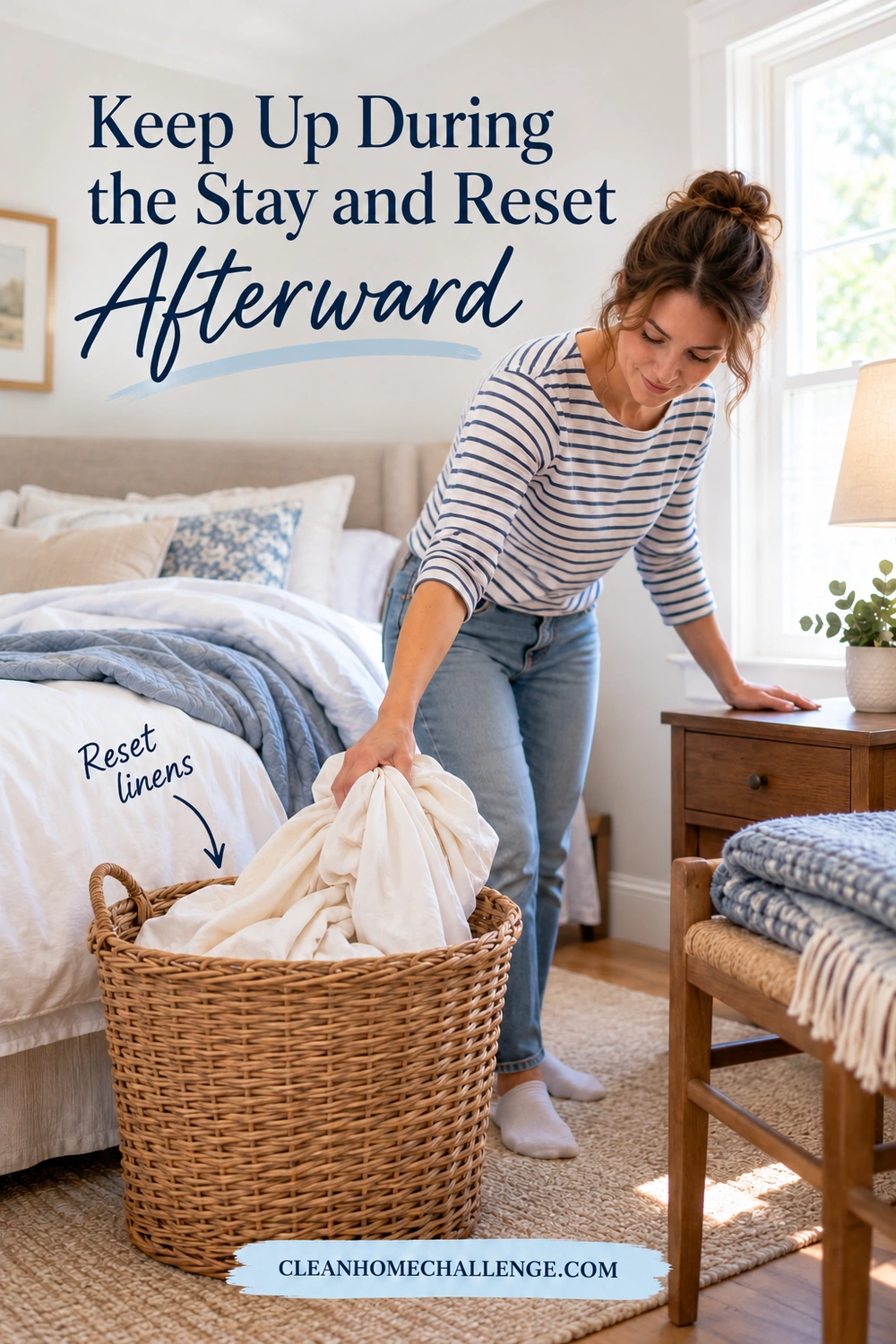
After departure, check the room for forgotten belongings before stripping the bed. Launder used bedding and towels according to their care labels, clean the bathroom, empty trash, and wipe food areas. Let textiles dry completely before making the bed again or storing them.
Return the temporary clutter basket to its normal rooms and put the everyday furniture layout back if you changed it. Note any supplies that ran out or small fixes you want to make before the next visit.
Save this cleaning checklist for house guests with your usual routine. Next time, you will already know which spaces matter, where the clean bedding lives, and what you can comfortably leave for another day. A ready bed, a usable bathroom, and a little room to settle in make a practical, welcoming start.
CLEANERS CLUBHOUSE
Need Help Getting Through a Proper Deep Clean?
Follow the 7-Day Deep Clean Bootcamp when your home needs more than a quick tidy. The Cleaners Clubhouse breaks the work into achievable steps with printable support and seasonal cleaning guidance.