

THIS POST MAY CONTAIN AFFILIATE LINKS. PLEASE READ MY DISCLOSURE FOR MORE INFO.
An old carpet mark has a way of becoming part of the furniture. You move the coffee table, notice the same brown patch again, and wonder whether another scrub will finally shift it.
If you’re figuring out how to remove old carpet stains, start with the carpet’s care instructions, a hidden-area test, and one compatible treatment. On water-cleanable carpet, controlled blotting from the outside inward helps you work on the mark without dragging it across clean fibers. Follow with the required residue removal and thorough drying. Some marks will improve; others need professional treatment or are permanent color damage.
This guide is for a small, ordinary household spot on carpet whose manufacturer permits the chosen method. Delicate rugs, uncertain fibers, old pet contamination, and a large or persistently damp area need a different level of care. You don’t have to try every bottle in the cupboard before asking for help.
Allow time to prepare, test, treat, and check the dried result. The hands-on work may fit into a short cleaning session, but testing and drying can take much longer. Pick one spot and give yourself permission to stop there.
Disclosure: This post may contain affiliate links. As an Amazon Associate, Clean Home Challenge earns from qualifying purchases. If you make a purchase through these links, we may earn a small commission at no extra cost to you. This helps us keep creating practical cleaning tips, routines and resources for busy families! 🧽
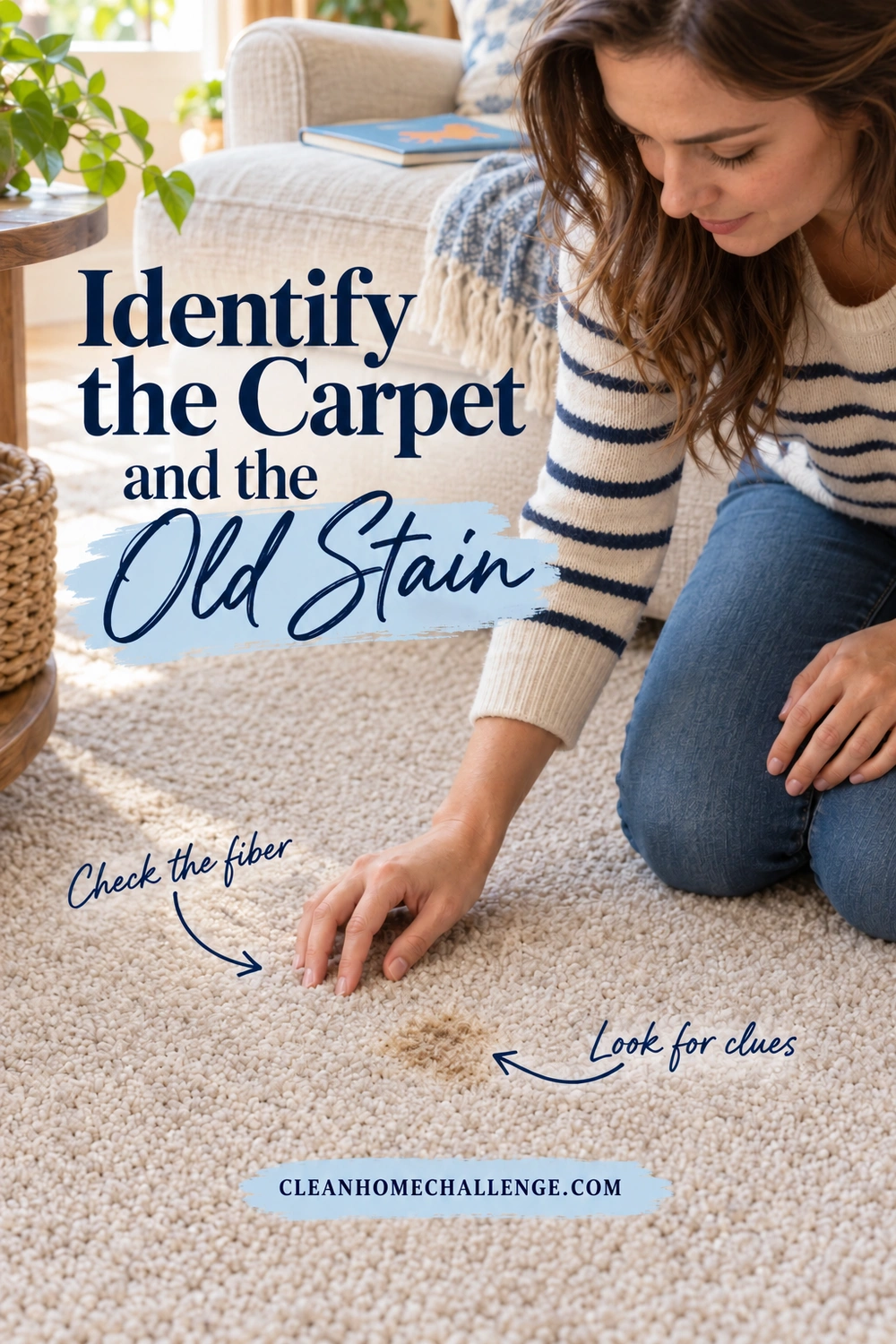
Identify the Carpet and the Old Stain
Find the care information before choosing a cleaner
Look for the installation receipt, spare carpet sample, product name, or rug label. If you rent, the property manager may know the brand and fiber. Ask for the care guide that matches the actual carpet, rather than choosing instructions for a similar-looking floor.
Record three things: the fiber, whether water-based spot cleaning is permitted, and any product or machine restrictions. A soft beige pile doesn’t tell you whether you’re looking at wool, nylon, polyester, or a blend. The backing and construction matter too. A label saying “carpet cleaner” on a bottle doesn’t settle those questions.
For wool, use the carpet maker’s directions and compatible wool-approved products. Fabrica specifically advises professional help for extensive or old set-in stains on its wool carpet, and warns against dishwashing liquid because of sticky residue. That is a useful reminder that an internet recipe for synthetic carpet isn’t automatically suitable for wool. Fabrica wool-care guidance
For silk, sisal, jute, viscose, and other delicate or moisture-sensitive rugs, pause the wet-cleaning plan and seek material-specific advice. WoolSafe notes that plant-based and regenerated fibers can develop watermarks or pile distortion from unsuitable wet treatment. If the material is unknown, identify it before adding liquid. WoolSafe fine-fiber care
Gather clues without guessing
Take a quick photograph in good light. Note the size, location, likely cause, and anything already applied. “Coffee beside the armchair, treated once with carpet spray” is more useful than “brown stain.” Include older attempts with powder, detergent, peroxide, or a rented machine if you remember them.
Look at the mark from both directions. Does it feel crusty, look greasy, or sit beneath a metal furniture leg? Is it actually lighter than the surrounding carpet? These are clues, not a home diagnosis. Avoid sniffing closely or handling an unknown deposit with bare hands.
A mark that becomes light or dark as your viewing direction changes may involve pile shading rather than a removable spill. Chemical fading can also resemble a stain. The Carpet and Rug Institute’s care guide distinguishes these appearance changes from ordinary soiling. CRI carpet and rug care guide
Gather a Small Carpet Spot-Cleaning Kit
Keep the setup simple enough that you can see what you’re doing and keep dirty tools separate from clean ones.
- Several clean, white, absorbent cloths or plain white paper towels
- A rounded spoon for lifting loose surface material
- A small bowl of clean water, only if the carpet allows water cleaning
- One carpet spotter approved for the fiber and likely stain
- Gloves and any other protection specified on the product label
- A tray for used cloths and a bag for lifted debris
- A timer, plus the product directions where you can read them
- A fan if needed, positioned safely away from the wet work area
White cloths make transferred soil easier to see. They also avoid introducing dye from a bright dishcloth. Keep a generous clean stack within reach so you aren’t tempted to use the same dirty corner repeatedly. The CRI’s household cleaning guidance recommends white absorbent materials and gentle removal of solids before spot treatment. CRI cleaning essentials
Choose a product for this job
Check whether the product is a hand-applied spotter, a machine formula, or a pretreatment that must be extracted afterward. Those instructions are not interchangeable. If the label requires a machine you don’t have, choose a suitable hand-treatment option recommended by the carpet maker or ask a cleaner.
CRI’s Seal of Approval program evaluates cleaning products and equipment; its product categories can help narrow the search. Certification is a starting point, not permission to ignore a fiber restriction or skip a test. CRI Seal of Approval program
Put the other cleaners away while you work. Never combine products or layer a new treatment onto unidentified chemical residue. Follow label directions for ventilation, gloves, storage, and keeping children and pets away. Poison Control warns that mixing household cleaners can release dangerous gases. Poison Control cleaning safety
You don’t need an extractor just because the stain is old. Before buying or borrowing one, decide whether the carpet permits it, whether the problem is small enough for hand treatment, and whether you can recover the added moisture. Start with the tools required by the approved method, rather than purchasing a whole cleaning system for one uncertain mark.


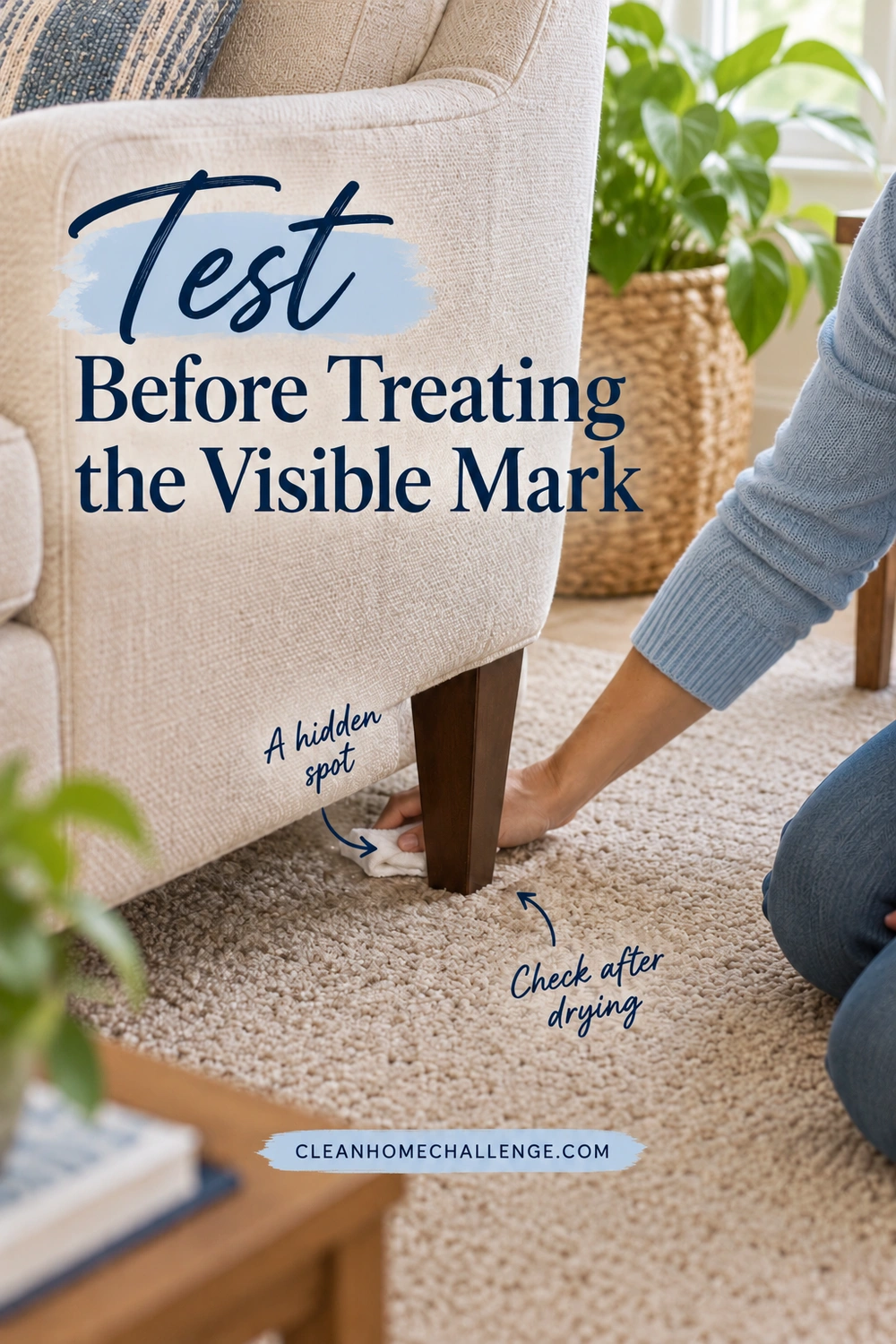
Test Before Treating the Visible Mark
A hidden-area test is a separate task from cleaning the stain. Choose an unobtrusive patch of the same carpet, such as inside a closet or behind furniture you can move safely. Test a spare offcut first if available, but remember that installed carpet may have aged differently.
- Read both sets of directions. Check the carpet care guide and the spotter label, including dilution, application, contact time, removal, and drying.
- Use the intended strength. Don’t test a heavily diluted product and then apply it stronger to the stain. Don’t dilute a ready-to-use cleaner unless instructed.
- Treat a tiny hidden area as directed. Use the same cloth and removal method planned for the visible spot.
- Check for transfer or change. Stop if carpet color appears on the cloth, the test area lightens, or the texture changes.
- Allow it to dry before deciding. Compare the dry patch with nearby untreated carpet in similar light.
BISSELL’s hand-cleaning guidance also calls for an inconspicuous test and stopping if carpet color transfers. Its example timing applies to its method; use the waiting period on your own product rather than borrowing a universal number. BISSELL hidden-area testing guidance
Let the label set the clock
Dwell time means the period a product is meant to stay in contact with the spot. It isn’t a challenge to leave it longer. Product instructions vary in how much to use, how long to wait, and whether to rinse, extract, or let it dry. Set a timer for the directions you are following.
For example, the registered directions for Stanley Steemer’s Professional Spot Remover specify a two-to-four-minute contact period followed by rinsing and blotting. That timing belongs to that particular product, not every carpet spray. Product-specific spot-remover directions
If you’re interrupted before the test is finished, leave the visible stain alone for now. Note the product and test location so you can return later without starting over. A successful test reduces uncertainty; it doesn’t guarantee stain removal or rule out every reaction in a previously treated spot.
Blot Old Carpet Stains From the Outside In
Once the carpet and cleaner have passed the checks, arrange your cloths beside the mark and work on a small area at a time. Take a second look at the boundary in your photograph so you can notice if the damp patch spreads beyond it.
Remove what is loose first
Lift loose, hardened food with the edge of a rounded spoon, moving upward rather than digging into the pile. Don’t force a crust that is firmly attached. Vacuum ordinary dry crumbs or loose soil only when the material is suitable for your vacuum and the carpet is dry. Never use a dry household vacuum to collect liquid, unknown chemicals, or bodily waste.
Interface’s carpet-maintenance guidance uses gentle lifting for hardened spills and warns against moving contamination across a wet area. The practical aim is to remove material before distributing it through more fibers. Interface spot-cleaning guidance
Use a press-and-lift movement
Apply your approved treatment in the amount and manner its instructions permit. For methods specifying cloth application, dampen a small cloth section rather than pouring cleaner onto the carpet. Some products have different directions; if they conflict with the carpet’s care restrictions, don’t improvise a compromise.
Place the cloth at the stain’s outer edge. Press gently downward, lift straight up, then move to the next small part of the perimeter. Gradually work toward the middle. Keep your hand still during each press instead of wiping sideways or making circles.
Fold or replace the cloth when the contact area becomes dirty. Shaw’s spot-removal instructions emphasize outside-in blotting and warn that scrubbing can damage the fibers. Shaw blotting guidance
Watch the result rather than chasing it
Look for soil transferring to the cloth, a smaller visible mark, and a stable carpet texture. Improvement can be gradual. An old stain that barely changes doesn’t need harder pressure as the next step.
Complete the labeled treatment and required residue-removal step, then allow the area to dry before considering another session. Stop sooner if the color changes, fibers fuzz, moisture spreads, or the carpet feels wetter than you can blot back out. Avoid treating the same wet spot over and over just because the stain is still visible.

Rinse Lightly and Dry the Spot Thoroughly
When the selected method calls for rinsing, use a separate clean cloth lightly dampened with plain water. Blot the treated fibers, then follow with a dry absorbent cloth. Refresh the rinse cloth instead of carrying dirty solution back to the spot. Keep the work within the treated area and avoid pouring a bowl of water into the pile.
If the directions specify extraction or a leave-on finish, follow that compatible system instead. Don’t automatically rinse every product or shorten a required drying period. Ask the manufacturer when the instructions are unclear.
Make drying part of the job
Press dry towels onto the area and change them as they become damp. Leave the spot uncovered once the blotting stage is finished. Use safe airflow through the room, and keep foot traffic off the treated patch until fully dry and the label allows access. Don’t hide it under a rug or put furniture straight back on damp fibers.
Excess moisture can affect carpet backing, seams, and appearance. CRI’s care guide advises prompt drying and gives 12 hours as a target for the wet-cleaning process it describes. A small spot that remains noticeably damp at that point deserves attention rather than another wet treatment; a specialist product with a different labeled process needs its own approved instructions. CRI wet-cleaning precautions
If you use a compatible extractor, finish with the recovery strokes required by its manual. BISSELL explains that dry passes help recover excess water; on an extractor, “dry” means suction without adding more solution, not using an ordinary dry vacuum on wet carpet. BISSELL explanation of dry passes
Understand a mark that comes back
Residue-related resoiling: A tacky patch that gradually attracts new dirt may contain leftover cleaner or spill material. Fabrica warns that unsuitable detergents can leave sticky residue and cause rapid soiling. Timing and texture are clues, not proof. Fabrica residue warning
Wicking: A mark can reappear as remaining liquid and contamination move up from deeper in the carpet during drying. Shaw describes wicking as the return of a previously cleaned stain involving liquid in the backing or padding. Adding more spray at the surface may repeat the problem. Shaw explanation of wicking
Photograph the dry result and note when the mark returned. If one careful treatment leaves a recurring ring or stubborn tackiness, get advice before repeating the wet cycle.

Adjust Your Approach for Different Stains
The outside-in technique stays useful, but the stain and carpet determine which treatment belongs on the cloth. For a named spill, consult the carpet maker’s stain guide or the WoolSafe Stain Wizard rather than treating every brown mark as coffee.
Mud and dried food
Remove ordinary loose dry soil and crumbs first. For a dried food deposit, gently lift what releases without tugging the pile. Chocolate, for example, can leave a removable solid layer as well as a remaining mark. BISSELL’s chocolate guidance starts by lifting excess material with a spoon or dull edge. That first step can reduce the amount left to treat. BISSELL chocolate preparation guidance
Use a compatible spotter for the remainder. Resist turning a small crust into a large wet smear. If the material doesn’t lift easily, check the stain-specific method before trying to soften it.
Coffee, tea, juice, and wine
Choose guidance for the actual drink and fiber. Tell a professional about milk, sugar, or previous treatments, as well as the drink’s color. Don’t reach for peroxide or a bleaching product solely because a brown shadow remains.
Pouring white wine over red wine adds another spill. WoolSafe recommends a little water and blotting for compatible treatment of a red-wine spill, followed by an approved spot remover if needed. An old mark may need specialist help, and moisture-sensitive carpet still requires its own method. WoolSafe red-wine advice
Grease, oil, ink, paint, or rust
These are reasons to consult specific instructions rather than work through kitchen-cupboard recipes. A solvent may be required for some oily marks, but its suitability depends on the carpet, backing, product, and ventilation. Shaw explicitly warns against putting its described solvent treatment directly onto carpet because of backing damage. This is not a recommendation to use paint thinner or nail-polish remover on an unknown rug. Shaw solvent precautions
For old paint, ink, rust, or an unidentified chemical mark, a professional assessment is a sensible first treatment decision.
Pet accidents and other biological stains
Choose a product specifically labeled for the substance and carpet. Enzyme cleaners are not automatically suitable for every fiber. Nature’s Miracle’s Advanced Stain and Odor Eliminator, for example, excludes silk and wool specialty fabrics and requires people and pets to stay off treated areas until dry. Nature’s Miracle material restrictions
Don’t apply a saturation instruction from a pet-product label to this light spot-cleaning method. If the carpet care directions and product requirements conflict, or an old accident may extend into padding, ask a professional before using it. CRI also cautions against heat-based steam treatment for urine spots. CRI pet-stain guidance
Wear appropriate gloves for bodily fluids, keep others away, and follow a specific care method for blood or vomit. Removing a visible mark does not establish that the area has been disinfected.

Know When to Stop and Call a Professional
A smaller, lighter mark can be a reasonable improvement. There is no household product that can promise to remove every old stain, and escalating the chemistry can leave you with a harder repair.
Stop the DIY attempt if:
- Carpet dye transfers, the patch lightens, or the texture changes
- The wet boundary grows or moisture is difficult to recover
- The stain returns after the carpet dries
- Odor persists, especially after an old pet accident
- One complete, compatible treatment produces no meaningful improvement
- You find a loose seam, backing problem, widespread discoloration, or unexplained dampness
- You cannot identify the fiber or previous chemical treatments
The one-treatment checkpoint is a cautious household decision point, not a promise that every stain should disappear in one attempt. A carpet maker or qualified cleaner may recommend another controlled treatment after assessment. It simply gives you a clear place to pause before frustration turns into repeated soaking.
For wool, WoolSafe’s guide specifically routes old urine stains, rust, and bleach-related marks to professional attention. Fine-fiber and valuable rugs also deserve advice before experimentation. WoolSafe stain-treatment guide
Make the call easier
Send a photograph of the dry mark and share the carpet details, likely spill, approximate age, and exact products already used. Describe whether it feels sticky, returned while drying, or has a persistent odor. Ask whether the cleaner has experience with your fiber and whether they expect improvement, full removal, or a repair assessment.
Request a written scope and price before booking, including any specialist stain treatment. Ask what drying arrangements you’ll need and when children, pets, and furniture can return. If a warranty might apply, contact the retailer first; Shaw asks owners to keep purchase records and provide a description or photograph when initiating a claim. Shaw carpet warranty guidance
A bleach-lightened patch may need color repair or replacement rather than more cleaning. An area that stays damp may need the moisture source investigated. In either case, leave it accessible for assessment instead of covering it and forgetting it.

Keep Carpet Spots From Becoming Set-In Stains
Once the treated patch is fully dry, check it in daylight and return the room to normal. Restock the white cloths, put the cleaner safely away, and save the photograph and treatment details somewhere easy to find. That takes less effort than trying to reconstruct the story next time.
Build a small Friday floor routine
Use Friday floors as a regular check-in, then respond to new spills when they happen. A workable routine could look like this:
- Pick up the floor. Move shoes, toys, and laundry into their usual homes.
- Look at the places spills collect. Check beside seating, under the dining area, and along the route from the door.
- Vacuum using the carpet’s recommended settings. Give busy walkways extra attention.
- Choose one small issue to deal with. Identify and test an old mark, refresh an entry mat, or arrange advice for a returning stain.
- Put the kit back together. Replace used cloths and keep product directions with the bottle.
Shaw recommends regular vacuuming, immediate attention to spills, and professional help for deep stains that routine spot cleaning cannot remove. Match the frequency and equipment to your carpet and household rather than treating every room identically. Shaw carpet-care routine
On a low-energy day, do the pickup and the busiest walkway. For an old, dry mark, finding the care guide and taking a photograph is a useful first session. A fresh spill deserves prompt attention, but an old stain doesn’t require an exhausted late-night experiment.
Keep an easy-to-reach supply of cloths separate from safely stored chemicals. Place drinks on stable surfaces and make the entryway convenient for muddy shoes. Choose the two changes that fit your family rather than trying to redesign how everyone lives.
If you like a routine you can follow without planning from scratch, the Cleaners Clubhouse floor-cleaning printables and Friday floor routine can support that weekly reset.
The next time an old mark catches your eye, begin with what you know about the carpet. Test, work gently, control the moisture, and judge the dry result. Protecting the fibers while making sensible progress is a worthwhile outcome, even when the final step is calling someone who can take it further.

CLEANERS CLUBHOUSE
Stay on Top of Floors Without Cleaning All Day
Give your floors a focused Friday reset instead of chasing every mark all week. The Cleaners Clubhouse helps you build a realistic routine with practical guidance, printables and monthly challenges.