
THIS POST MAY CONTAIN AFFILIATE LINKS. PLEASE READ MY DISCLOSURE FOR MORE INFO.
Some days you have the attention to sort a mixed cupboard but very little appetite for carrying a vacuum upstairs. Other days you can happily fold towels, yet deciding what to keep feels like one decision too many. A list that calls both jobs “ten-minute chores” misses a useful difference.
A cleaning effort menu sorts small, specific jobs by the physical work and attention they ask of you. Make a low, medium, and high group using your own experience, then choose a job that fits today’s circumstances. Include gathering supplies, finishing the cleaning process, and putting everything away in that choice.
These levels are personal planning labels, not medical categories or a test of how hard you should work. You can change a rating, share a job, choose a smaller version, or leave optional work for another time. The free fillable effort cards near the end let you build a menu around your actual home.
Disclosure: This post may contain affiliate links. As an Amazon Associate, Clean Home Challenge earns from qualifying purchases. If you make a purchase through these links, we may earn a small commission at no extra cost to you. This helps us keep creating practical cleaning tips, routines and resources for busy families! 🧽
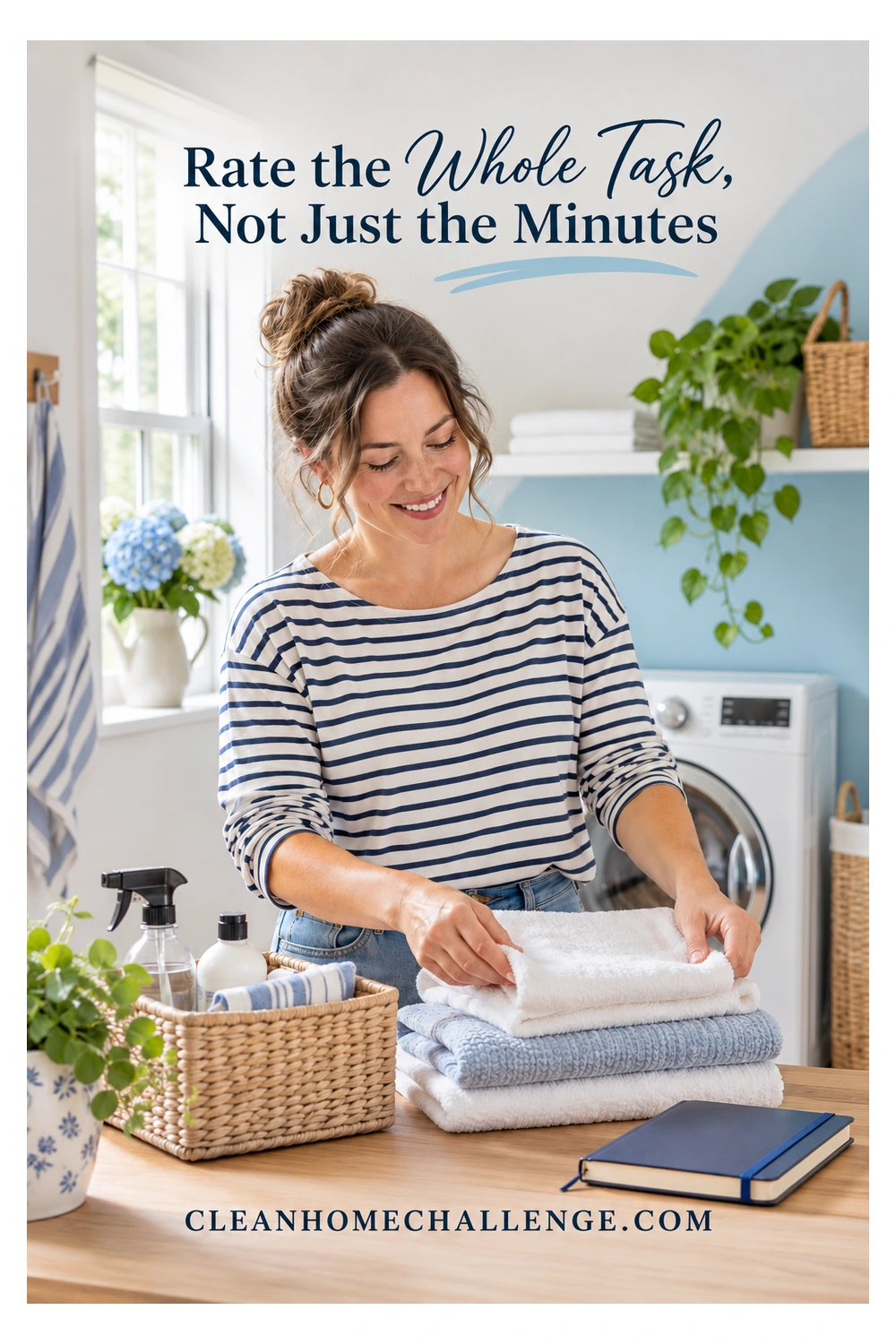
Rate the Whole Task, Not Just the Minutes
Notice two different kinds of demand
Physical effort includes carrying, gripping, reaching, repeated bending, pushing equipment, standing, and moving between rooms. Attention demand includes reading care instructions, making decisions, remembering several steps, watching a process, or managing interruptions. Neither is a measure of your willingness to help at home.
A seated paperwork sort can be physically light but require plenty of decisions. Returning three familiar books to their usual shelf may take little thought, although the shelf’s height could make it awkward for a particular person. Use the actual task and person rather than an assumed universal rating.
Here is a simple way to start:
| Level | What it might mean for you | A possible starting example |
|---|---|---|
| Low | Familiar steps, little setup, comfortable movement, and an easy finish | Fold a few clean hand towels at a comfortable surface |
| Medium | More movement, more setup, or several steps to keep track of | Vacuum one accessible room with familiar equipment |
| High | Demanding movement, sustained attention, many decisions, or a larger setup | Review a mixed storage shelf and decide what belongs there |
The examples are invitations to assess, not fixed assignments. Vacuuming may belong in your high group; folding towels may need more grip or attention than you have available. A task can also be unsuitable regardless of its level. Do not add unsafe lifting, unstable climbing, electrical repairs, or unfamiliar chemical treatments to a high-effort list as though extra determination makes them appropriate.
Count the edges of the job
“Wipe the table” can involve clearing dishes, finding a suitable cloth and cleaner, checking the table’s finish, cleaning it, completing any required rinse or drying, and returning supplies. Rate that whole sequence. If the setup is the part that gets you stuck, write it down instead of blaming the wiping step.
For a first menu, ask three questions beside each task: What do I need to move? What do I need to decide? What has to happen before I can leave it? You do not need a complicated score. One short note, such as “basket upstairs” or “many keep/donate decisions,” is enough to explain why you placed it where you did.
Time is still useful, but a short job does not automatically have low effort. If you want to observe your normal timing separately, use the guide to timing chores before building a cleaning schedule. Keep today’s effort menu small rather than measuring every job in the house.
Keep the kit simple
Start with paper or the free cards, a pen, and the supplies already appropriate for the selected task. Keep commonly used tools accessible to the adults who use them, while storing cleaning products securely and following their labels. Do not create an open chemical caddy for children to access in the name of convenience.
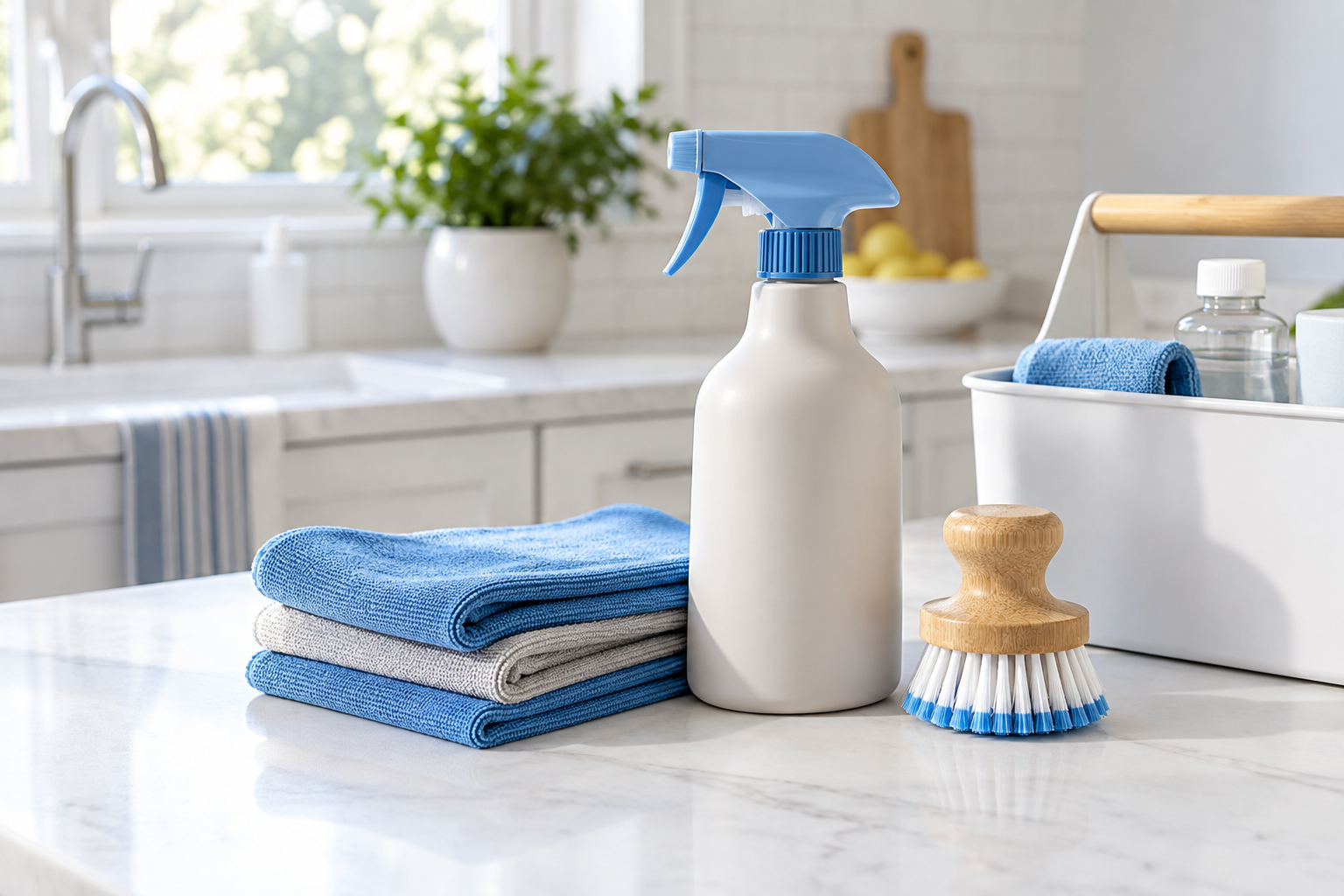
A familiar tool may reduce setup, but buying a new kit is not a requirement for making this menu. If you are reviewing everyday supplies, the collection below is a starting point for choosing what suits your surfaces and routine.
Build Your High-Medium-Low Cleaning Menu

Write jobs small enough to recognize
Begin with two or three jobs in each group. “Clean the kitchen” hides too many separate demands. “Clear and clean the small preparation counter” gives you something you can assess. “Do laundry” might become fold the clean towels, sort one ordinary load by its care needs, or put the already folded clothes into their drawers.
Include a finish condition on each card. For example: “Fold six clean towels; finished when they are on the linen shelf.” This avoids a quick folding job turning into a complete cupboard reorganization. For help defining that boundary, the cleaning stop-rule guide covers visible finish lines and a separate list for newly noticed projects.
You can start with this sample menu and move every item that does not fit:
| Possible low choice | Possible medium choice | Possible high choice |
|---|---|---|
| Return three books to an easy-to-reach shelf | Dust one accessible bookcase without moving it | Sort a mixed shelf where several people need to make decisions |
| Fold a few clean towels at a comfortable table | Put one basket of folded laundry away on the same floor | Change bedding when lifting and tucking are demanding for you |
| Pick up a few ordinary toys into their usual bin | Vacuum one clear room | Plan and complete a larger room reset with several separate stages |
| Clear a small dry area of the dining table | Clean that table with its permitted method | Sort a crowded collection of household papers |
These are examples of scope, not cleaning instructions for every material. Use the correct care method for the surface, fabric, or equipment. A small version must still be a safe and complete version.
Separate physical effort from decision effort
Write body demand and attention demand separately on the printable. You might mark a task “low body, high attention” and place it in the high menu because today you want low demand in both areas. Another day you may be comfortable choosing it because you can sit and concentrate.
If you prefer a single level, use the more demanding part as your starting label. Keep the note so the label makes sense later. Avoid averaging away a genuine limitation: low decision demand does not cancel a difficult carry or an awkward reach.
Split a larger job at a safe boundary
A big chore can sometimes become several smaller, independently useful jobs. For a bookcase, you could dust one accessible shelf without removing its full contents. For clean laundry, you could fold the towels and leave the remaining clean items contained in their usual place. For an entryway, return today’s shoes without emptying every storage basket.
Do not split a cleaning process by omitting necessary steps. Applying a cleaner and leaving residue because rinsing belongs on tomorrow’s card is not a useful adaptation. If the job involves a product, include all required contact time, rinsing, disposal, and drying in the same safe plan. Choose a different task when you cannot complete that process as directed.
The CDC’s home-cleaning guidance emphasizes surface-appropriate products and label directions. Keep cleaning and disinfection distinct. When disinfection is needed, follow the product’s full directions, including contact time; never mix products to hurry the job along.
Choose One Job That Fits Today

Check what is needed before choosing what is easy
Look first for immediate needs: a blocked walking route, a spill, food that needs putting away, or another issue that cannot sensibly wait. An effort menu helps you plan optional and recurring work; it does not turn an urgent safety or food-handling issue into an optional high card. If you cannot handle an immediate issue safely, keep others away where appropriate and arrange suitable help.
Then check your available movement, attention, time, and supplies. Choose one card that fits all four. A low-effort task that needs a missing tool is not ready to start. A job with simple steps can still be a poor fit when you must leave before it can be finished safely.
Try a short spoken decision: “Today I can do familiar steps at the table. I will fold these towels and put them on the low shelf.” That is enough. You do not have to complete one low, one medium, and one high task to make the system count.
Use a smaller plan without creating catch-up debt
On a busy day, choose the useful minimum for the area. Clear the walking route rather than resetting the entire room; return a few clean dishes you can handle comfortably rather than turning the kitchen into a cupboard project. Optional work can remain on its card without being automatically added to tomorrow.
If the same necessary job keeps being deferred, change the arrangement. Could another person own it? Could the equipment be stored nearer to its point of use? Could the scope, order, or timing change? An effort menu is most useful when it helps you notice those practical barriers, rather than relabeling an unmanageable job every week.
Share the whole task clearly
Different household members may give the same job different ratings. Ask rather than assume. Agree on the area, supplies, finish, and cleanup responsibility, and allow people to explain what makes it awkward. “Put the folded towels on the middle shelf” is clearer than “help with laundry.”
Sharing also includes choosing and remembering work. Avoid making one person prepare every card, find every tool, and check everyone’s result. An adult who owns a recurring task can also own its preparation and put-away. Children can take suitable, supervised tasks matched to their age and ability; cleaning chemicals and unsuitable equipment stay with the responsible adult.
For example, one adult might handle the vacuum and its storage while another returns toys to their bins. That division only works if both agree and the tasks fit their circumstances. Equal-looking lists do not guarantee a workable arrangement.
Finish, check, and stop
Complete the selected card’s finish steps, return tools, and leave the area safe to use. Then ask whether the level felt accurate. If it took more movement or concentration than expected, change the card. If a needed instruction was missing, add it before the next session.
Finishing one card is a useful endpoint. You can stop there. If you choose another, make a fresh decision about the time and capacity left instead of treating an easier start as a promise to tackle everything.
Use Effort Cards to Keep the Routine Flexible

Download the free fillable cards
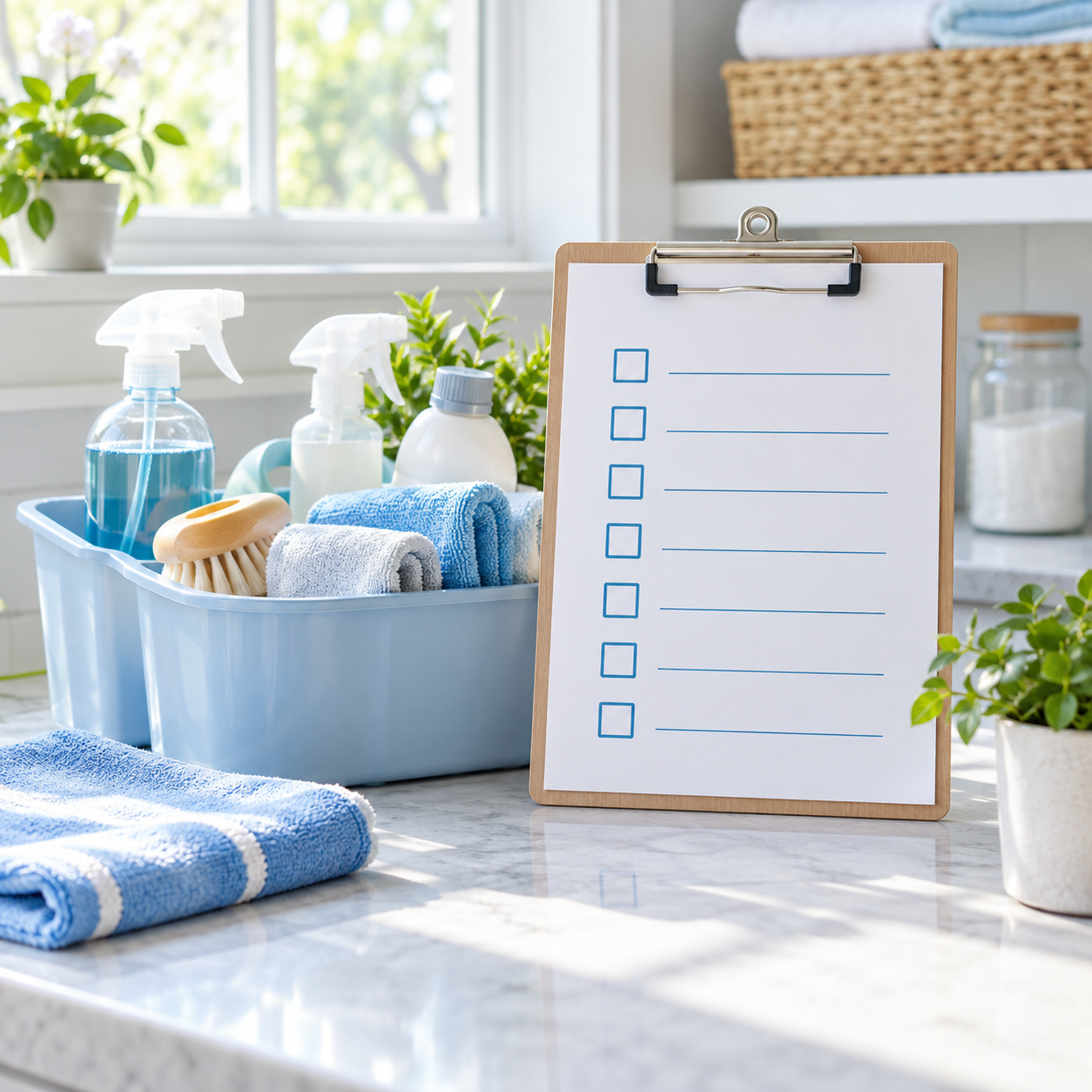
Download the free Cleaning Effort Menu and Fillable Task Cards (PDF). The two-page resource includes space for a personal low-medium-high menu and three reusable task cards. You can type into the fields before printing or write on a printed copy. The cards include the whole task, body and attention demand, supplies, a smaller safe version, and a finish condition.
Start with a single card. For example: task, “Fold six clean hand towels”; body demand, “comfortable seated hand movement”; attention, “familiar steps”; supplies, “dry towels and clear table”; finish, “towels on the low linen shelf.” Use your own rating rather than copying a level that does not fit.
Keep the printable where the adults using it can find it. There is no need to display personal capacity notes publicly. If a shared board is helpful, use neutral task names and agree on what everyone is comfortable sharing.
Let the weekly area guide the choice
The menu can sit beside CHC’s weekly areas: Monday kitchen, Tuesday bathrooms, Wednesday bedrooms, Thursday living areas, Friday floors, and Saturday laundry catch-up. The area is a prompt for where to look; it does not require a high-effort job every time that day comes around. Leave Sunday available for rest and essential household needs.
On bedroom day, a low choice might be returning clothes from one chair to their existing homes. Another day, changing bedding may fit. Both belong to the same area without becoming interchangeable in effort. Keep hygiene needs and actual use in view rather than assuming a menu level sets a universal cleaning frequency.
The American Cleaning Institute’s routine guidance provides examples of recurring work at different intervals. This menu adds your household’s personal effort notes; the high-medium-low labels here are an editorial planning framework, not ACI’s prescribed categories.
Review the cards after a few real uses
Cross out an unhelpful task, add a clearer finish, or move a card when your experience changes. Keep the menu short enough to choose from. If every card feels high today, you can choose rest, share necessary work, or postpone optional jobs rather than searching for a label that makes them feel easy.
If you would like a broader routine alongside these cards, the Cleaners Clubhouse offers the existing cleaning calendar, printable worksheets, and monthly challenges described below. This free PDF is available without membership or an email signup.
CLEANERS CLUBHOUSE
Make Your Cleaning Routine Easier to Follow
Stop wondering what to clean next. Inside the Cleaners Clubhouse, you’ll get a practical 12-month cleaning calendar, printable worksheets and monthly challenges to help you keep moving without trying to do everything at once.
Pick one useful job, give it a safe finish, and let the menu adapt to the people who live in your home. A lived-in home needs a routine that can move with your day.