
THIS POST MAY CONTAIN AFFILIATE LINKS. PLEASE READ MY DISCLOSURE FOR MORE INFO.
When the cloths are in the laundry, the cleaner is under a different sink, and the brush has disappeared, even a small cleaning job can feel like a project. A modest cleaning caddy keeps the everyday supplies together so you can begin without searching the house.
Here is what I would pack for a busy family, what can stay out, and how to keep the kit clean and safe. You can build it from what you already have.
Disclosure: This post may contain affiliate links. As an Amazon Associate, Clean Home Challenge earns from qualifying purchases. If you make a purchase through these links, we may earn a small commission at no extra cost to you. This helps us keep creating practical cleaning tips, routines and resources for busy families! 🧽
Start With a Caddy That Is Easy to Carry
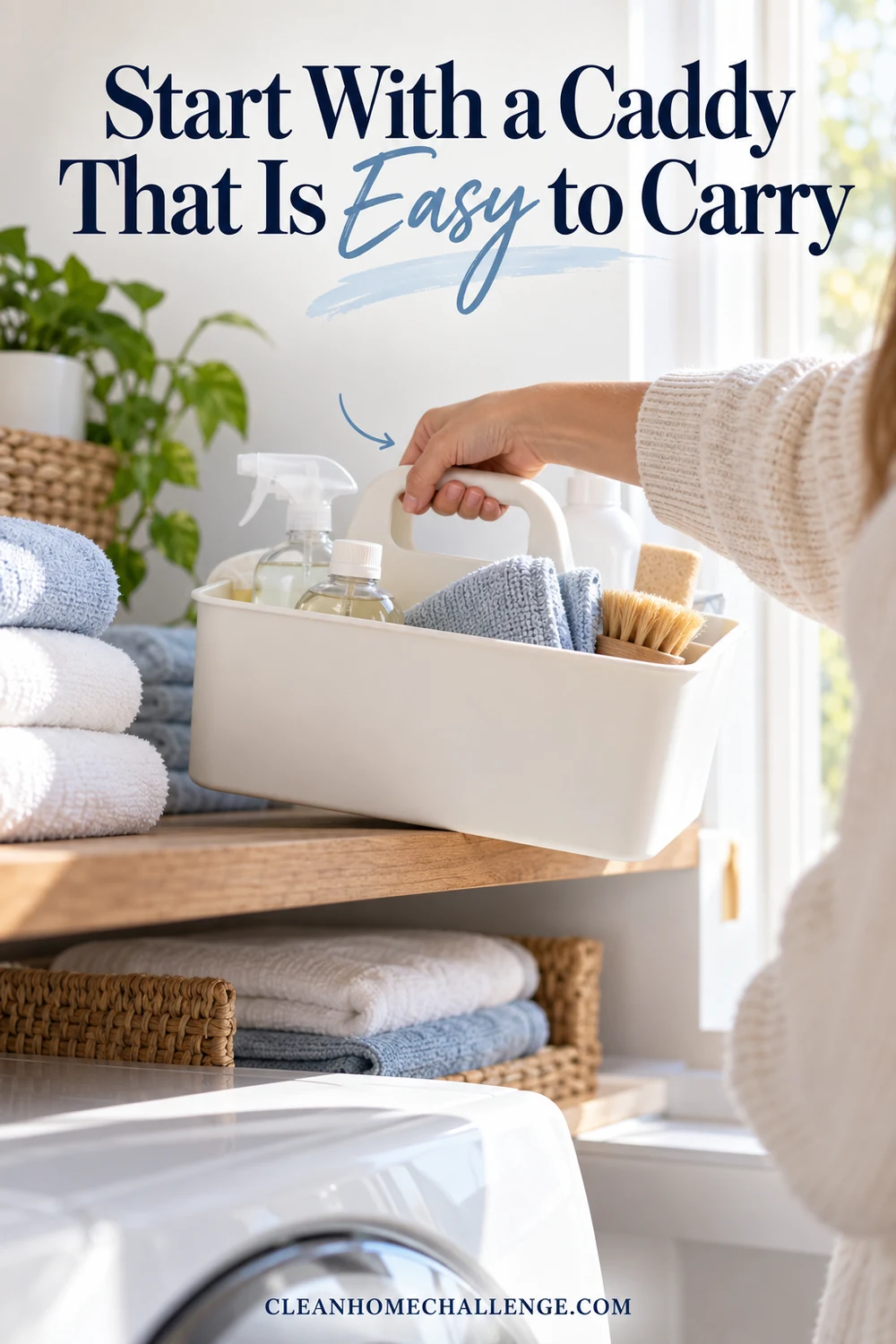
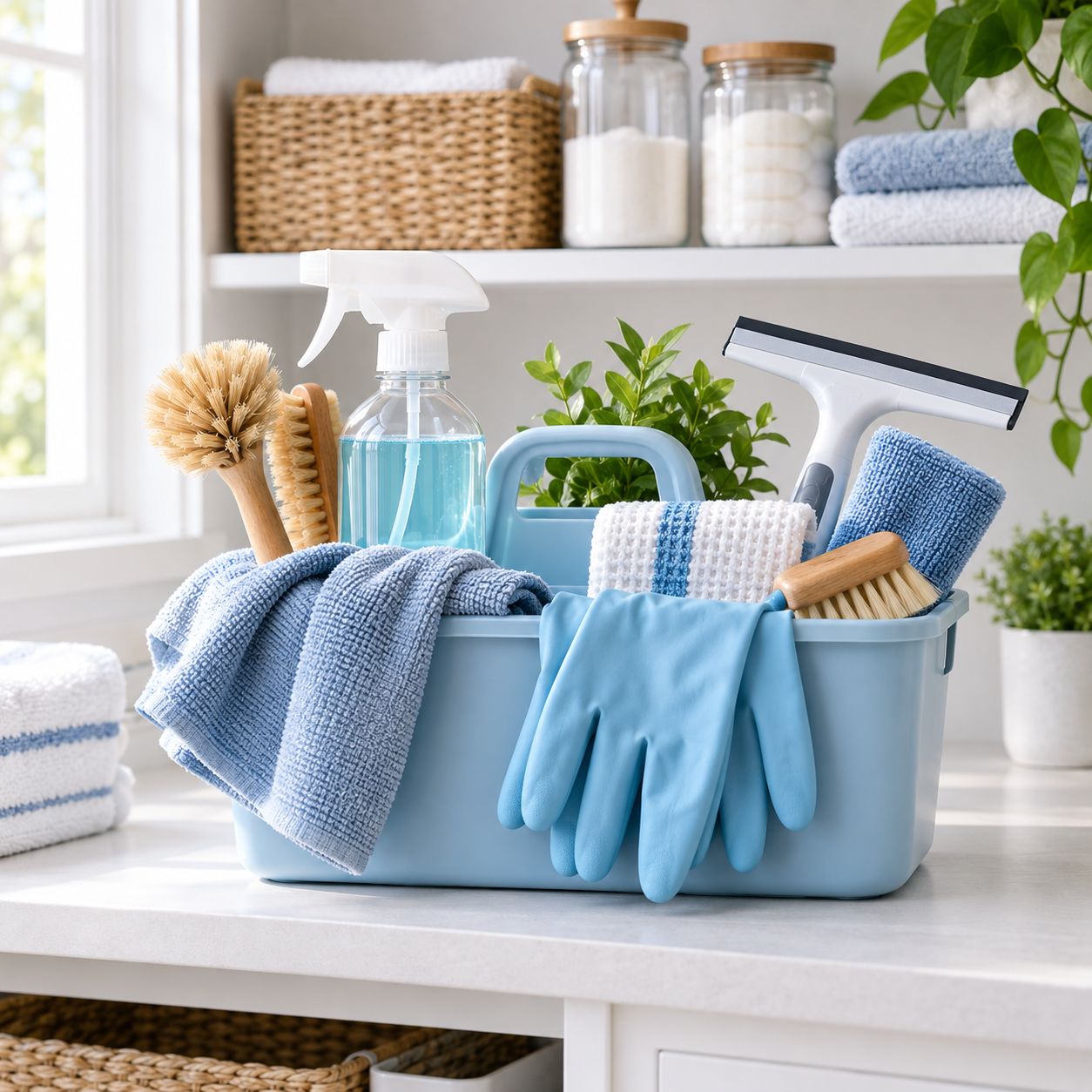
Choose a compact, wipeable carrier with a sturdy handle and enough room to keep bottles upright. A few open compartments make it easier to see what you have. Test the loaded weight before buying a larger one: if it is awkward to carry from room to room, it will probably stay in the closet.
A simple plastic caddy is easy to rinse after a spill. A small basket works for dry tools, but is less forgiving around leaking bottles. Keep the handle and frequently used cloths within reach.
Look for a stable base and a handle that does not dig into your hand. If you have stairs, carry the kit with one hand free for the railing. Put heavier bottles low and do not load the carrier higher than its sides if that makes it unsteady. A kitchen sink or laundry bench is a handy place to assemble it before a cleaning session.
The Six Essentials I Would Put Inside
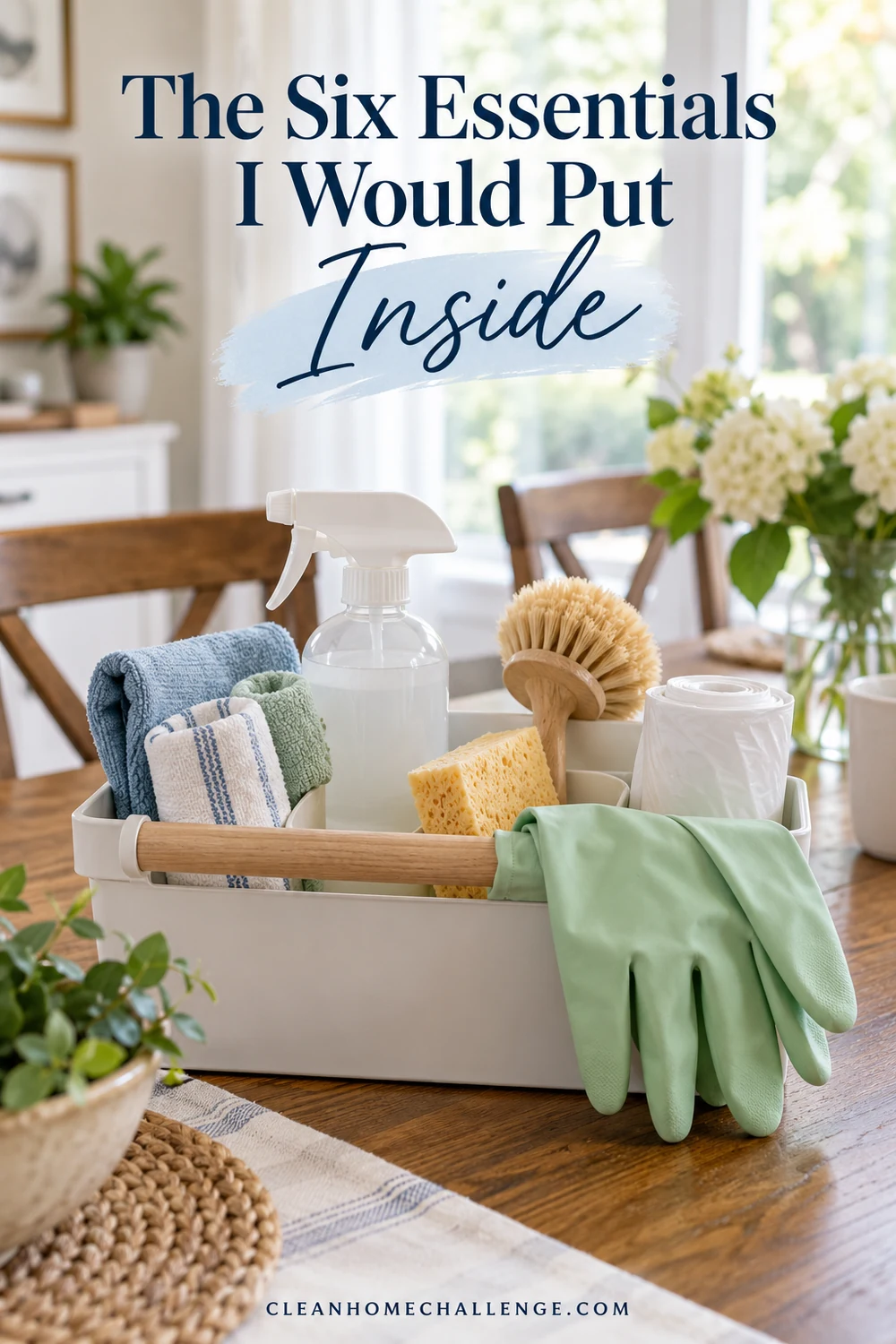
- Three or four clean microfiber cloths: keep extras so you can switch cloths between rooms and whenever one becomes dirty.
- One general cleaner suitable for your home’s common surfaces: check the label before using it on stone, wood, specialty finishes, or food contact areas.
- A non-scratch sponge or soft scrub pad: test an inconspicuous spot on delicate finishes.
- A small detail brush: useful around fixtures and tracks; use a separate toilet brush that stays in the bathroom.
- Reusable cleaning gloves: choose a pair that fits and follow any product-specific protection instructions.
- A few small trash bags: handy for collecting loose waste while you work.
This is a starting kit, not a shopping list you must buy all at once. Use the suitable tools you already own.
You may also find a small dustpan, spare cloth, or glass cloth helpful, but none is essential for every household. Keep the vacuum and mop stored separately. Choose tools that suit your surfaces and the product instructions; a rough scrub pad can scratch a finish even when the cleaner is appropriate.
Keep chemicals in their original containers where possible, with readable labels. If you use a labeled refill bottle allowed by the product maker, follow its dilution and storage instructions exactly. Do not assume a general cleaner is suitable for every stone, sealed wood, screen, or appliance.
Keep Bathroom and Kitchen Cloths Separate
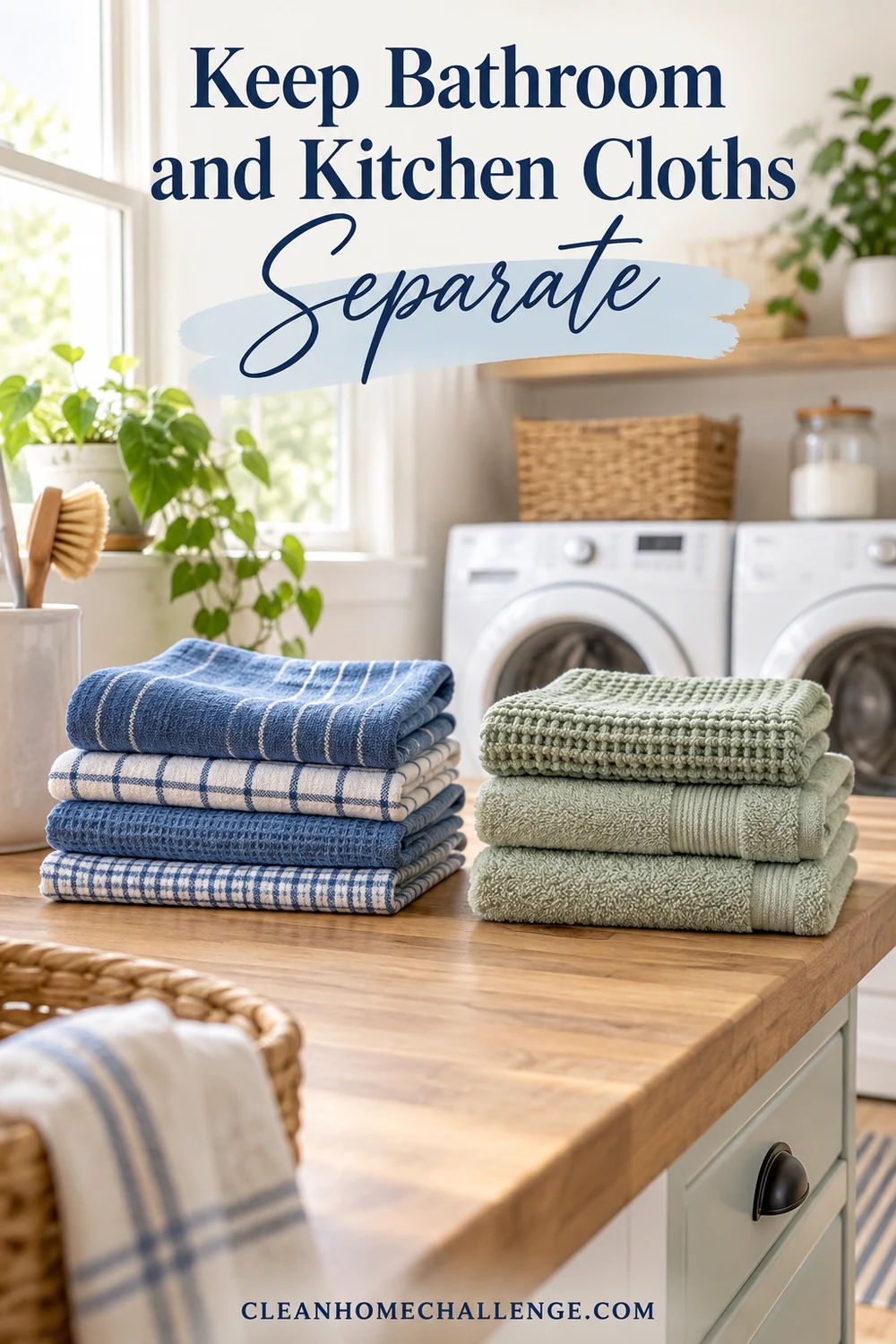
Set aside clearly distinguishable cloths for the bathroom and kitchen. Color coding is useful only if everyone using the kit understands the system. Never move a cloth used around a toilet to a food preparation surface. Put used cloths in a separate laundry bag or bin instead of returning them to the clean stack.
Keep toilet bowl cleaner and the toilet brush in their original, secure bathroom storage. If you prefer to carry a bathroom spray, check its label and make sure its cap is closed and its bottle stays upright.
One easy setup is blue for kitchen surfaces, another color for bathroom sinks and showers, and a dedicated tool that never leaves the toilet area. You do not have to buy a matching set; a separate laundry bag or marked storage pocket is enough. Wash reusable cloths according to their care labels, and let them dry before restocking the caddy.
What to Leave Out of Your Everyday Caddy
Skip duplicate sprays, bulky appliances, seldom-used specialty products, and bottles with missing labels. Store bleach and other strong cleaners securely according to their labels, away from children and pets. Do not decant products into drink bottles or mix cleaners in the caddy. In particular, never mix bleach with ammonia, acids, vinegar, or other cleaning products.
Disinfectant is not required for every routine wipe-down. Ordinary cleaning with a suitable soap or detergent product removes dirt and many germs. When disinfection is needed, use a product labeled for the surface and follow its directions, including the required contact time and ventilation. CDC household guidance explains the difference.
Consider where a product is used rather than carrying everything everywhere. A toilet brush, dishwasher cleaner, upholstery treatment, and oven product can stay close to their specific task in secure storage. If a bottle leaks, remove it, clean the carrier as the label directs, and check whether the product should be replaced. Do not combine remnants from different bottles.

Set It Up for a Ten-Minute Cleaning Session
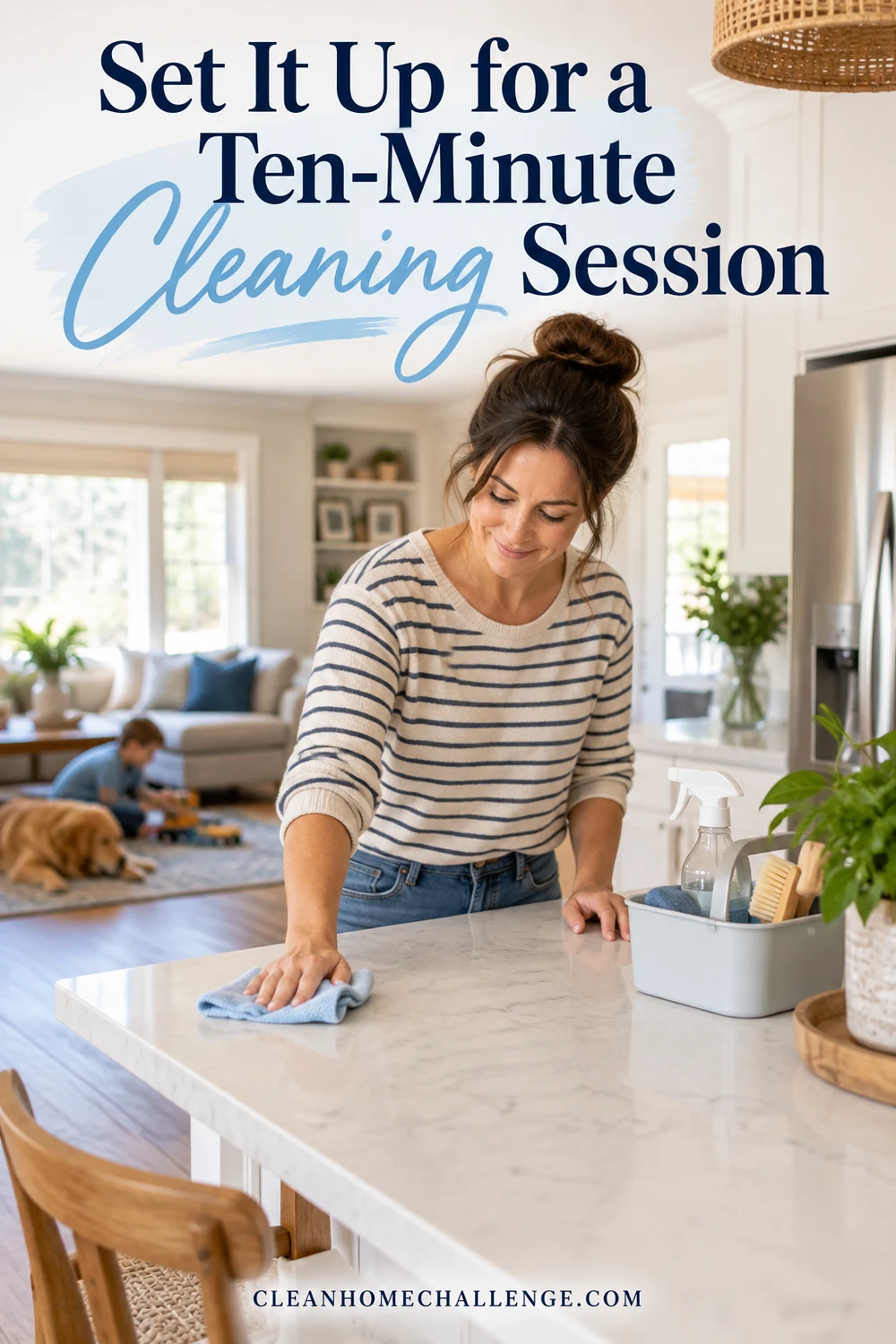
Place upright bottles in the deeper compartments and dry tools in a separate section. Fold clean cloths at the top where you can grab one without touching damp brushes. Start with the area that matters most today: pick up loose items, wipe the relevant surface with a suitable product, then use a fresh cloth in the next room.
If you have only five minutes, take the caddy to one counter, sink, or entryway and finish that small area. You do not need to carry the whole house in one container.
For a practical ten-minute pass, spend two minutes clearing the surface, five minutes cleaning it, and the remaining time putting the tools away and moving the used cloth to the laundry. The timer is a boundary, not a race. A cleaner may need a label-specified dwell time or rinse step, so follow that instruction even if it takes longer.
CLEANERS CLUBHOUSE
Use the Right Tools With a Routine That Works
Good cleaning tools work best when you know where and when to use them. Inside the Cleaners Clubhouse, recommended products sit alongside practical routines, printable worksheets and monthly challenges.
Clean, Refill, and Store the Caddy Safely
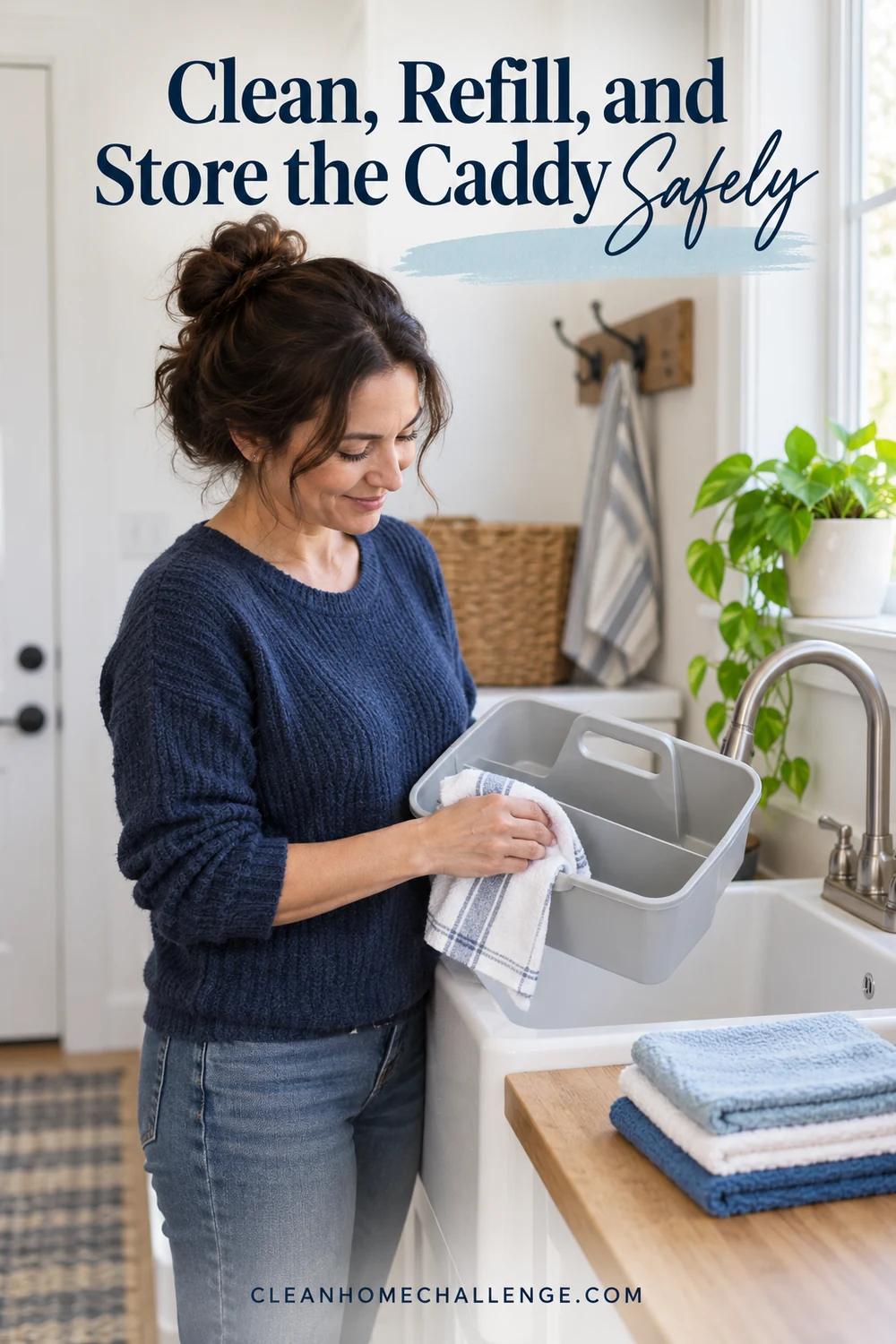
After each session, remove wet cloths and sponges so they can be washed or dried as appropriate. Wipe drips from bottles, check caps, and let the caddy dry. Once a week, rinse the carrier if its material allows it, inspect worn tools, and restock a few clean cloths and bags.
Store products upright in a secure location out of children’s and pets’ reach. Follow the storage and disposal directions on each original label. Keep the caddy away from food and do not leave it unattended during a cleaning session.
Keep a short restock note beside your supply storage if that helps. Replace an empty bottle when needed, but avoid buying backups merely because a space in the caddy is open. If the carrier becomes wet inside, empty it and dry it fully before replacing supplies. Never store damp cloths against bottles or brushes for days.
A Simple Caddy You Can Adapt to Your Home
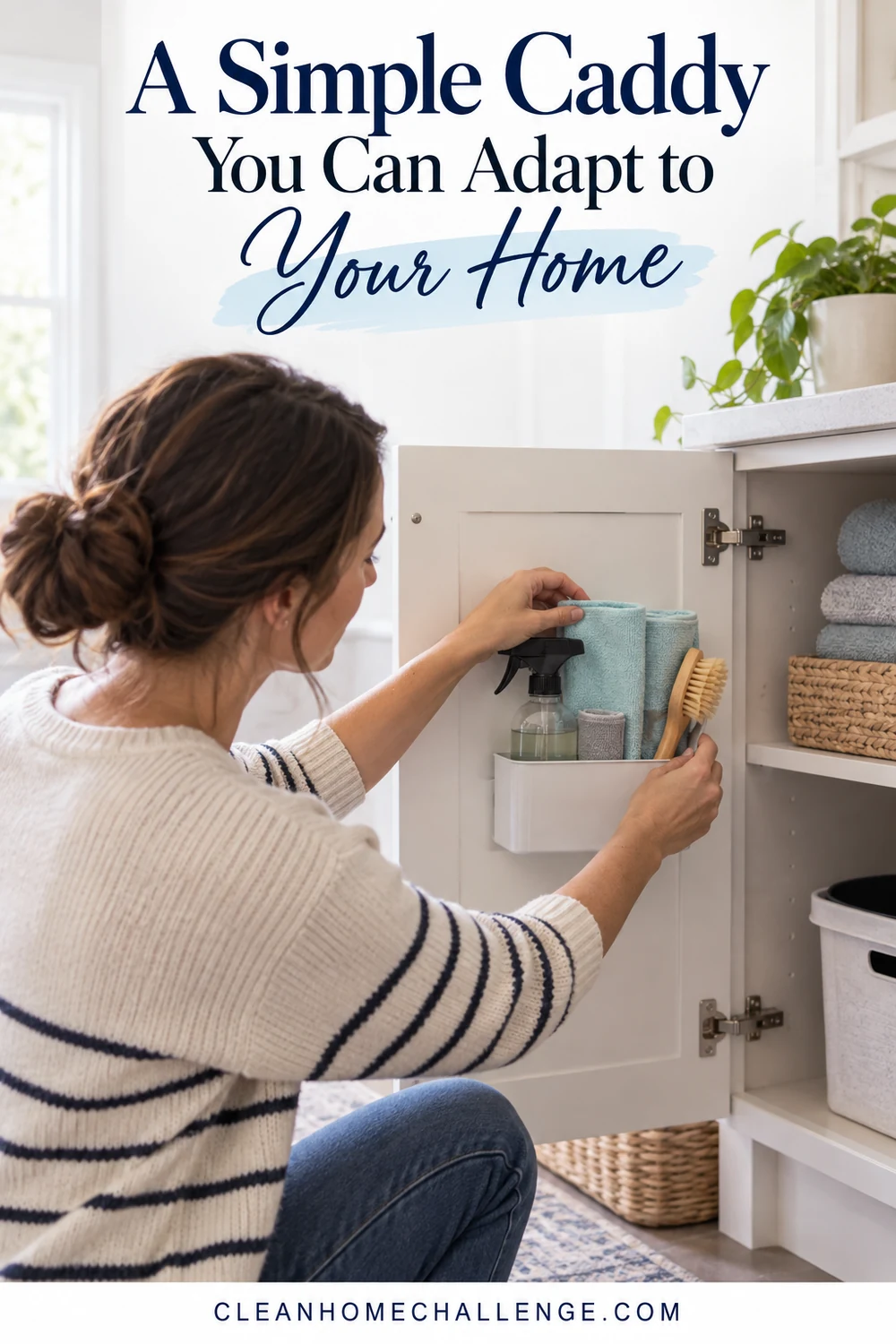
A cleaning caddy works when it removes friction from a realistic routine. Start with a small carrier, clean cloths, one suitable cleaner, a gentle scrub tool, gloves, and a few bags. Add a special tool only after you find yourself reaching for it repeatedly. A compact kit can make it easier to take care of one room today and another tomorrow.
If you have more than one floor, a small set of clean cloths upstairs can save trips, but keep all cleaning products secured. If your household uses different surface finishes, choose the cleaner for the task each time rather than assuming one spray is universal. The goal is a kit that makes the next sensible job easier to begin.