
THIS POST MAY CONTAIN AFFILIATE LINKS. PLEASE READ MY DISCLOSURE FOR MORE INFO.
Dish liquid earns its place beside the sink because it lifts food grease and rinses away. That same useful property can help with a few other everyday messes. The trick is choosing the right surface, using only a small amount, and removing the suds afterward.
This guide covers practical ways to use dish liquid beyond washing dishes, along with places where a specialist cleaner or the manufacturer’s instructions should take priority. Ordinary hand-washing dish liquid is the product discussed here; automatic dishwasher detergent is different.
Disclosure: This post may contain affiliate links. As an Amazon Associate, Clean Home Challenge earns from qualifying purchases. If you make a purchase through these links, we may earn a small commission at no extra cost to you. This helps us keep creating practical cleaning tips, routines and resources for busy families! 🧽
Start With a Small, Simple Cleaning Kit
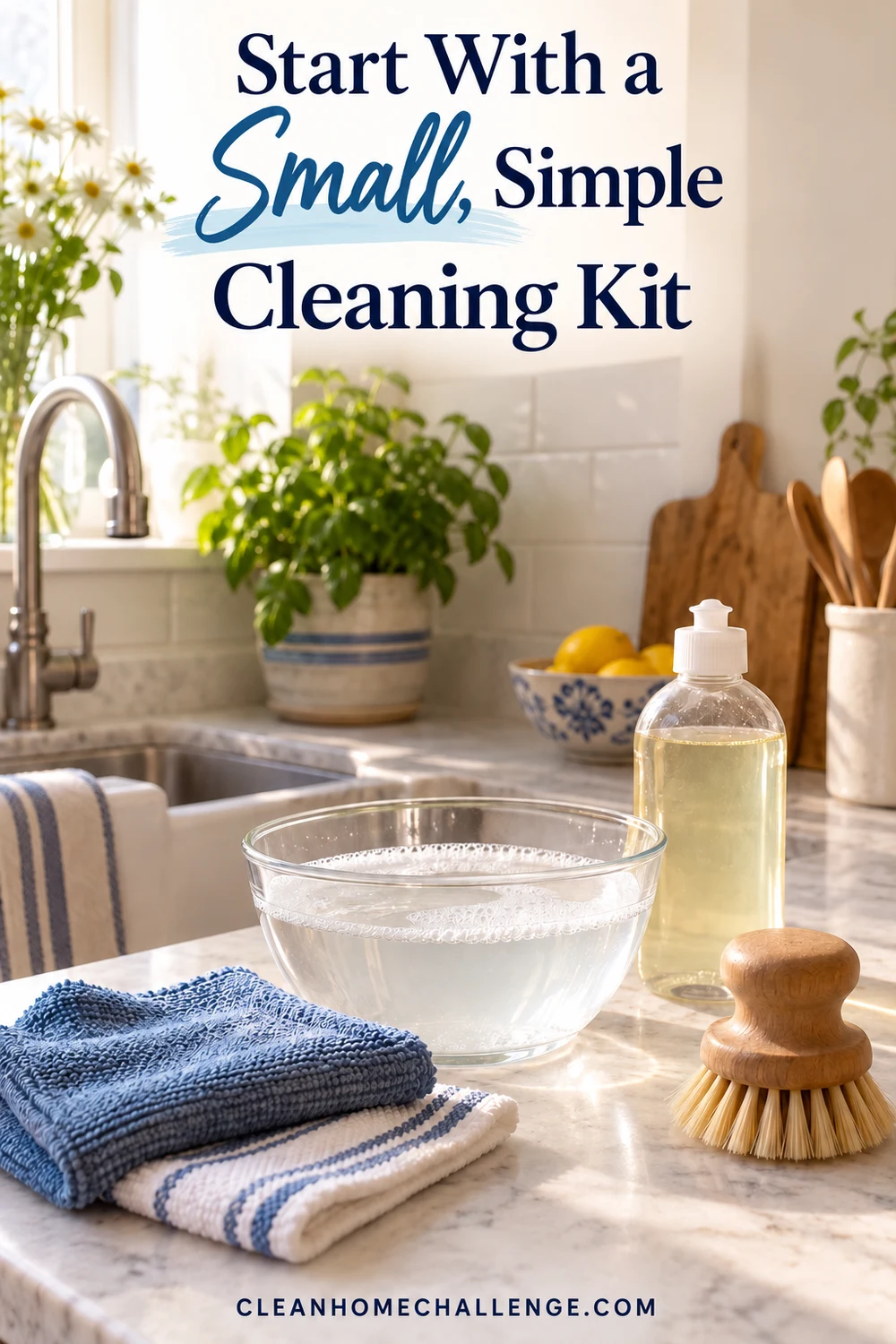
Gather a mild hand-washing dish liquid, warm water, two clean microfiber cloths, a soft brush or sponge, and a dry towel. Put a few drops of liquid into a small bowl of water to start; the exact amount depends on the product and the job. You want a lightly soapy cloth, not a thick blanket of suds. Follow the product label and the surface manufacturer’s care directions.
Wring the cloth out well. Test a hidden spot first on painted, stained, sealed, or unfamiliar finishes. Keep another cloth dampened with clean water for removing the soap, then dry the surface. Never mix dish liquid with bleach, ammonia, disinfectants, vinegar, or another cleaner; rinse away one product before switching to another. Store the bottle away from children and pets.
Dish liquid is a cleaner, not a disinfectant. If a surface needs disinfection because of illness or another specific reason, use a product labeled for that surface and follow its directions, including any required cleaning, contact time, rinsing, and ventilation.
Lift Grease From Kitchen Cabinet Doors
For greasy fingerprints around handles, first check the cabinet maker’s care instructions. A mild dish liquid and warm water solution can work on many washable cabinet finishes; Dawn also describes this method for greasy wood cabinets. Put the solution on a soft cloth rather than spraying it into seams or hardware.
- Dust or wipe away loose crumbs.
- Clean a small area around the handle with a barely damp, soapy cloth. Work gently with the grain on wood.
- Wipe with a separate damp cloth to remove the soap.
- Dry immediately, particularly around edges, joins, and hardware.
Do not soak wood, laminate joins, painted doors, or unsealed edges. Stop if the finish softens, color transfers, or the surface turns cloudy. A heavily built-up film may need advice from the cabinet maker rather than stronger scrubbing.


Clean a Washable Range Hood Grease Filter
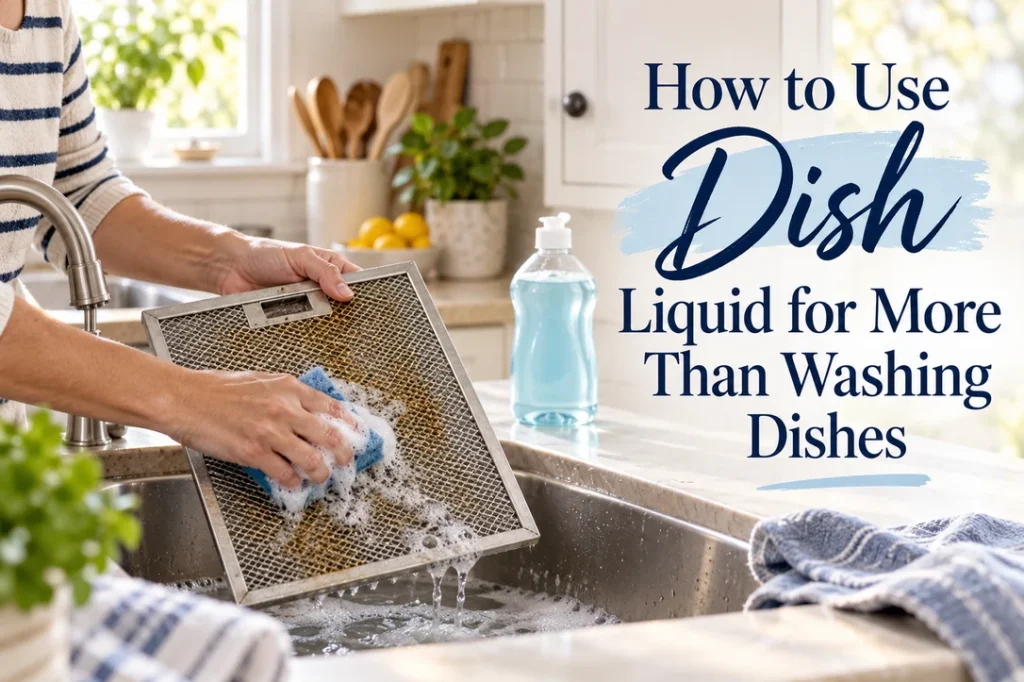
Turn off the hood and let it cool. Check the manual to confirm that its removable filter is a washable metal grease filter. Charcoal filters are often replaced rather than washed. GE advises that metal grease filters can be cleaned with soap and water, while the exact removal and care method depends on the model.
- Remove the metal filter as the manual shows, supporting it so grease does not drip across the counter.
- Wash in warm water with dish liquid using a soft brush or sponge. Avoid bending the mesh.
- Rinse until the water runs clear and no slippery film remains.
- Let the filter dry fully before reinstalling it.
Do not reach into the fan housing or combine the dish liquid with another chemical. If grease has hardened beyond an ordinary wash, use the method approved by the hood manufacturer.

Wash Removable Cooktop Parts.
When the stove is fully cool, some removable burner caps, grates, and drip pans can be washed in warm soapy water. GE’s care guidance, for example, tells owners to wash certain grates and burner caps in hot soapy water, rinse, and dry before replacing them. Your own model’s manual is the deciding guide.
Keep water out of igniters, electrical controls, and openings. Avoid abrasive scrubbers on coated parts. Do not put components in the dishwasher merely because they fit. Rinse and dry every approved removable piece thoroughly, then refit it correctly before using the stove.

Wipe Greasy Appliance Exteriors and Washable Countertops
A few drops of dish liquid in water can help remove cooking splatters from many washable appliance exteriors and counter surfaces. Apply it to a cloth, not directly to buttons, vents, seams, or outlets. Wipe the grease, follow with a clean damp cloth, and dry to prevent streaks.
Check the material first: natural stone, special coatings, unfinished wood, screens, and some appliance finishes may have specific approved products and care methods. Food-contact counters and preparation areas need any soap residue removed with clean water; follow the counter and product instructions. Dish liquid alone does not sanitize a food-preparation surface.

Pre-Treat a Fresh Greasy Laundry Spot
Some dish-liquid manufacturers suggest a small amount as a pre-treatment for grease. Check the garment care label and patch-test colorfastness first. Blot excess oil without spreading it, apply a tiny drop to the spot, work it gently with your fingers, and rinse thoroughly before laundering according to the label. Check the mark before machine drying, since heat can make a remaining stain harder to remove.
Use a laundry detergent or a fabric-specific stain remover when the garment calls for one. Do not pour dish liquid into the washing machine: the excess foam can create a mess and may not suit the appliance. Avoid this method on dry-clean-only, delicate, coated, or color-unstable fabrics unless their care instructions allow it.

Wash Durable, Water-Safe Household Tools
Plastic bins, washable brush heads, and other durable tools can collect greasy dust. Empty and dry-brush them first. If the maker permits washing, use a small amount of dish liquid in water, scrub with a soft brush, rinse thoroughly, and let them dry completely before storing.
Do not submerge tools with electrical parts, untreated wood, glued components, or materials that the manufacturer says must stay dry. For anything that touches food, use the item’s own washing guidance.

Know Where Dish Liquid Is the Wrong Choice
Dish liquid is not a universal cleaner. Skip it on a surface that forbids soap or water, and do not use it as a substitute for a labeled disinfectant. Excess liquid on floors can leave a slippery residue and may conflict with the flooring warranty, so use a floor-approved product instead. Avoid washing electronics, porous stone, suede, leather, unfinished wood, and delicate fabrics unless their makers specifically approve a method.
Avoid combining products to make a “stronger” cleaner. Read labels, ventilate when directed, and keep children and pets clear until the cleaned area is rinsed and dry.

Try a Ten-Minute Kitchen Grease Reset
On a busy day, choose one small patch rather than every cabinet and appliance. Spend two minutes clearing the counter and gathering clean cloths, five minutes wiping greasy handles and one washable appliance front, and three minutes removing soap, drying, and putting supplies away. Save the range hood filter for a day when you can let it dry completely.
The useful habit is simple: clean grease while it is still easy to lift, rinse the soap away, and keep the cloths clean. A bottle at the sink can handle several jobs, provided the surface and garment care instructions agree.

CLEANERS CLUBHOUSE
Build a Safer, Simpler Cleaning Routine
Clean confidently with practical guidance that helps you choose sensible products and use them correctly. The Cleaners Clubhouse combines safer cleaning support with realistic routines, worksheets and challenges.
Frequently Asked Questions
Can I use dish liquid to disinfect?
No. Ordinary dish liquid helps lift dirt and grease. Use a suitable registered disinfectant according to its label if disinfection is needed.
Can dish liquid go in the washing machine?
Do not add it to a machine load. If you use a tiny amount to pre-treat an approved fabric, rinse it out before washing with regular laundry detergent.
Why does the surface feel sticky afterward?
Too much product or incomplete rinsing can leave a film. Wipe again with a clean, lightly damp cloth if the surface tolerates water, then dry it. Check the manufacturer’s guidance if the film remains.
Keep the Method Small and Surface-Safe
Dish liquid is most useful here for ordinary grease on washable surfaces and approved removable parts. Start with a little, wipe gently, rinse, and dry. That short sequence keeps a handy everyday product useful without turning it into a cure-all.
Sources: Dawn cabinet care; GE metal grease-filter guidance; GE cooktop parts guidance; CDC cleaning and disinfecting guidance.