
THIS POST MAY CONTAIN AFFILIATE LINKS. PLEASE READ MY DISCLOSURE FOR MORE INFO.
You ask your child to clean the table. They move the books into a basket, proudly announce that they are finished, and head back to playing. The table still has crumbs on it. Before assuming they ignored half the job, it helps to check whether you both meant the same thing.
Tidying means putting belongings where they belong. Cleaning means removing dirt, dust, crumbs, or other unwanted residue. A space can need one job, the other, or both. Teaching those two ideas with familiar objects gives kids a clearer starting point than “Go clean up.”
You do not need a chore chart covering every room or an afternoon lesson. Start with one small surface and a calm moment. The aim is shared understanding and safe practice, with adult help matched to your child’s abilities. This guide includes a free picture-sort printable and a simple two-step activity you can adapt at home.
Disclosure: This post may contain affiliate links. As an Amazon Associate, Clean Home Challenge earns from qualifying purchases. If you make a purchase through these links, we may earn a small commission at no extra cost to you. This helps us keep creating practical cleaning tips, routines and resources for busy families! 🧽
Give Each Job a Clear Name
For a child, “clean your room” can mean anything from moving one toy to washing every surface. Adults use the word clean loosely, too. If you want a specific result, name the action before you name the whole room.
Try these short explanations:
- Tidy: “We put things back so we can find them and use the space.”
- Clean: “We remove dirt or mess from something.”
- Both: “We put the things away, then clean the space we uncovered.”
A toy car on the table needs a home. Dust on the table needs removing. A dusty table covered in cars needs both jobs. Moving a dirty item into a cupboard does not make it clean, and wiping around a pile of belongings does not put them away.
Keep the explanation concrete. Point to the object while saying, “This book belongs on the shelf.” Then point to ordinary crumbs and say, “These need cleaning off the table.” There is no need to manufacture a mess, use glitter, or create a germ demonstration.
Keep organizing and disinfecting separate
Organizing is another useful word: choosing where belongings will live or improving the storage system. Tidying returns them to that existing home. If your child cannot put something away because it has no accessible place, solve that setup problem together before repeating the instruction.
Cleaning also differs from disinfecting. Cleaning removes unwanted material; disinfecting involves a suitable product and its label directions. The CDC’s home-cleaning guidance explains that distinction. A surface that looks clear is not proof it has been disinfected. Keep that technical step with an adult, and follow appropriate hygiene guidance when illness or contamination is involved.
You can explain the adult boundary without frightening children: “Putting the books away is your job today. I will handle the cleaning product.” The learning goal is understanding a household task, not taking responsibility for every hygiene decision.
Agree on what finished looks like
Describe a result you can both see: “All five books are on the low shelf, with their pages inside the covers.” For cleaning, an adult might say, “The ordinary dust is removed, and the surface is dry and ready to use.” Avoid asking a child to judge whether invisible germs are gone.
Invite your child to show or tell you the next step. Pointing at the basket, choosing a picture, or demonstrating an action can work as well as a spoken explanation. If the instruction was unclear, give a smaller one. Treat the first attempts as teaching, not a test of character.

Show the Difference With Everyday Examples
Use places your child already recognizes. A few examples are enough; you do not need to walk through every room in one sitting. Keep the difference tied to the action rather than whether a room looks attractive.
| What you notice | Tidying job | Cleaning job |
|---|---|---|
| Books and ordinary dust on a low shelf | Return the books to their home | Adult removes dust using suitable surface care |
| Clothes beside a bed | Put dirty clothes in the hamper and clean clothes in their storage | Launder dirty items using their care instructions; adult manages detergent |
| Toys and crumbs on a small table | Put toys in their basket | Remove crumbs and clean the table as appropriate |
| Shoes and tracked-in dirt at the entry | Place shoes in the shoe area | Adult removes the tracked-in dirt |
| Art supplies on a desk with an old mark | Return supplies to their storage | Adult checks the surface before attempting the mark |
The mark example matters: cleaning does not always restore something to a brand-new appearance. Scratches, wear, and stains can remain after appropriate care. A child should not keep scrubbing, add another product, or assume they have failed because a permanent mark is still visible.
Likewise, a room with an unfinished puzzle can still have clean surfaces. Decide whether the puzzle needs an agreed safe place to stay rather than treating every visible activity as a problem. Clear the walkway and the surface needed for the next activity; perfection is not the lesson.
Use the free picture-sort printable
Download the Cleaning or Tidying? picture-sort and practice sheet (PDF). The two-page resource has six illustrated everyday examples, spaces to mark Tidy, Clean, or Both, an adult answer guide, and a small plan for trying one job together.
Read the picture captions aloud if needed. Your child can circle an answer, point, or tell you their choice. Cutting is unnecessary. Discuss what is actually shown: a basket of toys is a storage clue, while crumbs are something to remove. An answer of “both” needs two named actions, not simply a guess that every job is cleaning.
Let your child explain an unexpected answer. They may have noticed a detail you overlooked, or need the picture described differently. You can also use real objects from your home instead of the page. The printable is a conversation aid, not an assessment of development or reading ability.
The Raising Children Network’s household chore guidance recommends choosing jobs that suit a child’s age and abilities and doing them together while the skill is developing. Adjust the task to the child in front of you, including reach, coordination, attention, sensory preferences, and the support they want.
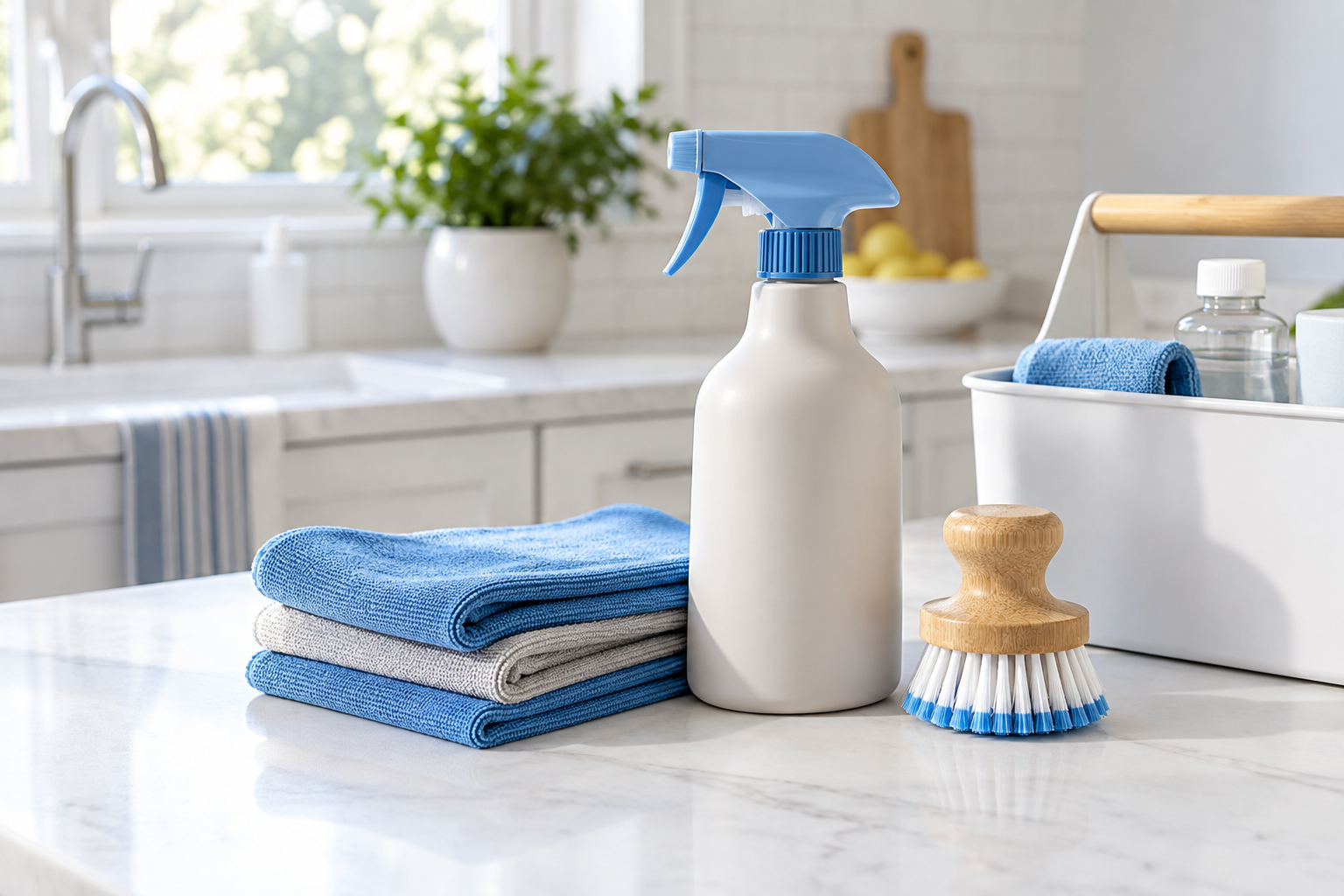
If supplies would help the adult side of the routine, start with what you already own. A clean cloth and an existing basket are enough for this lesson. The following collection is for adult household shopping; it is not a list of products for children to handle.

Practice One Safe Two-Step Reset
Choose a small, low, stable table or shelf. Keep the whole activity within easy reach, away from food preparation, electrical items, glass, sharp objects, and hot surfaces. Allow roughly five to ten minutes as a flexible practice window, including conversation. Stop earlier if your child has had enough; the timer does not decide whether a task is safe or complete.
For the clearest first lesson, choose a few large books or toys and a little ordinary dry dust. Do not use bathroom contamination, raw-food residue, pet waste, bodily fluids, mold, or an unidentified spill as a teaching prop. An adult should keep children away and handle those situations with the appropriate method.
Set up before inviting your child
You need a storage spot for the belongings and a clean cloth suitable for the surface. For the example below, use a dry cloth on a surface whose care instructions permit dry dusting. If the real surface needs a cleaning product, the adult does that part separately, with the child kept away as required. Do not substitute an unsuitable method simply to include the child.
Keep detergents, sprays, sanitizers, and disinfectant wipes securely stored and inaccessible. The EPA states that children should not apply disinfectants, including disinfectant cleaning wipes. A small spray bottle, pleasant scent, or “natural” label does not make a product a children’s tool. Never mix cleaning products.
Do the two jobs in order
- Look together. Ask, “What belongs somewhere else, and what needs removing?” Point out the books and the ordinary dust as separate needs.
- Give one tidying instruction. “Put these three books on the low shelf.” Model the first book if helpful, then allow time for the response.
- Name the result. “The books are put away. We have tidied the table.” Check that the next job can now happen without working around belongings.
- Model the cleaning step. The adult uses the suitable dry cloth to collect ordinary dust from the cleared surface. Say, “Now I am removing the dust. This is cleaning.” Avoid flicking dust into the air or wiping it onto the floor.
- Offer safe practice if appropriate. After the adult has finished, the child may copy the motion with a separate clean, dry cloth on a clean practice area. Explain that this is practicing the movement; it does not prove that a hygiene task is complete.
- Close the job. The adult puts used cloths aside for laundering according to their care instructions, returns tools to their proper place, and helps the child wash their hands. Check that the space is safe and ready to use.
For a child who is ready for more, you can gradually teach a suitable low-risk task under supervision. There is no requirement to do so during this first lesson. Adults retain responsibility for choosing the method, checking labels and surface care, and deciding what supervision is needed.
Adjust the activity without losing the point
A seated child might put two books into a basket within comfortable reach while an adult carries it. A child who dislikes cloth textures can point to the correct job and let the adult demonstrate. For a child who needs fewer choices, show just one tidy example and one clean example.
Avoid races, lifting a heavy basket, climbing to a shelf, or using electrical cleaning tools for this lesson. Children do not need to do the adult’s part for the activity to count. “You identified the two jobs” is useful progress on its own.

Make Clear Instructions Part of Your Routine
Once the words are familiar, use them during ordinary transitions. The easiest reminder is often an event already happening: after drawing, before setting the table, or when putting clothes away. Pick one moment to practice rather than turning every bit of mess into a lesson.
Swap a broad instruction for one visible next action:
- Instead of “Clean this mess,” try “Put the crayons in their box.”
- Instead of “Sort the table out,” try “Move the books to the shelf. Then I will remove the crumbs.”
- Instead of “Your room isn’t clean,” try “The laundry is in the hamper. Next we need the books off the walkway.”
- Instead of “Do it properly,” try “Let’s check which part is left: putting away or removing dirt.”
Name the child’s contribution honestly. “You returned the blocks to the basket” tells them what worked. If you asked for tidying and later notice dirt, explain the extra step without moving the finish line: “You finished the pickup I asked for. I can see a spill that I need to clean next.”
The American Academy of Pediatrics’ chore guidance frames household skills as a learning process, with realistic expectations and encouragement for effort. A child who needs another demonstration is not automatically refusing to help. Check whether the storage is reachable, the instruction is specific, and the job fits their current capacity.
If your household needs a smaller overall target, choose a family cleaning goal small enough to finish. Keep the vocabulary lesson focused here: one named job, one clear endpoint, and a chance to practice together.
Keep a tiny shared plan
Use the second printable page to write one tidying job, the adult cleaning step, and what finished looks like. Choose a time to try it again, such as after the next drawing session. The next practice can be shorter because you are using the same familiar setup.
On a busy day, reduce the plan to one sentence: “Books away; adult dusts.” If your child is tired or unable to participate, meet the practical need and return to teaching later. A missed practice does not create a chore debt.
For more structure around everyday habits, the Cleaners Clubhouse offers the routine and printable support described below. The free picture-sort stays available through the download above; membership is an optional next step for your household routine.
CLEANERS CLUBHOUSE
Turn Small Daily Habits Into a Cleaner Home
Make cleaning feel more achievable by sharing simple routines and building habits that stick. The Cleaners Clubhouse includes the 7-Day Daily Habits Bootcamp, printable support and motivating monthly challenges.
A useful place to finish today is a shared understanding: belongings have a home, dirt needs an appropriate cleaning method, and the next instruction says which job you mean. That small distinction can make asking for help much clearer for everyone.