
THIS POST MAY CONTAIN AFFILIATE LINKS. PLEASE READ MY DISCLOSURE FOR MORE INFO.
A freshly wiped counter does not need a lemon scent to feel ready for dinner. If strong-smelling cleaners make your home uncomfortable, fragrance free cleaning products can help you remove one source of added scent without turning every chore into a research project.
Start with the product you use most often, check the exact formula, and keep the routine small. You do not need to replace every bottle in one shopping trip. This guide brings together current manufacturer instructions and guidance from the EPA, CDC, and other primary sources to help you choose products and use them thoughtfully.
Fragrance-free cleaning is a household choice, not a treatment for asthma, eczema, headaches, or other symptoms. A product that works well for one person may still bother another. Keep any clinician-recommended precautions in place while changing your routine.
Disclosure: This post may contain affiliate links. As an Amazon Associate, Clean Home Challenge earns from qualifying purchases. If you make a purchase through these links, we may earn a small commission at no extra cost to you. This helps us keep creating practical cleaning tips, routines and resources for busy families! 🧽
Understand Fragrance-Free and Unscented Labels
The front of a bottle can make several different promises. Before comparing brands, get clear on what you want to avoid.
Fragrance-free generally means fragrance ingredients and masking scents have not been used. Unscented may mean a product has no noticeable added scent, but ingredients that disguise other odors can still be present. An unscented product might also genuinely be fragrance-free; the word alone does not settle the question. The EPA explains this distinction in its fragrance-free criteria.
Fragrance-free also does not necessarily mean odorless. Cleaning ingredients can have their own smell. You might notice a mild base odor without a perfume having been added. Avoid opening bottles to sniff them as a shopping test. Read the ingredient information instead.
What the EPA label can tell you
The standard Safer Choice label covers ingredient and product requirements, and scented products can qualify. Look specifically for the additional Fragrance-Free designation when you want that extra verification. Under the current Safer Choice standard, EPA reviews the formula for fragrance materials; ingredients with a fragrance function do not qualify for that designation.
The EPA product search includes a fragrance-free filter. Match the exact product and variant rather than assuming every cleaner from one brand has the same certification. A certification helps narrow your shortlist, but it does not replace the directions or a person’s individual medical advice.
A quick label-reading checklist
- Look for a clear fragrance-free statement on the exact bottle.
- Open the manufacturer’s ingredient page when the packaging gives only a short list.
- Check for fragrance, perfume, parfum, and ingredients identified as scent ingredients.
- Ask the manufacturer about masking scents if the wording is unclear.
- Check any ingredient you have been specifically advised to avoid, even when the product is fragrance-free.
Words such as natural, botanical, gentle, or plant-based do not answer those questions. Essential oils add fragrance too; replacing a perfume with lavender or citrus oil is not a fragrance-free solution. The American Lung Association’s fragrance guidance notes that both natural and synthetic fragrance sources may affect sensitive people.

Choose Fragrance-Free Cleaning Products
Choose by job first: dishes, everyday hard surfaces, laundry, or a specific floor finish. That prevents a promising bottle from becoming an expensive experiment on the wrong material.
The following US-market examples were checked against manufacturer pages on October 8, 2026. They are starting points for comparison, not hands-on rankings or guarantees of personal tolerance. Formulas and packaging can change, so check the bottle you buy.
For everyday hard-surface cleaning
Clorox Free & Clear Multi-Surface Cleaner Spray: The manufacturer identifies this version as fragrance-free and formulated without bleach, ammonia, or dyes. Its directions describe spraying soiled areas and wiping, with no rinsing required when used as directed. It is an everyday cleaner, not a registered disinfectant. Read the surface and patch-test instructions on the Clorox product page. Do not assume another Clorox product with similar packaging has the same formula or purpose.
Seventh Generation All Purpose Cleaner, Free & Clear: The current page identifies this formula as fragrance-free and EPA Safer Choice certified. Its directions include rinsing and wiping, so the workflow differs from the Clorox option. Crucially, the manufacturer excludes marble and concrete from its suitable surfaces. It also lists preservatives, a useful reminder to check the whole formula when you have a known ingredient allergy. Review the ingredients and surface instructions. This product is not a disinfectant either.
You usually need only one of these general-purpose options for compatible surfaces. Buying both is unnecessary unless they solve different problems in your home.
For handwashing dishes
Seventh Generation Dish Soap, Free & Clear: The manufacturer describes this dish liquid as free of fragrances and dyes and lists EPA Safer Choice certification. It is intended for washing dishes by hand. It must not go in an automatic dishwasher. Check the current dish-soap instructions, and rinse washed dishes thoroughly with clean water.
For laundry
Tide Free and Gentle Liquid Laundry Detergent: The product page specifies a formula without dyes or perfumes. Choose the appropriate version for your washer and follow the package dose and garment care labels. This is the named liquid product; similar names on other formats are not a reason to skip checking their labels. See Tide’s current formula and dosing guidance.
Compare value without buying a cupboard full
Start with the smallest practical size while deciding whether a product suits your routine. For concentrates, compare cost per correctly measured use rather than bottle size alone. Check whether refills are available after you know the product works for your household. Keep a photo of the exact front label and ingredient page so a later reorder is easier.
A basic store-brand option can also be worth investigating. Apply the same checks: clear fragrance information, accessible ingredients, suitable surfaces, and instructions you can follow comfortably.

Build a Small, Practical Cleaning Kit
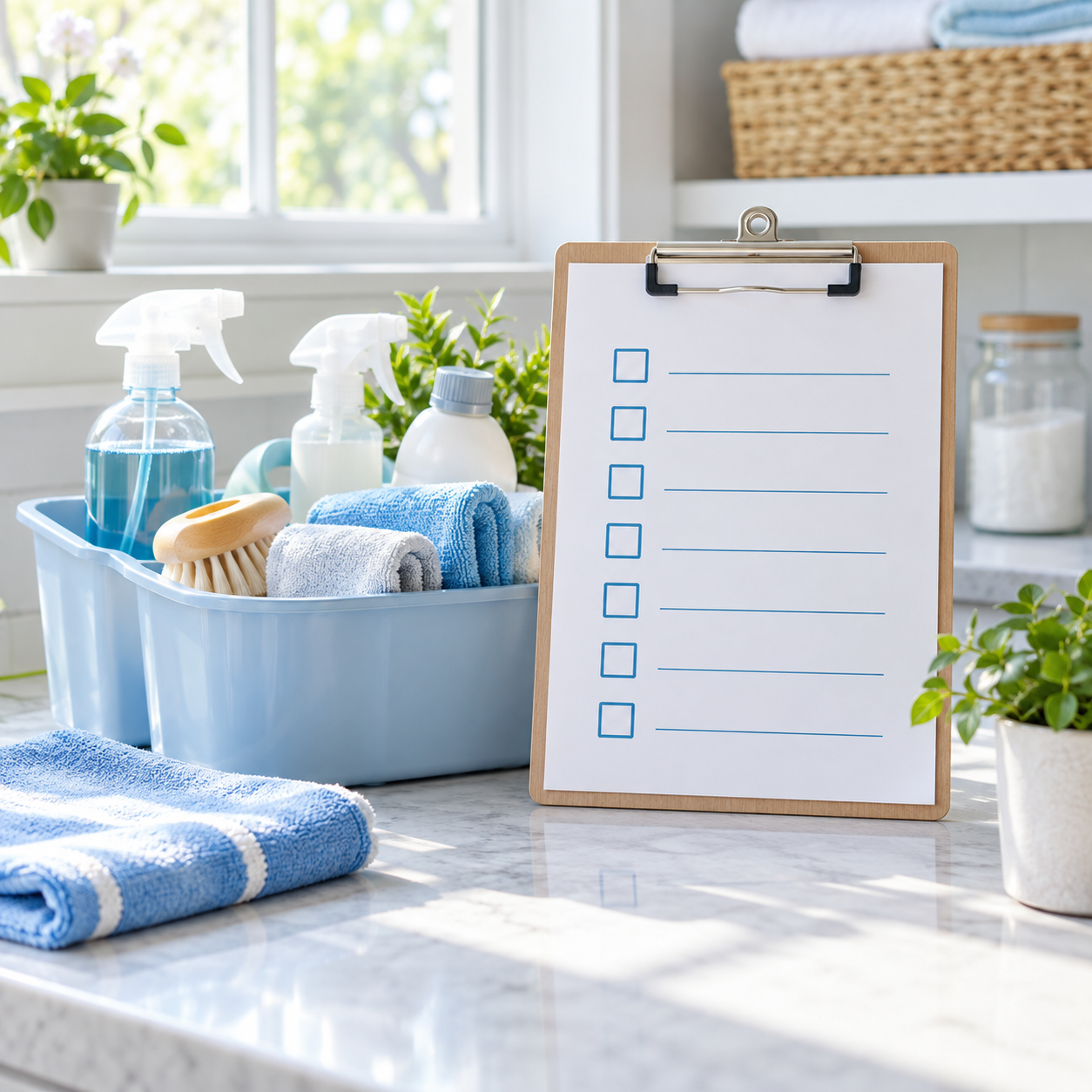
A smaller kit makes it easier for everyone in the household to use the right bottle. Start by collecting what you already own before adding anything to your cart.
For most routine jobs, gather:
- One fragrance-free hand dish liquid.
- One fragrance-free general cleaner approved for your surfaces.
- Your chosen laundry detergent.
- Several washable cloths, including a separate bathroom set.
- A non-scratch brush or pad suitable for the material.
- A mop with washable pads and a vacuum you already know how to maintain.
- Gloves and any other protection required by the product label.
Add a dedicated floor, stone, or appliance cleaner only when its care instructions call for one. For example, Bona’s hardwood-cleaner guidance specifies particular finished wood floors. A bottle marketed for hardwood is not automatic permission to use it on oiled wood, every laminate, or a robot mop.
Give each cloth a clear job. Blue for kitchen counters and another color for the bathroom is an easy household convention. Wash and dry cloths according to their care instructions, and replace a dirty cloth during a job rather than carrying the same grime around the room.
Keep products in their labeled original containers. A matching set of decorative bottles makes ingredients and first-aid directions harder to find. Poison Control recommends original containers and keeping household chemicals separate from food and drinks.
Ten-minute starting task: Choose one compatible surface cleaner, set out two clean cloths, and put the remaining products safely away. Leave a short note inside the storage cupboard explaining which surfaces the chosen cleaner can be used on.
Use the cleaning-supplies collection below for general tool and supply ideas, then verify fragrance-free wording and surface compatibility on the exact item you choose.


Clean Your Home With Less Product
“Less” means avoiding unnecessary products and excess dosing. Always use enough of the right product to complete the job according to its label, especially when sanitizing or disinfecting is required.
Prepare the room
Clear food, dishes, toys, and clutter from the work area. Read the cleaner’s directions before you start. Arrange for a sensitive household member to stay away from the cleaning area when needed, and keep children and pets away from products in use.
Provide the ventilation the label requires. Open windows when outdoor conditions are suitable, or use effective ventilation that exhausts outdoors. The EPA explains that outdoor-vented kitchen and bathroom fans can remove indoor pollutants. During wildfire smoke, high pollution, or high-pollen conditions, opening every window can be unhelpful. Check local conditions; EPA recommends keeping windows closed when outdoor pollutants are high. Postpone an optional product-heavy task if suitable ventilation is unavailable.
Use a simple clean-and-finish sequence
- Remove loose mess. Pick up crumbs and debris before adding cleaner. Vacuum a floor before damp cleaning it.
- Check the surface. Follow both the product label and the surface manufacturer’s care instructions. Patch-test where appropriate, but do not use a patch test to override an explicit exclusion.
- Apply as directed. Do not create a cloud of mist around yourself. For products whose labels allow cloth application, apply to the cloth rather than spraying into the room. Public-health guidance on disinfectants and asthma makes this label-dependent distinction.
- Work one small area. Use a clean cloth face and suitable gentle agitation. Follow any specified waiting time before wiping.
- Rinse when required. Pay attention to food-contact surfaces, children’s items, and product-specific directions.
- Finish and put away. Leave the surface appropriately dry, deal with used cloths, close containers, and store products securely.
Adapt the sequence to the room
In the kitchen, start with the food-preparation counter and finish with dirtier jobs such as the trash-bin exterior. Use a fresh cloth for the next area. Surfaces contaminated by raw meat or poultry juices need appropriate sanitizing after cleaning; follow CDC food-contact guidance.
In the bathroom, clean the basin and other surfaces with tools kept separate from toilet-cleaning equipment. Mineral deposits may need a surface-compatible specialty product rather than more of your general cleaner.
On floors, follow the finish manufacturer’s moisture limits and use the recommended solution. Work in small sections with a clean pad. For a flat mop, pull back in controlled passes, overlapping slightly and changing the pad when dirty. Keep people off the area until dry.
For screens and appliances, go straight to the manufacturer’s instructions. A cleaner that suits your kitchen counter may be unsuitable for an appliance coating or display.

Make Laundry Changes One at a Time
Laundry is a useful place to start because it is an existing routine. Choose one change you can keep track of instead of replacing detergent, stain treatment, softener, and washer settings together.
If a product has already caused a significant reaction, do not keep using it to complete an experiment. Get advice about an appropriate alternative from your healthcare professional.
Try a straightforward laundry reset
- Record the starting point. Note the detergent, usual dose, cycle, and any added products. A phone note is enough.
- Choose the change. For example, replace a scented detergent with the verified fragrance-free version while keeping the suitable wash cycle consistent. Avoid introducing new scented additives during the trial.
- Measure carefully. Use the package directions for your load and soil level, taking account of water hardness where specified. Check that the detergent is compatible with your washer.
- Leave room for movement. Follow the washer’s loading instructions. Use the garment’s recommended temperature and drying method.
- Check the result. Look for remaining stains, residue, or dampness after drying. Note whether the product fits your household’s needs before buying a large refill.
Whirlpool explains that too much detergent can leave residue, while too little may not clean effectively. There is no universal “one tablespoon for everyone” rule. Concentration, machine type, and the load all matter.
Once the detergent choice is settled, review scented softener, dryer sheets, scent beads, and fabric sprays individually. Keeping perfume elsewhere in the routine can make a detergent change less noticeable.
If clothes still smell of yesterday’s product, avoid repeatedly adding new mixtures. Check the dispenser and washer-maintenance instructions first. Whirlpool’s appliance-care guidance includes cleaning reservoirs and drawers as needed and avoiding overloaded loads. Follow your own model’s instructions rather than adding vinegar or another cleaner on a guess.
This is a practical product trial, not a medical test. Ongoing rashes, coughing, or other symptoms deserve professional advice rather than an endless cycle of detergent shopping.

Tackle Household Odors at the Source
When you remove added perfume, you may become more aware of a damp cloth or yesterday’s dinner scraps. Give yourself a short source-finding routine before reaching for another product.
Start with one room and ask what is wet, dirty, or overdue to be emptied:
- Kitchen: Empty food scraps, check for forgotten food, wipe refrigerator-shelf spills according to the appliance care directions, and clean visible spills inside the trash bin using its care instructions. Dry the bin before replacing the liner.
- Laundry: Hang damp towels so they can dry, move finished loads promptly, and check the hamper for wet items.
- Bathroom: Look for persistent condensation, wet bath mats, or a leak around the basin. Launder washable items according to their labels.
- Living areas: Check washable throws and pet bedding. Follow fabric instructions and dry items fully before putting them back.
Choose the most obvious source and deal with that first. You do not need to strip every bed and wash every cushion because one room smells stale.
Skip scented candles, plug-ins, incense, and essential-oil diffusers if your aim is to reduce household fragrance. The American Lung Association recommends removing odor sources rather than covering them with fragrance.
A recurring musty smell needs investigation, particularly after a leak or water damage. The EPA identifies moisture control as central to preventing indoor mold growth. Cleaning the visible surface while leaving the water problem unresolved is unlikely to solve the underlying issue. Arrange suitable help for persistent dampness or suspected hidden mold instead of repeatedly spraying it.
The everyday goal is to remove the mess and leave things dry where appropriate. A strong scent is not part of the finishing checklist.

Avoid Common Cleaning Safety Mistakes
Fragrance-free on the label does not remove the need for careful handling. These habits matter just as much as the bottle you choose.
Do not mix cleaners. Keep bleach away from ammonia, vinegar, acids, and other cleaning products. Do not combine products in a bucket or layer them on a wet surface. Poison Control warns that mixtures can release dangerous fumes. Follow the label if changing products, including any rinsing instructions.
Do not treat vinegar as an all-surface substitute. It has its own strong odor, and acidic cleaners can damage stone. The Natural Stone Institute warns that acids can etch or dull susceptible natural stone. Use the material’s approved cleaner.
Separate cleaning from sanitizing and disinfecting. Cleaning removes dirt and germs; sanitizing reduces germs to defined levels; disinfecting kills germs according to the product’s claims. CDC says routine cleaning is generally sufficient in many household situations, with additional disinfection needed when someone is sick or has a weakened immune system. When required, use a suitable registered product and keep the surface wet for its full labeled contact time. See the CDC’s cleaning and disinfection instructions.
Store safely every time. Close lids and keep products out of children’s and pets’ reach in secure storage. Put a bottle away before answering the door. Child-resistant packaging is another precaution, not a reason to leave products accessible. Keep products separate from food and follow label-required protection.
Stop when something causes symptoms. Leave the cleaning area and seek advice for persistent or concerning symptoms. Someone with asthma should follow their individual action plan. Severe breathing difficulty needs emergency help; the NHLBI advises calling 911 for a serious asthma attack when medicine is not relieving symptoms or breathing remains very hard. For suspected poisoning in the US, Poison Control is available at 1-800-222-1222. Elsewhere, use your local poison service.

Keep Your Fragrance-Free Routine Manageable
The easiest routine is one that still works on a busy week. Give your new products a place in the jobs you already do rather than building a second cleaning schedule around them.
Use the Clean Home Challenge weekly rhythm as a flexible starting point:
- Monday, kitchen: Wipe the main work area and deal with one food or trash odor source.
- Tuesday, bathrooms: Clean the basin and toilet with separate tools; check the bath mat and ventilation.
- Wednesday, bedrooms: Put away clothes and plan the bedding wash according to household needs.
- Thursday, living areas: Pick up, clean appropriate dusty surfaces, and check washable throws.
- Friday, floors: Remove loose dirt and clean the areas that need it with a finish-compatible product.
- Saturday, laundry catch-up: Finish an outstanding load and check product levels before shopping.
Daily, focus on food messes, spills, and the laundry you can reasonably finish. The schedule is a reminder, not a rule that every room needs chemicals every week.
Questions that come up after the switch
Do I need to throw away every scented product today?
No full-home replacement project is necessary. Prioritize products you use frequently and any products you have been advised to avoid. Keep unused products safely stored and follow the label and local waste-service instructions when disposing of them. Do not combine leftovers.
Can I ask a cleaner or visiting helper to use my products?
Yes. Set out the agreed products with their original labels and a brief surface list. Explain that you are avoiding added fragrance, including finishing sprays. Ask them to check with you before substituting another cleaner.
What if the new product is not cleaning well?
Check the surface, dose, application method, and rinse instructions first. A greasy mark and a mineral deposit may need different approaches. Adjust one part of the method before buying several more bottles.
For today, one useful step is enough: read the label on your most-used cleaner and choose what to do next. A small, repeatable routine gives you room to learn what works for your household without making cleaning take over your week.

CLEANERS CLUBHOUSE
Make Your Cleaning Routine Easier to Follow
Stop wondering what to clean next. Inside the Cleaners Clubhouse, you’ll get a practical 12-month cleaning calendar, printable worksheets and monthly challenges to help you keep moving without trying to do everything at once.