

THIS POST MAY CONTAIN AFFILIATE LINKS. PLEASE READ MY DISCLOSURE FOR MORE INFO.
If your dishwasher smells unpleasant when you open the door—or clean dishes come out with a stale, greasy odour—the filter is one of the first places to check. This small part catches food and debris, and when it stays damp between cycles, it can become the source of the smell.
The good news is that most removable dishwasher filters can be cleaned in about 10 minutes with warm water, dishwashing liquid and a soft brush. This guide shows you how to find the filter, clean it without damaging the mesh and work through the other common causes if the smell remains.
Important: Always follow the manual for your exact dishwasher. Filter designs, removal directions and approved cleaners vary by brand and model.
Disclosure: This post may contain affiliate links. As an Amazon Associate, Clean Home Challenge earns from qualifying purchases. If you make a purchase through these links, we may earn a small commission at no extra cost to you. This helps us keep creating practical cleaning tips, routines and resources for busy families! 🧽
Why a Dirty Dishwasher Filter Can Smell So Bad
Most modern dishwashers recirculate wash water during a cycle. The filter catches food particles so they are not sprayed back over the dishes or sent into parts of the machine where they can cause trouble. When crumbs, grease, paper labels and other residue stay damp in the filter, they can begin to smell.
A dirty filter is not the only possible cause of an odour. Food can also collect around the sump, beneath the lower spray arm, in the door seal or in a kinked or poorly installed drain hose. Standing water, a blocked household drain or a plumbing problem can create a similar smell. Cleaning the removable filter is the sensible first step because it is quick, safe and often solves the problem.

Before You Start: Check the Manual and Gather Your Supplies
Dishwasher designs vary. Some have a removable cylindrical filter beneath the lower spray arm, some combine a coarse screen with a fine filter, and a few use a self-cleaning filtration system. Check the appliance manual for the correct removal direction and whether any component should stay in place.
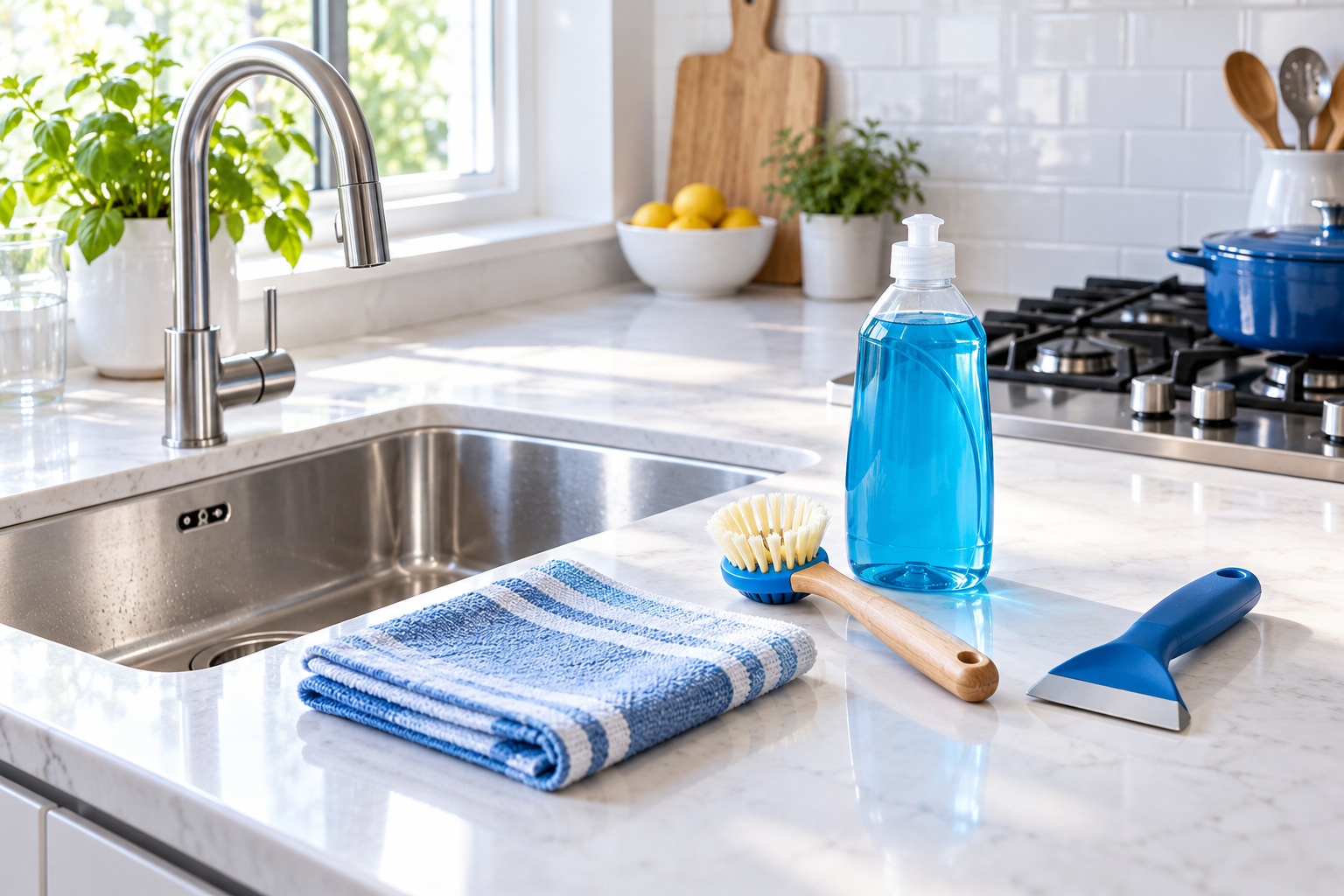
You will usually need: a sink or bowl, warm water, a small amount of dishwashing liquid, a soft nylon brush or old soft toothbrush, a microfiber cloth and a torch for inspecting the sump. Wear gloves if you prefer, switch the dishwasher off, let hot parts cool and keep children and pets away from the open machine.
Do not reach into an unseen sump or force a filter that will not turn. Broken glass can hide below the filter, and forcing plastic parts can damage the locking tabs.

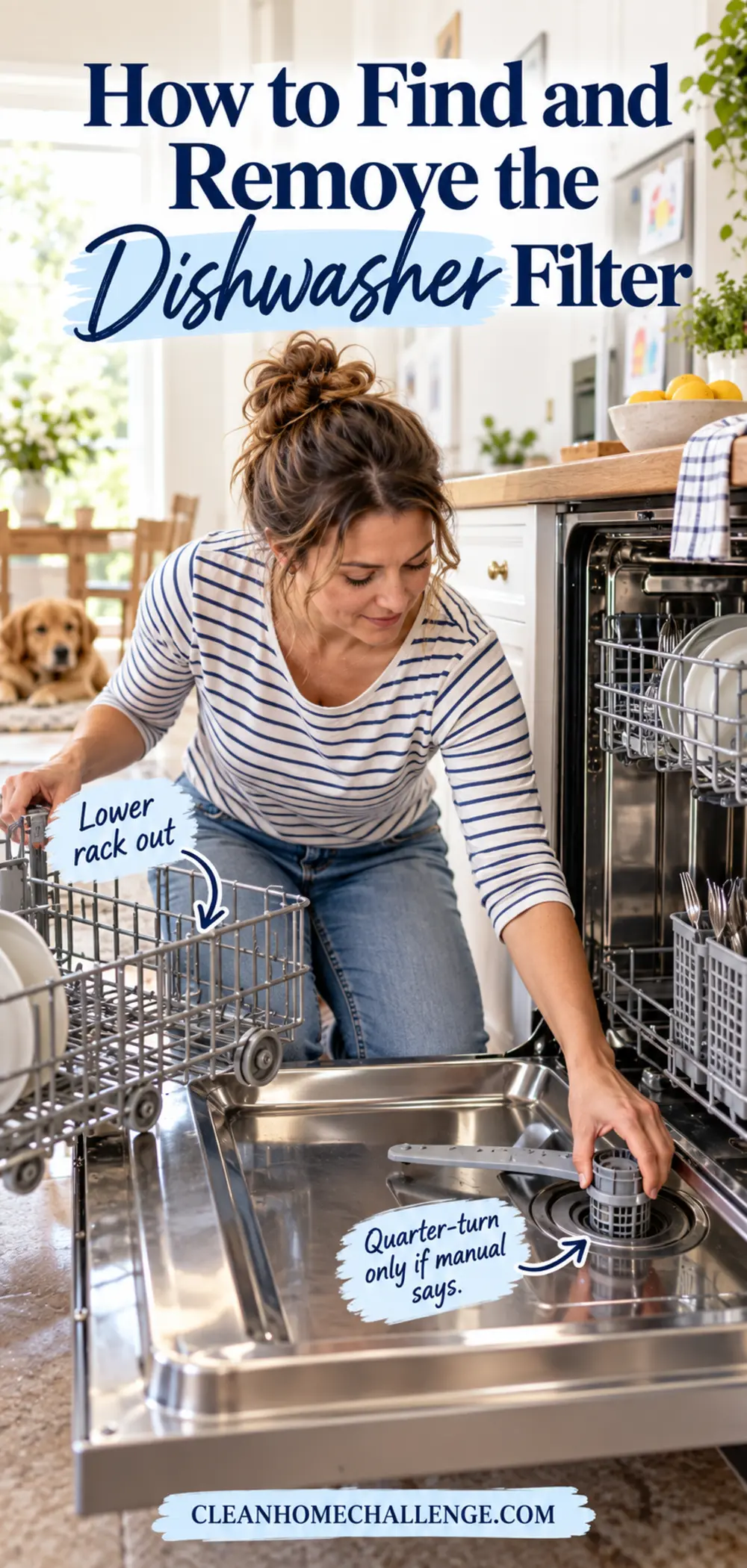
How to Find and Remove the Dishwasher Filter
Remove the lower rack and look at the floor of the dishwasher beneath the lower spray arm. A manual filter commonly looks like a short cylinder with a mesh wall. It may sit inside or beside a flat coarse screen.
Grip the filter by its handle and follow the arrows or instructions moulded into the top. Many models unlock with a quarter turn and then lift straight up, but your model may differ. Lift out any flat screen only if the manual says it is removable. Take a quick photo before disassembly if the pieces overlap; it makes correct refitting much easier.
How to Clean a Dishwasher Filter Step by Step
- Empty loose debris into the bin. Do not push food scraps down the sink if they may block the drain.
- Rinse the filter under warm running water. Work from the clean side toward the dirty side where possible so debris is encouraged out of the mesh.
- Use a little dishwashing liquid. If grease remains, add a drop to a soft brush and gently work around the mesh and plastic frame.
- Brush crevices without damaging the screen. Avoid wire brushes, steel wool and abrasive scourers.
- Rinse thoroughly. No foam or loosened particles should remain.
- Inspect for cracks or torn mesh. A damaged filter should be replaced with the correct part rather than refitted.
- Refit and lock it securely. Align the parts exactly as the manual shows. The cylindrical filter should sit flat and should not lift out once locked.
For a lightly soiled filter, the whole job may take five minutes. A greasy filter can be soaked briefly in warm water with dishwashing liquid, provided the manufacturer allows it. There is usually no need for strong chemicals.

Clean the Sump, Spray Arms and Door Seals Too
With the filter removed, use a torch to inspect the accessible sump area. Pick up visible labels, bones or food pieces with gloved fingers or blunt tweezers only when they are easy to see and reach. Wipe the surrounding surface with a damp cloth. Never pour drain cleaner into the dishwasher or probe deeply into the pump.
Check the lower spray arm holes for visible food particles. If the manual permits removal, rinse the arm and clear loosened debris with a soft brush or wooden toothpick—never enlarge the holes with metal. Wipe the door edges, lower lip and rubber seal with warm water and a little dishwashing liquid, then wipe again with clean water.

How to Stop Dishwasher Smells at the Source
Once the clean filter is locked in place, run the hottest empty cycle recommended by the manufacturer using a dishwasher-cleaning product approved for your model. If the manual specifically permits a vinegar rinse, follow its quantity and placement instructions; do not pour vinegar randomly onto rubber seals or combine it with bleach, chlorine products or another cleaner.
If the smell returns quickly, look beyond the filter. Confirm that the drain hose is not kinked and has the high loop or air-gap arrangement required by local installation instructions. Clean the sink air gap if you have one, check whether the kitchen sink itself drains slowly and make sure wastewater is not flowing back into the dishwasher. Persistent sewage-like odours, standing dirty water or repeated drainage errors deserve attention from a qualified appliance technician or plumber.

Dishwasher Cleaning Mistakes to Avoid
- Do not mix cleaners, especially bleach with vinegar, acids, ammonia or other products.
- Do not use hand dish soap in the dishwasher cycle; it can create excessive suds.
- Do not scrub filter mesh with steel wool or a harsh scouring pad.
- Do not run the machine with the filter loose, missing or fitted incorrectly.
- Do not assume every filter is removable—check the model instructions.
- Do not use drain opener inside the dishwasher.
- Do not ignore glass, unusual grinding noises, leaks or recurring error codes.
A fresh scent is not proof the machine is clean. The goal is to remove the damp food and grease causing the smell, not cover it with fragrance.

A Realistic Dishwasher Maintenance Schedule
| Task | Good starting rhythm | Do it sooner when… |
|---|---|---|
| Scrape large food scraps | Before every load | Plates have bones, labels or heavy residue |
| Check filter surface | Weekly | You wash without pre-rinsing or run frequent loads |
| Clean removable filter | Monthly | It looks greasy, dishes feel gritty or odour appears |
| Wipe door edges and seal | Monthly | Residue or mould-like spotting is visible |
| Inspect spray arms | Every 1–3 months | Cleaning performance drops |
| Run approved machine-care cycle | As the manual recommends | Scale or grease builds up |
Treat this as a flexible starting point. A family running two loads a day may need to clean the filter more often than a household using the dishwasher twice a week. A ten-second glance whenever you empty the lower rack is often enough to catch buildup early.

CLEANERS CLUBHOUSE
Make Kitchen Cleaning Feel More Manageable
Turn Monday into your kitchen reset day with a clear routine you can follow. The Cleaners Clubhouse gives you practical cleaning guidance, printable support and monthly challenges to help you stay consistent.
Frequently Asked Questions About Dishwasher Filters and Smells
How often should I clean my dishwasher filter?
Start with a monthly clean, then adjust to what you see. Frequent use, heavy food residue and hard-water buildup may make a weekly check worthwhile. Your manufacturer’s schedule takes priority.
Can I use vinegar to clean the filter?
Warm water, dishwashing liquid and a soft brush are normally enough for a removable filter. Vinegar should only be used where the appliance maker permits it, and it must never be mixed with bleach or another cleaner.
Why does my dishwasher still smell after I cleaned the filter?
Check the sump, door seal, spray arms, drain hose, air gap and household sink drain. A sewage smell or recurring dirty water can point to drainage or plumbing trouble rather than surface dirt.
Why is there water below the filter?
A small amount of clean water in the sump can be normal in some models because it protects seals. Dirty, foul-smelling standing water, a high water level or an error code is not something to guess about—consult the manual or arrange service.
Can the dishwasher filter go in the dishwasher?
Only if your manual explicitly says it can. Hand-cleaning is gentler and prevents a loose filter from being damaged during the cycle.

Keep Your Dishwasher Fresh With One Small Habit
Cleaning the dishwasher filter is a small job with a noticeable payoff: fewer trapped scraps, a fresher-smelling machine and a better chance for wash water to circulate as designed. The most useful routine is simply to check the filter regularly and clean it before the buildup becomes unpleasant.
Add the filter to your Monday kitchen reset once a month. On busy weeks, just remove visible debris and schedule the full rinse for the next reset. Consistency matters far more than turning it into a long deep-cleaning project.