

THIS POST MAY CONTAIN AFFILIATE LINKS. PLEASE READ MY DISCLOSURE FOR MORE INFO.
A greasy rangehood can turn an ordinary kitchen clean into a sticky, drippy job. The good news is that you do not need a cupboard full of harsh products or an entire afternoon. The trick is to work in the right order: protect the cooktop, soften the grease, remove the filters, wash each part according to its material, and dry everything completely before reassembly.
This guide shows you how to clean a greasy rangehood safely and efficiently, including the exterior, underside, reusable metal grease filters and the accessible area behind them. It also explains what to do with charcoal filters, what not to mix, and how to stop grease building up so quickly next time.
Important: Rangehood designs vary. Check your manual before removing filters, using a dishwasher or cleaning near electrical parts. Turn the appliance off and allow the cooktop and rangehood lights to cool completely before beginning.
Disclosure: This post may contain affiliate links. As an Amazon Associate, Clean Home Challenge earns from qualifying purchases. If you make a purchase through these links, we may earn a small commission at no extra cost to you. This helps us keep creating practical cleaning tips, routines and resources for busy families! 🧽
Check Your Rangehood and Filters Before You Start
Take one minute to identify what you are cleaning. That small check prevents damaged finishes, warped filters and wet electrical parts.
Most household rangehoods have a painted, glass or stainless-steel exterior and one or more removable filters underneath. The filters usually fall into one of these groups:
- Aluminium or stainless-steel mesh grease filters: These trap airborne grease and are normally washable. Some models allow dishwasher cleaning, but others recommend handwashing.
- Baffle filters: Common on larger or commercial-style hoods. They are usually washable but may be heavy and have sharp edges.
- Disposable fibre or paper grease filters: These are replaced rather than washed.
- Charcoal or carbon filters: Used mainly in recirculating rangehoods to help manage cooking odours. Standard charcoal filters are normally replaced, not soaked. Some premium long-life filters have special regeneration instructions.
Look for a label or model number inside the hood or near the filters, then check the manufacturer’s manual. If you cannot confirm that a filter is dishwasher-safe, handwashing with warm water and dishwashing liquid is the gentler default.
Also check the exterior finish. Stainless steel, painted metal and glass do not always tolerate the same products. A cleaner described as suitable for one surface is not automatically safe for another.

Gather a Simple Rangehood Cleaning Kit
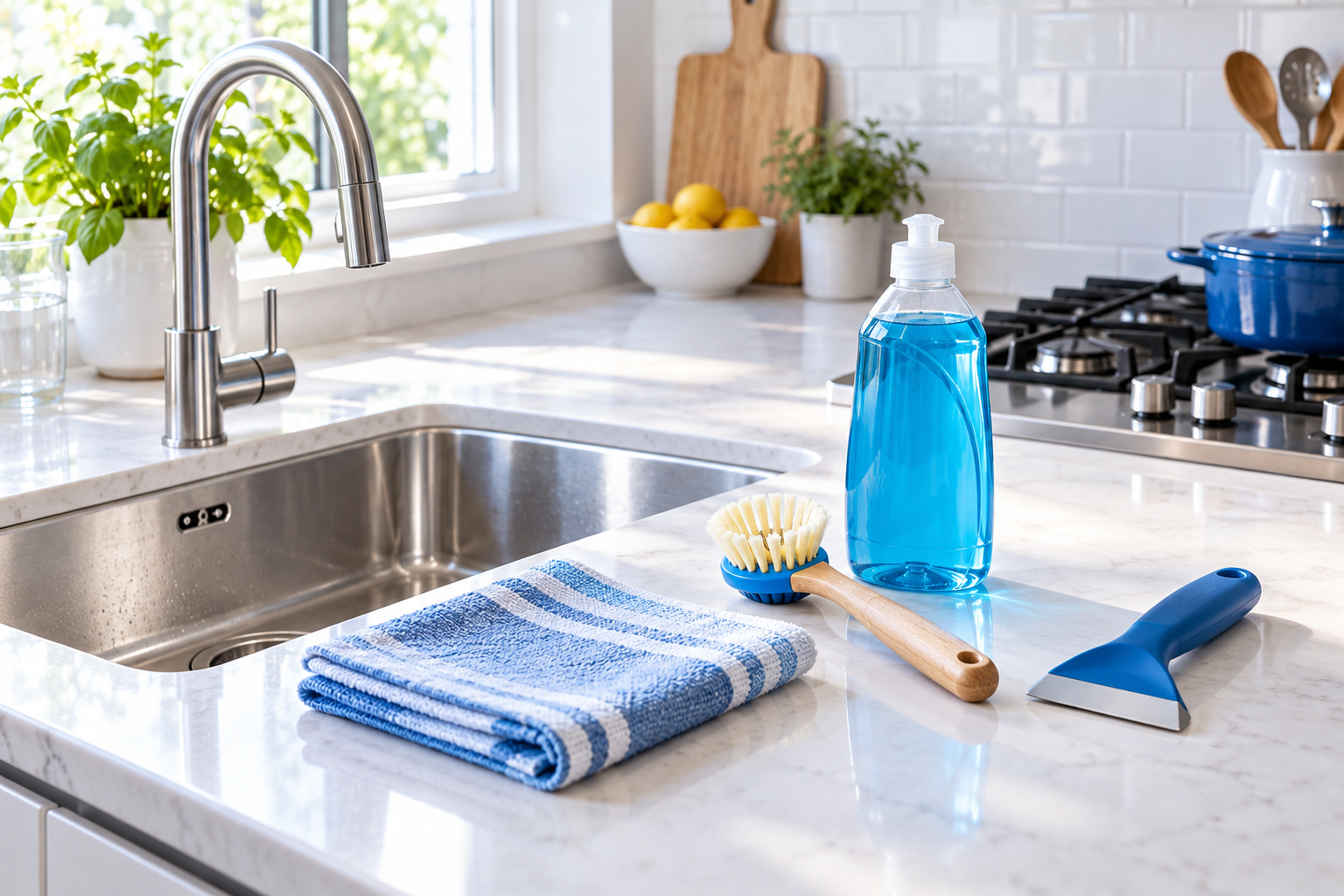
Having everything beside you stops greasy drips travelling across the kitchen. You will usually need:
- dishwashing liquid designed to cut grease;
- warm water rather than dangerously hot water;
- a sink, tub or shallow tray large enough for the filters;
- two or three clean microfibre cloths;
- a soft dish brush or non-scratch detail brush;
- an old towel or absorbent cloth;
- a small bowl or bucket;
- gloves if your skin is sensitive;
- a manufacturer-approved kitchen degreaser for stubborn residue, if necessary.
Avoid steel wool, abrasive powders, hard scouring pads and sharp scraping tools on painted, glass or stainless finishes. They can leave permanent scratches. Do not mix different cleaners, and never mix bleach with vinegar, acids, ammonia, alcohol or other cleaning products.
For this job, dishwashing liquid is often the best first choice. It is designed to lift food grease and is easier to control than a heavily sprayed product above the cooktop.

Prepare the Cooktop and Make the Job Less Messy
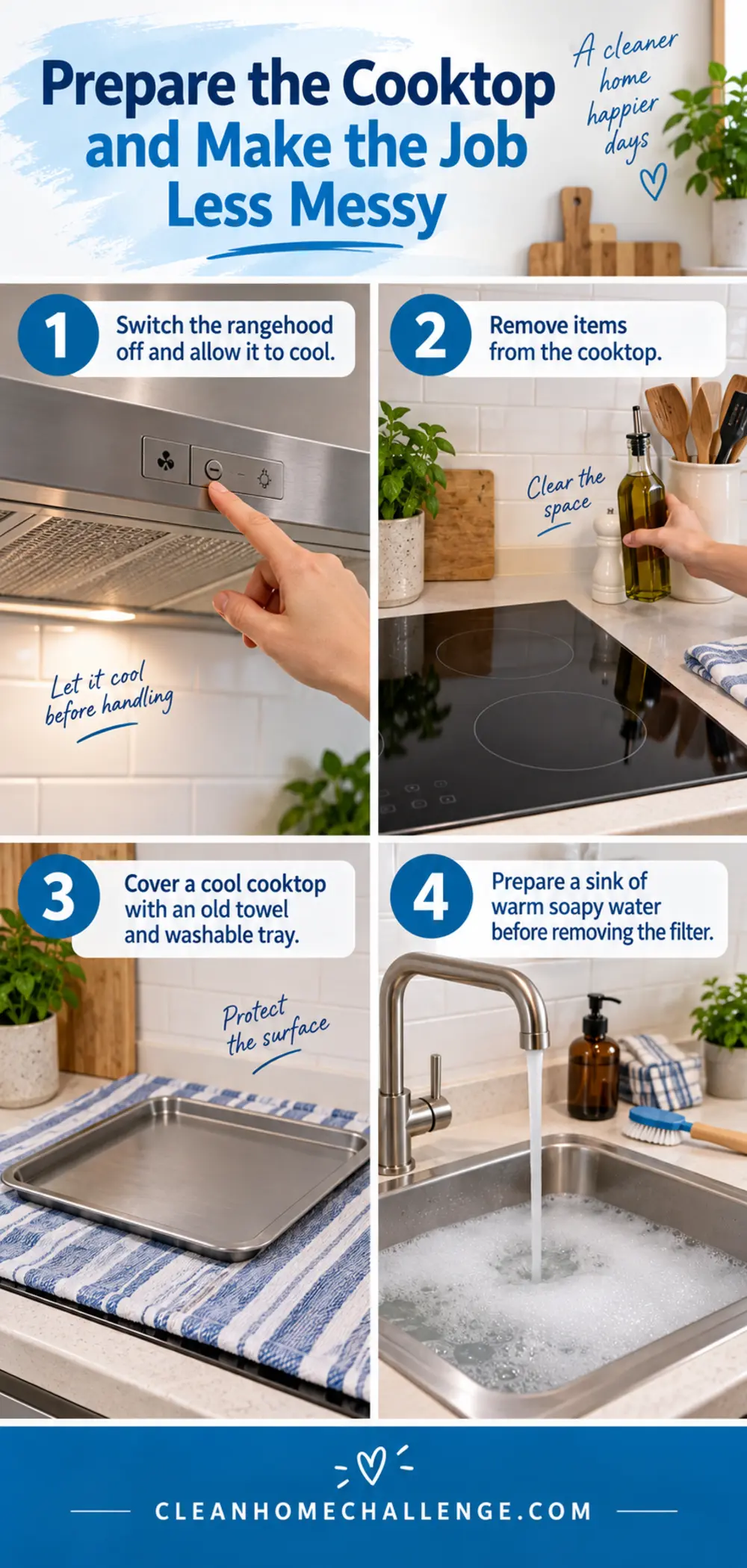
Turn the rangehood off. If your model has a reachable plug or isolation switch, disconnect it according to the manual. Wait until the cooktop, lights and hood are completely cool.
Remove pans, utensils and food from the area. Cover the cool cooktop with an old towel, then place a washable tray, baking sheet or several sheets of paper towel over it. The towel cushions removable filters while the top layer catches oily drips. Never cover a warm cooktop, and keep loose fabric away from gas burners.
Fill a sink or tub with warm water and a generous squeeze of dishwashing liquid before removing the filters. This lets each greasy filter go straight into the water rather than being carried through the room.
Run a dry microfibre cloth lightly over loose dust on the exterior and top ledges. Removing dry dust first prevents it turning into grey sludge once water is introduced.
Clean the Exterior Without Leaving Streaks
Start at the top and work down so loosened grease does not drip over an area you have already finished.
Add a small amount of dishwashing liquid to warm water. Dampen a microfibre cloth, then wring it out thoroughly. The cloth should be damp, not dripping. Wipe a small test area first, especially on painted or coated finishes.
For stainless steel, follow the direction of the visible grain. Use several light passes instead of aggressive scrubbing. Hold the damp cloth against a sticky patch for 20 to 30 seconds to soften it, then wipe again. If residue remains, apply a surface-compatible degreaser to the cloth rather than spraying it directly toward seams, controls or vents. Follow the product label, including any required rinsing.
Use a second cloth dampened with clean water to remove cleaner residue. Dry immediately with a fresh microfibre cloth. Drying matters because water and detergent left on stainless steel can create cloudy streaks.
Clean glass panels with a product approved for the model or a barely damp microfibre cloth followed by a dry glass cloth. Do not flood joins where glass meets electrical housings.

Remove and Wash Metal Grease Filters
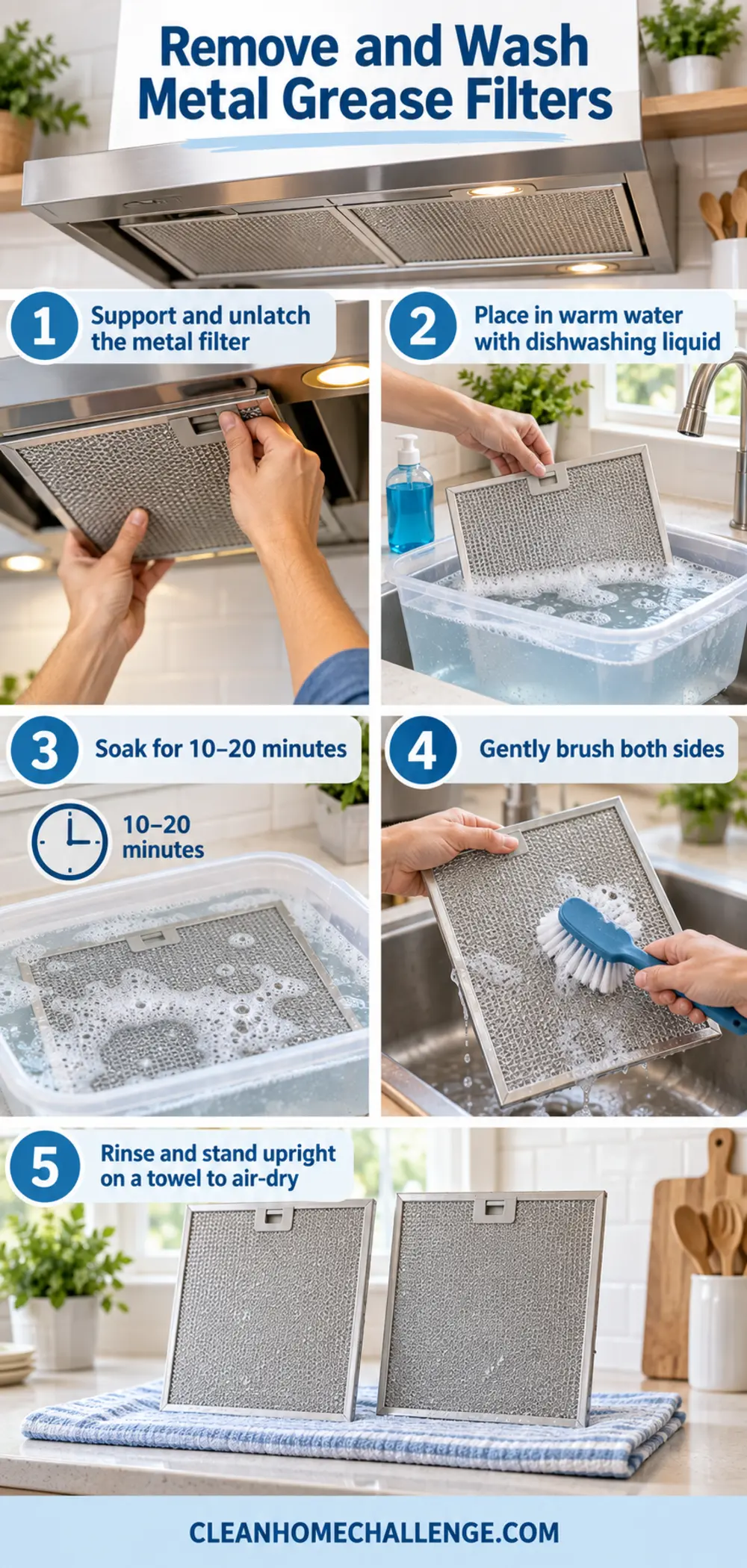
Support each filter with one hand while releasing its latch with the other. Filters can be surprisingly heavy when loaded with grease. Note which way each one faces, or take a quick photo before removal.
Place the filters directly into the prepared warm, soapy water. Let them soak for about 10 to 20 minutes—long enough to soften grease but not so long that the water becomes cold and redeposits grime.
Brush gently along the mesh or baffles on both sides. Pay attention to the frame edges and latch, where sticky residue collects. Avoid crushing fine aluminium mesh. Drain the dirty water and repeat with fresh warm water if the filter is still greasy.
Rinse thoroughly. Hold the filter at an angle so water can move through the layers rather than pushing grease deeper into them. Stand it upright on an old towel and allow it to air-dry completely.
Only use the dishwasher when the rangehood manual says the filter is dishwasher-safe. Even then, wash heavily greasy filters separately from dishes. Dishwasher detergent, heat and minerals may dull or darken aluminium; that colour change can be cosmetic, but the model instructions should decide the method.
If a washable filter stays sticky after two careful washes, is bent, has torn mesh or no longer sits securely, replace it with the correct part for the model.
Clean the Underside and Accessible Interior Safely
With the filters removed, you can see the underside and the filter recess. This area often holds the thickest grease, but it is also closest to the fan, lights, wiring and motor.
Do not spray cleaner directly into the hood. Put warm soapy water or an approved degreaser onto a cloth, then wring it out well. Wipe only the smooth, reachable surfaces the manual identifies as cleanable. Keep liquid away from the motor, fan hub, wiring, lamp sockets, switches and open electrical seams.
For corners and narrow edges, wrap the damp cloth around a soft brush handle or use a lightly damp detail brush. Do not push tools deep into the fan housing. If the fan blades are exposed and heavily coated, consult the manual or arrange professional service rather than reaching around sharp or powered components.
Follow with a separate cloth dampened in clean water to remove detergent residue, then dry the area carefully. Replace any light cover only when it is completely dry.
A thick, tar-like buildup that returns quickly may indicate overdue duct maintenance, a damaged filter or inadequate airflow. Cleaning the visible surface will improve it, but it will not correct a mechanical or installation problem.

Handle Charcoal and Disposable Filters Correctly
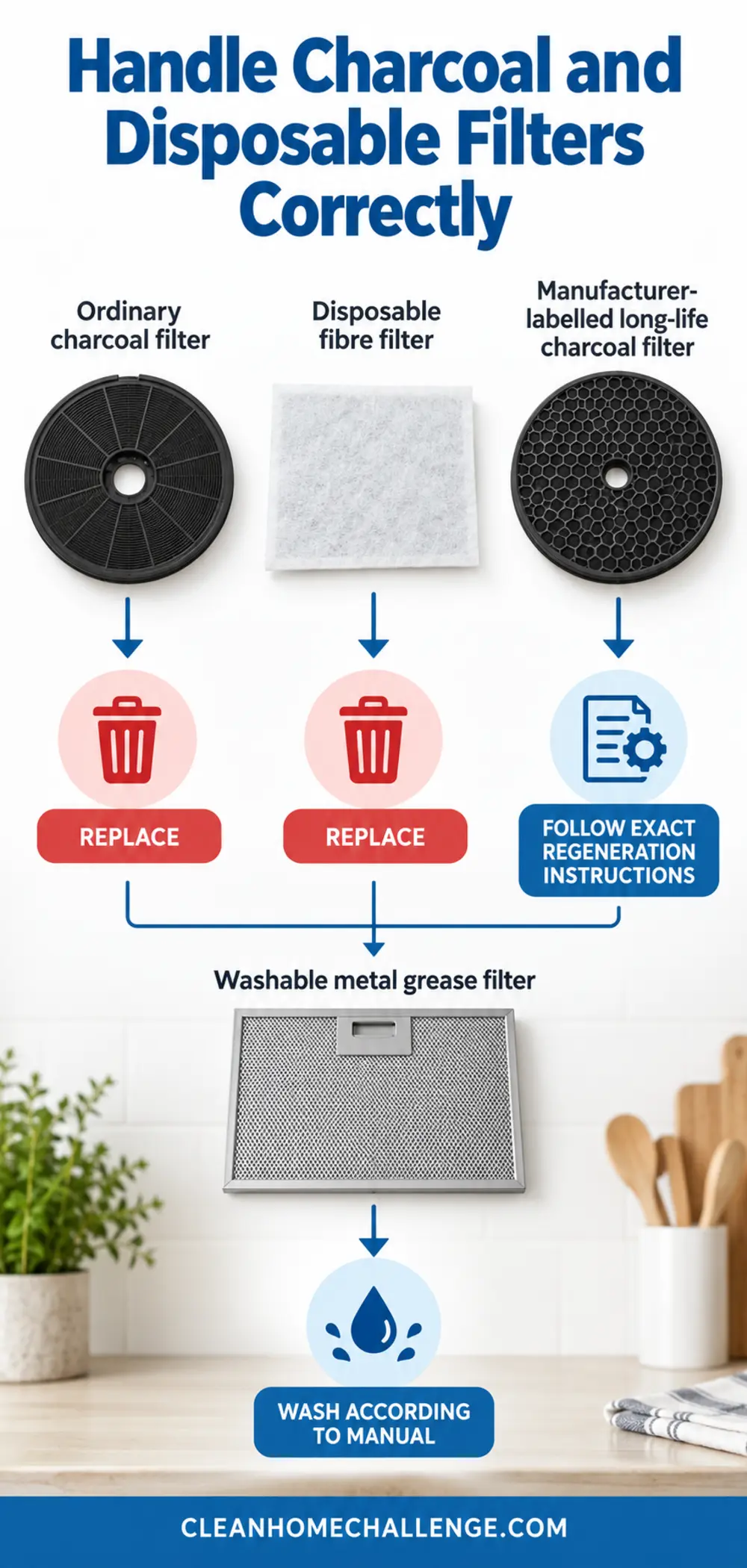
Not every filter belongs in the sink. Recirculating rangehoods often have a charcoal filter positioned behind the metal grease filter. Its purpose is different: the metal filter catches grease, while the charcoal layer helps reduce odours before air returns to the room.
Standard charcoal filters are normally replacement items. Washing them can saturate or damage the carbon and may make them ineffective. Replace them at the interval stated by the manufacturer, which depends on the model and how often you cook.
Some rangehoods use washable or regenerable long-life charcoal filters. These have very specific cleaning, drying or oven-regeneration instructions. Follow those instructions exactly rather than assuming the method from another brand.
Disposable fibre or paper grease filters should also be replaced when saturated. Never refit a torn, sagging or grease-soaked disposable filter.
Dry, Reassemble and Test the Rangehood
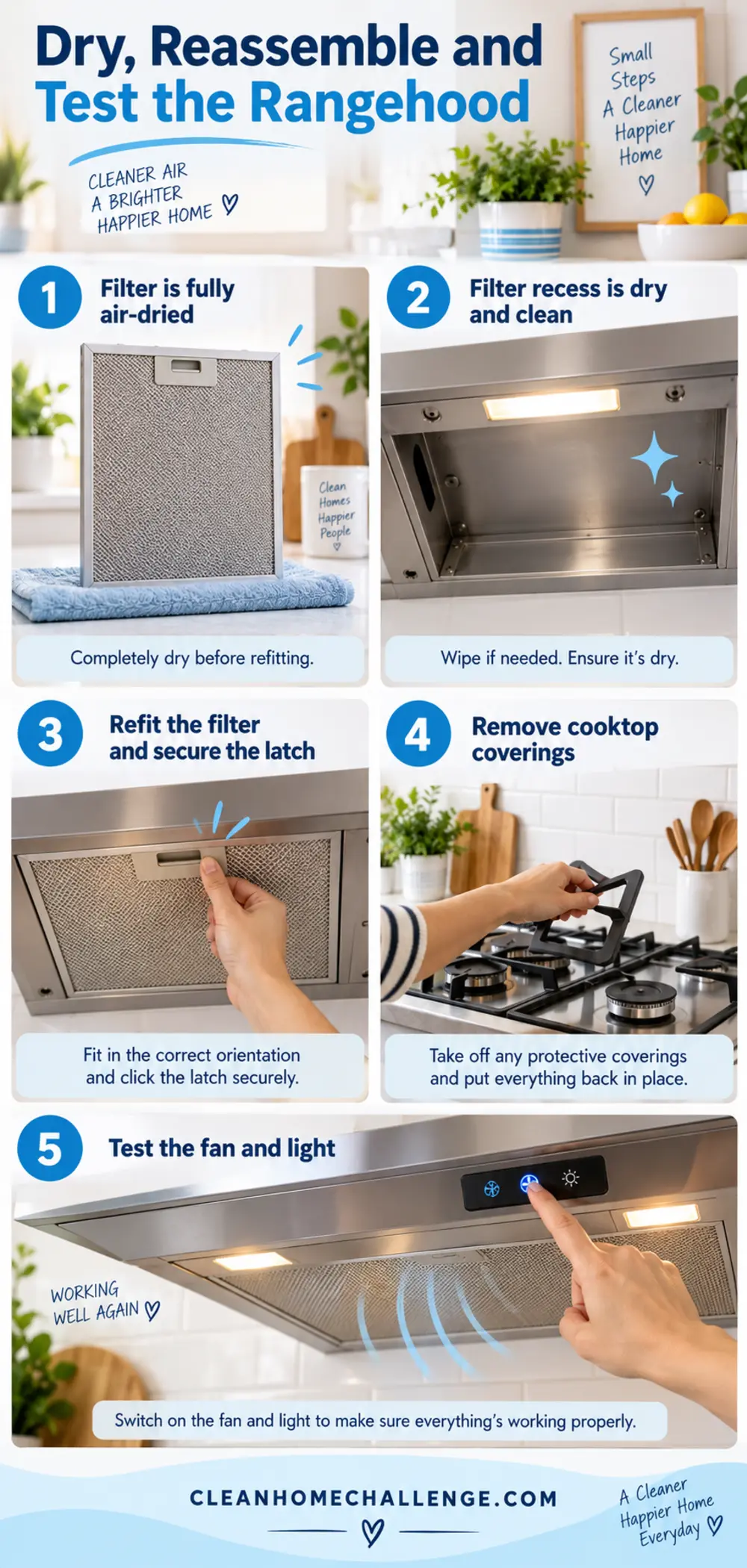
Do not rush the drying stage. Water trapped inside layered mesh can drip onto the cooktop or reach parts that should remain dry.
Check that the filter recess, exterior, latches and filters are completely dry. Refit charcoal filters first if your model uses them, followed by the metal grease filters in their original orientation. Make sure every latch clicks securely and the filters sit flat without gaps.
Remove the protective coverings from the cooktop. Reconnect power if it was disconnected. Test the light and each fan speed for a few seconds. Stop and switch the appliance off if you hear scraping, strong vibration or an unfamiliar rattle; a filter may not be seated correctly.
Finish by wiping the control panel and the clean, cool cooktop. Launder greasy cloths separately according to their care instructions and allow brushes to dry before returning them to your cleaning caddy.
Avoid These Common Rangehood Cleaning Mistakes
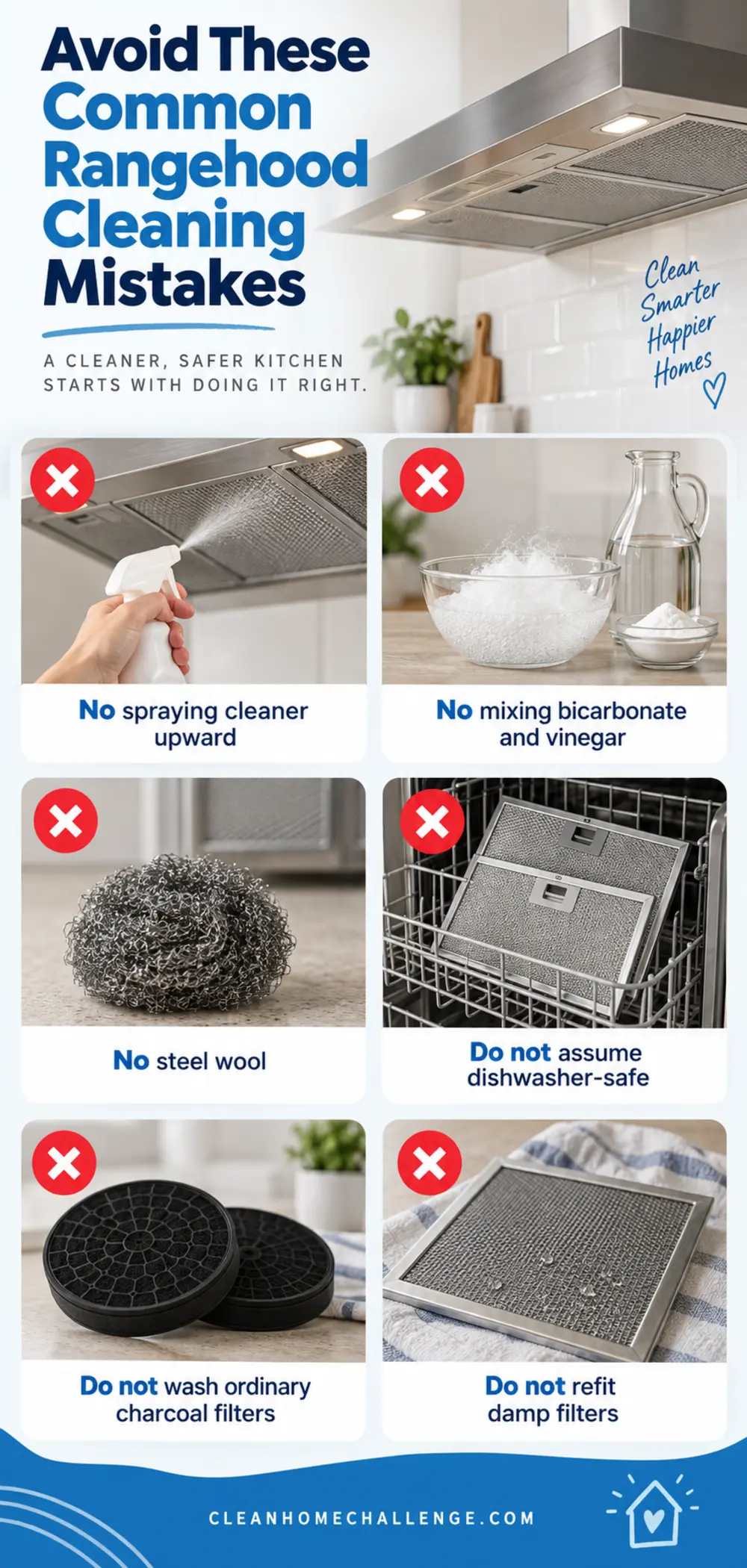
- Spraying upward into the hood: Overspray can enter switches, lights, the motor or seams. Apply product to the cloth.
- Mixing bicarbonate of soda and vinegar: The fizz looks active, but the acid and base largely neutralise each other. Use dishwashing liquid or one appropriate cleaner instead.
- Using harsh abrasives: Steel wool and aggressive scourers can permanently scratch stainless steel, glass and coatings.
- Assuming every metal filter is dishwasher-safe: Check the model manual. High heat and dishwasher detergent can discolor aluminium or damage some filters.
- Washing ordinary charcoal filters: Standard carbon filters are commonly replaced, not soaked.
- Refitting damp filters: Trapped water can drip and may reach electrical components.
- Cleaning while the cooktop or lights are warm: Heat increases the risk of burns and can make cleaners dry too quickly.
- Ignoring the filter for months: Thick grease takes longer to remove and can restrict airflow.
Keep Your Rangehood Cleaner With a Realistic Routine
The easiest rangehood clean is the one done before grease becomes sticky and dark. After frying or cooking oily food, wait until the hood is cool and wipe the exterior and underside with a damp microfibre cloth, then dry it.
Check the metal filters every two to four weeks at first. If they still look and feel clean, extend the interval. A household that fries frequently may need to wash filters monthly, while lighter cooking may allow a longer gap. Your manual remains the best guide.
Add a quick rangehood check to the Monday kitchen routine:
- Wipe the control panel and exterior.
- Look underneath for tacky residue.
- Check whether the grease filters look yellowed or feel sticky.
- Note the next charcoal-filter replacement date if applicable.
- Wash the filters when they need it rather than waiting for a fixed deep-clean day.
This five-minute check prevents a much larger job later and helps the rangehood operate as intended.

CLEANERS CLUBHOUSE
Make Kitchen Cleaning Feel More Manageable
Turn Monday into your kitchen reset day with a clear routine you can follow. The Cleaners Clubhouse gives you practical cleaning guidance, printable support and monthly challenges to help you stay consistent.
Rangehood Cleaning Questions Busy Families Often Ask
Can I put rangehood filters in the dishwasher?
Only if the manufacturer says your exact filter is dishwasher-safe. Some stainless and aluminium mesh filters are approved for dishwasher cleaning, but detergent and heat can discolor aluminium. Handwashing is the safer default when the instructions are unclear.
How do I know whether a charcoal filter needs replacing?
Follow the model’s interval and pay attention to reduced odour control, visible saturation or damage. Washing a standard charcoal filter will not restore it unless it is specifically sold as washable or regenerable.
What removes very old, sticky grease?
Start with warm water and dishwashing liquid. Give it contact time, wipe in repeated light passes and refresh the water when it becomes oily. If residue remains, use a manufacturer-approved degreaser that is compatible with the exact surface. Apply it to the cloth, follow the label and rinse away residue.
Why does my rangehood still smell after cleaning?
Check the grease filters, charcoal filter, accessible interior and surrounding splashback. Persistent odour may come from an overdue charcoal filter, grease further inside the ducting or a ventilation problem. Arrange appropriate service if the smell continues or the fan performance has changed.
Can I clean the motor and fan myself?
Only clean the parts the manual identifies as user-serviceable. Motors, wiring and inaccessible fan components should stay dry. Heavy buildup inside the housing is a sensible reason to contact a qualified appliance or ventilation professional.

A Cleaner Rangehood Without the All-Day Scrub
A clean rangehood does not require complicated homemade mixtures. Protect the cooktop, use warm water and dishwashing liquid as your first grease-cutting method, keep moisture away from electrical components and let the manufacturer’s instructions decide how each filter is treated.
Once the heavy buildup is gone, a short weekly wipe and regular filter check are enough for most busy homes. Add the task to your Monday kitchen routine, and the next clean should be quicker, calmer and far less messy.
Research notes
Manufacturer guidance varies by model. Haier and Miele both identify dishwasher-safe metal filters on selected models, demonstrating why the appliance manual must decide whether dishwasher cleaning is suitable. The method in this guide uses handwashing as the cautious default and treats ordinary charcoal filters as replaceable unless their instructions specifically permit washing or regeneration.