
THIS POST MAY CONTAIN AFFILIATE LINKS. PLEASE READ MY DISCLOSURE FOR MORE INFO.
A child’s bedroom can go from usable to buried in clothes, books, and half-built creations surprisingly quickly. When you need the floor clear before bedtime, it is tempting to scoop everything up yourself. The immediate job gets done, but tomorrow’s cleanup still depends on you.
A practical kids bedroom cleaning checklist gives everyone a clear part to play. Start with a small, visible finish line, choose jobs your child can manage, and teach the sequence alongside them. You can gradually step back while keeping responsibility for products, equipment, and safety.
The routine below separates a quick daily pickup from the cleaning that needs an adult. It also leaves room for a treasured construction project, an unevenly made bed, and a child who needs more support. A bedroom should work for the person who sleeps and plays there.
Disclosure: This post may contain affiliate links. As an Amazon Associate, Clean Home Challenge earns from qualifying purchases. If you make a purchase through these links, we may earn a small commission at no extra cost to you. This helps us keep creating practical cleaning tips, routines and resources for busy families! 🧽
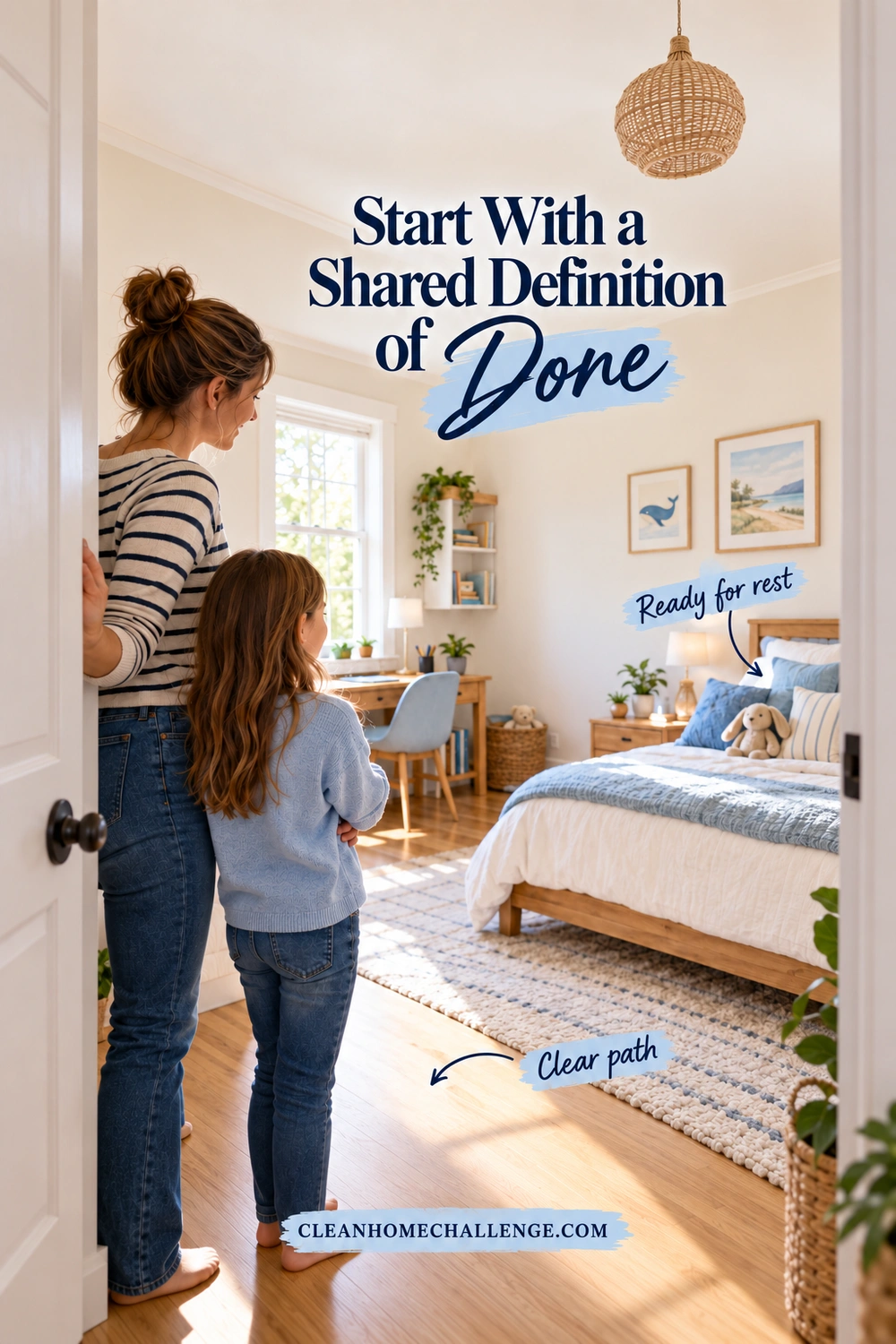
Start With a Shared Definition of Done
Before touching the mess, agree on what needs to be usable today. Walk through the room together and name a few concrete goals: a clear route from the door to the bed, bedding ready for sleep, dirty clothes in the hamper, and toys returned to their homes. For a desk, decide how much clear space your child needs for the next activity.
“Clean your room” leaves a lot to interpret. “Put the books from the floor on this shelf” provides both a job and a destination. Show the difference with one small area, then let your child try it.
Choose today’s finish line
For an everyday reset, use three checks:
- Can we walk through the room without stepping over things?
- Can you use the bed and the surface you need next?
- Are dishes, food scraps, and dirty clothes where they belong?
An adult should deal promptly with hazards such as broken glass, leaking batteries, or an unsafe spill. A storage makeover can wait for another session. You do not need to empty every drawer to clear tonight’s floor.
Protect things that matter
Ask before dismantling a carefully built model or packing away a game in progress. Agree on a safe, limited place where unfinished play can stay. Keep it away from walking routes and anything that creates a climbing temptation.
Never turn cleanup into a surprise donation sweep. Make decisions about outgrown toys together in a separate, unhurried session. During ordinary cleaning, use a small “decide together” basket for uncertain items, then arrange a time to empty it. The basket is a temporary pause, not another permanent pile.
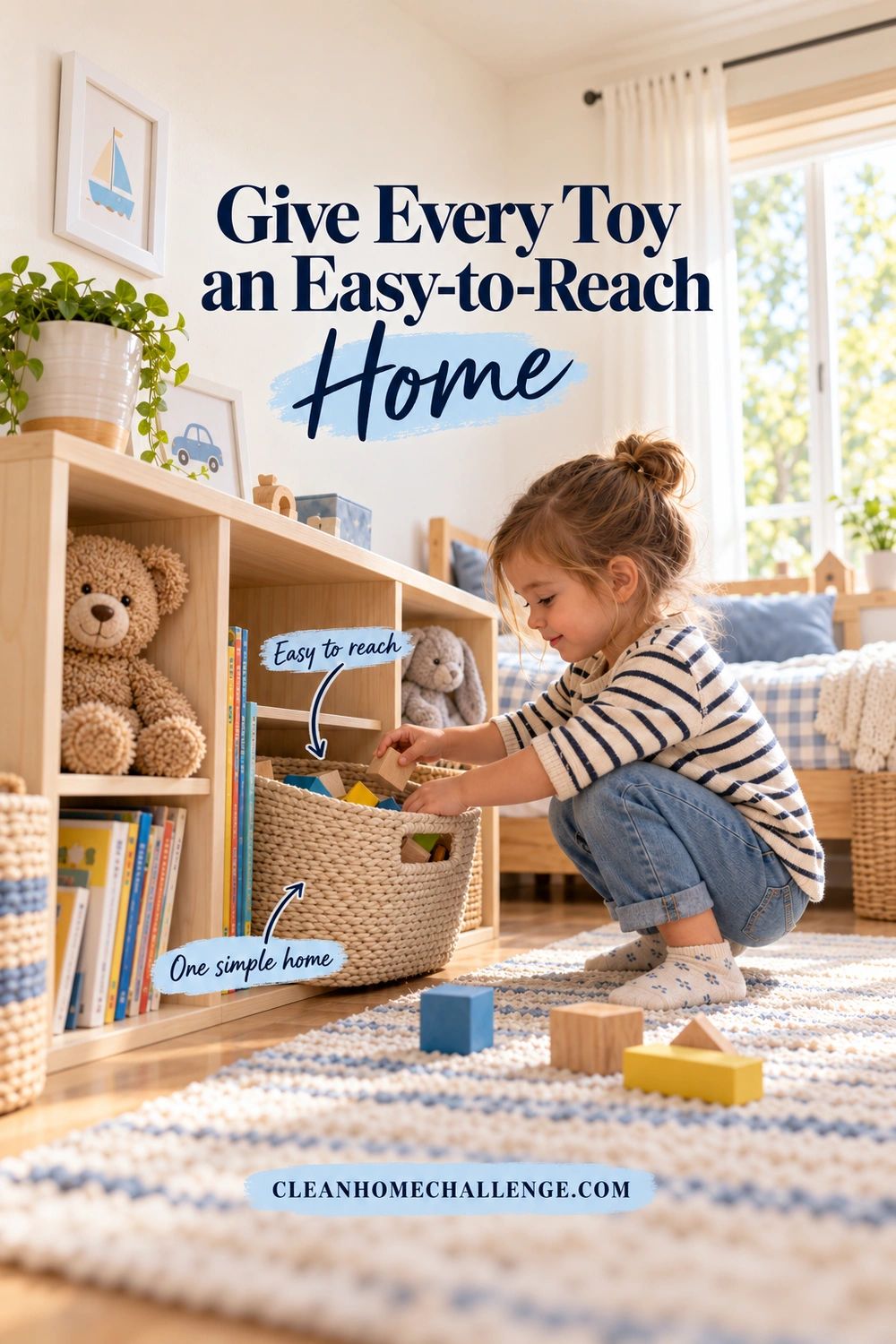
Give Every Toy an Easy-to-Reach Home
Watch your child put away a few things before buying organizers. A box that needs two hands to open, a shelf above their reach, or six tiny sorting categories can make cleanup harder than necessary. Start by changing the awkward step you actually observe.
Open baskets work well for broad categories such as soft toys, vehicles, or dress-up clothes. Keep books on a reachable shelf, and place the hamper close to where clothes usually come off. Avoid filling containers so tightly that your child must solve a packing puzzle to put one item away.
Use labels your child understands
A simple picture can help a child who is not reading yet. Pair it with a short word if useful. Let your child help choose the categories: “cars” may make more sense to them than “transportation.” Test the setup by asking where one familiar item goes.
You can use the containers you already own. Check for sharp edges, broken handles, trapped-finger risks, and anything too heavy to carry safely. An adult should manage storage that requires lifting a lid or moving a bulky container. Keep small parts away from younger children who may share or visit the room.
Make reachable storage safe
Low storage does not remove the need for furniture safety. The U.S. Consumer Product Safety Commission’s Anchor It guidance recommends securing furniture and televisions against tip-overs. Follow the furniture and anchor manufacturer’s installation instructions, and keep tempting toys off the top of furniture so children have less reason to climb.
Ask an adult to retrieve anything above comfortable reach. Never make standing on a chair, opening drawers as steps, or pulling down a loaded basket part of the routine.
If a category no longer fits, pause before adding another bin. Choose a few items together for a labeled rotation box stored safely by an adult, or plan a separate sorting session. Keep the everyday homes simple enough that your child can use them without you rearranging everything afterward.
Match the Jobs to Your Child’s Skills
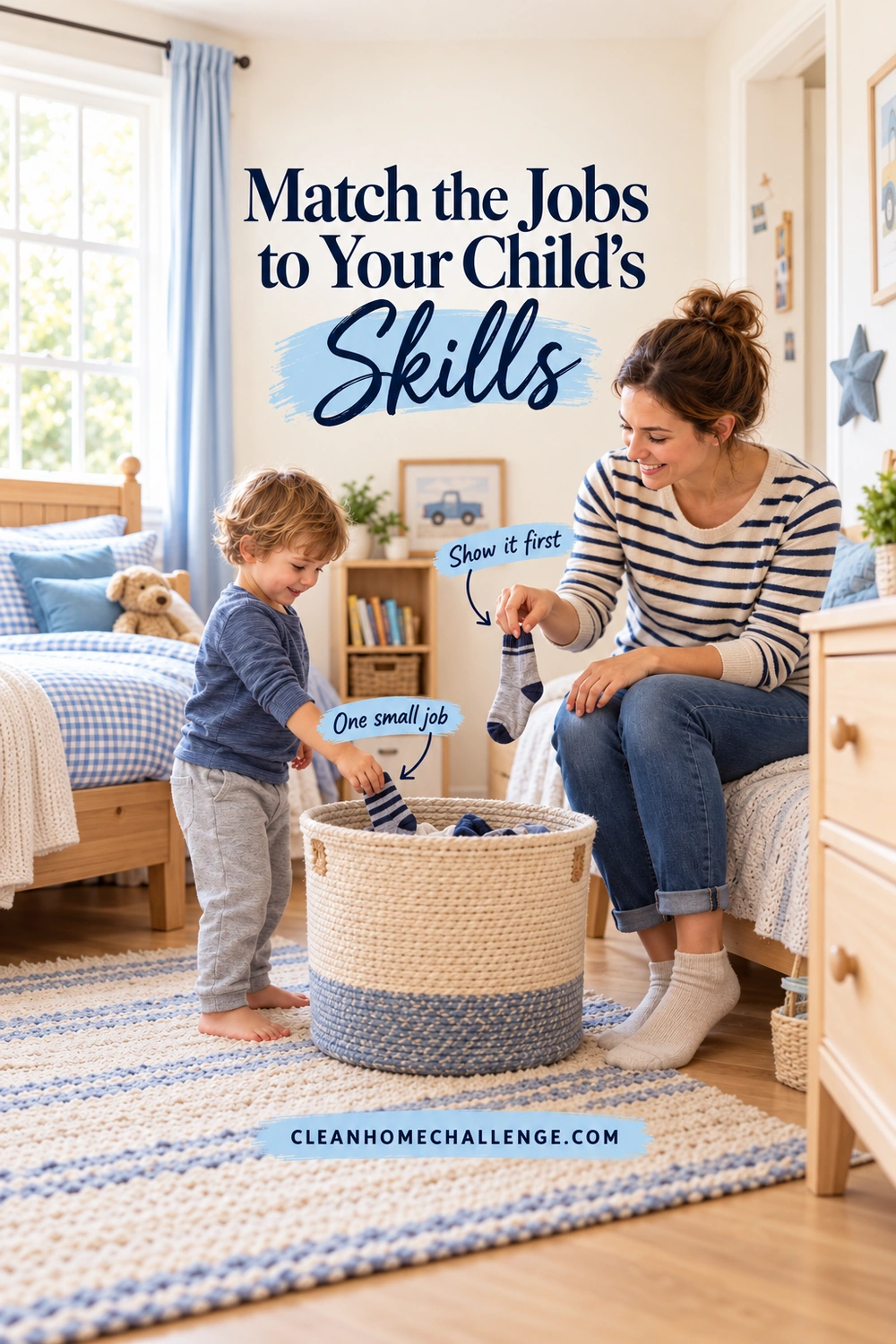
Age offers a starting point, but your child’s reach, coordination, understanding, and comfort matter too. The American Academy of Pediatrics supports age-appropriate chores with realistic expectations. Its examples include putting away toys and using a hamper for ages five to seven, with more involved jobs added as skills develop.
For this bedroom routine, choose from these starting points:
- Younger helpers: put a few large toys into an open basket beside you, carry one light item, or place socks in the hamper.
- Early school-age children: return books, sort familiar toy categories, and pull a light blanket straight with help.
- Older children: follow a short sequence, put away their own clean clothes, and practice changing accessible bedding with supervision.
- Teens: help agree on the schedule, notice supplies or storage that are not working, and take ownership of the routine they have learned.
These are invitations to practice, not deadlines a child must meet. Our guide to age-appropriate chores from toddlers to teens offers more ideas to adapt.
Keep adult jobs clearly separate
For this shared routine, an adult handles cleaning products and disinfectants, plugs and powered cleaning equipment, high surfaces, heavy furniture, and anything sharp or broken. Children should not mix products, spray around their faces, climb to dust, or reach into hidden spaces without a check first.
Keep products in their original containers, secured out of children’s reach, including while you work. The AAP’s family cleaning-safety advice is a useful starting point. “Natural” wording on a bottle is not permission for a child to handle it.
Offer adjustments without making them a big event: bring the basket closer, let your child work seated, use pictures, or give one instruction at a time. Some children benefit from you staying nearby throughout. Shared participation can still be meaningful when independence develops slowly.
Use a Simple Kids Bedroom Cleaning Checklist
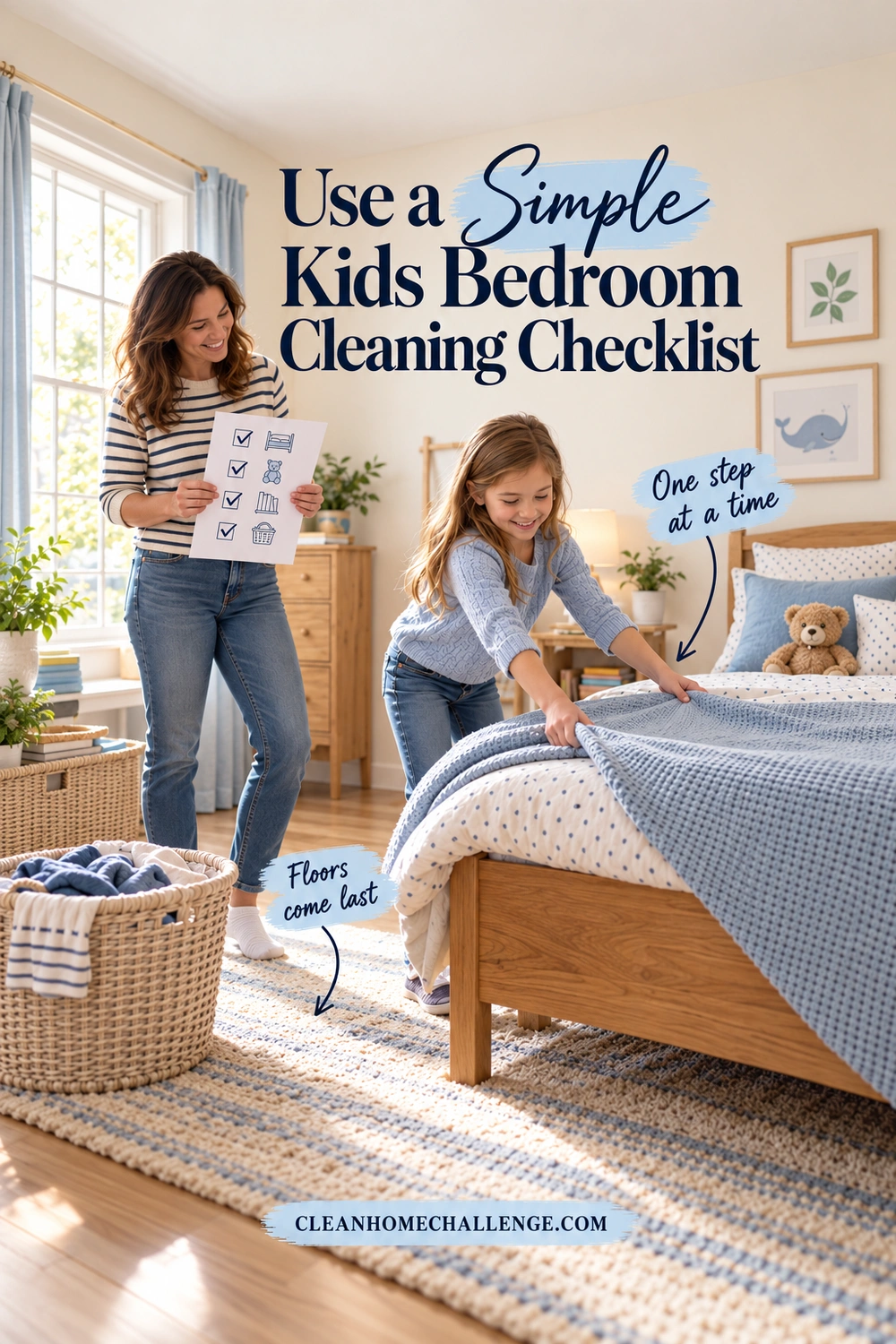
Gather an empty hamper, a light sorting basket, and a wastebasket before starting. An adult can keep the appropriate cleaning cloths and equipment nearby but under their control. Check the floor for hazards before inviting a child to pick things up.
Copy the steps below onto a short card, choosing only the jobs your child has learned. Read the first step together rather than handing over a long list and walking away.
The everyday pickup
- Return dishes and food. Have an adult carry breakable items, spills, or anything awkward. Check the bedside area and the spot where snacks tend to land.
- Collect obvious trash. A child can pick up safe items such as used paper; an adult checks anything uncertain. Keep homework, artwork, and small toy pieces out of the automatic trash sweep.
- Put dirty clothes in the hamper. Return genuinely clean clothes to their homes. Set uncertain items aside to check together instead of stuffing everything into a drawer.
- Put toys and books away. Choose one category at a time. Park an agreed project in its safe spot, and leave crowded-storage decisions for later.
- Make the bed usable. Remove toys that do not belong there, straighten the sheet or blanket, and place the pillow. An adult helps with awkward corners or heavy bedding.
- Clear the walking route. Check the path from the door to the bed and the space needed to open doors. Put remaining safe items away, then review the finish line together.
This is the daily version. A short pickup does not need to include washing toys, sorting a closet, or vacuuming every time.
Add cleaning on bedroom day
When the floor and surfaces are clear, an adult can work through the cleaning jobs. Wednesday is bedroom day in the CHC weekly routine, but choose a day that fits your household.
Start with reachable surfaces and work down. For a suitable sealed surface, follow its care instructions and use a compatible cleaner or a lightly damp cloth as directed. Avoid soaking wood or spraying liquids onto electronics. Test an unfamiliar method on an inconspicuous area and leave surfaces dry before replacing belongings.
Change bedding when needed and according to your household routine. Check each item’s washing and drying instructions. An adult manages detergent and the machines; a child can help bring light bedding or put a pillowcase back on. Dry items fully before returning them to the bed.
Clean visibly dirty toys according to their own instructions. A washable plastic toy, a battery-operated toy, and a favorite plush animal may need different treatment. For example, LEGO recommends hand-cleaning its bricks and avoiding dishwashers, while Build-A-Bear warns against immersing toys with sound or battery components. Do not assume a method suitable for one toy suits the whole basket. Allow cleaned toys to dry completely before storing them.
Finish with the floor. An adult vacuums a cleared carpet or uses the method recommended for the hard floor. Move only light, manageable items; save heavy-furniture cleaning for appropriate adult help. Keep children away from wet floors until dry.
Use disinfectant only when needed
The CDC’s home-cleaning guidance distinguishes ordinary cleaning from disinfection. Regular cleaning is usually enough; illness or particular household health needs may call for additional measures. When disinfection is needed, an adult follows the product label, including compatible surfaces, contact time, ventilation, and protective equipment. Never mix cleaning products. Follow relevant health advice for a specific illness.
For a bigger seasonal session, use the bedroom deep-cleaning checklist separately. Keeping that work off the daily card makes the everyday expectation easier to understand.
Teach the Routine Without Taking Over
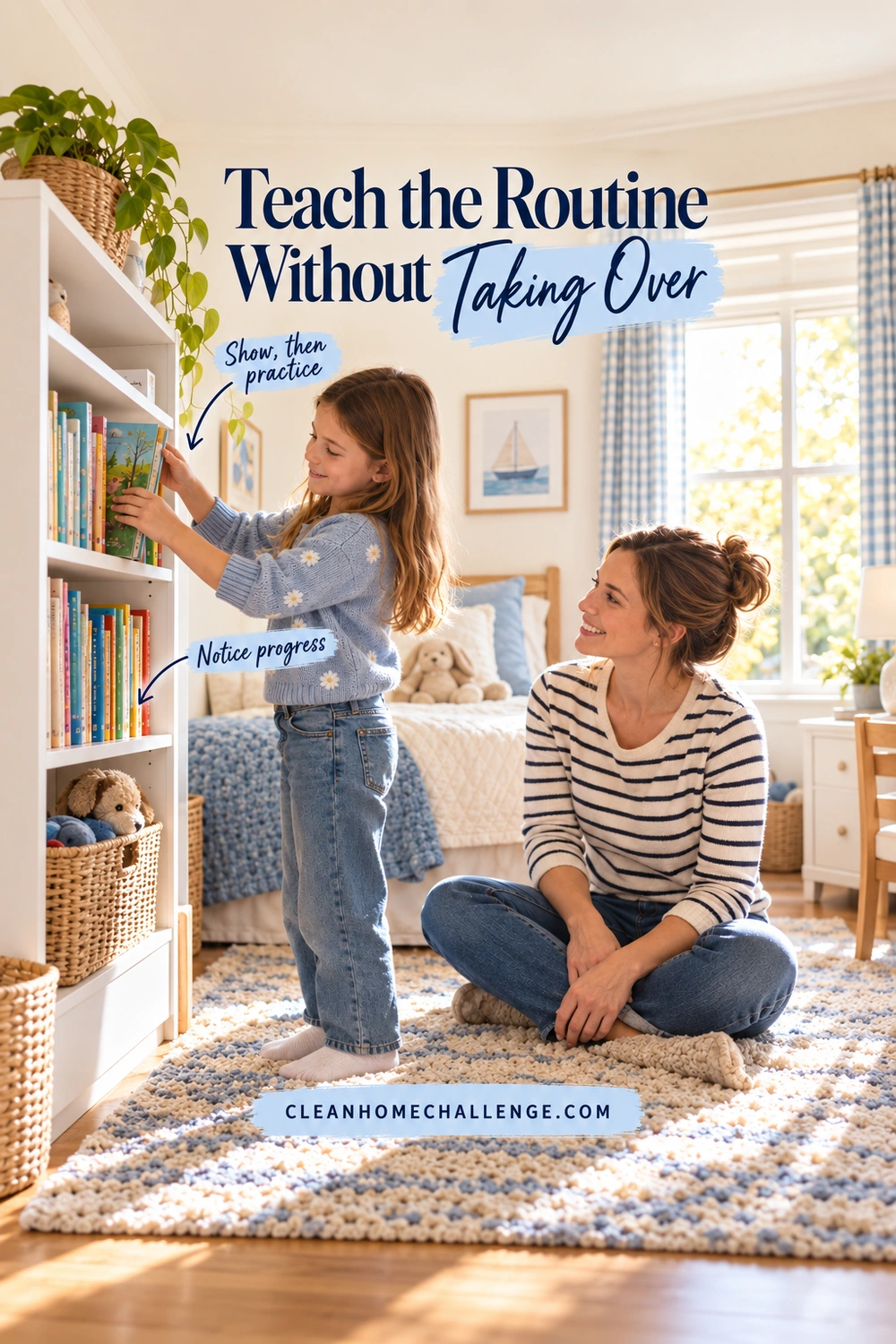
The first few attempts may take longer than doing it yourself. Choose one job you can teach without rushing, such as returning books. Demonstrate with one book, let your child do the next, and stay close enough to answer a question. Add another task after the first feels familiar.
Give specific help
If your child stops, ask what part feels tricky. “I don’t know where this goes” needs a storage decision. “There are too many things” may need a smaller area. A child distracted by a toy may need you beside them while they finish that category.
Try a clear prompt: “Put these three cars in their basket. Then we’ll check the floor.” You can offer a choice between two useful starting points, such as clothes or books. Keep the actual expectation steady while allowing some say in the order.
For an older child, ask whether a written list, a picture reminder, or a quick check-in would help. Avoid assuming that reminders mean they do not care.
Check together, then leave finished work alone
Notice something concrete: “You put the books where we can find them,” or “There is space to walk to your bed now.” If a step needs another try, describe the missing action without attaching a judgment to your child.
Resist silently remaking the bed just because the blanket is uneven. When the agreed job is safe and usable, let it stay finished. If a different standard genuinely matters, show it clearly the next time you practice.
In a shared room, name individual jobs and shared ones. Each child can handle their own clothes and sleeping space; toy categories or the shared floor can be divided in a way that fits ability. Do not leave the oldest child responsible for making a sibling cooperate. An adult keeps that responsibility.
Keep the Room Manageable With Small Resets
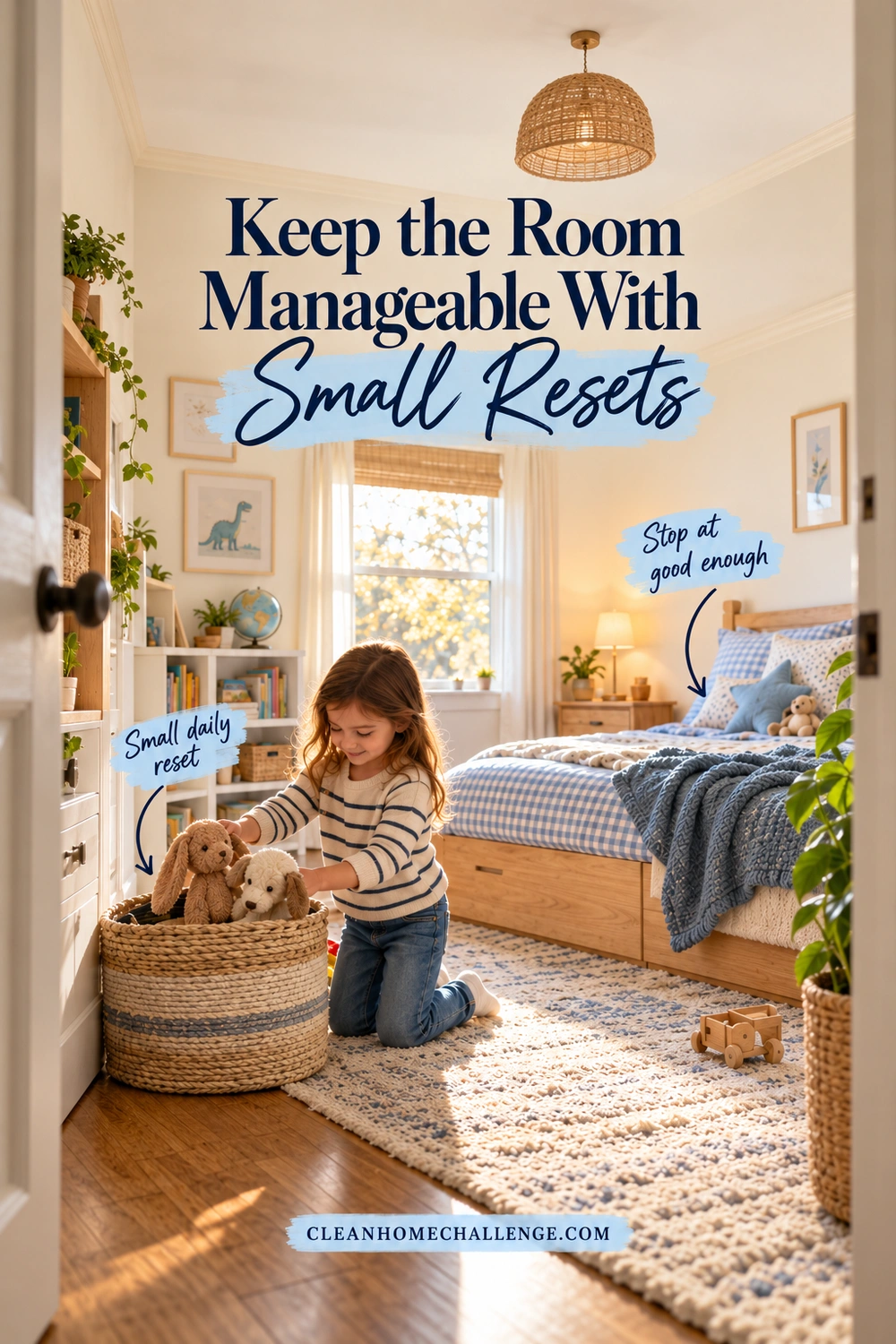
Attach a brief pickup to something that already happens, such as getting dressed or preparing for dinner. Choose a moment before everyone is exhausted if bedtime cleanup regularly falls apart. Keep the same simple sequence where your child can see it.
Use the minimum version on busy days
When energy is low, handle urgent spills or hazards first. Then bring out dishes, put dirty clothes in the hamper, and clear the route to the bed. Stop there if that is what the day allows. Our five-minute cleaning rule for low-motivation days can help you choose a small starting point.
A timer can mark a short practice session, but it is not a test of speed. Five minutes may clear a corner or gather the laundry; it will not always reset the entire room. Do not rush carrying, lifting, or moving around equipment to beat the clock.
Review what keeps getting stuck
After you have tried the routine for a while, look at the repeated obstacles. Clothes beside the hamper might call for moving it. Toys piled in front of a bin may mean the opening is awkward or the category is too full. A forgotten step might need a clearer picture or a better time of day.
Ask your child what would make their part easier before adding rules or buying storage. Change one thing, try again, and keep the parts that work.
If you would like support building a manageable room-by-room routine, Cleaners Clubhouse is a gentle next step alongside these habits. Start today with one shared decision: choose a small job, show the finish line, and give your child a chance to practice. Tomorrow, that same job can feel a little more familiar.

CLEANERS CLUBHOUSE
Follow a Simple Room-by-Room Cleaning Plan
Break the house into manageable spaces and know exactly where to focus next. The Cleaners Clubhouse gives you a follow-along 12-month calendar, printable worksheets and motivating monthly challenges.