
THIS POST MAY CONTAIN AFFILIATE LINKS. PLEASE READ MY DISCLOSURE FOR MORE INFO.
A bathroom can feel crowded even when it only holds small things. Half-used bottles gather around the shower, towels disappear into deep shelves, and the product you need ends up behind three backups. Getting ready takes longer, and wiping the counter becomes a moving job.
This bathroom decluttering checklist helps you work through toiletries, cosmetics, towels, and the awkward extras in a sensible order. You can finish one drawer today and come back for the towel shelf another day. The aim is a bathroom where everyday things are easy to find, put away, and clean around.
Start with what you already own. A few clear decisions usually help more than a new set of storage baskets.
Disclosure: This post may contain affiliate links. As an Amazon Associate, Clean Home Challenge earns from qualifying purchases. If you make a purchase through these links, we may earn a small commission at no extra cost to you. This helps us keep creating practical cleaning tips, routines and resources for busy families! 🧽
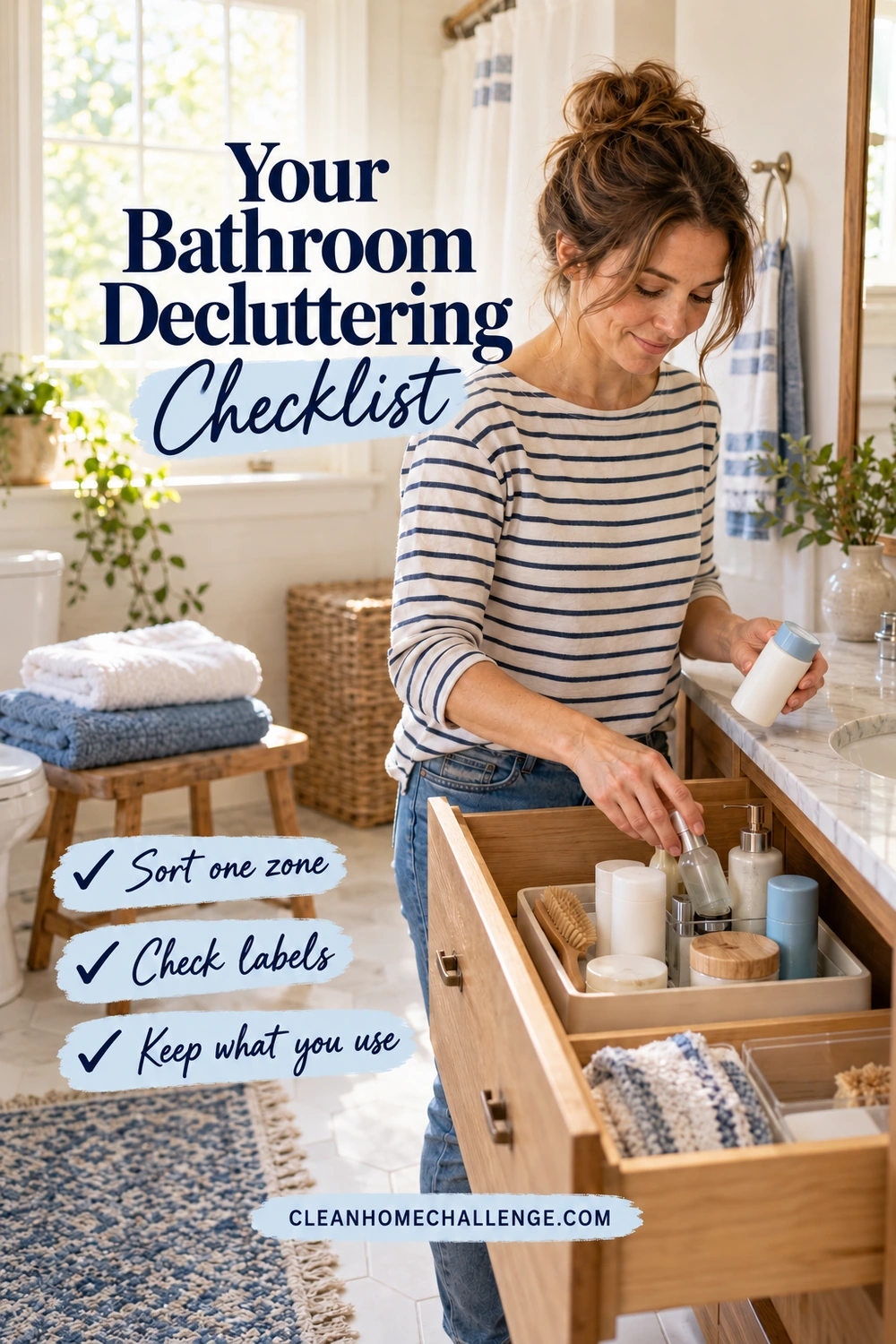
Your Bathroom Decluttering Checklist
Choose a finish line you can reach
Pick one zone: the shower ledge, a drawer, the counter, or one towel shelf. Allow about 10–15 minutes for a small zone as a planning estimate; a full family bathroom may need several sessions. Leave a few minutes at the end to put things away safely.
Gather a trash bag, a laundry basket, a box for items that belong elsewhere, a clean cloth, and a surface-appropriate cleaner. Set aside a separate, child-secure place for anything needing special disposal. Medicines, sharp items, and leaking chemicals must not sit in an open sorting pile.
If energy is limited, choose three empty containers and stop. The five-minute cleaning rule is another useful way to keep the task small.
Work through these categories
Use this checklist one area at a time. Check a category when you have made the decisions and put the keepers back.
- Counter and sink: remove empty packaging, unrelated belongings, unused accessories, and products that can live in a drawer.
- Shower and tub: review shampoo, conditioner, body wash, treatments, razors, sponges, and bath toys. Remove empties and anything no longer used.
- Skin and body care: sort cleansers, moisturizers, deodorant, sunscreen, and duplicate bottles.
- Makeup and tools: check cosmetics, applicators, brushes, hairbrushes, combs, and styling accessories.
- Dental and personal care: review toothpaste, floss, replacement heads, menstrual supplies, and other household essentials without removing genuinely needed reserves.
- Medicines and first aid: check labels and storage requirements; separate anything requiring pharmacist advice or safe disposal.
- Towels and linens: gather bath towels, hand towels, washcloths, guest towels, and mats, including those currently in the laundry.
- Backups and travel supplies: combine the inventory so you can see unopened duplicates and forgotten samples.
- Under-sink storage: check for leaks, damaged packaging, unnecessary cleaners, and items that block access to plumbing.
Sort into five decisions: keep here, use next, move elsewhere, donate if accepted, and dispose correctly. Ask the owner before removing someone else’s toiletries. A product that looks unnecessary to you may be part of their daily care.
Finish the zone before opening another cupboard. A clear sink and one working drawer are useful progress, even if the rest waits.
Sort Toiletries and Cosmetics
Keep what fits your current routine
Group similar products together so you can see the full picture. Three partly used conditioners are easier to assess side by side than in different corners of the bathroom.
For each item, ask:
- Does someone in this household use it?
- Is it within the manufacturer’s guidance and in good condition?
- Is it comfortable and suitable to use?
- Is there a realistic place and plan for it?
Keep legitimate differences, such as separate hair-care products or fragrance-free toiletries. Give each person a small, easy-to-reach area rather than forcing everyone to share one routine.
Check dates without relying on a universal chart
The FDA explains that cosmetic shelf life varies with the product, storage, and use. In the US, ordinary cosmetics do not all have to carry an expiration date. A missing date does not mean a product lasts indefinitely.
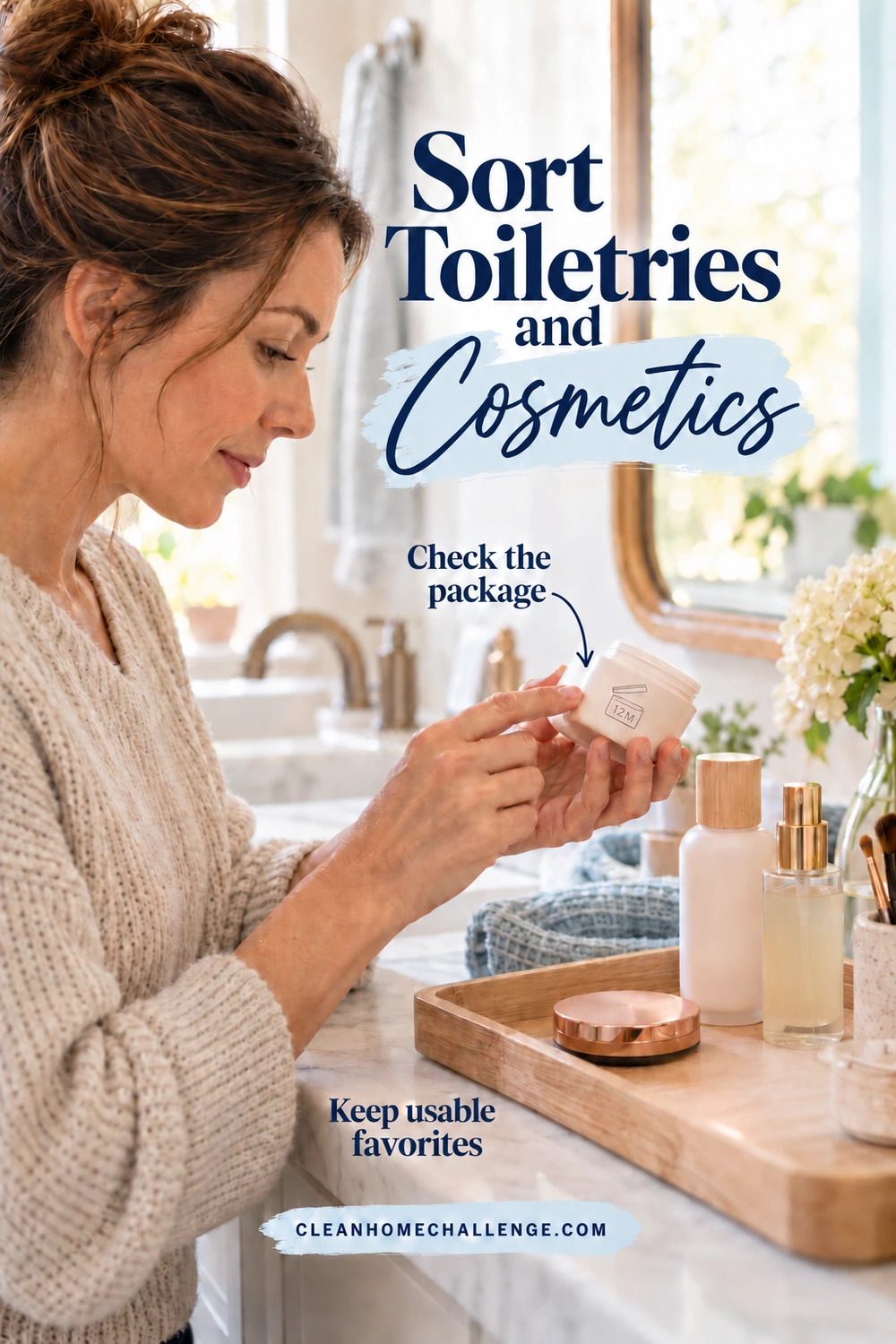
Follow the label and brand guidance. An open-jar symbol marked 12M means the recommended period after opening is 12 months, as explained by L’Oréal Paris. Write the opening month on new products when helpful. Do not guess an old product’s age just to keep it.
Set aside cosmetics that have developed an unusual odor, texture, or appearance. Normal-looking makeup can still be past its recommended use period. Discard dried-out mascara rather than adding water, and do not share eye makeup. Ask the manufacturer if the labeling is unclear.
Sunscreen deserves a separate check. The FDA advises discarding expired sunscreen. For sunscreen without a printed expiration date, use the three-year-from-purchase limit; discard it if you cannot establish its age. Follow storage directions, too.
Make a small “use next” collection
Choose one usable, wanted product from each crowded category to finish before opening another. Put it where the intended user will notice it. Leave unopened backups together in a dry, suitable storage spot.
Do not combine leftovers or refill an old bottle with a different formula. Keep identifying labels and directions. A “use next” collection should never include spoiled products or anything that causes irritation.
For unwanted products, check a local organization’s current donation list before making a bag. Offer unopened, unexpired toiletries only when that recipient accepts them. Samples need a real use or an accepted destination, rather than an unlimited travel stash. For an upcoming overnight stay, pack a small toiletry bag from suitable supplies you already have. Keep only a travel collection that matches real plans.
Follow local recycling rules for empty packaging. For leftover nail products, aerosols, or cleaners, read disposal instructions and ask your local waste service when unsure. The EPA’s household hazardous waste guidance explains why unsuitable leftovers must not be mixed together or poured down drains.
Handle Medicines Safely
Review storage before rearranging the cabinet
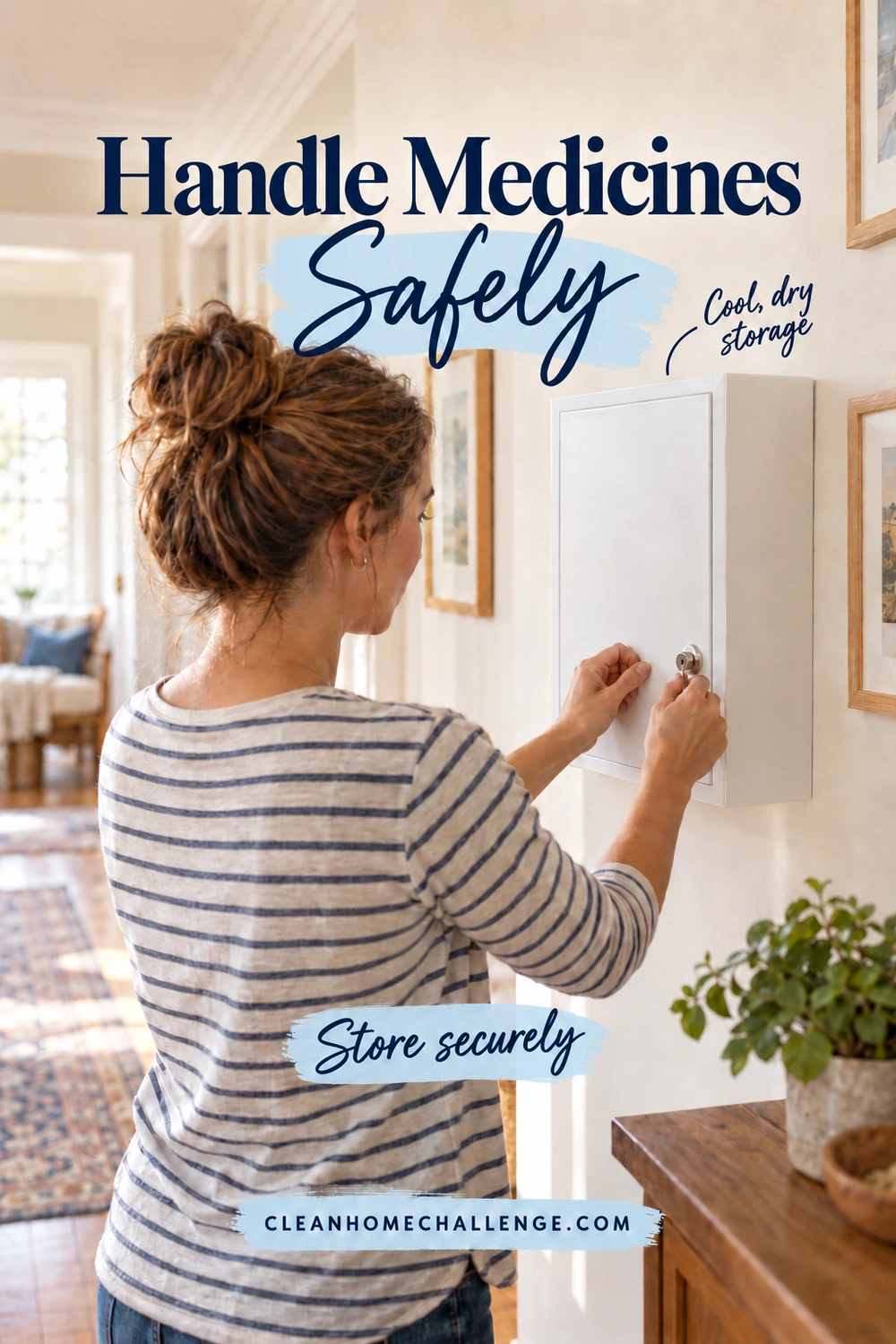
A bathroom cabinet is convenient, but shower heat and humidity can damage medicines. MedlinePlus recommends cool, dry storage, original containers, and following product-specific directions.
Move medicines to an appropriate secure location when their instructions allow. Keep them out of children’s sight and reach, with a child latch or lock as appropriate. Medicines requiring refrigeration or another special condition need their own labeled instructions followed. Ask a pharmacist if you are unsure.
Do not discard or change a current prescribed treatment as part of a tidy-up. Keep essential medicines available to the person who needs them. If packaging is damaged, labels are unreadable, or you are unsure whether a medicine is still needed, ask the pharmacist before deciding.
Use the correct disposal route
For most expired or unwanted medicines in the US, the FDA recommends a take-back location or prepaid mail-back option. Check what the collector accepts before traveling.
When take-back is unavailable, follow the medicine’s specific instructions and the FDA disposal guidance. Only medicines on the FDA flush list should be flushed under that guidance; do not routinely empty medicines into a sink or toilet. Household-trash disposal also has preparation steps, so do not simply tip pills into the bathroom bin.
Keep items awaiting disposal secure. Remove personal information from empty prescription packaging before discarding it. Used needles and lancets need a proper sharps container and local sharps-disposal arrangements, never loose trash or recycling. Outside the US, ask your pharmacist about the local system.
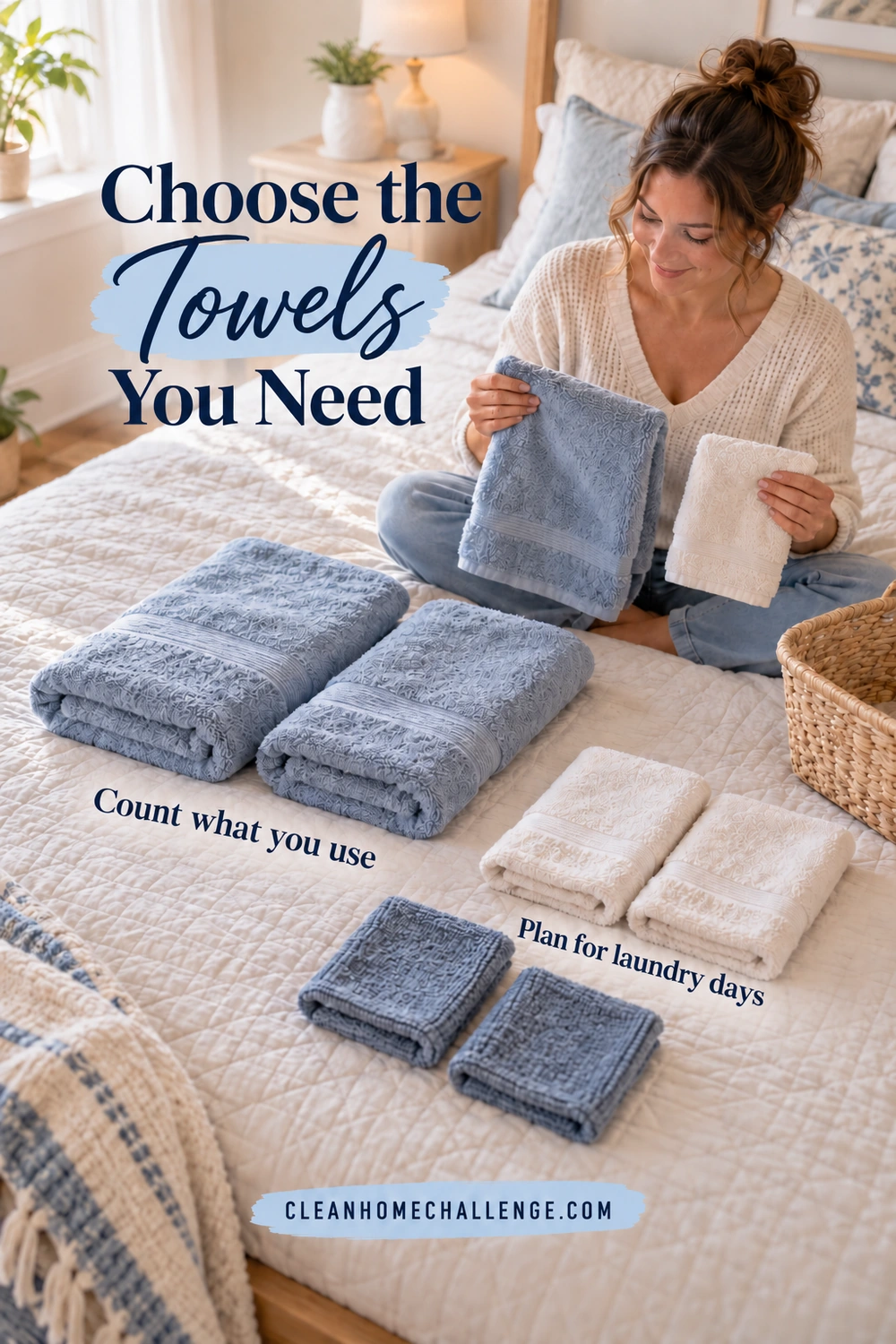
Choose the Towels You Need
Count the whole rotation
Gather towels from bathroom rails, linen shelves, bedrooms, gym bags, and the laundry. You may not need to move every towel physically; a quick count is enough if someone is using one.
Sort bath towels, hand towels, washcloths, guest towels, and utility towels separately. Keep the ones people reach for first, provided they are clean, absorbent, and in usable condition.
There is no single towel number that suits every family. Work from your laundry rhythm:
- Count the towels each person needs between laundry days.
- Add a clean spare for a delayed load or unexpected need.
- Add a realistic guest allowance based on who actually stays.
- Count hand towels and washcloths separately from bath towels.
For example, if one person normally gets through two bath towels between wash days, three gives them that rotation plus a spare. This is a storage example, not a rule about how often to wash. More frequent laundry, slow drying, frequent guests, or particular care needs change the number.
Decide what can leave
Separate towels that nobody chooses because they are uncomfortable, impractical, or badly worn. A faded towel can still be useful. A towel that remains unpleasant after appropriate washing and complete drying needs another decision.
Keep only a small, defined utility supply for spills or pet drying, stored away from face and bath linens. Turning every old towel into a rag simply moves the surplus.
Before donating, check the recipient’s current requirements. For example, the Humane Society of New York accepts clean, gently used towels without holes, while other shelters may pause linen donations. Never assume damaged towels are wanted. Check local textile-recycling rules for items unsuitable for donation.
Put towels away fully dry
Follow each towel’s care label and avoid overloading the washer. Whirlpool’s towel-care guidance emphasizes suitable wash and dry settings, correct detergent use, and complete drying before storage.
Choose one easy folding method and leave room to remove a towel without lifting the whole stack. Give in-use towels enough rail or hook space to dry. If stored towels become damp, relocate them to a drier cupboard and address the moisture source.
Clean and Organize Each Zone
Clean the empty space gently
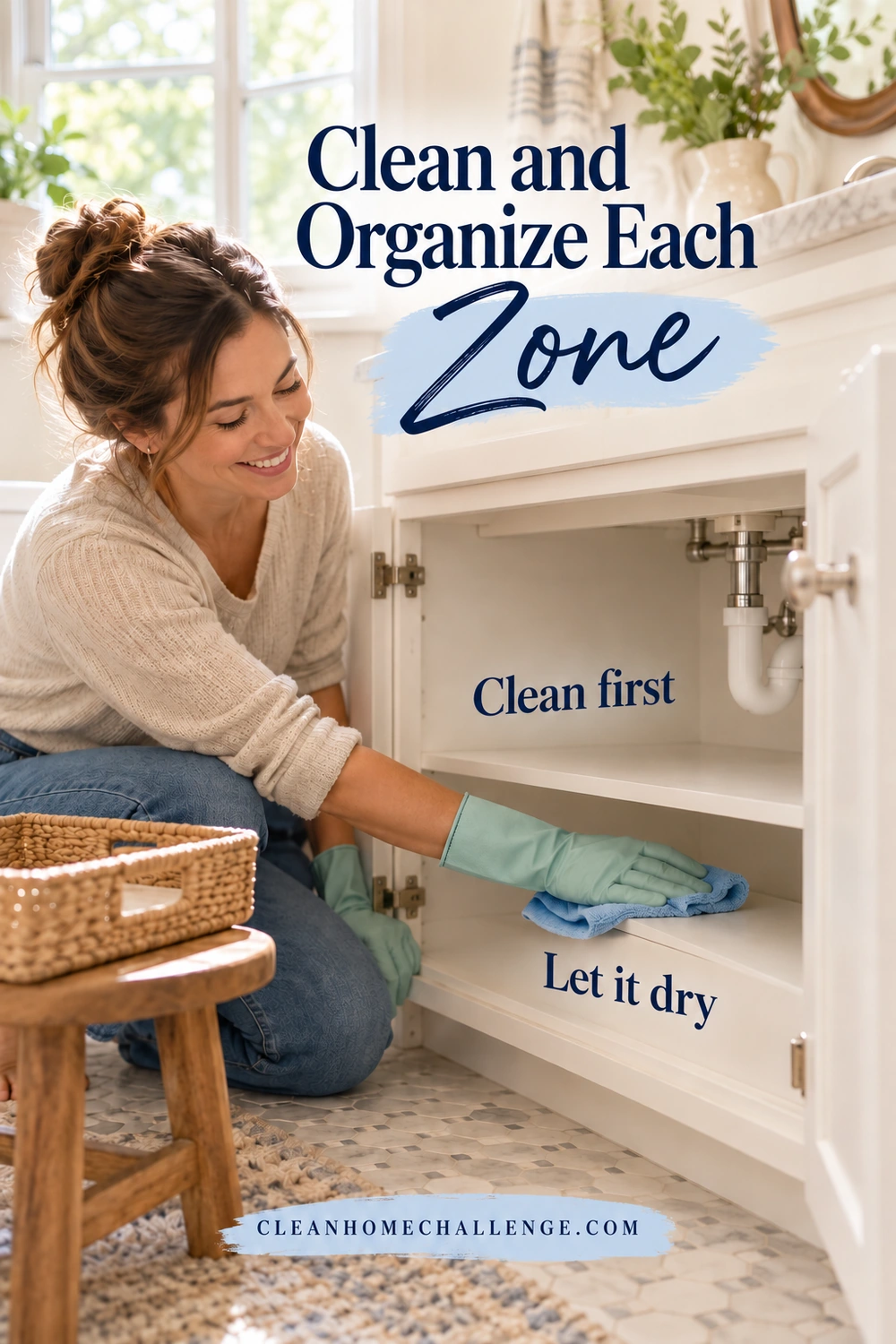
Remove loose hair and dust before wiping. Check the cabinet, countertop, tray, or shelf manufacturer’s care instructions, then use a compatible cleaner and clean cloth. Test an unfamiliar product in an inconspicuous spot. Avoid soaking cabinet joints or leaving water around edges and fittings.
For routine cleaning, the CDC recommends soap and water or a cleaner appropriate for the surface. Disinfection is an additional step when someone is sick or at increased risk, not an automatic requirement for every decluttering session. When needed, follow the product’s contact time and safety instructions.
Never mix cleaners. Ventilate and wear any protection the label requires. Keep cleaning products away from children and pets, and let shelves and containers dry before returning belongings.
Use separate cleaning cloths for toilet work and other areas. This guide to washing, drying, and replacing reusable cloths helps keep that system simple.
Give each space one clear job
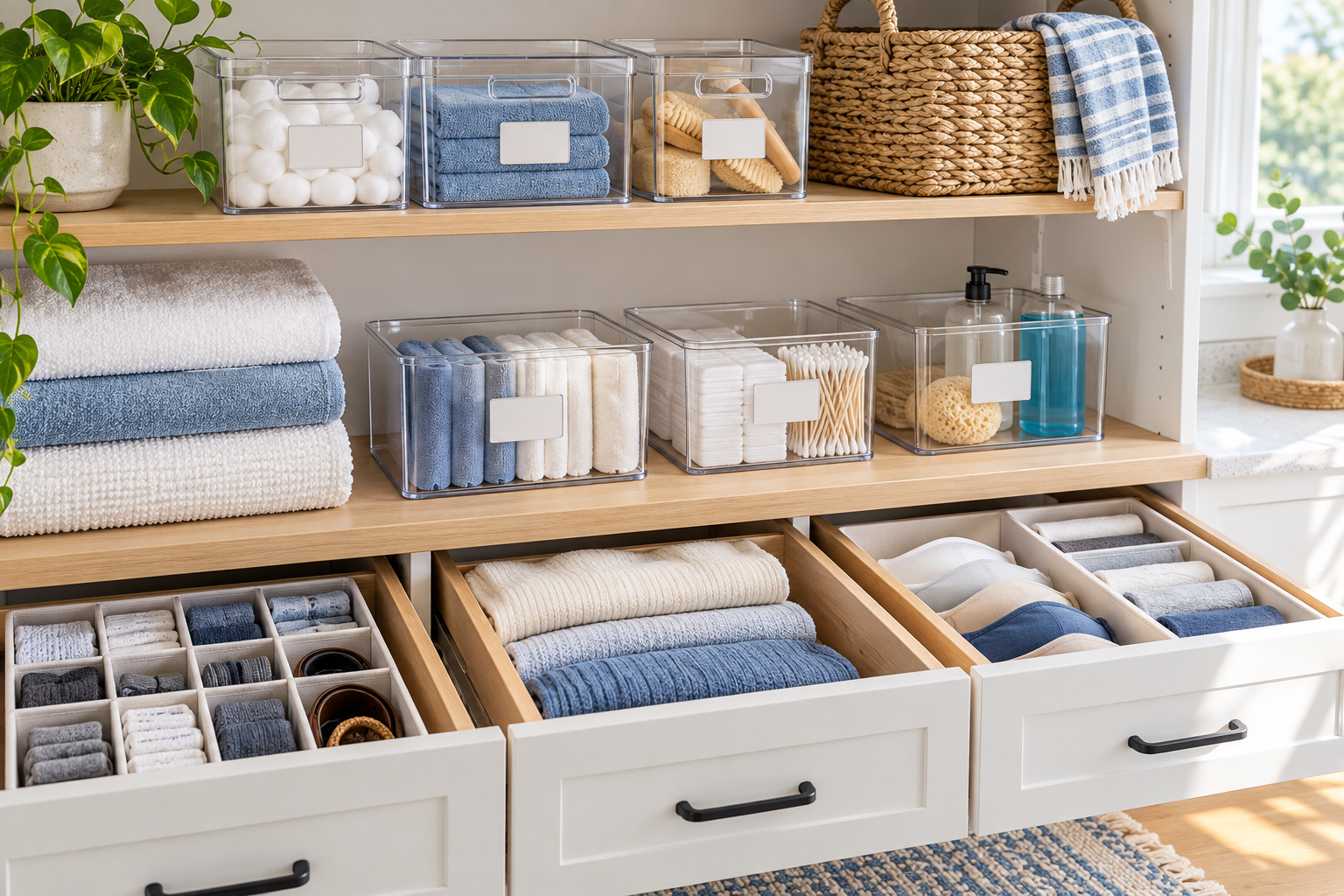
Counter: Keep the items that genuinely need to be there, such as hand soap and an everyday tray. Leave enough open surface for a quick wipe.
Shower: Store current-use products in a suitable draining holder. Keep backups elsewhere. Choose a holder that can be removed for cleaning and does not create a slipping hazard.
Drawers: Separate dental care, hair accessories, and daily grooming with dividers or containers you already own. Broad categories are easier to maintain than a tiny compartment for every item.
Backstock shelf: Put matching products together with older usable stock toward the front. Choose a sensible limit, such as one replacement of a regular essential, adjusted for household size and shopping frequency.
Towel shelf: Store the daily rotation within comfortable reach. Guest or occasional-use towels can live in another dry location if bathroom space is tight. For visitors, a small basket with fresh linens and a few appropriate unopened essentials is enough. Return unused supplies to their usual homes afterward.
Under the sink: Leave plumbing accessible and watch for leaks. Keep cleaners in original labeled containers and secured from children and pets. Do not use this space for medicines or items that need protection from dampness.
Hair tools: Follow the appliance instructions. Unplug, let tools cool, then store them away from water with cords loosely arranged. Conair’s dryer instructions illustrate these storage precautions.
Laundry: Position a hamper where clothes usually land, while keeping the doorway and walking route clear. Choose a place that does not crowd the towel-drying area.
Measure shelf height, cabinet openings, and plumbing clearance before buying storage. Try the arrangement for a week first. The most useful organizer is one that lets people put things away without unpacking everything else.
Avoid Common Decluttering Mistakes
Buying containers before reducing the contents
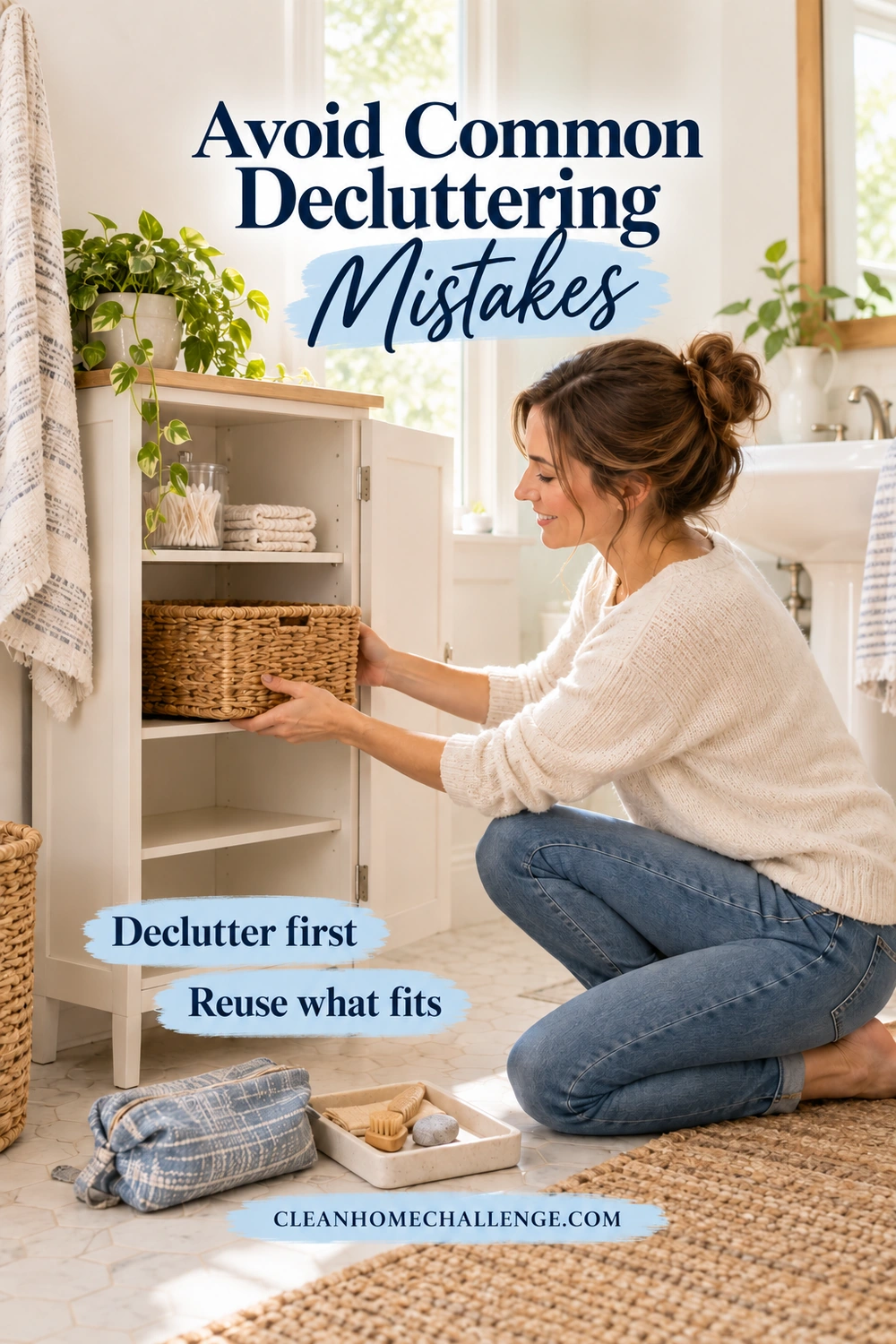
Attractive baskets can hide duplicates and make a small cupboard harder to use. Sort first, reuse what fits, and buy only for a clear remaining problem. Check that any new container is easy to clean and can actually be lifted out.
Treating every duplicate as waste
A family can need several products in the same category. Keep enough for actual use and a manageable reserve. If a multipack saves money and fits your space, keep the unopened stock together where it will be checked before shopping.
Keeping products because they were expensive
The purchase has already happened. Keeping something unusable, uncomfortable, or unwanted does not recover the cost. Let the experience guide the next purchase: try a smaller size, decline samples you do not want, or finish a current favorite before buying another.
Discarding other people’s belongings
Ask each person to review their own items and agree on a shared-space limit. Let children help count or fold clean towels with supervision; adults should handle medicines, chemicals, sharp tools, and hot styling equipment.
Creating a permanent exit pile
Put accepted donations on the calendar and make a specific plan for special disposal. Return relocated items to their proper homes. Keep anything hazardous secure while it waits, and avoid leaving boxes where they block the bathroom or hallway.
Removing useful reminders
Some people put things away more reliably when they can see them. A shallow open tray may work better than a lidded box. Use visible storage for appropriate everyday items while keeping hazardous items secured.
Keep Your Bathroom Easy to Use
A small daily reset
After getting ready, return products to their homes, put empties in the appropriate bin, and hang towels so they can dry. Deal with obvious drips before they become sticky rings. Give every regular user one simple responsibility, such as clearing their tray or hanging their towel.
Aim for a minute or two when practical. On a busy day, just clear enough space to use the sink comfortably.
A weekly bathroom check
Use Tuesday’s CHC bathroom routine, or whichever day fits your household, to:
- Return items that have drifted onto the counter.
- Check whether any “use next” product is finished.
- Restock everyday supplies from the backstock area.
- Check towels and mats and wash those that are due.
- Wipe storage trays and check under the sink for dampness.
- Empty the trash and finish any ready-to-go donation plan.
If mats need attention, follow the separate bath mat washing guide rather than assuming they can be treated like ordinary towels.
A monthly stock check
Before shopping, glance through backups, read approaching expiration dates, and check whether the current storage still works. Note what actually ran out and what stayed untouched. Keep the review short enough to repeat.
If the system slips, return to one zone. You do not need to empty the entire bathroom again. Clear the shower ledge, choose the next bottle to finish, or straighten the towel shelf.
Your bathroom decluttering checklist has done its job when people can find what they need, towels have room to dry, and wiping the counter feels straightforward. A practical setup that survives a normal family week is worth keeping.

CLEANERS CLUBHOUSE
Ready to Clear the Clutter One Step at a Time?
Join the 30-Day Declutter Challenge and work through your home in small, achievable steps. The Cleaners Clubhouse includes the plan, printable support and encouragement to help you keep going.