THIS POST MAY CONTAIN AFFILIATE LINKS. PLEASE READ MY DISCLOSURE FOR MORE INFO.
Air fryers make quick family meals much easier, but the combination of hot circulating air, crumbs, oil and food splatter means grease can build up surprisingly fast. If you leave it too long, the basket can become sticky, the inside can smell, and old residue may start smoking when the appliance heats up.
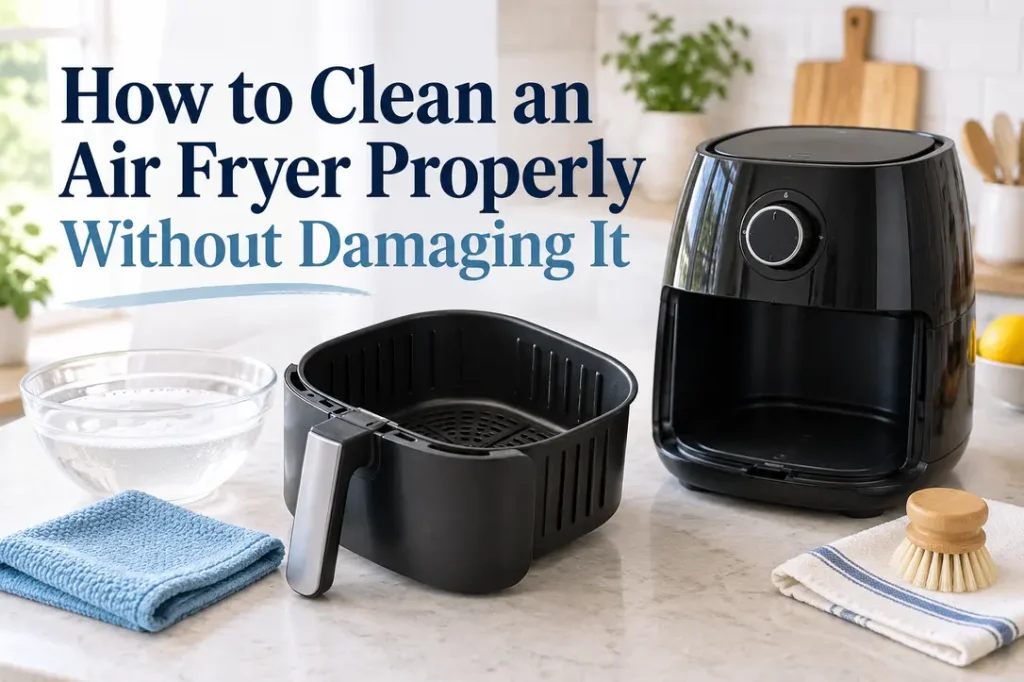
The safest way to clean an air fryer is also the simplest: unplug it, let it cool, remove the washable parts, use warm water with dishwashing liquid and a soft sponge, keep the main unit out of water, and follow the instructions for your exact model before putting anything in the dishwasher.
Important: Air fryer designs vary. Your model manual should always override general advice, especially for dishwasher-safe parts, removable heating-element guards, liners and any cleaning instructions for the inside of the unit.
Disclosure: This post may contain affiliate links. As an Amazon Associate, Clean Home Challenge earns from qualifying purchases. If you make a purchase through these links, we may earn a small commission at no extra cost to you. This helps us keep creating practical cleaning tips, routines and resources for busy families! 🧽
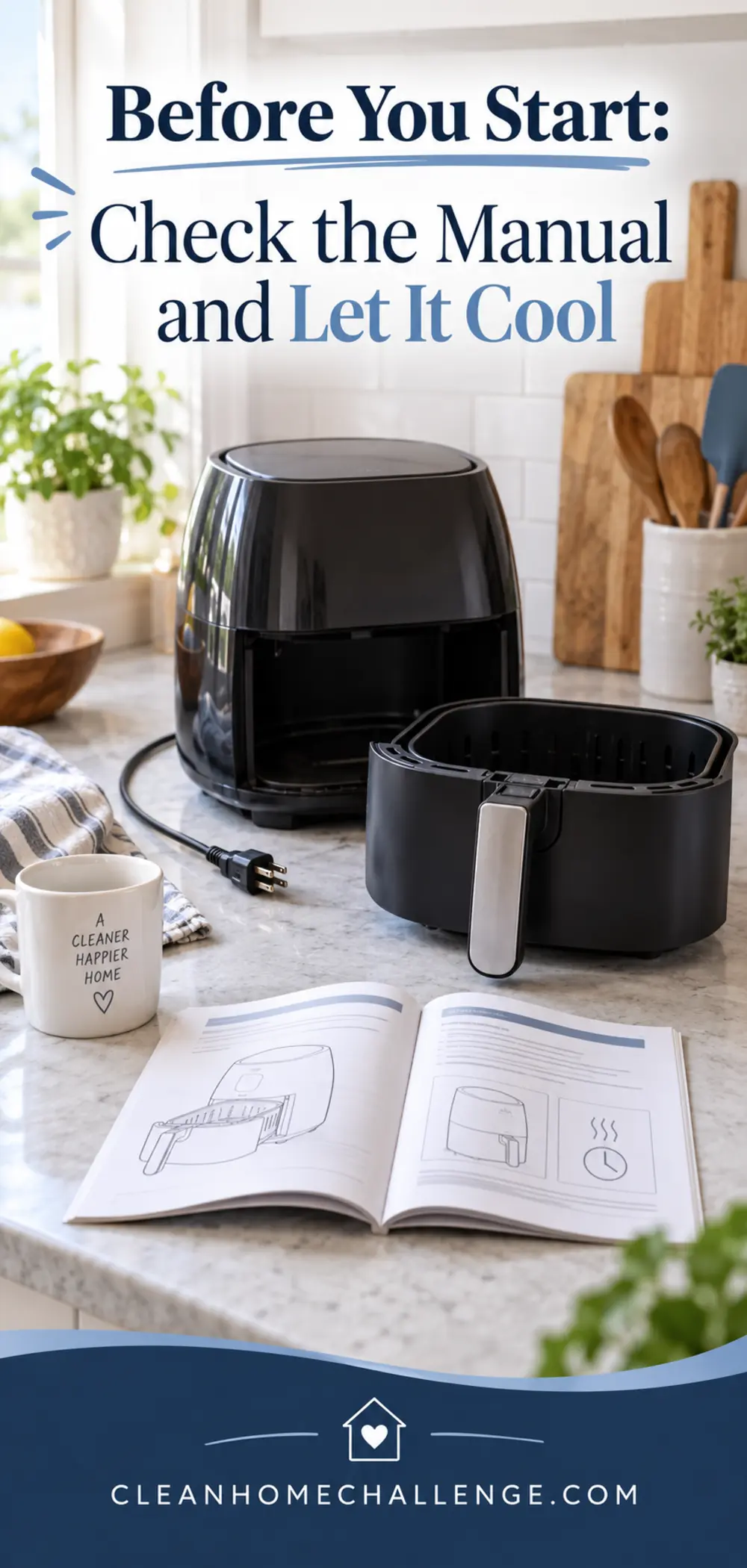
Before You Start: Check the Manual and Let It Cool
Turn the air fryer off, unplug it from the wall and give it enough time to cool completely before you start. A basket can feel cool at the handle while the metal around the cooking chamber or heating element is still hot.
Before removing anything beyond the normal basket, tray or crisper plate, check your manual. Air fryers can look very similar on the outside while having very different cleaning instructions. One model may allow the basket in the dishwasher, another may recommend handwashing, and an oven-style model may have trays or crumb pans that need separate care.
Take a quick look at the parts you are dealing with:
- Main unit: contains the electrical components, fan and heating system and should never be immersed in water.
- Basket or drawer: usually removable and commonly has a non-stick coating.
- Crisper plate or rack: lifts food so hot air can circulate.
- Accessories: grill plates, racks, trays or dividers may have their own cleaning instructions.
- Heating area: sits inside the main unit and needs careful, low-moisture cleaning only when the appliance is unplugged and cold.
If you no longer have the paper manual, search the manufacturer’s support site using the model number printed on the appliance label.
What You Need to Clean an Air Fryer
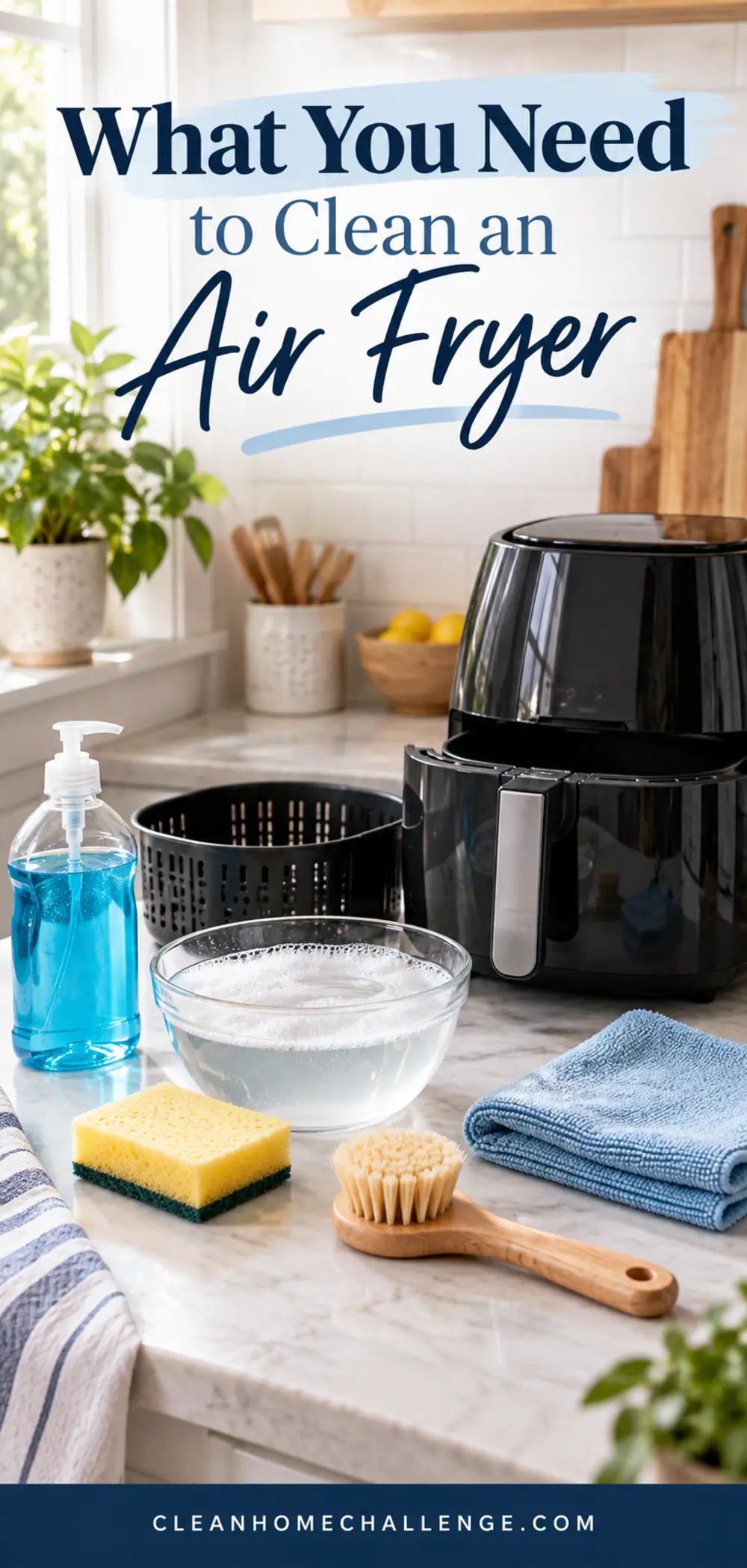
You do not need a complicated cleaning kit. For most routine air fryer cleaning, gather:
- warm water;
- grease-cutting dishwashing liquid;
- a soft sponge or non-scratch dish cloth;
- a soft-bristled dish brush or detail brush;
- two clean microfibre cloths;
- an old tea towel or drying mat;
- a soft toothbrush-style brush for small crevices if needed;
- your air fryer manual or online model instructions.
Avoid steel wool, metal scrapers, abrasive powders, oven cleaner and harsh scouring pads unless your manufacturer specifically says a product is safe. The coating on baskets and crisper plates can be damaged by aggressive scrubbing, and strong spray products can reach electrical areas if they are used carelessly.
For baked-on residue, time is usually more useful than force. A short soak in warm soapy water can soften stuck food so you can lift it with a soft sponge instead of scraping at the coating.
Clean the Basket and Crisper Plate After Use
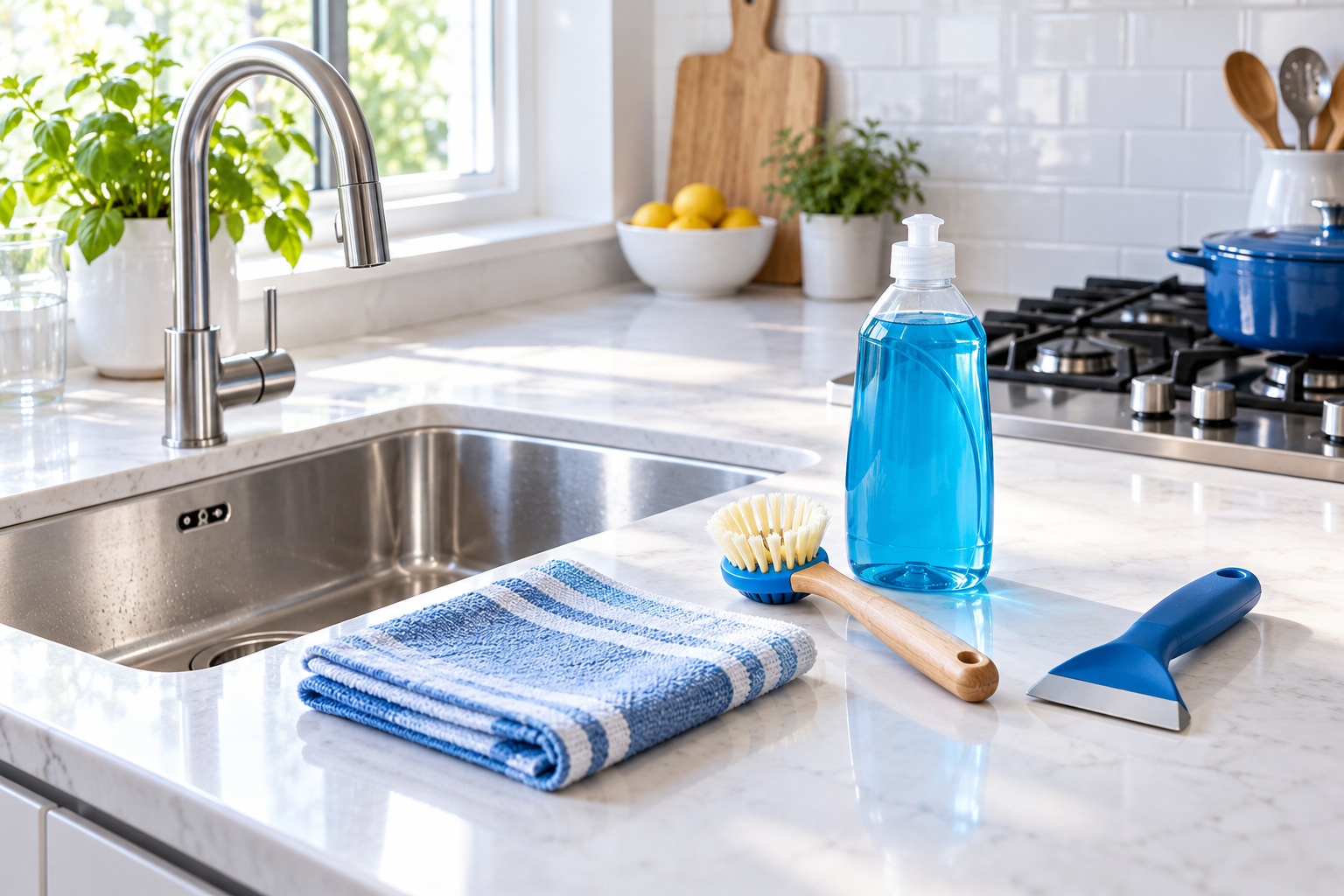
Once the appliance is cool, remove the basket, drawer and crisper plate. Tip crumbs into the bin first so they do not turn into soggy debris in the sink.
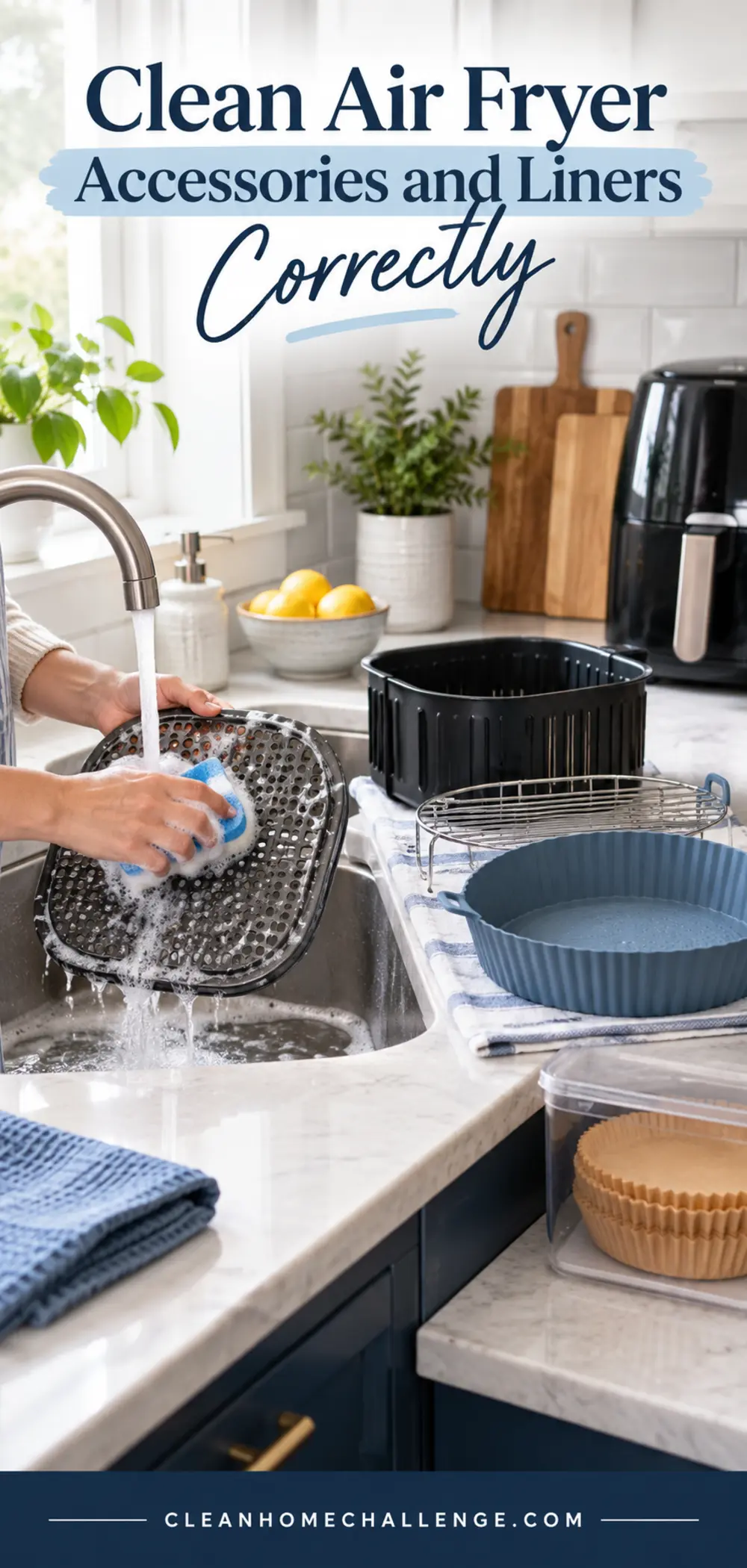
Wash the removable parts in warm water with dishwashing liquid and a soft sponge. Work around the corners, ventilation slots and the underside of the crisper plate, where grease can hide. A soft brush is useful for textured surfaces and small holes.
Do not assume that every removable part belongs in the dishwasher. Some manufacturers approve selected baskets and accessories for dishwasher use, while others recommend handwashing or warn that repeated dishwasher cycles can cause faster cosmetic wear. If the manual is unclear, gentle handwashing is the cautious option.
Rinse well so no detergent residue remains, then leave the parts to air-dry or towel-dry them thoroughly. Do not refit wet parts into the main unit.
Remove Baked-On Grease Without Scratching
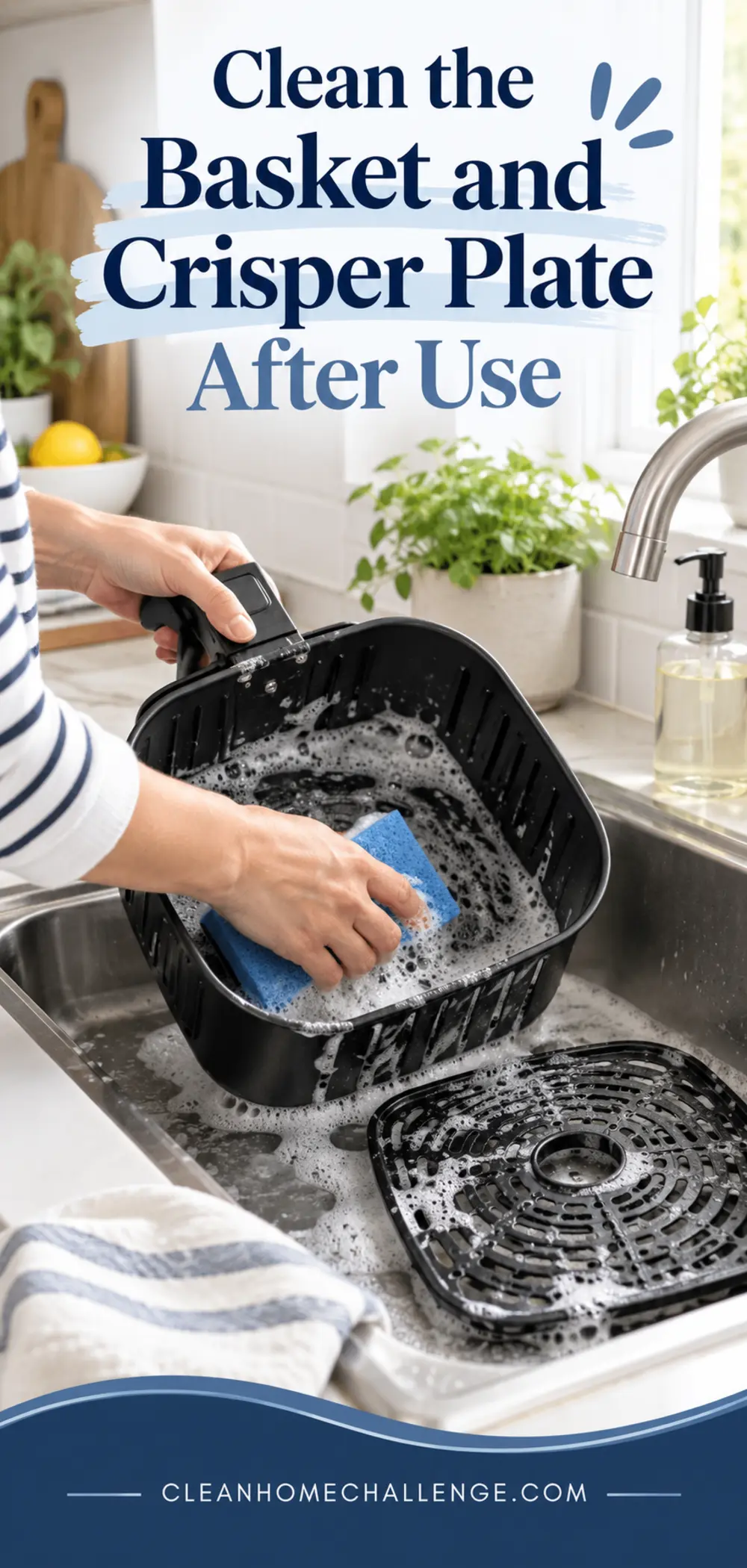
If the basket is sticky or has dark food residue that does not lift with a normal wash, resist the urge to reach for a harsh scourer.
- Fill the removable basket or pan with warm to hot tap water and a small amount of dishwashing liquid.
- Let it soak for about 5 to 10 minutes to soften food residue. Very stubborn buildup may need a little longer, provided your manual allows soaking.
- Use a soft sponge or non-scratch brush to loosen the softened residue.
- Pay attention to seams, corners and the underside of the crisper plate.
- Rinse thoroughly and repeat with fresh soapy water if the surface still feels greasy.
Philips specifically advises against metal utensils and abrasive cleaning materials on its non-stick air fryer pans and baskets because they can damage the coating. That is a sensible rule for any coated basket unless your manufacturer tells you otherwise.
If the non-stick surface is peeling, blistered, deeply scratched or flaking, stop scrubbing it. Check the manufacturer’s replacement-part guidance rather than trying to restore a damaged coating with stronger chemicals.
Clean Inside the Air Fryer and Heating Element Safely
Grease can splatter above the basket and collect around the cooking chamber or near the heating element. This is the part of the job where less moisture is better.
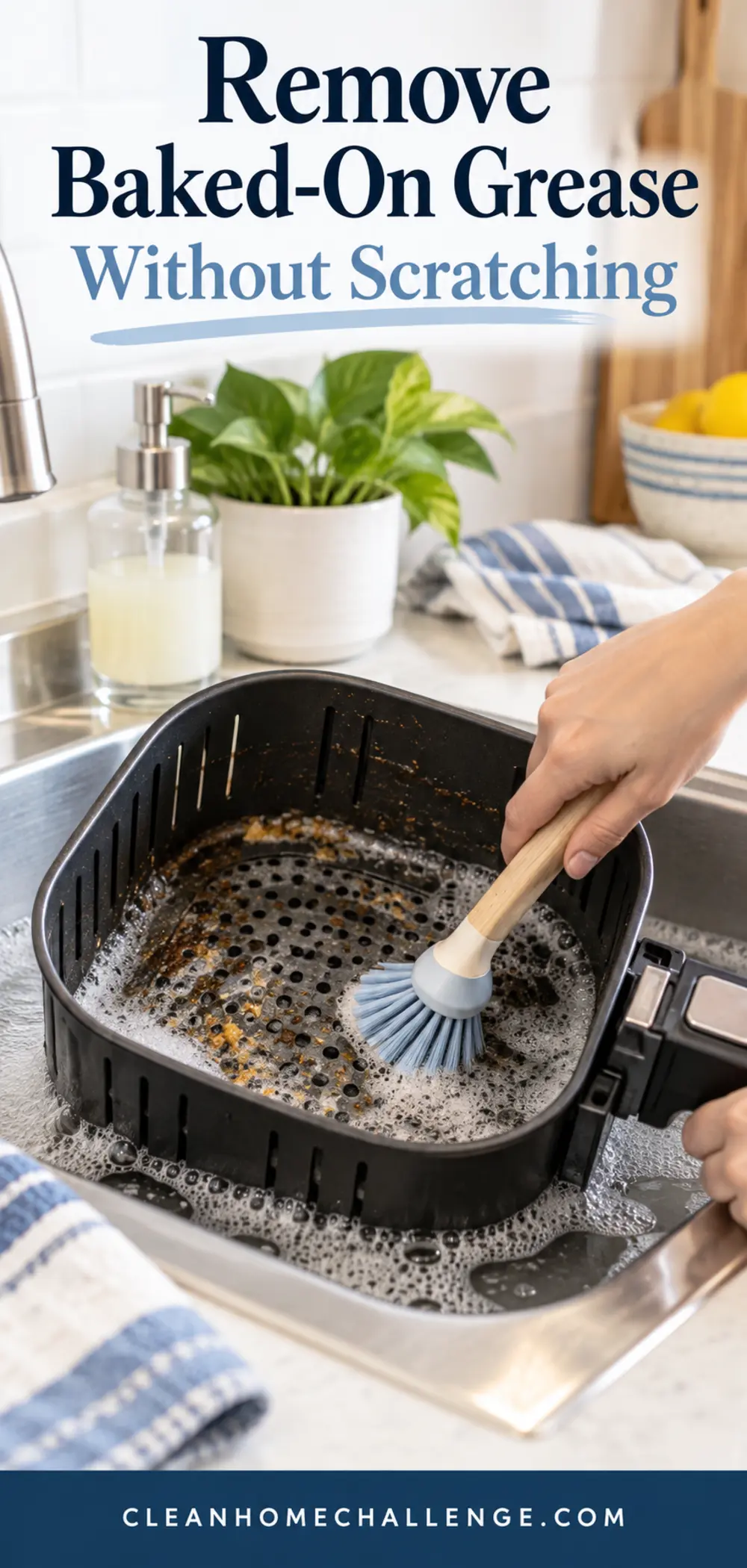
Make sure the air fryer is unplugged and completely cold. Remove the basket and any parts your manual says are removable. Use a damp—not dripping—microfibre cloth or soft sponge to wipe smooth, accessible interior surfaces.
For loose crumbs or food residue around the heating area, use a soft brush. Some manufacturers specifically allow a cleaning brush on the heating element, while others give different instructions, so follow your model guide. Never pour water into the main unit and do not spray cleaner directly into vents, the fan area, electrical seams or the heating assembly.
If the appliance has to be turned or positioned differently to access the inside, only do this when your manufacturer says it is safe and place it on a soft, stable surface. Never force tools into the fan housing.
Persistent smoking, a burning smell or heavy grease where you cannot safely reach it is a reason to stop and check the manual or contact the manufacturer rather than dismantling the appliance yourself.
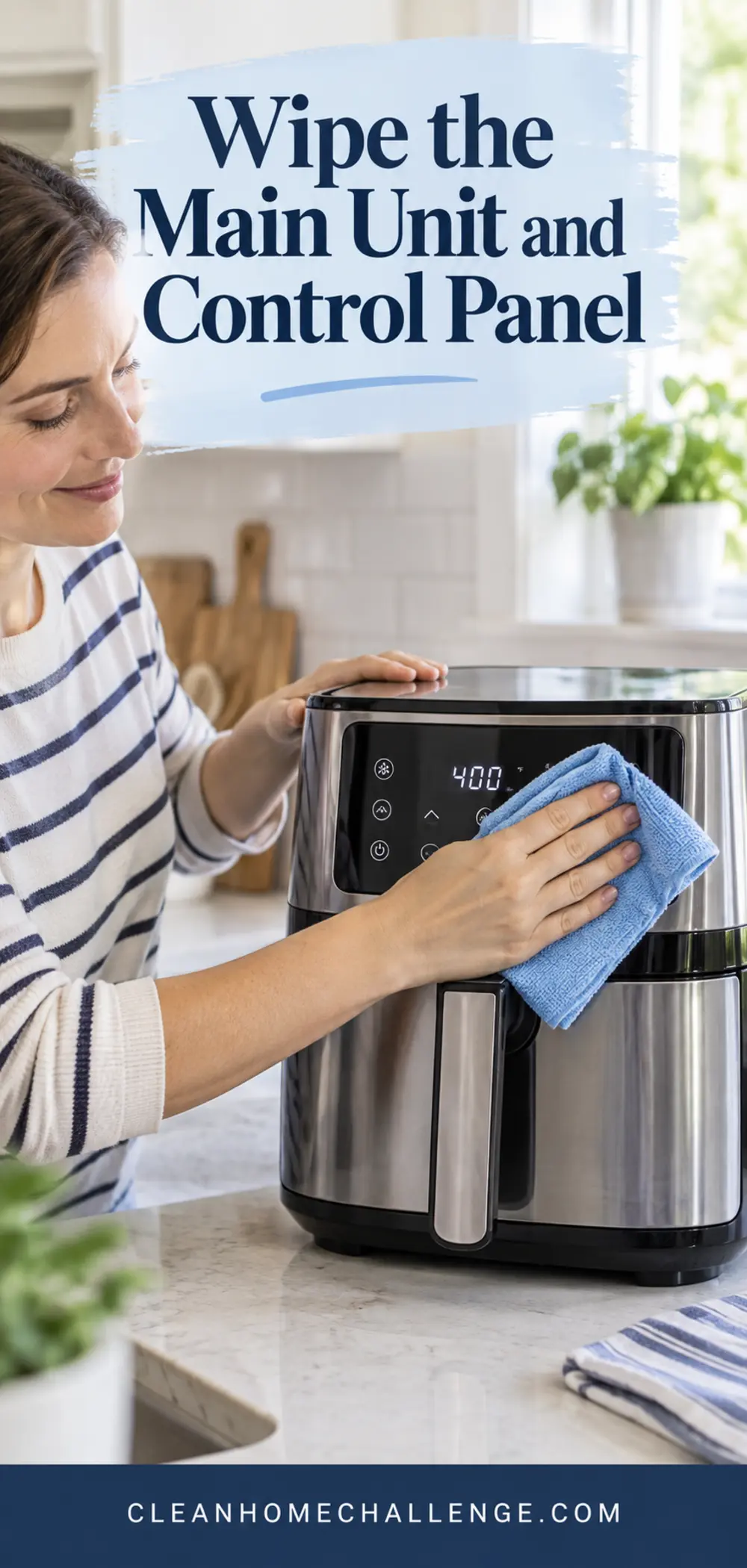
Wipe the Main Unit and Control Panel
The outside of the air fryer usually needs very little moisture. Wipe the body with a well-wrung microfibre cloth. If there are greasy fingerprints, add a tiny amount of dishwashing liquid to the cloth, then follow with another damp cloth to remove residue.
Keep water away from the plug, cord connection, control panel edges and vents. Do not spray cleaner directly onto the appliance. Apply anything you use to the cloth first so you can control exactly where the moisture goes.
Dry the exterior with a clean cloth. For stainless-steel trim, wipe in the direction of the visible grain and dry straight away to reduce streaks.
Clean Air Fryer Accessories and Liners Correctly
Extra racks, skewers, grill plates, dividers and baking accessories should be cleaned according to the instructions for that specific accessory. Do not assume the care directions for the main basket apply to everything that came in the box.
If you use reusable silicone liners, wash them after greasy foods and make sure they are completely dry before storage. They can trap oil underneath, so the basket itself still needs checking and cleaning.
Paper liners can make some messes easier to lift out, but they should only be used when your air fryer manufacturer permits them. Loose paper can move in strong airflow and may contact the heating element. Never preheat an empty air fryer with a loose paper liner inside, and do not cover ventilation areas that the manual says must remain open.
A liner reduces some splatter; it does not replace cleaning. Grease can still travel around the basket, drawer and upper cooking chamber.
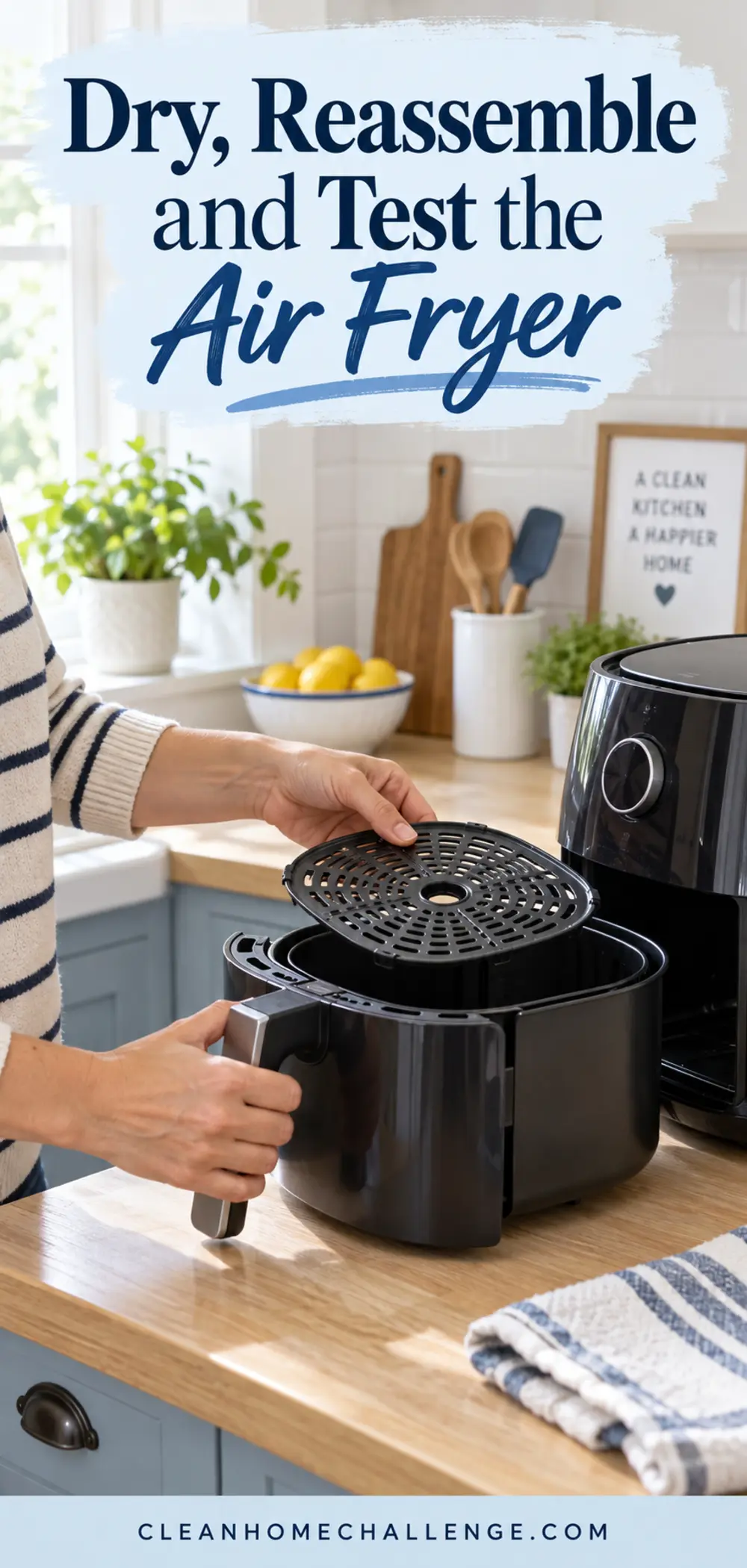
Dry, Reassemble and Test the Air Fryer
Before putting the appliance back together, check that the basket, crisper plate, accessories and interior surfaces you cleaned are fully dry.
Reinstall the crisper plate and other removable parts in their correct positions. Check that nothing is sitting crooked or blocking the basket from sliding in normally.
Wipe the cord if necessary with a dry cloth and make sure the plug itself has stayed dry. Return the air fryer to a stable surface with the ventilation clearances required by the manufacturer.
You generally do not need to run an air fryer empty after every clean. If your manual specifically recommends a short empty heating cycle after interior cleaning, follow that model-specific instruction. Otherwise, simply allow everything to dry completely before the next normal use.
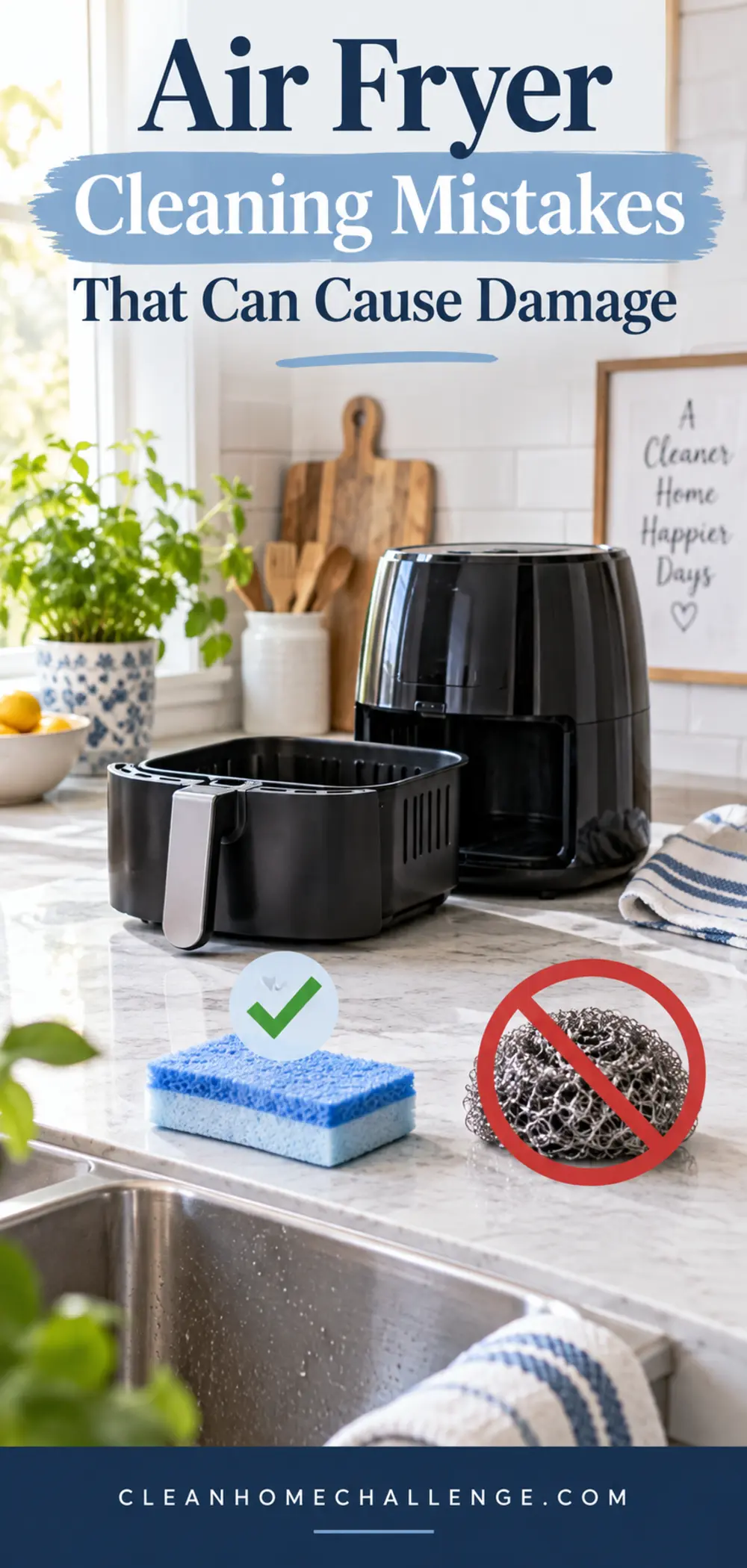
Air Fryer Cleaning Mistakes That Can Cause Damage
- Putting the main unit in water: the appliance body contains electrical components and should never be immersed.
- Cleaning while it is still hot: hot metal can burn you and sudden temperature changes are unnecessary.
- Using steel wool or abrasive scourers: these can scratch or remove non-stick coatings.
- Scraping baked-on food with metal utensils: soak first and use a soft brush or sponge.
- Spraying cleaner inside the appliance: overspray can reach the fan, heating system and electrical seams.
- Assuming every basket is dishwasher-safe: check the exact model instructions first.
- Refitting damp parts: dry removable parts thoroughly before reassembly.
- Ignoring grease near the heating area: old residue can contribute to smoke and odours when the unit heats.
- Using liners carelessly: loose paper can lift in the airflow and airflow openings should not be blocked.
- Trying to dismantle the fan or electrical housing: leave non-user-serviceable areas alone and seek manufacturer support if they are heavily contaminated.
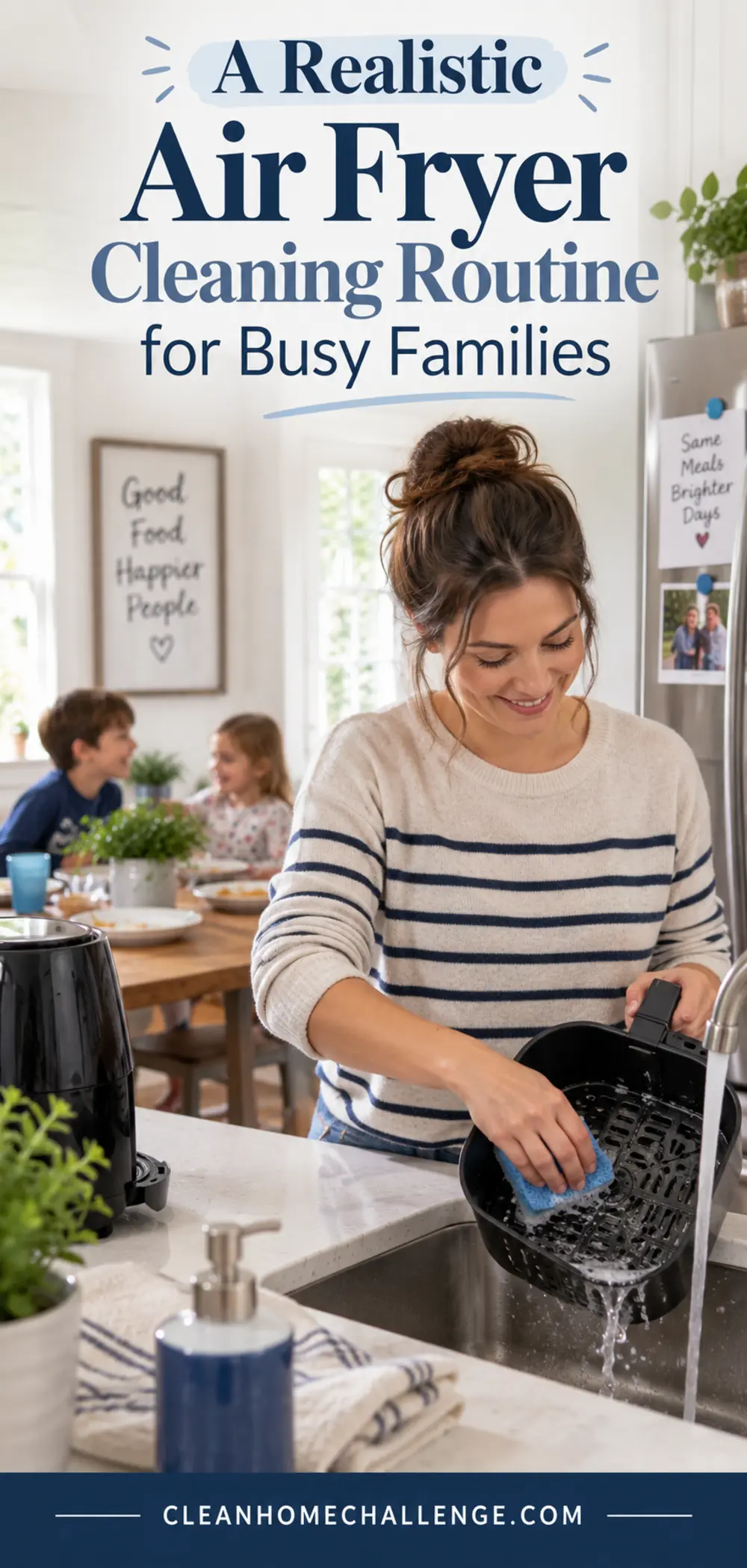
A Realistic Air Fryer Cleaning Routine for Busy Families
The easiest way to avoid a difficult deep clean is to deal with grease while it is still fresh.
After a messy or greasy cook
- Let the appliance cool.
- Empty crumbs and loose food.
- Wash the basket and crisper plate.
- Wipe any obvious splatter from accessible interior surfaces.
- Dry everything before reassembly.
After a light, dry cook
Check the basket rather than automatically creating extra work. If there are only a few dry crumbs, remove them and wipe the basket as your manual allows. If there is grease or food residue, wash it properly.
Every few weeks
How often you need a deeper clean depends on what you cook. Check the upper interior, heating area, vents you can safely reach, outside of the unit and the underside of the basket. A family cooking bacon, sausages or marinated foods frequently will usually see buildup faster than a household mostly reheating dry foods.
Add the air fryer to your Monday kitchen check so it becomes a small routine task instead of a forgotten appliance that eventually needs an hour of scrubbing.
CLEANERS CLUBHOUSE
Make Kitchen Cleaning Feel More Manageable
Turn Monday into your kitchen reset day with a clear routine you can follow. The Cleaners Clubhouse gives you practical cleaning guidance, printable support and monthly challenges to help you stay consistent.
Air Fryer Cleaning Questions Busy Families Often Ask
Can I put my air fryer basket in the dishwasher?
Maybe. Some current Ninja, Philips, Instant Pot and other models have dishwasher-safe baskets or accessories, while other models recommend handwashing or have parts that can wear more quickly in a dishwasher. Check the instructions for your exact model rather than relying on the brand name alone.
Can I soak an air fryer basket overnight?
A short warm-soapy-water soak is usually enough for stuck food. Only soak for longer if your manufacturer allows it, especially if the basket has seams, removable handles or coated parts.
How do I get sticky grease off an air fryer?
Start with warm water, dishwashing liquid and contact time. Let removable parts soak, then use a non-scratch sponge or soft brush. Repeat with fresh water rather than escalating straight to abrasives.
How do I clean the heating element?
Unplug the appliance, let it cool completely and use only the method in your manual. Some manufacturers permit a soft cleaning brush for residue. Keep liquids controlled and never spray directly into the heating or fan area.
Why does my air fryer smoke after I clean it?
Check for remaining grease or food residue around the basket, pan and accessible heating area, and make sure no wet cleaning product was left behind. If smoking persists after the appliance is clean and correctly assembled, stop using it and consult the manufacturer.
Can I use baking paper or a liner?
Only if your model instructions permit it. Do not place loose paper in an empty preheating air fryer, keep required airflow openings clear and make sure food safely holds the liner in place.
Keep Your Air Fryer Cleaner With Less Work
Air fryer cleaning is much easier when it is treated as a quick kitchen reset rather than a rescue job. Let the appliance cool, wash grease from removable parts before it bakes on again, wipe accessible splatter with controlled moisture and protect the non-stick coating from harsh tools.
The most important habit is checking your manual instead of assuming every air fryer is the same. Dishwasher advice, accessory care and heating-element access vary by model, but the basic principles stay consistent: unplug, cool, clean gently, keep the main unit dry and dry every removable part before it goes back in.
Research notes
This guide was checked against current manufacturer cleaning guidance. Philips advises warm water, washing-up liquid and a soft sponge for coated baskets, a short soak for stuck residue, and avoiding metal or abrasive materials. Ninja’s AF100 owner guide instructs users to unplug before cleaning, never immerse the main unit, soak stuck-on residue in warm soapy water and use a cleaning brush on the heating element. Instant Pot guidance shows why model-specific instructions matter: some Vortex models advertise dishwasher-safe baskets, while its general FAQ gives different care directions for some removable baskets and accessories. Always use the manual for the model in your home as the final authority.
Sources: Philips Airfryer cleaning guidance; Ninja AF100 Series Owner’s Guide; Instant Pot FAQs.