THIS POST MAY CONTAIN AFFILIATE LINKS. PLEASE READ MY DISCLOSURE FOR MORE INFO.
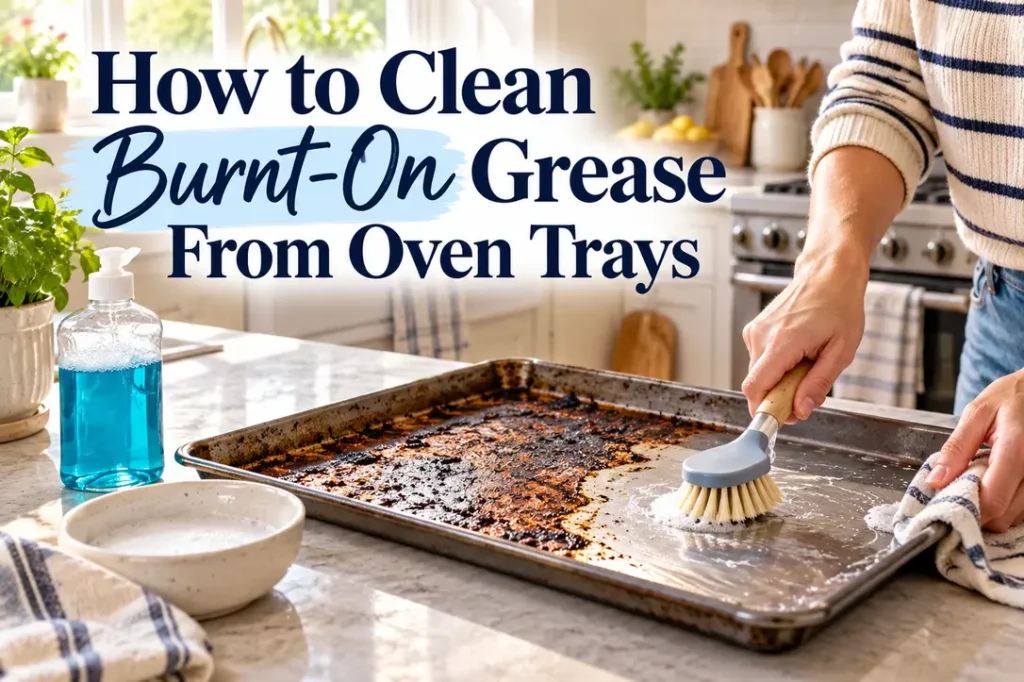
An oven tray with dark, baked-on grease can make a quick wash feel like a major job. You do not need to scrub it until every mark vanishes. The useful goal is to remove loose food and sticky or raised grease without damaging the tray’s surface. Start with warm soapy water, give it time to work, then choose the gentlest tool that actually lifts the buildup.
First, check whether the tray is bare metal, nonstick-coated, enameled, or another finish. That choice matters more than any viral cleaning hack. A metal scourer that seems harmless on one pan can ruin a coating on another. Set aside around 10 minutes of hands-on work plus a 15–30 minute soak; a badly neglected tray may need a second round.
Disclosure: This post may contain affiliate links. As an Amazon Associate, Clean Home Challenge earns from qualifying purchases. If you make a purchase through these links, we may earn a small commission at no extra cost to you. This helps us keep creating practical cleaning tips, routines and resources for busy families! 🧽
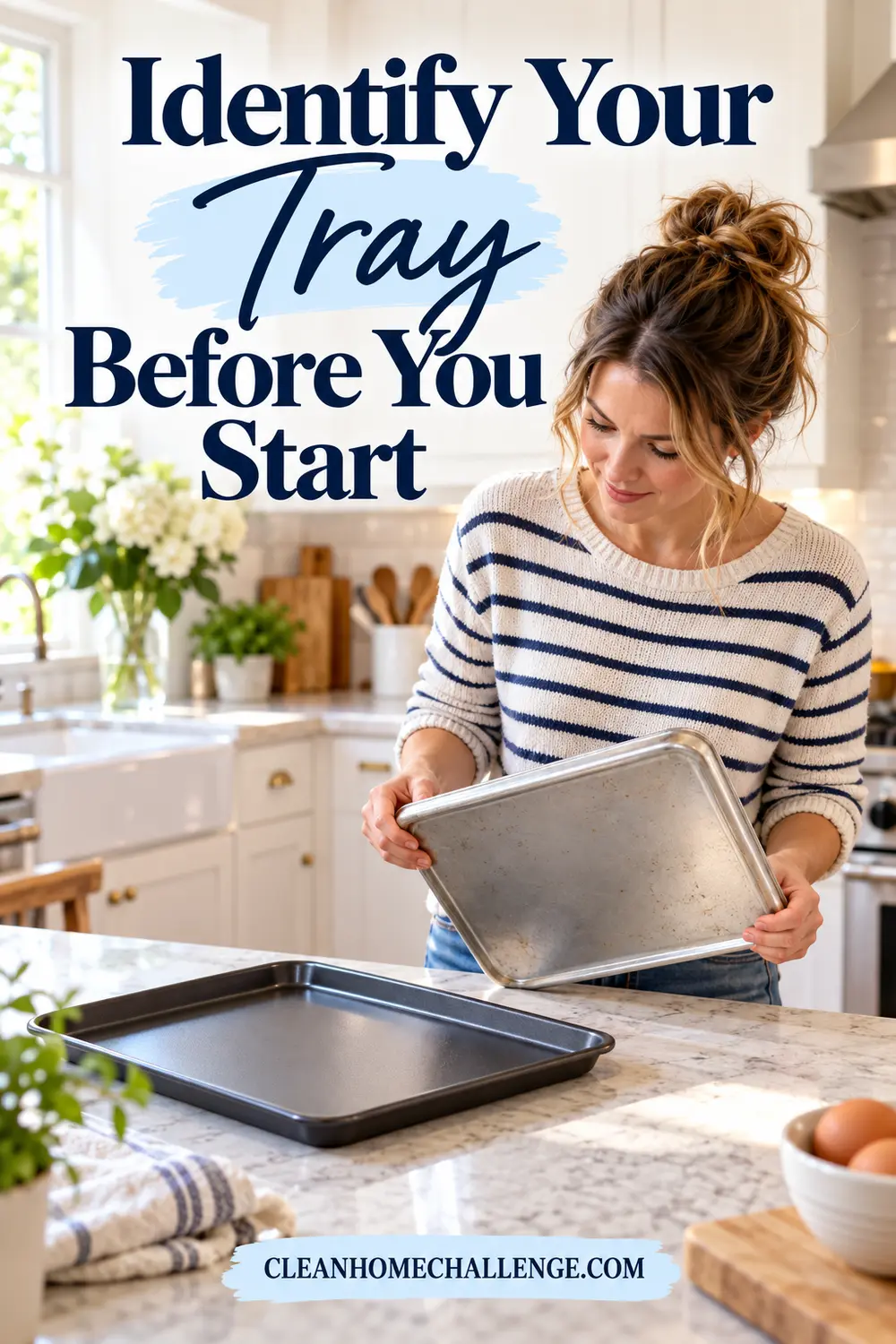
Identify Your Tray Before You Start
Look at the tray’s cooking surface, underside, label, or the manufacturer’s care page. A shiny silver sheet pan may be uncoated aluminum or stainless steel. A smooth dark tray often has a nonstick coating, but color alone is not proof. Some trays have enamel or a textured release finish. If you cannot identify it, use the gentlest nonstick method until you can check.
Do not confuse discoloration with removable grease. A flat brown patina can remain after a tray is clean; tacky, uneven, or raised deposits need attention. Nordic Ware says dishwasher-related discoloration on its natural aluminum sheet pans is cosmetic, while USA Pan’s care instructions advise hand washing and avoiding harsh abrasives. The instructions for your specific tray take priority. Nordic Ware care · USA Pan care
Gather Simple, Surface-Safe Supplies
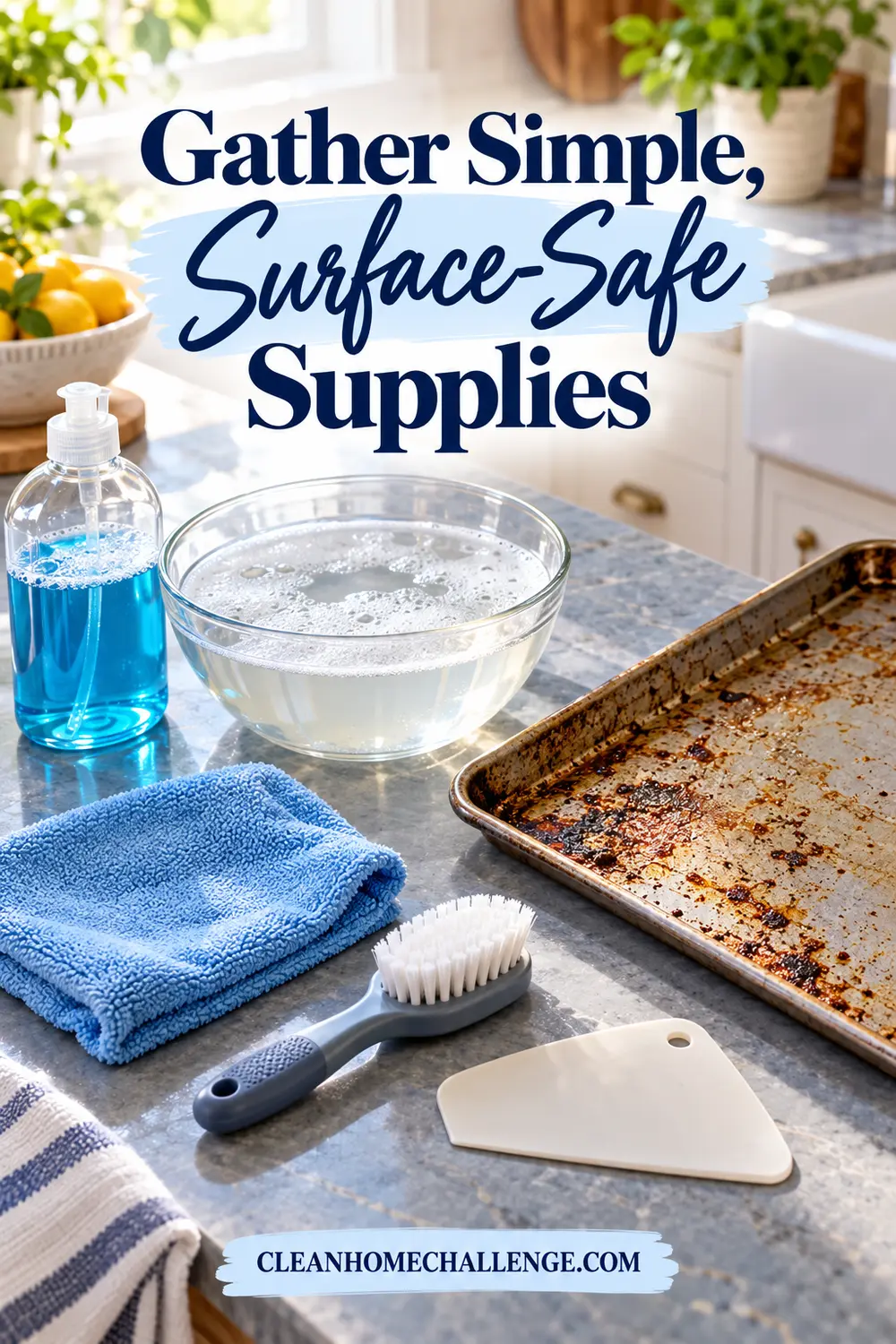
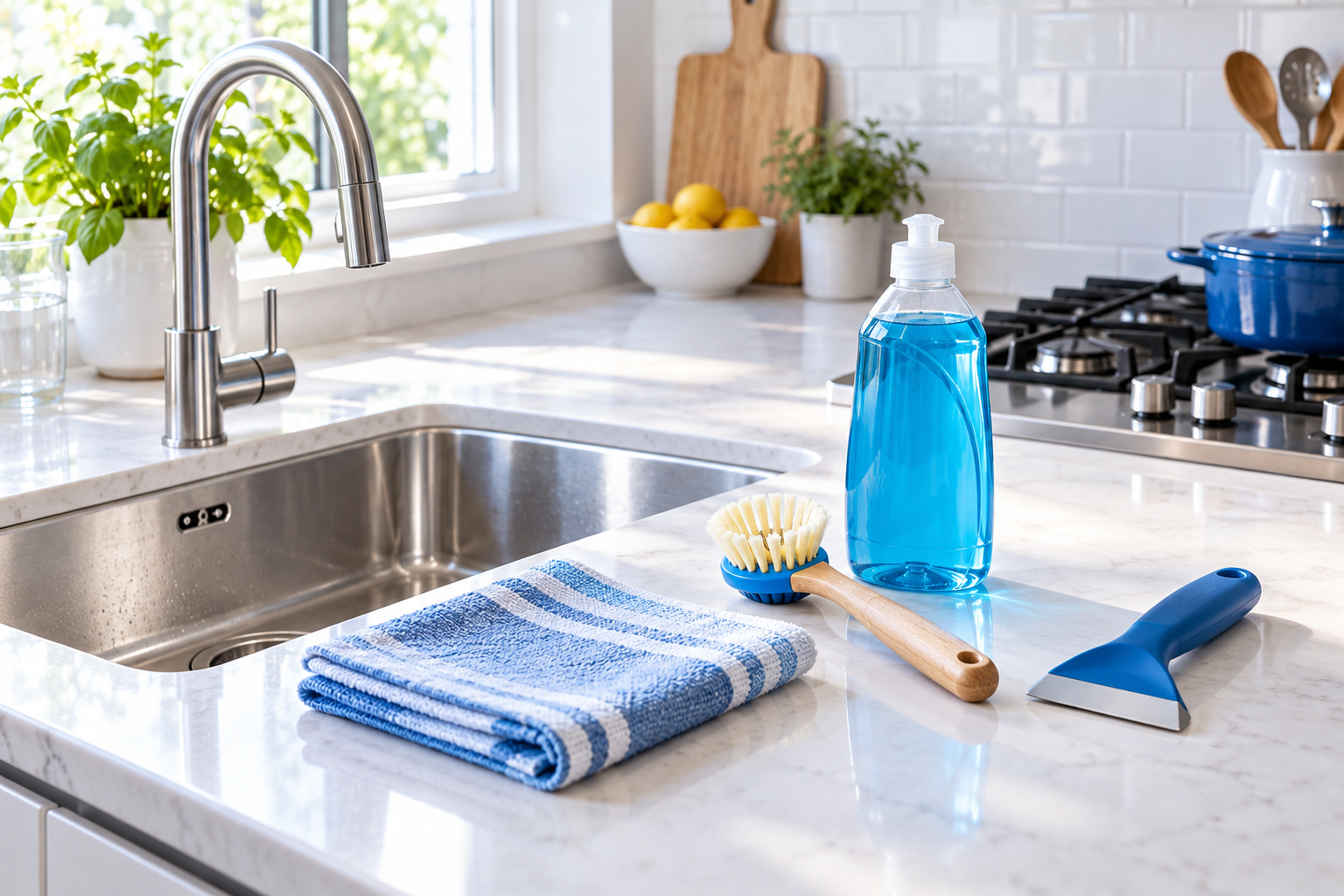
You need a sink or basin large enough for the dirty area, warm—not boiling—water, mild dish soap, a soft sponge or cloth, a soft nylon brush, a flexible plastic or silicone scraper for an approved finish, and a dry towel. Put on gloves if the water or repeated washing irritates your hands. Keep the tray away from children while it is soaking.
Skip steel wool, knives, metal blades, harsh scouring powder, and automatic dishwasher detergent unless your pan’s instructions specifically allow them. Do not reach for oven cleaner simply because the tray goes in an oven: a pan’s food-contact finish and its maker’s care directions may differ from an oven cavity. Never mix cleaning products.
For a five-minute start, clear the food scraps, wet the greasy patches with warm soapy water, and leave the tray safely in the sink while you do something else. The return visit is usually easier than immediate dry scrubbing.
Loosen Grease With Warm, Soapy Water
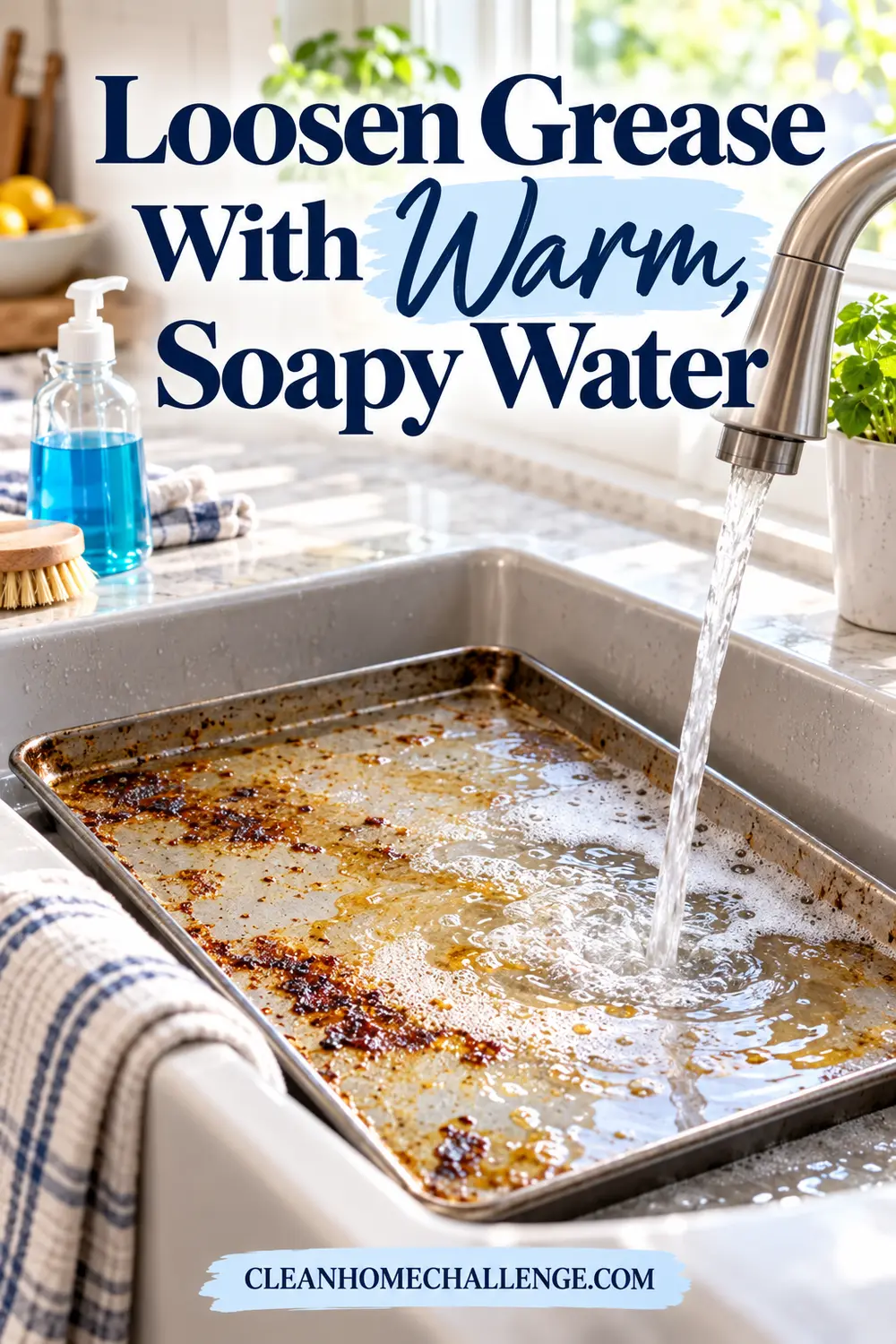
Let the pan cool fully first. Tip out loose crumbs and wipe away excess oil with a paper towel; put greasy solids in the trash rather than sending them down the drain. Fill the tray with enough warm water to cover the marked cooking surface, add a small squirt of dish soap, and leave it level for about 15–30 minutes. If the tray is too large to hold water safely, lay a warm, soapy cloth over the worst patch and rewet it as needed.
The soak is a practical starting interval, not a manufacturer-prescribed dwell time. Check periodically, especially if a label limits soaking. Empty carefully, then wipe in short passes with a soft sponge or nylon brush. Work around the corners and rolled rim, where grease collects. If the residue begins to lift, repeat the warm wash rather than escalating immediately to a harsh product.
Do not pour cold water onto a hot tray; let the metal cool naturally. Keep an electric appliance and its parts out of the sink unless its manual specifically permits washing them.
Lift Buildup From Uncoated Metal
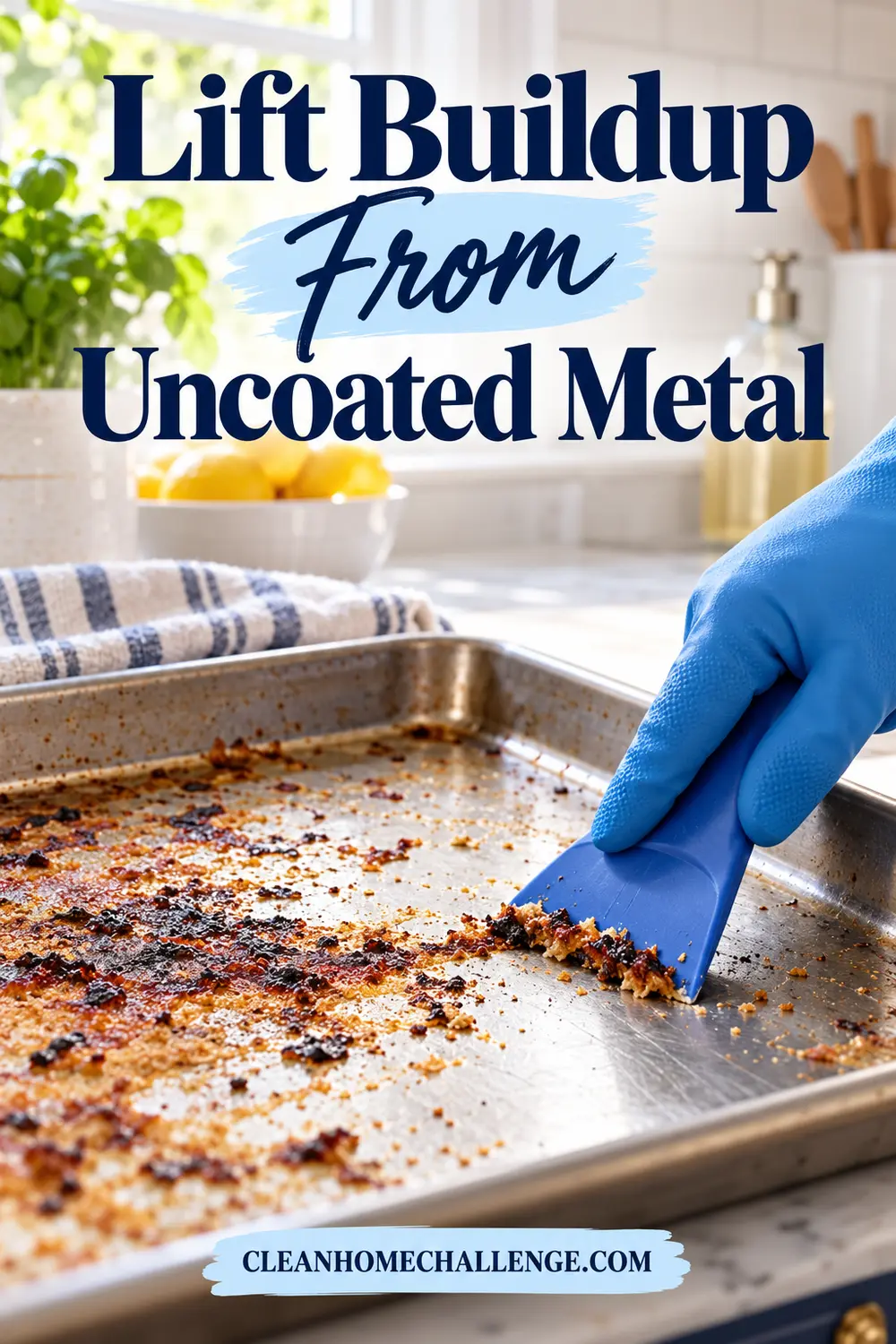
On a verified bare-metal tray, gently push a flexible plastic scraper almost flat against a raised greasy patch after soaking. Lift loosened flakes without gouging the surface. Follow with warm dishwater and a nylon brush, using light pressure. Repeat on a small area first so you can see how the finish responds.
Some uncoated pans show permanent darkening or oxidation. Stop when the surface is smooth, no longer sticky, and free of loose material; polishing it back to showroom silver is unnecessary. Do not assume that a product marketed for stainless steel is suitable for aluminum. A stronger degreaser, abrasive paste, or acidic cleaner needs explicit compatibility with the exact material and the maker’s directions. Rinse any permitted cleaner thoroughly before the tray touches food again.
If the raised layer does not move after two gentle rounds, take a break and check the manufacturer’s guidance. Harder scrubbing is not always progress.
Treat Nonstick Trays More Gently
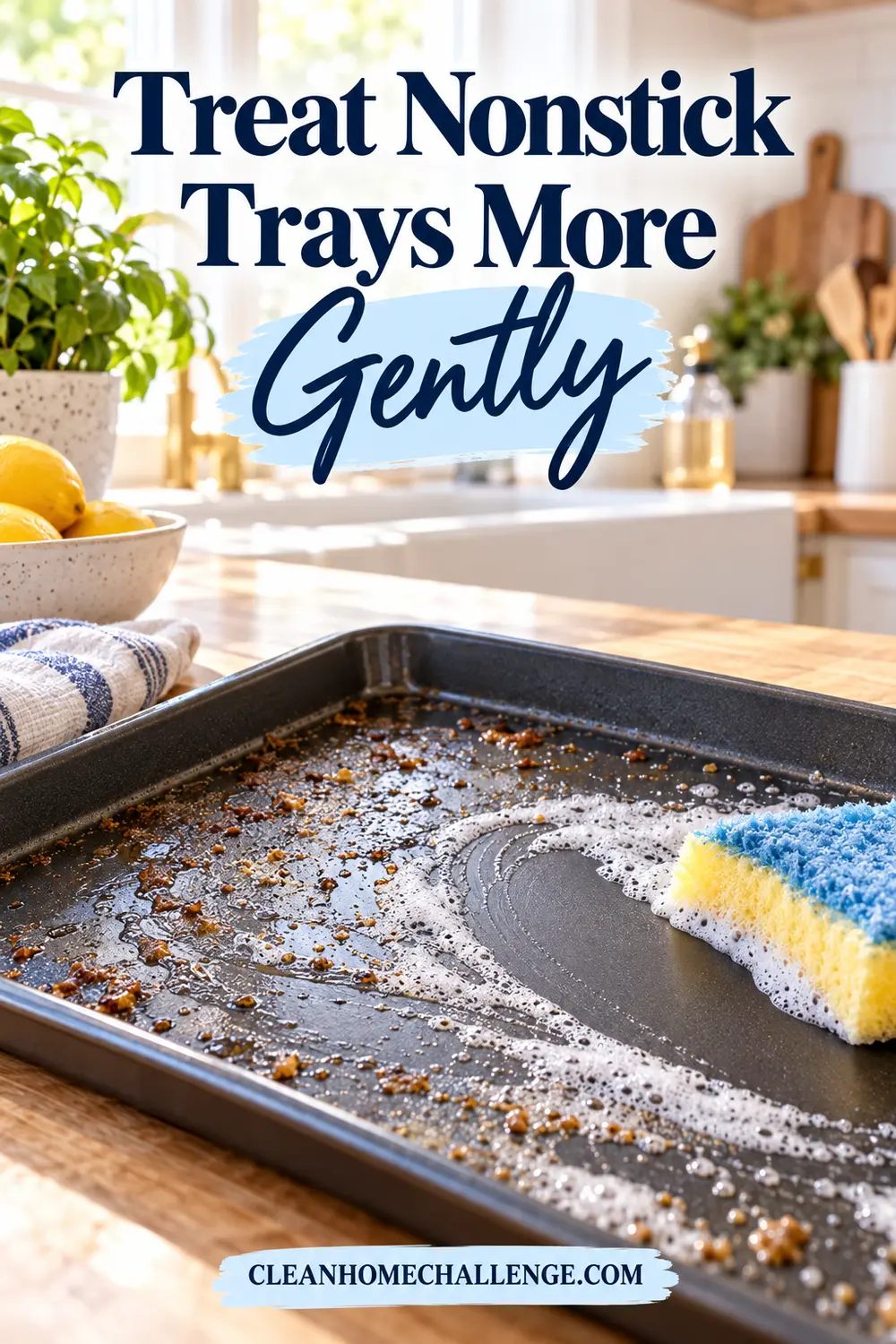
For a nonstick-coated or unidentified tray, stay with warm mild soap and a soft sponge or cloth. Let the water loosen the grease; do not chisel the spot with a metal utensil or scrub with steel wool. A soft nylon brush may be appropriate for some coatings, but check your pan’s instructions first. USA Pan recommends warm water, mild dish soap, and a sponge for its nonstick half sheet; it says not to put that model in the dishwasher. Other brands and models vary. USA Pan nonstick half sheet care
Look closely after cleaning. If the coating is peeling, bubbling, or deeply scratched, do not try to restore it with an abrasive cleaning method. Ask the maker about use or replacement. Avoid claiming a precise health risk from a mark alone; the practical issue is that the damaged finish may keep deteriorating and no longer work as intended.
Rinse, Dry, and Check the Finish
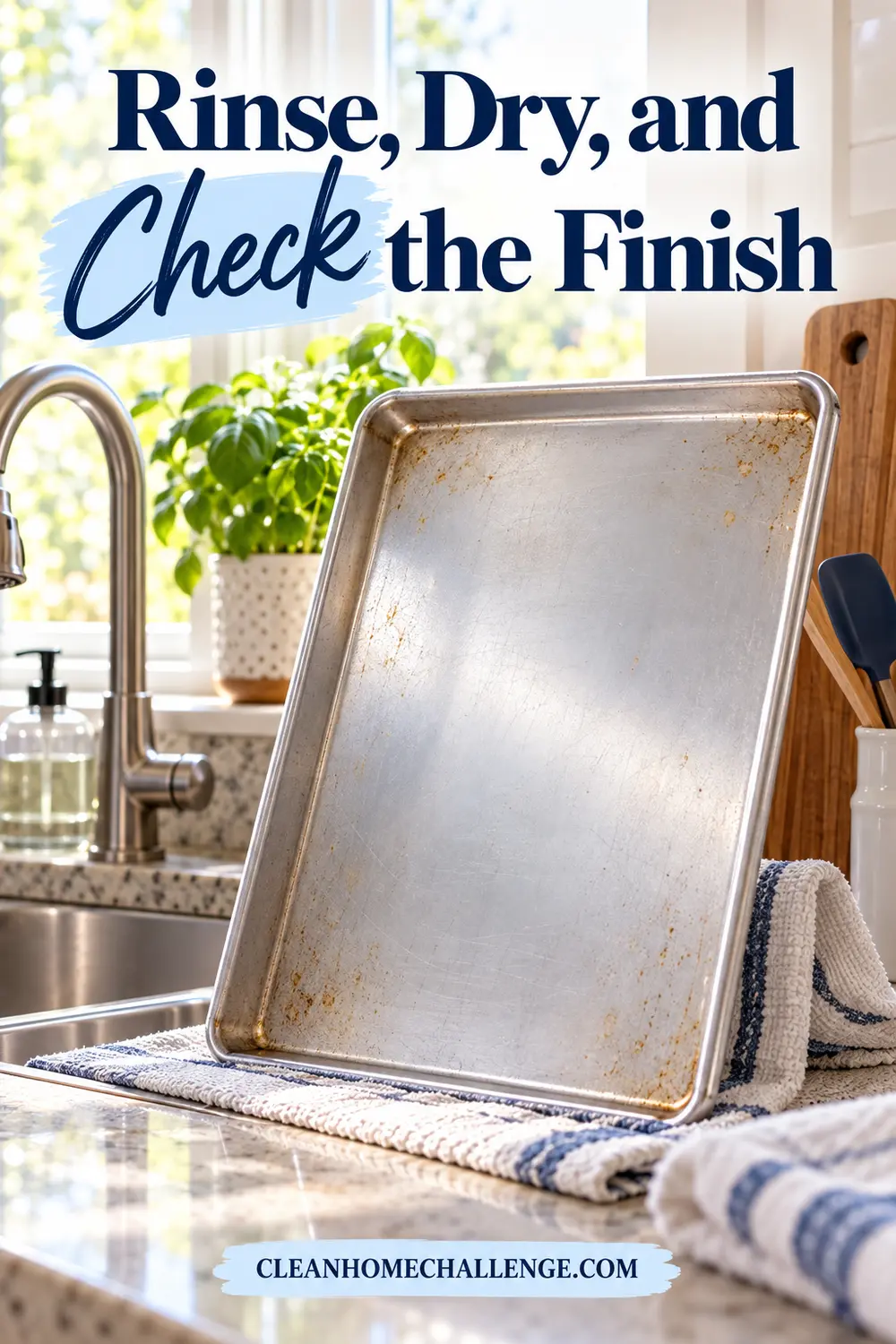
Rinse away soap and loosened grease with clean water. Run a clean finger over the surface once it is cool: it should feel smooth rather than tacky or gritty. Inspect the rim and underside, then dry the tray thoroughly with a towel. If water hides in a rolled edge or seam, stand the tray so it can air-dry before storage.
A clean pan does not have to be stain-free. If the remaining mark is flat and does not transfer to a clean cloth, consult the maker before attempting to remove it more aggressively. Nordic Ware recommends towel-drying its natural aluminum pans to prevent water marks. Nordic Ware care
Prevent the Next Greasy Buildup
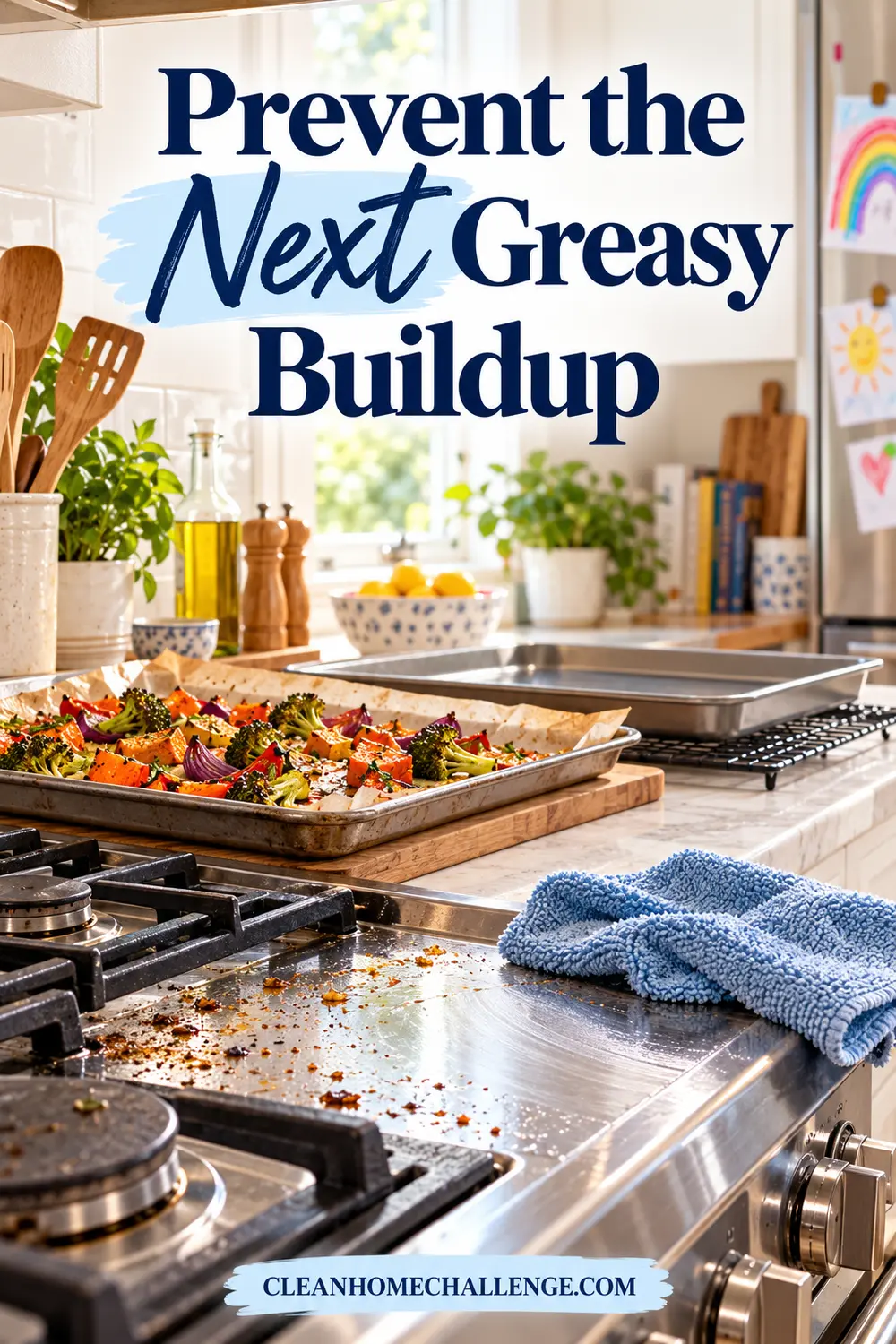
After roasting or baking, let the tray cool, remove food and pooled fat, then give it a quick warm-soapy wash before residue hardens through repeated heating. A two-minute wash after dinner is easier than a heavy scrub several weeks later. Store the tray fully dry and avoid stacking rough metal directly on a delicate coating.
Use parchment or a silicone mat only when it suits the recipe, temperature, and pan manufacturer’s instructions. For greasy roasting, some manufacturers recommend a suitable liner to protect appearance; do not place parchment under a broiler or beyond its stated heat limit. USA Pan suggests a silicone baking mat, foil, or parchment for certain higher-fat foods, subject to its own pan guidance. USA Pan nonstick bakeware
If Mondays are your kitchen reset day, check one frequently used tray after the usual surface wipe-down. If you are short on energy, wash the tray you used today and leave the older staining for a separate session.
CLEANERS CLUBHOUSE
Make Kitchen Cleaning Feel More Manageable
Turn Monday into your kitchen reset day with a clear routine you can follow. The Cleaners Clubhouse gives you practical cleaning guidance, printable support and monthly challenges to help you stay consistent.
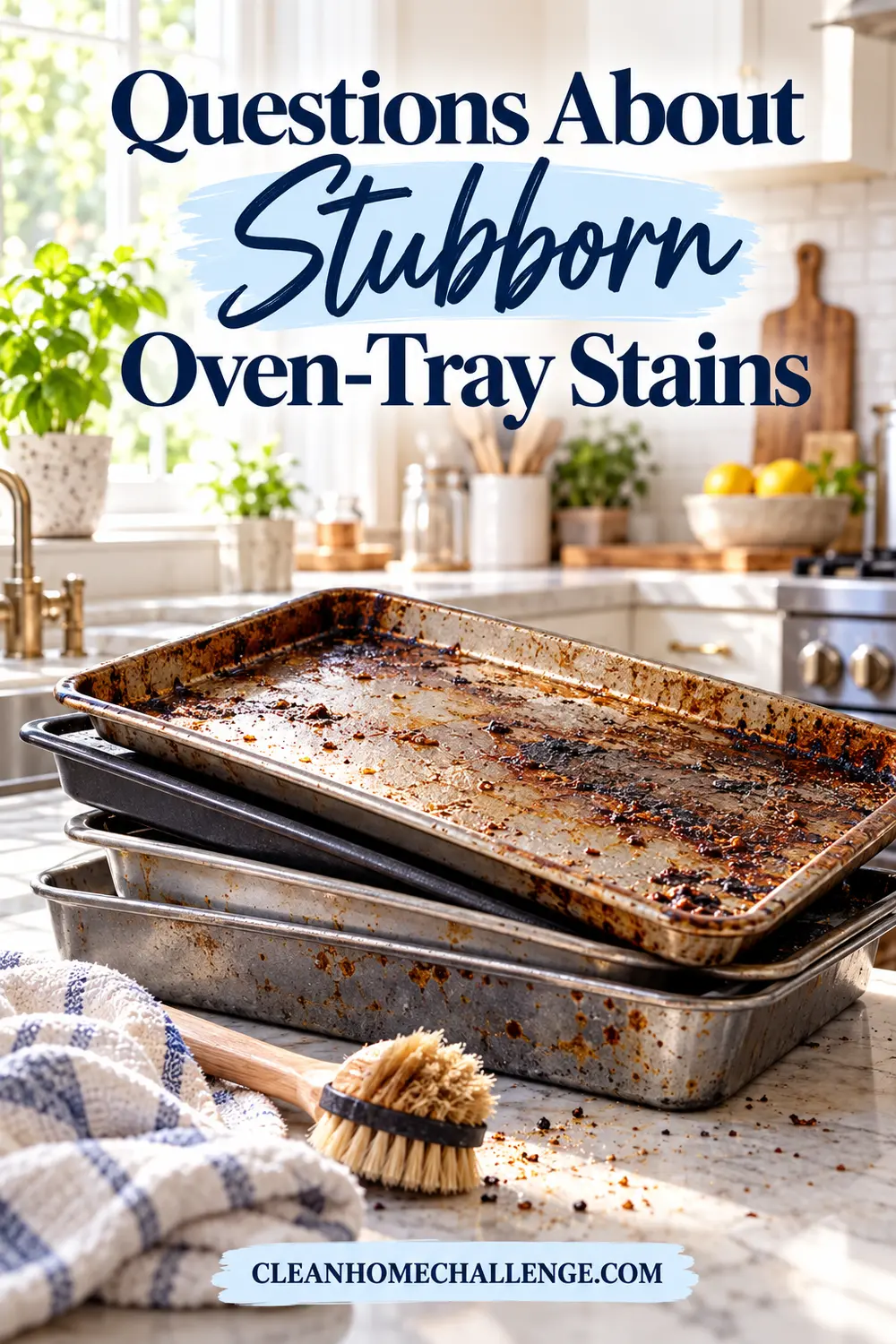
Questions About Stubborn Oven-Tray Stains
Will baking soda and vinegar clean burnt-on grease faster?
They fizz when combined, but that reaction does not make a reliably stronger degreaser. Start with mild dish soap and a soak. Only use a separate stronger product when the label and your tray manufacturer confirm it suits the finish.
Can I put the tray in the dishwasher?
Check the exact model. Nordic Ware advises against the dishwasher for its natural aluminum sheet pan because detergent can discolor it; USA Pan also directs hand washing for several bakeware lines. A different manufacturer may allow it. Nordic Ware sheet pan · USA Pan care
What if the brown stain will not come off?
Judge the surface, not just its color. If it is smooth, nonsticky, and free of loose food, it may be permanent discoloration. If it is rough, flakes into food, or the coating is failing, check the maker’s instructions before further use.
You do not have to rescue every old tray in one afternoon. A gentle soak, a sensible material check, and a thorough rinse are a useful win. The goal is a usable tray and a repeatable kitchen routine—not a perfect photograph.