
THIS POST MAY CONTAIN AFFILIATE LINKS. PLEASE READ MY DISCLOSURE FOR MORE INFO.
You can usually remove everyday dust and crumbs beneath a sofa, bed, or raised cabinet without rearranging the room. The useful starting point is a flashlight and a tool that fits the actual space beneath the furniture, including any lower rails or support legs.
If you’re wondering how to clean under furniture, work in this order: inspect the gap, remove safe-to-reach objects, collect dry debris with a suitable vacuum attachment or microfiber tool, and spot-clean only where the flooring allows it. Work from more than one side when you can. Stop if the tool catches, the furniture shifts, or you discover a spill or hazard you cannot safely reach.
For a first attempt, set aside about 10–20 minutes for one ordinary sofa or bed, including setup. A quick edge clean can take just 2–5 minutes. These are planning estimates, not targets; storage, awkward access, and heavier buildup will take longer. Start with the piece that bothers you most and leave the rest for another day.
Disclosure: This post may contain affiliate links. As an Amazon Associate, Clean Home Challenge earns from qualifying purchases. If you make a purchase through these links, we may earn a small commission at no extra cost to you. This helps us keep creating practical cleaning tips, routines and resources for busy families! 🧽
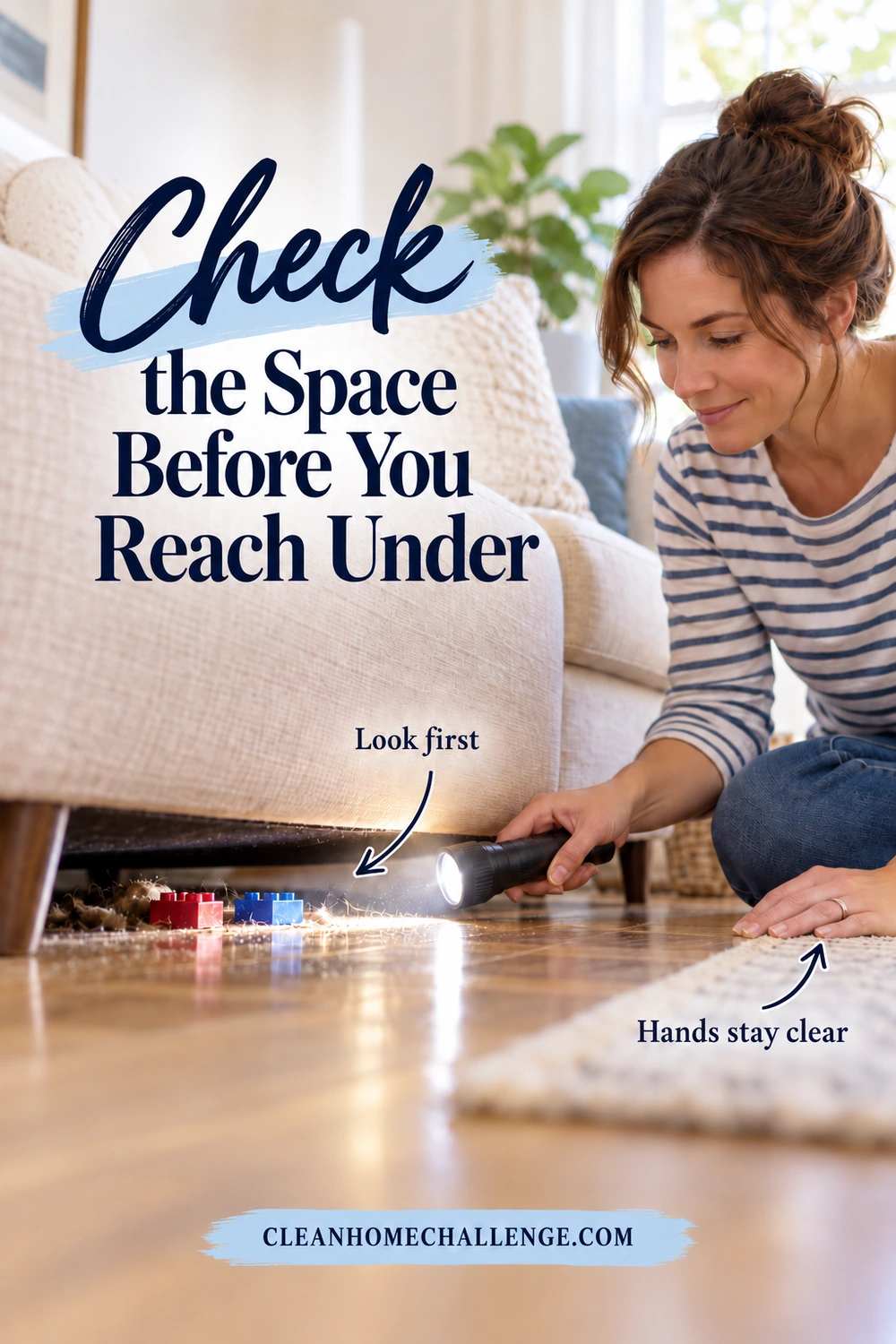
Check the Space Before You Reach Under
Look from the edge first
Turn on the room lights, then shine a flashlight along the floor from each accessible side. Keep your face and hands outside the gap. A small inspection mirror can help you see around a leg without reaching blindly.
Notice three things: the floor material, the narrowest clearance, and what is blocking the route. The front opening may look generous while a center rail hangs much lower. Bed legs, rug edges, storage boxes, and sofa lining can all interrupt a straight pass.
Pull out accessible storage containers individually, without overloading yourself. Put safe, visible toys and socks into a basket. Don’t tug an object that appears tangled in a cord or snagged on the underside of the furniture.
Clear the hazards before cleaning
Trace visible charging cables and lamp cords. Keep them out of the cleaning route, and disconnect equipment only in accordance with its instructions. Do not pull a cable to retrieve its plug or run a brush roll across it.
A recliner or adjustable bed needs extra care. Keep children and pets away, use its specified cleaning position, and isolate power as the manufacturer’s manual directs, including any battery supply. Never operate the mechanism while a hand or cleaning tool is underneath. Unplugging does not make moving joints safe to reach through. La-Z-Boy’s motion-furniture guide specifically warns about accessible mechanisms even when the furniture is not in use.
Stop the ordinary dusting routine if you find:
- Broken glass or other sharps: keep people and pets clear. Arrange enough access for appropriate cleanup; do not reach blindly or send a household vacuum after the fragments.
- Suspected mouse or rat waste, nests, or a dead rodent: do not sweep, dust, or vacuum it. Follow the CDC’s rodent-cleanup instructions, or get suitable professional help.
- Wet areas, damaged wires, or unexplained staining: identify the source and arrange safe access before continuing.
A hidden problem deserves its own cleanup plan. It does not need to become part of today’s five-minute dusting job.
Choose Tools That Fit the Gap
Measure the lowest accessible opening without pushing your fingers underneath. Compare it with the tool’s thickest point, including the connector behind the head. A thin cleaning pad is little help if its hinge gets stuck at the furniture edge.
You need enough room for the tool to enter and withdraw freely while staying in contact with the floor. Avoid forcing it through or levering against the furniture. Check reach as well as height: a short nozzle may clean the perimeter but leave the middle untouched.
Match the tool to the job
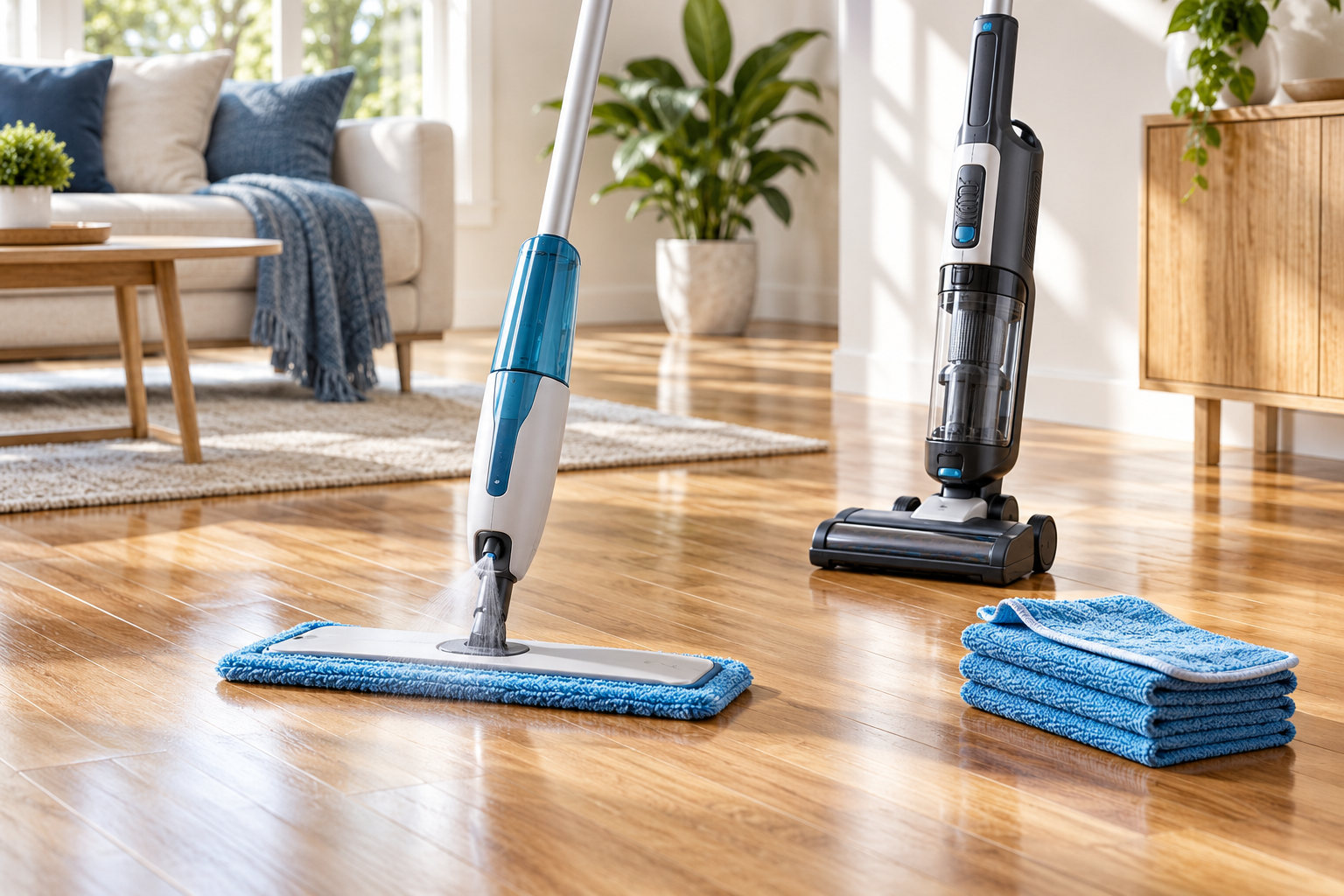
- Low-profile vacuum head: useful for a broad area when the head, neck, and wand fit. Choose a floor-compatible setting.
- Long crevice attachment: useful around legs, along edges, and in narrow channels. It covers a smaller strip than a floor head, so allow more passes.
- Flat microfiber duster: useful for loose dust and hair on hard flooring where a vacuum cannot fit. Choose a securely attached, soft cover with no exposed hard edges.
- Flat mop with a removable pad: useful when it fits comfortably, first with a clean dry pad and later for compatible spot cleaning if needed.
- Flashlight and small basket: useful throughout, for checking progress and collecting ordinary loose belongings.
Try tools you already own before buying something. If purchasing an attachment, check the exact vacuum model and connection rather than assuming a “universal” accessory will fit. Test the assembled tool in an open area before sliding it under furniture.
Skip bare coat hangers, uncovered rulers, and improvised sharp-edged scrapers. A cloth that slips off a homemade tool can become another object to retrieve.
Make the position comfortable
Use a long handle and work from the side that gives you the easiest reach. A stable chair may help with a short section if you can keep your balance and move the tool without twisting. Don’t stand on furniture or lean your weight on an unstable piece.
If getting down to floor level or standing back up is difficult, do the reachable perimeter from a comfortable position and ask for help with the center. Finishing a small area safely is a useful result.

Remove Dust From Hard Floors
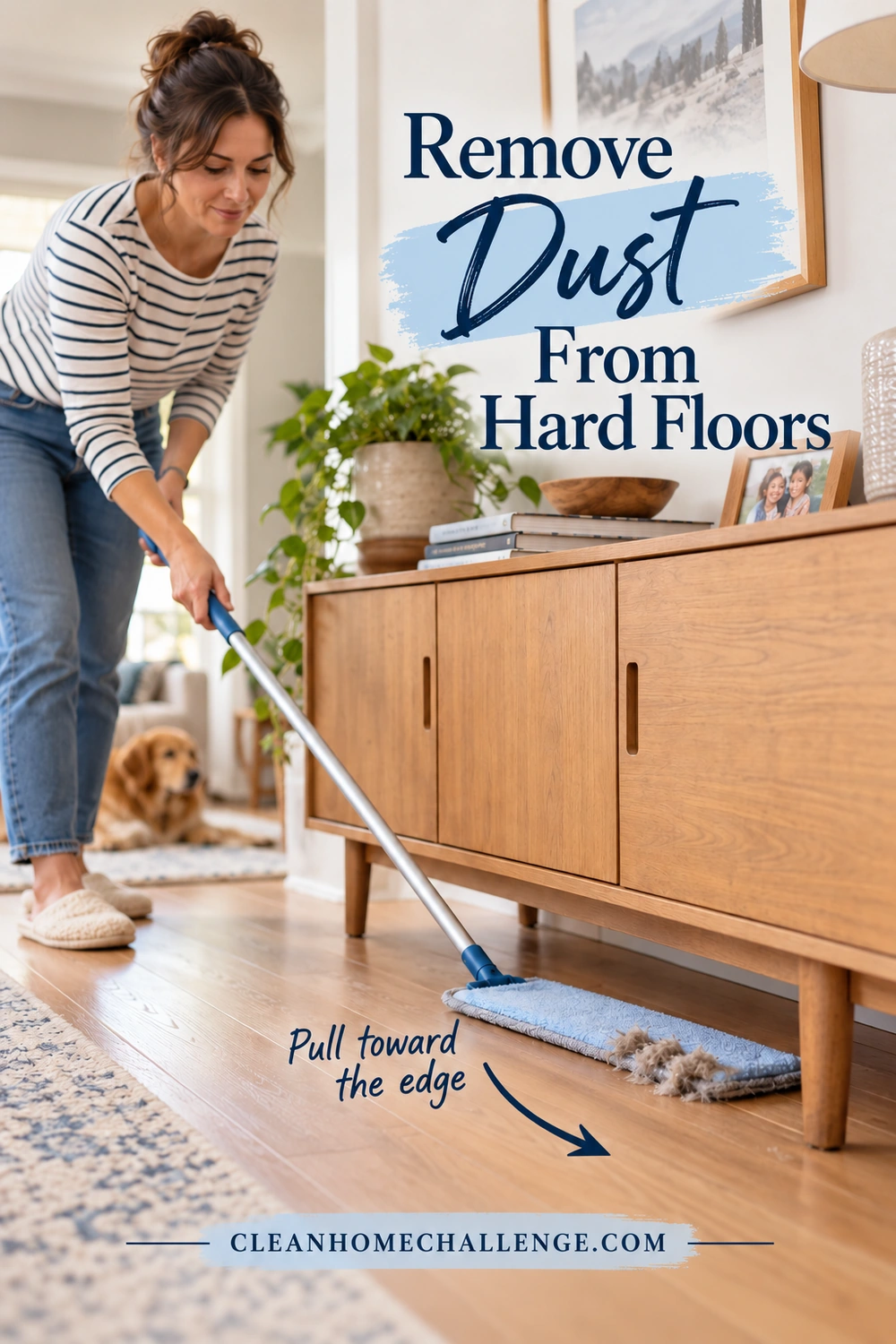
Start with dry debris. Loose grit can catch beneath a pad, so inspect both the floor and the underside of the tool before you begin. If a suitable vacuum head fits, use it to collect visible grit first. Otherwise, use a clean, soft microfiber cover with light pressure and check it often.
Use a controlled pull-back pass
- Clear the floor beside the furniture. This gives you somewhere to bring dust and an easy place to collect it.
- Guide the pad into one clear channel. Stop short of cords, legs, fabric, and anything you cannot identify. Keep the pad flat rather than using its edge as a scraper.
- Draw the pad slowly back toward you. Pull loose dust toward the open edge instead of repeatedly shoving it farther underneath.
- Lift and inspect the pad. Remove collected debris into the trash and change to a clean pad when needed. Don’t shake dust off in the room.
- Overlap the next pass. Work across the opening, then repeat from another accessible side to reach around support legs.
- Collect the edge pile. Use a suitable vacuum or dustpan, then inspect with the flashlight before deciding whether anything needs a damp clean.
Avoid pressing harder when something will not come away. A stuck patch may be dried food, adhesive, or finish damage; it needs a closer look and the right surface-care method.
Let the floor finish guide any moisture
For wood floors, the National Wood Flooring Association recommends dust mopping or vacuuming on the bare-floor setting and a cleaner appropriate to the finish. It advises against wet and steam mops. A dark space under a cabinet is no place to leave a wet patch you cannot check.
Laminate, vinyl, tile, and stone have different care requirements. Look up your exact flooring, especially before using water, steam, acidic cleaners, or a new product. For example, Pergo’s care guidance includes dry dust removal and damp cleaning for its laminate products; that is not blanket permission for every laminate floor.
If damp cleaning is allowed and needed, follow the product’s label and flooring instructions, test a new cleaner in an inconspicuous area, and use only the permitted amount. Keep liquid away from cords, upholstery, and furniture legs. Reach every area you wet, remove residual moisture as directed, and let the floor dry before replacing storage. Never pour cleaner into the hidden gap.
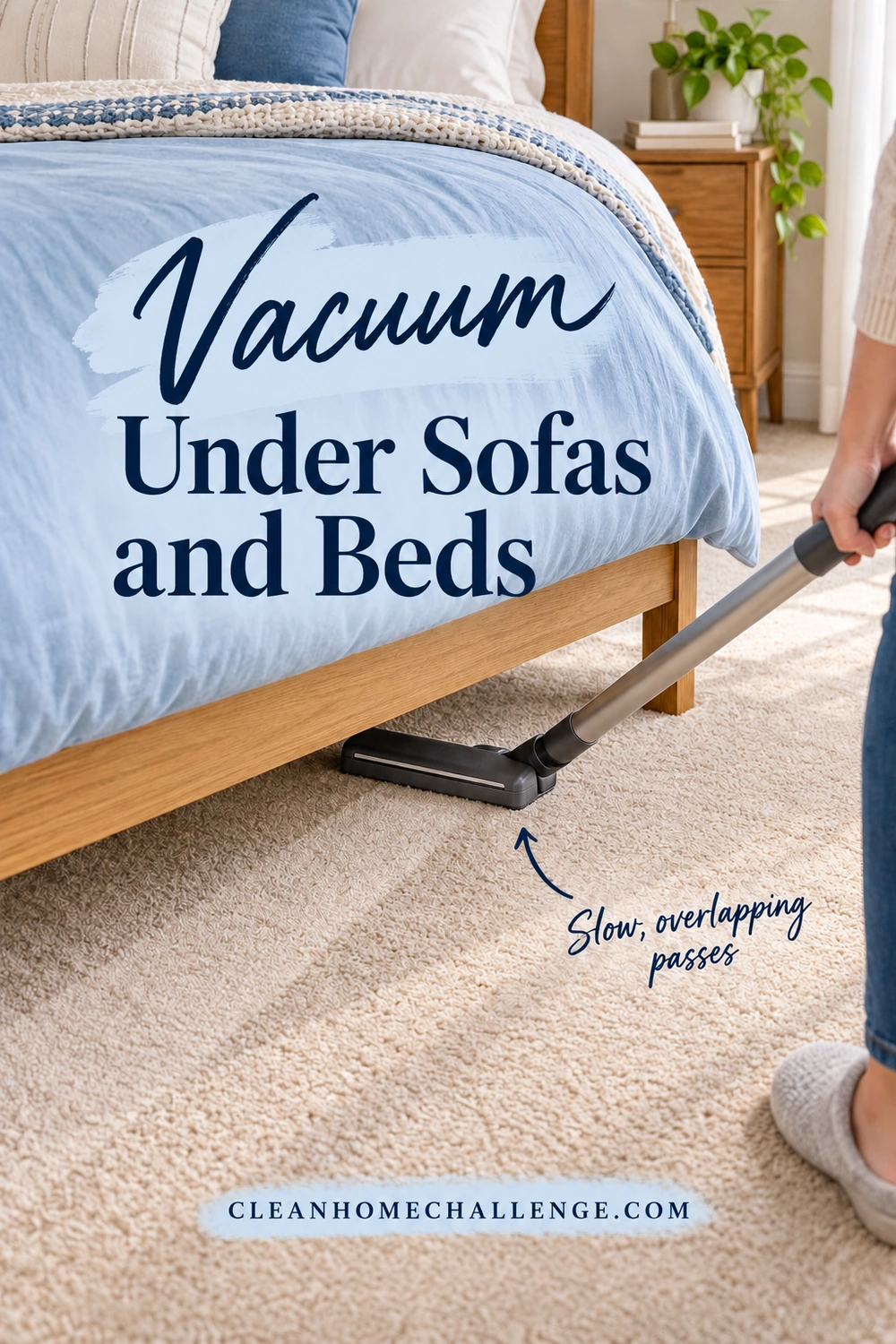
Vacuum Under Sofas and Beds
On carpet, use a vacuum attachment that can rest in its intended cleaning position. If lowering the handle makes the head tilt off the pile, switch to a compatible attachment rather than pushing the machine farther under.
Before starting, check the dust bin or bag, the attachment opening, and the brush roll according to the vacuum’s manual. A clogged tool can make repeated passes look productive while collecting very little. Switch off and disconnect the machine as directed before changing accessories or clearing a blockage.
Work in strips you can track
- Move loose bedding and sofa skirts out of the route. Keep fabric clear of the suction opening and rotating brush.
- Begin at one accessible corner. Make a slow pass into a clear channel and back out, without knocking the furniture legs.
- Shift sideways slightly. Overlap each strip so you do not leave narrow untouched lanes.
- Use the crevice tool around obstacles. Follow the accessible perimeter and work around support legs without twisting or pulling them.
- Approach from the other side. Meet the area you have already cleaned where possible. Do not assume that reaching halfway from one side covers the whole bed.
- Check with the flashlight. Look for remaining hair clumps, crumbs, or a strip your head could not reach.
Shaw’s carpet-care guidance recommends slow, overlapping strokes and matching the vacuum height to the pile. Its guidance differs for shag, where suction-only cleaning or keeping the brush away from long fibers can be appropriate. Follow your own carpet’s instructions for wool, looped pile, delicate rugs, and other specialty materials rather than applying one brush setting to everything.
A crevice tool is helpful for spot pickup, but its narrow opening takes longer to cover a broad carpeted area. If it cannot remove embedded debris, plan better access for a suitable carpet head.
Do not vacuum wet spills, sharp objects, or unknown debris with an ordinary dry household vacuum. Dyson’s operating manual, for example, excludes water and sharp hard objects. Follow the exclusions for your own machine.
A robot vacuum can maintain a clear, accessible space if its whole body fits with room to travel. Check its manual, clear cords and small objects, and supervise its first pass. It cannot clean a sealed base or solve an obstruction by squeezing harder.
Know When Furniture Needs to Move
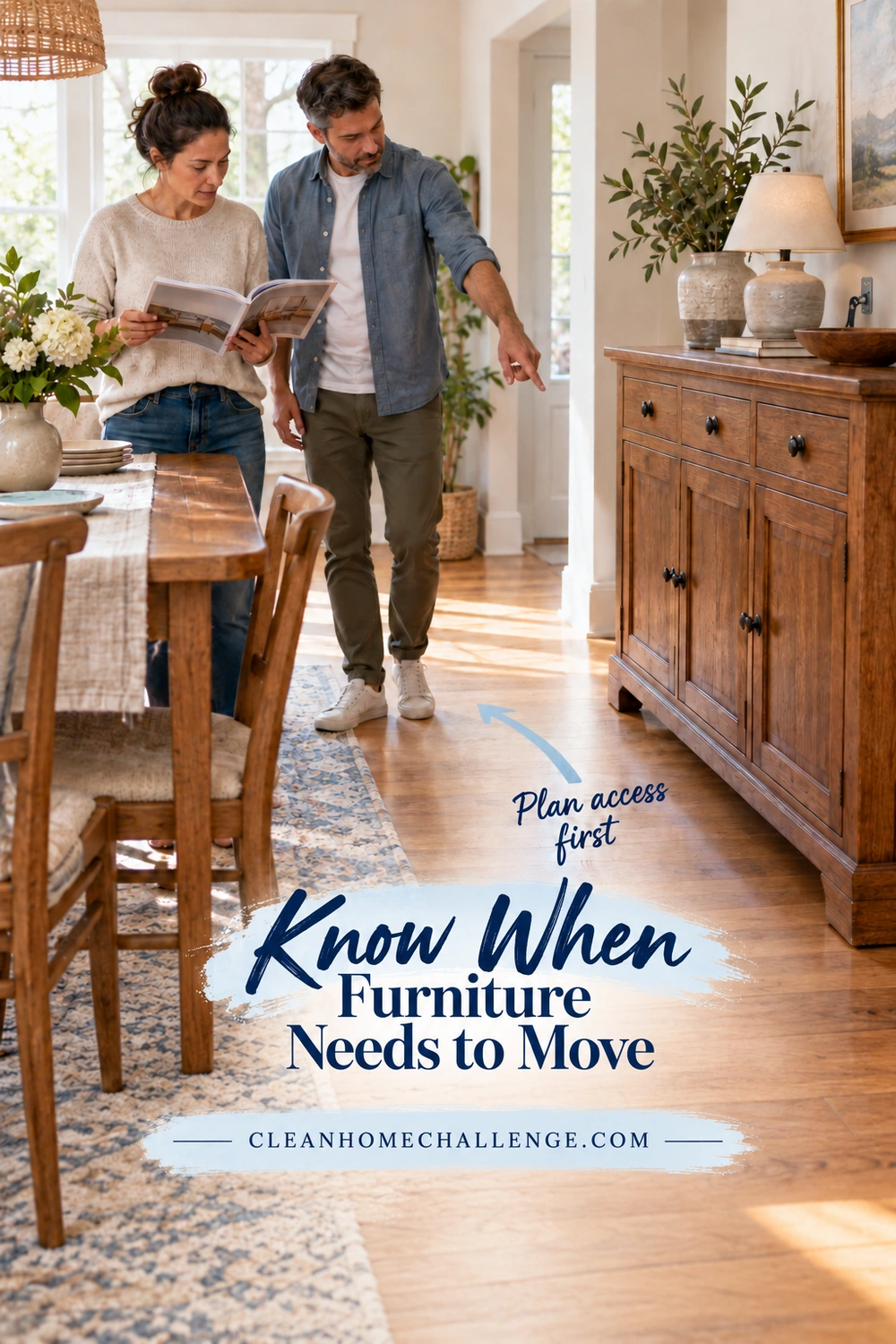
The promise of cleaning without moving everything has a practical limit: a tool must be able to reach the dirt safely. Some furniture has a base that touches the floor, a recessed area with no usable opening, or an internal frame that blocks the middle.
Clean the accessible edges and plan a separate task when:
- A spill extends beyond the area you can reach and dry.
- Food, a valuable item, or other debris remains trapped behind a support.
- Repeated passes leave obvious buildup in the center.
- The tool snags on loose lining, broken parts, or cables.
- Inspection reveals moisture, pest evidence, or a repair issue.
Plan access instead of improvising a lift
Do not tip a sofa or cabinet onto a makeshift support, put any part of your body beneath raised furniture, or ask someone to hold a heavy piece up while you clean. Never remove a support leg, cut the underside lining, or add improvised risers just to make a tool fit.
For a small movable piece, follow its manufacturer’s handling instructions, clear the route, and protect the flooring using approved methods. Furniture sliders are not a shortcut when installing them would require an unsafe lift; their suitability also depends on the piece and the floor.
Arrange capable help or professional movers for heavy, awkward, fragile, or unstable furniture. Tell a cleaning service in advance what needs access and ask whether furniture movement is included. Many jobs require a separate plan.
Keep anti-tip devices in place during routine cleaning. The CPSC’s Anchor It guidance recommends securing furniture and TVs according to manufacturer instructions. If moving an anchored cabinet is necessary, arrange someone who can manage the move and correctly secure it again before normal use. Don’t disconnect an anchor and leave the piece unsecured.
Until suitable help is available, finish the reachable edges and keep children and pets away from any hazard. Moving one piece thoughtfully is more useful than turning a quick clean into an unsafe furniture shuffle.
Keep Hidden Dust From Building Up
A repeatable little pass is easier to fit into family life than a whole-house furniture-moving day. Choose a starting rhythm, then adjust it to what you actually find. These are flexible household routines, not health requirements.
Add a small check to an existing cleaning day
- During a quick pickup: retrieve visible toys, wrappers, or socks from the furniture edges and deal with spills promptly.
- On bedroom day: use the flashlight under one bed, then vacuum the reachable strips that need attention.
- On living-area day: give the sofa edge a 2–5 minute reset, using a basket for belongings and your chosen dusting or vacuum tool.
- On floor day: look beneath one less-used cabinet or side table. Clean it if needed, or leave it until the next check.
If pets shed heavily or children often snack on the sofa, that spot may need attention more often. A little-used room may need less. Let visible buildup guide the adjustment rather than adding another rigid cleaning rule.
Keep the flashlight and attachment near your usual cleaning supplies. Wash reusable pads according to their care labels, let them dry, and store them ready for next time. Maintain the vacuum’s filters and brush roll as its manual directs.
Under-bed storage is easier to work around when containers have handles and can be removed one at a time. Keep cords routed away from cleaning paths and moving furniture parts, and avoid filling every accessible opening with loose bags.
For a low-energy day, choose one edge, one tool, and a short timer. Stop when the timer ends, put away what you collected, and note any area that needs help. You have still removed some dust and made the next pass easier.
The most useful way to clean under furniture is one you can repeat comfortably: check the space, choose a tool that fits, collect what you can reach, and make a safe plan for the rest.

CLEANERS CLUBHOUSE
Stay on Top of Floors Without Cleaning All Day
Give your floors a focused Friday reset instead of chasing every mark all week. The Cleaners Clubhouse helps you build a realistic routine with practical guidance, printables and monthly challenges.