THIS POST MAY CONTAIN AFFILIATE LINKS. PLEASE READ MY DISCLOSURE FOR MORE INFO.
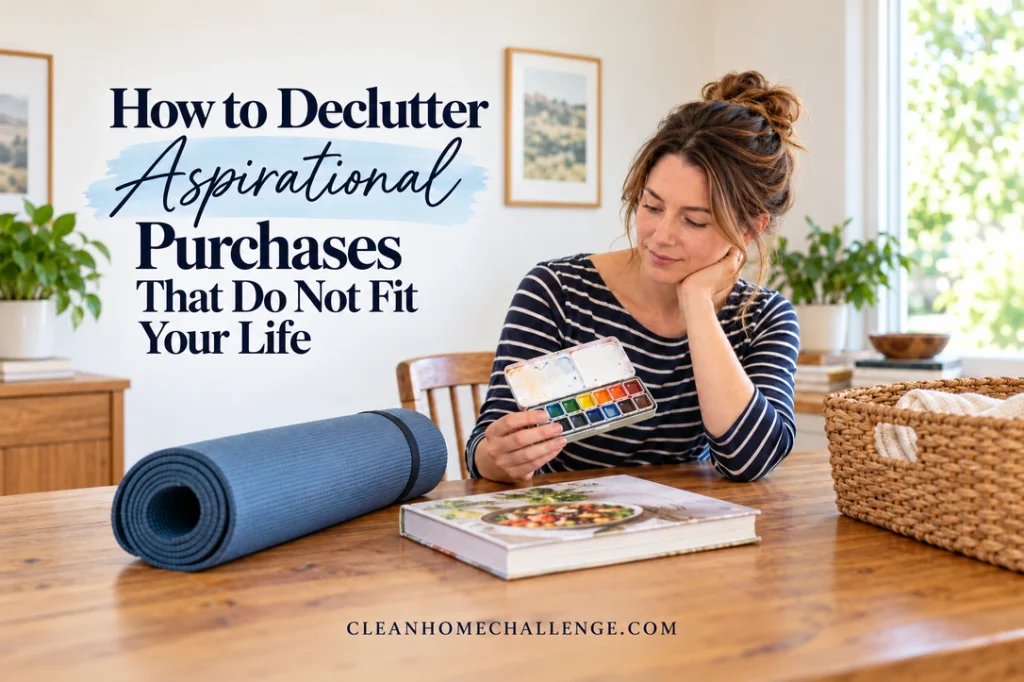
The watercolor set you hoped to use on quiet weekends. The baking tools bought for elaborate birthday cakes. The exercise equipment that became somewhere to hang laundry. These purchases can be difficult to sort because each one carries an idea of how you wanted life to feel.
You can respect that hope and still decide whether its belongings deserve space today. To declutter aspirational clutter, choose one small group, check what you actually want to do, try one realistic session if you are unsure, and give the things you keep a defined home. You do not have to abandon an interest because this season is busy.
This guide is for ordinary household purchases you own or have permission to sort. Leave another person’s belongings, essential accessibility equipment, important records, and potentially hazardous materials out of a general clear-out. The free decision sheet below helps you record an experiment and a review date without turning the whole home upside down.
Disclosure: This post may contain affiliate links. As an Amazon Associate, Clean Home Challenge earns from qualifying purchases. If you make a purchase through these links, we may earn a small commission at no extra cost to you. This helps us keep creating practical cleaning tips, routines and resources for busy families! 🧽
Recognize What You Bought for an Imagined Life
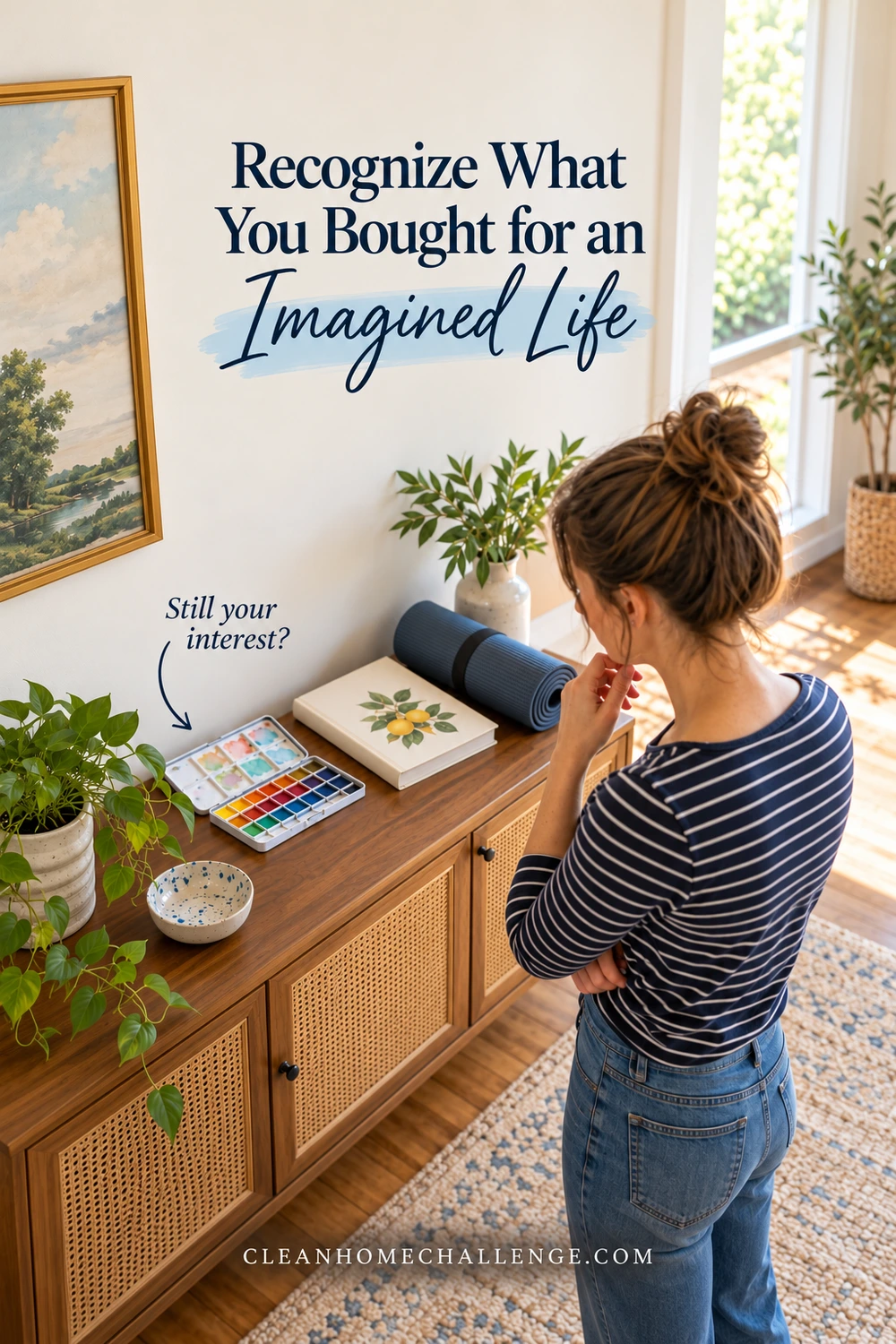
Aspirational clutter is a useful everyday description for belongings tied to an activity, identity, or habit you hoped to develop. It is not a diagnosis, and an unused item is not automatically clutter. A seasonal camping kit may have a clear role even when it spends months in storage. A half-used sketchbook may still bring you pleasure whenever you have a chance to open it.
The question is whether the item supports a choice you still want to make, or mainly reminds you of an expectation you no longer enjoy. Look for the difference between “I would like to paint again” and “I feel I should become someone who paints.” Neither answer makes the original purchase foolish. It gives you information about what belongs in your home now.
Start with one manageable group
Choose one shelf, drawer, or box that you can put back together in the time you have. Set out a bag for items leaving, a tray for things you will test, and a clear space for definite keepers. Use containers already in the house. Buying a new organizing system before you know what remains can simply add another hopeful purchase.
Take out that small group rather than emptying every hobby cupboard. Keep paths, stairs, and exits clear, and put sharp tools or small parts somewhere children and pets cannot reach. If you only have five minutes, identify one unused item and write down what you originally wanted it to help you do. That is enough for a useful first step.
Ask questions that produce a decision
- What activity did I expect this purchase to support?
- Do I still want that activity, or do I mostly like the idea of it?
- What has stopped me: time, difficult setup, missing skills, discomfort, or changed interests?
- Would a simpler version let me enjoy the same thing?
- If this belonged to someone else, would I choose to bring it home today?
Write a neutral answer. “The machine takes too long to set up after work” is more useful than “I never finish anything.” It also points toward a practical option: one small hand-sewing project, a class using shared equipment, or passing the machine to someone who wants it.
Ownership matters here. Ask before sorting a partner’s sports gear or a child’s craft materials. Agree on the available storage and invite them to choose within it. Do not quietly remove belongings because their plans look unrealistic to you.
Test One Interest in Your Real Week

When you still feel interested but uncertain, try a limited experiment before making a final decision. This is an optional editorial method, not a scientifically established deadline or a test you can fail. Choose a review date that includes a normal opportunity to use the item. Two weeks might suit a small drawing kit; seasonal equipment may need a different plan.
Make the session small enough to happen
Pick one activity, one item or compact kit, and one specific time. “Use the watercolor set for ten minutes after Saturday breakfast” is easier to evaluate than “be creative more often.” Put the session on your calendar if that helps. Choose a familiar surface, protect it appropriately, and check the item’s instructions before use.
Do not buy extra accessories just to make the experiment feel complete. Start with what you safely have. If essential parts are missing or you need instruction to use equipment safely, record that barrier rather than improvising. Borrowing equipment or attending a class can sometimes help you explore an interest without keeping a full setup at home.
Before the session, note how much time setup and cleanup will need. A hobby that takes ten minutes to enjoy and another forty minutes to unpack and put away may need a simpler kit or a different place in your week. Those practical details matter as much as whether the activity looks appealing.
Record what happened without grading yourself
Afterward, write whether you used the item, enjoyed the activity, and would choose to do it again. Notice what made the session easy or difficult. Did you need a clear table? Were the supplies accessible? Did you prefer a different activity once you had a free moment?
If an unexpected illness, caring responsibility, or work change removed the opportunity, you can set one new review date. Avoid automatically extending the trial every time the date arrives. If you repeatedly choose other things during genuine free time, consider whether the interest belongs in a smaller form or can be released for now.
For example, a family might keep one cake tin used for birthdays and release a large collection of specialty molds. That preserves the pleasure of baking while reducing the storage and washing-up burden. Someone who enjoys reading about gardening might keep a favorite book and a few tools for the plants they actually grow, rather than equipment for an imagined large vegetable garden.
Use the free Aspirational Purchase Decision Sheet (PDF) to record one item, a small trial, and the next action. It is a planning aid, and it does not require you to sign up or buy anything.
Choose What Earns a Place in Your Home

At your review date, decide whether each item belongs in active use, a limited future plan, or an outgoing group. You do not need equal piles, and you do not need to make a dramatic decision about every object. A clear next step is more useful than a perfect rule.
Keep what you choose to use
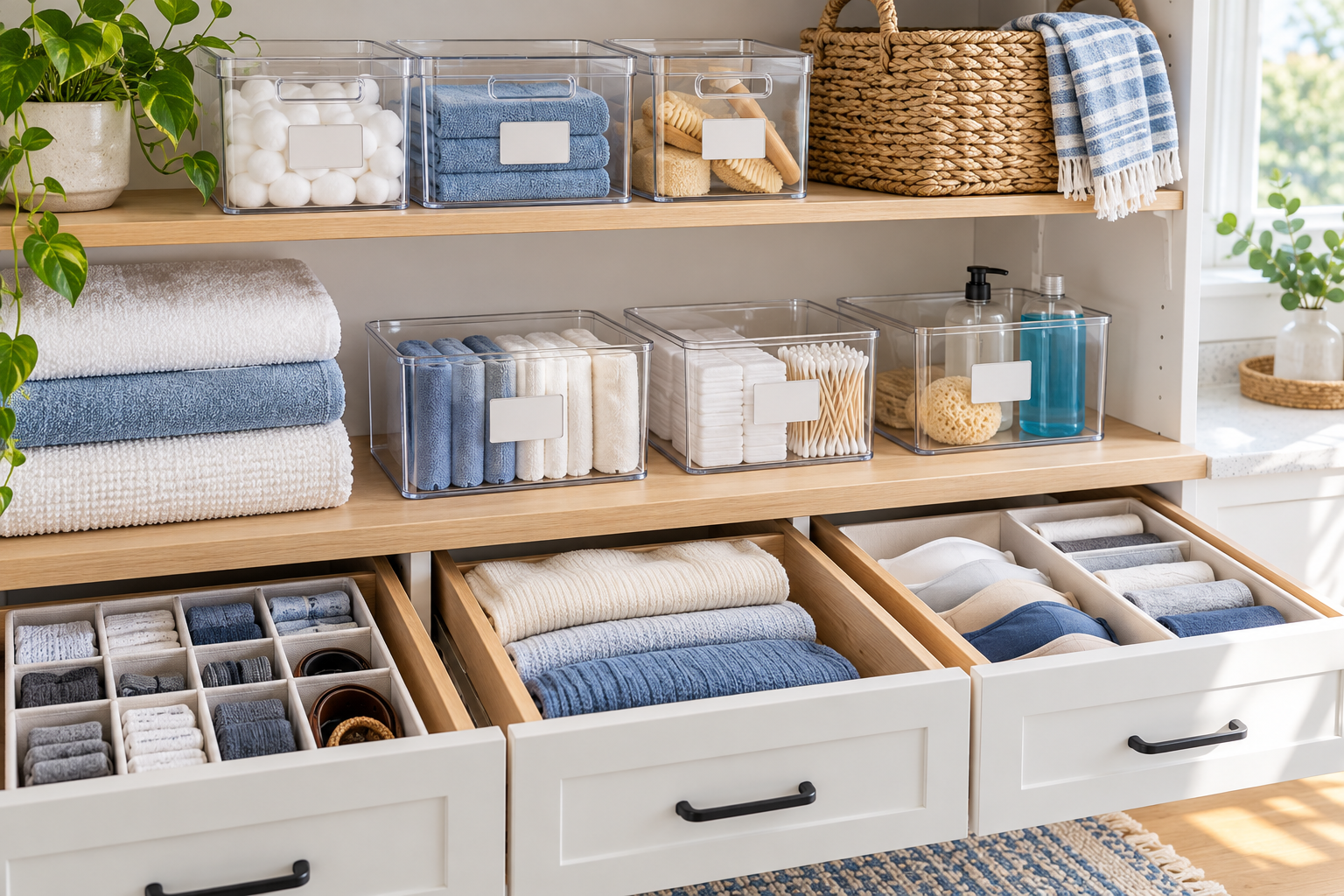
Give active supplies a home that fits the way you use them. Store a compact drawing kit near the place you draw, with small or sharp components secured as needed. Put heavy items where they can be handled safely. Keep frequently used supplies accessible without making walkways or shared surfaces into permanent storage.
Choose a physical limit: one drawer, one shelf, or one container you already own. Fit the equipment safely rather than forcing a lid closed or stacking an unstable pile. The limit is a household agreement about available space, not a measure of whether the interest matters.
Put a real boundary around future plans
Some interests are worth keeping through a busy season. Record what will change, when you will review the plan, and where the items will live meanwhile. “Revisit the camping kit before our planned trip” is specific. “Someday, when life is calmer” does not help you manage the space today.
If you want to keep a representative item for sentimental reasons, separate that choice from an active hobby kit. You might keep a small piece of fabric from a meaningful project while letting unused equipment go. Labeling something as a keepsake is more honest than expecting it to earn its place through future productivity.
Make releasing an item achievable
The amount you paid can explain why a decision feels difficult, but storing an item does not itself recover that money. Consider what you realistically want to spend on photographing, listing, answering messages, packing, or delivering it. You can choose a short selling window and a fallback plan if it remains unsold.
Check a recipient or organization’s current acceptance rules before dropping anything off. Describe missing parts, wear, or faults accurately. Keep useful components together where practical, and do not donate damaged or unsafe equipment as though it were ready to use. A friend should be free to decline without inheriting your storage problem.
If the item cannot be reused, follow the appropriate local disposal route. Batteries, paints, solvents, electronics, medicines, and sharp items may need separate handling; they do not belong in an ordinary mixed donation bag. Follow the product label and local service guidance instead of opening, mixing, or emptying unknown contents to make sorting faster.
Write the actual exit action: “Ask the community craft group whether it accepts these sealed materials,” or “Photograph the complete kit on Sunday.” Put outgoing items somewhere secure and set a date to finish the handoff. A donation bag that blocks the laundry for months has not yet returned that space to the family.
Keep Space for the Life You Live Now

Once the small group is sorted, wipe the emptied shelf using a method suitable for its material, let it dry if needed, and return only the chosen items. Avoid turning a short decluttering session into a whole-room deep clean. The useful result is a space you can use and maintain.
Add a purchase pause that answers practical questions
Before buying for a new interest, ask where the item will live, when you expect to use it, and what you can try first with borrowed or existing supplies. Put those answers beside the purchase rather than relying on excitement in the shop. For nonessential supplies, a short waiting period may help you decide whether you still want them after the initial enthusiasm.
Start with the smallest workable version. One project can tell you more about your preferences than a large bundle of equipment. Check what you own before adding another notebook, baking tool, exercise accessory, or storage basket. If you have reached the agreed space limit, make the next storage decision before bringing more home.
Storage products can help after you know what stays. Measure the available space and check whether the container allows safe, easy access. An attractive bin does not resolve an unwanted commitment; it can only hold the belongings you have chosen. Use the existing storage first, then fill a specific gap if one remains.
Share the space fairly
Talk about the practical issue in shared rooms: “We need this table clear for dinner,” or “This shelf is the space available for each person’s projects.” Ask everyone to choose their own priorities within an agreed limit. Keep criticism of someone’s interests out of the conversation, and do not treat one person’s leisure activities as automatically more worthwhile.
If decisions are becoming upsetting, pause and put the items safely aside. You can return to a smaller group later or ask a trusted person to help you work through choices while you keep control of them. You do not have to finish everything in one sitting.
On your next weekly reset, spend a minute checking the trial tray and outgoing bag. Have you used the kit? Has the recipient replied? Is there a next action you can complete today? This small follow-through keeps temporary piles from becoming permanent ones.
The Cleaners Clubhouse offers the existing 30-Day Declutter Challenge and printable support if you would like a plan for working through the home in manageable steps. Start with your free decision sheet and one small group; more support is there when it would help.
You are allowed to keep a hobby you love, to put an interest aside for a real future date, and to change your mind about a purchase. A home that fits your current family can still leave room for new interests. Begin with one decision you can act on this week.
Sources and approach
The general small-area, manageable-goal approach is supported by University of Georgia Extension’s Project FIND. Its guidance also highlights shopping your own home and choosing a method that fits your household. The realistic-use experiment and decision sheet here are original practical suggestions, not a validated behavioral program. Use the sheet as a flexible starting point and adjust the timing to your household.
CLEANERS CLUBHOUSE
Ready to Clear the Clutter One Step at a Time?
Join the 30-Day Declutter Challenge and work through your home in small, achievable steps. The Cleaners Clubhouse includes the plan, printable support and encouragement to help you keep going.