THIS POST MAY CONTAIN AFFILIATE LINKS. PLEASE READ MY DISCLOSURE FOR MORE INFO.
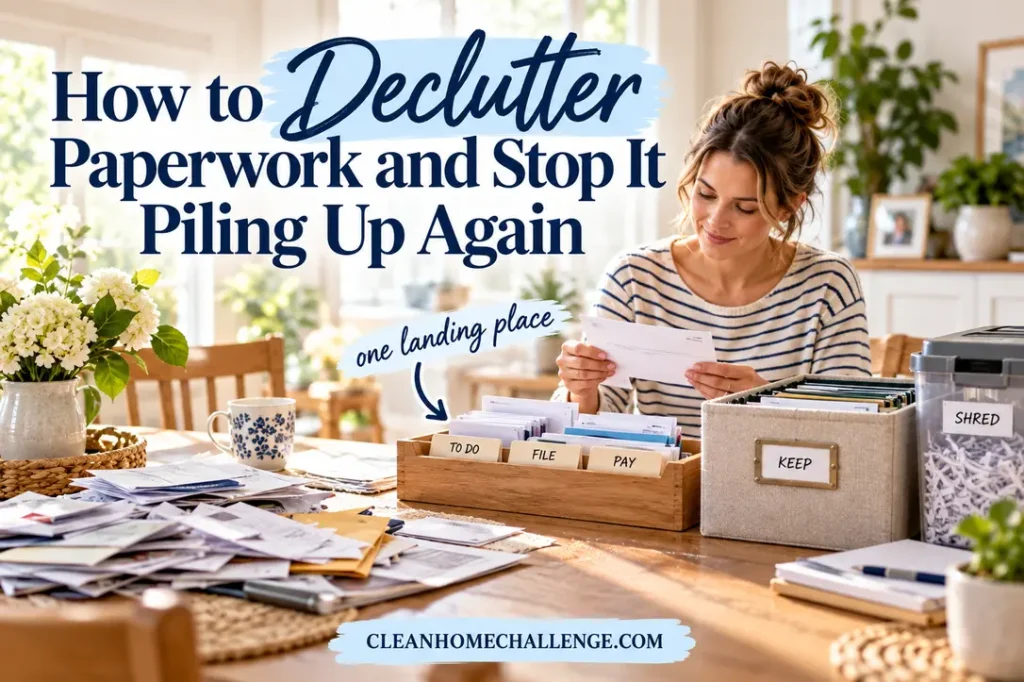
Paper clutter rarely arrives all at once. It slips in through school bags, the mailbox, medical appointments, receipts, warranties, tax documents, and forms you mean to deal with later. Before long, the kitchen counter becomes an unofficial filing cabinet and finding one important paper takes far too long.
The answer is not an elaborate color-coded archive. Busy families need a small, repeatable system that makes the next action obvious. This guide shows you how to declutter paperwork without covering the whole house in piles, decide what deserves space, and build a routine that prevents the backlog from returning.
You will need a recycling bag, a cross-cut shredder or secure shred box, one temporary action tray, five file categories, a pen, sticky notes, and your phone or scanner. Set aside 60 to 90 minutes for the first pass. If the backlog is large, stop after one contained box and repeat the process another day.
Disclosure: This post may contain affiliate links. As an Amazon Associate, Clean Home Challenge earns from qualifying purchases. If you make a purchase through these links, we may earn a small commission at no extra cost to you. This helps us keep creating practical cleaning tips, routines and resources for busy families! 🧽
Set Up a Paperwork Landing Zone
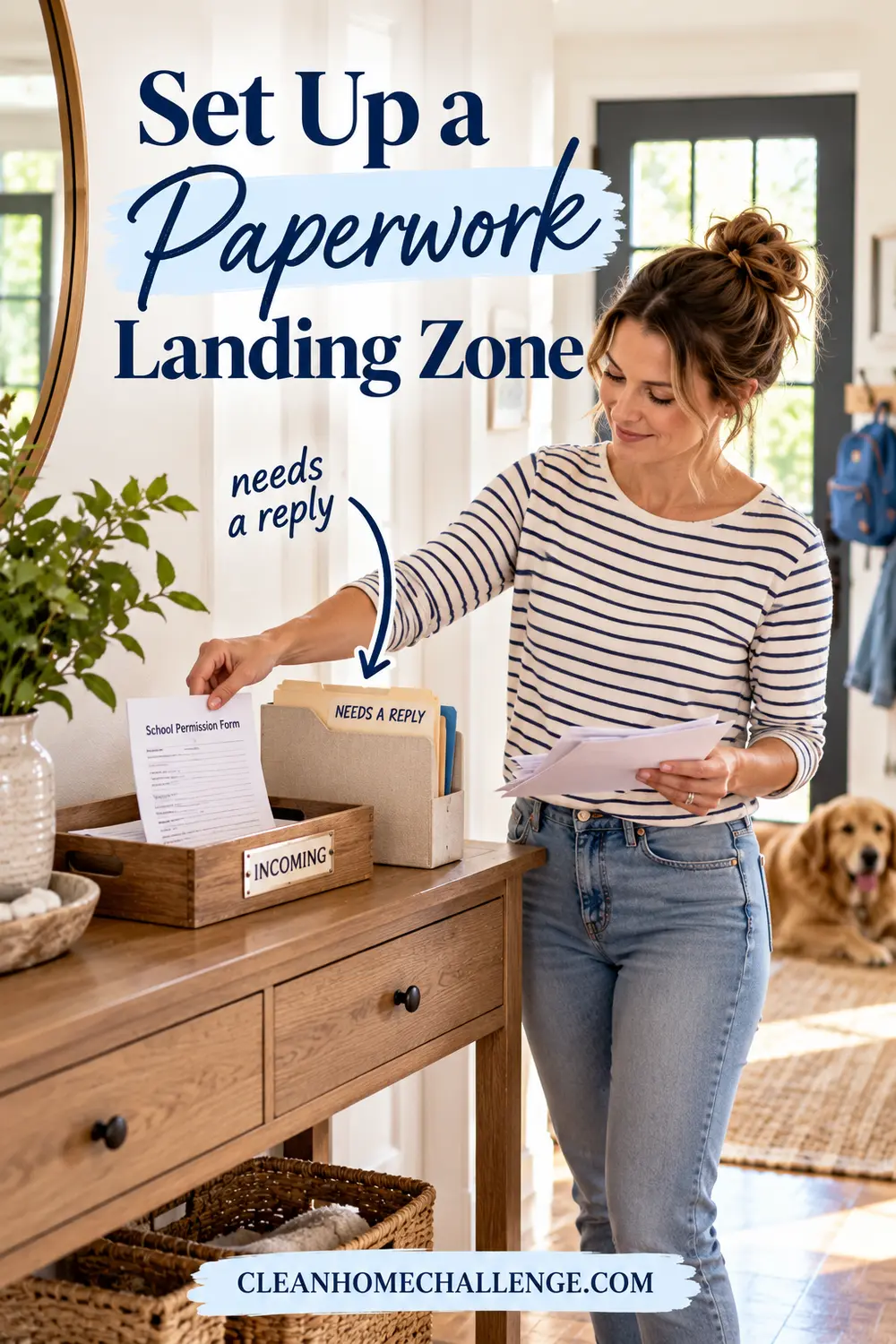
Choose one small spot where incoming paper is allowed to wait. An entryway console, one end of a kitchen counter, or a shelf near the family calendar works well. Add a shallow tray for mail and school papers plus a second, clearly labeled action folder for anything that needs a signature, payment, reply, or appointment.
Keep the landing zone compact. A tray that holds about a week’s worth of paper creates a helpful limit; a deep basket can quietly become another storage pile. Place recycling nearby so envelopes, flyers, and inserts can leave the system immediately.
The goal is not to file every piece of paper the moment it enters the house. It is to stop paper from spreading across several rooms. Ask everyone in the household to put papers in this one place, including permission slips, bills, receipts, and appointment notes.
Sort the Current Pile Without Spreading It Everywhere

Bring the existing paperwork to one table, but work with only one armful or box at a time. Keep the rest contained until you are ready for it. Spreading months of paper across the floor creates decision fatigue and makes it harder to pause safely.
Use four temporary destinations:
- Act: anything that needs a payment, signature, call, return, or calendar entry.
- File: records you have confirmed you need to keep.
- Shred: papers containing account numbers, Social Security numbers, medical details, signatures, or other sensitive information.
- Recycle: non-sensitive duplicates, expired flyers, empty envelopes, and reference material you can easily find online.
Open each envelope and make one decision. Remove inserts, note deadlines on your calendar, and place the remaining paper in the appropriate destination. Do not stop to build perfect subcategories yet. The first pass is about reducing volume and separating actions from archives.
Decide What to Keep, Digitize, Shred or Recycle

Keep paper because it has an active purpose, a legal or financial retention requirement, or value that cannot be replaced easily. Keep original birth, marriage, death, citizenship, adoption, property, and estate documents securely unless the issuing agency or a qualified professional confirms that a copy is sufficient. USA.gov explains how vital records are replaced, which is a useful reminder that these originals deserve deliberate storage.
For tax records, use the current IRS guidance rather than a universal household rule. The IRS says the retention period depends on the action, expense, or event the document records, and its general periods range from three years in many common situations to longer in specific cases. State tax, insurance, property, and legal requirements can differ, so verify before discarding originals.
Digitize documents you need for convenient reference but not
necessarily as paper originals: appliance manuals, routine statements,
school notices, and paid bills are common candidates. Scan the whole
page, check that it is readable, give the file a useful name such as
2026-09-electric-bill, and place it in a backed-up folder.
Do not shred the original until you have confirmed the scan opens and
you know a digital copy is acceptable.
Recycle only non-sensitive paper. Shred documents that reveal personal, financial, medical, or account information. The Federal Trade Commission recommends keeping personal information secure and disposing of it safely, including shredding papers that contain sensitive details.
Build Five Simple Household Paper Categories
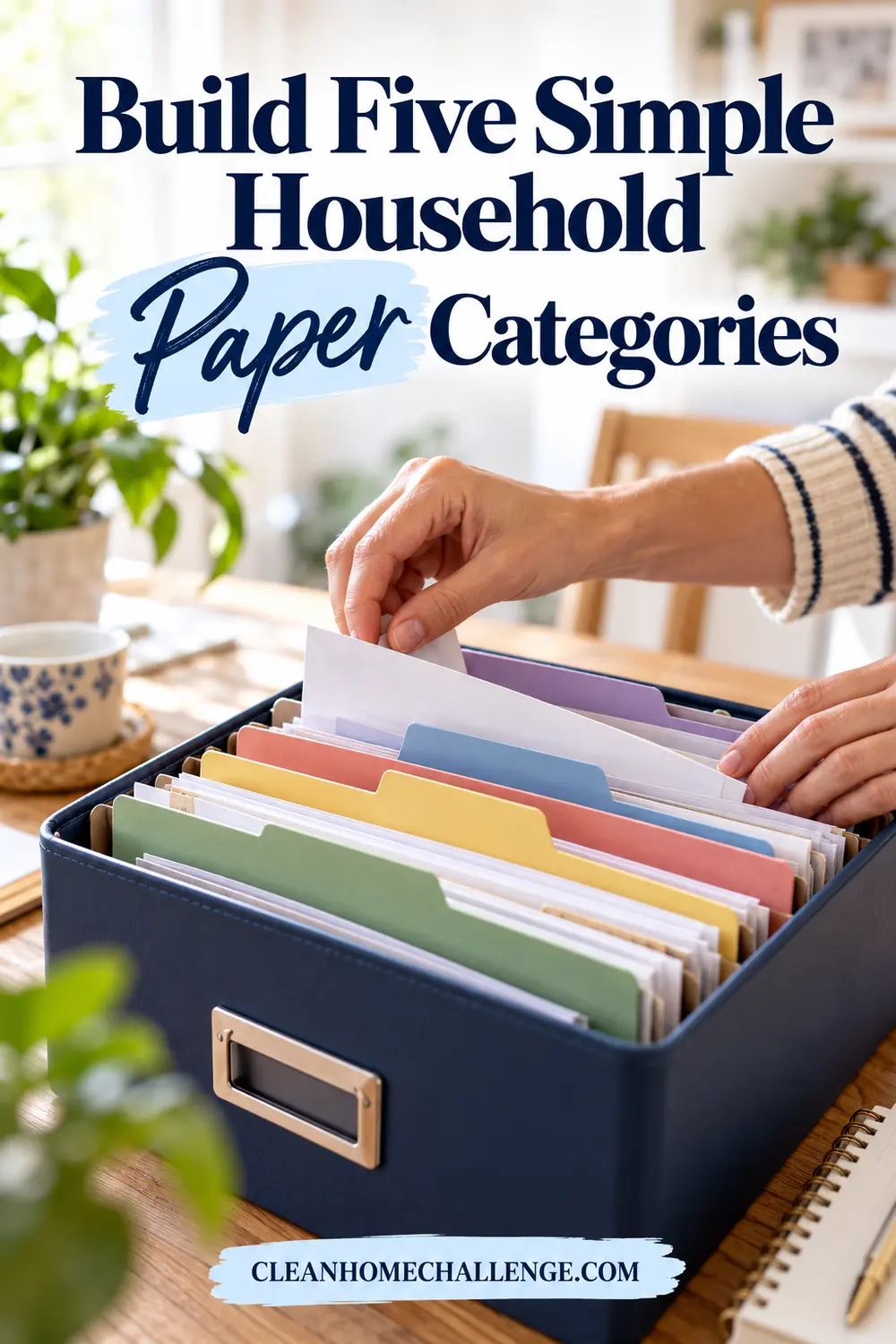
Five broad categories are easier to maintain than dozens of narrow folders. Start with these and add a subfolder only when the volume truly requires it:
- Action and current month: bills, forms, claims, and papers with a deadline.
- Home and vehicles: mortgage or lease information, insurance, repairs, warranties, titles, and major purchase records.
- Money and tax: tax support documents, investment and retirement records, loan paperwork, and year-end statements.
- Health and family: insurance records, important medical documents, school records, and family legal papers.
- Vital and permanent: certified records, estate documents, citizenship papers, and other hard-to-replace originals.
The fifth category should live in secure storage rather than an everyday open file box. The other four can sit in a portable file box or drawer near the landing zone. Label the tabs with plain words your whole household understands.
If a paper could fit in two places, choose the location you would search first. Consistency matters more than a technically perfect category.
Create a Filing System You Will Actually Use
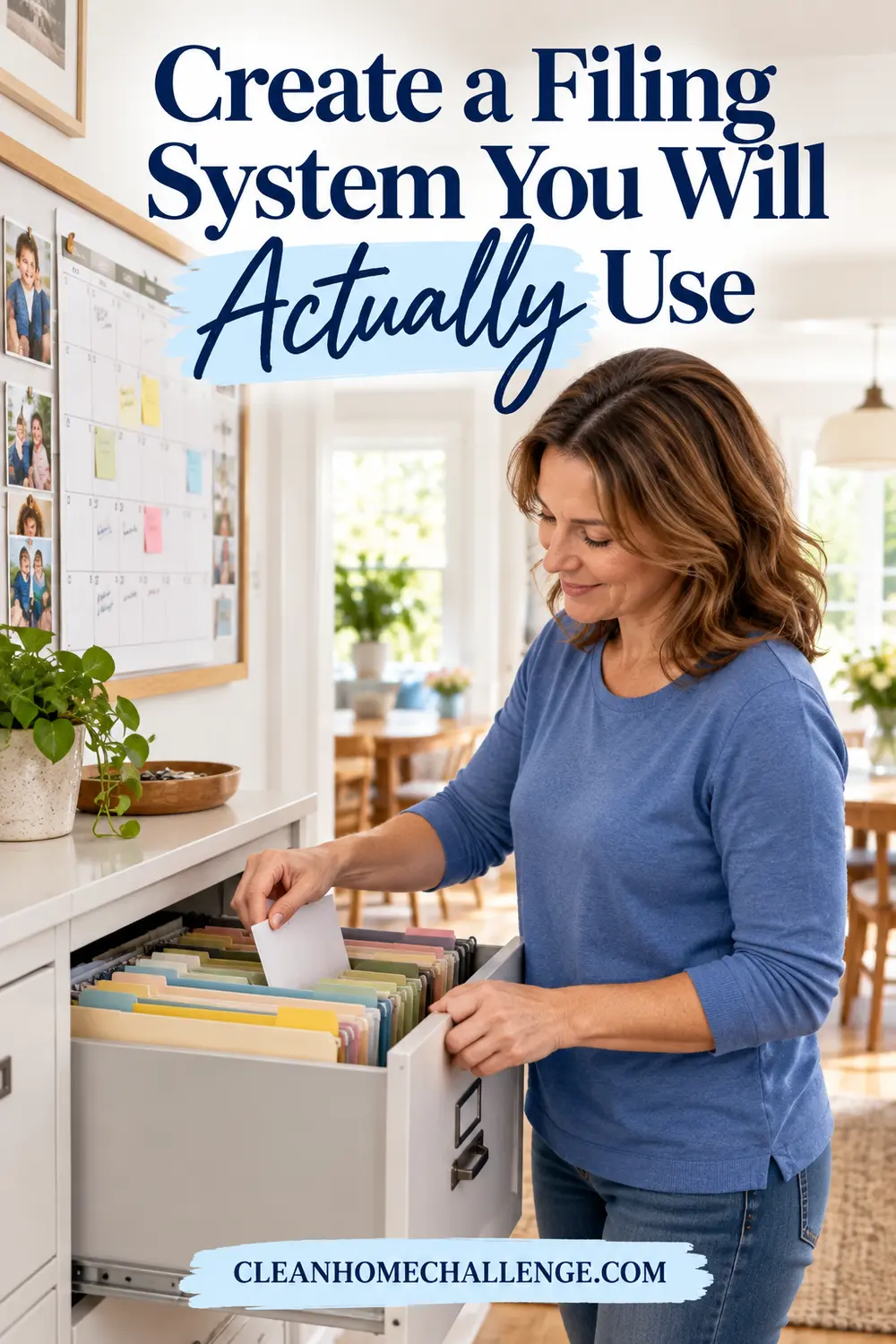
Match the system to the amount of paper you genuinely keep. A family with mostly digital statements may need one portable file box. A household managing property, caregiving, a home business, or complex medical records may need a drawer plus secure storage.
Put frequently used files between waist and shoulder height. Make tabs easy to read, leave some empty space in every folder, and keep spare folders and a pen nearby. If filing requires moving three boxes or finding a label maker, papers will wait on the counter.
Create an action folder that travels with your routine. Review it beside the family calendar or when you pay bills. Once an item is complete, file only the final record you need and discard duplicates, envelopes, and working notes.
For digital files, mirror the same broad categories. Use a simple
naming format that sorts naturally: YYYY-MM-DD-description.
Back up important files and protect accounts with strong, unique
passwords and multi-factor authentication where available.

Stop New Paper From Piling Up

Reduce the inflow before it reaches the landing zone. Switch routine statements to paperless delivery when digital access suits your household. Unsubscribe from unwanted catalogs and marketing mail. Photograph event details and add them to the calendar instead of keeping a flyer “just in case.”
Handle mail near the recycling and shred stations. Recycle obvious junk immediately, place sensitive unwanted mail in the shred container, and put only true action items in the action folder. School papers should follow the same route: calendar first, action folder second, recycling last.
Be selective with receipts. Keep those needed for returns, warranties, reimbursements, taxes, or insurance. Photograph a thermal receipt you must retain because the print can fade, then confirm the image is legible and stored with the related record.
A household rule helps: no loose paper moves beyond the landing zone. If someone carries a form to another room, it returns to the action folder when the task is complete.
Handle Sensitive Documents Safely
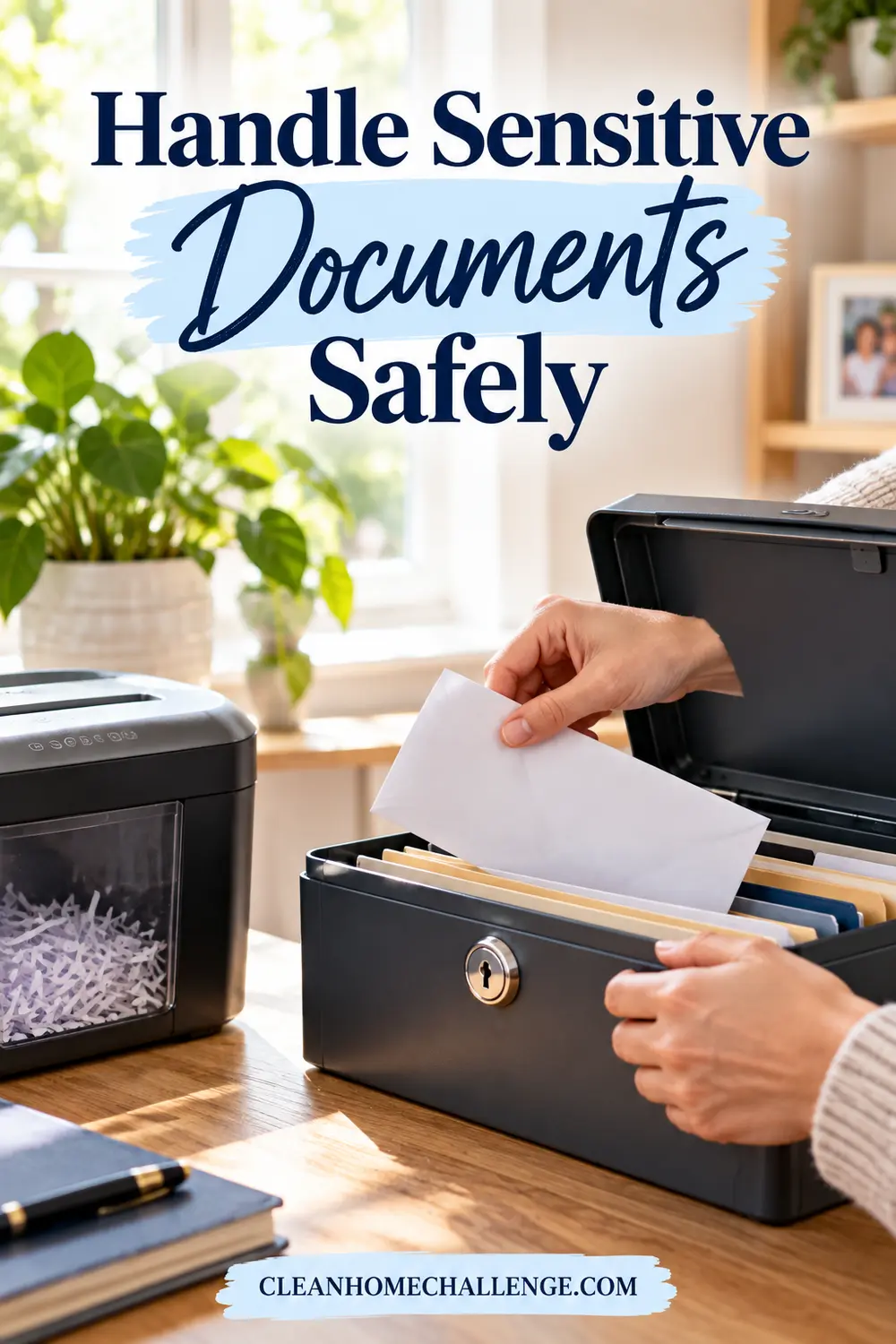
Store permanent originals in a locked, water-resistant and fire-resistant location appropriate to your risks. Keep a private inventory of what is stored there and how a trusted person could access it in an emergency. Do not put a visible label such as “passports and Social Security cards” on the outside.
Use a cross-cut shredder for sensitive paper or a locked shred console from a reputable service. Do not place documents with personal information loose in household recycling. Empty the shredder before it overfills, and follow the manufacturer’s instructions for staples, cards, cooling time, and maintenance.
Digital copies need protection too. Use a reputable encrypted storage service, enable multi-factor authentication, keep devices updated, and avoid scanning sensitive documents over public Wi-Fi. Delete extra copies from downloads, email attachments, and shared photo rolls once the secure version is confirmed.
If you are unsure whether a financial, legal, medical, property, or tax record can be destroyed, pause and verify with the relevant agency or professional. A slower decision is better than losing an irreplaceable original.
Use a 10-Minute Weekly Paperwork Reset

Choose a predictable time, such as Sunday evening or the day before bills are paid. Set a 10-minute timer and work in this order:
- Recycle junk and empty envelopes.
- Add dates and deadlines to the calendar.
- Complete any task that takes less than two minutes.
- Move longer tasks into the action folder.
- File completed records.
- Shred sensitive discards.
- Return the tray to empty or nearly empty.
Once a month, scan the action folder for stalled items. Once a year, preferably around tax time, review older files against current IRS, state, insurance, and legal requirements. Remove expired warranties and duplicates, but verify retention rules before destroying supporting records.
The best paper clutter system is not the prettiest one. It is the one your family can reset quickly after a busy week. Give every new paper one landing place, make the next action obvious, and keep only records that have a clear reason to stay. That small rhythm is what stops paperwork from piling up again.

CLEANERS CLUBHOUSE
Ready to Clear the Clutter One Step at a Time?
Join the 30-Day Declutter Challenge and work through your home in small, achievable steps. The Cleaners Clubhouse includes the plan, printable support and encouragement to help you keep going.
Sources
- Federal Trade Commission: How to protect your personal information
- Federal Trade Commission: Which documents to keep and which to shred
- Internal Revenue Service: How long should I keep records?
- Internal Revenue Service: Good recordkeeping key to year-round tax readiness
- USA.gov: Get copies of vital records and ID cards