
THIS POST MAY CONTAIN AFFILIATE LINKS. PLEASE READ MY DISCLOSURE FOR MORE INFO.
When every room feels cluttered, the hardest part is rarely knowing that something needs to change. It is deciding where to begin without creating an even bigger mess.
You do not need a free weekend, dozens of matching containers, or the energy to tackle your whole house. You need one small starting point, a simple decision system, and a clear way to move unwanted items out of your home.
This guide will help you declutter when you feel overwhelmed, even if you are short on time, surrounded by family life, or have stopped and restarted before.
Disclosure: This post may contain affiliate links. As an Amazon Associate, Clean Home Challenge earns from qualifying purchases. If you make a purchase through these links, we may earn a small commission at no extra cost to you. This helps us keep creating practical cleaning tips, routines and resources for busy families! 🧽
Start With One Tiny, Visible Win
Do not begin with the worst room in your house. Begin with a space small enough to finish.
Choose one visible area you use every day, such as:
- one corner of the kitchen counter;
- the top of your bedside table;
- one bathroom drawer;
- the entryway bench;
- one shelf in the living room; or
- the surface of the dining table.
Your first area should take about 10 to 20 minutes. A visible result gives you proof that the process works. It also creates one calmer place you can maintain while you work on the next area.
Define the boundary before you start. “The kitchen” is too broad. “The left side of the counter between the toaster and sink” is clear and finishable.
If even that feels like too much, remove five obvious items and stop. Five items is still progress.

Gather Four Containers Before You Begin
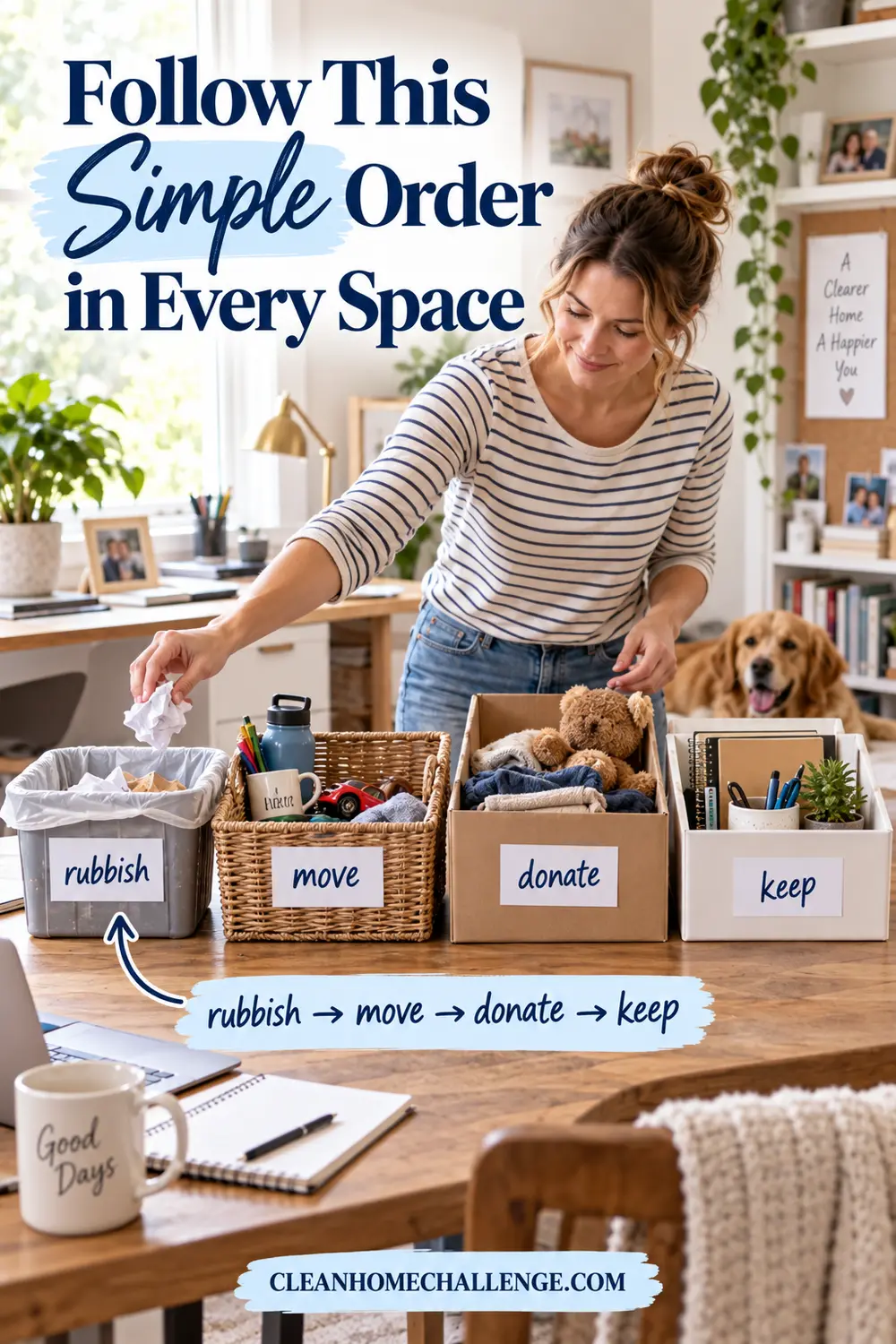
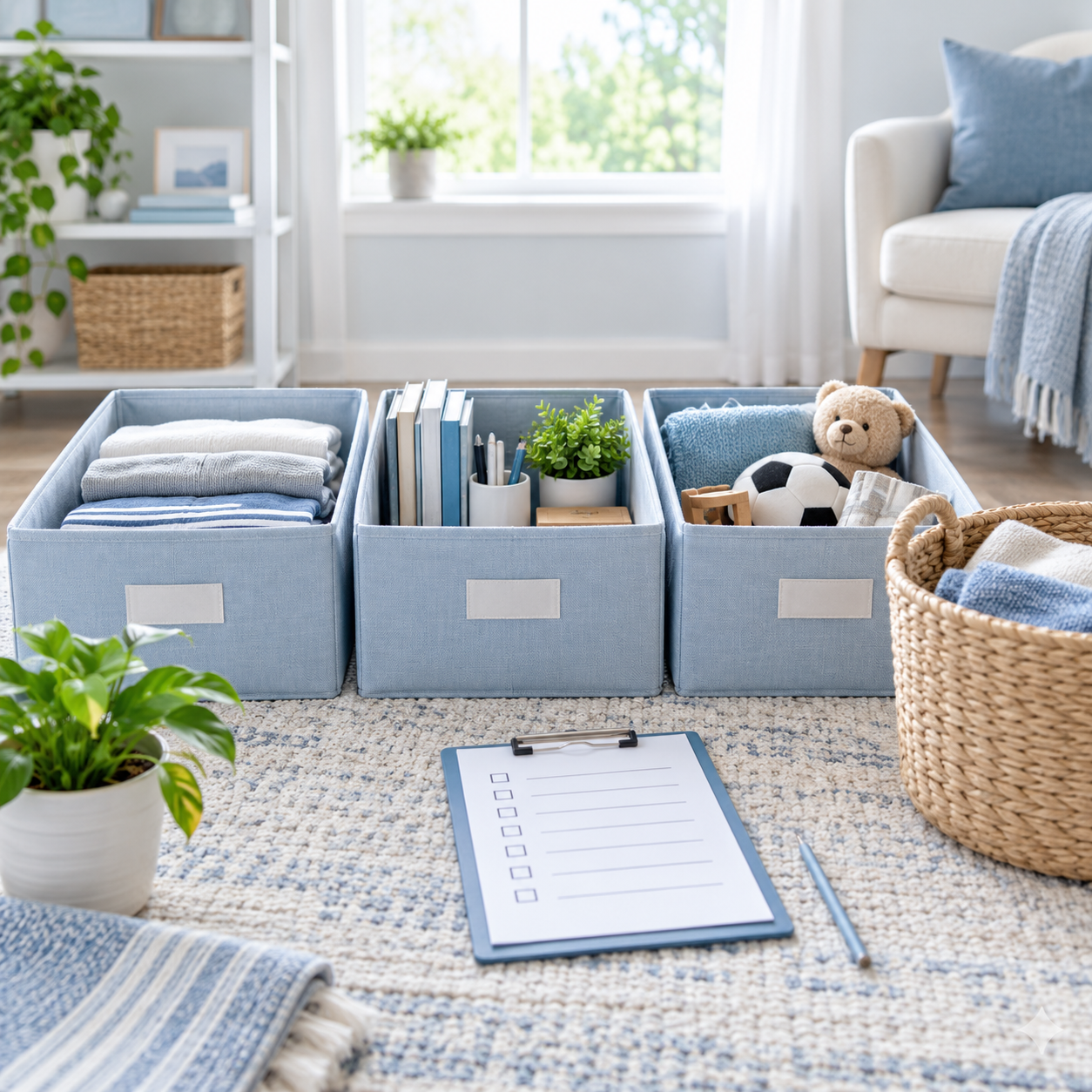
Use four laundry baskets, boxes, reusable bags, or tubs. Label them:
- Keep here – items that belong in the space.
- Move – items that belong somewhere else in the home.
- Donate or sell – usable items that can leave the house.
- Bin or recycle – rubbish, damaged items, and recyclable packaging.
The containers prevent you from walking away every time you find something from another room. They also stop the floor and surrounding surfaces from becoming new piles.
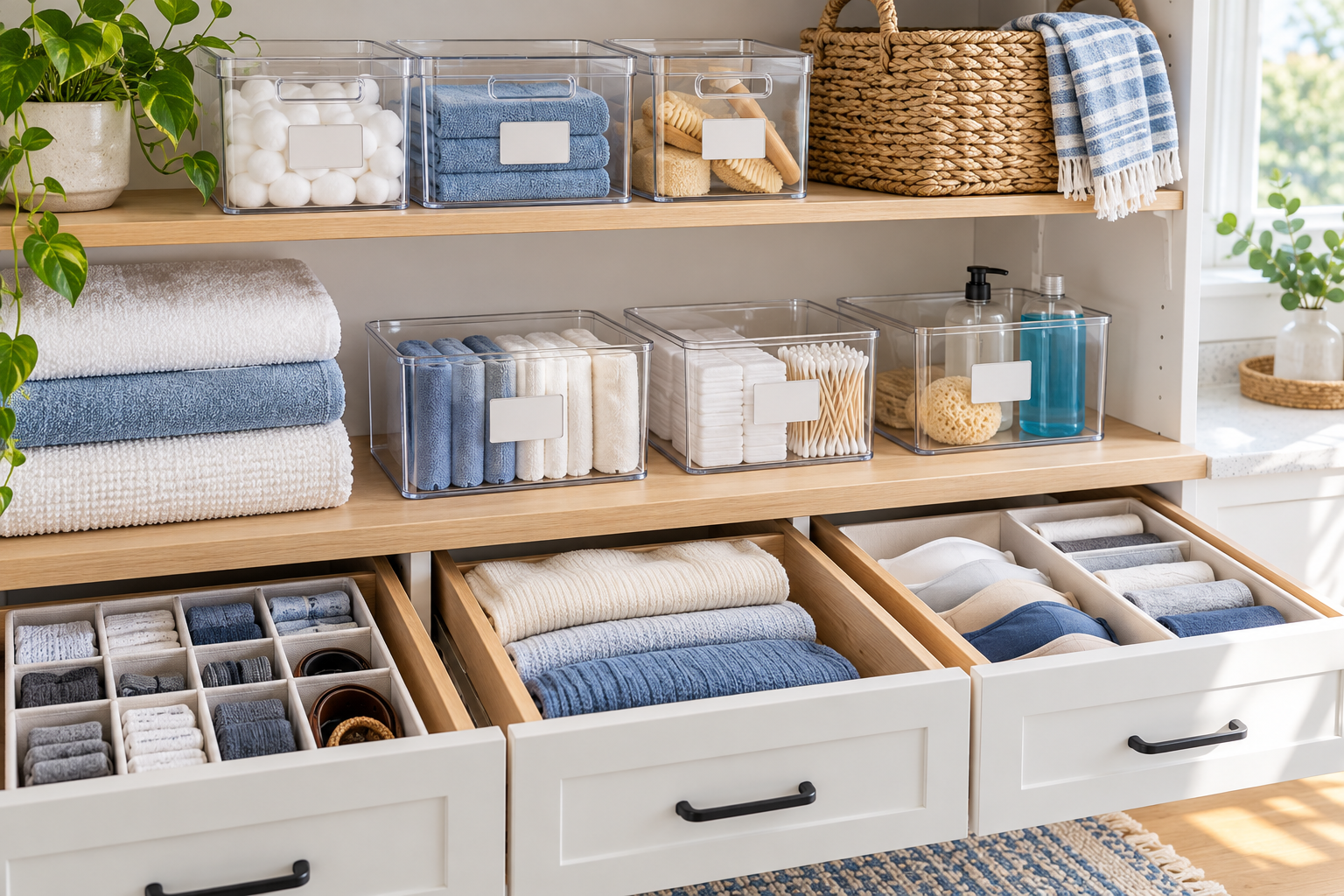
Do not buy permanent storage before you reduce what you own. Organizers are useful only after you know what is staying and where it will live.

Use the 15-Minute Decluttering Rescue
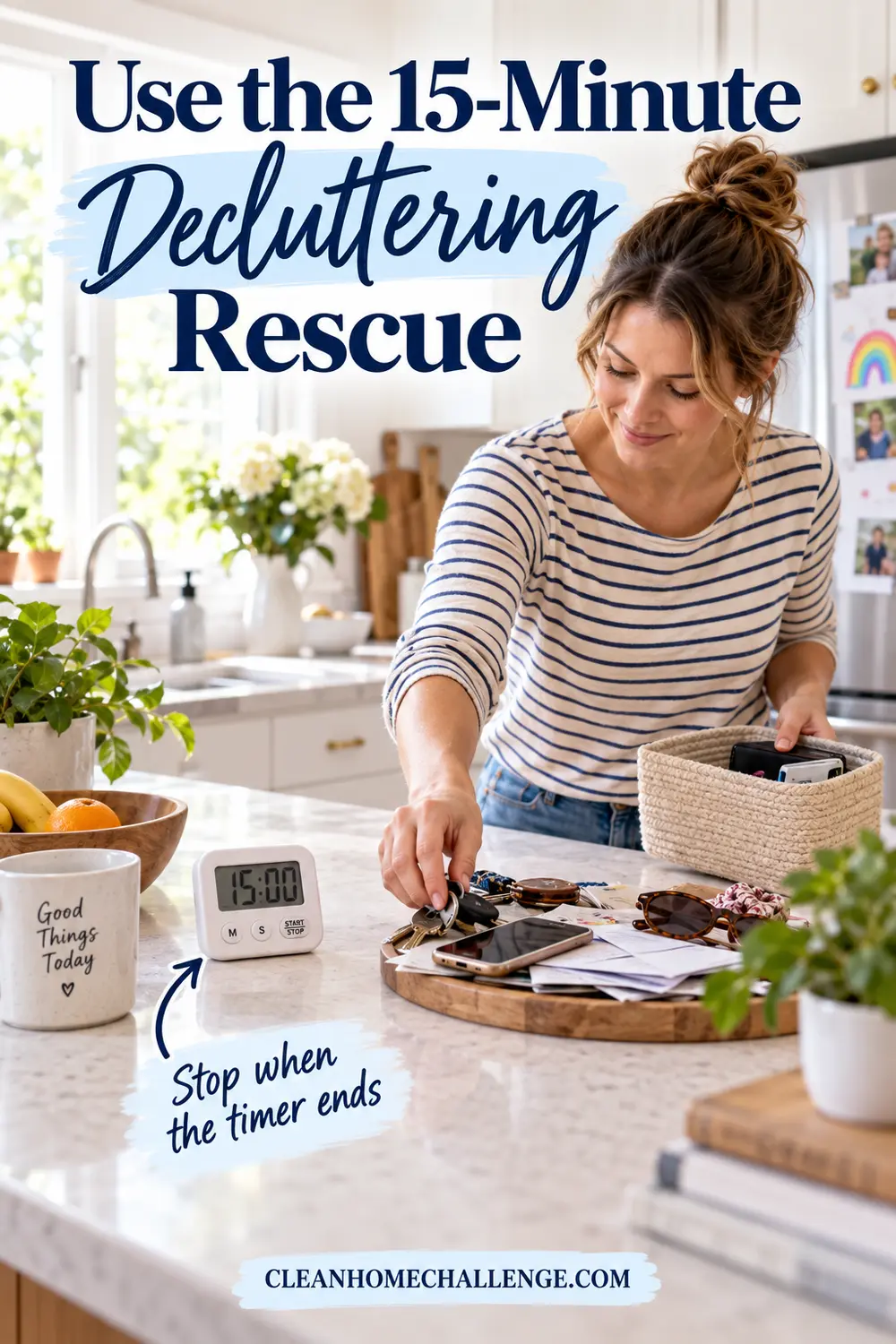
Set a timer for 15 minutes and choose one small boundary. Then work in this order:
- Remove obvious rubbish.
- Return easy items that clearly belong in the zone.
- Put out-of-place items in the move basket.
- Put easy donations in the donation container.
- Stop when the timer ends.
Stopping is part of the method. You are building trust with yourself that decluttering does not have to take over the day.
If you have energy, complete another 15-minute session after a break. If you do not, close the loop: empty the rubbish, place the donation bag by the exit, and return the move basket items when you next walk through those rooms.
The lowest-energy version
On a difficult day, take one rubbish bag and collect only obvious rubbish for five minutes. Do not make decisions about sentimental items, paperwork, or things you might sell. Removing easy waste still makes the next session lighter.
Follow This Simple Order in Every Space
Working in the same order reduces decision fatigue.
1. Rubbish and expired items
Start with empty packaging, broken items you cannot repair, dried-up pens, expired food, and other clear waste. Check local rules before disposing of medicines, batteries, chemicals, paint, electronics, or sharp items.
2. Things that belong elsewhere
Put them in the move basket instead of leaving the room repeatedly. Return them together at the end.
3. Easy donations
Look for duplicates, outgrown clothing, unused gifts, toys no one plays with, and household items you would not choose again.
4. Items you are keeping
Group similar items, choose a sensible home for them, and put the most frequently used items within easy reach.
5. Clean the small empty area
Wipe or vacuum the cleared space before putting the keep items back. This turns decluttering into a finished result instead of another half-done pile.
Make Faster Decisions Without Regret
You do not need to ask whether an item “sparks joy.” Practical questions often work better in a busy family home:
- Do we use this now?
- Would I buy or choose this again today?
- Do we have another item that does the same job better?
- Does it fit the space available?
- Is it worth the time required to clean, store, maintain, or move it?
- If I needed this later, would it be difficult or expensive to replace?
- Am I keeping it because I want it, or because I feel guilty?
For genuinely difficult items, use one small “decide later” container with a review date. A container limit prevents “maybe” from becoming a new category of permanent clutter.
Photographing a sentimental item can preserve the story without requiring you to keep every physical object. Keep the best examples rather than every example.
Selling can also become a holding pattern. Set a minimum value and a deadline. If the item is not listed or sold by that date, donate it if appropriate.

What to Do With Donations, Rubbish and Recycling
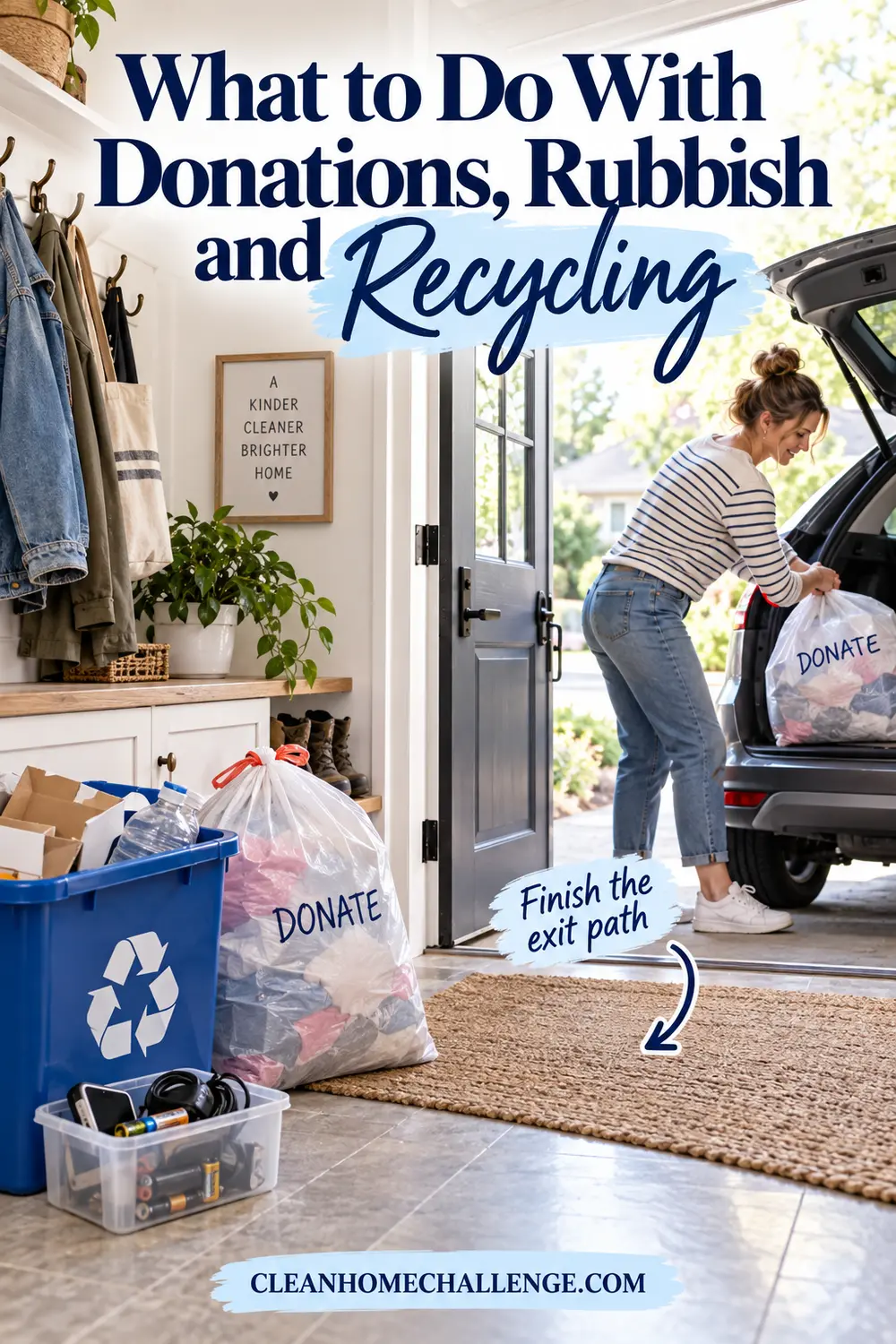
Decluttering is not complete when bags sit in the hallway for six weeks. Finish the exit path.
- Put donation bags directly in the car or beside the door.
- Choose a specific charity or drop-off point before you start.
- Book a pickup for furniture or large items where available.
- Empty rubbish and recycling at the end of each session.
- Use local household hazardous-waste services for chemicals, paint, batteries, and similar products.
- Take unused medicines to an approved medicine take-back location where available.
- Remove personal data from phones, computers, and other devices before recycling or donating them.
Only donate items that are clean, safe, complete, and accepted by the organization. Passing unusable items to a charity transfers the disposal cost rather than helping.
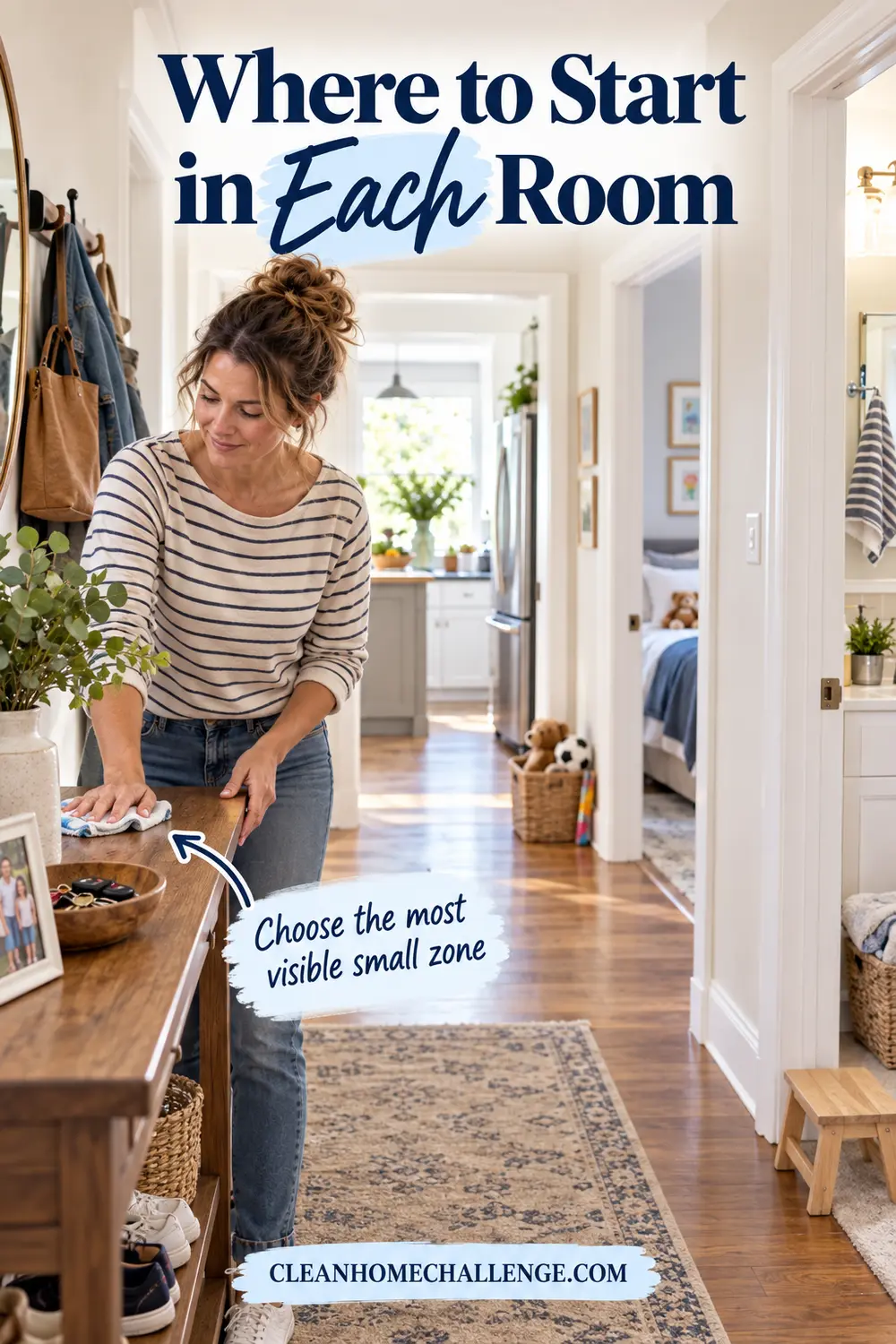
Where to Start in Each Room
| Room | Best first zone | Leave until later |
|---|---|---|
| Kitchen | One counter section or one utensil drawer | Pantry backstock and sentimental dishes |
| Living room | Coffee table or one shelf | Photos, collections, and family keepsakes |
| Bedroom | Bedside table or floor beside the bed | The whole wardrobe |
| Bathroom | Countertop or one drawer | Medicines and products requiring careful disposal |
| Entryway | Shoes, bags, and keys | Seasonal gear stored elsewhere |
| Laundry | Top of the machine or one supply shelf | Clothing repairs and stain projects |
| Kids’ room | Broken items and obvious outgrown toys | Favorite toys and sentimental items |
| Home office | Visible desk surface | Tax, legal, and identity documents |
Start with the area that causes the most daily friction, not necessarily the area that looks worst. Clearing a chair you need, finding the kitchen counter, or creating a safe walking path can improve family life immediately.
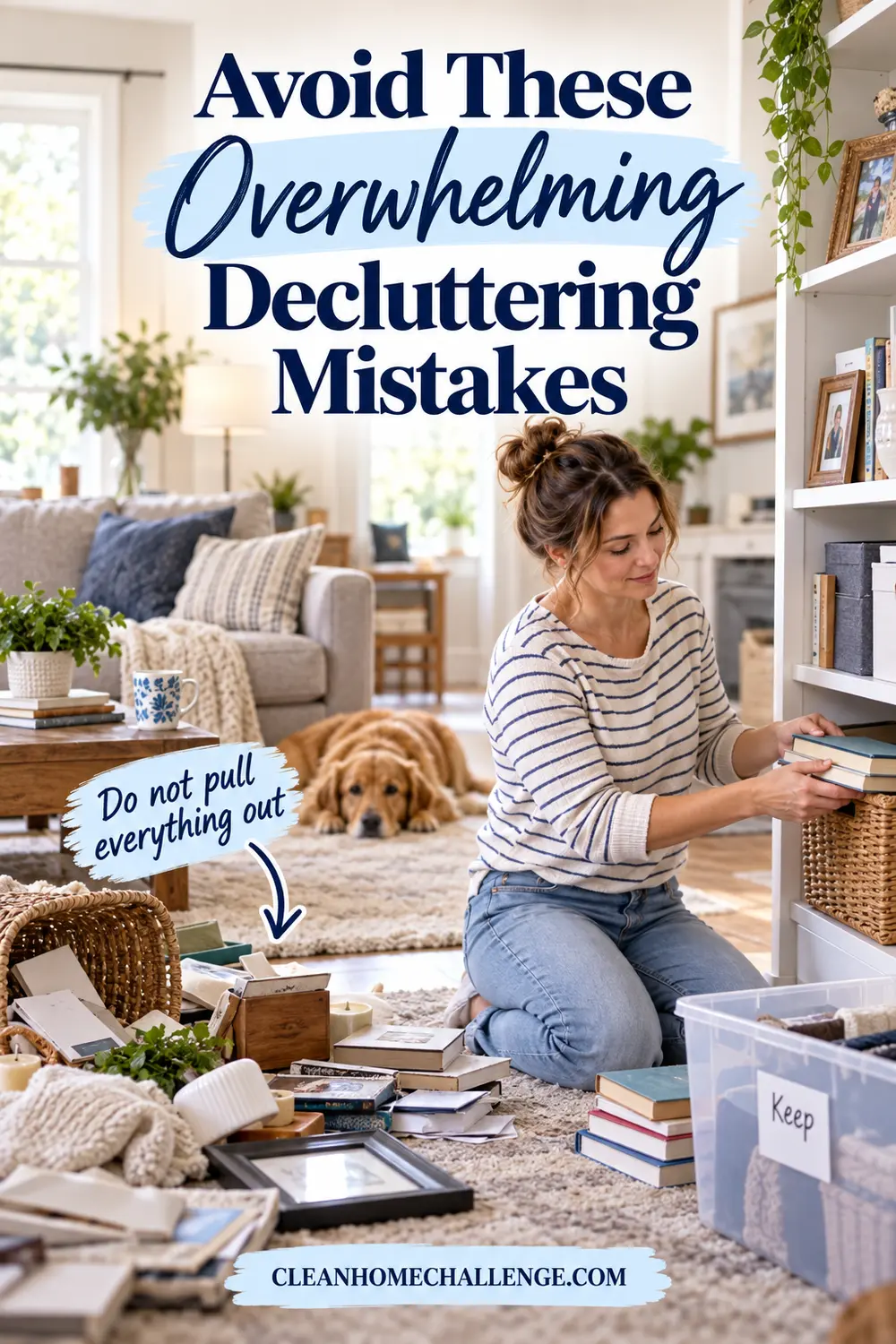
Avoid These Overwhelming Decluttering Mistakes
Emptying an entire room
Taking everything out creates hundreds of decisions at once. Work within a small boundary and finish it before expanding.
Organizing before reducing
Moving excess into prettier boxes does not remove clutter. Decide what deserves space first.
Starting with sentimental belongings
Sentimental items require more emotional energy. Build confidence with easy, low-stakes categories before tackling them.
Making a separate pile for every decision
Too many categories slow you down. Four containers are enough for most sessions.
Leaving donations inside
Give the bag a departure date. A donation is still clutter until it leaves your home.
Expecting the family to read your mind
Explain what each basket or landing place is for. Labels and simple routines work better than repeated reminders.
Using shame as motivation
Clutter is not a character flaw. Homes collect belongings during busy seasons, illness, caring responsibilities, growing children, moving, grief, and ordinary life. A calm plan is more useful than criticism.
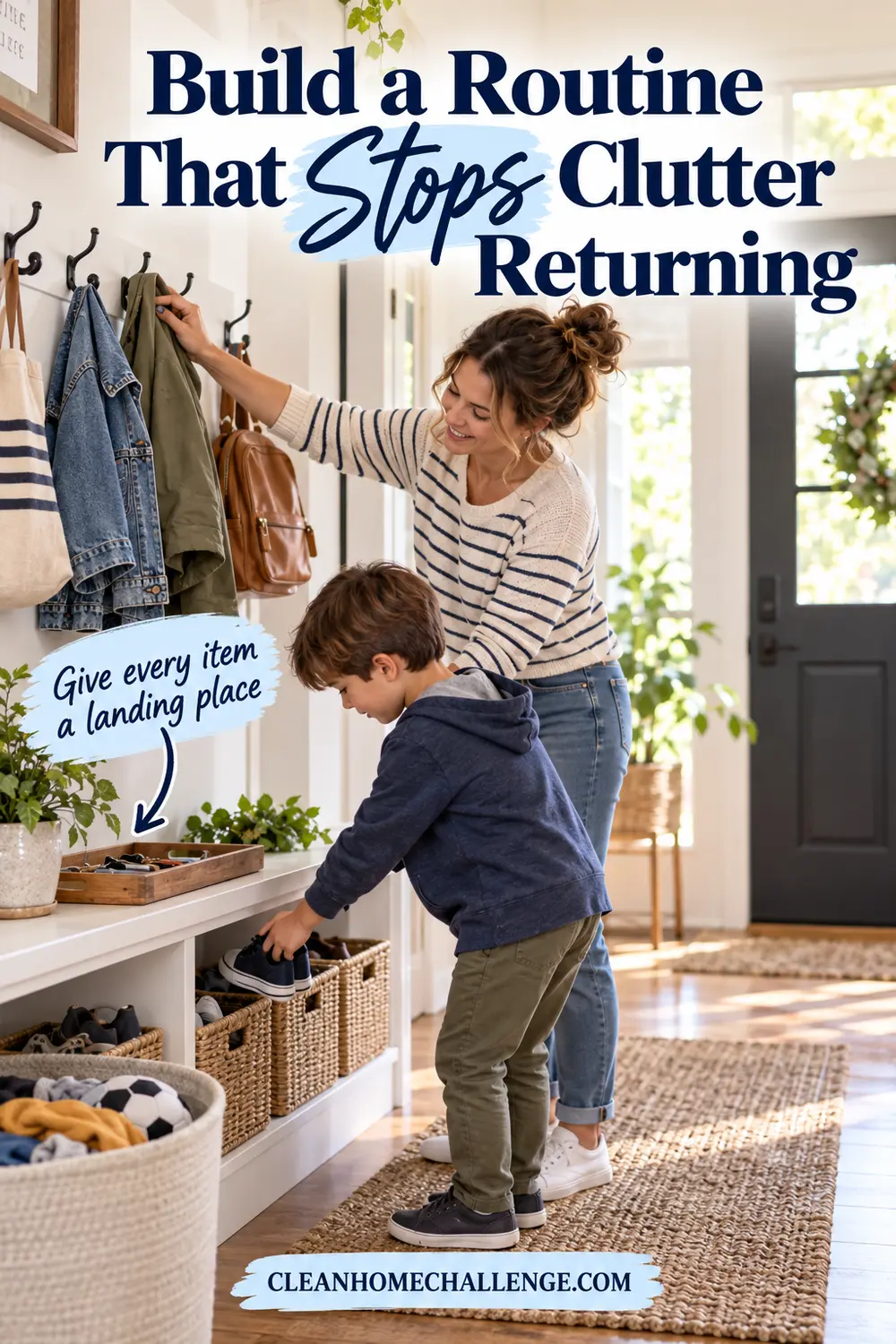
Build a Routine That Stops Clutter Returning
Once an area is clear, make the next correct action easy.
- Put hooks where bags are naturally dropped.
- Keep a small donation bag in a cupboard.
- Add a tray for keys and sunglasses.
- Give incoming papers one landing place.
- Store frequently used items near where they are used.
- Keep categories within the space available rather than adding endless storage.
Add a five-minute pickup to the end of the day. Ask everyone to return a few items to their homes, clear the main flat surfaces, and prepare the entryway for tomorrow.
Use a one-in, one-out guideline for categories that grow quickly, such as mugs, toys, books, beauty products, and clothing. It does not need to be rigid; it is simply a reminder to notice what comes into the home.
The Cleaners Clubhouse 30-Day Declutter Challenge can give you a small space to focus on each day, with printable support when you do not want to decide what to tackle next.
A Gentle 7-Day Plan for an Overwhelmed Home
| Day | Small zone | Goal |
|---|---|---|
| 1 | Entryway | Clear the walking path and create homes for shoes, bags, and keys |
| 2 | Kitchen | Clear one counter section and one everyday drawer |
| 3 | Living room | Reset the coffee table and one seat |
| 4 | Bathroom | Clear the counter and check one product drawer |
| 5 | Bedroom | Clear the bedside table and floor beside the bed |
| 6 | Paperwork | Collect loose papers into one safe inbox; do not sort every file |
| 7 | Exit day | Deliver donations, recycle approved items, and remove rubbish |
Keep each session to 15 or 20 minutes. If a day is missed, continue with the next small task when you can. There is no need to double the workload.

CLEANERS CLUBHOUSE
Ready to Clear the Clutter One Step at a Time?
Join the 30-Day Declutter Challenge and work through your home in small, achievable steps. The Cleaners Clubhouse includes the plan, printable support and encouragement to help you keep going.
Frequently Asked Questions
What should I declutter first when my whole house is messy?
Choose one small, visible, frequently used surface. Remove rubbish and obvious out-of-place items first. A completed counter section, bedside table, or entry bench is more useful than a whole room pulled apart.
How do I declutter when I have no energy?
Use a five-minute rubbish round or remove five items. Sit down while sorting a single drawer or basket if that is more comfortable. Avoid difficult categories and stop before you are exhausted.
What if I regret donating something?
Slow down for valuable, irreplaceable, or sentimental items. Use a small dated maybe box and review it in 30 days. For common, replaceable items you have not used, the practical risk is usually low.
Should I clean or declutter first?
Remove rubbish and excess items first, then clean the newly cleared small area. Trying to deep-clean around clutter usually creates more handling and frustration.
How long does it take to declutter a house?
It depends on the size of the home, the amount of belongings, the number of people involved, and the time and energy available. Aim for steady completed zones rather than a dramatic deadline.
What if another family member does not want to declutter?
Begin with your belongings and shared rubbish. Do not discard someone else’s possessions without agreement. Make shared systems easy to understand and invite family members to choose what stays within an agreed space.

Your Home Does Not Need to Be Finished Today
The goal is not to make every room perfect. It is to make the home easier to use, one completed space at a time.
Choose a tiny visible zone, set a short timer, use four containers, and finish the exit path. Then stop and notice what is easier: a clear chair, a usable counter, a safer walkway, or a calmer start to the morning.
That small win is not insignificant. It is how an overwhelming house becomes manageable.

Sources and safety notes
- U.S. Environmental Protection Agency guidance on household hazardous waste and electronics recycling.
- U.S. Food and Drug Administration guidance on medicine take-back options.
- Local council, municipal, or waste authority rules should always be followed for disposal and recycling in your area.