
THIS POST MAY CONTAIN AFFILIATE LINKS. PLEASE READ MY DISCLOSURE FOR MORE INFO.
A morning cleaning routine should make the next part of the day easier, not turn the first hour into a cleaning marathon. In ten focused minutes, you can make the bed, restore the kitchen after breakfast, collect the most obvious clutter and prepare the main walkway for everyone heading out the door.
This routine is intentionally small. It will not deep-clean the house, finish every load of laundry or make every room look perfect. It simply stops a few high-impact jobs from building into a much bigger mess later.
Set a ten-minute timer, work in the same order and stop when it rings. If the morning has already gone sideways, use the three-minute minimum version. A routine only helps when it fits the life your family is actually living.
Disclosure: This post may contain affiliate links. As an Amazon Associate, Clean Home Challenge earns from qualifying purchases. If you make a purchase through these links, we may earn a small commission at no extra cost to you. This helps us keep creating practical cleaning tips, routines and resources for busy families! 🧽
What Your Morning Reset Should Actually Do
The goal is to restore function. By the end of the reset, the bed is pulled up, the main kitchen work area is usable, the busiest clutter hotspot is under control and the path to the door is safe and clear.
That is enough to change how the house feels when you return later. Breakfast dishes are less likely to harden in the sink, crumbs are less likely to travel through the home and school bags are less likely to disappear beneath the day’s belongings.
A useful morning reset should:
- reduce the mess that becomes harder to handle later;
- protect the surfaces and walkways your family uses most;
- move one or two jobs to their correct next stage;
- create an obvious finish line; and
- leave time for breakfast, medication, school preparation and getting out the door.
It should not include cupboard organizing, full-room vacuuming, bathroom scrubbing, paperwork sorting or detailed dusting. Those jobs need their own scheduled time.

Set Up the Night Before So Ten Minutes Is Enough
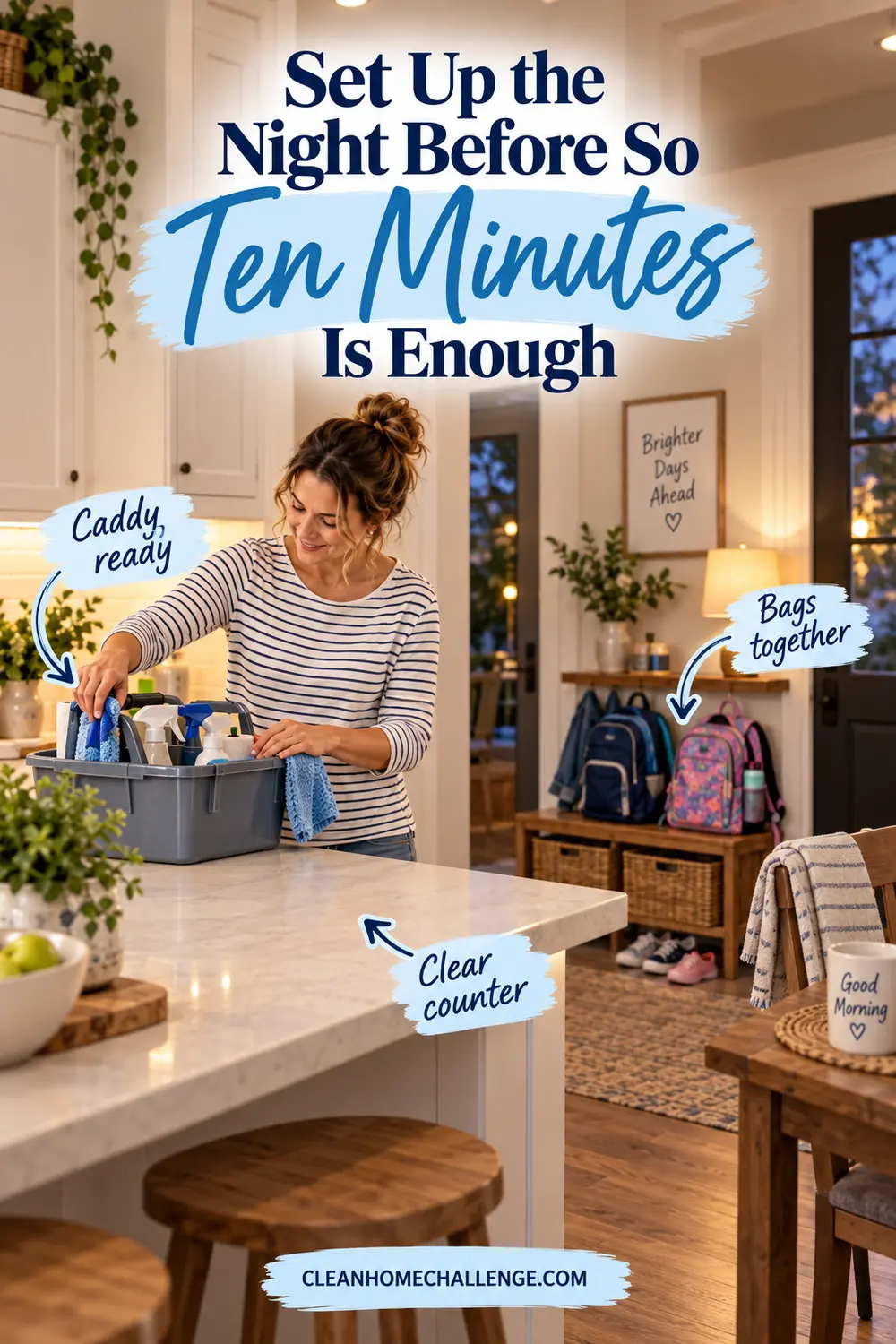
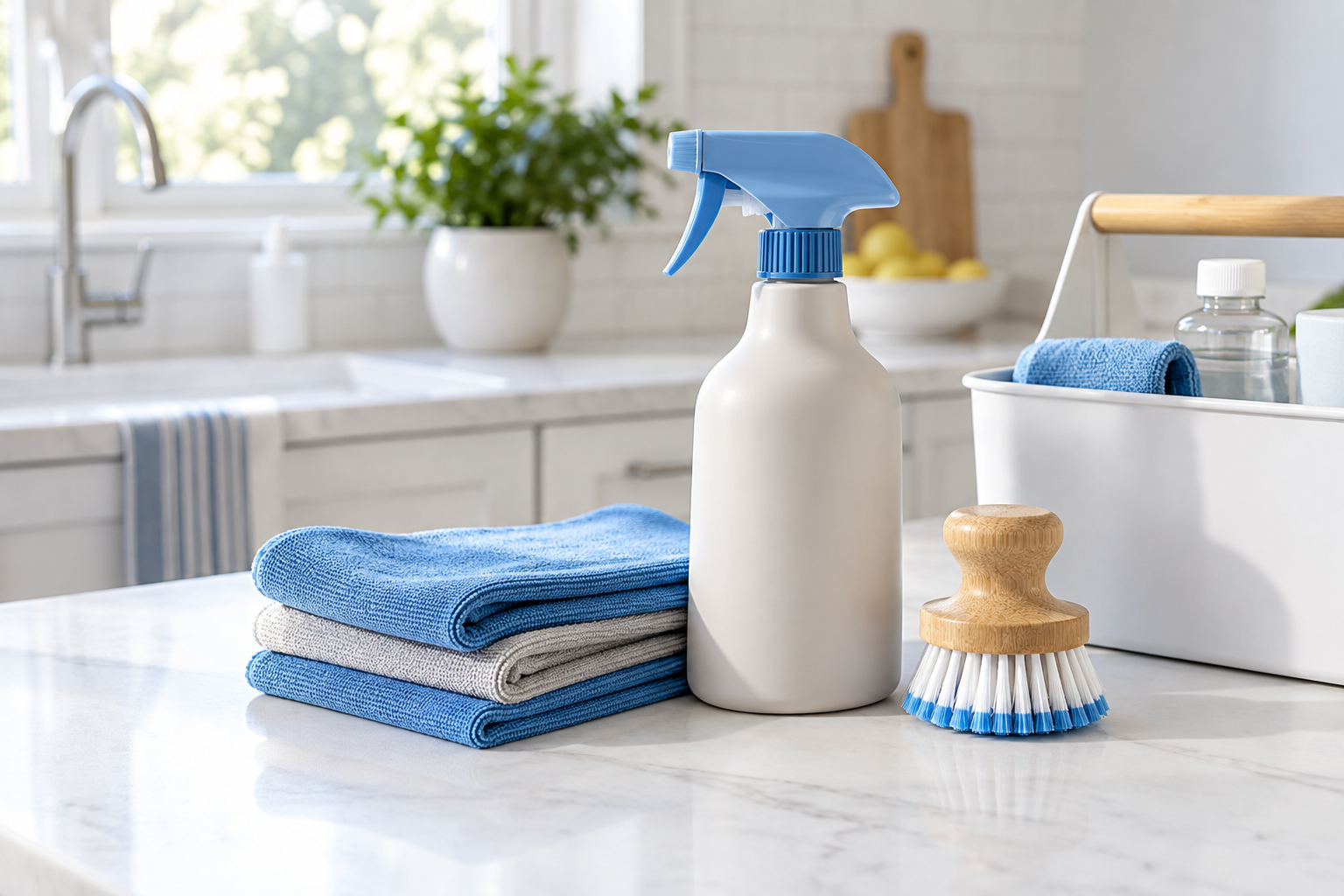
The morning routine works much better when you are not searching for a cloth, basket or vacuum attachment. Keep the basic supplies close to the places where you use them:
- one microfiber cloth in or near the kitchen;
- a small basket for belongings that need to travel to another room;
- your usual surface-safe cleaner, stored securely away from children and pets;
- a lightweight vacuum or hand vacuum where it is easy to reach; and
- a timer on your phone, watch or kitchen counter.
If possible, run or load the dishwasher in the evening, put school bags in one launch spot and leave the breakfast counter mostly clear. You are not doing tomorrow’s cleaning in advance. You are removing the little delays that can use up most of a ten-minute window.
Use products only as their labels direct. Never mix cleaning products, and do not spray cleaner around uncovered food. For an ordinary breakfast surface, routine cleaning with a suitable detergent or cleaner is usually the task; disinfect only when there is a specific reason and follow the product’s required contact time.
Minutes 0–2: Make the Bed and Open the Room
Start in the bedroom because this gives you a quick, visible win before the day becomes noisy.
Pull the covers up, straighten the pillows and open the curtains or blinds. You do not need hospital corners, decorative cushions or a perfectly smooth duvet. The bed only needs to look finished enough that you are less tempted to pile clean laundry, bags or paperwork on it later.
If opening the window is appropriate for the weather, security and outdoor air conditions, a short burst of fresh air may make the room feel less stuffy. Otherwise, simply open the curtains and let in daylight.
Put sleepwear in its usual place and take one cup, tissue or piece of rubbish with you as you leave. Do not start sorting the wardrobe or bedside drawer. When the two minutes are up, move on.

Minutes 2–5: Reset the Kitchen for Breakfast
The kitchen is where a small morning mess can become an unpleasant afternoon job, so give it the largest share of the timer.
Work in this order:
- Put milk, spreads, fruit and other perishable food away.
- Load breakfast dishes into the dishwasher, or stack hand-washing neatly so the sink remains usable.
- Wipe the main preparation strip and the area where the family ate.
- Shake crumbs from a removable placemat over the bin, if appropriate.
- Put obvious rubbish in the bin.
Do not empty the entire dishwasher unless that is the one job blocking you. Do not scrub the stovetop, clean the fridge or wipe every cabinet. Your target is one usable counter, one workable sink and food safely returned to storage.
Use a cleaner suited to the surface. Natural stone, timber, laminate and specialty finishes can all have different care requirements, so follow the manufacturer guidance and patch-test an unfamiliar product in an inconspicuous area.

Minutes 5–7: Clear the Main Clutter Hotspots
Take one basket through the kitchen, living area and entryway. Collect only the things that are obviously out of place: toys, shoes, chargers, books, drink bottles and a folded item of laundry.
If an item’s home is within a few steps, put it away. If returning it would send you into another room and another job, place it in the basket and keep moving. Park the basket somewhere intentional, such as near the bedroom hallway, and empty it during your next normal trip through the house.
Keep paperwork out of this reset. Put permission slips, bills or forms that need action in one visible admin spot. Sorting the whole pile can wait.
Ask family members to carry one personal item with them as they move through the morning. A child can take a toy or drink bottle, while an adult can move a work bag or mug. The aim is shared movement, not a complicated chore chart before school.

Minutes 7–9: Wipe One High-Use Surface
Choose the single surface that will make the room feel most usable. In many homes, that is the breakfast table, kitchen island or bathroom vanity.
Remove the items that do not belong there, then wipe the surface with a clean cloth and a product suitable for its material. If there are fresh spills, deal with those first so they do not become sticky or stained.
Stop at one surface. Do not drift into polishing taps, dusting shelves or wiping every door handle. The point of this step is to create one clear place for the family to use later, not to chase every mark in the room.
Keep food-contact surfaces separate from cloths used on toilets, floors or pet areas. Launder reusable cloths regularly and allow them to dry between uses.

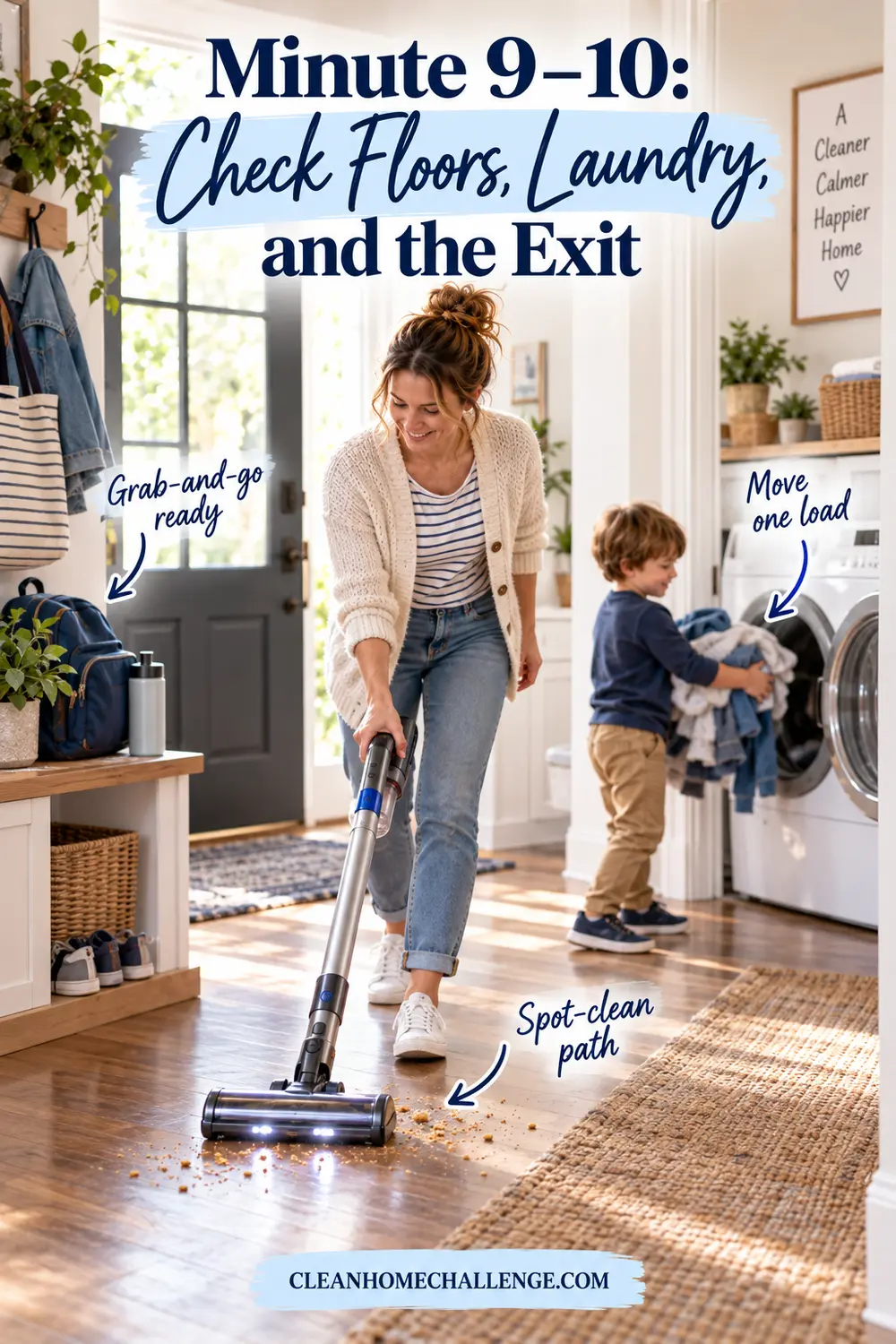
Minute 9–10: Check Floors, Laundry, and the Exit
Use the final minute for a quick scan, not another round of cleaning.
- Vacuum or pick up only the crumbs on the main kitchen or exit path.
- Move one laundry load to its correct next stage if it takes less than a minute.
- Put keys, wallets, school bags and water bottles in their launch spot.
- Clear shoes or toys that create a trip hazard near the doorway.
- Return the cloth, basket and vacuum to their normal homes.
Do not start a wash cycle you cannot move on time, and do not vacuum the entire house. A quick pass over visible crumbs protects the busiest floor; scheduled floor cleaning can happen later.
When the timer sounds, stop. A reliable finish line is what makes the routine repeatable.
CLEANERS CLUBHOUSE
Make Your Cleaning Routine Easier to Follow
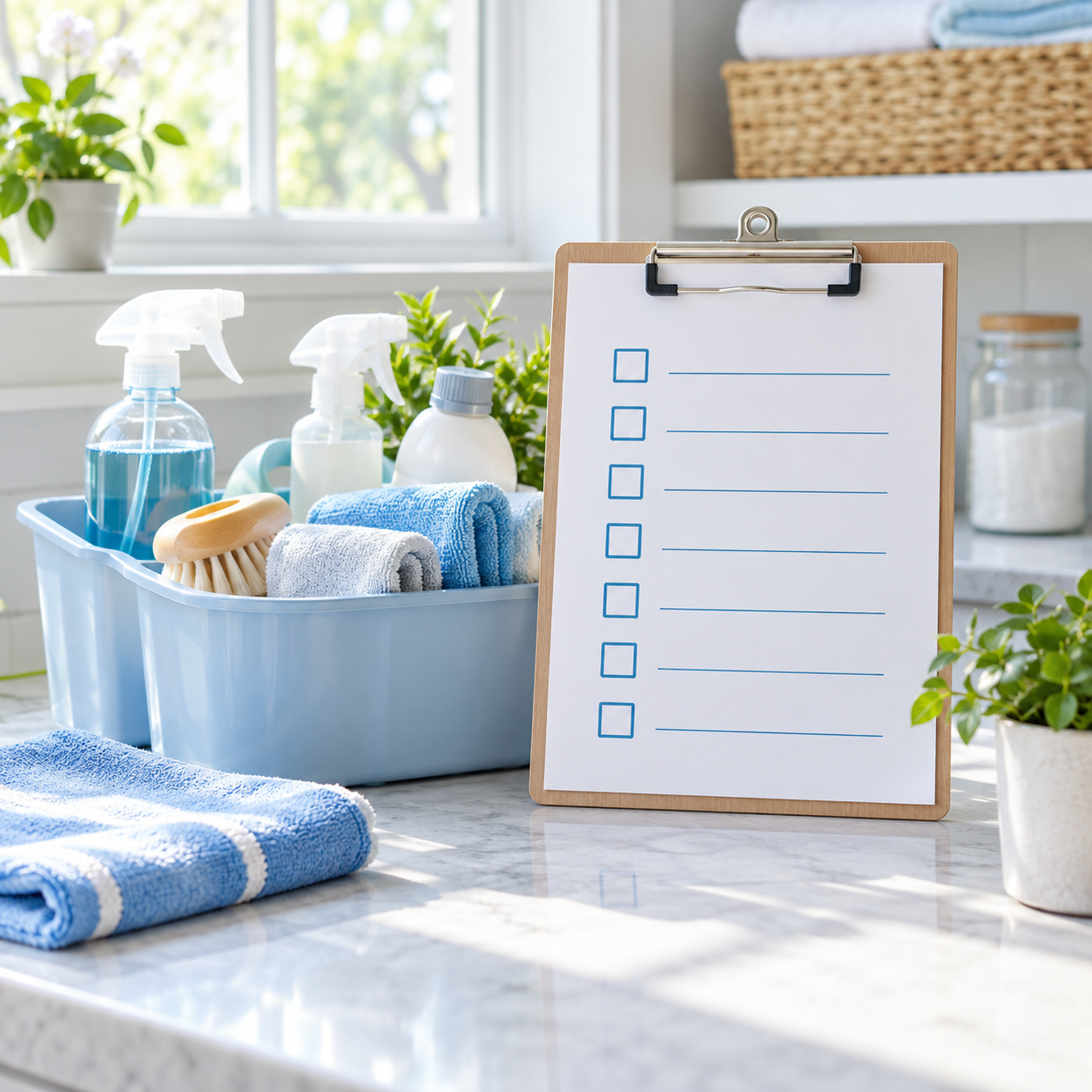
Stop wondering what to clean next. Inside the Cleaners Clubhouse, you’ll get a practical 12-month cleaning calendar, printable worksheets and monthly challenges to help you keep moving without trying to do everything at once.
The Minimum Morning Routine for Chaotic Days
Some mornings have illness, poor sleep, unexpected phone calls, sensory overload or a child who cannot find the one thing they need. Use a three-minute minimum instead of deciding the whole routine has failed.
- Put perishable food away.
- Make the sink and one counter usable.
- Clear the main walkway and group essential bags by the door.
If you have another thirty seconds, wipe a fresh spill. Everything else can wait.
This minimum version is also appropriate during difficult seasons, disability flare-ups, shift-work weeks or the first months with a new baby. The most useful routine is the one that protects essential household function without demanding energy you do not have.

How to Make This Routine Stick Without Doing More
Attach the reset to something that already happens every morning. Start after breakfast, after the children brush their teeth or just before you put on your shoes. A dependable cue removes the need to feel motivated.
Keep the order the same:
- bed and daylight;
- breakfast kitchen;
- clutter basket;
- one high-use surface; and
- floor, laundry and exit check.
If the routine regularly takes longer than ten minutes, remove a task instead of trying to move faster. Perhaps the bed only needs the duvet pulled up, or the laundry step belongs in the evening. The timer protects the rest of your morning.
Give family members repeatable jobs with clear finishes. One child can group shoes, another can take cups to the kitchen and an adult can load the breakfast dishes. Clear ownership reduces reminders and stops one person carrying the entire routine.
Track the routine only if it feels helpful. A simple tick on a calendar is enough. Judge success by function: you can use the sink, walk safely to the door, find the bags and return to a home that has not gathered a full day of avoidable mess.
The ten-minute morning cleaning routine is not a test of how much you can squeeze into the day. It is a small reset that gives the household a steadier starting point. Do the high-impact jobs, let the deep cleaning wait and leave the house knowing you have already made the afternoon a little easier.
Sources and Further Reading