THIS POST MAY CONTAIN AFFILIATE LINKS. PLEASE READ MY DISCLOSURE FOR MORE INFO.
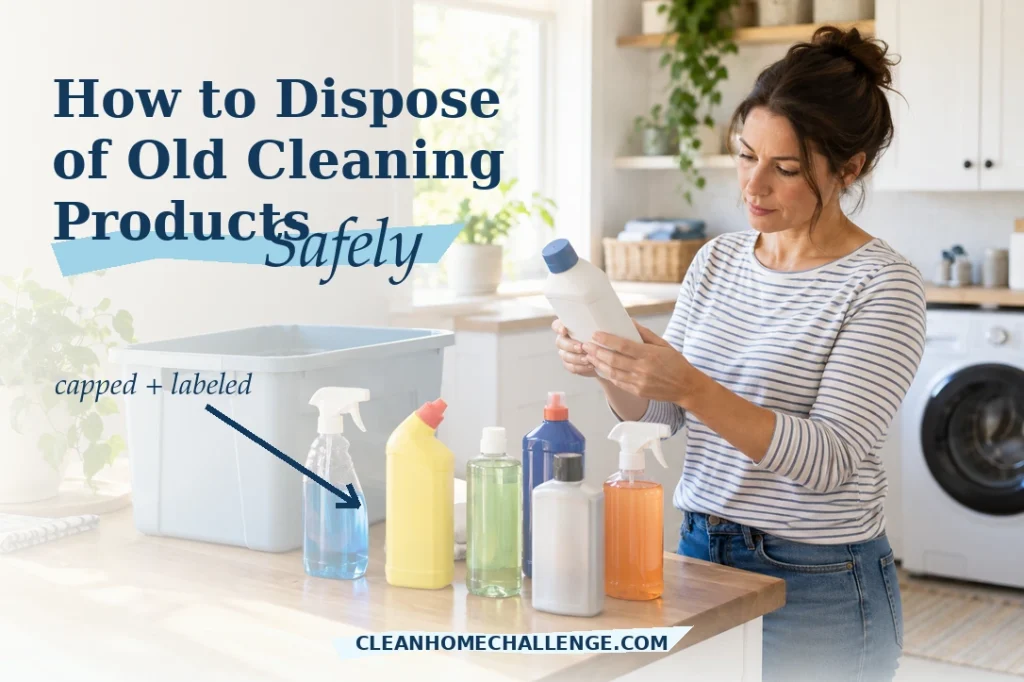
That half-used bottle of oven cleaner has been pushed to the back of the cabinet for years. The spray disinfectant has a broken trigger. A mystery bottle has lost most of its label. It is tempting to pour everything out, toss the containers, and call the job done—but old cleaners are not all handled the same way.
Some household cleaning products can be corrosive, flammable, toxic, or reactive. Disposal rules also vary by location. The safest approach is to identify each product, follow its label, and confirm the instructions with your local household hazardous waste program before anything leaves its container.
This guide gives you a calm, practical system for working through the shelf without mixing chemicals or guessing where they belong.
The short answer: Keep every product capped and in its original labeled container. Never mix leftovers or pour an unwanted cleaner into another bottle. Read the disposal directions, check your city or county’s household hazardous waste guidance, and take hazardous, leaking, unknown, or partly full aerosol products to the program that accepts them.
Disclosure: This post may contain affiliate links. As an Amazon Associate, Clean Home Challenge earns from qualifying purchases. If you make a purchase through these links, we may earn a small commission at no extra cost to you. This helps us keep creating practical cleaning tips, routines and resources for busy families! 🧽
Start With the Label and Local Disposal Rules
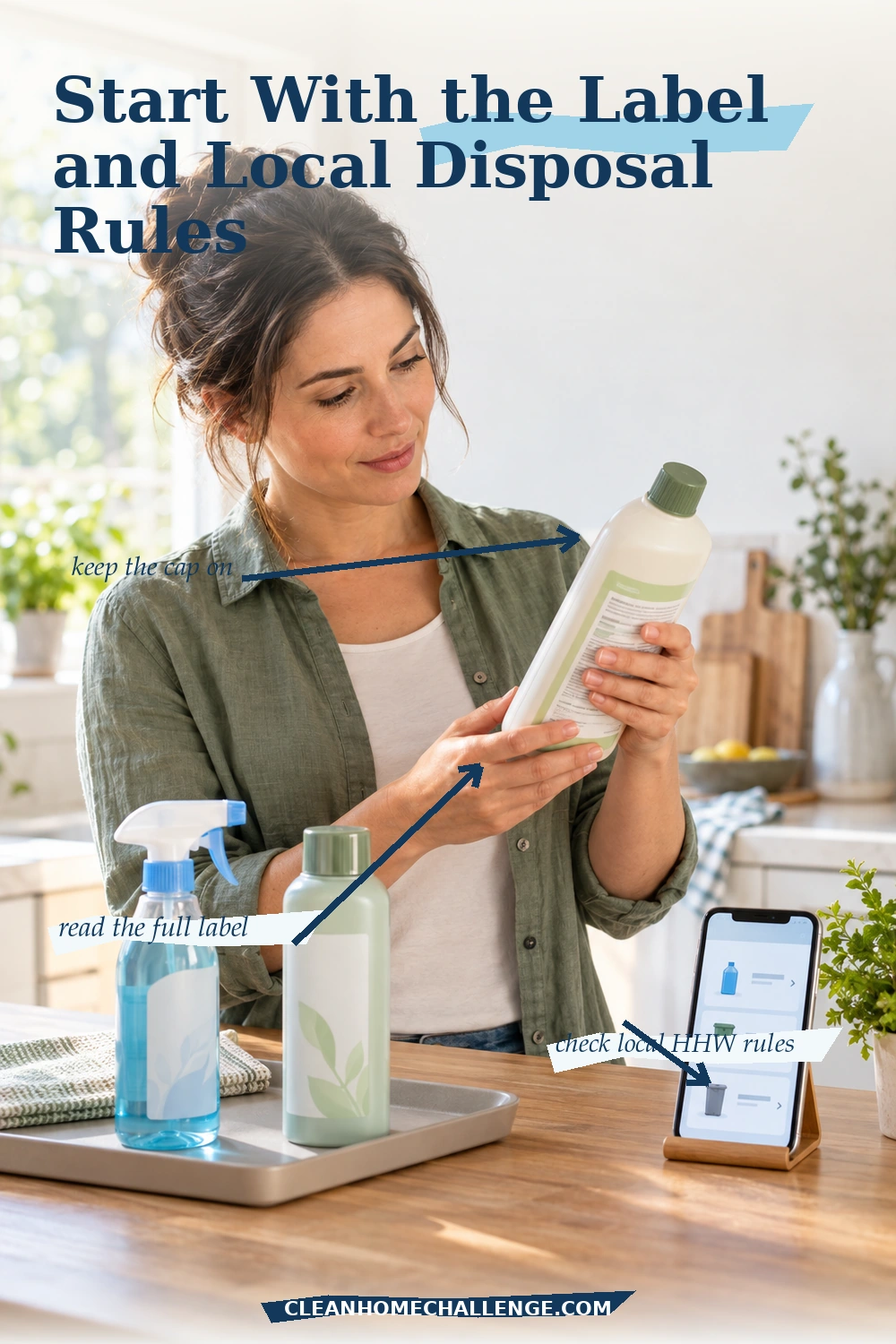
Before sorting anything, open a window or work in a well-ventilated area, move children and pets away, and put on any protective equipment required by the product label. Do not open containers just to smell or inspect the contents.
Read the entire label, paying particular attention to:
- the product name and intended use
- signal words such as Danger, Warning, or Caution
- warnings such as corrosive, flammable, poison, oxidizer, or harmful if swallowed
- storage and disposal directions
- a manufacturer phone number or website; and
- any date or lot code that may help the manufacturer identify the product.
The US Environmental Protection Agency advises consumers to read disposal instructions, keep hazardous products in their original containers with labels attached, and check with local environmental, health, or solid-waste agencies. Your local program matters because accepted materials, quantity limits, appointment rules, and instructions for empty containers can differ from one community to the next.
Search your city or county website for “household hazardous waste” or “HHW.” If the answer is unclear, call the program before you drive there. Tell them the product type, whether the container is full or partly full, and whether it is leaking or unlabeled.
Do not rely on a social-media shortcut or a generic list that says every cleaner can go down the drain. EPA recommends keeping HHW out of drains, storm sewers, and the ground, and state or local rules may be stricter.
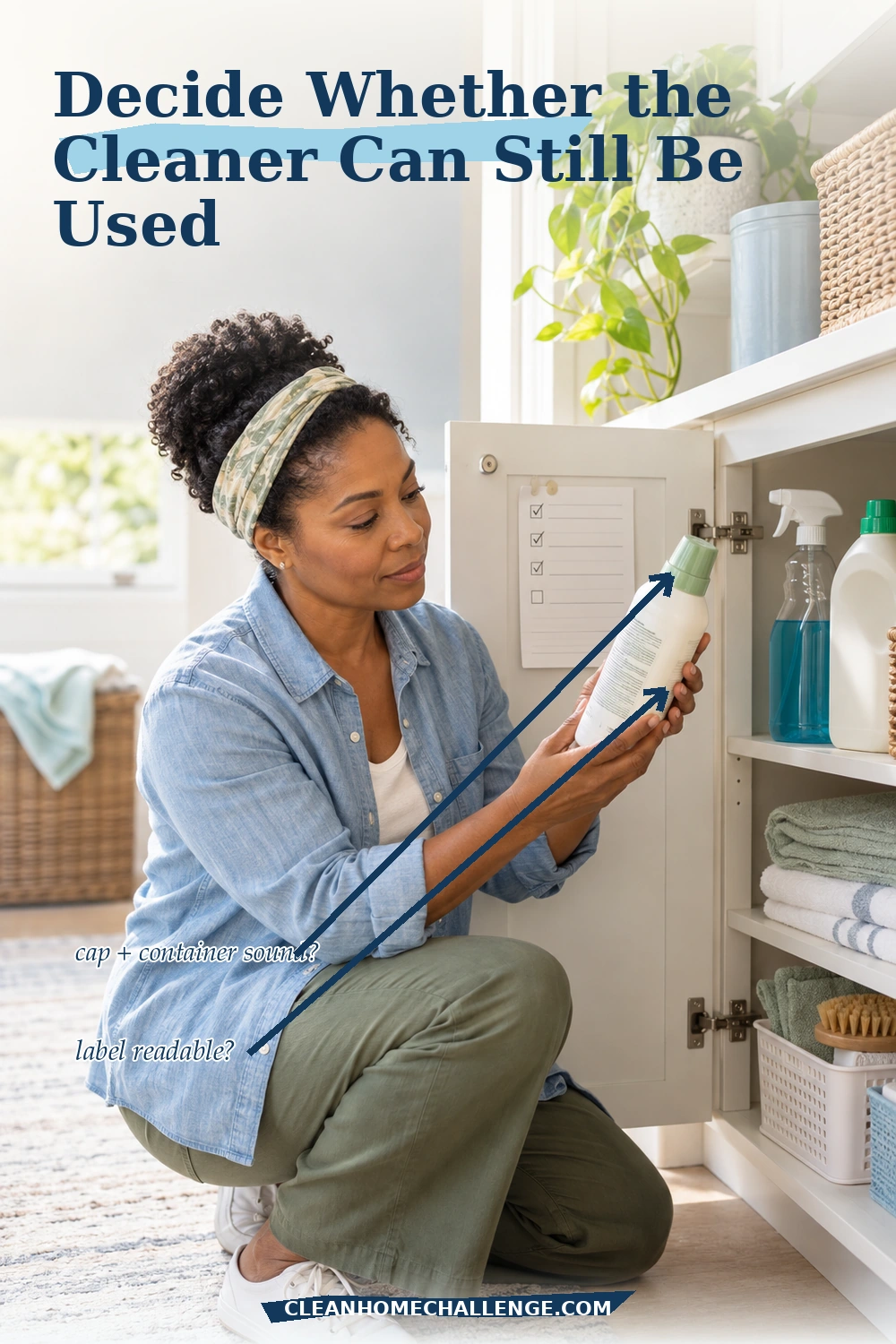
Decide Whether the Cleaner Can Still Be Used
Disposal is not always the first option. If a product is still usable, clearly labeled, safely stored, and allowed by the label, finishing it for its intended purpose can prevent waste. A local reuse program may also accept unopened products, but confirm first—never leave chemicals at a donation center without permission.
Use this quick decision check:
- Is the label readable? If you cannot identify the product, do not use it.
- Is the container sound? Bulging, corrosion, cracking, leaks, or a damaged cap are stop signs.
- Does the product look normal for that product? Do not test a separated, discolored, unusually thickened, or foul-smelling cleaner.
- Is it still recommended for the intended surface and task? Formulas and care instructions change.
- Can you follow the current label exactly? If not, move it to the disposal group.
The printed date is not the only factor. Some products lose effectiveness before they become a disposal hazard, while others may have no consumer-facing expiration date. When the label does not answer the question, contact the manufacturer rather than improvising.
If you decide to use a product, use only the amount directed and never combine it with another cleaner. “Using it up” does not mean emptying it into a sink, toilet, or yard.
Sort Products by Their Hazard Warning
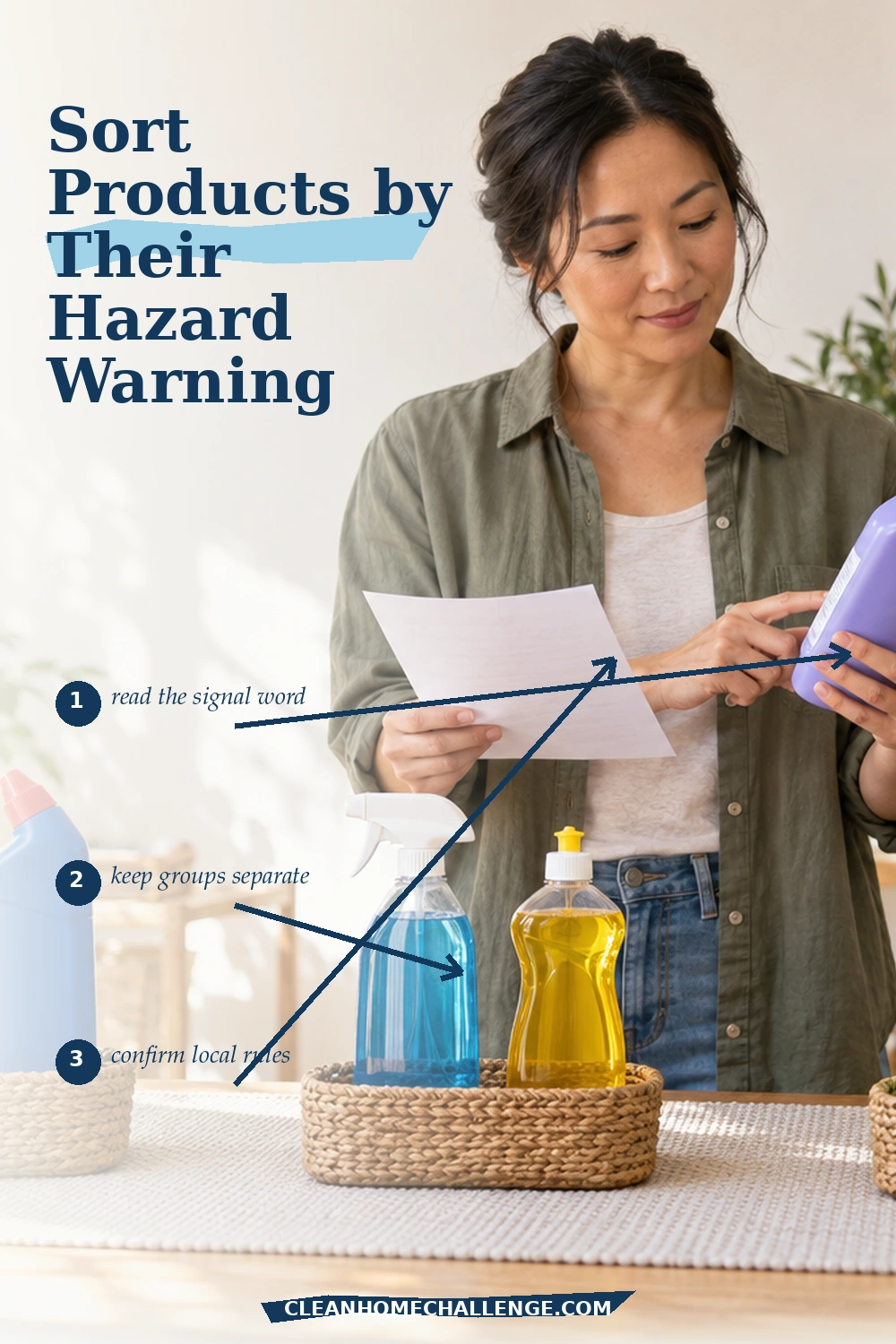
Create four clearly separated groups without opening, transferring, or combining anything.
Group 1: Household hazardous waste
Place products here when the label says corrosive, flammable, toxic, poison, oxidizer, reactive, or otherwise directs you to special disposal. Common examples can include drain and oven cleaners, some toilet-bowl cleaners, solvent-based products, strong acids or alkalis, disinfectants, and partly full aerosol cleaners.
These products usually need instructions from a local HHW program. The exact product—not the broad category name—determines what your program will accept.
Group 2: Usable products
These are clearly labeled, in good condition, and still suitable for their intended use. Keep them stored according to the label until you use them or an approved reuse program accepts them.
Group 3: Empty packaging
An “empty” container may still need special handling. Check both the label and your local recycling or waste program. Do not assume that a bottle is recyclable because the plastic has a recycling symbol, and do not rinse a hazardous product container unless local instructions explicitly tell you to.
Group 4: Unknown, leaking, or damaged containers
Stop handling these. Keep people and pets away and contact your local HHW program, hazardous-materials official, or fire department for specific directions. EPA notes that corroding containers require special handling. Do not place a leaking container into a second container if doing so would require touching the spill or create an incompatible-material risk; ask the program how they want it secured.
Keep the groups physically apart while you make calls. A sturdy tray can catch minor drips from sound containers, but never use one tray to pool different chemicals.
Prepare Cleaning Products for Safe Drop-Off
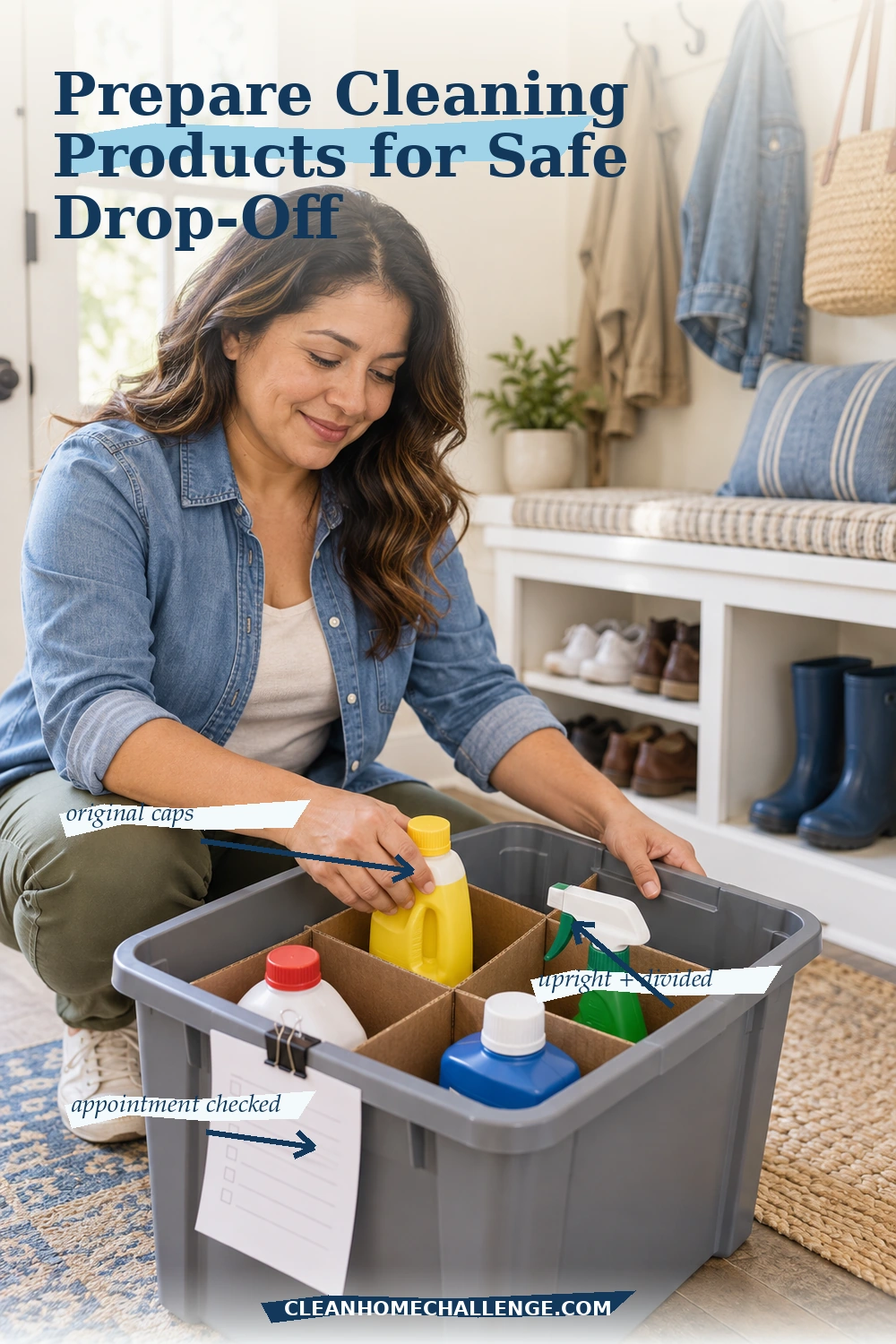
Once your local program confirms it accepts the products, follow its transport instructions exactly. A careful setup usually includes these steps:
- Leave each product in its original container. Keep the label attached and readable.
- Tighten the original cap. Do not add tape over vents or safety devices unless the program tells you to.
- Keep containers upright. Use a sturdy box or rigid plastic tote that prevents tipping.
- Separate incompatible products. Use dividers or individual secondary bags only if your local program allows them. Never allow leaked liquid from different products to mix.
- Protect containers from heat and impact. Keep them out of direct sun and away from passengers when possible.
- Drive directly to the facility. Do not leave chemicals in a hot car or store them in the vehicle overnight.
- Tell staff about any concern. Point out a damaged cap, unreadable label, or suspected leak before unloading.
Do not consolidate three half bottles into one. Even products that appear similar may contain incompatible ingredients, and a mixture can create fumes, heat, fire, or pressure. Consolidating also removes the reliable label staff need to manage the waste.
Bring only household quantities accepted by the facility. Business-generated waste and unusually large volumes often follow different rules.
Handle Empty Bottles and Aerosol Cans Correctly
Packaging is where well-meant recycling mistakes happen most often.
For a pump bottle, jug, trigger spray, pouch, or tub, start with the product label and then check local recycling guidance. Some programs accept only containers that are completely empty; others exclude packaging that held hazardous material. Pumps, triggers, and mixed-material closures may need to be removed or placed in the trash. Never rinse or wash out a container unless the local program specifically directs you to do so.
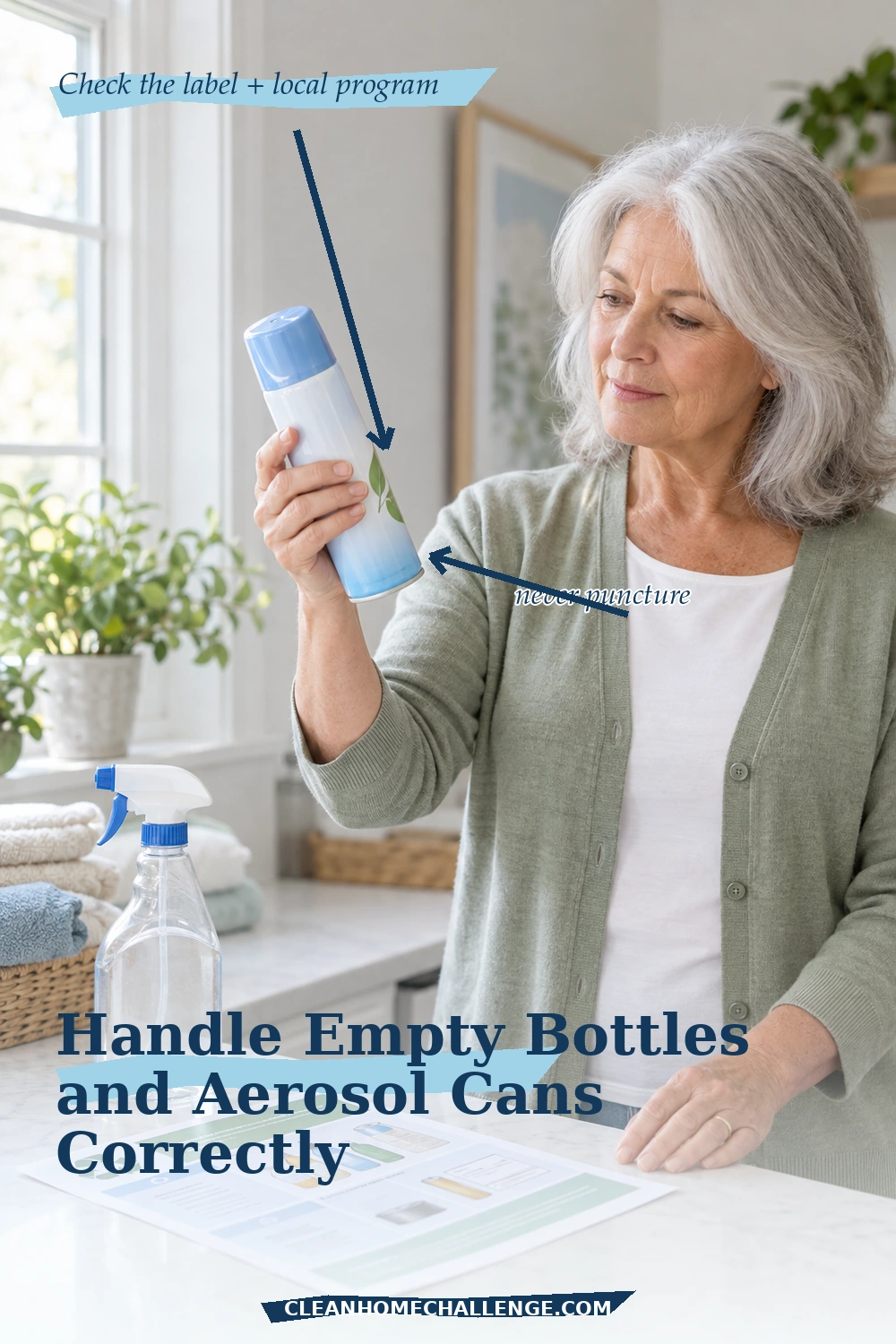
Aerosol cans need extra care because a can that seems empty may still be pressurized. Do not puncture, crush, burn, or take apart an aerosol can at home. EPA lists nonempty aerosol cans among items that may be HHW, and local recycling programs vary on whether they accept completely empty cans. If the nozzle is broken or product remains, ask the HHW program where it belongs.
Do not put any pressurized or chemical container into curbside recycling just because it is metal or plastic. The correct destination depends on both the remaining contents and the local facility’s equipment.
Avoid These Dangerous Disposal Mistakes
The safest disposal system is as much about what you do not do as what you do.
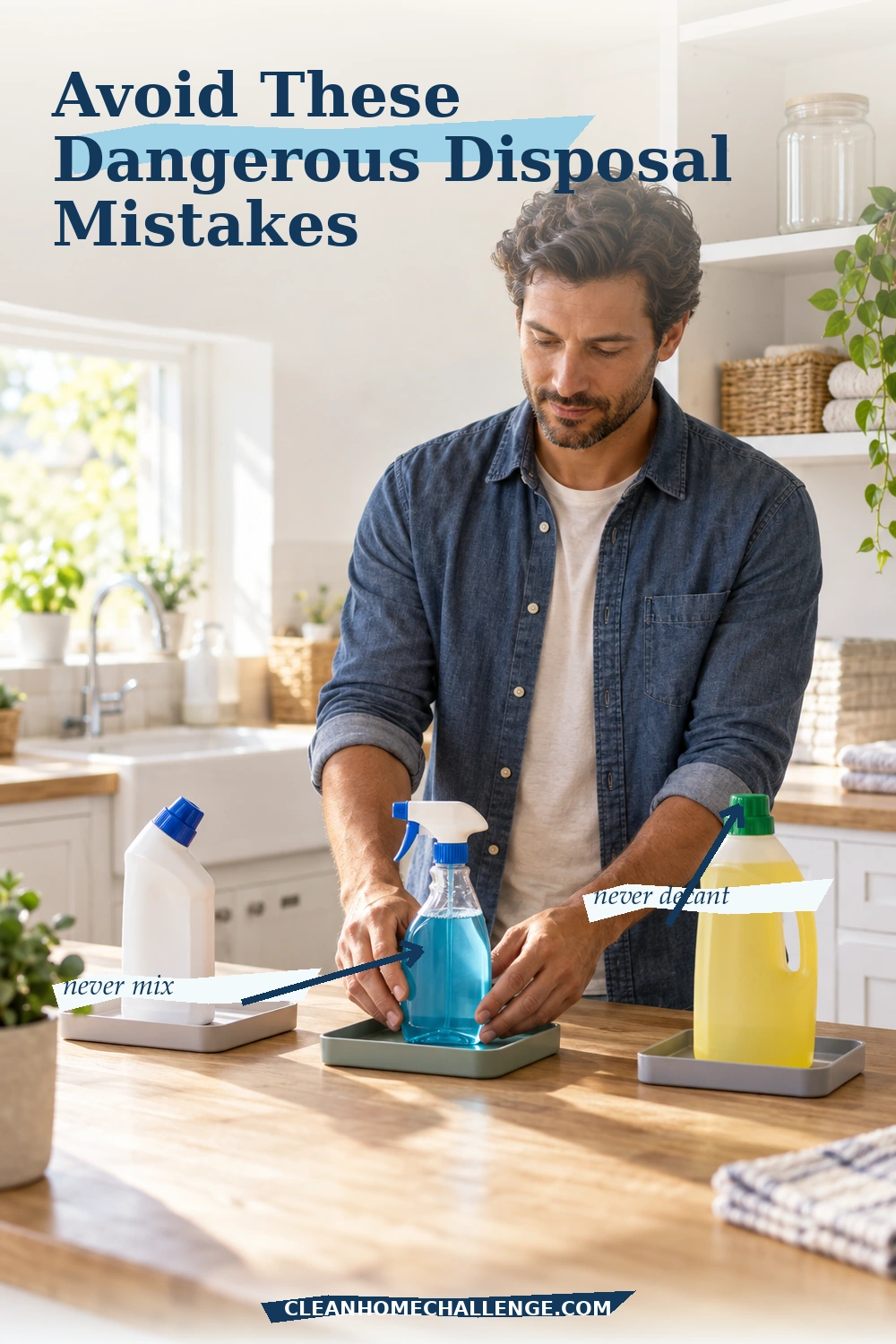
- Never mix cleaning products. Poison Control warns that mixing household cleaners can create poisonous fumes. Bleach with acid can produce chlorine gas; bleach with ammonia can produce chloramine gas.
- Never neutralize a product yourself. Adding vinegar, baking soda, bleach, ammonia, or another chemical can create heat, splashes, pressure, or toxic gas.
- Never pour unwanted cleaner into a sink, toilet, storm drain, gutter, soil, or street. Only use a drain for a product when its current label and your local wastewater authority both allow that exact use.
- Never transfer cleaner into a food or drink container. This creates a serious poisoning risk and removes vital hazard information.
- Never remove a label or guess at unknown contents. Treat an unknown as a reason to call for guidance.
- Never burn, puncture, or deliberately evaporate a cleaner. These actions can release hazardous fumes or create a fire risk.
- Never leave products at a facility after hours. Unattended chemicals can endanger workers and the public.
If products are accidentally mixed and you notice fumes, coughing, burning eyes, dizziness, or trouble breathing, leave the area and get to fresh air if you can do so safely. In the United States, call Poison Control at 1-800-222-1222 for guidance. Call emergency services for severe breathing difficulty, collapse, seizure, or another life-threatening reaction.
Build a Simple Cleaning-Product Disposal Routine
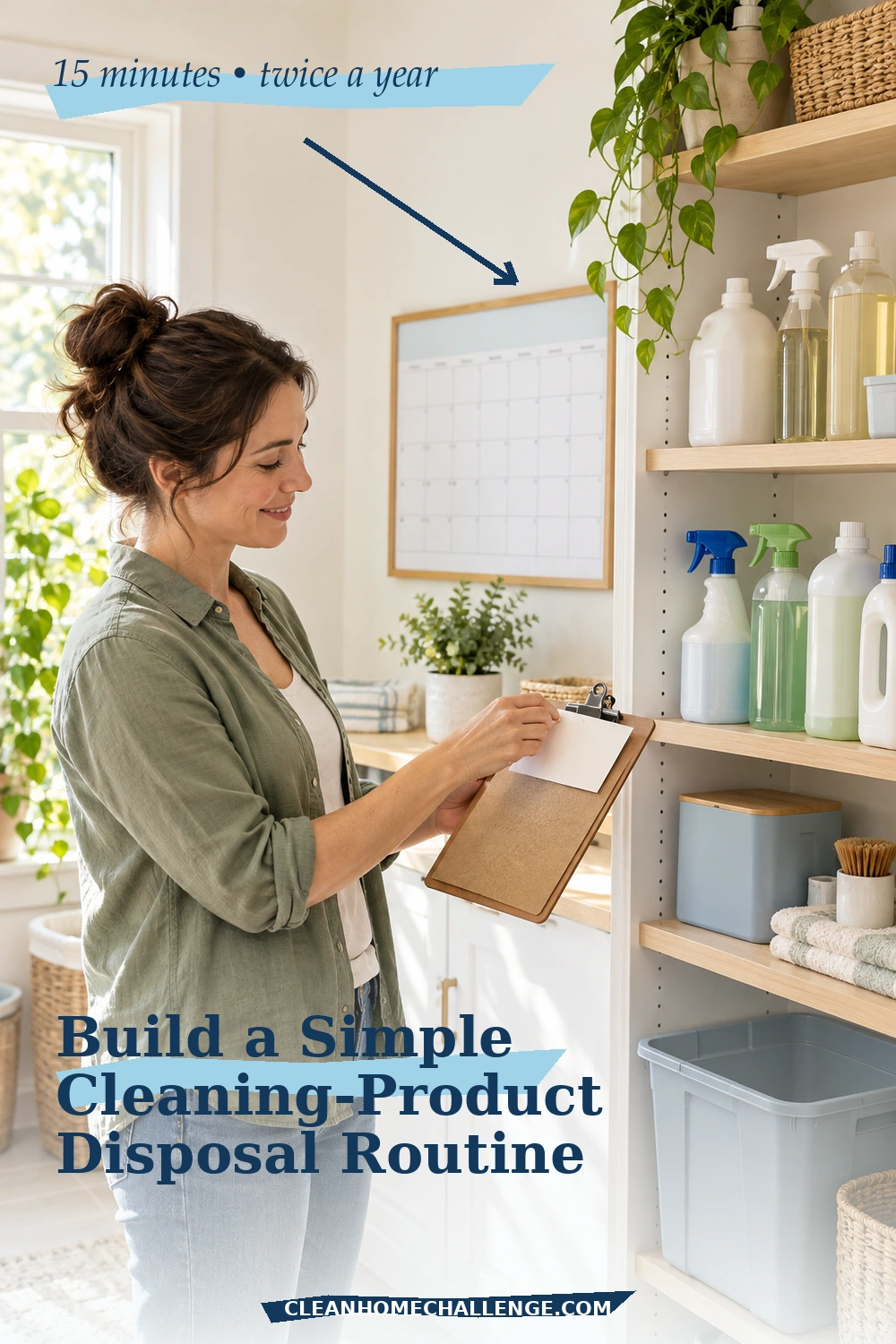
You do not need a major chemical cleanout every year. A small twice-a-year check keeps the shelf safer and makes drop-off day manageable.
Try this 15-minute routine:
- Choose one cabinet and keep children and pets away.
- Check every cap, label, and container without opening products unnecessarily.
- Move current products to the front and place each one upright.
- Write a short list of unwanted products—do not combine them.
- Look up the local HHW program and note its next collection date, accepted items, and quantity limits.
- Store the unwanted products safely, according to their labels, until the approved drop-off.
- Add the collection date to your calendar.
For future purchases, buy only the amount you expect to use, choose EPA Safer Choice-labeled products when they suit the job, and avoid owning several cleaners that perform the same task. Fewer bottles mean fewer incompatibilities, less clutter, and less waste to manage later.
Old cleaning products are not a reason to panic, but they are a reason to slow down. Keep the contents identifiable, let the label and local program guide the destination, and make “never mix” the rule that never changes.
CLEANERS CLUBHOUSE
Build a Safer, Simpler Cleaning Routine
Clean confidently with practical guidance that helps you choose sensible products and use them correctly. The Cleaners Clubhouse combines safer cleaning support with realistic routines, worksheets and challenges.