
THIS POST MAY CONTAIN AFFILIATE LINKS. PLEASE READ MY DISCLOSURE FOR MORE INFO.
A musty house does not necessarily need a stronger cleaner. It needs a closer look at moisture, drying, and the things that stay damp between uses. A towel packed away too soon needs a different response from a leaking wall, even if both make a room smell stale.
To get rid of musty smells, find the damp source, stop the moisture, clean or replace affected items appropriately, and make sure the area stays dry. Fragrance can make that investigation harder. A good result is a room that stays neutral through ordinary use, not one that smells strongly of disinfectant.
This guide gives you a manageable sequence, a copyable source-check worksheet, and clear stopping points. Start with one room. You do not need to empty every closet or deep-clean the whole house today. If the smell is burning, gas-like, sewage-like, or otherwise unfamiliar rather than clearly musty, use our guide to finding a mystery smell instead; do not assume every odor is harmless dampness.
Disclosure: This post may contain affiliate links. As an Amazon Associate, Clean Home Challenge earns from qualifying purchases. If you make a purchase through these links, we may earn a small commission at no extra cost to you. This helps us keep creating practical cleaning tips, routines and resources for busy families! 🧽
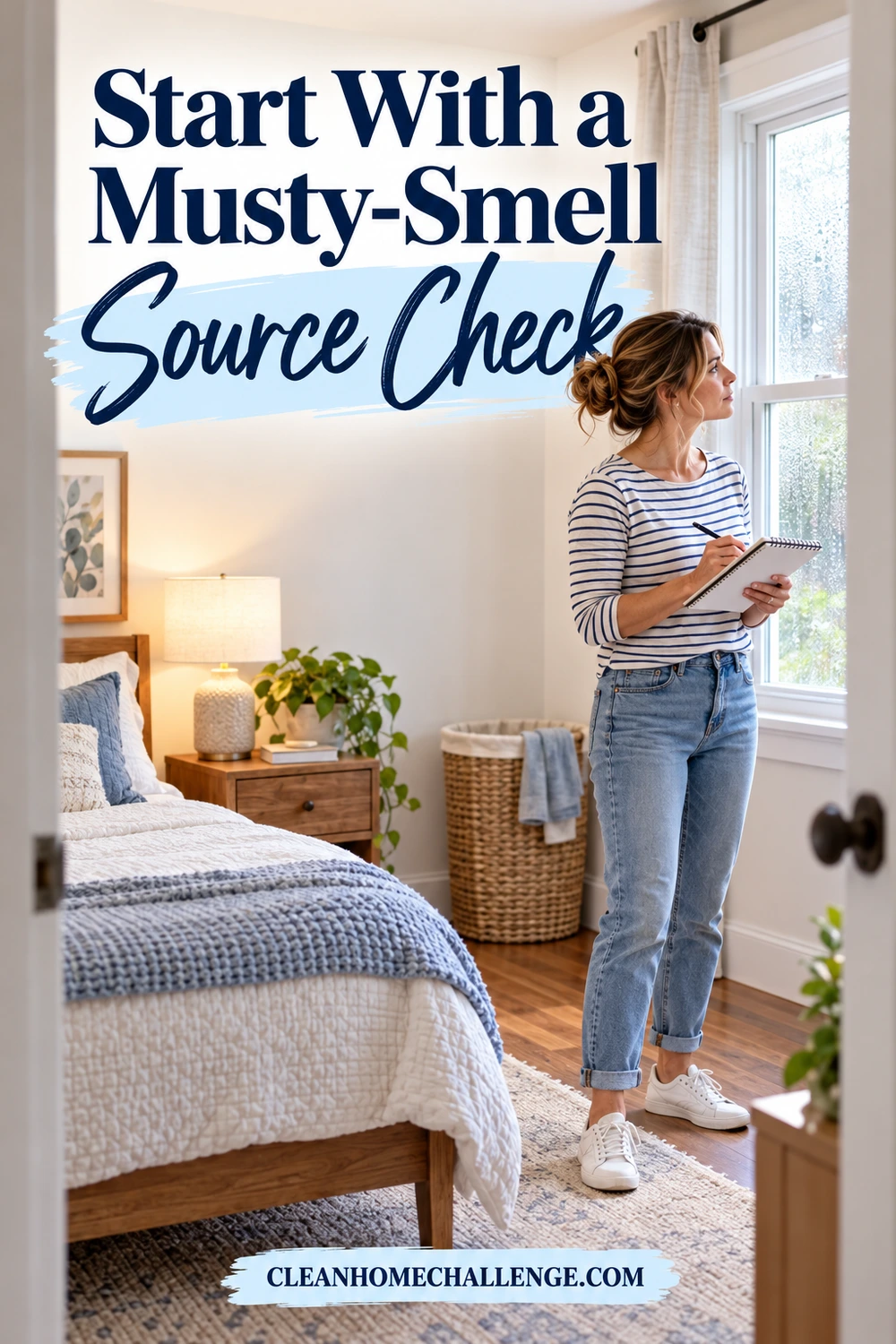
Start With a Musty-Smell Source Check
Begin with observation rather than scrubbing. Choose the room where you first noticed the smell and write down what changed: heavy rain, a plumbing repair, wet laundry, closed windows, stored furniture, or an appliance cycle. You are collecting clues, not diagnosing a building by smell.
Gather a flashlight, a notebook or phone, and the relevant appliance manuals. A small humidity monitor is useful if you already own one, but you can start without buying equipment. Keep children and pets away from suspect material. Do not press your nose against fabrics, vents, or damaged walls to identify the source.
The CDC's mold guidance explains that mold can grow where moisture accumulates, including around leaks. A musty odor deserves investigation, but it cannot tell you the species, amount, or health significance of possible mold. Seek medical advice about symptoms rather than trying to connect them to an odor yourself.
Copy this source-check worksheet
Use one entry per location so a laundry problem does not get mixed up with a bedroom problem:
- Date and room:
- Exact location where the odor is noticeable:
- When it appears or becomes stronger:
- Recent rain, spill, leak, repair, or appliance use:
- Visible moisture, staining, swelling, or condensation:
- Item or surface involved:
- Humidity reading, if available, with time recorded:
- Safe action taken today:
- Repair, professional assessment, or landlord contact needed:
- Recheck date and what changed:
For example: “Hall closet; strongest after wet coats are put away; damp coat hems; no visible wall damage; hang coats to dry elsewhere; inspect again tomorrow.” This is an illustration of how to record observations, not a guarantee that coats are the only possible cause.
Put urgent repair clues above cosmetic cleaning. Water dripping beneath a sink needs attention before washing the cabinet shelf. A soft ceiling or wet area near electricity is a reason to keep clear and arrange appropriate help, not to investigate with a cloth.
If you rent, send dated photos and a written description of leaks or building damage to the property manager. Keep your record factual: where, when, and what you can see. Do not remove flooring or open walls while waiting for a reply. Ordinary tidying can continue elsewhere without disturbing the affected area.
Trace Moisture Room by Room
Work through the suspect room in a consistent order: water connections, windows and exterior walls, floor edges, then stored belongings. This prevents an exhausting loop of checking the same cabinet while overlooking the wet bag beside it.
Bathrooms and laundry areas
Look at towels, bath mats, the laundry basket, and the floor around the washer. Is a mat laid flat while still wet? Are washcloths bunched together? Is there an obvious drip after an appliance cycle? Check accessible areas without moving heavy equipment or reaching behind electrical connections.
A washer can contribute to a musty laundry room. Inspect the user-accessible door seal and detergent dispenser using the manual. Whirlpool's washer-odor guidance identifies retained moisture and residue as reasons to maintain these areas and the washer itself. The cleaning product, cycle, and maintenance interval should come from your specific model's instructions, not a universal recipe.
Bedrooms, closets, and living spaces
Look around window frames and at accessible wall edges beside furniture. Check whether a suitcase, shoe pile, or storage bag was put away damp. Move only lightweight items you can handle safely; do not pull a large wardrobe away from a damaged wall by yourself.
Use location carefully. A smell noticed beside a couch does not prove the couch is responsible. Inspect the surrounding wall and floor visually before paying for upholstery cleaning. If the upholstery is actually damp or visibly moldy, stop using it and get material-specific advice rather than soaking it with deodorizer.
Kitchens and ground-floor storage
Check accessible plumbing joints beneath sinks, the cabinet base, and the floor beside the dishwasher. Remove clean, dry stored items only if doing so will not disturb suspicious growth. Photograph swelling or staining before arranging a repair.
In a garage, basement, or utility room, look from a safe, accessible position for water marks and storage touching damp floors. Do not enter a cramped crawlspace to follow a smell. EPA moisture-control guidance distinguishes leaks and seepage from moisture generated indoors. Those different causes can require different repairs; extra cleaning alone will not resolve a building-water problem.
If several rooms seem affected, write down their positions rather than washing everything. A simple sketch showing rooms, windows, and shared plumbing can make your observations easier to explain to a contractor. There is no prize for finding the source unaided. A clear record is useful progress even when the next step belongs to a professional.

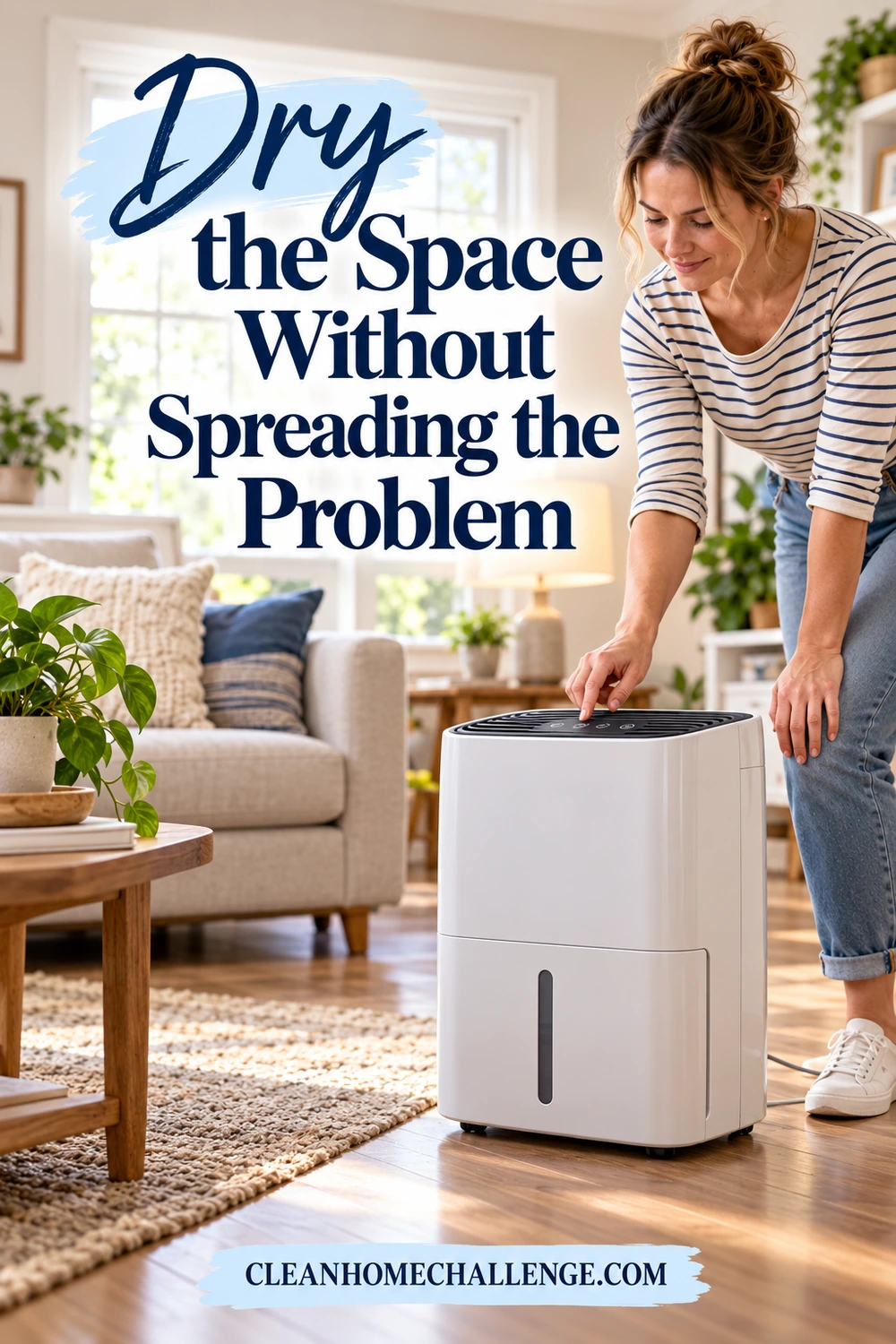
Dry the Space Without Spreading the Problem
Drying comes after you have considered where the water came from and whether mold or contamination is involved. This section is for ordinary, accessible dampness. Floodwater, sewage, extensive damage, and suspected contaminated ventilation systems need a different plan.
For a fresh, small clean-water spill on a compatible surface, remove the water promptly and dry according to the material's care instructions. EPA emphasizes acting quickly after water damage, ideally drying affected materials within 24–48 hours. That window is a prevention target, not permission to wait or proof that a material is safe afterward. Hidden layers can remain wet. See EPA's home mold and moisture guide.
Make ventilation a deliberate choice
Use an exhaust fan that vents outside during moisture-producing activities. Opening a window can help in suitable conditions, but it is not automatically useful when outside air is very humid or outdoor air quality is poor. If the room stays damp despite ordinary ventilation, record that rather than leaving windows open indefinitely.
Do not aim a fan at visible or suspected mold or use it to blow material through the house. If you suspect mold in the HVAC system, do not run that system while seeking qualified advice; EPA warns that contaminated systems can distribute mold. Do not remove duct covers or spray cleaning products inside to test a theory.
Use a dehumidifier as a tool, not a repair
For a safe, undamaged space with excess humidity, follow the appliance manual for placement, drainage, cleaning, electrical connection, and operating temperature. Keep the treated space's doors and windows closed while it runs. ENERGY STAR's dehumidifier guidance gives a general indoor relative-humidity range of 30–50%; climate and condensation conditions still matter.
A humidity monitor measures air conditions, not moisture hidden behind drywall. A normal reading does not rule out a leak. Likewise, an appliance filling its tank shows that water is being collected, not that a wet floor assembly is dry.
Record a reading in the same location at comparable times rather than chasing every small fluctuation. Note showers, cooking, or laundry alongside it. Keep appliance maintenance realistic: a collection tank that needs emptying or a neglected filter creates another task. If operating the unit requires an unsafe cord arrangement or moving heavy containers you cannot manage, ask for help choosing a workable setup.
Clean the Source With the Right Method
Once the source is identified, separate ordinary musty residue from an actual mold-cleanup job. A washable towel left in a basket is not the same project as growth across a wall. Avoid buying a “whole-house odor treatment” before deciding what needs cleaning and what needs repair.
Ordinary damp belongings and compatible surfaces
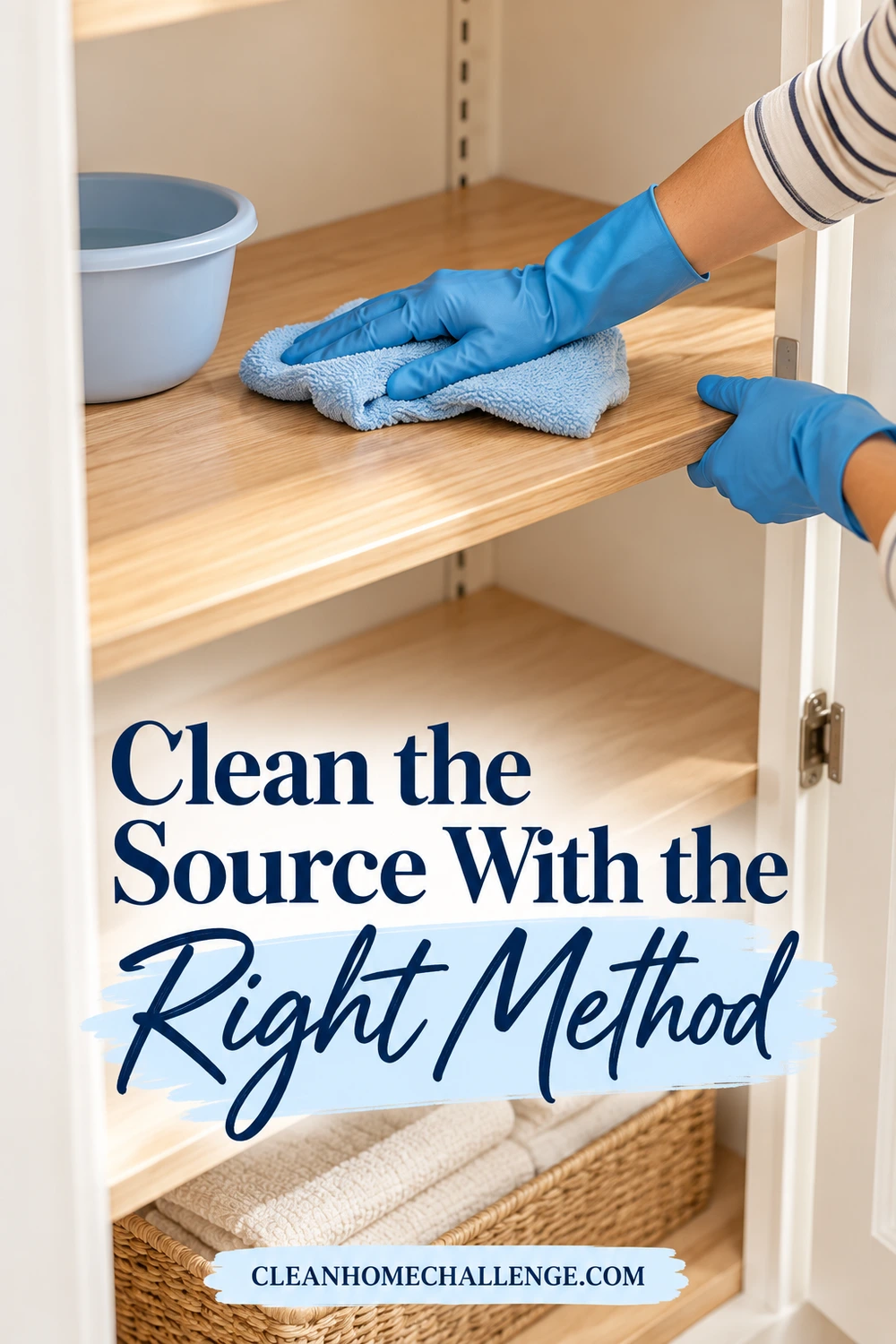
For a non-moldy, intact hard surface, remove loose everyday debris, clean with a product approved for that material, follow label directions for wiping or rinsing, and dry it. Use the smallest amount of moisture needed. Test an unfamiliar product in an inconspicuous place first.
If an under-sink shelf has swollen or softened, do not treat it as an ordinary wipe-down. Record the damage and arrange assessment after fixing the leak. A dry-looking top surface does not tell you what happened underneath.
For a washer, use the manufacturer's cleaning cycle and maintenance steps. Do not combine a machine-cleaning tablet with bleach, vinegar, or another cleaner. If the maker recommends leaving the door ajar between loads, do so only where children and pets cannot enter or become trapped; follow the appliance's safety instructions.
Small, suitable mold-cleanup jobs
EPA says some small mold problems can be handled at home, but extent, water source, material, and household circumstances all matter. Its guidance describes cleaning suitable hard surfaces with detergent and water and drying them thoroughly; moldy absorbent materials can require disposal. Do not paint over growth or assume wiping has restored damaged material. Review EPA's cleanup guidance before deciding to proceed.
For mold cleanup, the CDC recommends protective gloves, appropriate goggles, and at least a NIOSH-approved N95 respirator. People with allergies, immune suppression, underlying lung disease, asthma, or COPD should not take part in mold cleanup. A respirator is not permission to tackle a larger job or a substitute for professional judgment.
Never mix cleaning products. In particular, never combine bleach with ammonia, vinegar, or other cleaners. EPA does not recommend bleach as a routine mold-cleanup method; killing growth alone does not remove it. EPA's bleach guidance explains this distinction. Stronger chemistry is not a shortcut around repairing moisture or removing unsuitable material.
Keep the work area separate from ordinary household routines. Put clean supplies somewhere unaffected, use only the products required for the chosen method, and decide in advance where used cloths or damaged items will go. If you cannot manage that safely, stop and arrange help.
Reset Musty Fabrics and Storage
After the moisture source has been addressed, reset the belongings that were keeping the room stale. Work in small batches so you have enough drying space for everything you wash. An ambitious laundry pile that sits wet overnight simply adds another problem.
Washable towels, linens, and clothing
Read each care label. Choose the appropriate detergent dose, wash setting, and drying method for that item. Do not automatically select the hottest cycle or add several laundry boosters. A delicate curtain and a sturdy cotton towel may need very different treatment.
Handle visibly moldy fabrics separately and seek suitable cleaning or restoration advice, especially for valuable items. This ordinary laundry reset is not a promise that every contaminated fabric can be salvaged.
For an item that is merely stale from damp storage, complete the wash-and-dry process before judging the result. Check seams, thick hems, elastic edges, and folded layers before putting it away. If the odor remains, avoid sealing it in a bag or spraying perfume on it. Reassess the item and the storage location; repeated washing is not always the useful next step.
Empty one shelf, not the entire closet
Take clean, dry contents out of one section. Check the empty shelf and the visible wall behind it. If they are intact and free of suspected growth, use the finish manufacturer's cleaning advice and let the area dry fully before restocking.
Put back only what fits without compressing every item into place. Keep the belongings you use often easy to remove so you can notice a damp patch or recurring smell early. Separate outdoor shoes and wet coats from clean linens. A designated drying spot is more helpful than a basket that hides damp things.
Use a container because it suits the item and the storage conditions, not because a lid can conceal the smell. Never seal damp belongings inside. Label seasonal boxes with their contents and the date checked; this makes the next inspection quick rather than a full unpacking session.
Soft furnishings need their own decision
Check the manufacturer's care instructions before treating rugs, carpet, cushions, or upholstery. Do not soak a mattress or carpet backing to chase an odor. If water reached padding, a floor underneath, or other inaccessible layers, ask a qualified cleaner or restoration professional what can be assessed and dried.
Skip ozone treatments as a household odor fix. EPA's review of ozone generators warns that ozone can harm health and is not a dependable solution to indoor contaminants at concentrations that meet public-health standards. A stronger smell is not evidence of a cleaner room.

Know When the Smell Needs Professional Help
A recurring musty smell can be a building-maintenance issue rather than a cleaning failure. Stop adding products when the same location becomes damp again, the source is concealed, or you cannot explain why an area stays wet.
Arrange appropriate help for these situations:
- Moisture appears after rain or returns after a plumbing repair.
- A wall, ceiling, floor, or cabinet shows swelling, softness, or deterioration.
- Mold is extensive, repeatedly returns, or seems to involve ventilation equipment.
- Water may be sewage-contaminated or came from flooding.
- A smell seems to come from behind a wall or beneath flooring.
- Someone has health concerns that need medical advice before cleanup.
EPA uses approximately 10 square feet as one consideration in choosing who should handle mold cleanup, but size alone is not a safety clearance. A smaller area can still need professional help. For a fuller decision guide, read safer mold cleaning and when to call a professional.
Match the first call to the evidence. An active plumbing leak points to a plumber. Rain-related entry may need a roofing or building-water specialist. An odor associated with heating or cooling needs HVAC assessment. Where the source and extent are unclear, ask a qualified moisture or mold professional what their inspection includes.
Before agreeing to work, ask practical questions: Will they identify the moisture source? What areas will they inspect? Which materials may need removal? How will they limit spread during work? How will they decide the area is dry enough for repairs? Request a written scope so a deodorizing service is not mistaken for moisture investigation.
Give them your worksheet and dated photos. Include previous attempts without embarrassment: “The shelf was wiped and dried, but the smell returned after the next rainfall” is useful information. If renting, copy the property manager into the repair request and keep correspondence together.
Do not cut into a wall, peel off wallpaper, or lift moldy flooring to prove your suspicion. Investigation can disturb hidden material. You can be organized and proactive without taking on demolition or declaring the house safe yourself.

Keep Musty Smells From Coming Back
Build prevention around the source you actually found. A leaking fitting needs repair and follow-up. Damp coats need a drying routine. A crowded linen shelf needs space and fully dried contents. The best routine is specific enough that someone else in the household can help without guessing.
A low-energy ten-minute option
If you have very little capacity today, make the goal “identify the next safe action,” not “fix the whole house.” Spend a few minutes completing one worksheet entry, photograph an accessible clue without disturbing it, and send the repair request if one is needed. If there is no damage or suspected mold, you could instead transfer one ordinary damp towel load to its appropriate drying method.
Stop there. Do not start washing every curtain when you have nowhere to dry them. Getting the right person involved is a useful household task, even when nothing looks dramatically different afterward.
Give the room a short follow-up routine
After ordinary cleaning and any required repair, recheck the location the next day and after its usual trigger, such as a shower or rainfall. Record what you observe. This is a practical monitoring schedule, not a professional clearance test. If moisture or odor returns, reopen the source investigation instead of repeating fragrance or surface cleaning.
Once a week, glance at the problem spot while doing an existing chore. Check that mats and cloths can dry, stored items are dry before packing, and the repair area has stayed unchanged. Maintain ventilation and drying appliances on their manufacturers' schedules.
Choose one household responsibility for each recurring issue: who hangs wet coats, who empties a dehumidifier tank safely, or who reports another leak. Keep the instruction short enough to remember. “Hang wet towels separately” is easier to follow than “keep the bathroom fresh.”
A musty home is not a verdict on your housekeeping. Take the smell as a prompt to investigate, deal with the water source, and make drying easier. When ordinary cleaning is the right job, do a manageable amount well. When it is a repair or remediation job, arranging that help is the right kind of progress.

CLEANERS CLUBHOUSE
Get Step-by-Step Help With Tricky Cleaning Jobs
When a stain, smell or stubborn cleaning problem has you stuck, a clear plan makes all the difference. The Cleaners Clubhouse gives you practical guidance, useful printables and routines you can actually follow.