
THIS POST MAY CONTAIN AFFILIATE LINKS. PLEASE READ MY DISCLOSURE FOR MORE INFO.
A permanent marker beside a new scribble can make an ordinary afternoon feel rather dramatic. Before you reach for the strongest cleaner in the cupboard, pause. The best way to remove permanent marker depends on what is underneath it: plain glass, washable fabric, painted drywall, and a wooden tabletop need different decisions.
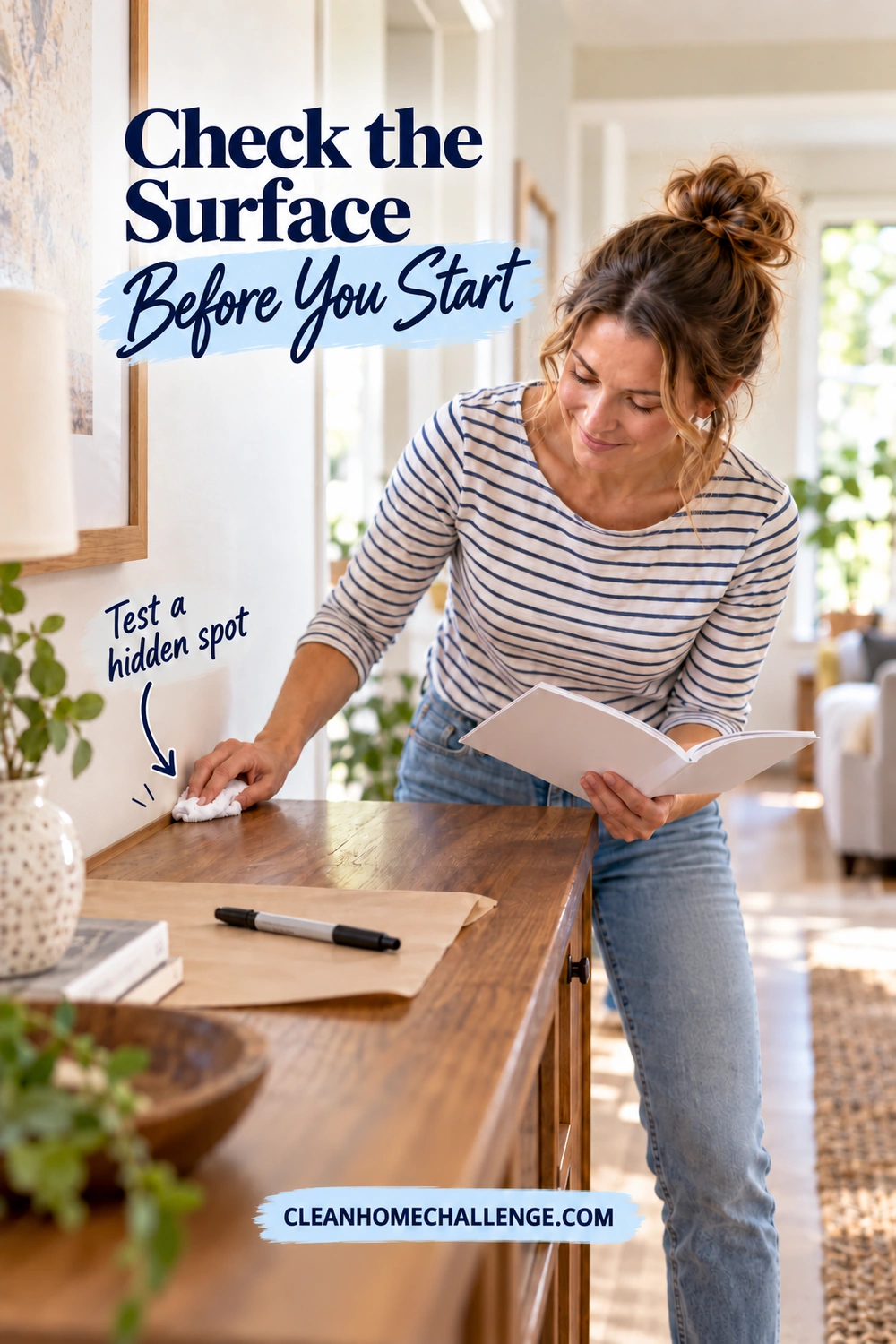
Start by identifying the material, checking its care instructions, and testing an approved method in a hidden spot. Some marks lift; others leave a shadow. Protecting the surface matters more than making the last trace disappear at any cost.
This guide covers ordinary permanent ink. Paint markers, baked-on decorative finishes, and unknown inks may need advice from the marker or surface manufacturer. You do not need to try every internet trick to make progress.
Disclosure: This post may contain affiliate links. As an Amazon Associate, Clean Home Challenge earns from qualifying purchases. If you make a purchase through these links, we may earn a small commission at no extra cost to you. This helps us keep creating practical cleaning tips, routines and resources for busy families! 🧽
Check the Surface Before You Start
Set the marker aside, cap it, and keep children and pets away from the treatment area. If the mark is fresh, avoid touching it or dragging it onto another surface. Take a quick photo so you can compare the result after cleaning and drying.
Gather a few plain white cloths or paper towels, mild dish soap, water, and the item’s care information. A white cloth makes transferred ink or surface color easier to notice. Add a treatment product only after you have confirmed that it suits the material and finish.
Use this short decision guide:
| Surface | Sensible first step | When to pause |
|---|---|---|
| Plain, smooth, uncoated glass | Hidden test of a compatible ink-removal treatment | Film, coatings, painted decoration, or uncertain material |
| Smooth glazed ceramic tile | Check tile care, then test an approved treatment | Porous grout, unglazed tile, or decorative finishes |
| Painted wall or finished wood | Gentle cleaning allowed by its care instructions | Paint transfers, sheen changes, or finish becomes sticky |
| Plastic or laminate | Identify the product and consult its manufacturer | Clouding, whitening, softened plastic, or altered texture |
| Washable clothing | Read the label and test a fabric-compatible treatment | Dye transfers, delicate fabric, or dry-clean-only label |
| Upholstery or carpet | Find the cleaning code or carpet-care guide | Missing instructions, large stains, or sensitive fibers |
For a patch test, use the same small amount, cloth, and pressure you intend to use on the mark. Let the test area dry and inspect its color, sheen, and texture. A successful hidden test reduces uncertainty; it does not guarantee that an old stain will come out.
If you use rubbing alcohol, follow its label, ventilate the room, and keep it away from flames, sparks, and heat. Wear the protection the product specifies. Keep cleaners in their original containers. Never mix alcohol, bleach, or other cleaning products. Clean with one suitable product at a time.
Short on time? Identifying the surface and securing the marker is a useful first step. You can make a safer treatment decision later instead of rushing into a damaging scrub.
Glass and Glazed Ceramic
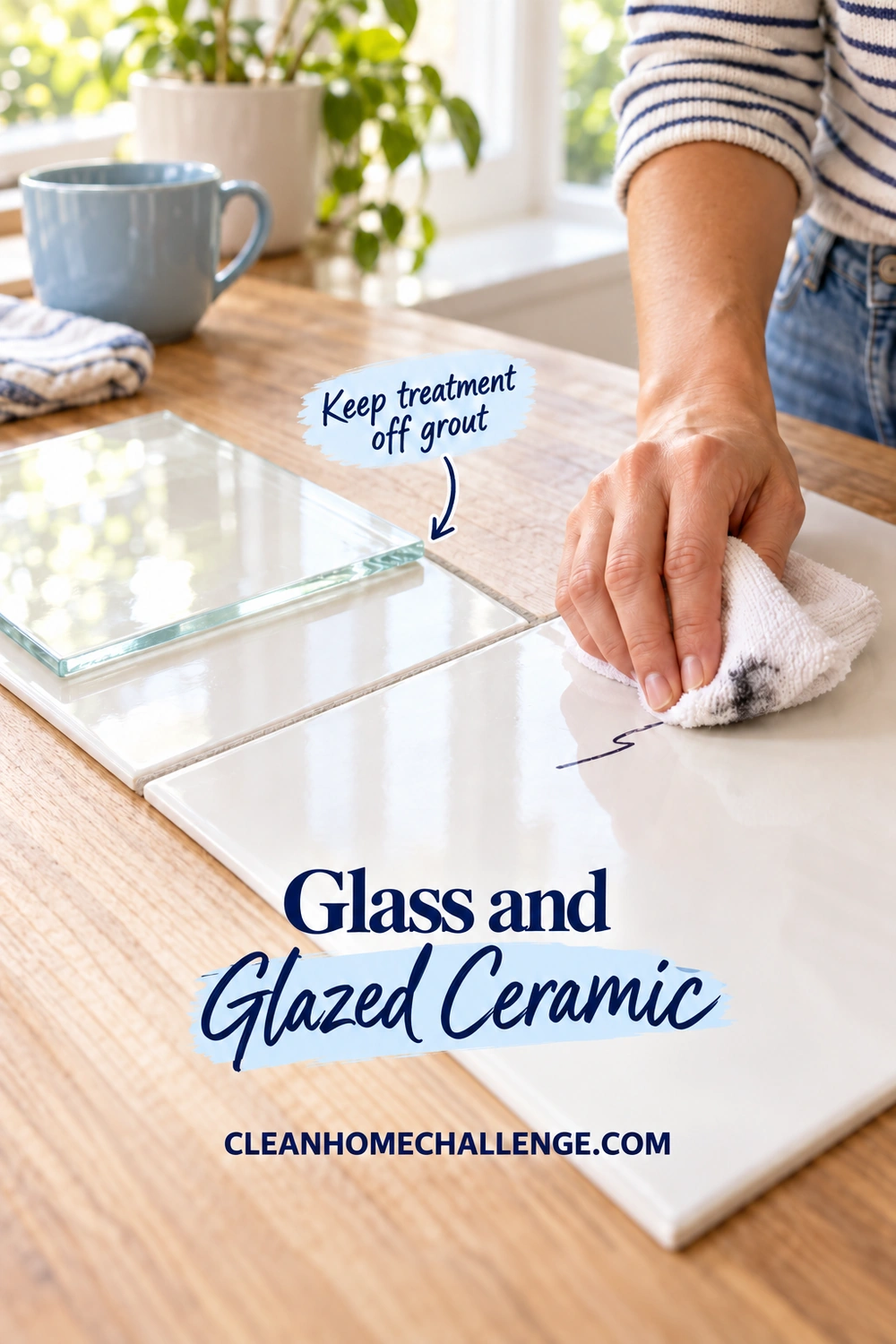
Plain glass offers a different starting point from absorbent fabric or unfinished wood. Marker manufacturer edding explains that permanent ink on smooth, nonporous glass and tile can respond to alcohol-based solvents, while also recommending an inconspicuous test. That does not make every window, mirror, or tile finish solvent-safe.
For a small mark on confirmed compatible glass or smooth glazed tile:
- Check the surface-care instructions and test a little rubbing alcohol in a hidden area.
- Put a small amount on a clean white cloth rather than pouring it over the surface.
- Wipe the mark gently in a small area. Fold to a clean part of the cloth as ink transfers so you do not spread it.
- Remove residue using the surface manufacturer’s cleaning method, then dry with a fresh cloth.
- Inspect the dry surface before deciding whether another gentle pass is worthwhile.
Keep the treatment off grout, seals, painted frames, and surrounding wood. Skip blades and abrasive scrubbers. Window film, etched glass, decorative coatings, and mirror edges need their own care guidance. A smooth clear panel could also be acrylic, so confirm the material rather than judging by appearance.
Painted Walls and Finished Wood
The difficult part of marker on a wall or furniture is that the finish may change before the ink disappears. A cleaner that works on glass can remove color, dull paint, or damage a coating elsewhere.
For painted walls, start with the paint maker’s cleaning instructions. Sherwin-Williams recommends mild soap and water with a soft cloth and gentle pressure; flat finishes are particularly vulnerable to excessive rubbing and moisture. Try the allowed method in a hidden spot, then gently treat the mark with a well-wrung cloth. Remove soap residue with a clean damp cloth and let the area dry.
Stop if paint color appears on the cloth, the patch becomes shinier, or the wall looks scuffed. More pressure is not a better plan. If ink remains, ask the paint supplier about an appropriate stain-blocking primer and repainting rather than scrubbing through the finish. A small touch-up can look different from the surrounding wall, so match the paint and follow the supplier’s advice.
For finished wood, use the furniture manufacturer’s approved care method. Herman Miller’s guidance, for example, favors a slightly damp soft cloth for routine wood care, followed by drying. Keep moisture controlled and wipe with the grain. Do not assume rubbing alcohol, acetone, toothpaste, or an abrasive eraser is safe for your table.
An antique, unknown finish, veneer, raw wood, or valuable piece is a good candidate for professional advice. A remaining ink line is usually less troublesome than an enlarged pale patch where the finish has been removed.

Plastic, Laminate and Countertops
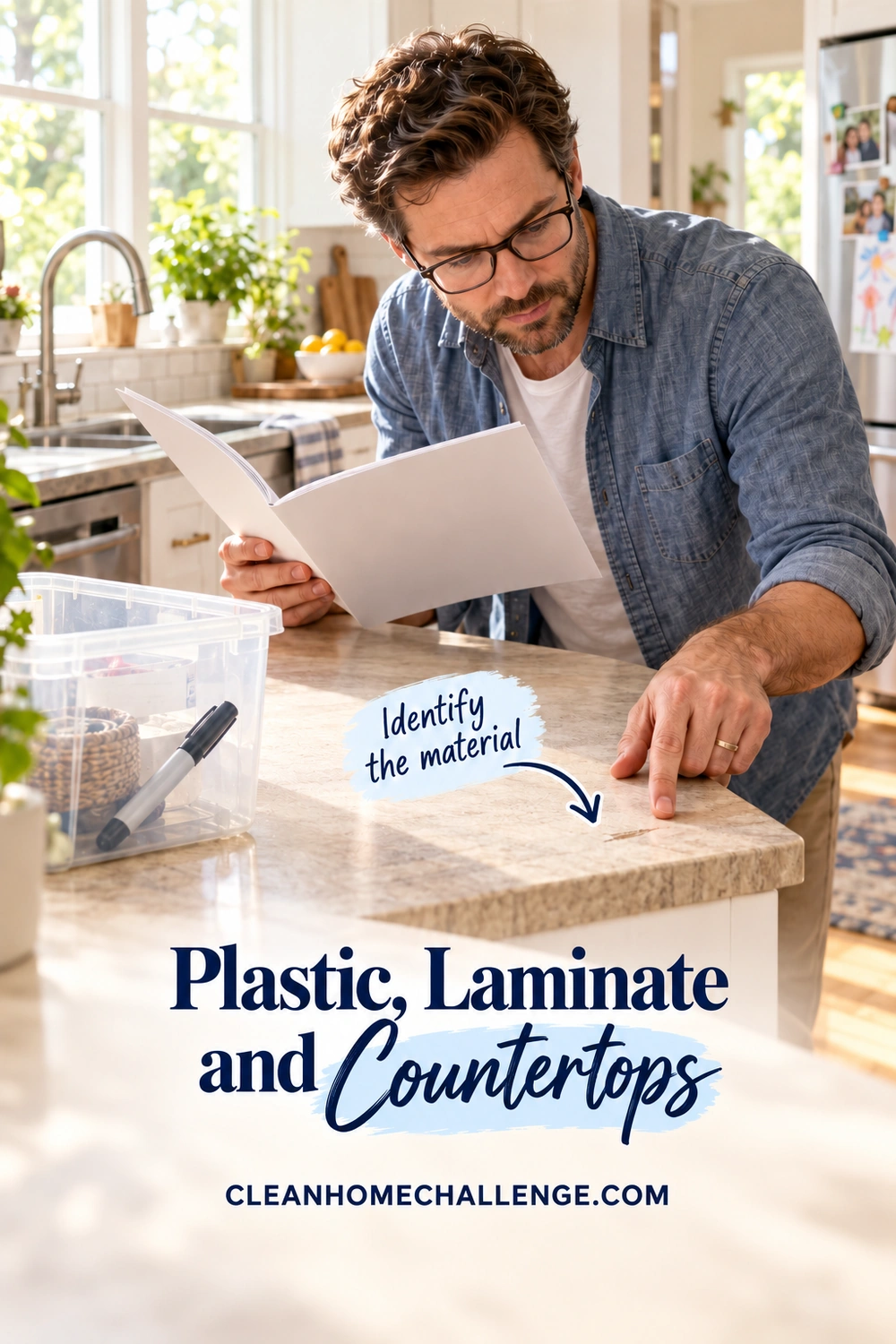
“Hard surface” is not a useful compatibility label. Acrylic, molded plastic, laminate, engineered quartz, and natural stone can react differently to the same treatment.
Start by checking the product paperwork or asking the manufacturer to identify it. For many ordinary plastics, a soft cloth and mild soap are the sensible first cleaning step. Herman Miller specifically warns against solvents on its plastic products and against certain solvents on acrylic glazing. Do not transfer a glass-cleaning recipe to a clear plastic storage box or screen.
For laminate, consult the exact brand’s stain-removal guide. Formica also cautions that similar-looking matte surfaces may have different cleaning resistance. Use only a treatment that is allowed for your identified product, protect seams from excess liquid, and finish with the specified rinse and dry steps. If soap does not remove the ink, seek product-specific instructions before moving to a stronger cleaner.
For countertops, check the brand and material, including any sealer. Cambria advises against abrasive and chemically aggressive cleaners on its quartz products. A marker remover advertised for multiple surfaces is not automatically suitable for every countertop.
Stop immediately if the surface becomes cloudy, tacky, discolored, or rough. Do not try to polish away the damage with another household remedy. Ask the manufacturer about repair options and keep the product name and a photo of the affected area ready.
Clothing and Washable Fabrics
Act promptly, but keep the stained item out of the dryer and away from the iron. Sharpie warns that heat can set a stain and recommends working from the underside where possible, with clean absorbent material underneath.
For a small stain on washable clothing whose care instructions permit the treatment, Maytag describes this rubbing-alcohol approach:
- Test a hidden area for fabric damage or color loss. Check any print, trim, or coating too.
- Place the marked area face down on fresh white paper towels. Separate garment layers so the treatment does not reach the unstained back of the shirt.
- Apply a little alcohol to the reverse of the stain. Let the absorbent towel collect the ink; do not scrub it through the fabric.
- Replace the towel as ink transfers. Stop if garment dye moves or the mark spreads.
- Rinse the treatment out thoroughly before laundering with detergent according to the care label.
- Air-dry and inspect. Do not machine-dry or iron while a stain remains.
A labeled permanent-ink stain remover is another option when its instructions cover the fabric. Sharpie’s FAQ identifies Amodex as a product to consider; compatibility and the product’s own method still matter. Do not combine it with alcohol or other treatments to invent a stronger mixture.
Silk, wool, dry-clean-only garments, and delicate or valuable items deserve a professional cleaner’s assessment. Tell the cleaner what marker was used and which treatments, if any, you have already tried. Complete removal is not guaranteed, especially on old stains.

Upholstery, Carpet and Delicate Surfaces
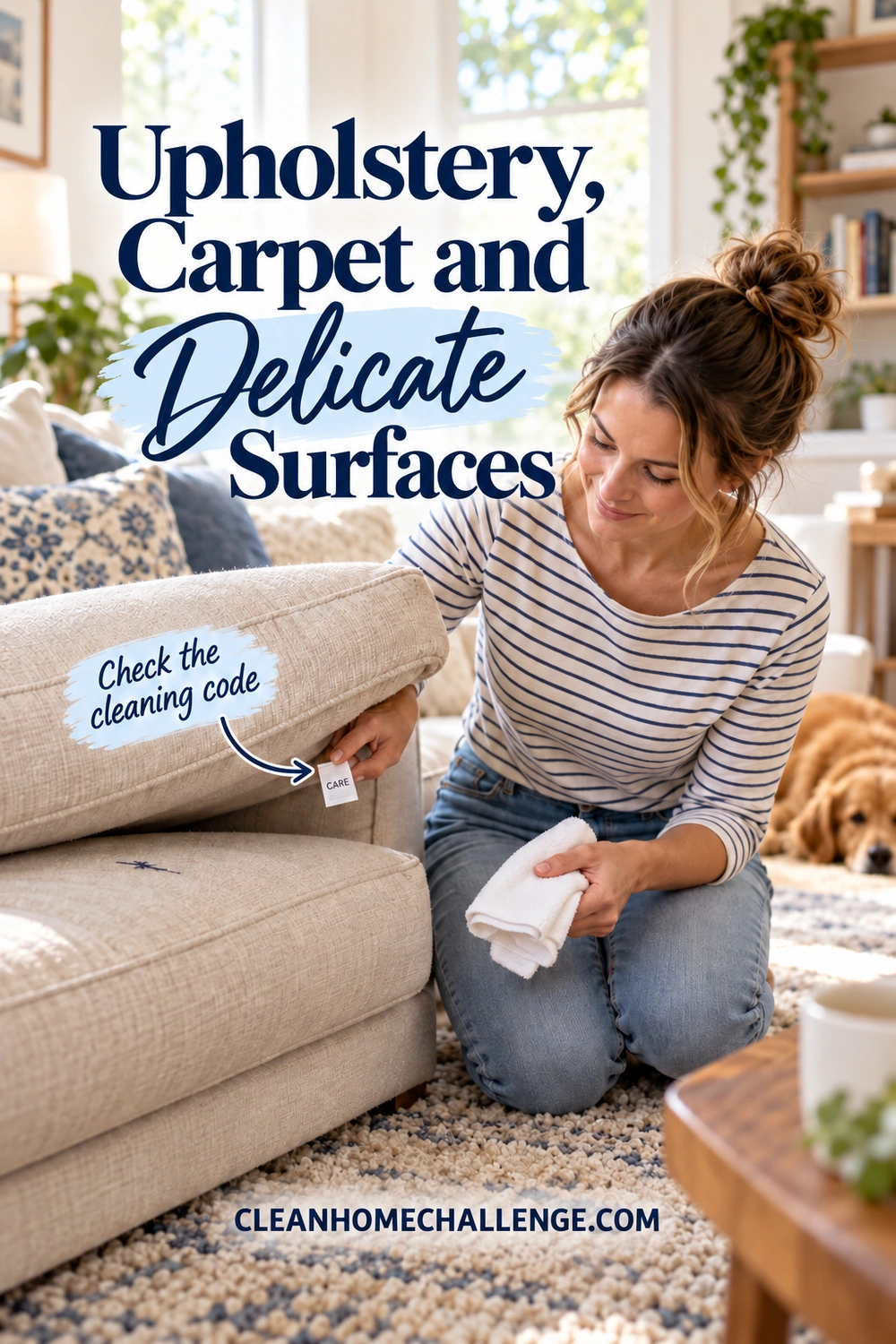
A sofa is not a washable T-shirt. You may be unable to rinse a treatment out, and moisture can reach padding or backing. Find the upholstery cleaning code and the manufacturer’s instructions before applying liquid.
Ashley lists these common codes:
| Code | What it allows |
|---|---|
| W | A specified water-based upholstery cleaner; no solvent spot treatment |
| S | A specified dry-cleaning solvent; no water treatment |
| WS or SW | A suitable water-based upholstery cleaner or mild dry-cleaning solvent |
| X | Vacuuming or light brushing; no water or solvent cleaner |
A code identifies a cleaning category, not a promise that a particular household alcohol product is approved. Do not use a generic marker-removal trick simply because you see an S or WS tag.
If the manufacturer allows a stain treatment, test it first and follow its application and drying instructions. Blot small amounts with a clean white cloth; avoid vigorous rubbing and soaking. Stop if color transfers, the mark grows, or the fabric texture changes. For a missing code, leather, suede, velvet, or a large mark, contact a qualified upholstery cleaner.
For carpet, use the carpet maker’s stain guide, including restrictions for the fiber and backing. Do not pour alcohol through a rug or keep adding liquid to a stubborn spot. Protect the area from foot traffic while you seek the right treatment. Screens, wallpaper, artwork, and other specialty surfaces also need specialist guidance rather than the glass method above.
Keep Marker Mishaps Manageable
Once the item is dry, check the result in daylight. A faint shadow may be the best outcome you can achieve safely. If a gentle compatible treatment is no longer transferring ink, pause and ask for advice instead of repeating it indefinitely.
Save the care instructions with a quick note of what worked. Store permanent markers separately from washable drawing supplies, cap them after use, and use a protective mat for craft projects. Put cleaning products away before children or pets return to the area.
During your normal surface-wiping habit, spot a new mark and identify it before cleaning. Saturday laundry catch-up is a useful reminder to inspect treated clothing before it reaches the dryer. Keep the response small: one item, the right method, and a sensible stopping point.
Can I use hand sanitizer or hairspray instead?
Their formulas vary, and added ingredients can leave residue or introduce another stain. Choose a treatment with clear instructions for the material rather than assuming that anything containing alcohol is interchangeable.
Will a cleaning eraser remove permanent marker?
An abrasive eraser can alter sheen or remove a surface finish. Use one only if the manufacturer allows it, with a hidden test and the specified pressure. It is not the default choice for paint, polished surfaces, or finished furniture.
What if the mark will not come out?
Stop when the next step risks more damage than the original mark. A professional cleaner, furniture repairer, or paint supplier can help you decide between further treatment, repair, and leaving a small trace. A marker mishap does not need to turn into an all-day cleaning project.
Sources checked October 1, 2026: edding glass care, edding tile care, Sharpie FAQ, Maytag permanent-marker laundry guide, Sherwin-Williams wall care, Herman Miller finish care, Formica care, Cambria care, Ashley furniture care, and Poison Control alcohol safety.

CLEANERS CLUBHOUSE
Get Step-by-Step Help With Tricky Cleaning Jobs
When a stain, smell or stubborn cleaning problem has you stuck, a clear plan makes all the difference. The Cleaners Clubhouse gives you practical guidance, useful printables and routines you can actually follow.