
THIS POST MAY CONTAIN AFFILIATE LINKS. PLEASE READ MY DISCLOSURE FOR MORE INFO.
To remove pet urine smell from carpet, absorb fresh liquid first, check what your carpet can tolerate, and use a pet-urine treatment labeled for that material. Give the product its stated contact time, dry the area fully, and reassess. A quick spray of fragrance may make the room smell different without dealing with the accident underneath.
Dog urine, cat urine, a fresh puddle, and an old hidden spot do not all need the same amount of work. The useful starting question is: can you identify and safely treat a small carpet spot, or might urine have reached the backing, padding, or floor below?
You do not need to shampoo the entire room immediately. Start with the affected area and a clear plan. Set aside time for hands-on cleanup, plus the cleaner’s contact time and drying; neither should be rushed to fit a ten-minute tidy.
Disclosure: This post may contain affiliate links. As an Amazon Associate, Clean Home Challenge earns from qualifying purchases. If you make a purchase through these links, we may earn a small commission at no extra cost to you. This helps us keep creating practical cleaning tips, routines and resources for busy families! 🧽
Find Every Urine Spot Before You Clean
First, move children and pets to another room. Pick up toys, remove washable items that may also be soiled, and look around the furniture rather than treating only the most obvious mark. A damp patch beside a sofa and an older spot at the doorway can explain why one treatment seemed to do little.
Use ordinary light to look for changes in color or texture. Notice where the odor is strongest without putting your face against the carpet. Check accessible corners, the edge of a dog bed, and places your pet repeatedly visits. Photograph suspected spots and note their position relative to furniture so you can find them again after drying.
A pet-stain UV flashlight can help locate possible dried deposits in a dim room. Follow its safety instructions, aim it only at the surface, and keep the beam away from people and animals. Treat fluorescence as a clue: it does not identify the substance with certainty, measure how deeply it traveled, or prove that a treated carpet is odor-free.
Mark locations in a sketch or place a removable marker on nearby hard flooring; do not stick tape onto carpet fibers. If several spots overlap or the affected area is large, stop planning a series of increasingly wet DIY treatments and ask a carpet-care professional about an assessment.
Quick first step: contain the area, blot any wet accident, and record the location. That is useful progress even if you need to obtain the right cleaner before continuing.

Check the Carpet and Choose the Right Cleaner
Look up the carpet manufacturer’s care instructions or your rug’s care label before selecting a treatment. Fiber, dyes, backing, and the floor underneath matter. If you cannot identify the material, ask the supplier or a qualified cleaner rather than assuming a product suitable for one carpet will suit yours.
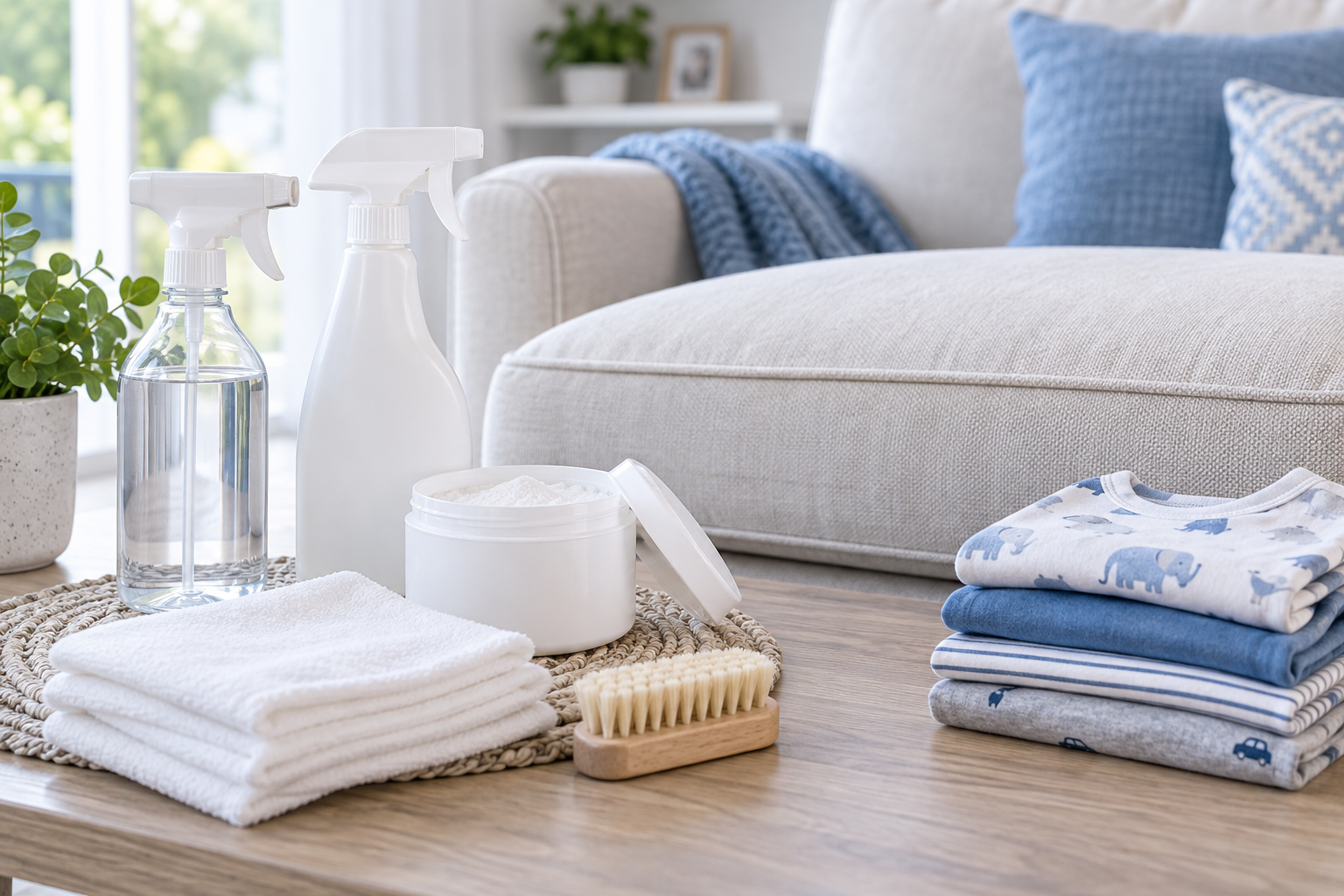
Gather white absorbent cloths or paper towels, gloves appropriate to the product label, a waste bag, and your chosen cleaner. A small kit makes it easier to respond quickly next time. Keep the kit out of children’s and pets’ reach, and wash your hands after cleanup.
Choose a pet-urine cleaner whose label explicitly permits your carpet material. Enzyme-based formulations are a useful option for compatible carpets, but the word “enzyme” is not a blanket guarantee. Some formulas exclude wool or specialty fabrics. For wool, look for the WoolSafe mark and verify the exact product and your carpet’s instructions; do not rely on a similarly named bottle.
Patch-test first. Follow the product’s stated test method in an inconspicuous place. Check for color transfer, discoloration, and changes to the pile or backing. If the test changes the material, do not proceed. A successful hidden-area test also does not authorize soaking an unknown floor beneath the carpet.
Use one treatment at a time. Do not combine a pet cleaner with bleach, ammonia, vinegar, peroxide, or a household cleaning mixture. Keep containers in their original packaging and follow label directions for dilution, ventilation, protective equipment, and when people or pets may return.
For wool-specific care, Cormar’s stain guidance and the WoolSafe approved-product directory provide useful starting points. Your own carpet and product instructions still decide the method.

Blot Fresh Urine Without Scrubbing
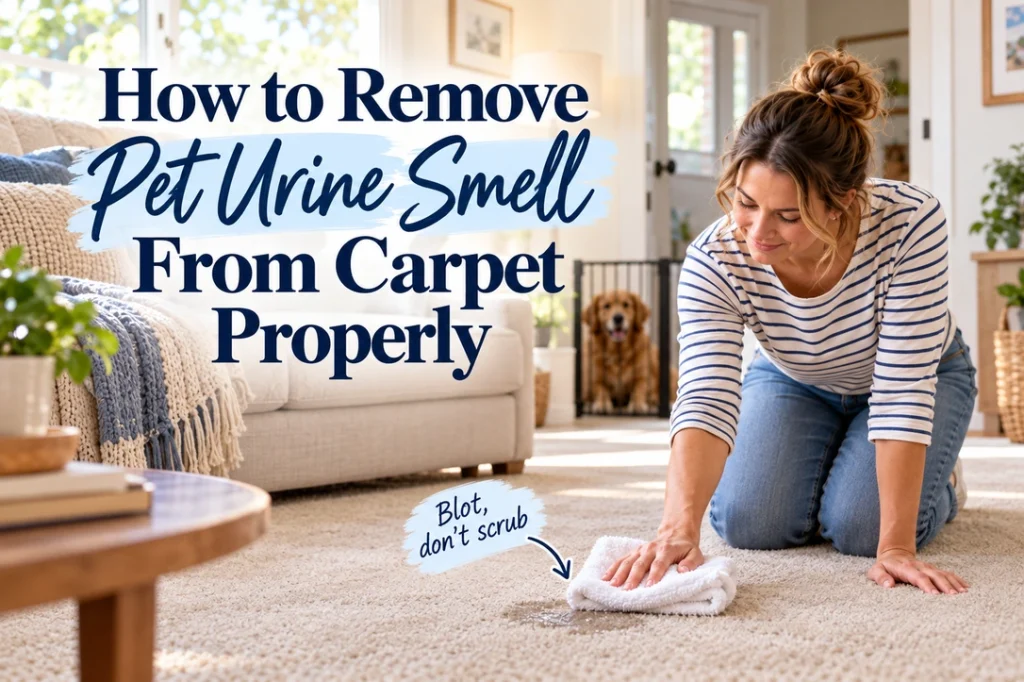
Fresh urine is the moment to remove as much liquid as you can before it spreads or dries. Blotting means pressing an absorbent surface down and lifting it away. Rubbing back and forth can spread the mess and roughen the pile.
- Put on gloves and place a thick white towel or layered paper towels over the wet area.
- Press steadily, lift, and replace or refold the absorbent material to expose a clean part. Work from the edge toward the center.
- Continue until you are lifting very little liquid. Bag used paper towels and keep contaminated cloths separate from the clean ones.
- If the carpet instructions allow it, use controlled amounts of clean, cool water and blot again. Avoid pouring water through the carpet into the padding or floor.
- Apply the compatible pet-urine treatment according to its label. Do not assume blotting alone has dealt with every odor-causing residue.
If you use a wet extractor, it must be intended for liquid pickup and approved for this material. An ordinary household vacuum is for dry debris, not urine or a wet carpet. Follow the equipment’s instructions and do not place electrical equipment in a puddle.
Avoid newspaper directly against pale carpet where ink could transfer, and use white cloths so you can see what you are lifting. Keep replacing the towel rather than pressing a saturated one back into the spot.
Humane World for Animals recommends prompt absorption and cool-water cleanup for fresh accidents. Adapt the amount of moisture to the carpet’s care instructions. Your aim is to lift contamination while keeping the surrounding carpet and layers underneath as dry as practical.

Treat Dried Urine With an Enzyme Cleaner
A dry-looking spot may still need odor treatment. Read the exact bottle before you start: application quantity, dilution, contact time, blotting, and drying instructions can differ between products and between stain and odor treatment modes.
- Identify the full affected area and complete the material and patch-test checks.
- If the label requires precleaning or removal of earlier cleaner residue, follow that instruction using a carpet-compatible method. Tell a professional which products you have already tried.
- Apply the permitted amount to the affected area. A light surface mist may not follow the label, but flooding the room is not a safe substitute. If the required treatment would threaten the backing or floor, seek professional help.
- Leave the cleaner for its stated contact time. Use a timer or write down the start time so you do not blot it away too early.
- Blot, extract, or allow it to air-dry exactly as directed. Do not assume every enzyme product should be rinsed immediately or left indefinitely.
For a specific example, the current Nature’s Miracle Urine Destroyer Plus for Dogs product information describes a 15-minute wait before blotting in its stain directions, with a different air-drying approach for tough odors. That is an example for that formula, not a universal enzyme-cleaner timetable. It also lists material exclusions; read the bottle you actually have.
For old cat urine, select a product labeled for the mess and surface, locate all affected areas, and resist increasing the strength beyond the instructions. An odor problem is not permission to mix cleaners or repeatedly saturate a carpet.
Skip the steam cleaner as a first response to urine. American Kennel Club guidance warns against heat or steam on urine spots and discusses enzyme treatment when odor remains. A professional can choose an appropriate extraction method for your carpet and contamination; a handheld steam cleaner is not an odor-removal shortcut.

Dry the Carpet and Check for Lingering Odor
Follow the product’s drying directions and keep the treated area unavailable to children and pets until the label permits access. Do not hide a damp spot under a rug, dog bed, or furniture just because it looks tidier.
Once the required treatment time has finished, ordinary ventilation and air movement may help the carpet dry, where compatible with the label. Keep a fan and its electrical connections away from wet areas. Drying time varies with application quantity, carpet construction, ventilation, and humidity, so do not promise that every spot will be ready within a particular hour.
Recheck after the area is fully dry. Compare it with nearby untreated carpet: does it feel tacky, unusually stiff, or still damp? Has the smell reduced, stayed the same, or returned? Record the result and the product used before deciding what comes next.
If the odor remains
First, confirm that you found the right spot and followed the actual label. A missed patch, insufficient contact time, a second soiled item, or contamination below the pile may explain the result. One careful repeat may be appropriate if the instructions permit it and there is no sign of material damage or excessive moisture.
Do not keep adding different treatments until something seems to work. If the carpet stays wet, the backing changes, or the odor returns after a correctly performed treatment, stop and seek advice. A clean-looking surface is encouraging, but it is not proof that every layer is clean.
What about baking soda or vinegar?
Neither is a reliable substitute for identifying and treating the affected material. Fragrance and powder can distract from a smell, and powders may leave residue or conflict with vacuum instructions. There is no need to add a vinegar-and-baking-soda mixture to this workflow. Use the compatible product’s directions instead of stacking home remedies onto an already-treated spot.

Know When the Padding Needs Professional Help
Repeated accidents in the same area can reach below the carpet pile. If urine has entered the backing, padding, or floor, treating the visible surface may leave part of the problem untouched. This is a different job from blotting a fresh, isolated spill.
Ask a qualified carpet cleaner for an assessment when there are multiple old spots, strong persistent odor despite a correctly performed treatment, suspected floor damage, delicate materials, or uncertainty about what was used previously. Describe the carpet, accident history, cleaner names, and whether the odor returns after drying. Those details help the professional choose the next step.
Do not pull up fitted carpet yourself to investigate sharp tack strips or pour cleaner underneath it. A professional can inspect the layers safely, evaluate whether controlled treatment is appropriate, and explain when replacing contaminated padding or a damaged section is necessary. No DIY spray can promise to repair a damaged subfloor or restore altered carpet dye.
The WoolSafe carpet-care guide is a useful reference for material-specific cleaning and professional care. Keep a short record of what you tried rather than escalating the chemical strength. If you rent, notify the property manager before arranging invasive work or replacement.

Keep Pet Accidents From Becoming a Repeat Problem
Once the area is clean and dry, keep the response simple: a ready cleanup kit, prompt attention to new accidents, and a household routine that gives your pet appropriate bathroom opportunities. Avoid punishing a pet for an accident; cleaning and patient retraining serve different purposes.
For dogs, build regular outdoor breaks into the day and watch for their usual signals. For cats, review litter-box access, location, and cleaning with appropriate animal-care guidance. A newly soiling or frequently soiling pet may need a veterinary assessment rather than another bottle of carpet cleaner. Cleaning removes a household problem; it does not diagnose its cause.
Add a small carpet check to the CHC Friday floor reset. Pick up clutter, inspect known problem areas, and vacuum dry carpet according to the manufacturer’s directions. Spot-treat a new accident when it happens rather than leaving it until Friday. Keep washable pet bedding on its own care routine so a soiled blanket does not make a treated carpet seem to smell again.
For a lower-energy day, deal with the wet accident, contain the area, and leave yourself a note for the next permitted treatment or dry-check time. You do not need to complete every room to have handled the important job.
The goal is a comfortably clean home and a method you can repeat: find the source, respect the material, treat it properly, let it dry, and get help when the problem sits below the surface.

CLEANERS CLUBHOUSE
Stay on Top of Floors Without Cleaning All Day
Give your floors a focused Friday reset instead of chasing every mark all week. The Cleaners Clubhouse helps you build a realistic routine with practical guidance, printables and monthly challenges.