

THIS POST MAY CONTAIN AFFILIATE LINKS. PLEASE READ MY DISCLOSURE FOR MORE INFO.
You pull off a clean pillowcase on laundry day and find a yellow patch underneath. Or the sheets look fine until you unfold the top edge and notice a darker strip where they sit against your skin. It is a familiar bedding problem, and tackling it does not have to turn into an afternoon of mixing products and scrubbing.
To remove yellow stains from pillows, first separate the pillowcase, protector, and pillow insert. Check each care label, pretreat washable fabric with a compatible laundry product, wash only the parts approved for washing, and dry them completely. Foam and latex need their own care route. Some older marks may remain even after careful cleaning.
This guide helps you choose the right next step for the bedding you actually own. Start with one pillowcase or one sheet if that is what fits your day. You can make useful progress without washing every pillow in the house at once.
Disclosure: This post may contain affiliate links. As an Amazon Associate, Clean Home Challenge earns from qualifying purchases. If you make a purchase through these links, we may earn a small commission at no extra cost to you. This helps us keep creating practical cleaning tips, routines and resources for busy families! 🧽
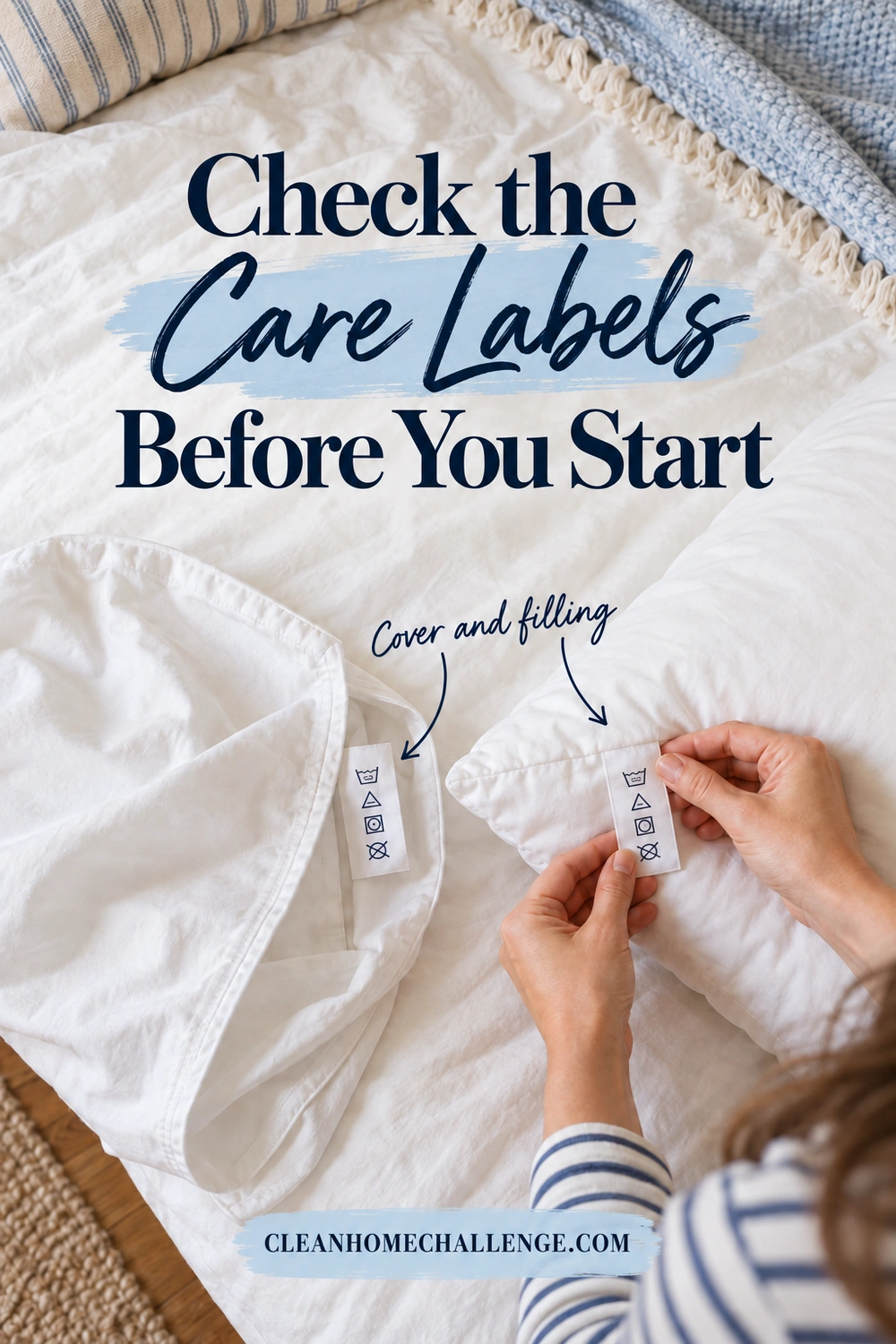
Check the Care Labels Before You Start
Yellowing can come from sweat, body oils, saliva, and residues from products that transfer onto bedding. Casper’s explanation of pillow discoloration identifies these common contributors. The color alone does not tell you exactly what caused a mark or which cleaner will remove it.
First, work out where the discoloration is. Uncover the pillow in layers and look at the pillowcase, any zippered protector, the pillow’s fabric shell, and the filling only if the product is designed to open. A washable removable cover does not automatically mean that the insert can go in the washer.
Make a quick care check
Look for the material, permitted wash method, water temperature, drying instructions, and any bleach restriction. Read the cleaner’s label as well as the fabric label. A treatment has to suit both the textile and any filling it could reach.
- Cotton or polyester pillowcases and sheets: Often washable, but check the exact item, including colored trim and decorative finishes.
- Synthetic-fill pillows: Use a machine only when the pillow label permits it.
- Down or feather pillows: Follow the exact wash, detergent, bleach, and drying directions. A white cotton shell does not cancel restrictions on the filling.
- Memory foam and latex: Keep the core out of a routine laundry load. Check the maker’s instructions before using even a damp cloth.
- Silk, wool, specialty fills, and dry-clean-only items: Use the dedicated care route. Do not borrow the cotton-sheet soaking method below.
Photograph a faint tag before it becomes harder to read. If the label is missing, look up the exact model or contact the manufacturer. In the meantime, wash only the removable pieces whose care instructions you can confirm.
Before treating a pillow, inspect its seams and shell. If filling is escaping or fabric is tearing, stop and ask the manufacturer about repair or replacement. Pacific Coast’s down-pillow guide recommends checking the shell and equipment capacity before washing. Finding a problem now is easier than dealing with loose filling in a wet load.
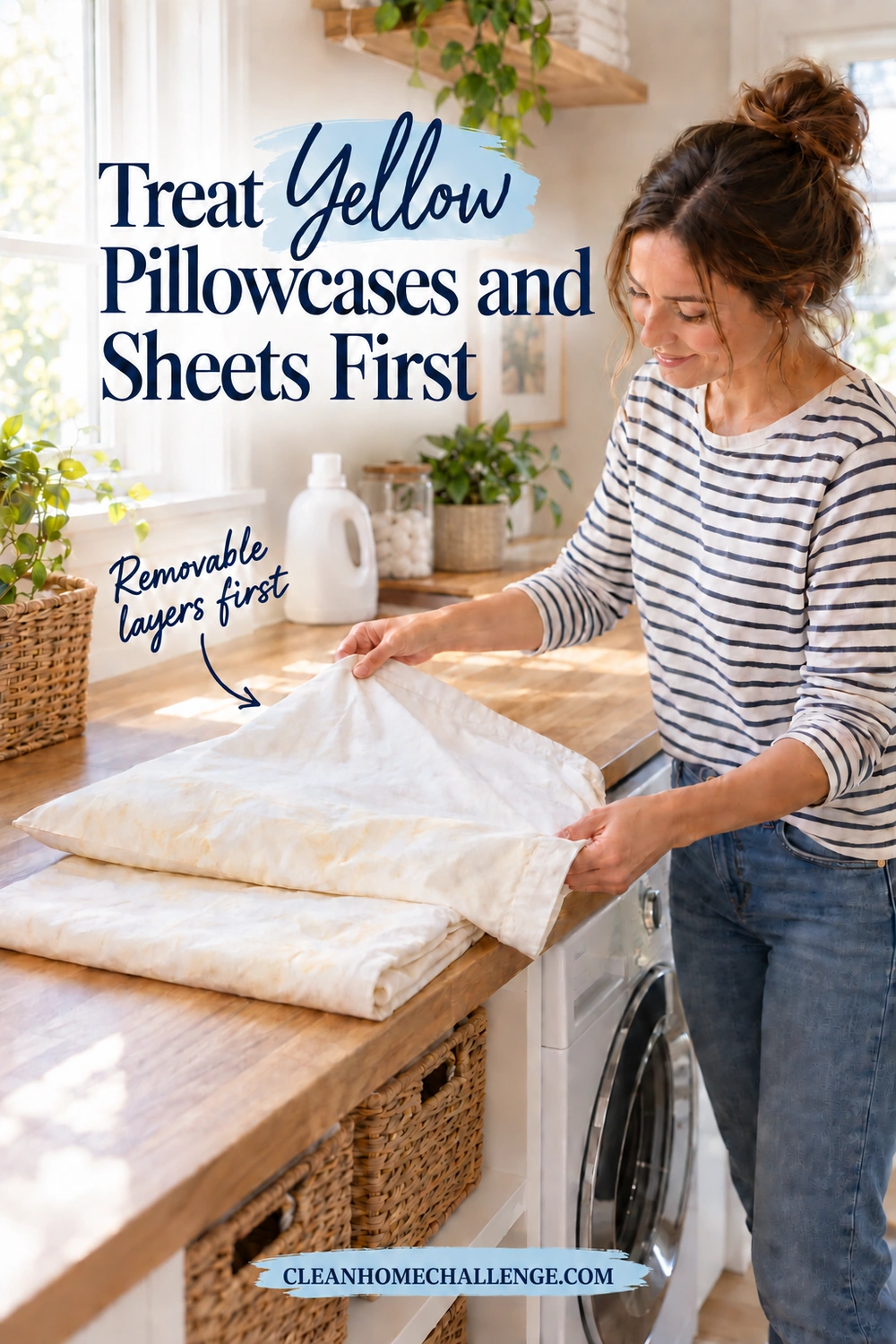
Treat Yellow Pillowcases and Sheets First
Removable layers are a manageable place to begin. Lay the stained fabric out in good light so you can find the affected areas, including pillowcase seams and the folded top edge of a sheet. Keep the pillow insert elsewhere while you work.
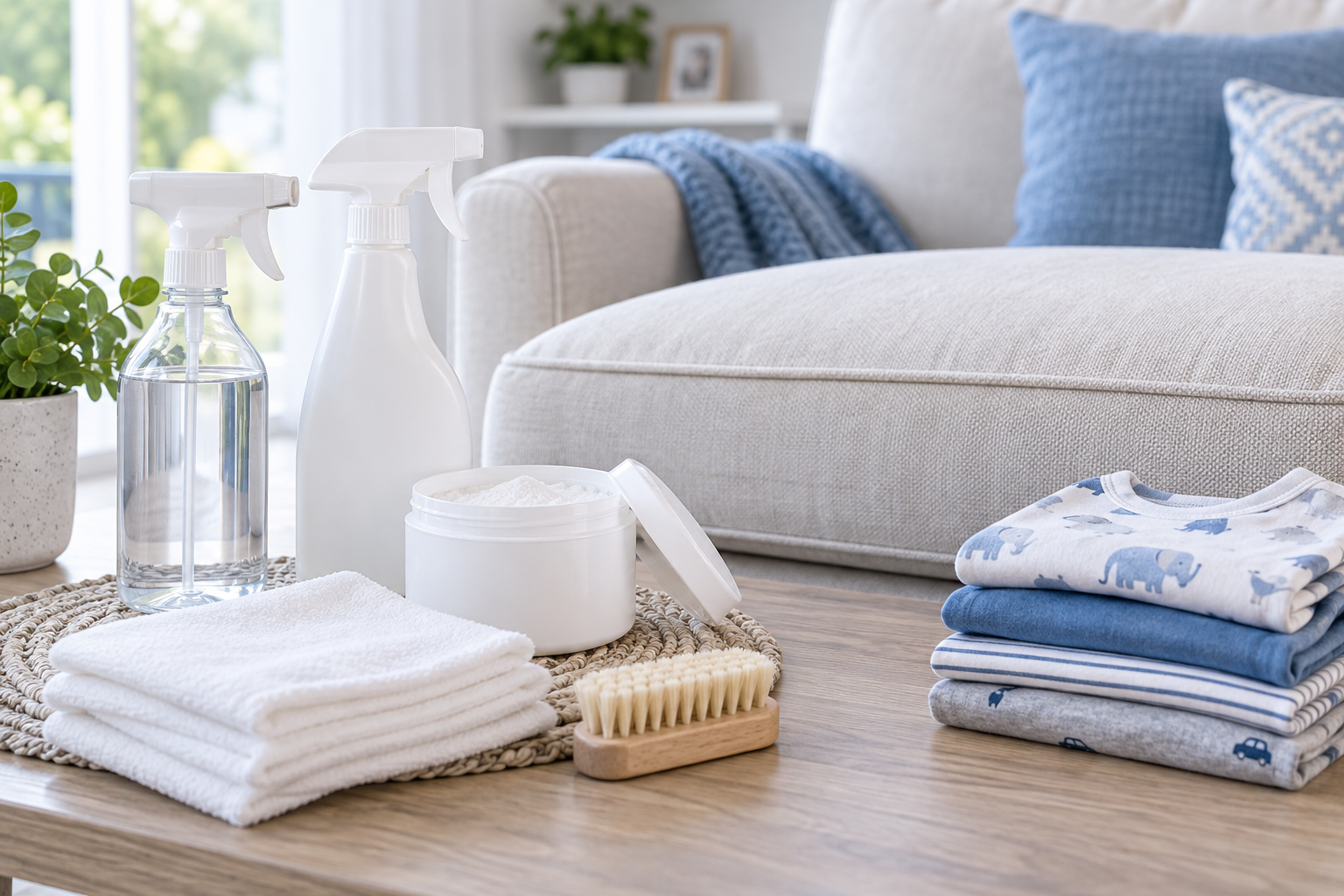
Gather a small, useful kit
You will need the care labels, a compatible laundry detergent or pretreatment, a clean white cloth, and access to the washing and drying method the fabric allows. Add a measuring cap or scoop. A basin is only necessary if a suitable product specifically calls for a soak. Keep laundry products in their original containers, away from children and pets, and follow any glove and ventilation directions.
For ordinary washable cotton or polyester bedding, try this order:
- Check and test. Confirm that the pretreatment is suitable for the fabric and color. Test a hidden seam as the product instructs. Stop if the test changes the color or texture.
- Pretreat the yellow area. Apply a compatible liquid laundry detergent or laundry stain remover according to its directions. Work gently with the fabric or cloth rather than attacking it with a stiff brush. Tide’s laundry guide includes detergent pretreatment for sweat stains.
- Use the stated waiting time. Set a timer for the product’s instructions. A quick pretreatment and a long presoak are different methods; do not assume an overnight treatment is better.
- Wash at an allowed temperature. Follow the textile label and detergent directions, and leave enough space for the bedding to move. Keep incompatible colors and delicate fabrics in separate loads.
- Inspect before drying. Check the stained area after the wash. The American Cleaning Institute’s stain guide advises checking for remaining marks. If a compatible repeat treatment is needed, do that before committing the fabric to a drying cycle.
When an oxygen cleaner is worth considering
An oxygen-based laundry stain remover can be an optional second step for suitable washable sheets and pillowcases. It is not a substitute for checking the care label, and “chlorine-free” does not mean suitable for every fiber.
For example, OxiClean’s bedding directions describe a measured presoak followed by laundering. They limit use to suitable colorfast fabric and exclude wool, silk, their blends, leather, and dry-clean-only materials. The listed soaking window is one to six hours for the named products, but your own package and bedding instructions take priority.
If both labels permit the treatment, measure the cleaner into the specified amount of water, dissolve it as directed, and follow the stated soak and wash steps. Do not make the solution stronger to compensate for an old stain. Do not soak a whole pillow unless its shell, filling, and manufacturer instructions explicitly allow that treatment. In particular, do not assume oxygen bleach is appropriate for down or feathers.
There is no need to add vinegar, baking soda, dishwashing liquid, or household bleach to this routine. Use a formulated laundry product as directed. OxiClean’s product guidance prohibits mixing its powder with chlorine bleach or other household chemicals, apart from its directed use with regular laundry detergent in the wash. Keep prepared oxygen-cleaner solution out of tightly sealed containers because it releases gas.
If you only have a short window today, pretreat and wash the removable cases. Save a permitted longer soak for a time when you can finish the whole process.
Wash Only Pillows With Washable Filling
Once the covers are underway, look at the pillow’s own instructions again. Do not choose the machine cycle based on the color of the stain. The filling, construction, and care label determine the wash route.
For a machine-washable pillow
Remove the outer layers and any components the instructions specifically tell you to remove. Leave sewn compartments and nonremovable fillings intact. Check that the pillow fits comfortably in both the washer and the dryer or other approved drying setup.
Whirlpool’s pillow-washing guide recommends a gentle cycle, label-compatible water temperature, and an extra rinse when available. It also suggests balancing suitable loads with two pillows. Check your appliance manual and available space first; two oversized pillows crammed into a small drum are not a useful rule to follow.
Use the type and measured amount of detergent allowed by the pillow and detergent instructions. More detergent does not remove the need for a proper rinse. If the pillow’s shell permits a stain pretreatment, test it and follow the directions before washing. Skip added bleach unless the pillow label and the product both specifically allow it.
Support the whole wet pillow when moving it. Do not lift a heavy pillow by a thin corner or twist it to force water out. Have its approved drying arrangement ready before the wash ends so it does not sit wet while you work out what to do next.
Down, feathers, and hand-wash-only instructions
Treat down and feather care as product-specific. Some pillows are machine washable, while other constructions need a different method. Pacific Coast’s current laundry guidance makes the sewn-in label the deciding source; it also distinguishes pillows from comforters. Do not carry pillow settings across to a duvet insert or mattress pad.
If a pillow allows handwashing only, use its own directions for detergent, water temperature, rinsing, and drying. Handwashing still wets the filling and still requires complete drying. It is not a fallback way to clean foam, latex, or an unidentified pillow.
A large-capacity laundromat may be an option for a genuinely machine-washable bulky item when your home machine is too small. Bring the care instructions, check the equipment settings, and plan for the drying stage before paying for a wash.

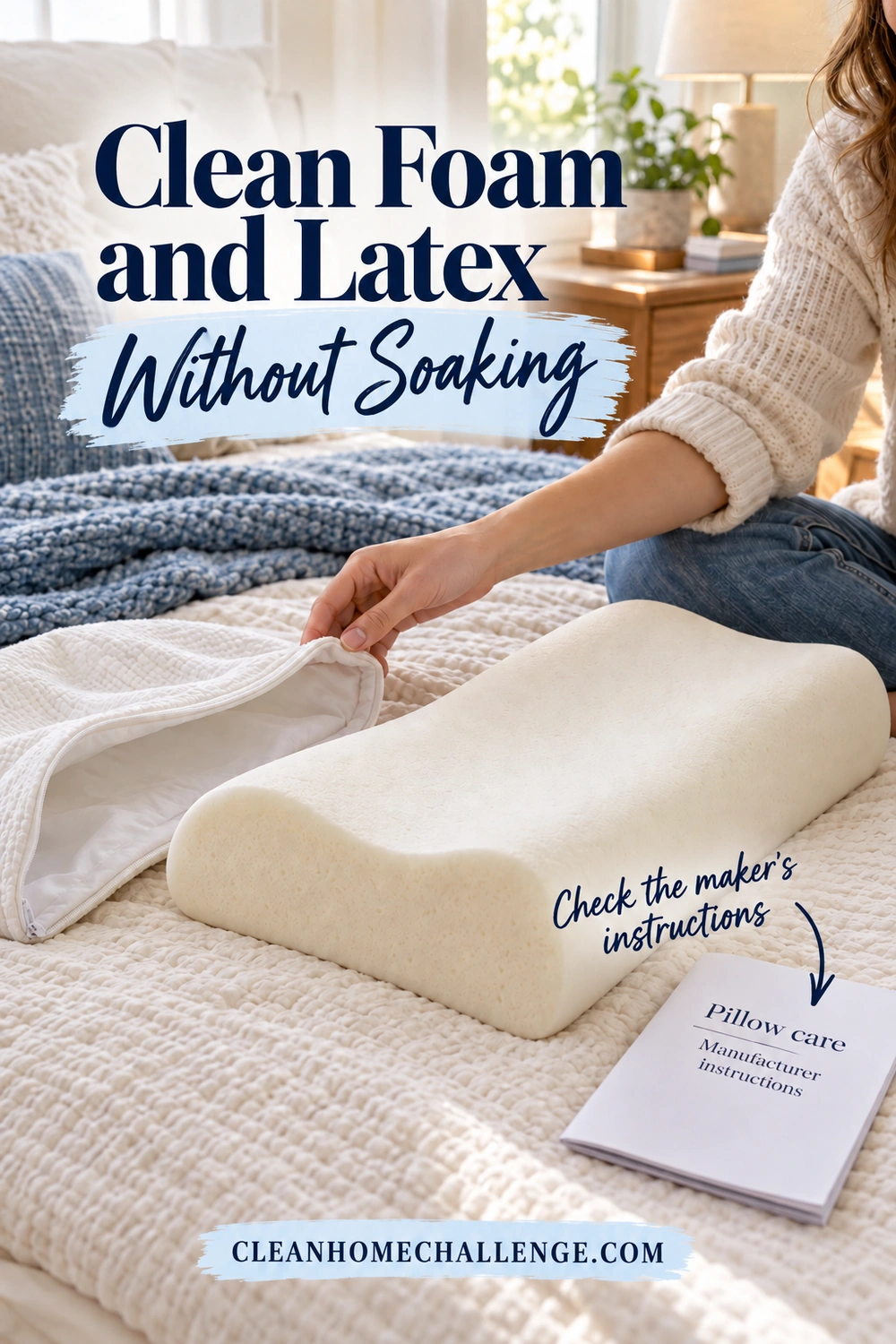
Clean Foam and Latex Without Soaking
A yellow mark on foam calls for restraint. The washable shell and the core can have very different instructions, even when they belong to the same pillow. Keep foam and latex out of the washing machine and do not submerge them as a generic stain-removal method.
Tempur-Pedic’s care guidance says not to wash or submerge an insert unless its instructions specifically say it is washable. Its TEMPUR-Cloud product care is stricter still: the foam should not be cleaned with liquid. For a pillow with that restriction, focus on washing its removable cover and use only the approved refresh method. Do not improvise a wet stain treatment.
If the manufacturer permits spot-cleaning
Use only the specified cleaner and method. As one example, Saatva’s latex care guidance describes blotting with a well-wrung cloth dampened with mild detergent solution, taking up excess moisture with dry towels, and drying flat away from direct sunlight. It prohibits putting the latex core in a washer or dryer.
That is a surface treatment, not a soak. Keep the cloth barely damp as instructed, blot gently, and avoid forcing liquid deeper into the pillow. Complete any residue-removal step required by the manufacturer. Leave the pillow uncovered in its approved drying position until it is fully dry.
Do not apply the sheet-soaking method, oxygen cleaner, a homemade paste, steam, or a hot hair dryer to the core. If the manufacturer cannot confirm a treatment for the mark, leave the mark alone while you ask for advice. A fresh washable cover is a useful improvement without risking damage to an expensive insert.
Dry Pillows Completely Before Making the Bed
Drying deserves its own place in the plan. A pillow can feel warm on the outside while moisture remains inside, and a dry-looking shell is not enough to decide that it is ready for a pillowcase.
Use only the drying method and heat setting on the label. Some washable pillows allow a low-heat dryer cycle, some require another setting, and some items must air-dry. Do not increase the heat to meet bedtime. Keep nonwashable foam and latex out of the dryer.
For a dryer-approved pillow, give it room to tumble. Pause as its instructions allow to reposition it and gently loosen filling that has clumped. Use dryer balls only if the pillow and appliance guidance permit them. Whirlpool includes this as an option for suitable pillows, not a requirement for every filling.
Before replacing the covers:
- Let the surface warmth fade so it does not mask a damp-feeling area.
- Gently check the center and thicker areas, not just the corners.
- Look and feel for wet clumps, damp patches, or unevenly dried filling.
- Continue only the approved drying process if any part is still damp.
- Put the case or protector back on only after the whole pillow is dry.
Pacific Coast’s drying advice emphasizes checking the center rather than relying on the end of a timed cycle. No single number of minutes works for every pillow, machine, and room.
For air-dry-only items, use the position and conditions the maker specifies, with space around the item for air to circulate. Direct sunlight is not a universal shortcut, especially for latex. Do not fold damp bedding into a basket or linen closet.
A spare pillow or clean set of covers can take the pressure off. If you cannot finish drying today, choose a removable-cover wash instead of starting a full pillow wash late in the evening.

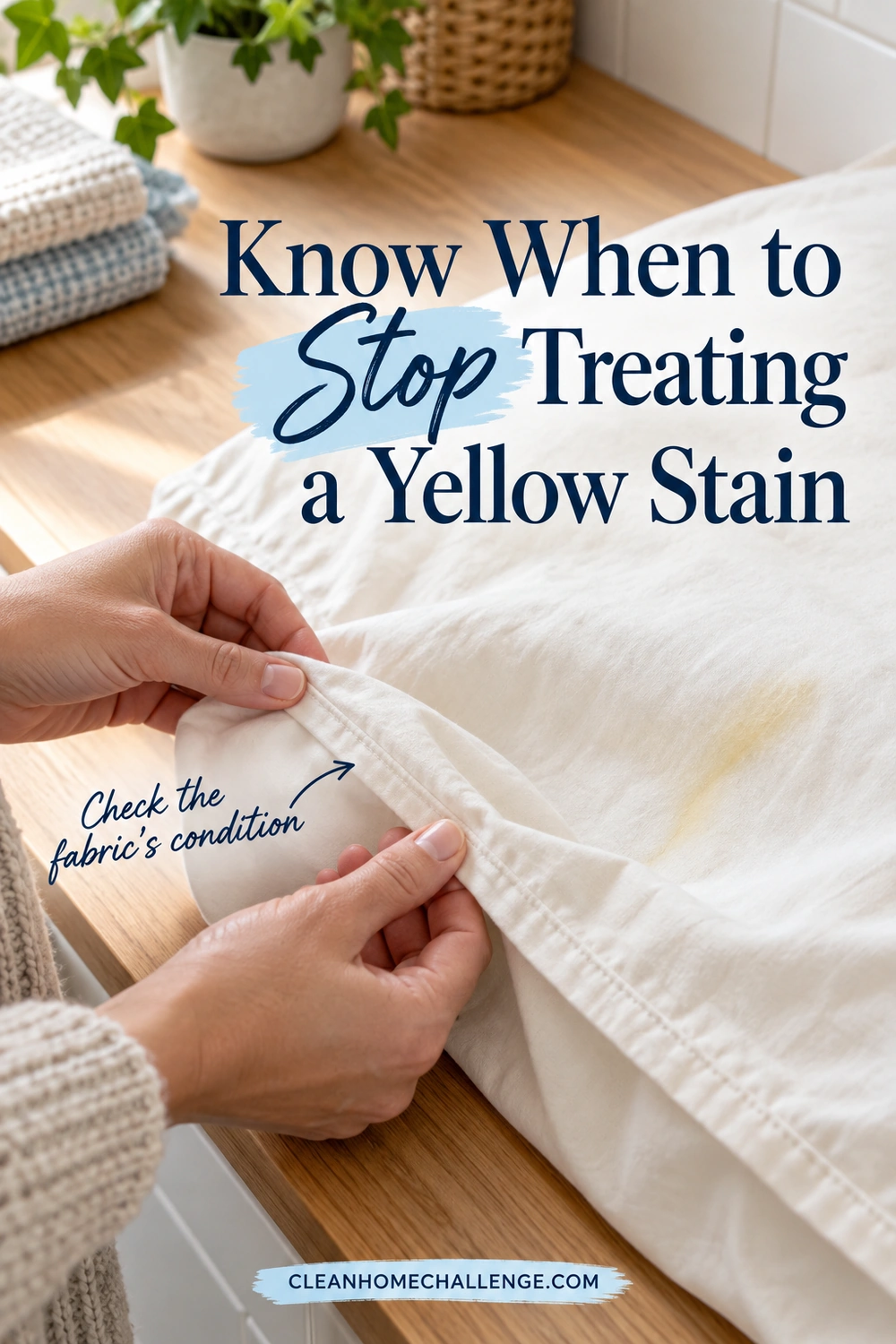
Know When to Stop Treating a Yellow Stain
A remaining yellow patch is frustrating, especially after you have spent time laundering the bedding. Before starting again, check whether the mark has improved and whether the fabric still looks and feels sound. Cleaning results depend on the item and its history; an old stain may not disappear completely.
Make the next step a deliberate one
For a sound, washable pillowcase or sheet, another label-approved treatment may be reasonable. Review the amount used, waiting time, load size, and rinsing before buying something stronger. If several items come out with new marks, check your washing-machine care instructions and detergent dosing rather than repeatedly treating each item in isolation.
Stop if you see color loss, fabric damage, leaking seams, or a change in the filling. Ask the manufacturer or a professional textile cleaner about valuable, delicate, or unknown materials. You can describe the mark, share the care label, and explain exactly what has already been used.
If an insert remains damp, has a persistent unusual odor after approved cleaning and complete drying, or is deteriorating, keep it off the bed while you seek product-specific advice or arrange a replacement. Pacific Coast recommends contacting its care team when problems persist after drying. Do not cover up an unresolved problem with fragrance.
Avoid escalating to a mixture of bleach and other cleaners. Poison Control warns that bleach combined with acids, including vinegar, can release chlorine gas, while bleach and ammonia can produce chloramine gas. This guide does not require chlorine bleach. If a bedding label says “do not bleach,” do not assume that an oxygen product is an exception.
You also do not need to identify a health problem from the color of a pillow. This is a fabric-care guide, and yellow staining alone is not a medical diagnosis. Judge the next cleaning step by the care instructions and the condition of the item, rather than alarming before-and-after claims online.
Keep Yellow Stains From Building Up
The simplest maintenance plan is one you can fit into the laundry you already do. Protect the pillow, clean the removable layers regularly, and notice small marks before the next big bedding reset.
Choose a routine that is easy to repeat
- At your regular sheet change: Inspect the pillowcases and sheet edges before loading the washer. Treat suitable marks then, rather than discovering them after drying.
- With removable protectors: Follow their care labels and wash them when needed. A protector adds a washable layer, but it does not make the pillow underneath exempt from care.
- When changing pillowcases: Check the pillow shell for new marks, dampness, damaged seams, or a label you need to look up.
- Before a full pillow wash: Confirm that the item is washable and that you have time and equipment to dry it completely.
- Before storing spare bedding: Make sure every layer is dry, then put it away in a clean storage space.
The American Cleaning Institute advises washing sheets at least every two weeks, more often with heavy nighttime sweating. A weekly sheet-and-pillowcase change can be a practical starting point for a household working on recurring marks; adjust to use, visible soil, and the fabric’s instructions. Pillow inserts follow their own care schedule, not automatically the sheet schedule.
For a smaller week, keep clean spare pillowcases within reach. Wash the cases and protectors you can safely handle, make a note of the pillow’s care requirements, and leave the bigger job for a workable day. In the Clean Home Challenge routine, a Wednesday bedroom check or Saturday laundry catch-up can be an easy reminder to look at those removable layers.
The useful goal is clean, fully dry bedding with a repeatable care plan. Start with the label, use the gentlest compatible treatment that does the job, and give drying enough time. A modest improvement is still worth having, even when an older pillow never returns to a perfect white.

CLEANERS CLUBHOUSE
Get Step-by-Step Help With Tricky Cleaning Jobs
When a stain, smell or stubborn cleaning problem has you stuck, a clear plan makes all the difference. The Cleaners Clubhouse gives you practical guidance, useful printables and routines you can actually follow.