

THIS POST MAY CONTAIN AFFILIATE LINKS. PLEASE READ MY DISCLOSURE FOR MORE INFO.
A favorite black T-shirt can start looking tired long before it wears out. The good news is that a few small changes can help your dark laundry keep its color, without turning washday into a complicated project.
If you’re wondering how to keep black clothes from fading, start with the garment label, sort similar fabrics together, measure detergent, and choose a suitable cool wash and gentle drying method. First, though, check whether you’re seeing lost color, surface wear, or something sitting on the fabric. They need different responses.
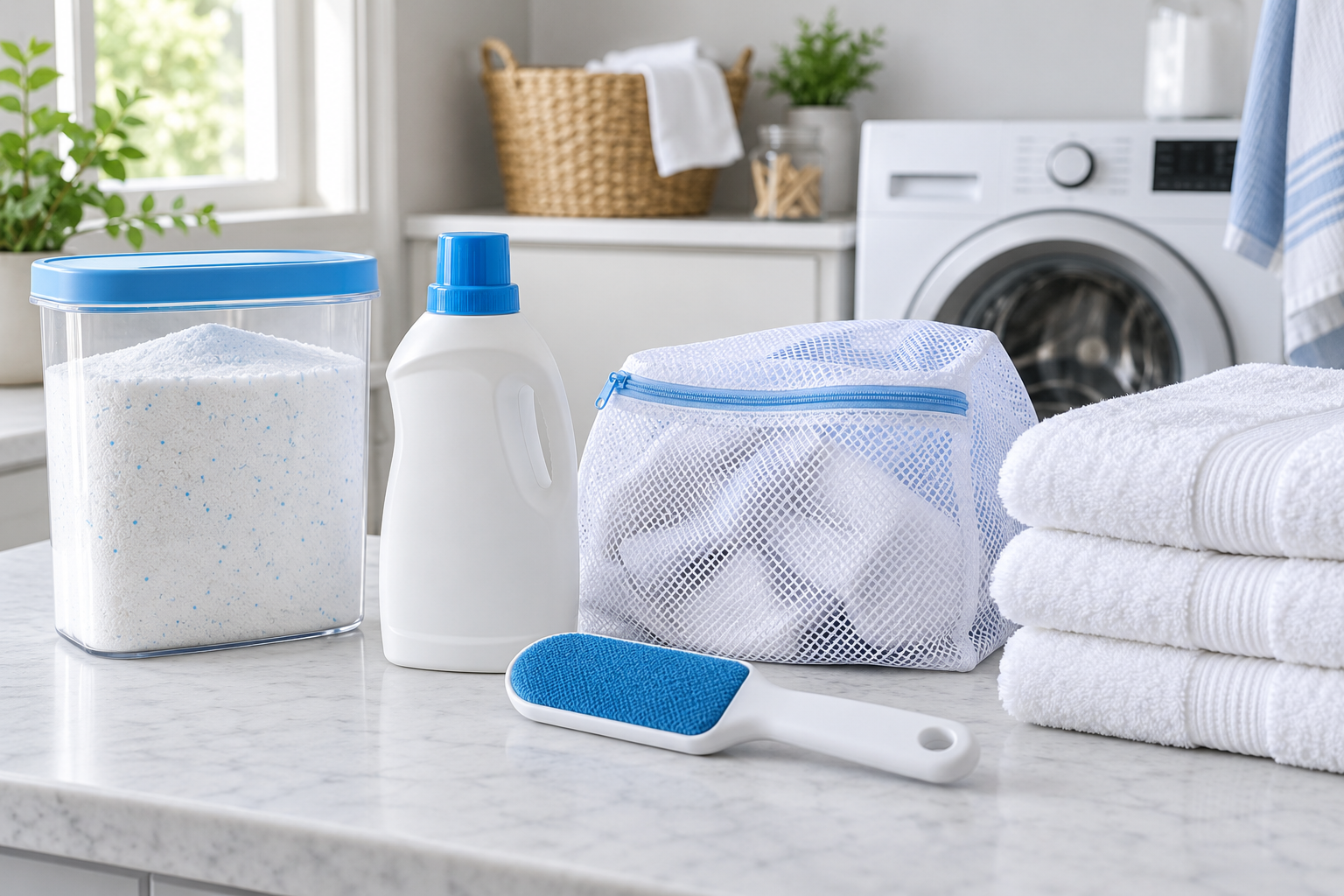
What you need: Your garment care labels and washer instructions; a compatible laundry detergent and its measuring cap or scoop; a mesh laundry bag only for items that need one; and a shaded drying rack or a dryer permitted by the clothing labels. A garment brush or lint roller is optional for troubleshooting fluff.
Time to allow: For a small, straightforward load, estimate about five minutes for sorting and preparation, plus your machine’s cycle and enough time for everything to dry fully. A larger load or stain treatment will take longer, and drying time varies with fabric, airflow, and weather.
Disclosure: This post may contain affiliate links. As an Amazon Associate, Clean Home Challenge earns from qualifying purchases. If you make a purchase through these links, we may earn a small commission at no extra cost to you. This helps us keep creating practical cleaning tips, routines and resources for busy families! 🧽
Why Dark Clothes Fade or Look Gray
Dark clothes can lose dye during washing, while rubbing and repeated wear can roughen the fabric’s surface. Strong washing conditions and overdrying can contribute to that tired appearance. Some dyes and fabrics also hold up better than others. Careful laundering helps, but it cannot promise that every black garment will stay its original shade forever. Whirlpool explains the main causes of fading and fabric wear.
Before changing your whole routine, look closely at one clean, dry item in good light:
- Small pale fibers or specks: Check for towel lint, tissue from a pocket, pet hair, or undissolved detergent.
- Chalky streaks or patches: These may be wash residue. Notice whether they appeared suddenly after one load.
- A fuzzy, worn surface: Friction and pilling may be making the color look dull.
- An evenly lighter shade or pale worn edges: Actual dye loss or wear may be involved, especially if rinsing and lint removal make no difference.
These clues are a starting point, not a certain diagnosis. White marks do not automatically mean you used too much detergent; loading and rinsing matter too. Whirlpool’s residue guidance identifies several possible causes.
Choose one item to troubleshoot before buying another product. Take a quick photo in the same light if that helps you compare the next wash. There’s no need to experiment on the entire family’s clothes at once.

Sort, Check Labels, and Turn Clothes Inside Out
A black wool sweater, a black cotton shirt, and black stretch leggings may need three different routines. When you wash dark clothes, color is only one part of sorting.
Read both the care instructions and the fiber label. Look for machine or hand washing, temperature limits, drying instructions, and warnings about bleach or professional cleaning. Respect “dry clean only.” The label considers the finished garment, including features that a simple fiber description might miss. The FTC’s care-label guidance explains why those instructions matter.
For everyday sorting, make these practical distinctions:
- Washable cotton tops and similar everyday clothes: Group compatible dark items of a similar weight together.
- Black denim: Keep heavy jeans away from delicate tops. Follow any separate-wash warning on new denim. Levi’s recommends cold washing and shade drying for its denim.
- Synthetic workout clothes: Keep them away from abrasive items and lint-shedding towels. Check the maker’s softener advice. For example, lululemon recommends similar fabrics and avoiding fabric softener for its technical garments.
- Wool, silk, delicate trims, or special finishes: Set these aside for their own instructions rather than adding them to a general dark load.
You don’t need a row of matching hampers. One basket for compatible everyday darks and a small place for “check first” items is enough to start. A simple label on that second basket helps stop a well-meaning family member from tipping everything into the machine.
Before loading, empty pockets, deal with tissues, close zippers and hook-and-loop fasteners where appropriate, and turn garments inside out. This puts more of the wash friction on the inner surface. Use a suitable mesh bag for washable items that need protection, while still respecting their required cycle.
Treat visible stains before turning the item. Use a product approved for the fabric, test on a hidden area, and follow its contact time. Avoid hard scrubbing that leaves a worn-looking patch. Sorting by color, fabric, and cleaning needs is also the approach recommended by the American Cleaning Institute’s laundry guide.

Measure Detergent for a Cleaner Rinse
The right dose depends on the product, load size, soil level, water hardness, and washer instructions. A small load of lightly worn shirts does not necessarily need the same dose as a full load of dirty work clothes.
Start with the directions on your current detergent, including its high-efficiency requirements. Use the supplied cap or scoop and look for the actual measurement lines. Filling a cap to the brim is not a universal instruction. Equally, cutting every dose to one spoonful can leave some loads poorly cleaned. Tide’s dosing guidance covers load size, soil, and water hardness rather than prescribing one amount for every wash.
A detergent intended for colors or darks can be a convenient choice if it suits your fabrics and washer. You can also use a compatible everyday detergent. Check the product’s cold-water directions and bleach content instead of choosing by the bottle color alone. A dark-clothes detergent does not automatically make a wool sweater machine washable.
Wool needs particular care. Use a suitable mild wool detergent and the washing method on the garment label. Woolmark advises against heavy-duty enzyme detergents and chlorine or oxygen bleach for wool. Read Woolmark’s detergent advice.
Put detergent in the location specified by your machine and product. Liquid, powder, and single-dose products can have different placement instructions. Don’t pour concentrated product over a dry garment unless its directions explicitly call for that use.
If faded black laundry is actually marked with residue, review dosing, loading, and water temperature together. Increasing detergent without checking the cause may simply add another variable.
Keep the routine simple: detergent first, other products only when there is a clear, label-supported need. Fabric softener is optional and may be unsuitable for technical fabrics. Never mix bleach with vinegar, ammonia, or other cleaners, and keep laundry products sealed in their original containers, out of children’s and pets’ reach.

Choose a Cold Wash That Still Cleans
Cold water is a useful starting point for many normally soiled, washable dark clothes, provided the care label and detergent allow it. It can help limit dye bleeding and reduce unnecessary heat exposure. However, “cold wash darks” is a starting routine rather than a rule that overrides every garment, stain, or cleaning need.
Match the cycle to the clothes and the dirt. Use a gentle or delicate cycle when it is appropriate for the fabric and soil level. A normal cycle may be needed for compatible everyday garments that need more cleaning. The shortest cycle is not automatically the best: quick-wash programs often have smaller load limits and are intended for lightly soiled items. Check your washer’s cycle guide instead of assuming every program handles a full basket. Whirlpool explains how wash cycles differ.
Load items loosely, following the capacity guidance for that particular cycle. Don’t press down a pile of clothes to squeeze in the last hoodie. Fabric needs space for washing and rinsing, and a crowded load may leave detergent behind. If you regularly find dry-looking folds or streaks afterward, start by trying a smaller, properly dosed load.
Cold water also varies by machine and season. Some washers adjust their cold setting; others offer a separate tap-cold option. In very cold incoming water, detergent performance can suffer. GE Appliances notes this problem at very low wash temperatures. Check your manual and detergent directions if winter loads repeatedly come out poorly rinsed or unclean. Don’t override a garment’s temperature limit to solve it.
Greasy stains, heavy soil, and laundry requiring special hygiene measures may need a different label-compatible treatment. Pretreat appropriately and follow the relevant product or public-health instructions. A routine cold wash should not be described as sanitizing or disinfecting.
When the wash ends, check the result before drying. If a stain remains, treat it again as directed rather than baking it into another laundry problem.

Dry Dark Clothes Without Extra Wear
Drying deserves as much attention as the wash cycle. Start by checking the label, then take clothes out promptly, gently shake out washable items, and arrange them so air can circulate.
For clothes that can hang dry, use a rack or line in a shaded, ventilated spot. Keep items inside out and leave gaps between them. Strong sun is not necessary to get dark clothes dry; reducing direct exposure helps protect their appearance. Levi’s specifically recommends drying denim inside out in shade in its denim-care instructions.
Choose the drying space before starting a big load. If your rack only holds six shirts without overlapping, washing twelve at once may create a damp pile with nowhere to go. A smaller load that can dry properly is often easier to finish during a busy day.
Give knits the support they need. Heavy wet sweaters can stretch on hangers. Where the label calls for flat drying, reshape gently and lay the item on a suitable flat drying surface. Woolmark’s drying guidance recommends flat drying for wool knitwear unless tumble drying is specifically permitted, and warns against direct heat and sunlight.
If a dryer is allowed, use the label-compatible setting, favoring lower heat when suitable, and avoid leaving garments tumbling after they are dry. Separate items with very different drying times so a thin black tee doesn’t keep heating while a heavy sweatshirt finishes.
You don’t have to air-dry every sock to improve the routine. Start with the dark items whose color and shape you most want to protect. Always let clothes dry fully before folding them into a drawer.

What to Do When Black Clothes Already Look Faded
Start with the least involved, fabric-safe check. You may be able to improve the appearance without recoloring anything.
For lint or loose fluff: Try a garment brush or lint roller suitable for the fabric. Work gently. Removing pale fibers can make the underlying black easier to see, but it does not replace dye.
For suspected detergent residue: Check the washer’s troubleshooting guidance. A label-compatible rinse may help if the clothes are otherwise clean; actual soil may require rewashing with the correct dose and cycle. Avoid treating every pale mark with more stain remover. If the problem keeps returning, inspect the dispenser and follow the machine’s cleaning instructions.
For genuine color loss: Ordinary detergent cannot put missing dye back. An appropriate fabric dye may be an option for a suitable garment, but read the full instructions before buying it. Check fiber composition, required water temperature, trims, stitching, and whether the garment can tolerate the method. Rit’s guidance distinguishes dyes by fabric composition; one formula does not suit every black item.
Don’t expect an even result over bleach damage or sharply sun-faded patches. Rit warns that bleach damage can make dyeing difficult, with no guaranteed repair. A valuable garment deserves advice from its maker or a textile-care professional before an experiment.
Skip the salt-and-vinegar cure. Neither ingredient supplies the missing black dye. Some dyeing processes use salt or vinegar for particular fibers, which is different from adding them to an ordinary wash and expecting faded clothes to turn black again. Follow a dye manufacturer’s complete method if you choose to recolor; don’t improvise a mixture of laundry products.
Keeping an evenly faded shirt as a comfortable everyday piece is a perfectly reasonable outcome, too.

Make a Darks Routine You Can Keep
The most useful routine is one you can repeat on an ordinary week. Keep a short reminder near your hamper:
- Check: Read unfamiliar labels and look for stains or tissues.
- Sort: Put compatible dark fabrics together; set special-care items aside.
- Prepare: Treat stains as directed, then turn clothes inside out.
- Wash: Measure detergent and use a suitable temperature, cycle, and load size.
- Finish: Check the clothes, dry as labeled, and put them away fully dry.
Let the workload fit your day. If Saturday is your laundry catch-up time, use it for the dark items that need extra sorting or drying space. On a busy weekday, one manageable load is enough. Leave a basket by the drying rack so putting clean clothes away is the next obvious step.
To learn how to keep black clothes from fading in your own household, change one avoidable habit first. Perhaps that’s sorting out towels, measuring your detergent, or moving the rack out of direct sun. See how the clothes respond before adding another product. A calmer laundry routine can protect your favorites and make the next load easier to finish.


CLEANERS CLUBHOUSE
Make Laundry Catch-Up Feel More Manageable
Use Saturday to catch up without letting laundry take over the whole weekend. Inside the Cleaners Clubhouse, practical routines and printable support help you keep washing, folding and household jobs moving.