

THIS POST MAY CONTAIN AFFILIATE LINKS. PLEASE READ MY DISCLOSURE FOR MORE INFO.
The jacket that handles school drop-off, dog walks, and damp Saturday sport can end up with a grubby collar long before the rest of the laundry catches your attention. Washing it does not need to become a complicated project. The useful starting point is the jacket’s own care label, followed by a compatible cleaner and a drying plan you have checked before pressing Start.
To wash a softshell jacket, follow its garment-specific instructions, use an approved cleaner without fabric softener, rinse as directed, and dry by the permitted method. Check the finish after cleaning before deciding whether a compatible water-repellent treatment is needed. There is no single temperature, dryer setting, or reproofing product that suits every softshell.
This guide covers ordinary washable softshell outerwear. If your jacket has electrical heating, leather panels, unusual insulation, or a missing label, obtain its exact manufacturer’s instructions first. A familiar-looking outer fabric cannot tell you how all its components should be treated.
Disclosure: This post may contain affiliate links. As an Amazon Associate, Clean Home Challenge earns from qualifying purchases. If you make a purchase through these links, we may earn a small commission at no extra cost to you. This helps us keep creating practical cleaning tips, routines and resources for busy families! 🧽
Read the Care Label Before Choosing a Wash
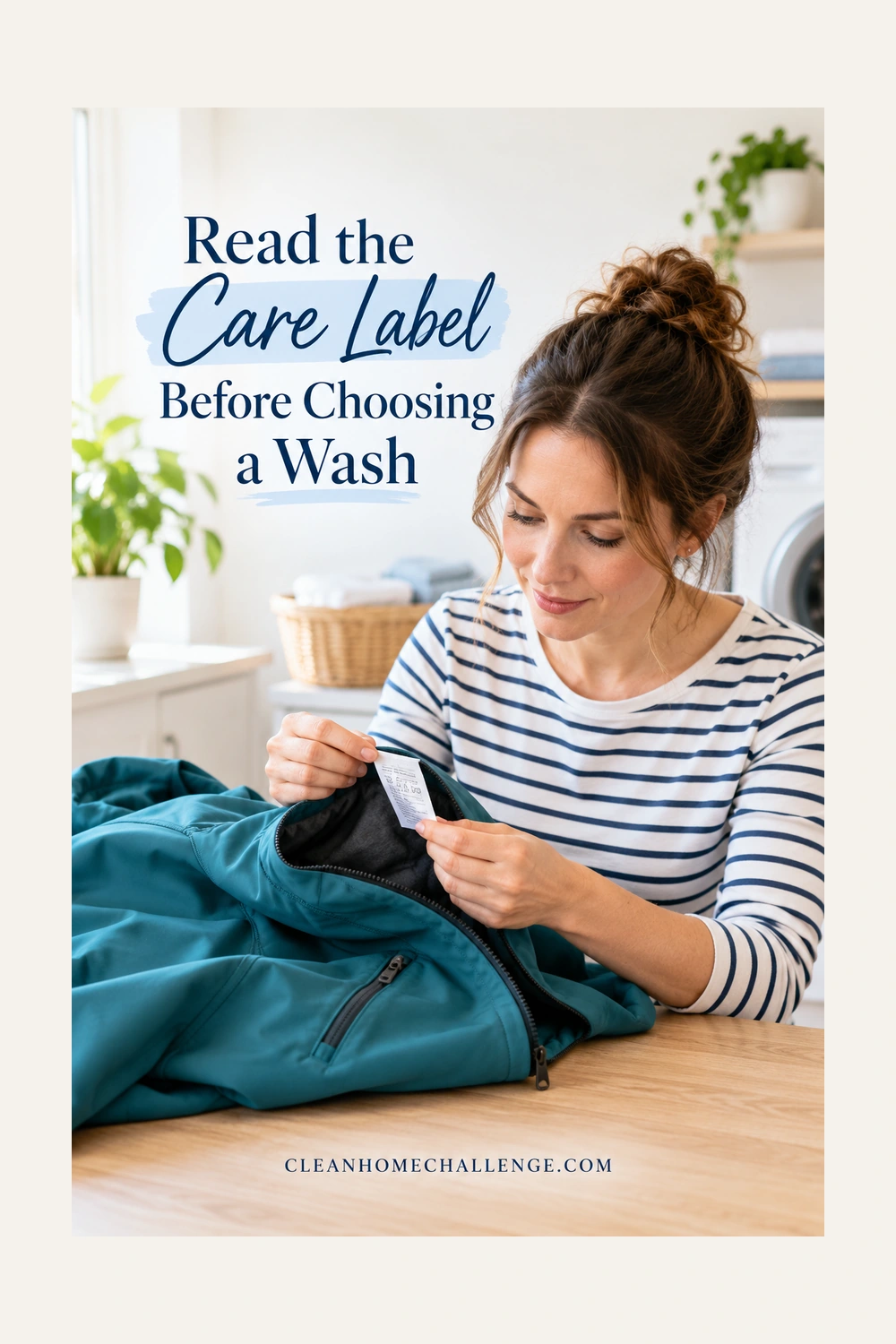
Start by finding the sewn-in care label and the brand and model name. Photograph the instructions while they are still readable. If the symbols are unfamiliar, look up the manufacturer’s explanation rather than interpreting a crossed-out symbol as optional advice.
Softshell describes a category of flexible outdoor clothing, not one identical fabric recipe. Your jacket may have a woven outer face, a brushed lining, a membrane, stretch fibers, and a durable water-repellent finish, often shortened to DWR. Construction and finishes vary, which is why a friend’s successful wash is not your care instruction.
Read the complete label for the washing method, maximum temperature, bleach restrictions, drying method, and any special finishing instructions. A machine-wash symbol does not automatically approve tumble drying. A tumble-dry instruction does not mean high heat is acceptable. Treat ironing as a separate decision too, especially around logos and trims.
Haglöfs’ softshell care guidance puts the garment label in charge of washing and warns against fabric softener. Use that label-first approach even when another brand’s general guide looks easier to follow.
Choose a sensible starting point
If the jacket has a little loose dirt but otherwise feels fresh, check whether its maker permits local cleaning. For a sweaty lining, a dirty collar, or soil spread across several areas, plan the approved full wash. Do not avoid necessary cleaning simply because you are worried that water will remove every bit of the finish.
Before beginning, collect the jacket, its care instructions, the permitted cleaner, and a clean soft cloth if local treatment is allowed. Have somewhere ready for the chosen drying method. Keep unrelated stain removers and laundry additives out of this small care job so they do not get added by habit.
A useful time plan: allow a short preparation window, then the actual machine cycle and whatever drying time the garment needs. The hands-on work may fit between family jobs; the complete process may not. Avoid starting just before you need to wear the jacket outside.
If you cannot identify the model or read the tag, pause. Send the manufacturer clear pictures of the jacket, labels, and any damage. Guessing a cold delicate cycle is still guessing.
Wash the Jacket With a Compatible Cleaner
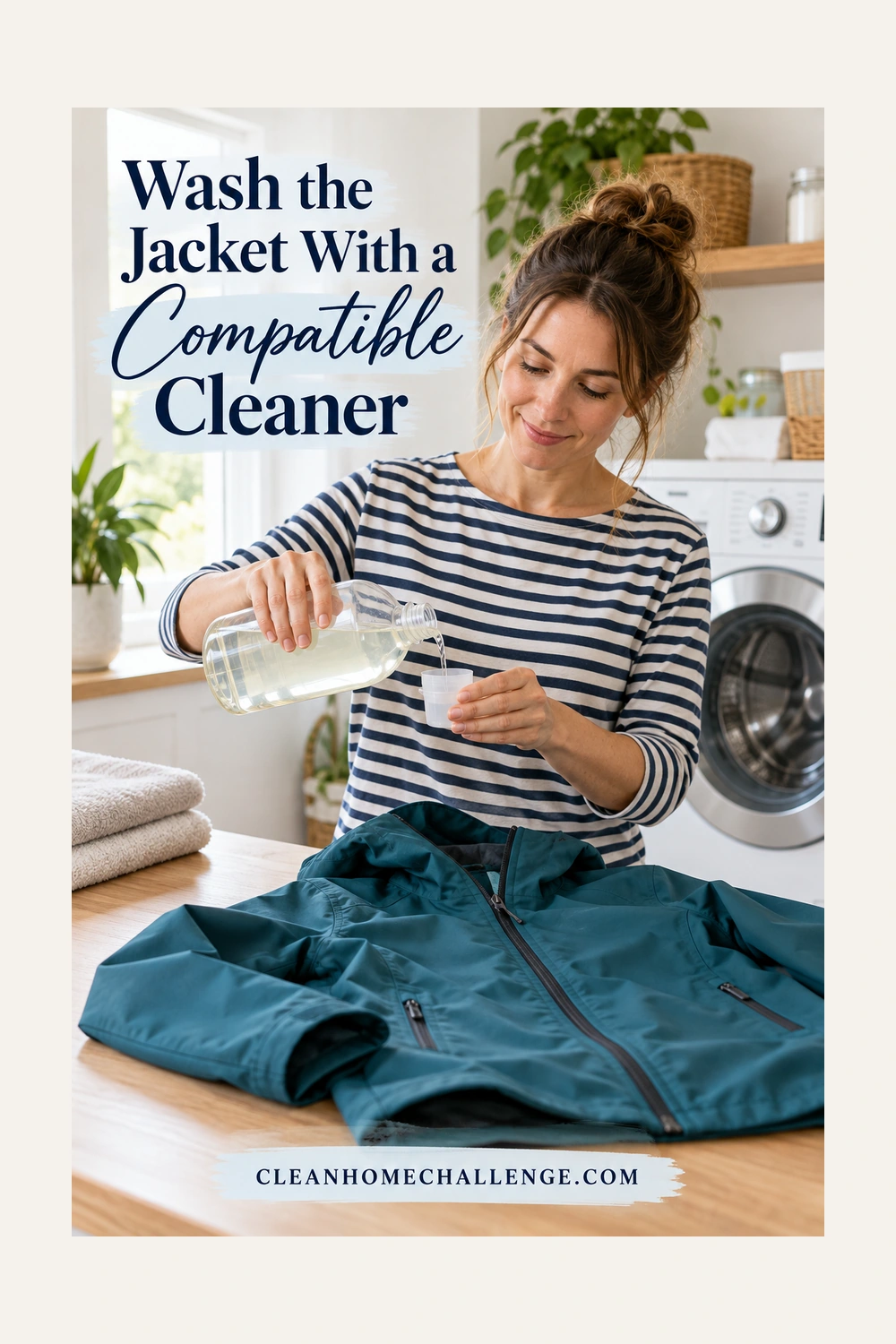
Choose the cleaner using both the garment instructions and the product label. Some makers recommend a technical-wear cleaner; others permit a particular mild liquid detergent. “Gentle,” “natural,” or “for delicates” on the front of a bottle does not by itself establish compatibility with a softshell finish.
Montane’s softshell instructions, for example, specify a non-biological detergent, no fabric softener, and a rinse to clear excess detergent. VAUDE’s guide describes a gentle 30°C wash for its advice, with the care label taking priority. Those examples show why an internet temperature should never override the tag on your jacket.
Prepare without making extra work
- Empty every pocket. Check the small chest pocket as well as the hand pockets. Remove tissues, keys, snack wrappers, and anything electronic.
- Check the condition. Look for peeling layers, a broken zipper, or loose components. Ask about repairs before sending an already damaged garment through a wash.
- Prepare fasteners as instructed. Secure hook-and-loop tabs so their rough edges are covered. Follow the maker’s directions for zippers, drawcords, and turning the garment inside out; those details can differ.
- Check the dispenser. Remove visible leftover softener or detergent from the accessible dispenser according to your washing machine’s instructions. Do not dismantle the appliance or add a chemical cleaning treatment with the jacket inside.
- Choose a compatible load. Keep rough items and unrelated family laundry out of the load. Follow the garment and cleaner directions for the number of items, and leave enough space for them to move.
Handle a grubby collar or muddy cuff gently
If pretreatment is allowed, follow the approved cleaner’s instructions for that use. Test an inconspicuous area where the manufacturer recommends it, and work gently with a soft cloth. A small test does not make an otherwise prohibited treatment safe. Avoid abrasive scrubbing, household degreasers, bleach, and improvised mixtures.
If mud is loose, remove it gently without grinding grit into the fabric. For an oily or unknown mark that the permitted method does not address, ask the maker before escalating treatment. A faint remaining stain can be a better outcome than a damaged finish.
Run the permitted wash
Measure the cleaner using its current directions for your machine, load, and water conditions. Do not add extra because the collar looks particularly dirty. Select the garment’s specified temperature and cycle, then follow its rinse instructions. There is no benefit in inventing a fixed dose or spin speed for every jacket.
Skip fabric softener, softener-containing combination products, scent beads, and dryer sheets unless the garment maker specifically approves an item. Keep bleach and unrelated laundry boosters out of the process. A water-repellent finish does not need to feel coated or strongly scented to be cared for properly.
When the cycle ends, remove the jacket promptly and move on to the planned drying step. If detergent remains, consult the cleaner and garment directions about rinsing rather than masking it with another product.
Dry and Check the Water-Repellent Finish
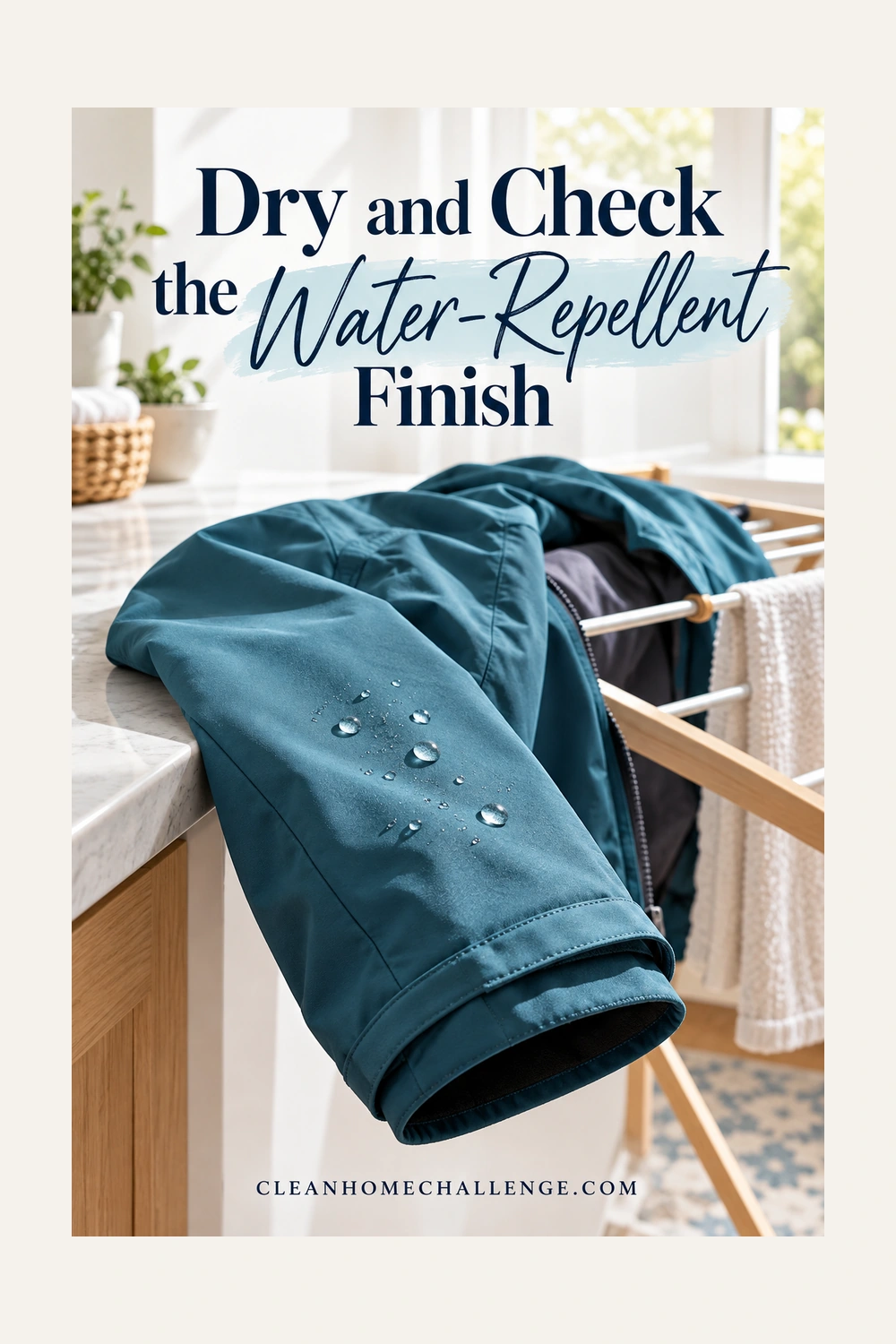
Drying is part of garment care, not an automatic trip into the family dryer. Follow the label’s instructions for line drying, laying flat, or tumble drying, including any temperature restriction. If permitted to hang, give the jacket enough room and airflow rather than leaving sleeves folded into a damp bundle. Keep it away from an improvised direct heat source.
Some finishes can be reactivated with manufacturer-approved heat. Others use treatments that do not require tumble drying. For example, Nikwax says its Softshell Proof treatment develops water repellency without tumble drying. That is product-specific information, not permission to disregard a garment’s drying directions or use that treatment on every brand.
If a product’s activation instructions conflict with the jacket’s care label, stop and choose a confirmed compatible system. Do not raise the heat, iron the jacket, or improvise a compromise setting. Ask the garment maker which treatment and drying method work together.
Clean first, then decide about reproofing
Once the normal wash and approved drying are complete, assess the outer fabric using the manufacturer’s suggested water-beading check. Water gathering into small beads is different from a broad dark patch where the face fabric wets out. This is a maintenance clue, not a laboratory waterproofness test.
Dirt can interfere with surface performance, so cleaning comes before deciding that more treatment is needed. If the jacket still does not shed water as its maker says it should, check the recommended reproofing route. Do not automatically add a treatment after every wash.
Select a product approved for the jacket’s construction and follow its application directions. Spray-on and wash-in treatments are not interchangeable for every garment; a lining and the maker’s instructions can affect that choice. Apply only as directed, follow ventilation precautions, protect nearby surfaces, and keep products away from children and pets. Save the product name in your care notes rather than relying on the bottle color next time.
Reproofing the outside cannot turn an ordinary water-resistant softshell into a fully waterproof rain jacket. It also cannot repair torn fabric, failed seams, or separating layers. If the outer surface improves but water still gets through, describe the location and conditions to the manufacturer instead of repeatedly adding more treatment.
When the result needs another decision
| What you notice | A useful next step |
|---|---|
| The jacket is still damp inside | Continue the permitted drying method; check cuffs, pockets, and lining before storage. |
| A visible mark remains | Check the brand’s stain advice before using a stronger product. |
| Water spreads over clean outer fabric | Review the maker’s reactivation or compatible reproofing instructions. |
| Peeling, bubbling, or separating layers appear | Stop further home treatments and ask about repair or replacement advice. |
Make the Next Jacket Wash Easier

The easiest repeat routine is the one that saves the decisions you have already made. Write down the model, permitted cleaner, cycle, drying method, and any reproofing instructions. Keep those notes with a clear label photo. Each family’s jackets may need different settings, even when they are all called softshells.
Download the free Softshell Jacket Care Card (PDF). It has space for the jacket’s exact directions, a wash checklist, and a short record of finish checks and treatment. The blank settings are intentional: fill them from your jacket’s instructions rather than borrowing another garment’s temperature.
A small routine for busy weeks
After a wet outing, give the jacket its approved drying space before it returns to the cupboard. When putting away ordinary laundry, glance at the jacket’s cuffs, collar, and lining so you can plan care before the next busy morning. Use condition and the manufacturer’s advice to decide when to wash; a fixed weekly cycle is not necessary for every household.
If you have only a few minutes, do the preparation: find the label, check pockets, and set aside the correct cleaner. Leave the full wash for a time when you can also finish the drying step. Put a reminder on the machine or your phone if that helps you remember the jacket before bedtime.
Tell another adult where the care card lives. A simple note such as “Check jacket card before washing” can prevent this item joining an ordinary scented-softener load. Keep laundry products in their original containers and follow their storage instructions.
For help fitting garment care around the rest of your home, the Cleaners Clubhouse offers routines and printable support for manageable laundry catch-up. Your free care card is available directly above, and you can explore the membership separately when you want more routine support.

CLEANERS CLUBHOUSE
Make Laundry Catch-Up Feel More Manageable
Use Saturday to catch up without letting laundry take over the whole weekend. Inside the Cleaners Clubhouse, practical routines and printable support help you keep washing, folding and household jobs moving.
The repeatable order is straightforward: check this jacket’s instructions, prepare a compatible wash, finish the approved drying, and record anything you learned. You do not need to perfect the entire laundry room to take good care of one useful jacket.