

THIS POST MAY CONTAIN AFFILIATE LINKS. PLEASE READ MY DISCLOSURE FOR MORE INFO.
A basket of delicate clothes can become its own little laundry backlog. The blouse you like wearing, a soft cardigan, and the lace-trimmed top all sit there while the easier loads keep moving. You don’t need to assume that every delicate garment requires an evening at the sink.
The practical answer to how to wash delicate clothes is to let each care label decide the method. Machine-washable pieces can often share a carefully prepared gentle load. Hand-wash-only garments still need hand washing, and items that require professional cleaning stay out of that load. A mesh bag adds protection, but it cannot change those instructions.
Start with one small group of compatible clothes. Allow roughly 10–15 minutes of hands-on time for checking, preparing, and laying out a familiar load, plus your washer’s cycle and the drying time. That is a planning estimate, not a promise: unfamiliar labels, stains, and hand-wash pieces take longer. Set up the drying space before you press Start.
Disclosure: This post may contain affiliate links. As an Amazon Associate, Clean Home Challenge earns from qualifying purchases. If you make a purchase through these links, we may earn a small commission at no extra cost to you. This helps us keep creating practical cleaning tips, routines and resources for busy families! 🧽
Read the Label Before You Load
Read the care label sewn into the garment, including any words beside the symbols. Check the washing method, temperature, bleach restrictions, and drying instructions. A soft feel or a familiar fiber name cannot tell you how the lining, trim, dye, or construction will behave.
Make three small groups:
- Machine washing allowed: Keep these for the appropriate machine cycle, provided their other care instructions agree.
- Hand washing required: Set these aside for a small, separate hand-wash session.
- Professional care or uncertain instructions: Keep these out of the washer while you check with the maker or a professional cleaner.
For symbol labels, a number inside the wash tub gives a maximum temperature in Celsius. Bars beneath the tub call for milder washing action. A hand-wash symbol and a crossed-out wash tub have different meanings; a professional wet-cleaning symbol does not authorize home washing. Use the GINETEX care-symbol guide to check an unfamiliar mark rather than guessing.
A garment labeled “dry clean only” should go to a professional. If the label says “dry clean” and offers no home-washing instructions, ask the manufacturer before trying an alternative. With a missing or unreadable tag, look up the exact item or contact the brand. A similar-looking blouse is not enough evidence.
Also inspect the garment itself. Put aside loose beading, damaged seams, detached hooks, or anything whose trim might catch. If a piece has several components with different instructions, ask the maker which method applies to the complete garment.
Quick win: Check the three pieces you most want back in rotation. You can solve the rest of the basket later. Take a photo of a difficult-to-read label while it is still legible so you have it next time.

Build a Small Delicates Kit
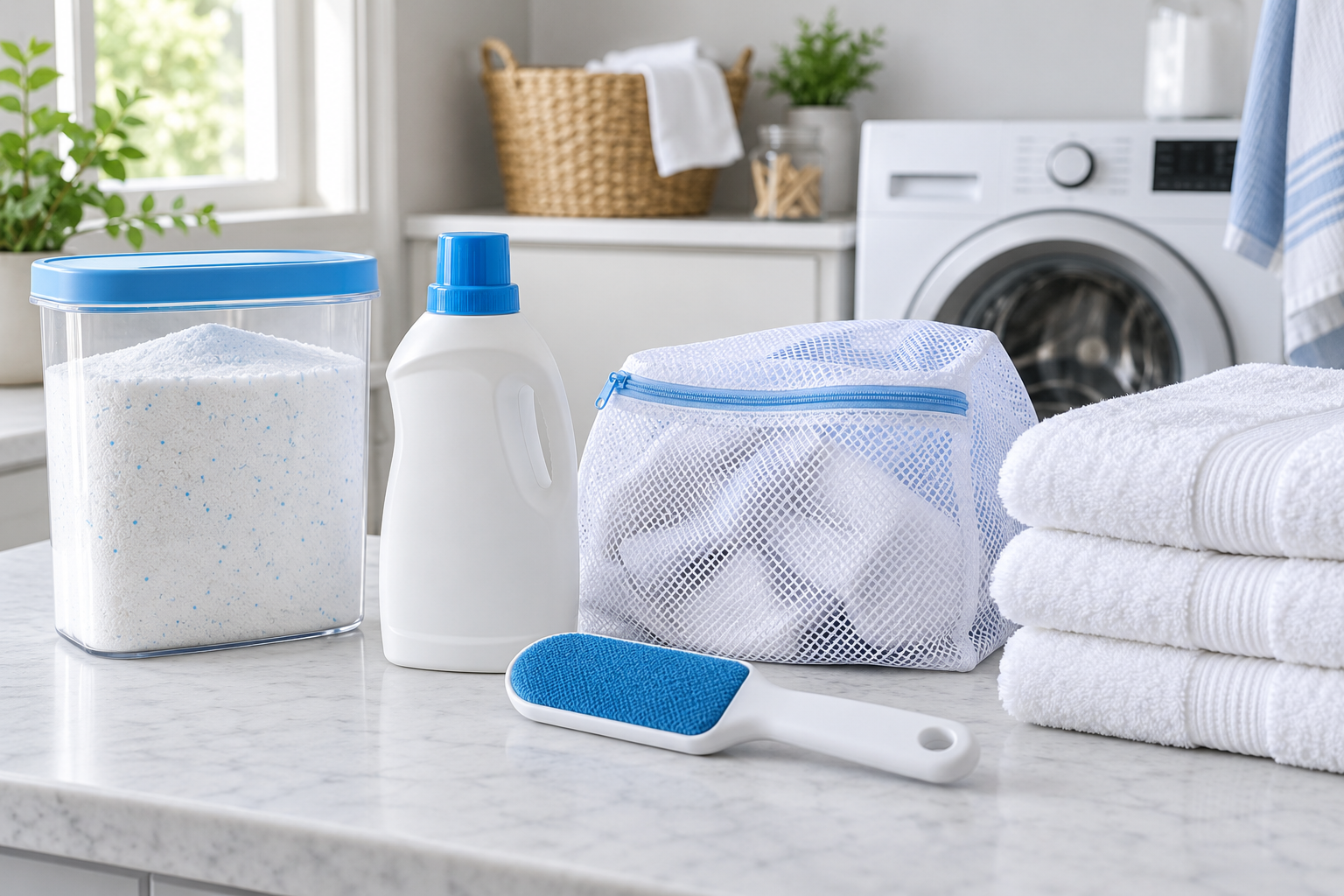
A useful kit is short enough to fit in one basket near the washer:
- A few smooth, zippered mesh laundry bags in sizes that suit your clothes
- A laundry detergent labeled for the fabrics and washing method you are using
- A clean, light-colored, low-lint towel for pressing out moisture
- A drying rack with flat support for garments that require it
- A clean basin for the pieces that genuinely need hand washing
Check mesh bags for broken zippers or rough seams. Choose a bag that gives the garment room to move rather than one that squeezes it into a tight bundle. If you have a structured bra that its maker allows in the machine, use a suitable bag that does not crush the cups.
Detergent needs the same attention as the cycle. A product described as gentle on skin is not automatically suitable for wool or silk. Read its fabric exclusions, machine compatibility, dosing directions, and any instructions for high-efficiency washers. Choose a product specifically suitable for the fibers in that load.
For wool, Woolmark recommends a mild, neutral detergent and advises against heavy-duty, enzyme-containing “bio” detergents and bleach-containing products. It also warns against both chlorine and oxygen bleach on wool. For silk, look for explicit silk compatibility instead of assuming your usual detergent will work.
Measure the dose for the small load and your water conditions according to the product. A full cap is not a universal dose. Avoid adding scent boosters, fabric softener, or stain products by habit; first establish that the garment, product, and washer instructions allow them.
Store laundry products in their original containers, closed and out of children’s and pets’ reach. Keep the drying rack somewhere it will not block a walkway. Having the towel and rack ready is particularly helpful when your hands are full of wet fabric.
Use the linked laundry collection as inspiration for tools and organization. Choose detergent that is explicitly compatible with your garments and washer, and keep laundry products in their original labeled containers.

Sort, Fasten, and Bag Your Clothes
Treat the machine-washable group as a small load with shared needs. Sort by compatible color, fabric weight, washing instructions, and detergent requirements. A white silk top and a dark wool cardigan do not become good wash companions simply because both feel delicate.
Leave out heavy jeans, towels, bulky sweatshirts, and garments with exposed hardware. These create a very different load from a few lightweight blouses. Tide’s silk-care instructions likewise separate delicate silk from heavier clothing and make machine washing conditional on the label.
Prepare each item before it enters a bag:
- Empty the pockets. Remove tissues, hair accessories, and anything sharp.
- Check for stains and damage. A visible mark deserves attention before the wash, and a loose fastening deserves repair.
- Secure snagging fasteners. Close zippers and bra hooks where the garment’s instructions allow. Follow specific guidance for buttons and removable trims rather than fastening everything automatically.
- Turn items inside out if recommended. Handle lace and ornamentation gently so nothing catches as you turn the garment.
- Bag loosely. Separate pieces that could tangle or hook into one another, close each zipper fully, and tuck the zipper pull under its protective cover if provided.
Do not stuff several garments into one tiny bag. Water and detergent need to reach the fabric. Equally, a bag is not a substitute for sorting: putting one inside a heavy normal load still exposes its contents to that cycle.
For stains, follow both the garment label and a treatment explicitly suitable for that fabric. Test an allowed treatment on a concealed area first, then follow the product’s application and contact-time instructions. Do not scrub fragile fabric with a stiff brush. If water or spot treatment is prohibited, or the color changes during a permitted test, stop and get the maker’s or cleaner’s advice. Whirlpool’s laundry guide also recommends checking stain-product instructions and testing a hidden area.

Choose a Label-Safe Wash Cycle
The word “delicate” on a washer is a starting point. Read your model’s cycle guide to learn which program matches your garments and what temperatures, spin options, and load limits it allows.
Generally, a delicate cycle reduces the washing action compared with a normal cycle. Its exact settings and duration depend on the machine. Whirlpool explains these differences in its delicate-cycle guide. Avoid treating one manufacturer’s defaults as a rule for every washer.
Use this sequence for a compatible, machine-washable load:
- Select the required program. This may be Delicates, Gentle, Wool, or another program named in the garment or appliance instructions. A machine’s Hand Wash setting is not blanket permission to ignore a hand-wash-only tag.
- Set the permitted water temperature. Cold or cool is common for delicates, but follow the actual label. If it specifies a maximum in Celsius, 30°C is 86°F and 40°C is 104°F. Those are ceilings, not instructions to heat every delicate load to that temperature.
- Check the spin. Use the garment- and machine-approved setting. Do not add a high-speed spin just to make drying faster. Some items require little or no spinning.
- Respect the cycle’s load limit. A washer’s advertised drum capacity may be larger than its allowable delicate or wool load. Place bagged items loosely, without packing the drum.
- Add the measured compatible detergent. Use the correct compartment or dosing location in the appliance instructions.
- Plan to unload after the cycle. Set a reminder if the washer is out of earshot. Leave time to place each garment in its proper drying position.
A Quick Wash program is not necessarily a gentle program. Shorter running time alone says nothing about its agitation or spin. If your washer has no suitable program, use the permitted hand-wash method or seek professional advice; choosing the shortest normal wash is a gamble.
Do not bulk up a delicate load with unsuitable items to fill the drum. If the washer struggles to balance a very small load, follow its troubleshooting instructions and combine only compatible garments when allowed.

Give Special Fabrics Extra Care
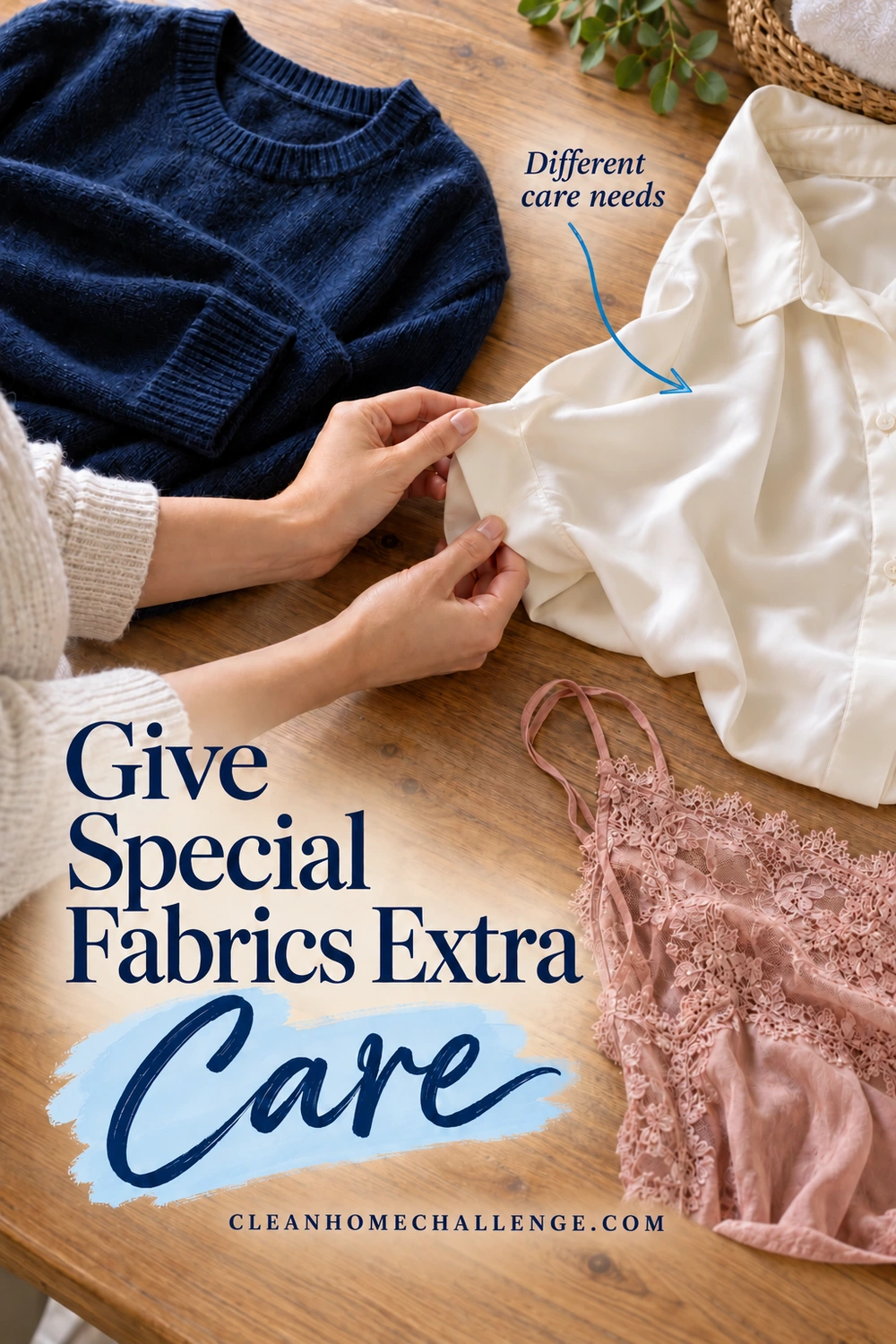
Fabric-specific instructions still matter within this gentle routine. Use the following as a check before washing, while keeping the garment’s own directions in charge.
Wool and cashmere
Some wool garments are made for machine washing; others are not. Woolmark’s washing guidance ties machine washing to the garment’s care claim and recommends the appropriate wool setting and a suitable detergent. Do not assume that a regular delicate cycle is interchangeable with your machine’s dedicated wool program. Check the relevant instructions before substituting.
Treat a cashmere sweater according to its own label too. A mesh bag cannot prevent damage from an unsuitable temperature, detergent, or washing action. Keep wool pieces separate when their detergent requirements differ from the rest of the load.
Silk, satin, and trimmed garments
Silk care varies with the complete garment. Satin describes a fabric structure and may be made from different fibers, so a silky finish does not identify the material or washing method.
Check lining, decorative details, and attached trims as well as the main fabric. EILEEN FISHER’s silk-care guide notes that features such as beading, sequins, and some linings can affect cleaning requirements. Do not apply general washable-silk advice to a structured or embellished garment with stricter instructions.
For silk approved for machine washing, use the specified cycle and temperature, a compatible detergent, and a loosely filled mesh bag. Skip bleach unless the garment and product explicitly permit that exact use. Avoid experimental soaking or stain-removal mixtures on an expensive or unfamiliar piece.
Lace, lingerie, and bras
Read the actual instructions rather than assuming synthetic fabric makes a bra machine washable. For example, Wacoal’s lingerie-care guidance recommends gentle hand washing. Follow the maker’s direction for the particular item, including how to support cups and straps when drying.
For lingerie that does allow machine washing, secure hooks, use an appropriately sized bag, and keep it away from rough garments. Do not squeeze molded cups into a bag that distorts their shape.
The small hand-wash group
Make this a manageable separate job. Clean the basin, use the label-approved water temperature, and mix in the measured compatible detergent. Gently move the fabric through the water without scrubbing, stretching, or wringing. Follow the garment and detergent instructions for any soak and rinse; there is no single safe soaking time for every delicate fabric.
Support the wet item as you lift it, press out water gently, and transfer it to its prescribed drying position. Washing one needed piece today is useful progress even if the rest can wait.
Dry Delicates Without Stretching
Before unloading, reread the drying instructions. A successful gentle wash can still be undone by an unsuitable dryer cycle or by hanging a heavy wet knit from its shoulders.
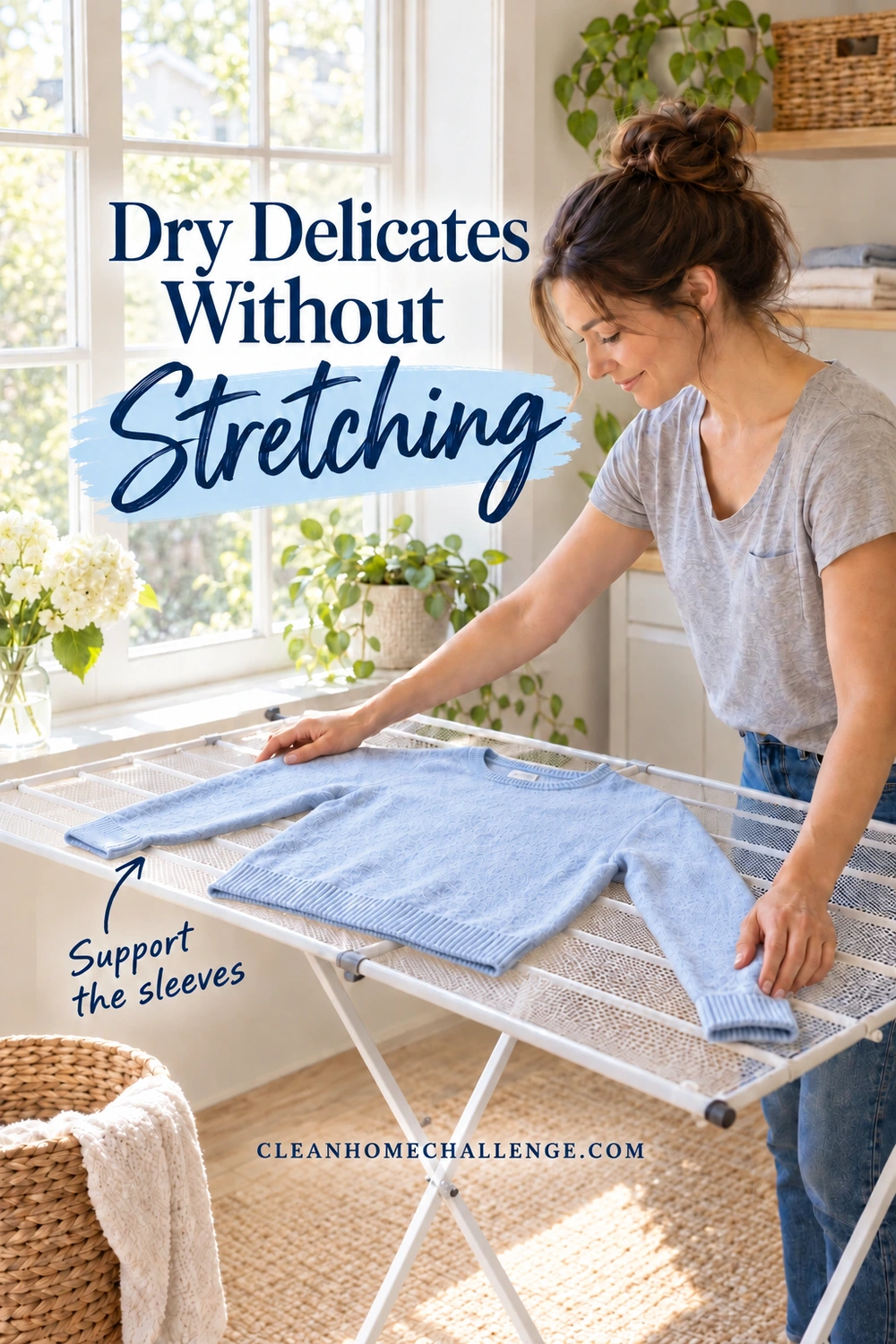
For items labeled dry flat: Support the whole garment as you lift it. If its instructions allow pressing out excess water, place it on a clean, light-colored towel and gently press; do not twist or wring. Transfer it to a fresh dry towel or suitable flat mesh drying surface. Arrange sleeves and hems close to their original shape without pulling them larger.
Woolmark’s drying guidance recommends flat drying knitwear and explains that the weight of water can stretch a sweater on a line or hanger. It also advises keeping drying wool away from direct heat and strong sunlight.
For items labeled line dry: Use a smooth drying support appropriate to the garment. Protect delicate shoulders and straps from taking the entire wet weight. Follow any instruction to dry in the shade. Avoid rusty clips, splintered rails, or a narrow edge that presses a crease into fragile fabric.
For items that permit tumble drying: Use only the stated setting and restrictions. A low-heat setting is still tumble drying, so it does not override “do not tumble dry.” Equally, do not assume every machine-washable garment is dryer safe.
Give garments space and airflow. If a towel becomes saturated, move the item carefully onto a dry one. Drying time varies with fabric, thickness, room conditions, and how much water remains; plan ahead rather than promising that everything will dry overnight. Before putting clothes away, check thicker seams, waistbands, cuffs, and overlapping layers for dampness.
If an item looks stretched, shrunk, or misshapen, stop before adding heat or trying an internet rescue soak. Keep its care details and ask the maker or a textile-care professional about realistic options. Some changes cannot be reversed.
Make Delicates Part of Laundry Day
The easiest routine is the one you can repeat without remembering a long set of exceptions. Give delicates a small, clearly marked place so they do not accidentally enter the family’s normal wash. Keep damp clothes out of a closed, forgotten pile; deal with them promptly using their approved care method.
Choose a moment when you can also unload and arrange the drying. Saturday laundry catch-up may work, but a small midweek load is just as useful if it gets a needed outfit ready. Work backward from the drying space and time available. Starting another wash when the rack is full only moves the problem.
Keep a short note for frequently worn pieces: the correct cycle, temperature limit, detergent, and drying position. A label photo is handy when someone else helps with laundry. The original instructions remain the reference if your note is incomplete.
Fix the process before repeating the wash
- Clothes feel soapy or show residue: Recheck dosing, bag fullness, and load size. If the care instructions allow it, use a suitable rinse without adding more detergent. Do not automatically choose a hotter or harder cycle.
- An item still has a mark or odor: Inspect it before drying. Check whether the stain treatment and detergent were appropriate, then choose a label-safe next step. Persistent problems on fragile fabric are a reason to seek advice, rather than keep escalating products.
- Straps keep tangling: Separate items into suitable bags and reduce crowding.
- Drying takes too long: Improve spacing, replace a wet support towel, and schedule more drying time. Keep within the label’s heat and spin limits.
For a low-energy laundry day, make the task smaller: check labels, prepare one compatible group, or wash the one item you need. You can leave the other stages for a better moment without sending the entire basket through a risky shortcut.
Before every load, use this final check: label checked, compatible pieces sorted, fasteners secured, bags loose, detergent measured, cycle verified, drying space ready. Once those decisions are settled for your regular clothes, learning how to wash delicate clothes becomes a much more ordinary part of keeping laundry moving.

CLEANERS CLUBHOUSE
Make Laundry Catch-Up Feel More Manageable
Use Saturday to catch up without letting laundry take over the whole weekend. Inside the Cleaners Clubhouse, practical routines and printable support help you keep washing, folding and household jobs moving.