THIS POST MAY CONTAIN AFFILIATE LINKS. PLEASE READ MY DISCLOSURE FOR MORE INFO.
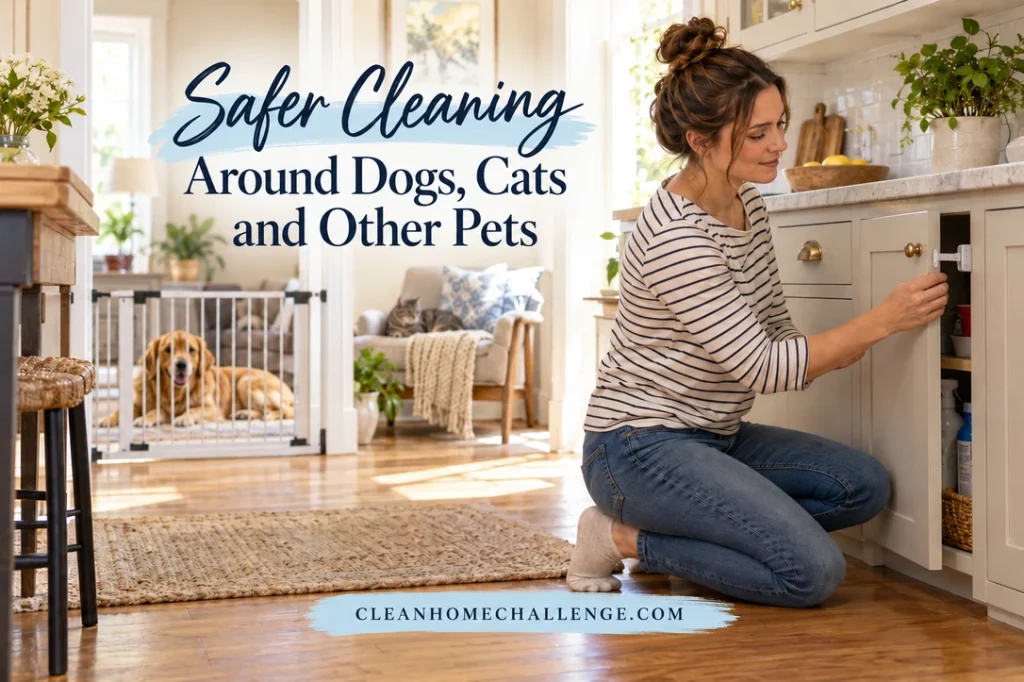
A dog stretches out on the kitchen floor. A cat investigates the bucket. A rabbit finds the corner you have just wiped. Cleaning with pets at home takes a little planning, especially when curious noses arrive before a surface has dried.
When you search for pet safe cleaning products, start with the exact product directions, your pet’s species, and the surface you need to clean. A reassuring phrase on the front of a bottle cannot tell you everything about dilution, rinsing, ventilation, or when an animal can return.
The practical goal is a comfortably clean home with fewer opportunities for exposure. That usually means choosing a suitable cleaner, keeping pets out while you work, completing every label step, and putting everything away. You do not need to disinfect every paw print or replace your entire cleaning cupboard today.
This guide covers household cleaning around animals, not products applied to their bodies. For a pet with breathing problems, skin sensitivity, an illness, or unusual care needs, ask your veterinarian about your actual products and routine. If an exposure has already happened, contact veterinary help promptly rather than using this article to judge the risk.
Disclosure: This post may contain affiliate links. As an Amazon Associate, Clean Home Challenge earns from qualifying purchases. If you make a purchase through these links, we may earn a small commission at no extra cost to you. This helps us keep creating practical cleaning tips, routines and resources for busy families! 🧽
Read the Label Before You Clean
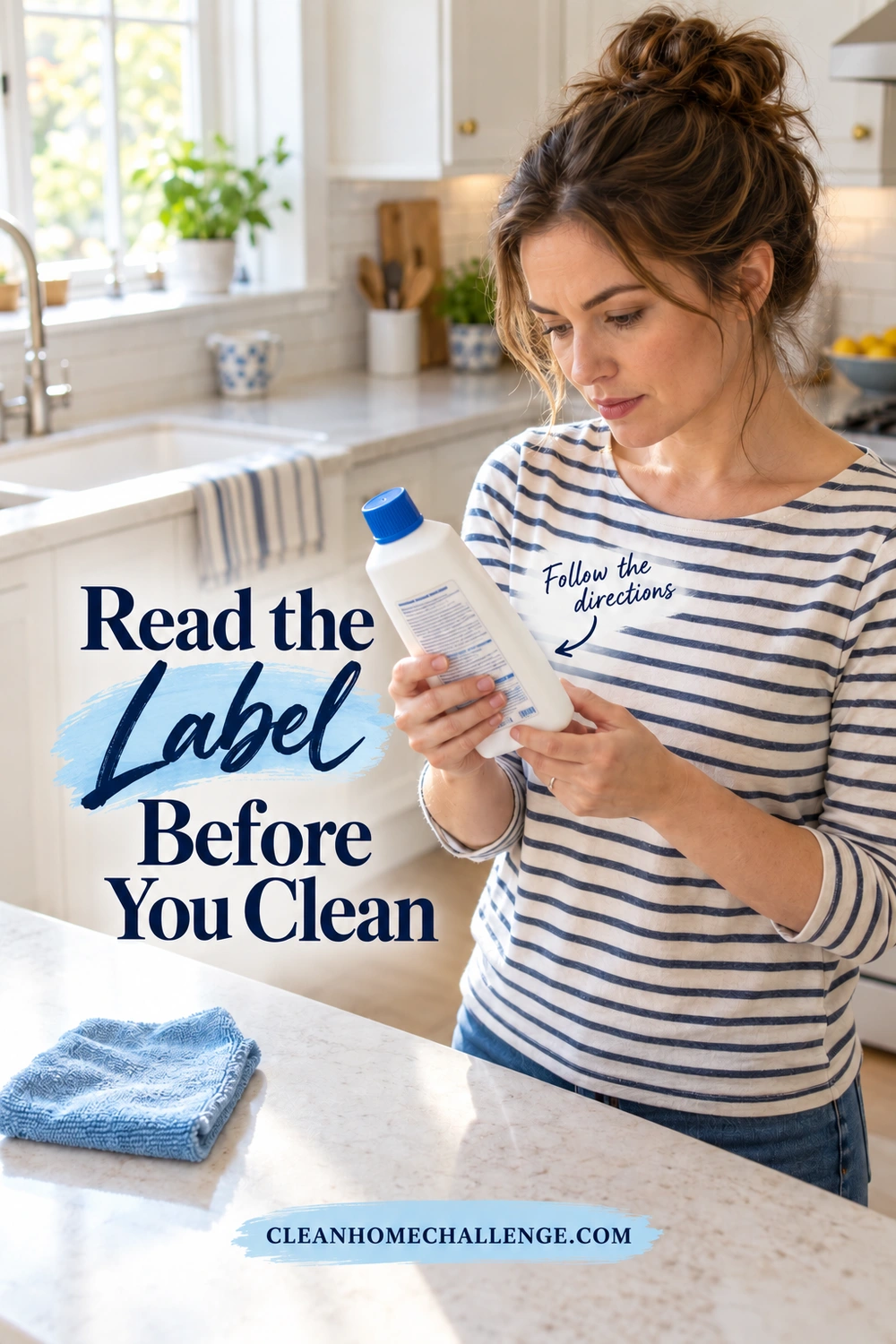
Turn the bottle around before buying or opening it. Product names such as natural, plant-based, green, or pet-friendly are a starting point for questions. They do not replace the directions for that exact formula.
Work through a short label check:
- Surface: Is it intended for this flooring, counter, fabric, or pet item?
- Preparation: Does it need dilution, pre-cleaning, or a surface test?
- Application: How much should you use, and how should it be applied?
- Finish: Does the task require a contact period, rinsing, drying, or another re-entry precaution?
- Handling: What ventilation, protective equipment, and storage does it require?
Keep the instructions accessible while you work. If the label is unreadable or leaves the proposed use unclear, choose another suitable product or ask the manufacturer. The EPA’s pet-protection guidance explains why the directions and original packaging matter.
What a certification can tell you
The EPA Safer Choice label identifies products whose ingredients and performance meet the program’s criteria. It can help narrow your shopping list. It does not mean an animal can drink the product, walk through it wet, or use every treated object immediately.
For a closer walk-through of the packaging, see how to read a cleaning product label.
The program also offers a fragrance-free designation. That can be useful when you want to avoid added fragrance, but fragrance-free still requires correct handling. A product’s lack of perfume does not make it suitable for every species or surface.
Be careful with oils and DIY additions
Skip adding essential oils to mop water, laundry, or a homemade pet-area spray. Their risks depend on the oil, concentration, formulation, and animal. The ASPCA advises against applying essential oils directly to pets and highlights particular concerns for birds and animals with breathing problems.
If you have a cat, check disinfectant ingredients for phenols, including names such as 2-phenylphenol; the CDC advises against these disinfectants in cat households. Bring an uncertain ingredient list to your veterinarian or the manufacturer instead of guessing from a brand name.
The following supplies are general cleaning-kit ideas, not a species-specific safety endorsement. Check each exact product label for your animals and surfaces, and keep household chemicals in their original containers. Refillable bottles shown in a shopping card are not a recommendation to decant cleaners.

Create a Pet-Free Cleaning Zone
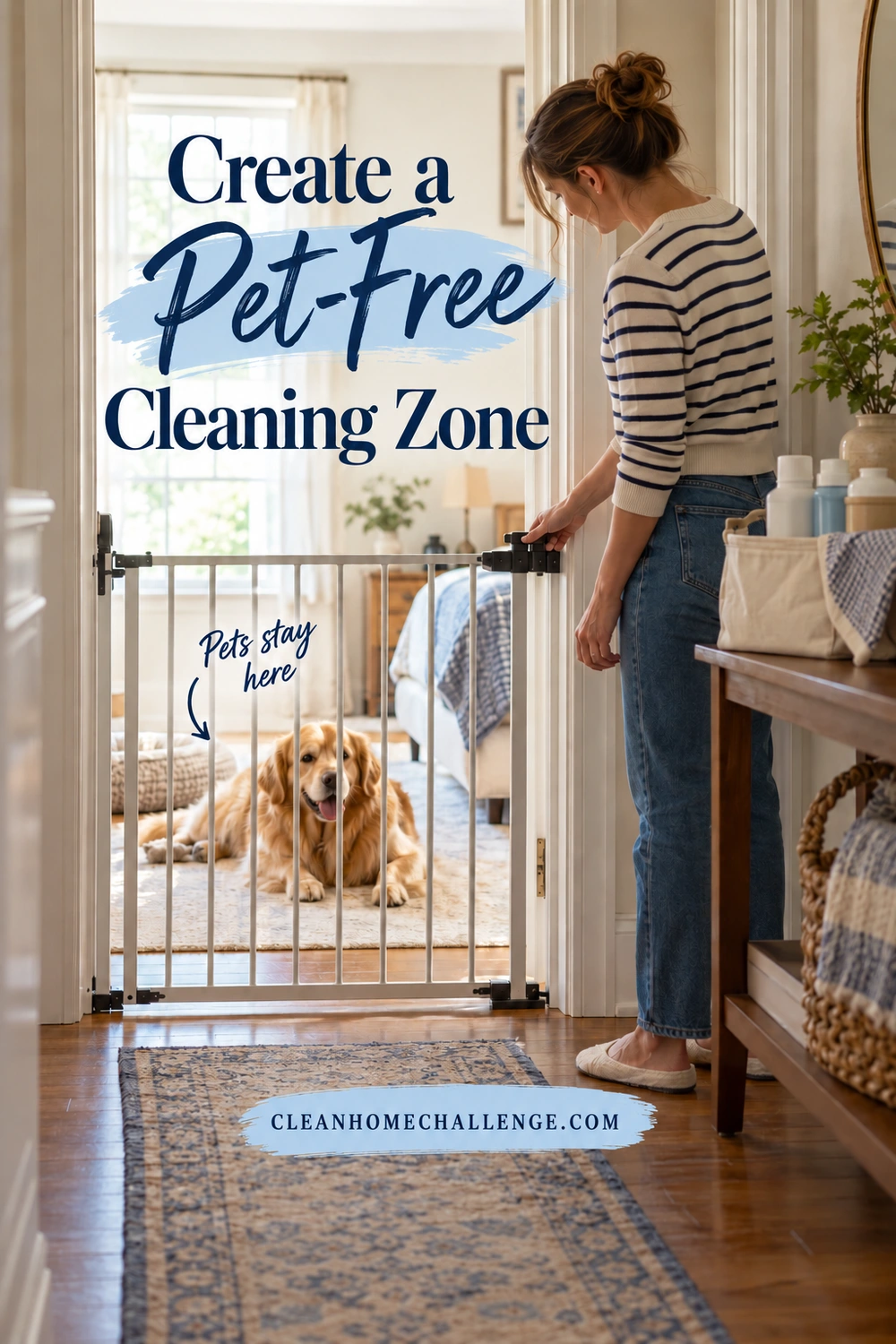
Make the separation plan before opening the cleaner. A room with a securely closed door is often simpler than repeatedly asking a curious pet to move. A gate works only if that animal cannot jump over it, squeeze through it, or knock it down.
Choose a familiar, comfortable waiting area with whatever your pet needs during the task. Keep drinking water and feeding items outside the cleaning zone. For a dog, that might be the dry living room while you clean the kitchen. For a climbing cat, use a closed room rather than relying on a low barrier.
A quick setup can look like this:
- Choose one manageable area. Leave yourself a dry route out so you do not need to carry supplies across a finished wet floor.
- Move pet belongings. Remove bowls, toys, blankets, and loose food from the work area. Put them somewhere they cannot catch splashes.
- Separate the animal. Check the latch and tell anyone else at home which door must stay closed.
- Gather the whole kit. Bring the correct product, cloths, measuring tool if needed, and label-required protection. Avoid leaving an open bucket while you fetch something.
- Plan ventilation. Follow the product directions without creating an escape route through an open exterior door or unsecured window.
Keep the caddy with you, and stop to secure it if you are interrupted. Used wipes, wet mop heads, and dirty solution also belong inside the controlled area. The ASPCA’s household-cleaning guidance specifically includes cleaning implements and leftover solutions in the items pets should not reach.
For a small apartment, clean one room or a small section at a time while another adult supervises the pet elsewhere. If you cannot maintain separation and follow the label, postpone that chemical-cleaning task. Dry pickup in an accessible area can be today’s smaller win.
Keep Paws Off Wet Floors
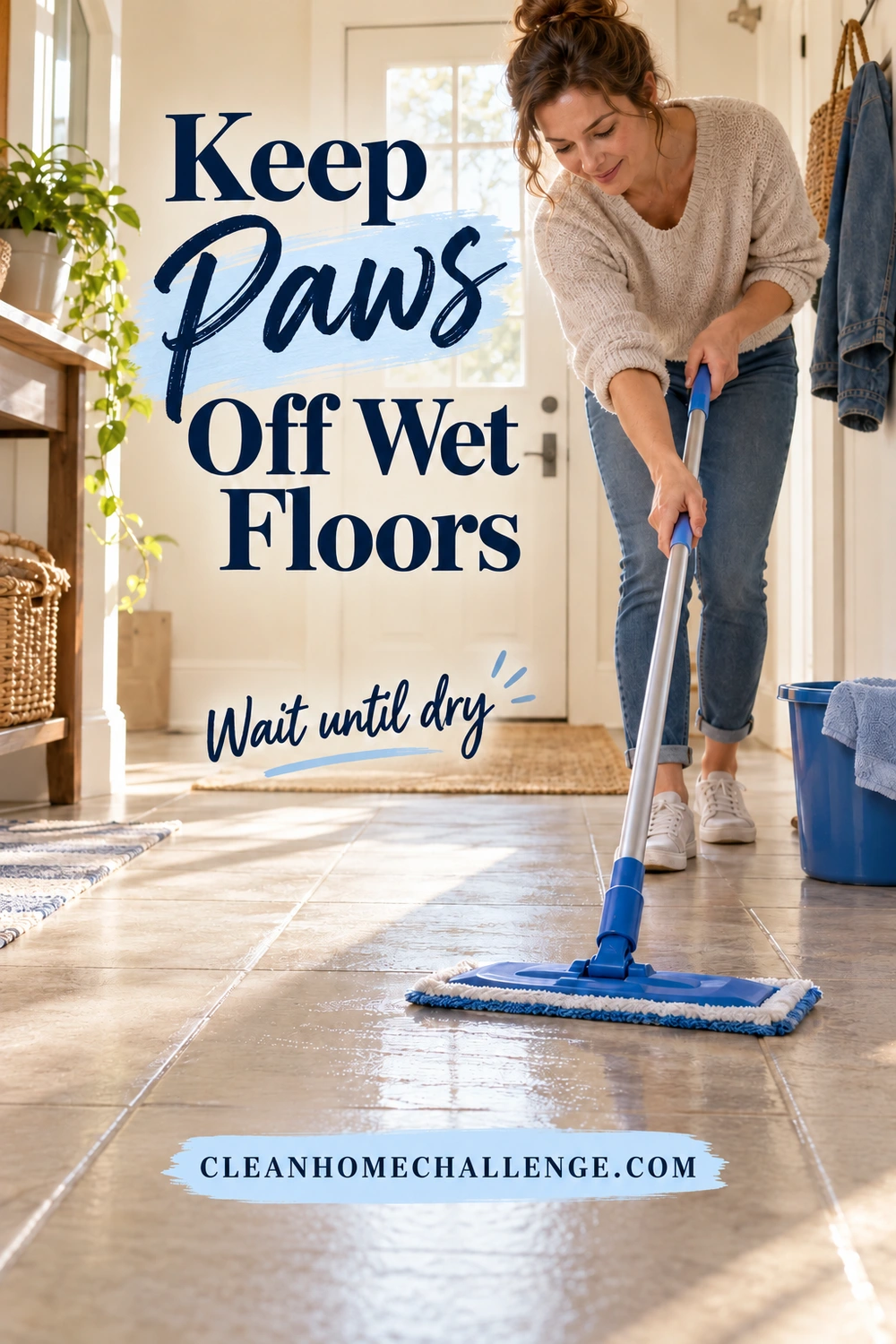
Cleaning floors with pets is partly about managing access. Paws pick up what they walk through, and animals may lick their feet or investigate a damp patch. Even products marketed for pet households need their directions followed.
Start by checking the floor manufacturer’s care guidance. A cleaner suitable for one sealed surface may be wrong for another finish. Remove loose hair, grit, and crumbs first so your wet-cleaning step can focus on the remaining dirt; Bona’s floor-care advice for pet homes also recommends dry pickup before regular floor cleaning.
Then keep the process controlled:
- Measure a concentrate exactly as directed. Leave ready-to-use products at their supplied strength unless the label says otherwise.
- Work in a small area with a clean pad. If using a flat mop, a controlled pull-back pass helps you gather loosened dirt rather than chasing it around.
- Use only the moisture and method allowed for the floor. Do not flood joints or assume a steam setting is suitable.
- Complete any required rinse. Do not add a second chemical to deal with streaks or residue.
- Keep pets away until all label re-entry requirements are met, including drying and any required ventilation.
How long should pets stay out?
There is no reliable one-size-fits-all answer such as ten minutes. The product instructions, application, surface, room conditions, and task determine the finish point. A touch-dry patch beside the doorway does not establish that the whole room is ready.
Walk the route before reopening it. Check under moved bowls and around furniture edges for pooled liquid. Empty and put away the bucket, secure the cleaner, and remove the damp mop head from reach. If you discover an unexplained sticky film, keep the area closed while you check the product and floor-care instructions.
For the cleaning technique itself, use our guide to mopping without sticky residue, alongside your floor and product instructions.
Carpet spot cleaners and enzyme cleaners have their own directions too. The ASPCA notes that enzyme-cleaned areas should dry before pets return. Treating a stain does not automatically disinfect it, and a cleaner being useful for pet mess does not make it suitable for washing the pet.
Disinfect Only When Needed
Cleaning removes dirt and many germs. Sanitizing reduces germs to specified public-health levels; disinfecting uses an appropriate product to kill germs on surfaces. Those jobs have different directions, and an ordinary cleaner or deodorizer should not be assumed to do all three. The CDC explains these distinctions.
For everyday household dirt, start with cleaning. Disinfection becomes more relevant when there is illness, contamination, or a household member at increased risk. Waste-contaminated pet items also need appropriate disinfection. Ask your veterinarian for a targeted plan when an animal is sick, particularly if a specific infection is involved.
Searching for a pet-safe disinfectant should lead you to a product and method suited to the actual task. In the US, check for an EPA registration number and directions covering the use site. EPA’s registered-disinfectant guidance emphasizes checking the label for the intended setting and organism. A germ-killing claim for one target does not establish effectiveness against every pet infection.
For an appropriate washable, hard pet item:
- Remove the animal, food, bedding, and loose debris from the work area.
- Follow the item’s care instructions and the product’s pre-cleaning directions.
- Apply the disinfectant at its specified strength using the stated method.
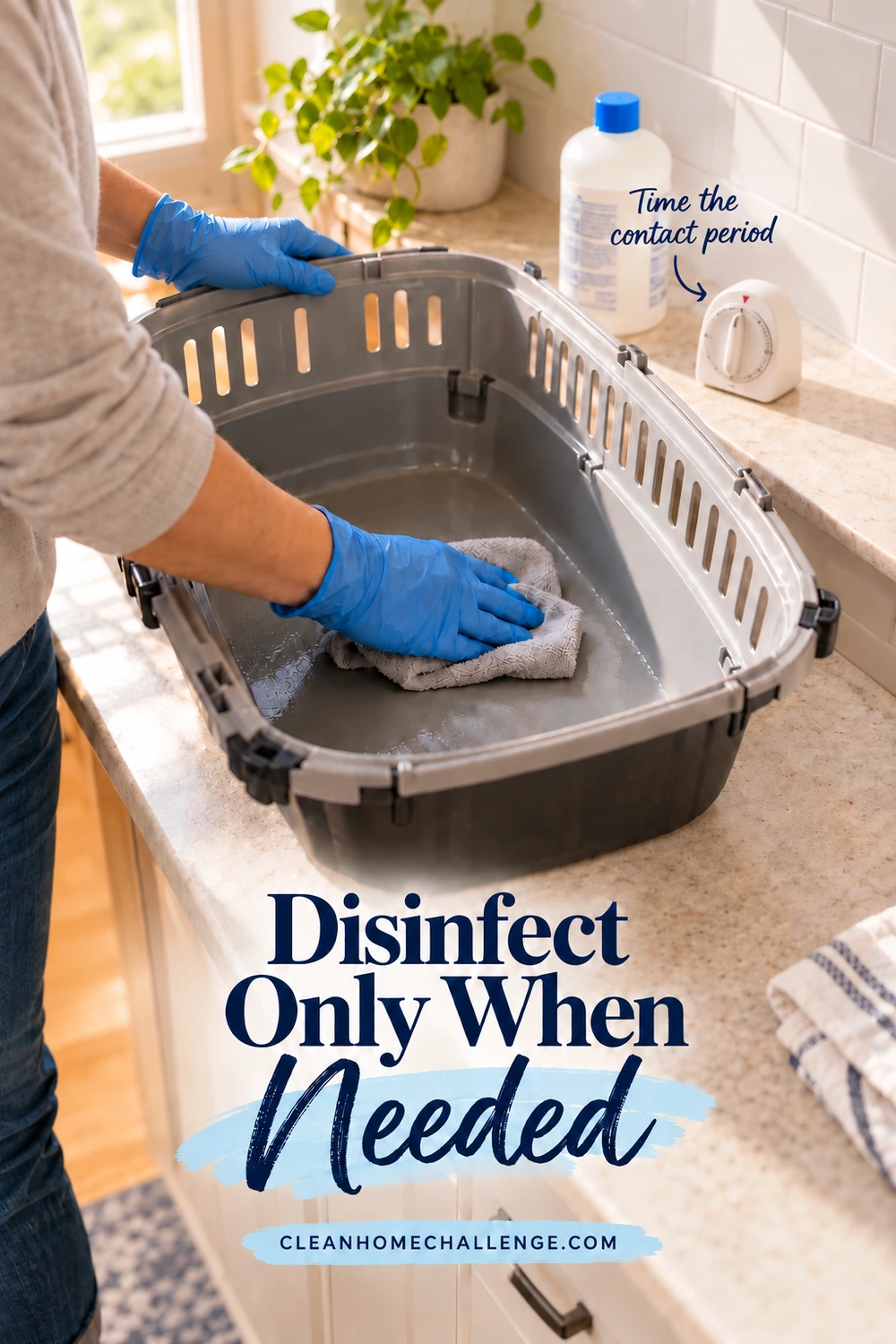
- Keep the surface wet for the full labeled contact period. Set a timer rather than estimating.
- Complete required rinsing, drying, and ventilation before the item is used again.
Do not rinse or towel-dry early just to bring the pet back sooner. For bowls, toys, and anything likely to be mouthed, verify the product’s specific instructions for that use. If they are unclear, select a clearly suitable method instead.
Never mix cleaners. In particular, do not combine bleach with vinegar, acids, ammonia, alcohol, or another cleaner. Never use a household cleaner or surface disinfectant on an animal’s coat, paws, skin, or food. The CDC’s safe-disinfection instructions address both mixing and using these products on pets.
Plan for Birds, Fish and Small Pets
Advice about dogs and cats cannot automatically be applied to every animal in the house. A bird’s airspace, a fish’s water, and a rabbit’s bedding are different environments. Tell your veterinarian the species and exact product when asking for cleaning advice.
Birds: protect the airspace
VCA’s veterinary guidance on household hazards identifies cleaning fumes, air fresheners, and other airborne pollutants as concerns for birds. Keep a bird out of the room during chemical cleaning, and ask an avian veterinarian about an appropriate location and return plan. A cage cover is not a substitute for separation from fumes.
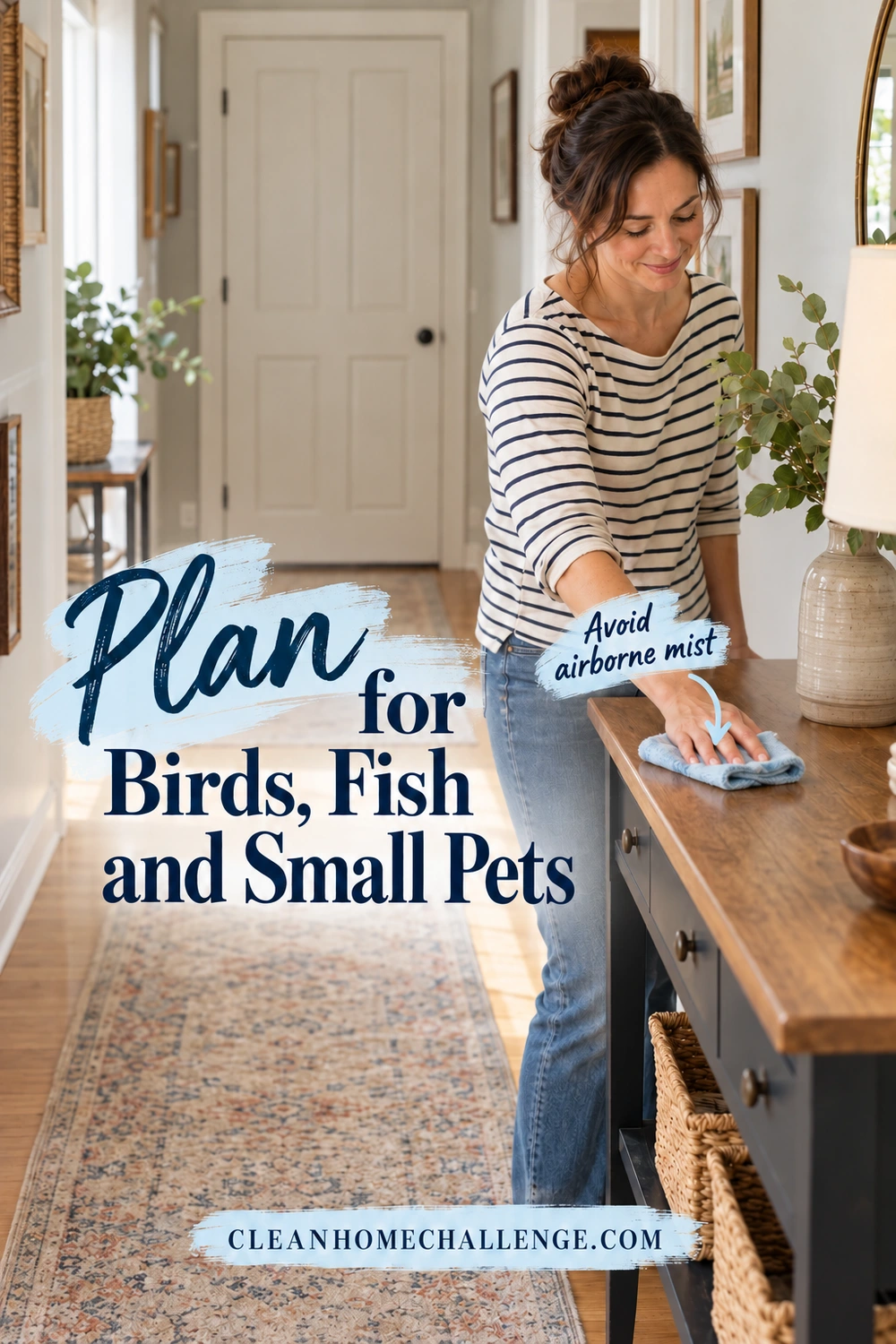
Avoid turning a household wipe-down into an airborne mist near the bird’s environment. Clean removable equipment in an appropriate separate location. For cages and accessories, VCA advises thoroughly removing chemical residues before the bird is exposed again. Follow the selected product’s directions rather than borrowing a dilution from an unrelated cleaner. Do not use disappearance of a smell as proof that the air is safe.
Fish: keep household chemicals out
Treat aquarium equipment as a separate cleaning kit. Aqueon warns against using buckets or scrubbers previously used with soap or other chemicals. Label aquarium-only tools and store them apart from floor-cleaning supplies.
Keep household sprays and contaminated cloths away from the tank, its openings, and aquarium tools. For exterior glass, follow the aquarium manufacturer’s method; Aqueon’s cleaning checklist specifies an aquarium-safe glass cleaner. Do not add a household cleaner to the water or improvise tank disinfection. For suspected contamination, contact an aquatic veterinarian promptly. Ask the equipment manufacturer about equipment-specific cleaning questions.
Small mammals, reptiles, and amphibians: plan by species
Move an animal to suitable secure temporary housing before cleaning its enclosure. Confirm which bedding, accessories, and products suit that species, and keep clean items separate from waste-handling tools.
A habitat-cleaning schedule should reflect the species and how quickly the enclosure becomes soiled. For example, the RSPCA recommends daily attention to rabbit toilet areas, with a broader clean around weekly and adjustment when needed. Do not treat that as a universal schedule for every small pet.
Store Cleaners and Act on Exposures
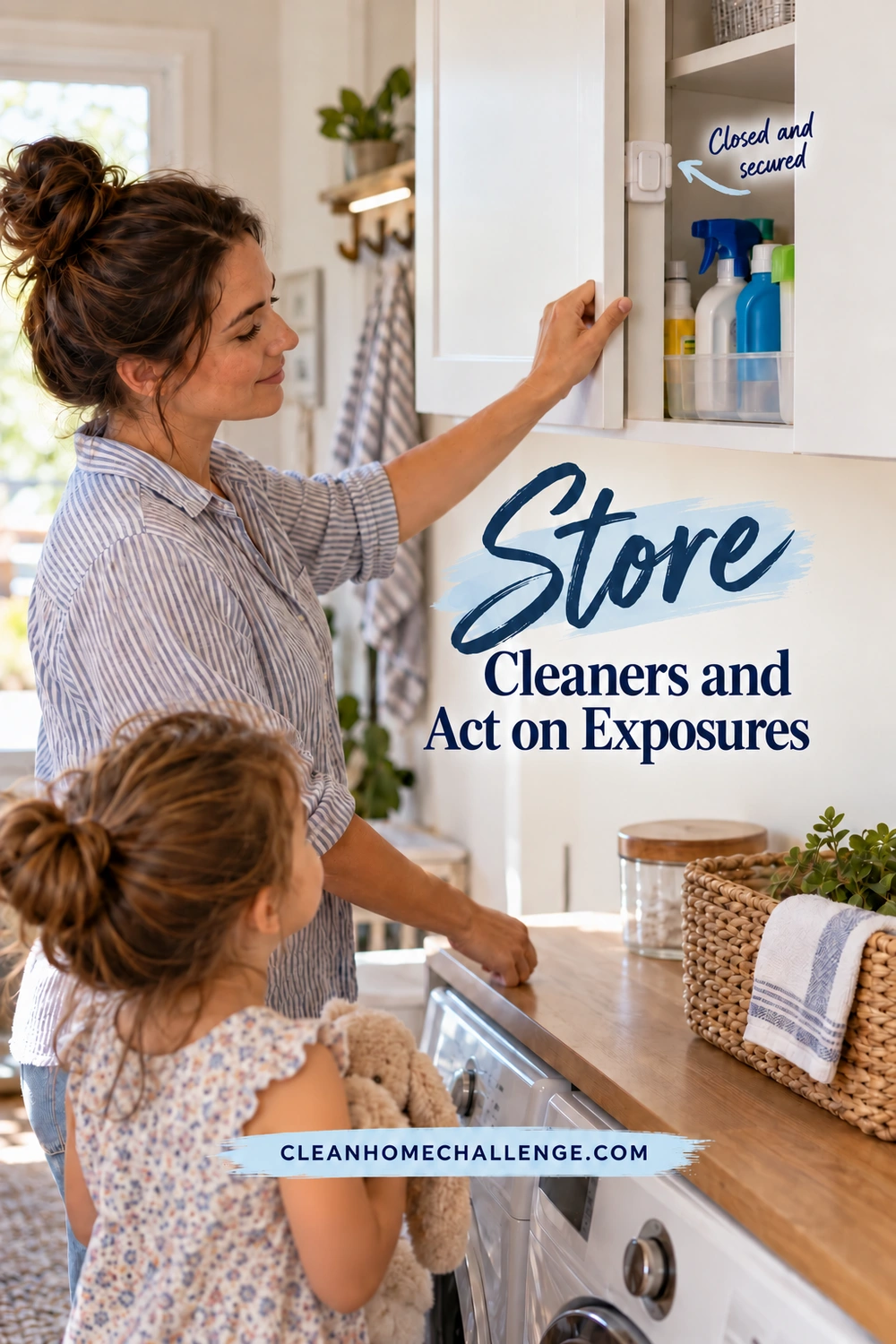
The routine is unfinished while a bottle, wipe, or bucket is still accessible. Close products immediately and return them to a secured cabinet. Height alone may not stop a climbing cat or an animal that can open a door.
Keep products in their original containers with readable labels. Never decant cleaner into a drink bottle, food jar, or unmarked decorative dispenser. If a label calls for preparing a solution in another container, follow its container, labeling, storage, and disposal directions. Make only what the task requires.
Look beyond the usual spray bottles. Laundry products, dryer sheets, drain cleaners, toilet products, and diffuser liquids need secure storage too. The ASPCA’s guidance on corrosive household products explains why some of these exposures can cause serious injury. Keep toilet lids and bathroom access controlled during cleaning, and check for dropped packets or wipes before letting pets in.
If a pet contacts a cleaner
Stop the task and prevent further exposure without putting yourself at risk. Contact your veterinarian or an animal poison service promptly, even if the pet initially seems well. In the US, ASPCA Poison Control is available at (888) 426-4435; a consultation fee may apply.
Have the product container or label ready, along with the pet’s species, approximate weight, what happened, and when. Mention whether the product was concentrated or diluted. Follow professional instructions for that specific exposure.
Do not induce vomiting, try to neutralize the chemical, or give home remedies unless a veterinary professional instructs you. If the animal is unconscious, having seizures, or struggling to breathe, seek emergency veterinary care immediately. The ASPCA’s poisoning-response guidance stresses acting promptly rather than waiting for signs to develop.
Save your veterinarian and emergency clinic numbers now, when you have time to find them calmly. For a cupboard-by-cupboard check, see our guide to storing cleaning products safely in a family home.
Make Safer Cleaning a Small Daily Habit
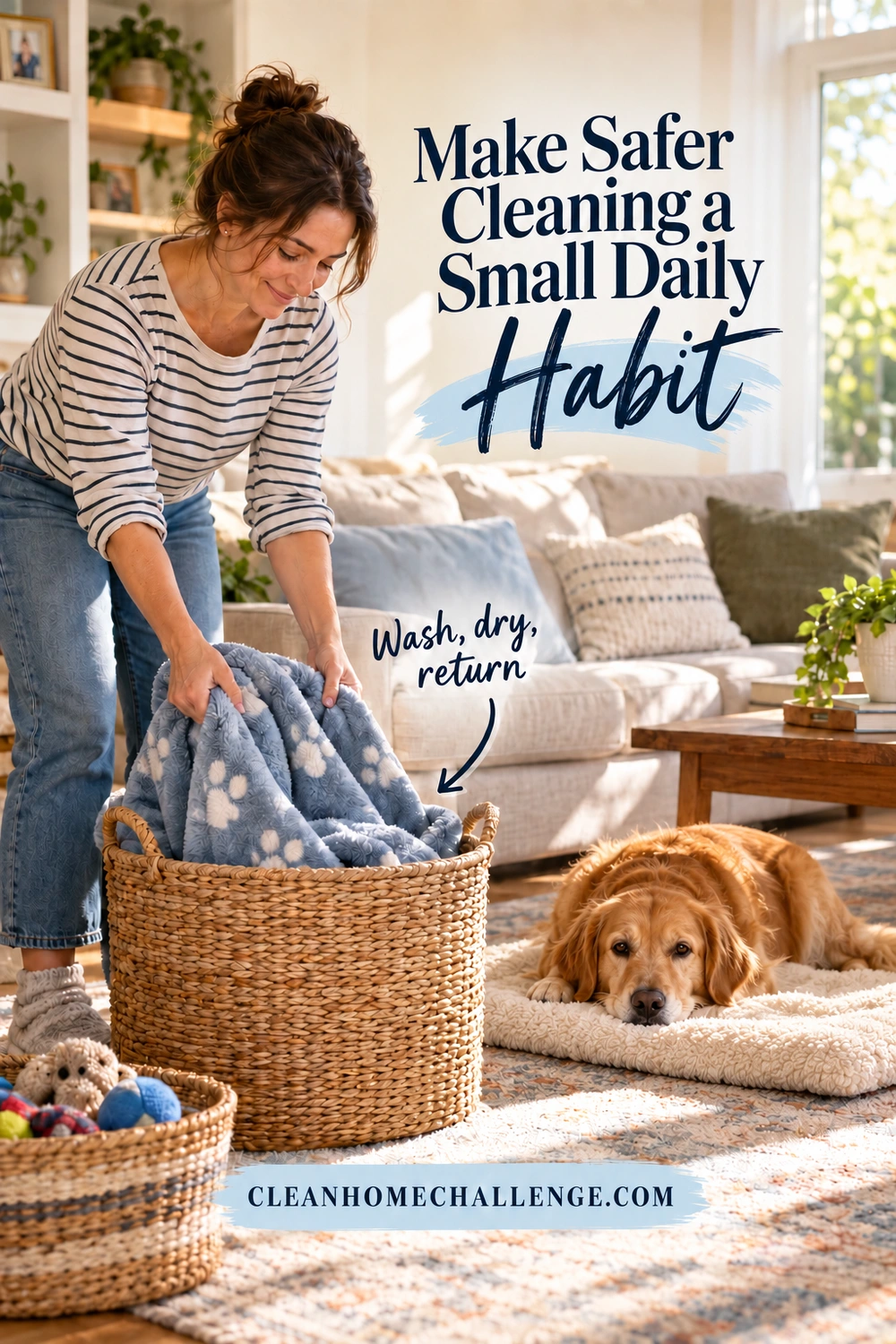
A manageable routine reduces the number of decisions you have to make with a wet cloth in one hand and a curious pet nearby. Keep one short checklist beside your supplies: choose the correct product, separate the pets, finish the directions, check the area, and put everything away.
Start with a five-minute reset
Treat five minutes as a planning window for a small job, never as a product’s contact or drying time. Pick up loose debris in one area, collect a washable blanket, or organize the waiting room before a later clean. If the job cannot be finished safely within your available time, choose a smaller task.
An everyday rhythm might include:
- Washing dog or cat wet-food bowls after use, and dry-food and water bowls daily, following their care instructions.
- Checking the feeding area for spills and moving bowls before spot-cleaning underneath.
- Removing visible mess promptly with a surface-appropriate method.
- Checking that gates, cupboard latches, and cleaning-product lids still work properly.
For washable bedding, keep a spare ready if that makes laundry easier. Before loading the washer, check the drum for pets, and check again before closing the door and starting the cycle. Return the cleaned item only when it is fully dry. The CDC’s pet-supply guidance offers starting schedules for bowls, bedding, and toys, with more frequent attention when items are dirty or illness changes the household’s needs.
Fit it into your existing week
Add a pet-area check to the room you are already cleaning: feeding areas on kitchen day, a washable throw on living-area day, and access planning before floor day. Saturday laundry catch-up can include a pet blanket if its care label allows the available cycle. Species-specific habitat care keeps its own schedule.
On a busy day, the most useful improvement may be closing one cupboard properly or setting up a reliable waiting area. Build from there. A cleaner home with pets comes from repeatable small choices, suitable products, and enough time to finish the safety steps.
CLEANERS CLUBHOUSE
Build a Safer, Simpler Cleaning Routine
Clean confidently with practical guidance that helps you choose sensible products and use them correctly. The Cleaners Clubhouse combines safer cleaning support with realistic routines, worksheets and challenges.