THIS POST MAY CONTAIN AFFILIATE LINKS. PLEASE READ MY DISCLOSURE FOR MORE INFO.
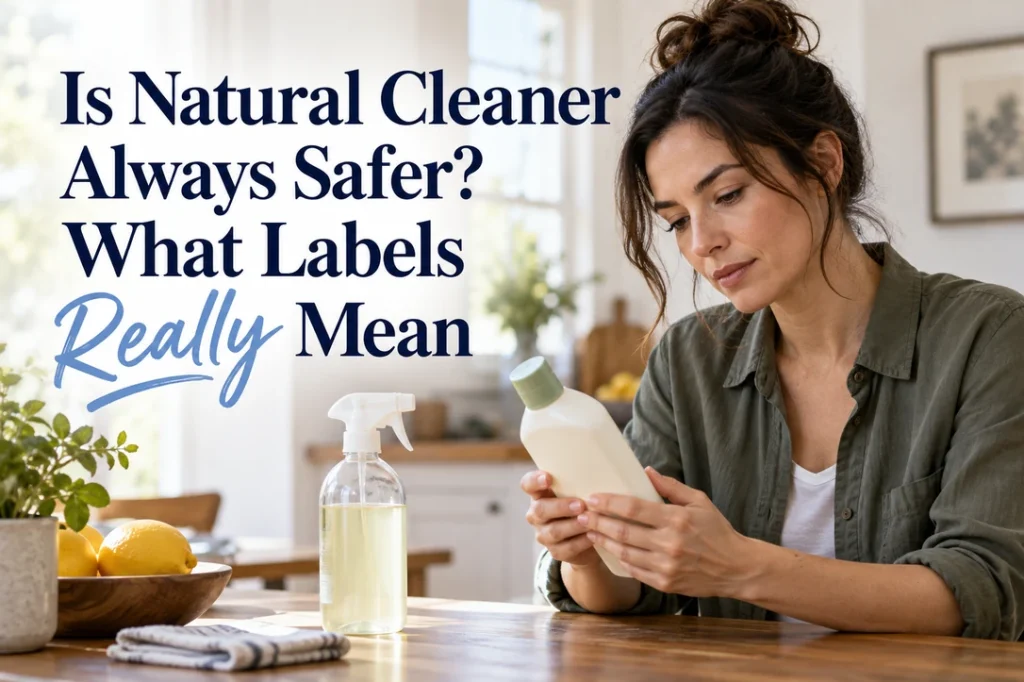
Is natural cleaner always safer? It is a fair question when you are trying to keep a family home clean without buying more than you need. Bottle labels use words such as “green,” “plant-based,” and “non-toxic,” but those words do not all answer the same question. Here is how to read the claims, choose a practical product, and use it safely.
Disclosure: This post may contain affiliate links. As an Amazon Associate, Clean Home Challenge earns from qualifying purchases. If you make a purchase through these links, we may earn a small commission at no extra cost to you. This helps us keep creating practical cleaning tips, routines and resources for busy families! 🧽
The short answer: natural does not automatically mean safer
A leaf on the bottle can make a cleaner look gentle. It cannot tell you whether the product will irritate skin, suit your countertop, or do the job you need. Plant-derived ingredients can still cause reactions, and a synthetic ingredient is not automatically more hazardous. What matters is the complete formula, the amount and way you use it, the surface, and the label directions.
For a busy family, the practical goal is simple: choose a product suited to one task, use only as directed, ventilate as instructed, and store it securely. You do not need a cupboard full of specialty sprays to clean effectively.
What common cleaner claims actually tell you
Natural or plant-based: These words suggest something about an ingredient’s origin. They do not, by themselves, certify the finished product as safe for children, pets, skin, or every surface.
Green or eco-friendly: Look for a specific, supported claim such as recycled packaging or a named certification. The FTC cautions against broad environmental claims that can imply more than a seller can substantiate.
Non-toxic: This is a broad claim that should be backed by evidence. It is not permission to taste a product, use it without ventilation, or leave it within a child’s reach.
Fragrance-free versus unscented: These are not necessarily interchangeable. If fragrance is a concern, check the ingredients and look for a verified fragrance-free mark where available. An unscented product can be formulated to mask an odor.
Disinfects: Cleaning removes visible soil; disinfecting has a different purpose. If you need to disinfect, choose a product registered for that purpose and follow its listed surface, precleaning, dilution, and contact-time directions. A pleasant-smelling “natural” all-purpose spray is not automatically a disinfectant.
Look for specific verification, then read the directions
In the United States, the EPA Safer Choice label identifies products that meet its criteria for ingredients and performance. You can check a product in the EPA Safer Choice product search. Some qualifying products also carry an additional verified fragrance-free label. Certification is a useful screening tool, not a promise that you can ignore a product’s instructions or use it on any material.
Turn the bottle around before buying. Check its intended surfaces, ingredients or ingredient disclosure, warnings, ventilation advice, dilution instructions, and storage requirements. If a claim matters to your household, find out exactly who verified it and what the verification covers. A logo that looks official may be a company’s own design.
A five-minute shelf check before you buy
- Name the job. Is this for everyday soil on sealed counters, bathroom scale, laundry stains, or an actual disinfection need?
- Match the surface. Read the material care instructions first, especially for natural stone, wood, specialty finishes, and fabrics. Acidic cleaners, including vinegar, are not universal choices.
- Read the product’s directions. Check concentration, dwell time, whether rinsing is required, and whether gloves or ventilation are recommended.
- Check claims carefully. Prefer a specific verified claim over a vague promise. Use EPA’s product search when a Safer Choice claim is relevant.
- Buy only what you will use. One suitable everyday cleaner and a few task-specific products are easier to store safely than a crowded shelf.

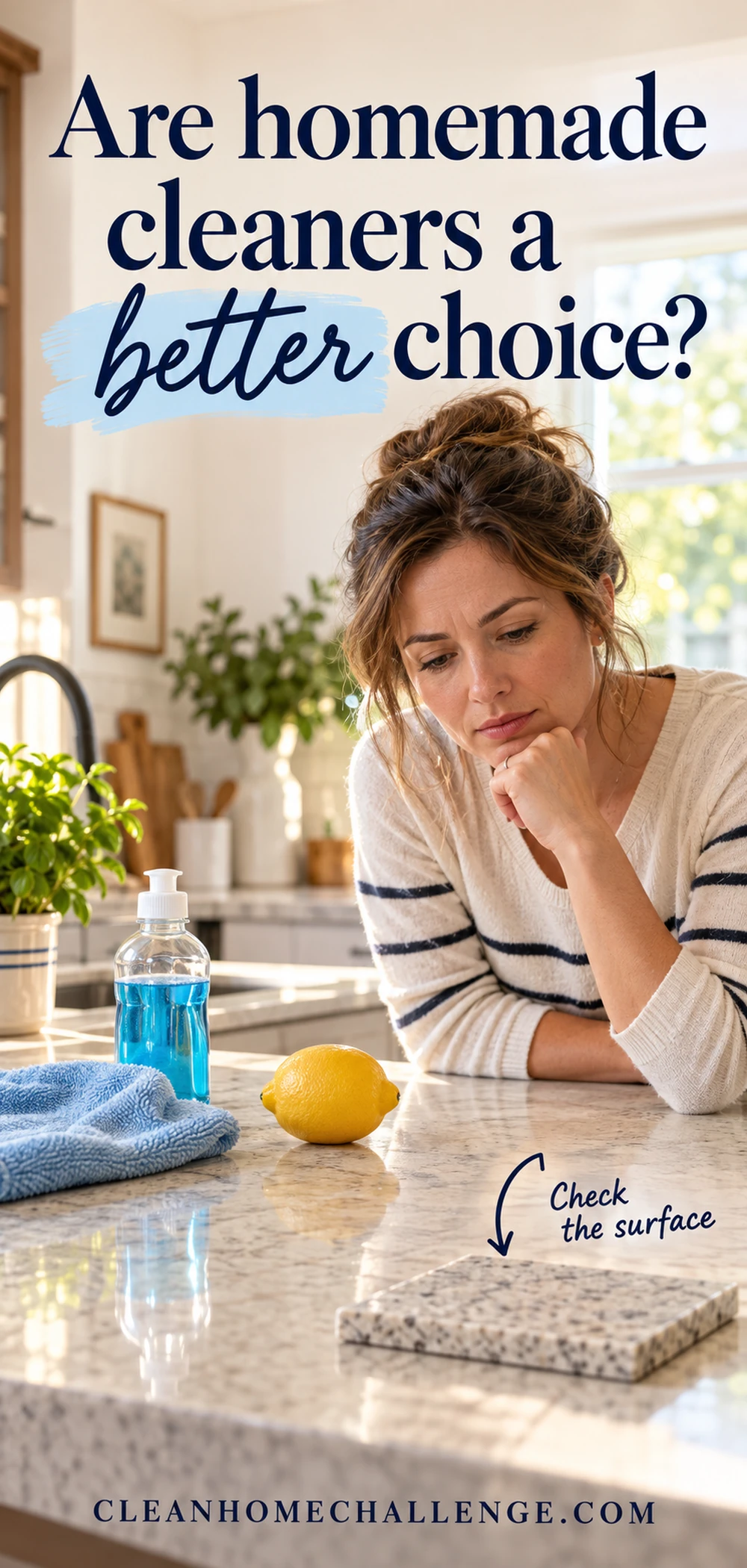
Are homemade cleaners a better choice?
Sometimes a damp microfiber cloth or a little dish soap diluted according to its label is enough for ordinary mess. A homemade mixture is still made of chemicals, and “from the pantry” does not mean safe for every surface or every person. Vinegar may damage acid-sensitive stone and some finishes. Essential oils can be irritating and are not a substitute for a verified disinfectant.
Do not combine leftover products to make a stronger cleaner. In particular, never mix bleach with vinegar, ammonia, acids, or other cleaning products. Follow each label, use good ventilation, and keep containers out of children’s and pets’ reach. If you need a disinfectant, use a product labeled for that purpose instead of guessing at a homemade recipe.
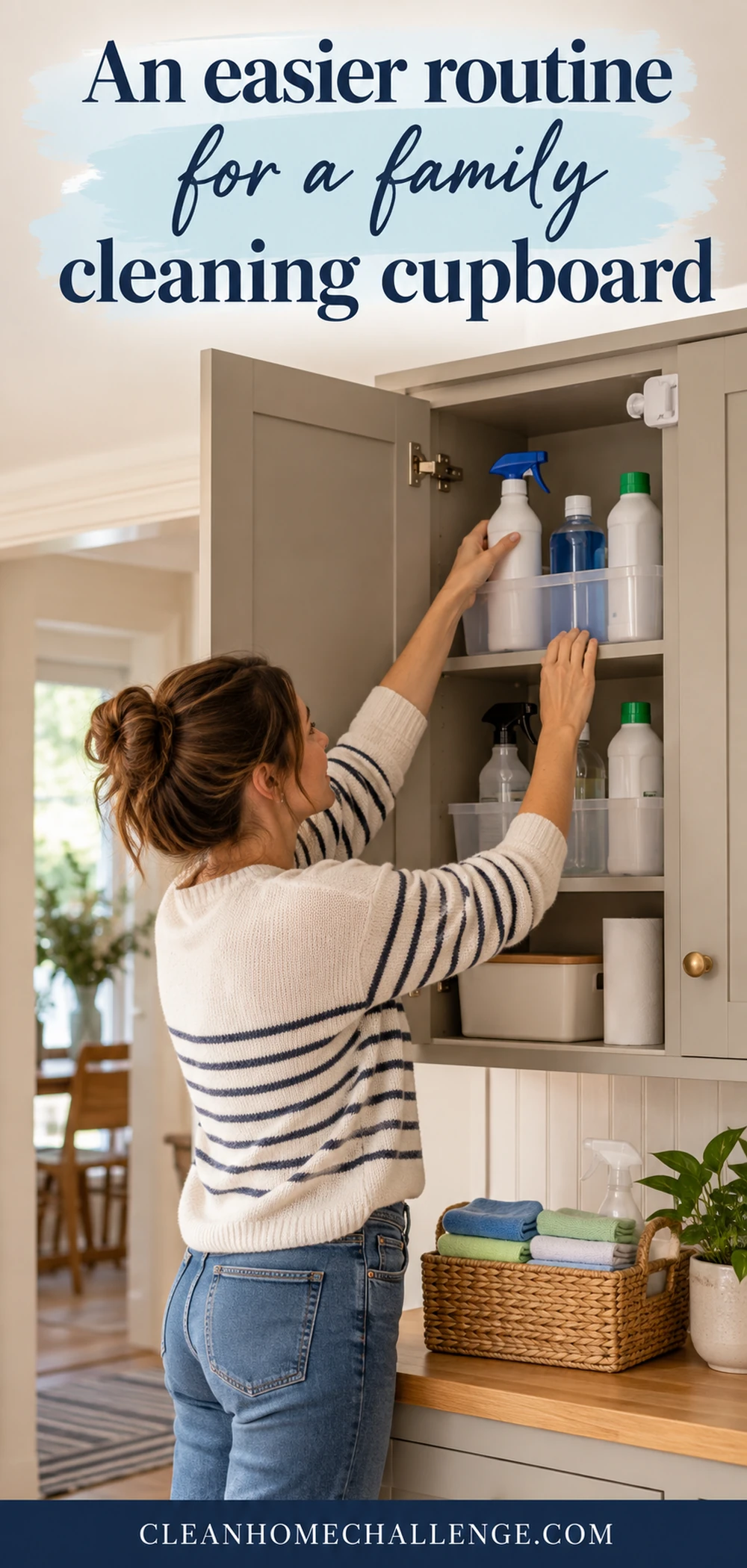
An easier routine for a family cleaning cupboard
Set a timer for ten minutes. Put products upright in one secure spot, preferably in their original labeled containers. Set aside expired or unwanted products for disposal according to the label and your local waste service; do not pour different products together. Keep the everyday cleaner and clean cloths easy for adults to reach, but inaccessible to children.
When you clean, open a window if the label calls for ventilation, use the smallest amount directed, and let the surface dry or rinse as instructed. A quick wipe of frequently used surfaces during your regular routine usually matters more than collecting every new product marketed as “natural.”
Questions busy families often ask
Is an EPA Safer Choice product safe around pets and children?
The label helps identify products meeting the program’s ingredient and performance criteria. It does not replace safe storage or the directions for use. Keep all cleaners out of reach and prevent children and pets from accessing wet treated surfaces when the label requires it.
Does “plant-based” mean I can skip gloves?
No. Skin sensitivity varies, and a concentrated product may still irritate. Follow the product’s directions and wear gloves when advised or when your skin needs protection.
Do I need to disinfect the whole house every day?
Routine cleaning and targeted disinfecting serve different purposes. Follow current public-health advice for your household’s circumstances and use an appropriate labeled product only where needed.
CLEANERS CLUBHOUSE
Build a Safer, Simpler Cleaning Routine
Clean confidently with practical guidance that helps you choose sensible products and use them correctly. The Cleaners Clubhouse combines safer cleaning support with realistic routines, worksheets and challenges.
Choose clarity over a pretty label
The most useful cleaner is one that fits your surface, your task, and the time you actually have. Read the back label, favor specific verified claims, and use a simple routine that you can repeat. If you’d like help keeping that routine manageable, the Cleaners Clubhouse offers follow-along cleaning guidance and printables.
Sources: EPA Safer Choice label; EPA product search; FTC environmental claims guide; Poison Control cleaning safety.