THIS POST MAY CONTAIN AFFILIATE LINKS. PLEASE READ MY DISCLOSURE FOR MORE INFO.
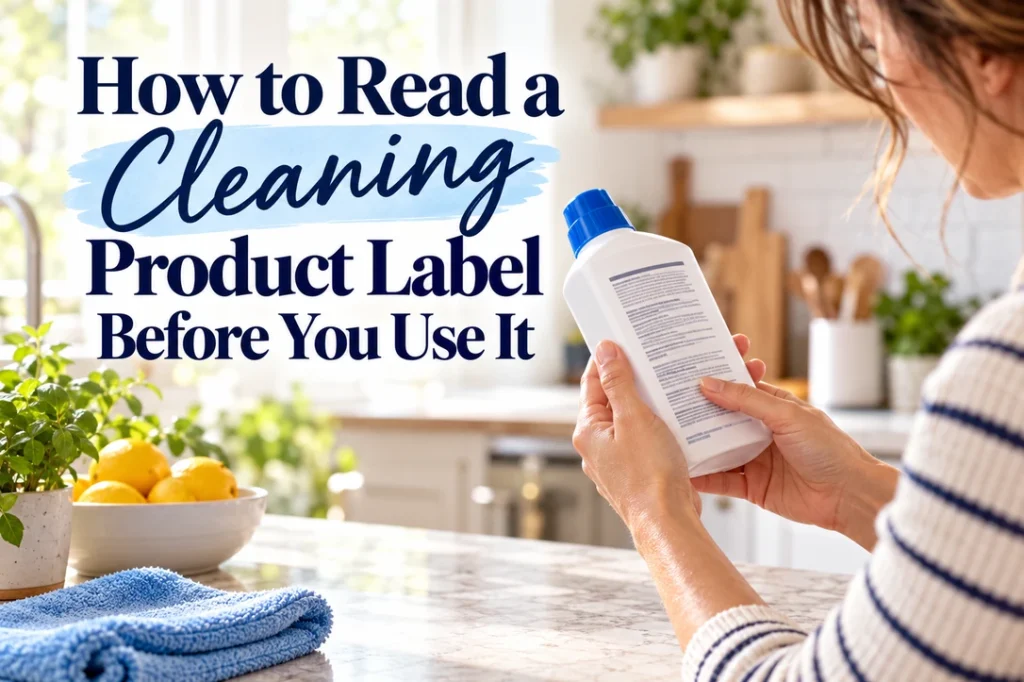
A cleaning product label can look like a wall of tiny print when you only have ten minutes to tackle a mess. You do not need to memorize every ingredient. You do need to find the few directions that tell you whether the product suits the job, how to use it, and when the surface is ready for your family again.
This simple reading order works for sprays, wipes, concentrates, and disinfectants. It is especially useful when you bring home a new product or move between kitchen, bathroom, and floor surfaces.
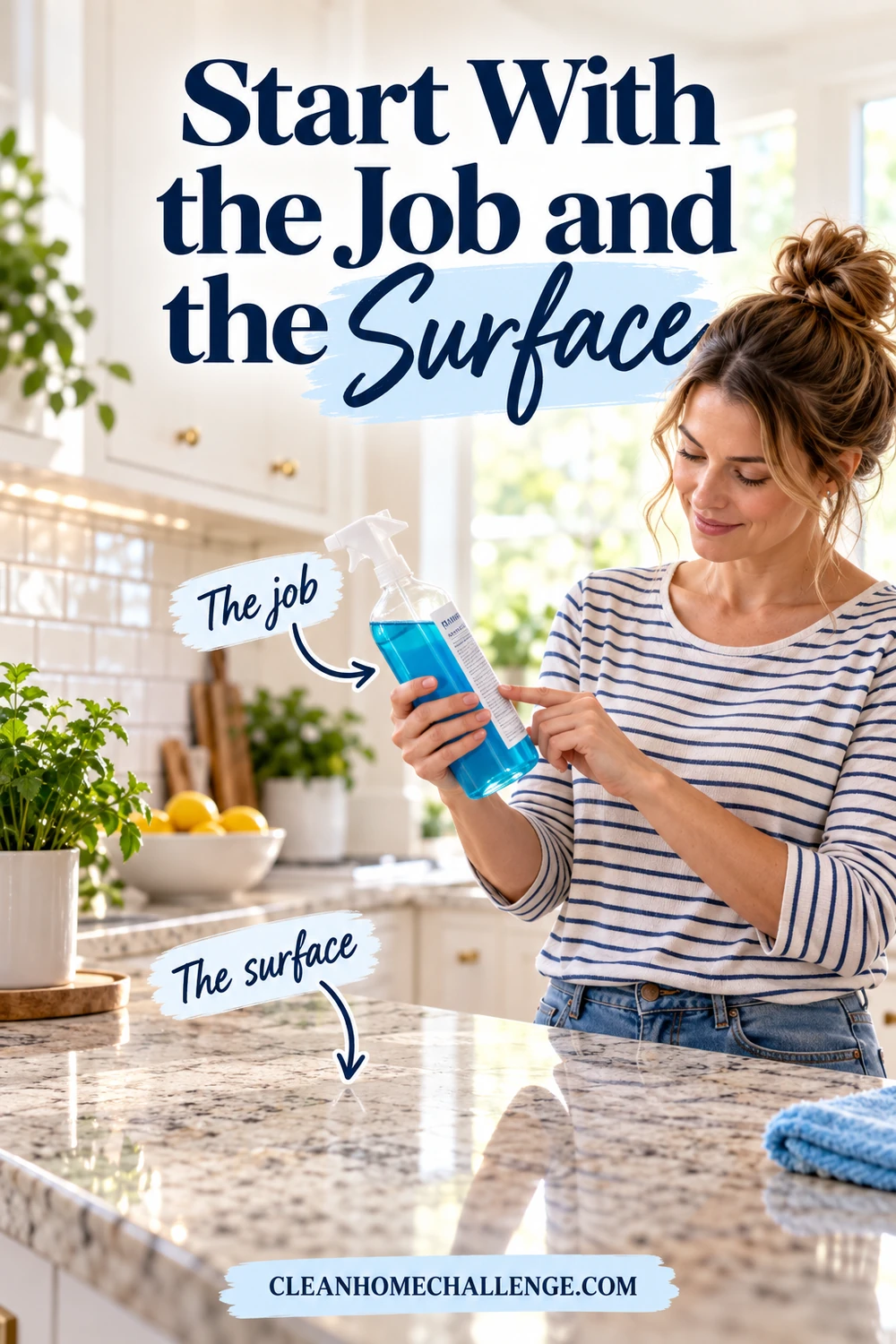
Start With the Job and the Surface
Before you open a bottle, decide what you need it to do. An everyday cleaner removes dirt and grease. A sanitizer or disinfectant has a specific germ-control claim and directions that must be followed for that claim. For most routine household surfaces, cleaning with soap or detergent is a sensible first step. If you need to disinfect, clean visible soil first unless your product explicitly gives a different process.
Look for the surfaces named on the label: sealed countertops, glass, tile, toilets, fabrics, or floors. “Multi-surface” does not mean every finish. Check the care instructions for natural stone, unfinished wood, specialty coatings, electronics, and upholstery. If a surface is missing from the label, choose a product approved for that material instead of guessing.
Find the Directions for Your Exact Task
A bottle may give different instructions for cleaning, sanitizing, disinfecting, and stain removal. Read the section that matches your goal. Check whether the product is ready to use or a concentrate, whether it goes onto a cloth or directly onto the surface, and whether you must preclean, rinse, or dry afterward.
For concentrates, use the stated measuring method and dilution. More product is not automatically more effective; it can leave residue and create unnecessary exposure. Never refill an unlabeled bottle or put a cleaner into a food or drink container. Keep the original label available even if a manufacturer allows transfer to a properly labeled working bottle.

Understand Contact Time and Rinsing
A disinfectant’s contact time is how long the treated surface must stay visibly wet. It may differ by organism and use, so read the relevant directions on your own product. A quick spray and immediate wipe does not satisfy a longer stated time. If the surface dries early, follow the label for reapplication.
Check whether the label calls for a potable-water rinse after use on food-contact surfaces or on toys that children may mouth. Let surfaces dry as directed and keep children and pets away until the product’s directions say the area is ready. Never substitute a generic online dwell-time chart for the instructions on the bottle.

Check Warnings, Protection, and Ventilation
Look for signal words, eye and skin warnings, recommended gloves or eye protection, and directions for fresh air. Open a window or door when the label calls for ventilation and avoid breathing spray mist. Wash your hands after handling the product, even if you wore gloves.
Do not mix cleaners or layer them while a previous product is still present. Bleach must not be mixed with ammonia, vinegar, acids, or another cleaner. Toilet cleaners, descalers, and some glass cleaners can contain ingredients that make accidental mixing dangerous. If switching products, first remove the earlier cleaner according to its directions and thoroughly rinse where appropriate.

Read Storage, First Aid, and Disposal Instructions
Store the product in its original, tightly closed container, out of sight and reach of children and pets. Follow any temperature or upright-storage directions. Do not keep cleaners next to food, and never assume a child-resistant closure replaces secure storage.
Find the first-aid panel and product identifier before an accident happens. If someone is exposed, move away from fumes to fresh air if you can do so safely, follow the label’s immediate first-aid directions, and contact your local poison service. Call emergency services for severe breathing trouble or other urgent symptoms. Keep the container or a photo of its label available for the responder. Follow local disposal instructions rather than combining leftovers or pouring an unknown product down a drain.

A 30-Second Label Check Before Every Clean
- Job: Is this a cleaner, sanitizer, or disinfectant?
- Surface: Is the material listed, and does its manufacturer allow the product?
- Method: How much should you use and where should you apply it?
- Time: Must the surface remain wet, and for how long?
- Finish: Is rinsing or drying required, especially near food or children?
- Safety: Do you need gloves, eye protection, ventilation, or a clear room?
If you are interrupted, stop after the quick check. It is easier to come back to a task than to work around an unsafe product or damaged surface.

Common Label Mistakes to Avoid
- Trusting the front claim alone. The back-panel directions define what the product can do and how to use it.
- Assuming “natural” means harmless. Ingredients and directions still matter; even certified products must be used as labeled.
- Using one product everywhere. Check both the bottle and the surface maker’s guidance.
- Wiping a disinfectant dry too soon. Observe its stated wet contact time.
- Combining leftovers. Keep products separate, including inside buckets, drains, and toilet bowls.
- Forgetting the rinse. Food-contact and child-contact surfaces may have extra steps.

Make Safe Cleaning Easier Next Time
Keep a small set of products that match your actual surfaces and tasks. Before buying a replacement, compare its labeled uses, directions, contact time, protection needs, and storage requirements. A product that needs elaborate steps may be a poor fit for a five-minute weekday reset.
Take a clear photo of the back label for your household reference, but keep the original container. Teach older family members to ask before using a product they have not read. For ordinary daily messes, a suitable cleaner and a clean cloth often do the job. Save a disinfectant for situations where it is called for, and follow its exact instructions.

CLEANERS CLUBHOUSE
Build a Safer, Simpler Cleaning Routine
Clean confidently with practical guidance that helps you choose sensible products and use them correctly. The Cleaners Clubhouse combines safer cleaning support with realistic routines, worksheets and challenges.