
THIS POST MAY CONTAIN AFFILIATE LINKS. PLEASE READ MY DISCLOSURE FOR MORE INFO.
Some weeks, the calendar fills up before you have even thought about cleaning. There are extra shifts, appointments, school events, visitors, or simply too many ordinary things happening at once. A full cleaning schedule may be perfectly sensible on paper and completely unrealistic right now.
A minimum cleaning routine gives you a temporary, smaller plan: handle food and immediate messes, keep essential spaces usable, and make sure everyone has what they need for tomorrow. Leave the appearance-only extras for another week.
This is an essentials-first routine for a short, overloaded stretch. It is not a promise that every household can stay clean in ten minutes, and it is not a deep-cleaning recovery plan. The aim is to make clear decisions about what deserves your limited energy today.
You can use the checklist below for a week, adapt it to your household, and review it when life changes. You do not need to earn a fresh start by catching up on every missed chore.
Disclosure: This post may contain affiliate links. As an Amazon Associate, Clean Home Challenge earns from qualifying purchases. If you make a purchase through these links, we may earn a small commission at no extra cost to you. This helps us keep creating practical cleaning tips, routines and resources for busy families! 🧽
Choose What Matters This Week
Before picking up a cloth, take a quick look at the next few days. Where will the pressure land? A week of packed lunches creates different needs from a week of late shifts and simple dinners. Sports uniforms may matter more than spare pillowcases. A heavily used downstairs bathroom may need attention before an almost-unused guest room.
Choose your minimum by asking three questions:
- What needs attention now because of food, contamination, a spill, or a hazard?
- What needs to be ready for our next meal, shower, bedtime, or departure?
- What would merely look nicer if I did it?
Work through those questions in that order. An unwashed food-preparation board comes before straightening cushions. A clear path to the bathroom comes before sorting a drawer. This is a decision tool, not a ranking of how well you keep your home.
Define a useful finish line
Replace broad jobs with an observable result. “Clean the kitchen” could mean anything from washing one pan to scrubbing cabinet doors. “Tomorrow's dishes are clean and there is a clean place to prepare breakfast” is easier to finish.
Write down three or four outcomes for your particular week. For example:
- We can prepare food on a clean surface and use clean dishes.
- The bathroom has a usable toilet, sink, soap, and clean hand towel.
- Main walkways are clear and spills are handled.
- Needed clothes are washed, dried, and easy to find.
Those are planning examples, not a universal hygiene standard. Young children, pets, illness, accessibility needs, and other circumstances can change the workload. Food safety and immediate hazards still need attention even when they are absent from a written list.
Decide what can wait
Put decorative tidying, detailed dusting, window polishing, drawer organizing, and unused-room cleaning on a short “later” list. Bed-making can be optional this week if the bedding itself is suitable to use. Do not turn the later list into a debt ledger with deadlines beside every item.
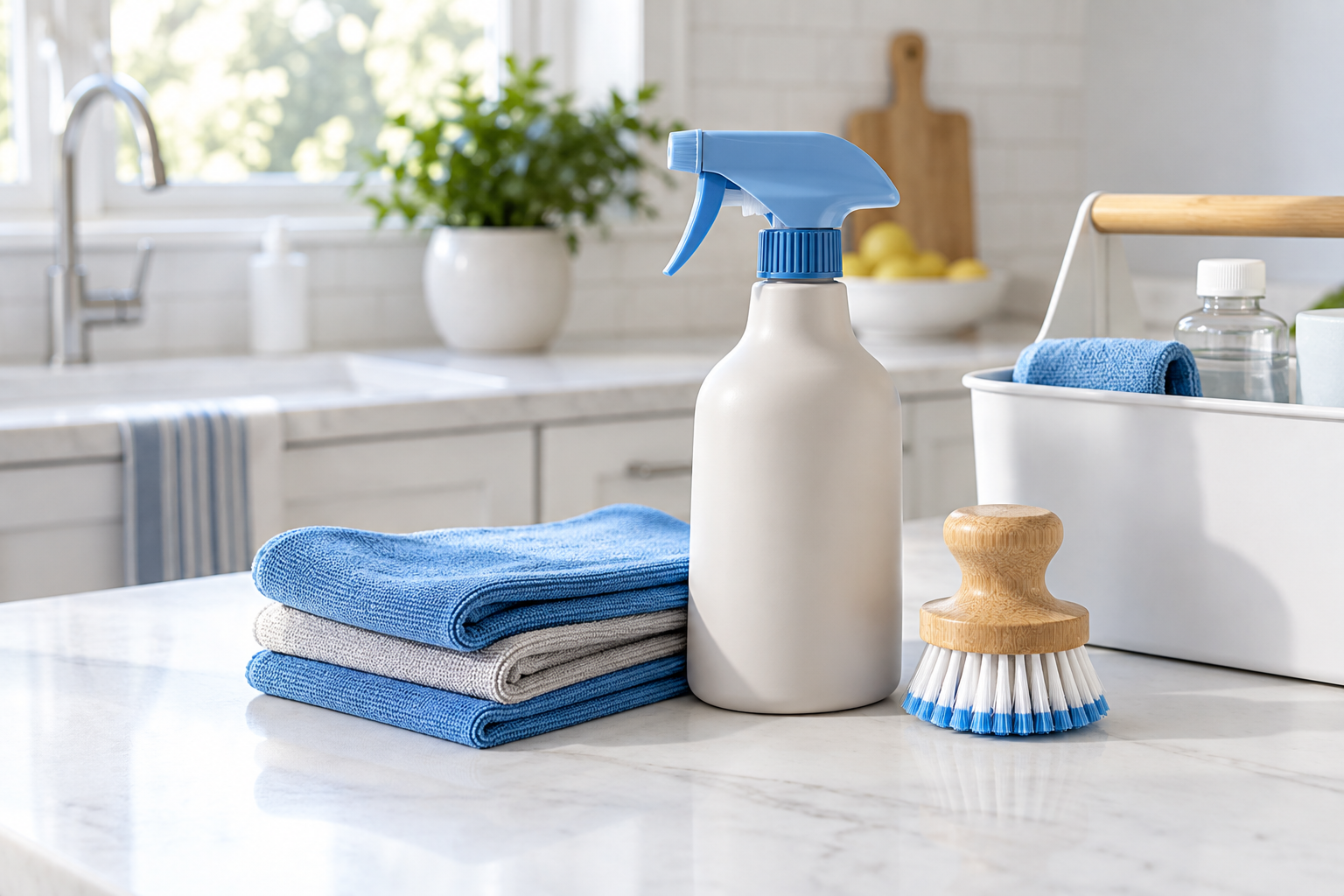
Keep a small working kit: clean cloths, dishwashing supplies, a surface-appropriate cleaner, trash bags, and the floor tool you already use. Keep bathroom cloths separate from kitchen cloths. No new organizing system or specialist purchase is required to begin.
Keep products in their original labeled containers and store them securely away from children and pets. Convenience should never mean an accessible bottle beside the sink. Poison Control explains why original containers and secure storage matter.

Keep the Kitchen Ready for the Next Meal
The kitchen usually earns a place in a minimum cleaning routine because you need it again soon. Focus on food, dishes, and the preparation area before touching appliance fronts or cabinet handles for appearance alone.
Do time-sensitive food tasks when they arise. An evening reset does not make it safe to leave lunch leftovers on the counter all afternoon.
Use this practical order
- Put food away. Refrigerate perishable leftovers promptly in shallow containers. USDA guidance gives a two-hour limit at room temperature, reduced to one hour above 90°F. Food left beyond those limits should be discarded. These are limits, not a reason to wait. Read USDA's leftovers guidance.
- Remove scraps and deal with waste. Put food scraps in the appropriate covered waste container. Empty trash when it is full, leaking, attracting pests, or causing a problem, rather than waiting for a designated room-cleaning day.
- Move dishes through to clean. Load dishwasher-safe items according to the appliance and item instructions, or wash, rinse, and dry the dishes you need. Include food-preparation tools; a tidy stack of dirty dishes is still unfinished washing.
- Clean the working area. Clear and clean the space used for preparing food, plus the eating surface where needed. Address grease, sticky spots, and visible food residue. Use a product compatible with the counter and follow any required rinsing instructions.
- Check the sink and floor. Remove food debris from the sink and clean it as needed. Sweep up food crumbs where people ate and deal with slippery spills. Leave wet areas dry before normal use.
For a small, lightly used kitchen, the hands-on part might fit into a short block. A full dishwasher unload, several cooked meals, or accumulated dishes will take longer. Machine cycles, drying, and any required product contact time are additional. Use a timer to limit optional polishing, never to interrupt necessary food cleanup.
Keep food preparation separate from the nightly reset
Wash hands and food-contact tools as you cook. FDA guidance calls for washing cutting boards, dishes, utensils, and countertops with hot, soapy water after preparing each food item. Use clean kitchen cloths, laundering them often. See FDA's safe food handling guidance.
Raw meat or poultry juices need attention immediately. Clean affected surfaces, then sanitize appropriately using a product suitable for that food-contact surface and follow its label, including rinsing where required. Do not carry a contaminated cloth around the kitchen. USDA explains cleaning and sanitizing after raw meat or poultry handling.
If dishes have already backed up, start with what serves the next meal: cups, utensils, plates, a board, and one useful pan. Finish that batch, then reassess. You can make the kitchen functional before the entire backlog disappears.

Protect Bathroom Basics and Clear Walkways
A busy-week bathroom pass should support everyday use. Begin with the bathroom people actually use, then check other occupied bathrooms as needed. An untouched guest bathroom does not automatically deserve equal time.
Remove trash that needs emptying, put abandoned clothes in the hamper, and check that soap and toilet paper are available. Replace a dirty or damp hand towel with a clean one. Clean visible toothpaste and grime from the sink, faucet, and surrounding surface using a compatible product.
For the toilet, use suitable products and separate cleaning tools. Work over the exterior from less-soiled areas toward more-soiled areas, then clean the bowl with its dedicated brush according to product directions. Do not reuse a toilet-cleaning cloth elsewhere. Finish by putting supplies away and washing your hands.
You can leave mirror polishing for later. You cannot ignore a soiled toilet, a wet slippery floor, or a shower that needs cleaning to remain usable simply because the checklist says “minimum.” Check each space's actual condition.
Clean routinely; disinfect when the situation calls for it
Cleaning removes dirt and germs. Sanitizing reduces germs to levels considered safe; disinfecting kills most germs on surfaces. They are different processes. CDC advises regular household cleaning, with disinfection when someone is sick or has a weakened immune system. Include frequently touched surfaces, such as faucets, doorknobs, and light switches, in regular cleaning. A busy schedule should not replace specific advice for a vulnerable household member. CDC's home cleaning guidance explains when each step is needed.
If disinfecting, choose an EPA-registered product appropriate for the surface and situation. Follow its directions for precleaning, application, and contact time. The surface must stay visibly wet for that entire time; a quick spray and immediate wipe may not meet the directions. EPA explains disinfectant labels and contact time.
Never mix cleaning products, including bleach with toilet cleaner, vinegar, or ammonia. Ventilate the room, use the protection specified on the label, and keep children and pets away while cleaning. Poison Control's cleaning precautions cover these risks.
Give floors a targeted check
Walk the routes between the entrance, kitchen, bedrooms, and bathroom. Move shoes, cords, bags, and toys out of the way without starting a full organizing session. Put loose items in a stable basket away from exits and walkways.
Sweep or vacuum the visibly dirty areas that affect everyday use. Spot-clean spills with a method approved for the flooring; avoid soaking wood or laminate. For an unfamiliar cleaner or finish, check manufacturer guidance and test an inconspicuous area first.
Leave under-furniture detailing for another day. Prioritize the places your household actually walks, eats, and plays.

Wash Only the Laundry You Need
During a busy stretch, laundry becomes easier to plan when you count usable items rather than looking at the entire hamper. Ask what each person needs before the next realistic wash opportunity.
Start with underwear, socks, work or school clothing, essential towels, and anything soiled that needs prompt washing. Include bedding when it needs changing; a busy week is not a reason to keep using soiled linens. Follow garment care labels and any specific household health advice.
You do not have to complete one load every day just because that habit works in a normal week. One well-chosen load that gets dried and returned to use can be more helpful than several loads waiting for the next step.
Plan the whole load before starting
Check your detergent, available drying space, and the time you will be home to move things along. Choose a cycle suitable for the fabrics and soil level. Follow the appliance's load limits and detergent directions; squeezing everything into one overloaded wash is not a useful shortcut.
Then give the load three checkpoints:
- Wash: Put the needed items through the appropriate wash.
- Dry: Transfer them promptly and dry them completely using the care-label method.
- Return: Put them where the person who needs them can find them.
The CDC recommends suitable washing settings and complete drying for household laundry. Wash your hands after handling dirty laundry. Its cleaning guide includes laundry advice. There is no single temperature that suits every textile.
Set a reminder for the next step if it helps. Do not start another load automatically when the current one still needs attention. If you have a shared laundry room or laundromat trip, collect the essential items in advance and plan the return-and-dry stage as part of that trip.
Relax presentation, not the clean-and-dry step
This may be a week for clean socks in a basket and pajamas in a drawer without careful folding. Hang garments that need it, keep clean and dirty items separate, and choose a temporary landing place everyone understands.
A clean laundry basket is useful only when needed clothes can be found. Separate one person's essentials into a small stack rather than creating a mystery mountain. Put a required uniform or work outfit in its usual place first.
Leave sorting outgrown clothes, reorganizing closets, and matching every spare sock for later. The minimum finish line is enough usable laundry for the next stretch of life.

Use a Flexible Busy-Week Checklist
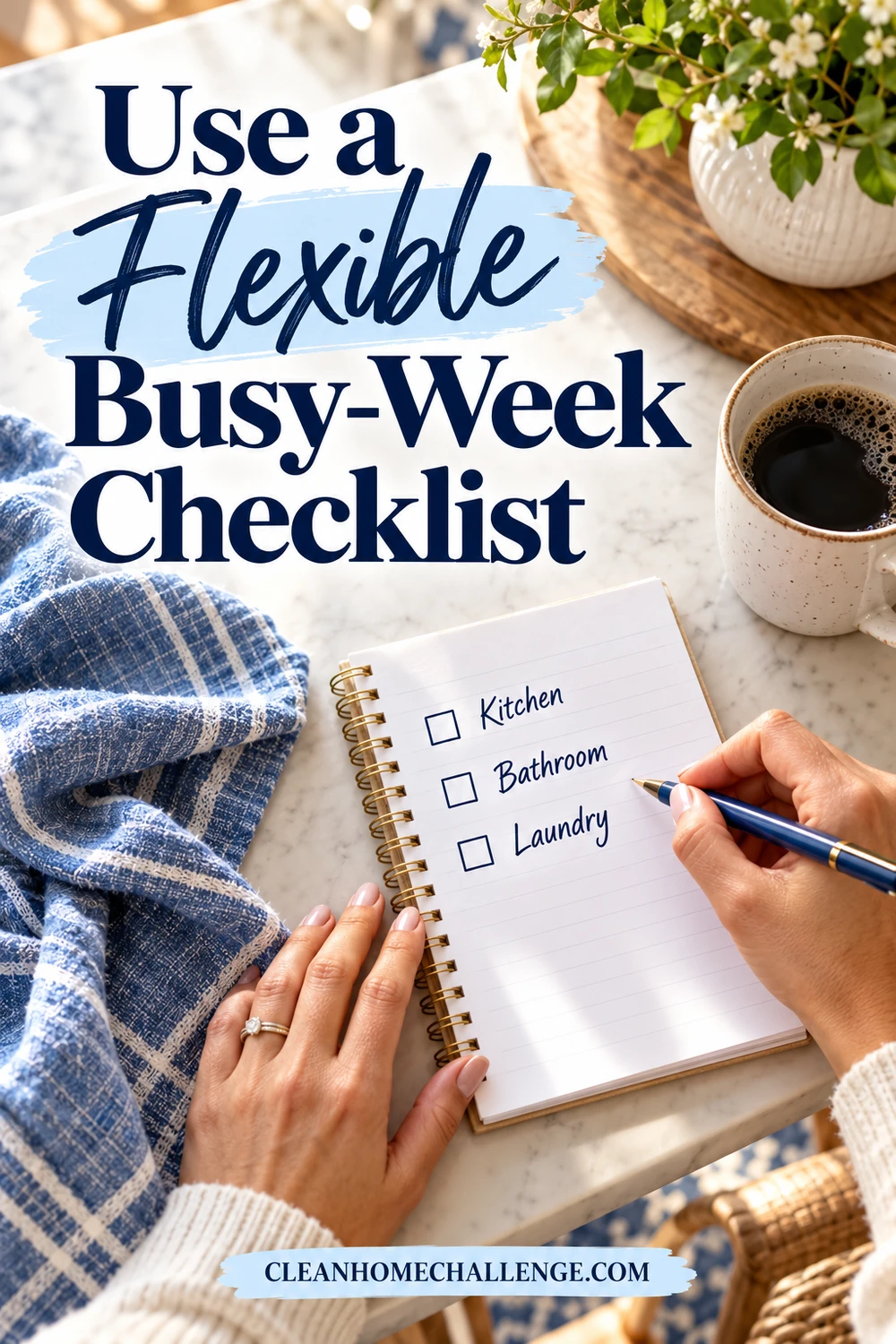
A checklist should reduce decisions, not create another standard to fall behind on. Copy this version, cross out irrelevant items, and add any essential needs particular to your household.
Use it as a daily check plus a few condition-based jobs across the week. You are checking whether something needs doing; you are not being instructed to wash an already-clean surface repeatedly.
Copyable minimum cleaning checklist
Week of: __________ Review the plan on: __________
Handle as needed throughout the day
- [ ] Put perishable food away promptly.
- [ ] Clean food-preparation surfaces and tools after use.
- [ ] Deal with spills, contamination, and immediate hazards.
- [ ] Keep essential paths and exits clear.
Check before the next meal or bedtime
- [ ] Have clean dishes and a clean preparation space ready.
- [ ] Remove food scraps and empty problem trash.
- [ ] Check the most-used bathroom, including soap and a clean hand towel.
- [ ] Put loose floor items somewhere safe.
- [ ] Check tomorrow's necessary clothes; finish any laundry already started.
Fit in when needed this week
- [ ] Clean the used toilets and sinks; inspect showers or tubs.
- [ ] Sweep or vacuum busy floor areas and spot-clean marks or spills.
- [ ] Wash and completely dry essential clothes and linens.
- [ ] Check refrigerated food and discard anything no longer safe to keep.
- [ ] Replace used cleaning cloths and towels as needed.
- [ ] Review whether this smaller plan is still enough.
Can wait unless circumstances change
- [ ] Decorative tidying and detailed dusting
- [ ] Windows, cabinet fronts, and drawer organizing
- [ ] Cleaning little-used rooms for appearance alone
One thing that would make tomorrow easier: ____________________
Choose windows instead of rigid deadlines
If familiar weekday labels help, keep the Clean Home Challenge rhythm but shrink the work: Monday, check kitchen needs; Tuesday, bathroom basics; Wednesday, essential bedroom laundry; Thursday, clear living-area paths; Friday, busy floor areas; Saturday, finish needed laundry. Sunday can be a brief review.
Those are reminders, not permission to postpone urgent messes until a particular day. If Tuesday disappears, check the bathroom at your next workable opportunity rather than adding Tuesday's entire normal cleaning list to Wednesday.
You can also reserve two short windows: one near dinner for kitchen needs and one during the week for bathrooms or floors. Ten or fifteen minutes may help define a manageable work period, but it is a planning choice, not a guarantee or a safety limit.
Stop when the selected outcome is reached. If you finish the bathroom basics early, you can rest instead of finding another surface to polish.
Share the Work and Lower the Effort
A smaller routine works best when the work is visible and ownership is clear. “Help with cleaning” leaves someone responsible for noticing, deciding, and reminding. A specific outcome is easier to share.
Try: “Can you own the dinner dishes through to clean and ready for breakfast?” Or: “Please check and handle the main bathroom tomorrow, including the towel and trash.” Agree on what finished looks like and when it needs to happen.
Divide work by available time, ability, and access to supplies, rather than assuming equal minutes will always be fair. Someone out of the house all evening may be able to take the morning dishes. Someone with limited standing tolerance might handle a seated laundry task while another person does floors.
Keep the plan where the people doing it can see it. A paper list, shared note, or short conversation may be enough. Avoid making one person the permanent manager of every checkbox.
Children can contribute suitable simple tasks, such as returning toys to a basket, with supervision appropriate to their age and abilities. Leave cleaning chemicals, hot water, sharp waste, and other hazards to a capable adult.
Use a lower-energy version when necessary
If the full minimum feels too much, narrow the next action further:
- Handle immediate food and safety needs first, or ask for help doing so.
- Wash the dishes required for the next meal rather than the entire backlog.
- Clear one essential route rather than tidying the whole floor.
- Locate tomorrow's clean clothes before deciding to start laundry.
- Sit for a suitable task, work briefly, and rest as needed.
One tiny task is a starting point, not a requirement to continue. If you are unwell or cannot safely do the necessary cleaning, ask another household member or trusted support person for a specific job. An illness involving contamination may need cleaning guidance beyond this general routine.
You can also reduce the mess created: choose simpler meals, use fewer serving dishes, put a hamper where clothes actually land, or keep a small supply of clean cloths available in secure, appropriate storage. Choose changes that fit your household rather than buying a solution to every inconvenience.
If nobody has capacity for all the essentials, acknowledge that gap. Simplifying optional chores helps, but it cannot replace support when basic household needs are going unmet.

Restart Without a Catch-Up Marathon
At the review point, look at the home you have today. Do not reconstruct a list of every chore you missed. Ask what is currently dirty, what is affecting daily life, and what can return to the next ordinary cleaning cycle.
If the demanding week has passed, keep the useful basics and add one manageable job. That might be cleaning the shower more thoroughly, vacuuming another room, or changing the remaining bedding. Choose by need and available energy.
Resume your regular routine from the present day. A missed Monday kitchen session does not mean Monday must be completed before Tuesday is allowed to begin. Detailed jobs can return to their next suitable slot unless their current condition calls for earlier attention.
If the busy period continues, revise the plan instead of pretending it is over. You may need another laundry window, a clearer division of responsibilities, fewer meal-preparation dishes, or help with bathrooms. If the same essentials keep overflowing, the routine needs adjustment rather than more willpower.
Notice what worked. Perhaps the breakfast preparation space mattered more than a spotless sink, or putting clean clothes straight into individual baskets saved a morning search. Keep the helpful change when your normal schedule returns.
For more structure, the Cleaners Clubhouse can be a supportive next step when you are ready for a fuller routine. There is no need to expand the plan before you have room for it.
A minimum cleaning routine has done its job when it helps your household through a demanding stretch with clearer priorities. Start with the next necessary thing, share what you can, and let the optional extras wait their turn.

CLEANERS CLUBHOUSE
Make Your Cleaning Routine Easier to Follow
Stop wondering what to clean next. Inside the Cleaners Clubhouse, you’ll get a practical 12-month cleaning calendar, printable worksheets and monthly challenges to help you keep moving without trying to do everything at once.