

THIS POST MAY CONTAIN AFFILIATE LINKS. PLEASE READ MY DISCLOSURE FOR MORE INFO.
A basket of clean clothes can sit beside the couch for days, even when the washing machine runs constantly. That is the frustrating part of family laundry: starting another load feels productive, but it does not help much when tomorrow's socks are still buried somewhere.
A one load a day laundry routine gives the whole job a regular place in your day. Choose a useful load, wash it, dry it completely, and return it to its home. The aim is a manageable flow of clean clothes, with fewer baskets waiting for attention.
You do not have to wash every day, own a huge laundry room, or fold everything into perfect rectangles. This guide helps you build a realistic family laundry schedule around your actual laundry volume, drying space, working hours, and shared responsibilities.
Disclosure: This post may contain affiliate links. As an Amazon Associate, Clean Home Challenge earns from qualifying purchases. If you make a purchase through these links, we may earn a small commission at no extra cost to you. This helps us keep creating practical cleaning tips, routines and resources for busy families! 🧽
Finish the Whole Load
The most helpful change is deciding what “done” means before you press Start. For this routine, a finished load has moved through five stages:
- Choose and sort: Collect enough compatible items for a useful load.
- Wash: Check care instructions and use the appropriate settings and detergent.
- Dry: Move the washing along and dry every item fully.
- Fold or hang: Give the clean items their simplest suitable treatment.
- Put away: Return everything to drawers, closets, or linen storage.
A dryer full of clean clothing is progress. A basket delivered to a bedroom is progress, too. Keep the final step visible so those intermediate stops do not quietly become permanent storage.
“Daily” describes your check-in habit, not a requirement to start an underfilled machine. ENERGY STAR recommends washing full loads when possible. Stay within your washer's instructions, since full does not mean tightly packed. If your household has enough compatible laundry only three days a week, check the hampers daily and wash on those three days. ENERGY STAR washer guidance
Choose today's load using a simple priority order: items needed soon, a ready load with matching care needs, then less urgent household linens. A school uniform required tomorrow can justify a smaller necessary load; a calendar square alone does not.
Allow a rough starting budget of 15–25 minutes of hands-on work, split across the day. That is a planning estimate, not a promise. Sorting complicated clothing, helping children, carrying laundry between floors, or managing limited mobility can take longer. Washing and drying cycles are additional elapsed time.
For the first week, count completed loads rather than washer starts. That small distinction reveals whether the real obstacle is washing, drying, or getting clothes home.

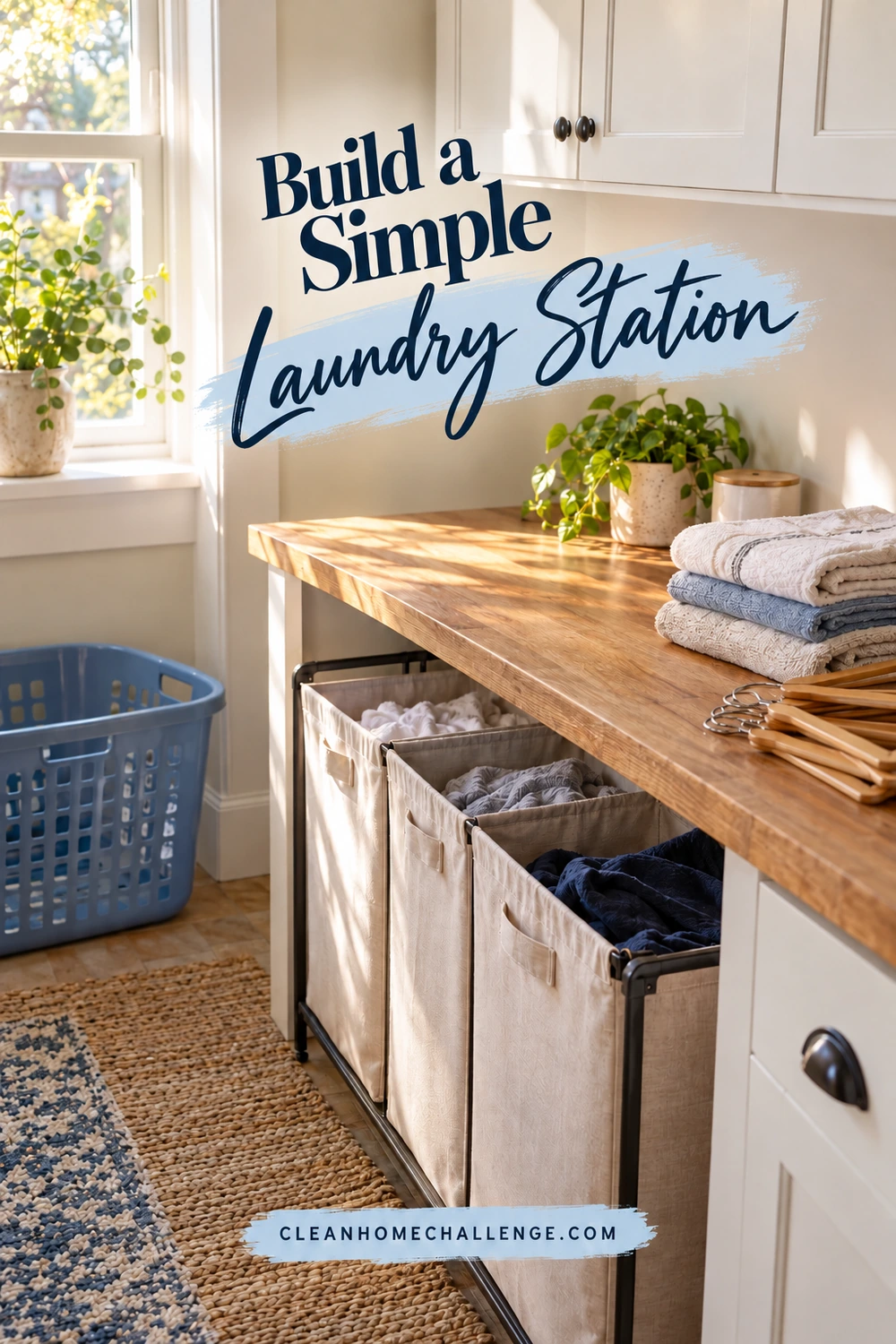
Build a Simple Laundry Station
Make the next step easy to see and easy to reach. Start with what you already own; matching baskets are optional.
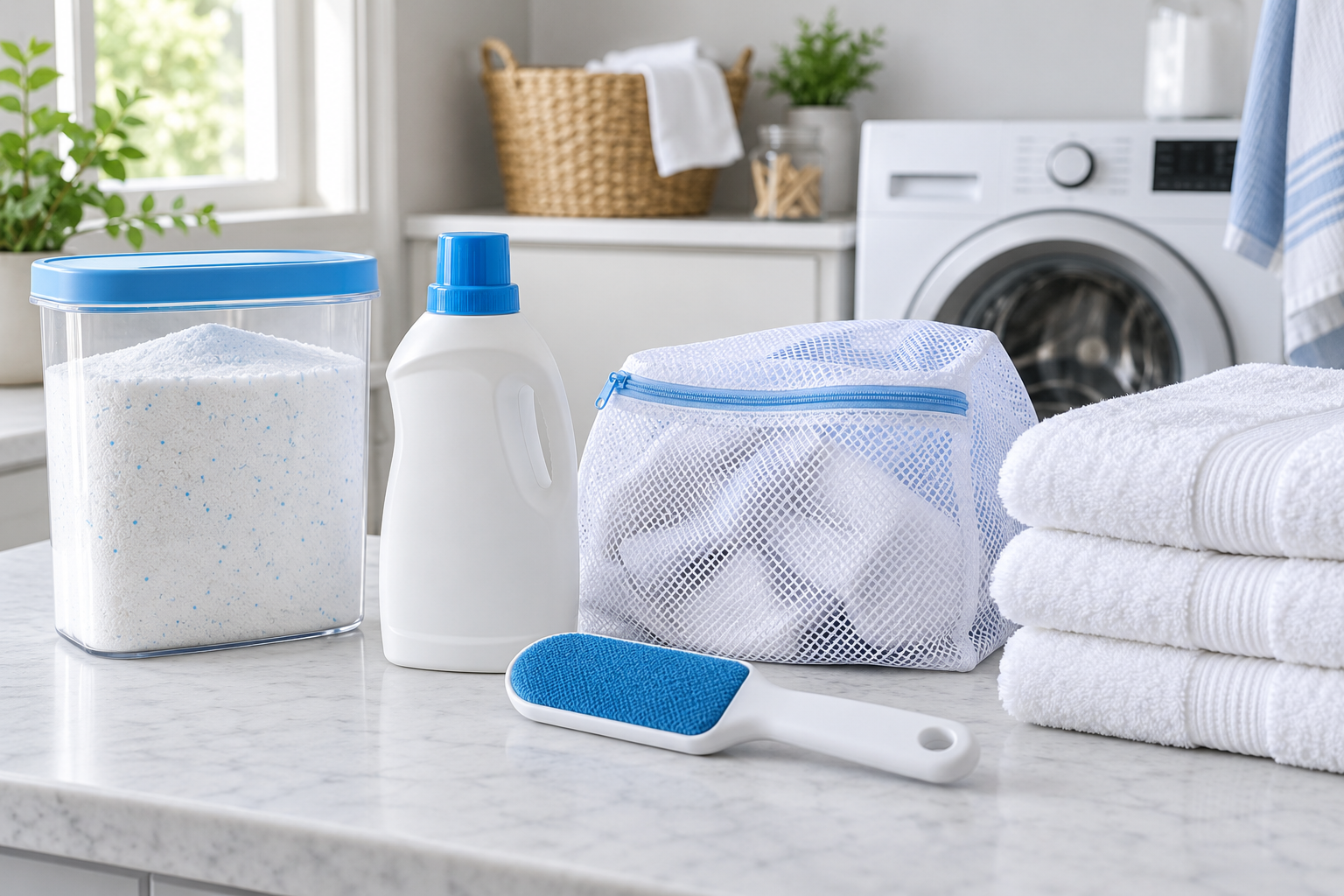
Your basic setup needs:
- A hamper or collection point where clothes usually come off.
- A basket you can carry comfortably, or a wheeled option on a suitable route.
- Detergent appropriate for your machine and laundry.
- A small, clear surface for sorting and folding.
- Hangers and a drying rack or clothesline if you use them.
- A timer or phone reminder that you will actually notice.
A divided hamper can reduce sorting later, but do not make categories more complicated than your household can maintain. You might separate light and dark everyday clothes, then keep towels or special-care items apart when their washing needs differ. Give stained items an obvious place for an adult to check before washing. Let damp items dry safely before adding them to a waiting hamper.
Keep laundry products in their original containers with their labels intact. Close them after use and store them securely away from children and pets; packets belong locked away, out of children's sight and reach. Decorative jars are a poor trade for safe storage. CPSC laundry-packet safety advice
Use the folding surface as a short stop, rather than another collection zone. A small clear section of a bed or dining table can work if it is available when you need it. A folding board is optional; try one only if it makes the job easier for someone in your household.
Finally, walk the put-away route. If a basket is too heavy, the linen shelf is unreachable, or drawers are jammed, fix that obstacle before buying more organizers. Two lighter trips or a reachable shelf can be more useful than an elaborate laundry-room makeover.
Choose Your Daily Laundry Anchors
An anchor is something you already do that reminds you to move the load forward. Choose three that fit your day: one to start, one to transfer, and one to put away.
For someone home during the day, the pattern might look like this:
- After breakfast: Select and start a compatible load.
- At the cycle-end reminder: Transfer it to the appropriate drying method.
- After lunch or dinner: Fold or hang the dry items and put them away.
A household away all day can use an early-evening window instead, provided the actual wash and dry times fit before bed. If they do not, choose a different washing day or air-dry suitable pieces and finish putting them away once dry. Do not squeeze the routine into an unsafe deadline.
Never run the dryer while asleep or away from home. NFPA specifically advises switching it off before leaving home or going to bed. Plan a safe drying window rather than depending on an overnight cycle. NFPA clothes-dryer safety
If a weekly outline helps, try this flexible example:
- Monday: A ready load of everyday clothing.
- Tuesday: Towels, when due and compatible.
- Wednesday: The clothing load most needed next.
- Thursday: Sheets or another due household load.
- Friday: A ready clothing load for the weekend.
- Saturday: Laundry catch-up or a planned extra load.
- Sunday: Check supplies and hampers; wash only if needed.
These are possible slots, not instructions to wash everything weekly or run seven loads. Split items with different care requirements, move categories around, and leave empty slots empty. Whirlpool's scheduling guidance likewise recommends considering laundry volume, available time, special circumstances, and machine capacity. Whirlpool laundry-schedule guide
Set a reminder for the next action, such as “move washing to rack,” rather than the vague word “laundry.” The reminder should tell whoever sees it what needs doing.

Sort, Wash, and Dry With Care
A simpler schedule still needs sensible fabric care. Before loading, check pockets, read unfamiliar care labels, and separate items with incompatible colors, fabric weights, soil levels, or washing instructions. Pretreat a stain only with a product suitable for that fabric and stain, following its directions and testing an inconspicuous area when appropriate.
Load loosely according to your machine's manual. More clothing squeezed into the drum does not make the routine more efficient if the load cannot move properly. Follow the detergent label and machine instructions for the amount and dispenser placement; do not assume every product or machine uses the same dose. These basics are covered in Whirlpool's laundry guide.
For suitable everyday loads, cold water can be a practical energy-saving choice. ENERGY STAR recommends cold washing for many loads, while noting that some soils need a different approach. Let garment labels, detergent instructions, and any relevant hygiene guidance determine exceptions. Cold washing is not a claim that clothing has been disinfected. ENERGY STAR laundry tips
Move washed items to their appropriate drying method promptly. Check treated stains before heat-drying, and follow the stain-product instructions if treatment needs repeating. Choose dryer settings from the care labels; items marked for air-drying belong on a suitable rack, line, or flat surface as directed.
Make dryer care part of the handoff. Clean the lint filter before and after each cycle, use the dryer only with the filter correctly fitted, and keep venting maintained according to the manual. Have restricted or damaged venting addressed rather than simply extending drying time. US Fire Administration dryer-safety guidance
Keep the product routine uncomplicated. Do not improvise cleaning-product mixtures, and never combine chlorine bleach with ammonia, vinegar, acids, or other cleaners. Use any laundry additive only as its label and the garment and appliance instructions allow. More products create more decisions; they do not replace correct washing and drying. Follow label precautions for ventilation and protective gloves where required. CDC bleach-safety guidance

Make Put-Away a Family Job
A family laundry routine works better when ownership includes noticing the job, rather than waiting for one person to issue reminders. Agree on who owns each load or each complete stage, based on ability and availability.
For example, one adult might own Monday and Thursday loads from hamper to closet, while another takes Tuesday and Friday. Alternatively, one person can start a load and another can own drying and put-away, as long as the handoff is clear and accepted. “The dark load is ready for the dryer, and you're taking it through to the drawers” is more useful than “Can you help later?”
Give children suitable jobs with appropriate supervision. A younger child may match clean socks or carry a few washcloths to a reachable drawer. A more capable child can sort their clean clothes or put away a small stack. Adults should control access to laundry chemicals, and appliance tasks need instruction and supervision appropriate to the child. There is no universal birthday when every child is ready to use the machines.
Reduce folding where it adds little value. Socks, underwear, or pajamas may work well in simple drawer categories. Hang clothing that benefits from hanging. Reserve careful folding for items where it makes storage easier or prevents a problem you actually care about.
Try a short household put-away window after dinner: everyone returns their own dry clothing before moving to the next activity. Start with one manageable basket, not every neglected pile in the house. If you live alone or carry most of the household work, sit to sort when helpful and choose the shortest storage route you can manage.
Check the receiving spaces, too. An overfilled drawer turns a quick task into a wrestling match. Make room for the clothes in regular use so putting them away takes less effort than leaving them in the basket.

Adapt the Routine to Your Home
The name of the routine should never overrule your household's reality. Use the finish-the-load principle, then adjust the number and timing of loads.
When you generate more than seven loads a week
Count a normal week's actual loads, including towels, bedding, uniforms, and any separately washed items. If you generate ten loads and finish seven, three remain; that is a capacity gap, not a motivation problem. Add planned second-load slots on suitable days or reserve a longer block. Protect enough drying and put-away time for those extra loads.
When your household has less laundry
Keep the daily hamper check but wash only when there is a useful compatible load or an urgent item. Three well-chosen washing days may fit better than seven tiny loads. Do not add clean clothes just to fill a machine.
When you air-dry
Plan backward from available rack or line space and the expected drying conditions. A load may need more than a day to dry, so “finish today” becomes “keep this load moving and put it away when fully dry.” Avoid starting another load that has nowhere suitable to dry. Space items appropriately, follow flat-drying instructions, and provide suitable room ventilation when drying indoors. Keep racks clear of exits and heat sources.
When you use a laundromat or shared machines
Use the daily habit to gather, sort, and check what is needed. Wash on practical visit days, following the facility's rules and machine capacities. Pack compatible loads separately, include time for drying, and return clean items to drawers after getting home. Daily sorting can support a twice-weekly washing schedule without requiring seven trips.
When you have a compact or combination machine
Check the manual's washing and drying capacities separately. A machine's wash capacity is not automatically its wash-and-dry capacity. Measure success in usable finished loads rather than trying to copy another family's basket size. Bulky items may need a different machine or care method. Check your model rather than applying a universal fill rule. Whirlpool combination-machine guidance
When energy, mobility, or time is limited
Keep essential clothing moving first, use lighter baskets, and simplify storage. A seated folding spot or help with carrying may remove the hardest step. During an unusually demanding week, maintenance can mean having tomorrow's necessary clothes ready. The rest of the plan can resume when there is room for it.

Catch Up Without a Laundry Marathon
When several baskets are waiting, begin by separating clean laundry from dirty laundry. Do not rewash clean clothing simply because it has been sitting unfolded; inspect it and decide what actually needs washing. Put away one existing clean basket before adding to the backlog.
Next, identify immediate needs: work clothes, school items, underwear, or towels needed soon. Sort compatible items into realistic loads, and choose the first one you can take all the way through. Leave the rest contained rather than spreading every hamper across beds and floors.
Use a small recovery plan:
- Finish any wet load that already needs drying.
- Put away dry laundry that is blocking the next step.
- Run the highest-priority compatible load.
- Add one extra load only when drying space and a safe finishing window are available.
- Recheck what remains before planning tomorrow.
If Saturday is your usual laundry catch-up day, give it a defined role. Use it for the load displaced by a busy evening or for a planned additional category. Avoid treating Saturday as an automatic rescue for five days of abandoned clean baskets.
Repeated pileups usually point to a specific obstacle. If wet washing waits, improve the transfer reminder or start at a different time. If dry clothing waits, make put-away easier or change ownership. If every stage keeps moving and dirty hampers still grow, schedule more capacity rather than blaming the person doing the work.
Missed a day? Restart with the load most needed now. There is no need to double everything automatically or “pay back” an empty calendar square. If washing was forgotten long enough that it smells unpleasant, rewash using suitable care and product instructions before drying; fragrance is not a substitute for cleaning.


CLEANERS CLUBHOUSE
Make Laundry Catch-Up Feel More Manageable
Use Saturday to catch up without letting laundry take over the whole weekend. Inside the Cleaners Clubhouse, practical routines and printable support help you keep washing, folding and household jobs moving.
Start With One Finished Load
Try the routine for a week without reorganizing your entire home. Pick one manageable load, choose its drying window, and decide who will put it away. Make those decisions before starting the machine.
Use this quick daily check:
- Do we have a useful compatible load or something needed urgently?
- Is there space and time to dry it safely?
- Who owns the next step, and what will remind them?
- Is yesterday's dry laundry back where it belongs?
- Are products secured and the laundry area ready for the next use?
At the end of the week, review what happened. Count your completed loads, notice where baskets waited, and change one thing. That could be a later start time, an extra washing slot, a smaller carrying basket, or a shared put-away habit. Keep the parts that already work.
A one load a day laundry routine is useful when it makes clean clothes easier to find and laundry easier to manage. Some weeks that means a daily load; others need fewer washing days or planned extra capacity. The steady habit is checking what your family needs and following through on the next useful step.
Today, begin with one load you can finish. Tomorrow's routine can grow from that.