
THIS POST MAY CONTAIN AFFILIATE LINKS. PLEASE READ MY DISCLOSURE FOR MORE INFO.
Reusable cleaning cloths are economical, effective and much less wasteful than grabbing a fresh paper towel for every job. But there is one catch: a cloth only helps you clean when the cloth itself is clean. If it stays damp in a bucket, moves from the toilet to the kitchen or comes out of the wash coated in fabric softener, it can spread grime instead of lifting it.
The good news is that cloth hygiene does not need to become another complicated household system. A few clear rules—separate the jobs, wash after use, dry completely and retire damaged cloths—will keep your routine simple and safe.
Disclosure: This post may contain affiliate links. As an Amazon Associate, Clean Home Challenge earns from qualifying purchases. If you make a purchase through these links, we may earn a small commission at no extra cost to you. This helps us keep creating practical cleaning tips, routines and resources for busy families! 🧽
Why Reusable Cleaning Cloth Hygiene Matters
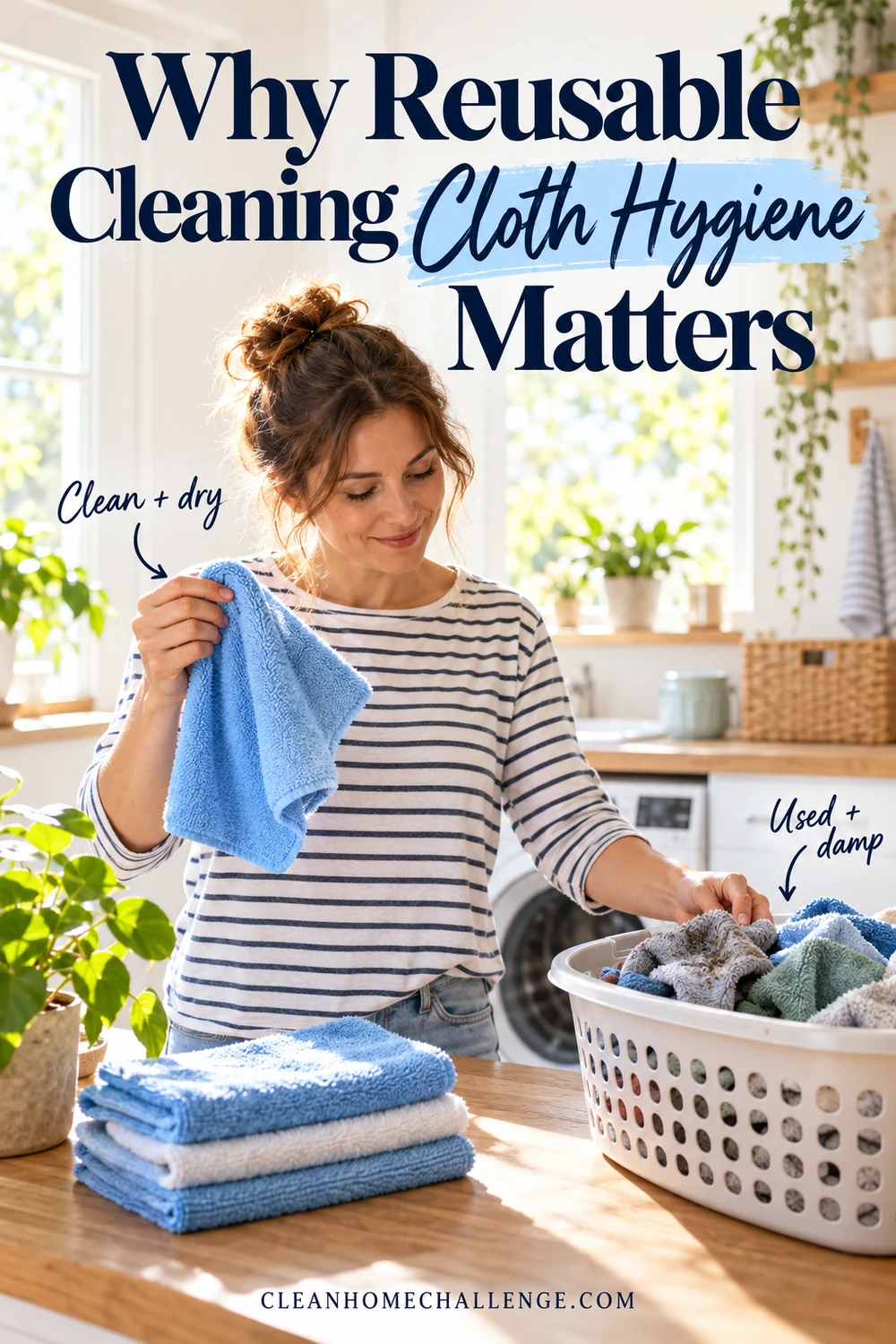
A reusable cloth picks up food residue, grease, dust, hair and moisture as it works. Those materials do not disappear when the cloth is folded and left on the counter. A damp, dirty cloth can develop odor, transfer soil to the next surface and make an otherwise clean room feel stale.
The most important distinction is between cleaning and disinfecting. Cleaning removes dirt and many germs with soap or detergent and water. Disinfecting uses a registered product according to its label, including the stated contact time. A normal laundry cycle can clean a cloth very well, but you should not promise that every cloth is “disinfected” unless you have followed a product or appliance cycle that is specifically designed and labeled for that purpose.
For an everyday family home, focus on the basics:
- Use a fresh cloth for a new cleaning session or whenever the cloth becomes visibly dirty.
- Keep kitchen, bathroom, toilet and general dusting cloths separate.
- Move used cloths to a ventilated holding spot instead of leaving them wet in a sink or bucket.
- Wash them using the warmest appropriate setting allowed by the care label.
- Dry them completely before stacking or storing them.
Sort Cloths by Job and Soil Level
Color-coding is one of the easiest ways to prevent cross-contamination. The exact colors do not matter; consistency does. For example, you might use blue for general surfaces, green for the kitchen, yellow for the bathroom and red only for the toilet area. Keep a small card inside the cleaning cupboard until everyone in the household remembers the system.
Also sort by soil level. A lightly dusty cloth does not need to share a load with a rag covered in cooking oil, pet waste, paint, solvents or strong chemicals. Shake loose crumbs and debris into the trash before washing. Keep heavily greasy or chemically contaminated rags separate and follow the product label and local disposal guidance; some oil- or solvent-soaked rags can create a fire hazard and should not go through an ordinary household wash.
Do not mix cleaning chemicals on a cloth or in the washer. In particular, never combine bleach with ammonia, acids or other cleaners.

How to Wash Reusable Cleaning Cloths Step by Step
- Collect used cloths promptly. Let a damp cloth air out in a ventilated basket until laundry time rather than sealing it wet in a plastic bag.
- Check the care label. Microfiber, cotton terry and specialty polishing cloths can have different temperature and drying limits.
- Remove loose debris. Shake crumbs, hair and dry soil into the trash. Rinse away excess product if the manufacturer directs you to do so.
- Separate the load. Keep reusable cleaning cloths away from clothing, bedding and delicate items. Separate very greasy rags from normal household cloths.
- Use detergent, not extra detergent. Follow the detergent dose for the load size and soil level. Too much detergent can leave residue in the fibers.
- Choose the warmest appropriate cycle. Follow the cloth’s care label and your washer instructions. The USDA advises washing kitchen towels frequently on a hot cycle, but microfiber brands often specify a lower maximum temperature.
- Run an extra rinse if needed. This can help when cloths feel slick, smell strongly of detergent or have been used with a residue-heavy cleaner.
- Dry completely. Use a dryer only if the label permits, or air-dry the cloths with space between them.
If a cloth still smells after a correct wash and full dry, rewash it promptly. A lingering sour or musty odor is a sign that soil, product residue or moisture remains.

How to Wash Microfiber Without Coating the Fibers
Microfiber works because its fine split fibers grab dust, oils and moisture. Fabric softener and dryer sheets can coat those fibers and reduce their performance. For that reason, wash microfiber with a small, appropriate amount of detergent and skip fabric softener unless the cloth manufacturer explicitly says otherwise.
Avoid washing microfiber with lint-heavy cotton towels. The microfiber can attract lint, leaving the cloth less pleasant to use. A mesh laundry bag can help keep small pads and cloths together, but do not overfill it; water and detergent still need to move through the fabric.
Temperature guidance varies by brand. Some microfiber products tolerate a warm wash, while others allow hotter settings. The safest rule is to follow the sewn-in care label or the manufacturer’s current instructions. If the label is missing, use a conservative warm wash and low-heat or air-dry method rather than assuming the cloth can handle high heat.


When Hot Water or a Laundry Sanitizer Makes Sense
Hotter water can be useful for kitchen towels and heavily soiled washable cloths when the care label permits it. It is not automatically the right choice for every microfiber cloth, and heat cannot compensate for overloading the washer or using too much detergent.
A laundry sanitizer may be reasonable after illness, a high-risk contamination event or when a healthcare professional recommends extra precautions. Use only a product labeled for laundry, check that it is compatible with the cloth and washer, measure it exactly and follow its required cycle and contact instructions. Never pour a sanitizer into the same compartment or load with incompatible chemicals.
For routine wiping in a generally healthy home, thorough cleaning, frequent washing and complete drying are usually the practical priorities. If someone in the household has a weakened immune system or a contagious illness, follow their clinician’s guidance and the CDC’s current cleaning and laundry advice.

Dry Cloths Completely Before Storage
Drying is not an afterthought. A cloth that is folded while damp can quickly smell musty, even if it just came out of the washer. Give air-dried cloths room: drape them in a single layer over a rack, rail or line instead of stacking them on top of one another.
If you use a dryer, select the heat level allowed by the label and avoid dryer sheets on microfiber. Check thick hems and folded corners before putting cloths away, because those areas often hold moisture longer than the center.
Store clean, fully dry cloths in a dry cupboard or open caddy. Keep the clean stack physically separate from the ventilated used-cloth basket so nobody accidentally grabs a cloth that is waiting for laundry.

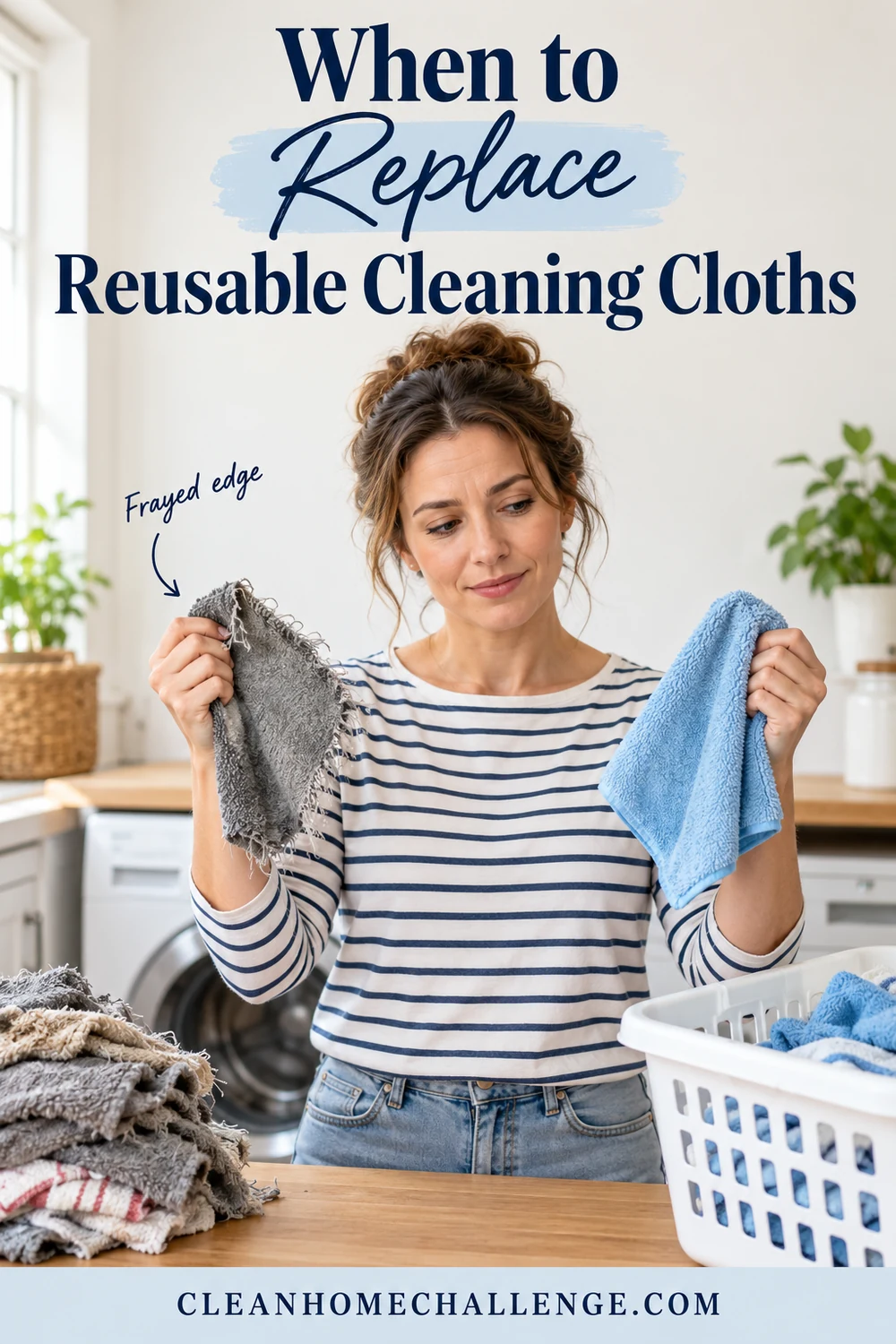
When to Replace Reusable Cleaning Cloths
There is no universal replacement date. A well-made cloth that is washed correctly may last a long time, while a frequently used kitchen cloth may wear out sooner. Replace or downgrade a cloth when it:
- stays sour or musty after a proper wash and complete dry;
- has a greasy, waxy or stiff feel that does not rinse out;
- has holes, badly frayed edges or damaged seams;
- no longer absorbs water or picks up dust effectively;
- has a permanent contamination concern; or
- leaves lint, streaks or residue on surfaces.
A worn but clean cloth can sometimes be moved to a lower-stakes utility job, such as wiping outdoor furniture. Mark it or store it separately so it does not drift back into kitchen or bathroom use. Discard any rag contaminated with a hazardous substance according to the product label and local waste rules.
CLEANERS CLUBHOUSE
Build a Safer, Simpler Cleaning Routine
Clean confidently with practical guidance that helps you choose sensible products and use them correctly. The Cleaners Clubhouse combines safer cleaning support with realistic routines, worksheets and challenges.
Build a Simple Cloth Rotation
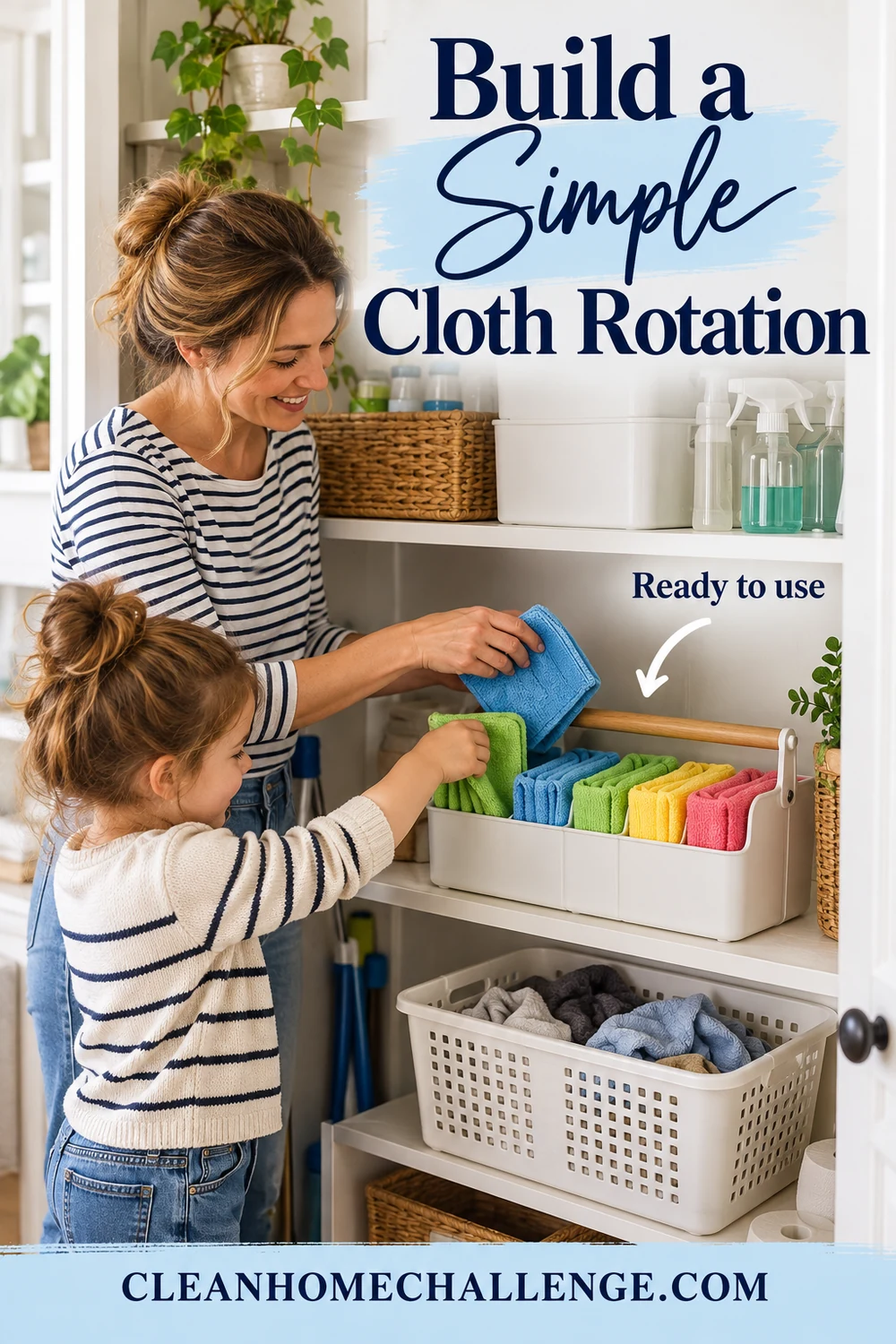
You do not need dozens of cloths. A small rotation is enough for most homes. Start with 12: four kitchen cloths, three bathroom cloths, three general-purpose cloths and two utility cloths. Adjust the mix to match how often you clean and do laundry.
Keep one clean set in a grab-and-go caddy, one set in use and one set moving through the wash and dry cycle. Place a ventilated used-cloth basket near the laundry, not under the kitchen sink where damp cloths are easy to forget. Once a week, check that the clean supply is dry, the used basket is empty and no cloth has slipped into the wrong color group.
That simple loop—fresh cloth, correct zone, prompt wash, complete dry—is the whole system. It keeps reusable cloths convenient without turning cloth care into a project of its own.
Quick cloth-care checklist
- Assign one color to each cleaning zone.
- Use a fresh cloth when the current one is dirty or after a higher-risk job.
- Keep greasy and chemically contaminated rags separate.
- Follow each cloth’s care label and use the warmest appropriate setting.
- Skip fabric softener and dryer sheets on microfiber.
- Dry every cloth completely before storage.
- Replace cloths that remain smelly, coated, frayed or ineffective.
Sources
- CDC: When and How to Clean and Disinfect Your Home
- CDC: Cleaning and Disinfecting with Bleach and Water
- CDC: Laundry and Bedding
- USDA: Kitchen Towels and Food Safety
- EPA: What Is the Difference Between Cleaning, Sanitizing and Disinfecting?
- E-Cloth: Care and Laundry Instructions