THIS POST MAY CONTAIN AFFILIATE LINKS. PLEASE READ MY DISCLOSURE FOR MORE INFO.
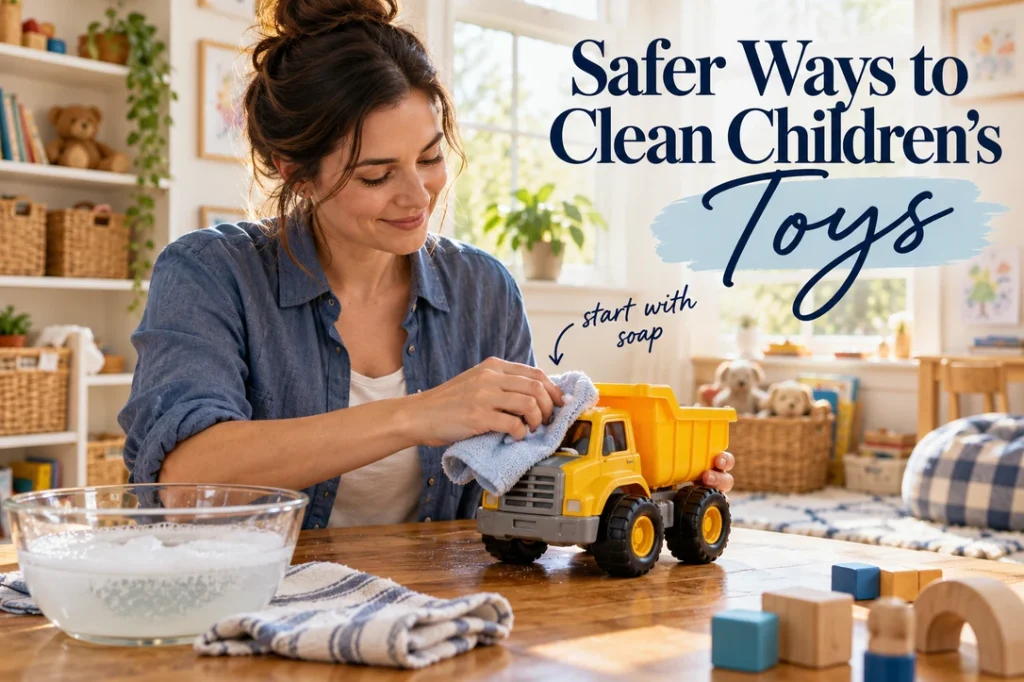
Toys end up in hands, mouths, snack crumbs, bathwater, and every corner of the living room. You do not need to disinfect an entire playroom every night. A manageable plan starts by cleaning visible dirt, choosing a method that suits each toy, and letting everything dry before play.
Quick answer: Wash sturdy, water-safe plastic toys with soap and water; launder washable soft toys according to their care labels; wipe wood and electronic toys without soaking them. Clean mouthed or visibly dirty toys promptly. Consider a suitable sanitizer or disinfectant when illness or a childcare rule calls for it, following the product label exactly. CDC home guidance says routine cleaning is enough in most homes, while CDC childcare guidance has additional rules for shared, mouthed toys.
Set aside about 10 minutes for a small basket of hard toys, plus drying time. You will need mild dish soap, clean cloths, a soft brush for crevices, a towel or rack, and perhaps a mesh laundry bag. Keep cleaning products out of children's reach throughout.
Disclosure: This post may contain affiliate links. As an Amazon Associate, Clean Home Challenge earns from qualifying purchases. If you make a purchase through these links, we may earn a small commission at no extra cost to you. This helps us keep creating practical cleaning tips, routines and resources for busy families! 🧽
Before You Clean: Sort Toys by Material
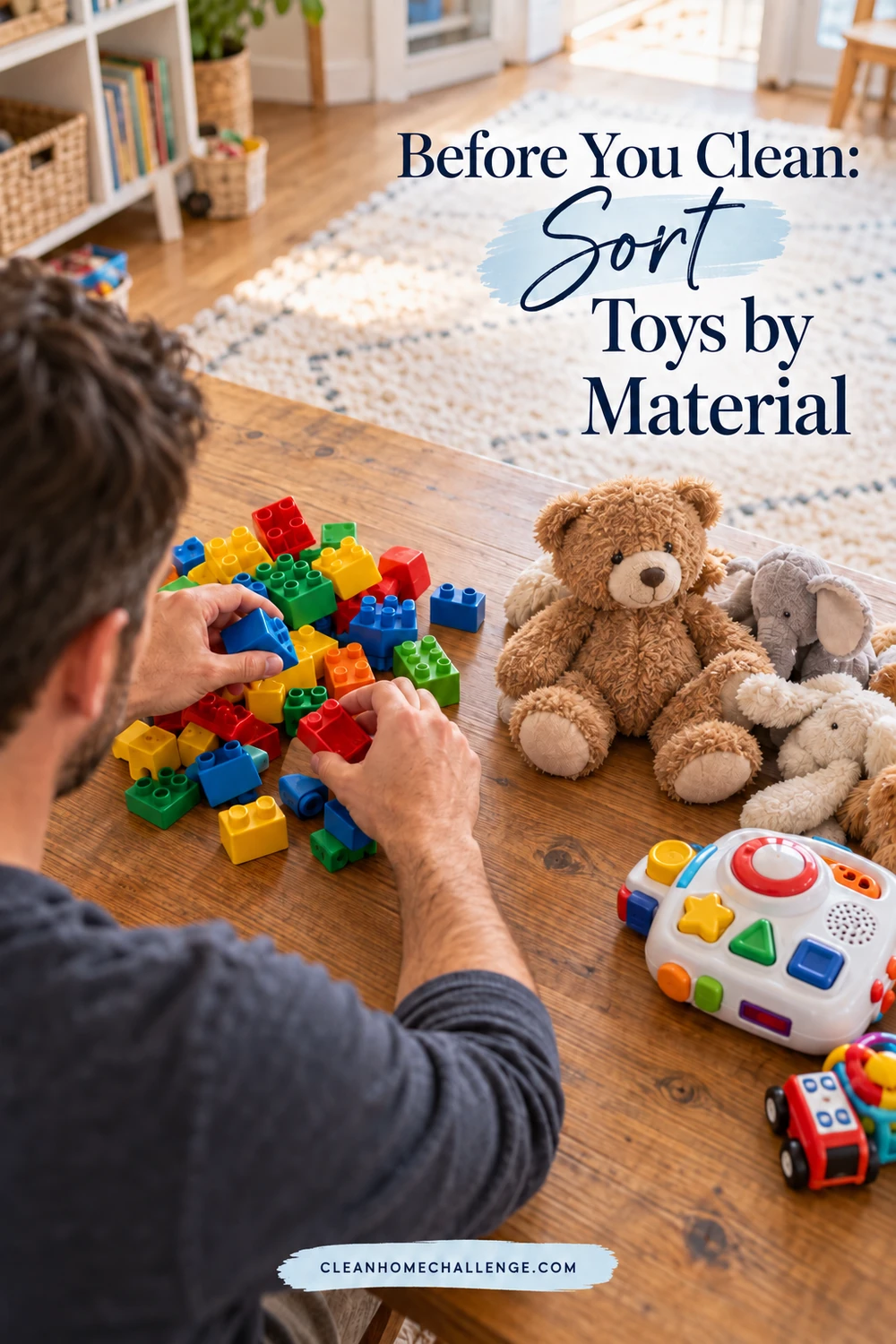
Put toys into a few sensible groups: sturdy plastic without batteries, soft toys with care tags, wood or cardboard, and electronics or toys with battery compartments. Check for loose parts, cracked plastic, peeling paint, exposed batteries, or a damaged seam. Set damaged toys aside rather than trying to wash them back into safe use.
Read the maker's care instructions first, particularly before using a washing machine, dishwasher, hot water, sanitizer, or disinfectant. A toy's appearance alone does not establish that it can withstand heat or soaking. If a cloth toy lacks instructions, try a cautious surface clean and dry it thoroughly.
Make a separate pile for anything a child has put in their mouth or that has been contaminated by bodily fluids. Handle those promptly, especially if several children share the toys. In childcare settings, the CDC says to keep mouthed toys out of circulation until they have been cleaned and sanitized.
Wash Sturdy Plastic Toys With Soap and Water
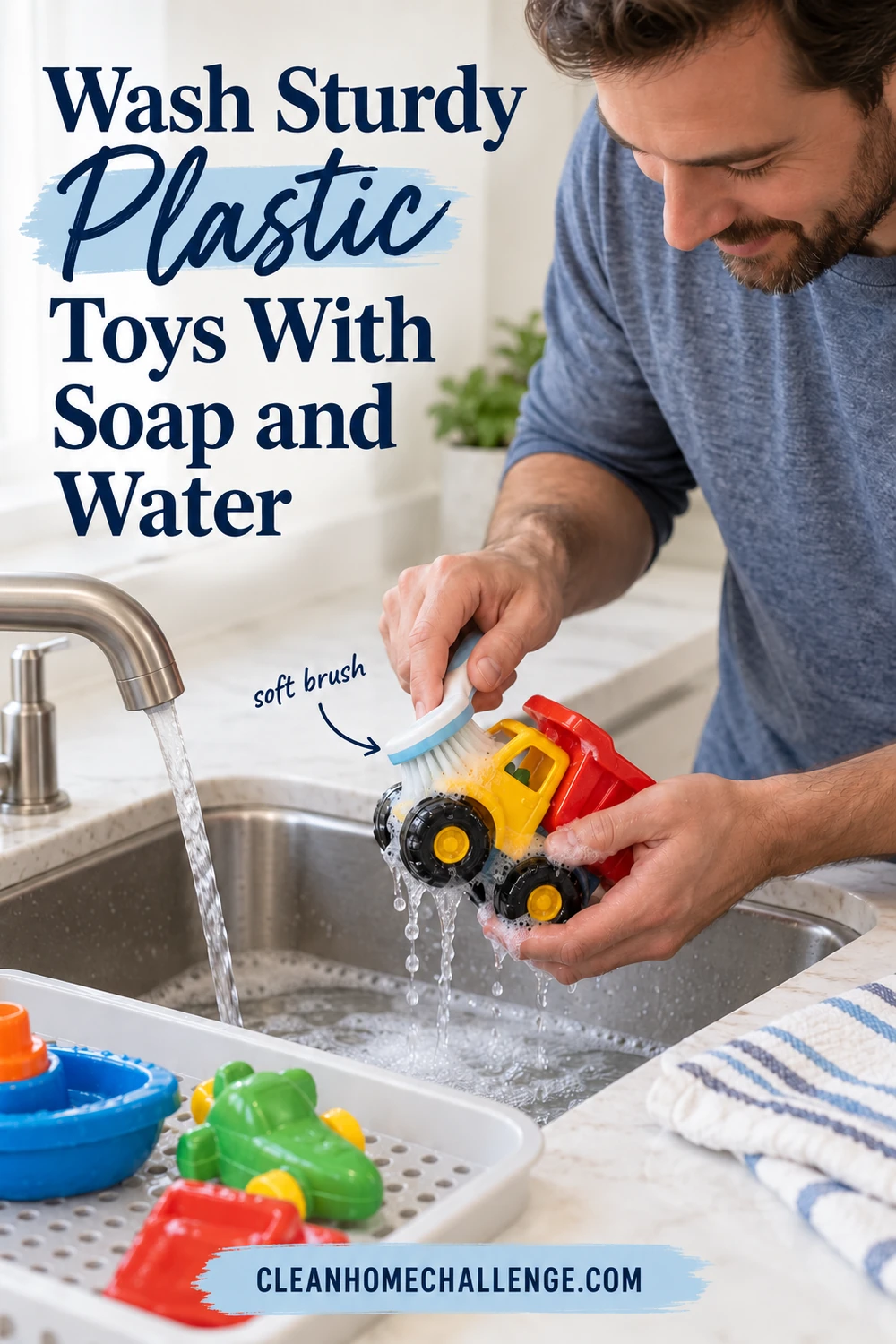
For a simple one-piece, water-safe plastic toy, remove obvious dirt, then wash it in warm soapy water. Use a soft brush around wheels, grooves, and joins, and rinse away soap. Place it on a clean towel or rack so water can drain. If a hollow bath toy holds water inside, squeeze it out and inspect for trapped moisture; replace an item you cannot adequately clean and dry.
Do not soak a toy with batteries, speakers, fabric inserts, stickers that can lift, or openings that could trap water. Wipe those instead. Likewise, use a dishwasher only if the manufacturer's instructions explicitly allow it and specify a suitable cycle or rack; high heat can warp parts or damage decoration.
Washing removes dirt that can interfere with later sanitizing or disinfecting. It is the useful first step even when a second treatment is warranted. A quick rinse alone may leave grime behind.
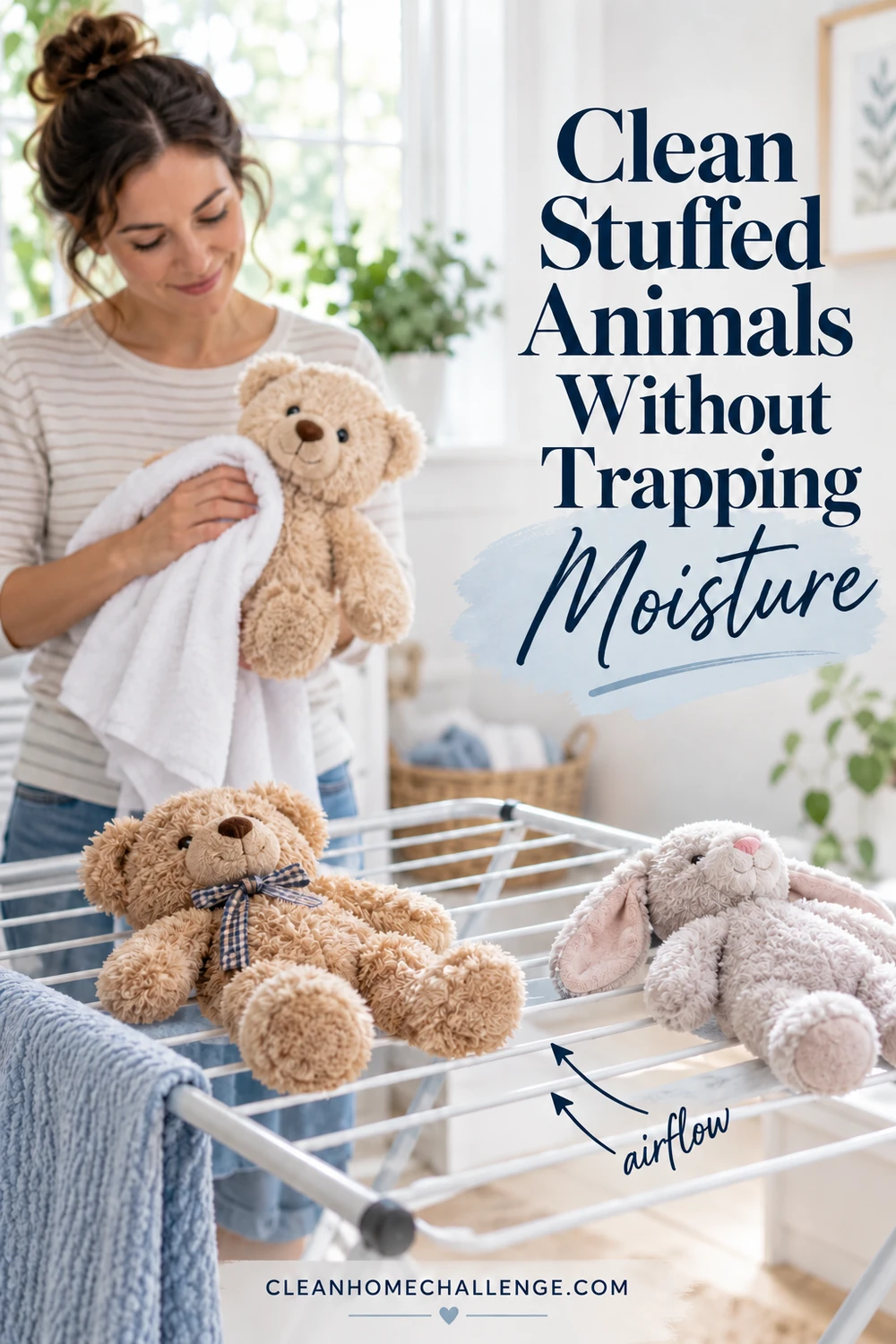
Clean Stuffed Animals Without Trapping Moisture
Start with the tag. If machine washing is permitted, secure loose accessories, put the toy in a mesh bag or pillowcase, choose the care-label settings, and dry it exactly as directed. A large plush toy or one with foam, electronics, glued features, or a sound box may not be washable in the machine.
For a surface-clean-only toy, use a cloth lightly dampened with mild soapy water on dirty areas, then wipe away residue with another lightly damp cloth if the care instructions permit. Avoid saturating stuffing. Let the animal dry completely in a ventilated spot before putting it in a basket or bed. Feel the thickest seam or center before declaring it dry.
If a toy has been exposed to vomit or another substantial spill and cannot be cleaned and dried effectively, replacing it may be more practical than trying to rescue it. Do not perfume a damp toy to hide an odor.
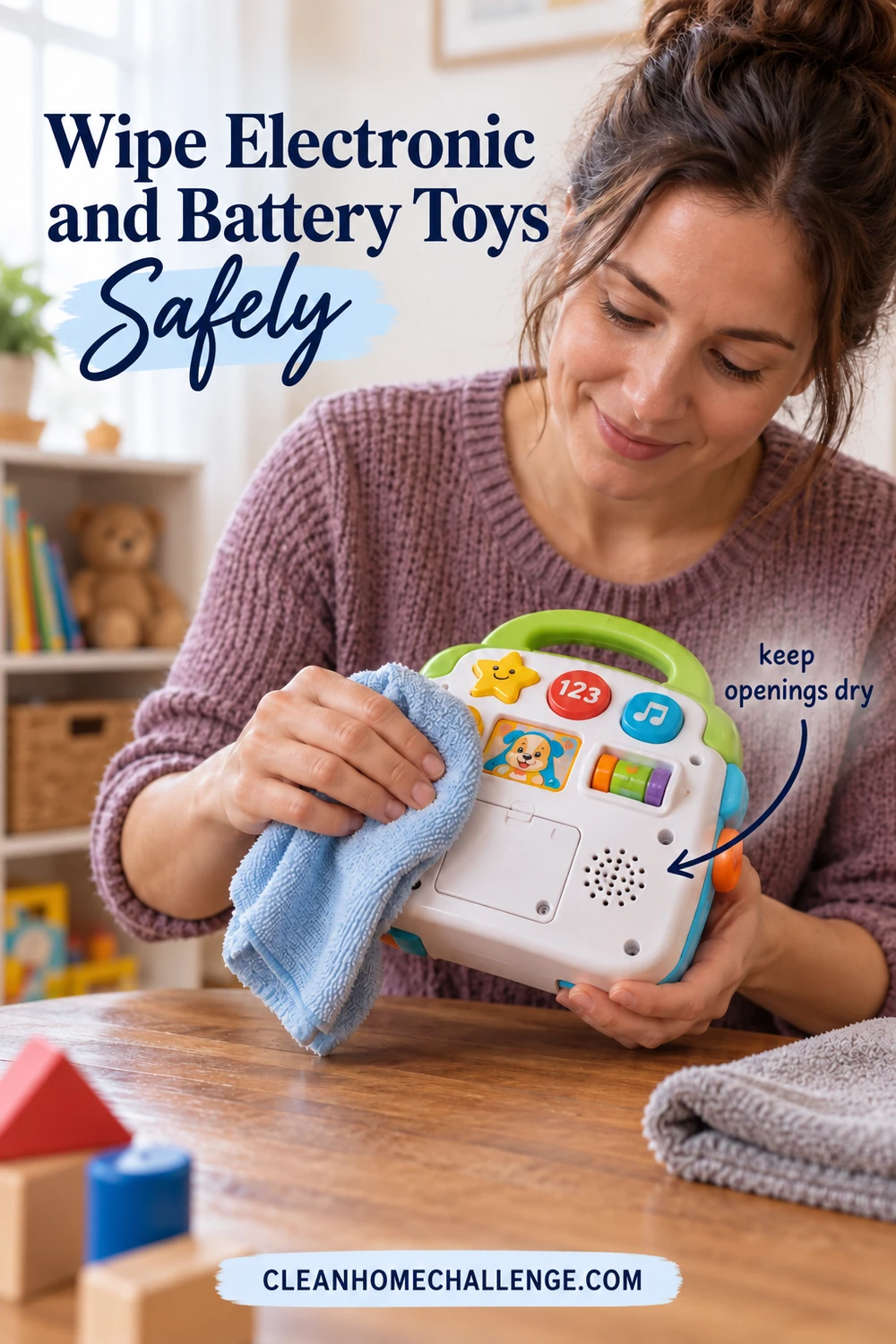
Wipe Electronic and Battery Toys Safely
Turn the toy off. If the maker's instructions permit it, remove batteries before cleaning. Use a lightly damp cloth to wipe the exterior, paying attention to handles and buttons, without pushing liquid into speakers, ports, seams, or the battery compartment. Use a dry cloth to finish and allow the toy to air-dry before switching it on or replacing batteries.
Never submerge electronics or spray cleaner directly onto them. If a specific disinfectant is needed, check both the toy maker's and product's instructions for compatibility, contact time, and any rinse requirement. If there is corrosion, leakage, or a damaged compartment, stop using the toy and follow the manufacturer's safety instructions.
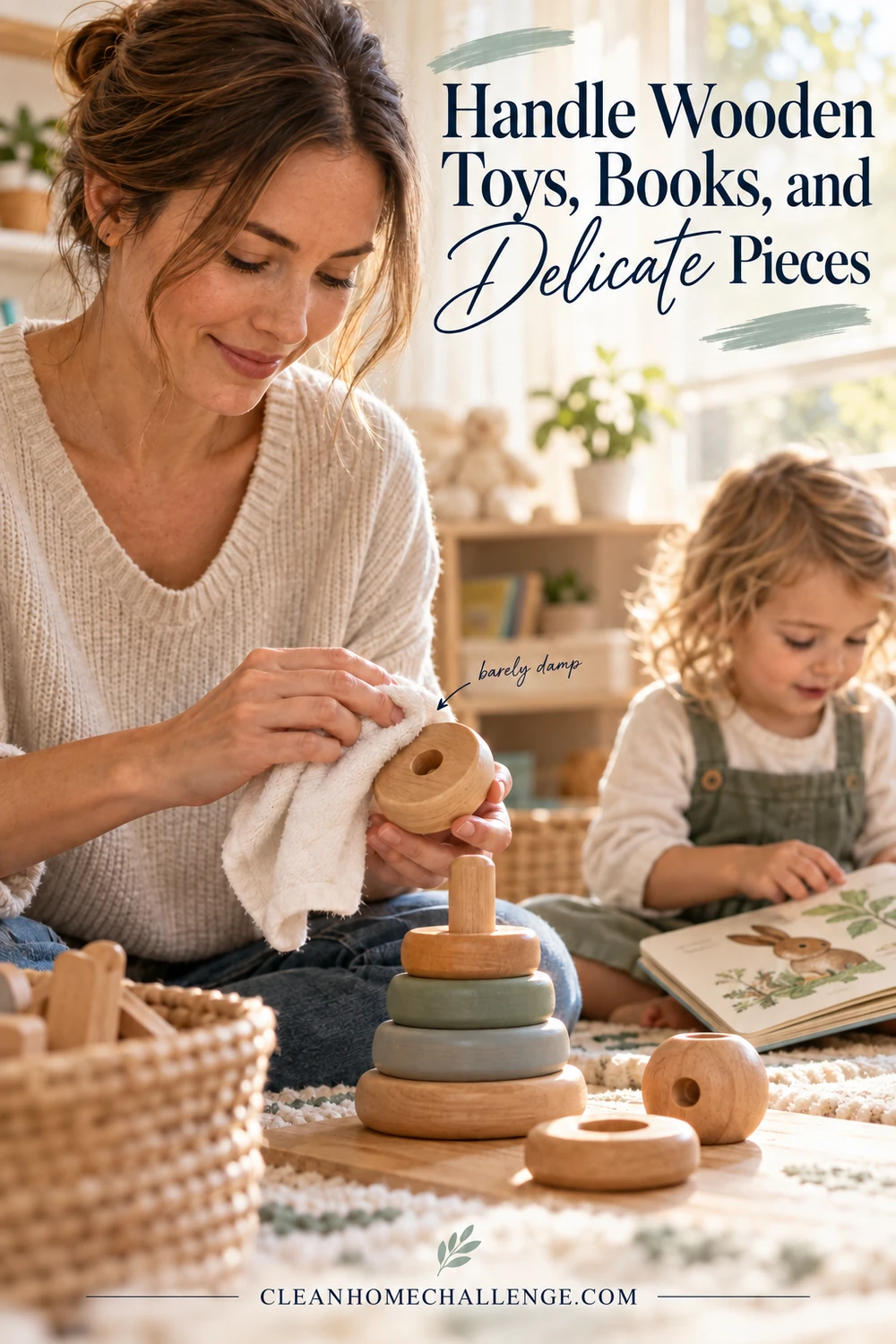
Handle Wooden Toys, Books, and Delicate Pieces
Dust first, then wipe sealed wooden toys with a barely damp cloth and dry them immediately. Water can swell unfinished wood, lift paint, or weaken glued joints. Check the manufacturer's instructions before applying any cleaner. Do not soak wood, and do not use the dishwasher.
For board books, wipe a wipeable cover or page with a lightly damp cloth if the finish tolerates it, avoiding the spine and page edges. Paper books should generally be kept dry: brush away crumbs and spot-clean only when appropriate. Allow everything to dry open or separated before stacking.
Take a gentle approach to musical toys, dolls with hair or painted faces, and mixed-material sets. Test a hidden spot and stop if color transfers. “Washable” on one component does not necessarily apply to the whole toy.

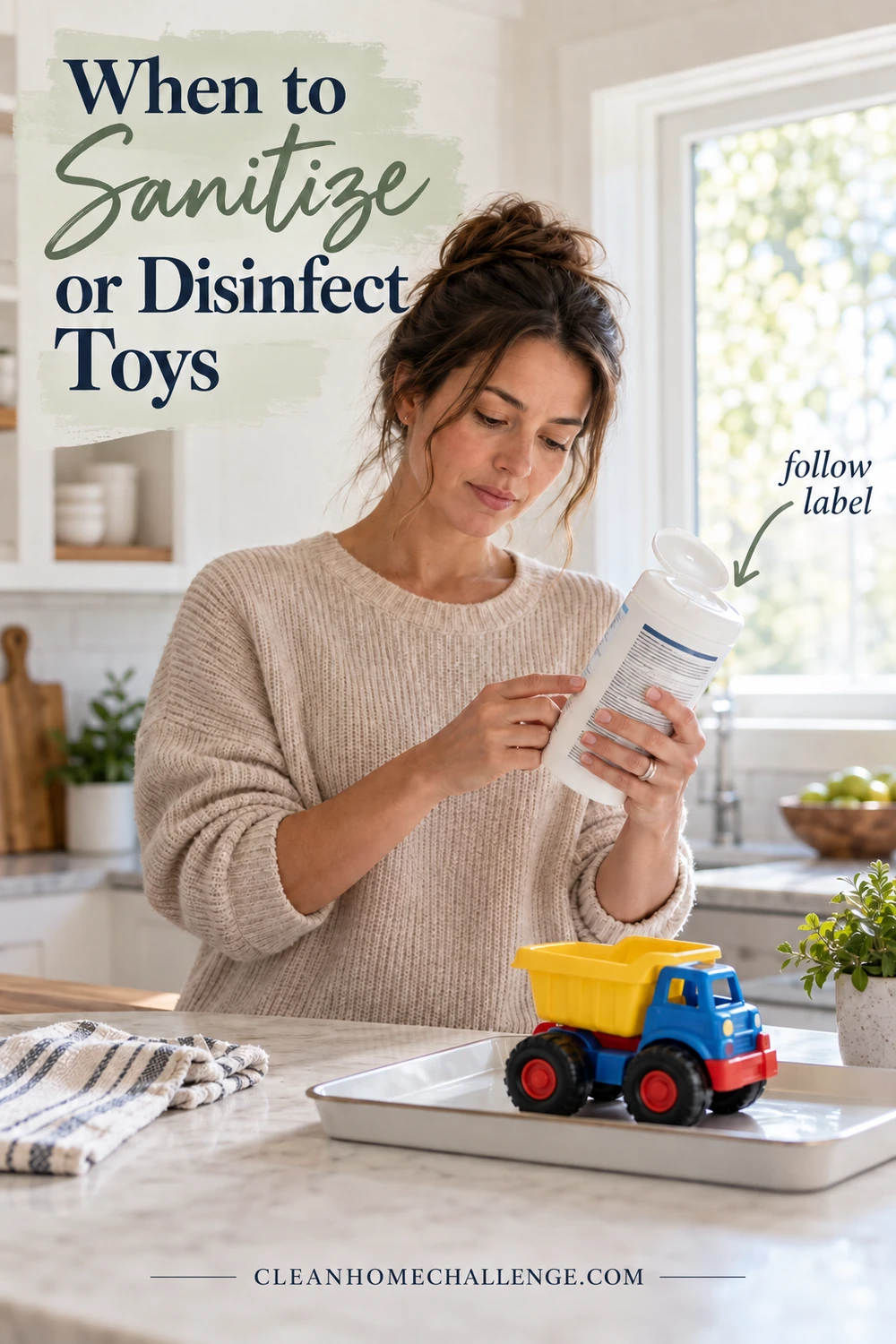
When to Sanitize or Disinfect Toys
The words matter. Cleaning removes dirt and many germs with soap or detergent and water. Sanitizing reduces germs to levels specified by a product's directions. Disinfecting kills specified germs on a surface when the label's directions are met. Routine home cleaning is usually sufficient; extra disinfection is more relevant when someone is ill, a toy has been contaminated, or a care setting has stricter rules. See the CDC's home guidance and early care guidance.
For a suitable hard, nonporous toy, clean first. Choose a product whose label allows use on that surface and follow the dilution, application, wet contact time, ventilation, and rinse instructions, especially for toys that may go into a mouth. Keep children away until the product's directions say the surface is ready and the toy has dried. Never mix cleaning chemicals, particularly bleach with ammonia or acids. Store products locked up or otherwise inaccessible. The American Academy of Pediatrics cautions families about children's exposure to these products.
Do not assume vinegar or an essential oil blend is an approved disinfectant. Avoid broad claims that a homemade mix kills particular pathogens; use an appropriately labeled product if that is the goal.
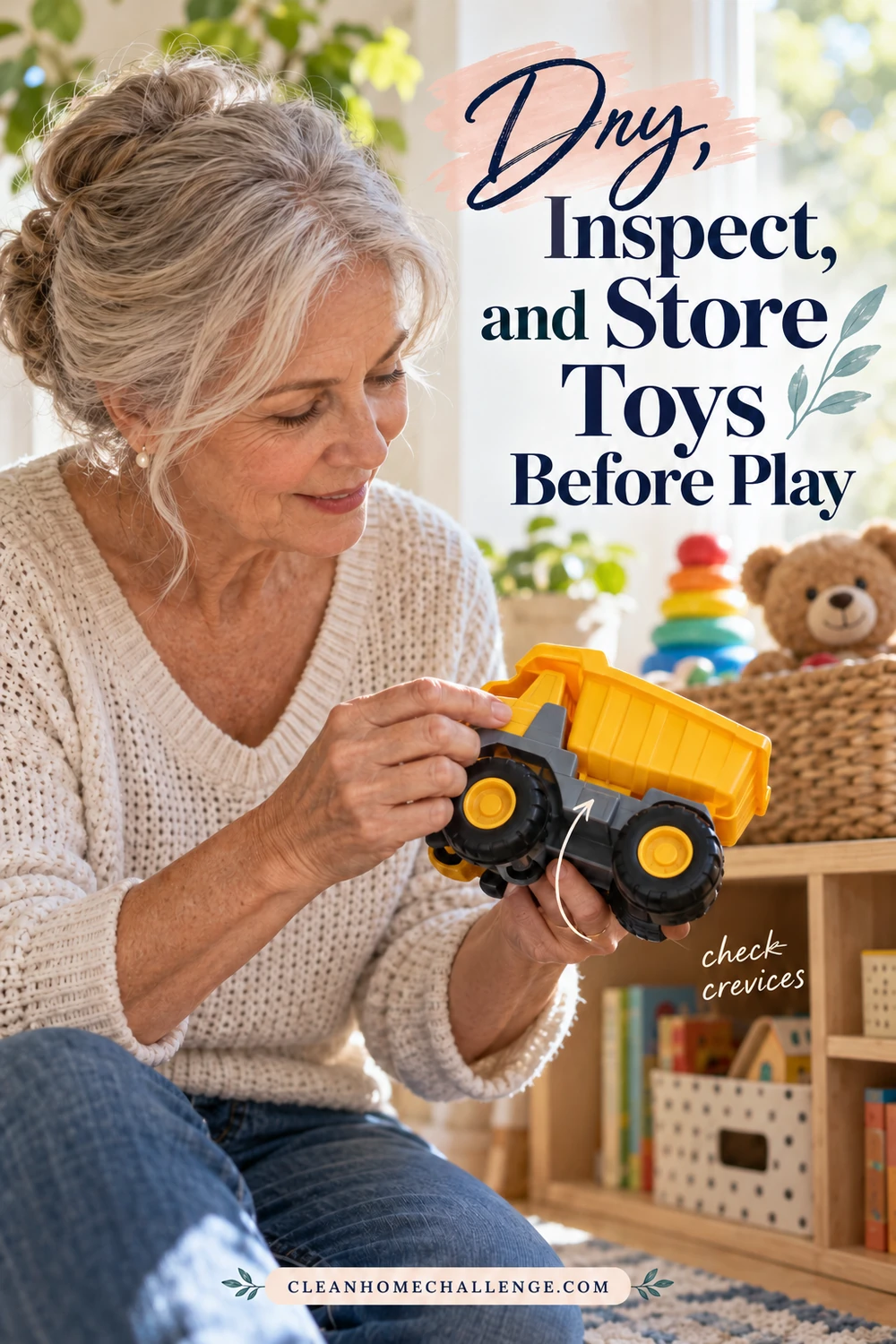
Dry, Inspect, and Store Toys Before Play
Let washable plastic pieces drain with gaps between them. Check wheel housings, seams, and hollow cavities for remaining moisture. Soft toys need enough time for their stuffing to dry. A toy that looks dry on the outside can still be damp inside.
Once dry, check for broken parts and return toys to clean, breathable storage. Keep a small “to wash” bin separate from ready-to-use toys; empty it regularly so the distinction stays useful. Wipe the bin itself when it becomes dirty. If a cleaned toy develops a persistent musty odor or shows growth, do not put it back into play.
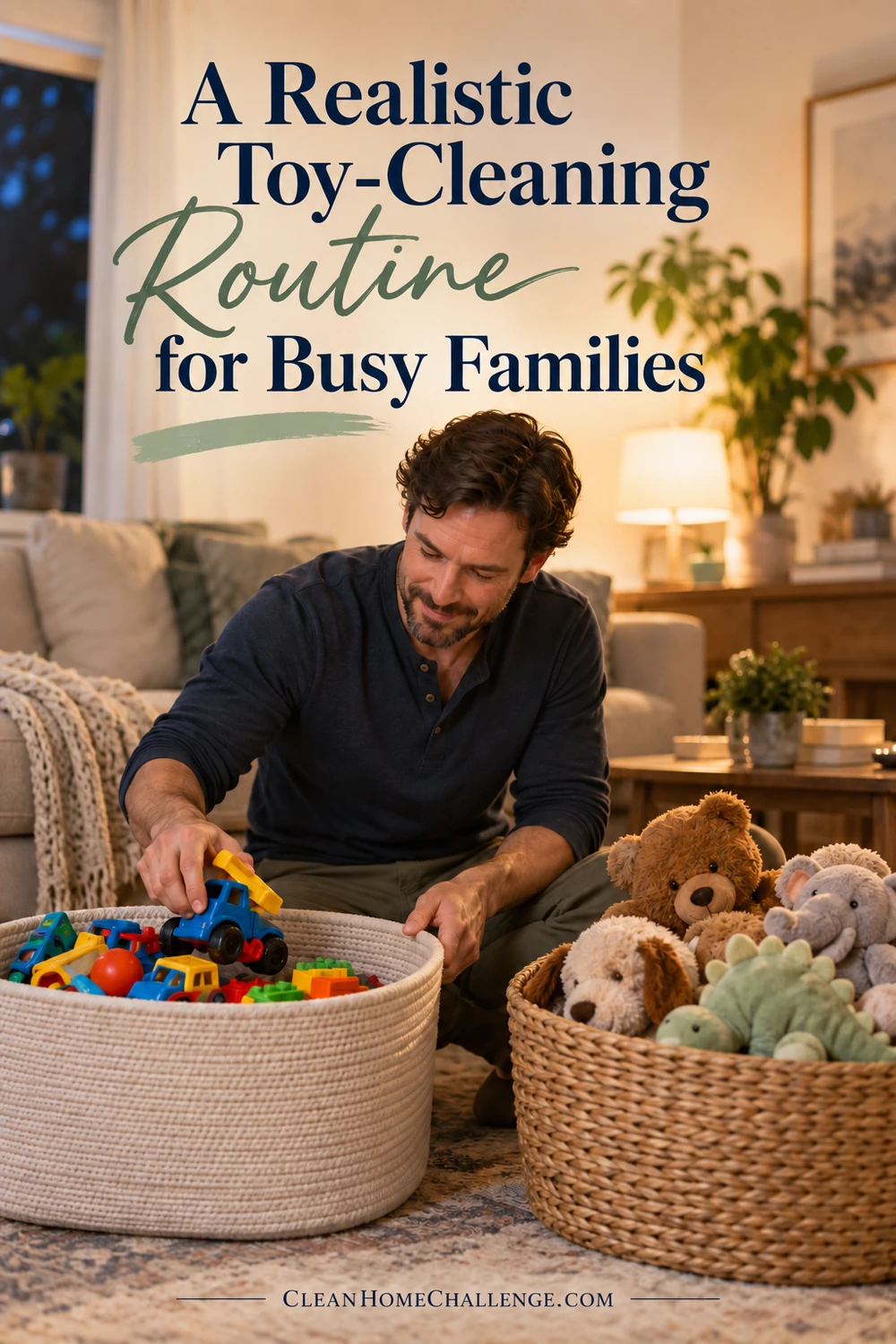
A Realistic Toy-Cleaning Routine for Busy Families
Try a small routine tied to play rather than a complicated calendar. After play, put mouthed items in a washable bin. When a toy is sticky or visibly dirty, clean it before returning it. Once a week, wash the handful of hard toys used most often and check plush care tags while doing the regular laundry. Do a deeper sort after an illness or before sharing toys with guests.
If you have five minutes, wash just the few pieces that need attention and leave the rest for another day. The goal is to keep toys usable and pleasant, not to make every shelf spotless. A simple basket, a clean cloth, and the right method for each material go further than a marathon cleaning session.
Common questions
Can I use a dishwasher for plastic toys? Only if the maker permits it. Choose the specified settings and ensure no battery, electronic, wood, or fabric components are attached.
How often should I disinfect toys? There is no one-size-fits-all daily requirement for a typical home. Clean regularly and as needed; consider a label-appropriate sanitizer or disinfectant when illness, contamination, or childcare policy calls for it.
Can I spray disinfectant on a stuffed animal? Do not assume a hard-surface spray is suitable for porous fabric. Follow both labels; launder a washable toy or use a manufacturer-approved method, and dry it completely.
For a room-by-room approach that fits around family life, the Cleaners Clubhouse offers practical routines you can adapt to your household.
Sources and review notes
- CDC: When and How to Clean and Disinfect Your Home, January 31, 2025.
- CDC: How To Clean and Disinfect Early Care and Education Settings, April 19, 2024.
- American Academy of Pediatrics: Cleaners, Sanitizers & Disinfectants, May 6, 2021.
This general guide cannot replace the care directions for a particular toy or cleaning product.
CLEANERS CLUBHOUSE
Build a Safer, Simpler Cleaning Routine
Clean confidently with practical guidance that helps you choose sensible products and use them correctly. The Cleaners Clubhouse combines safer cleaning support with realistic routines, worksheets and challenges.