THIS POST MAY CONTAIN AFFILIATE LINKS. PLEASE READ MY DISCLOSURE FOR MORE INFO.
The breakfast dishes are barely put away when someone asks for a snack. The living room has become a construction site, and a damp towel has arrived home in the bottom of a bag. During school holidays, the house does more work because more of family life happens inside it.
A useful school holiday cleaning routine makes room for that extra activity. It protects the places you need for meals, rest, and getting out the door, then gives the rest of the house a few dependable chances to recover. You can leave a project out and still have somewhere clean to eat.
Start with three short daily anchors, a few sensible mess boundaries, and clearly shared jobs. The times below are planning estimates, not promises or targets everyone must meet. Adjust them for your home, your energy, and the support available. You do not need to spend the break following children around with a cloth.
Disclosure: This post may contain affiliate links. As an Amazon Associate, Clean Home Challenge earns from qualifying purchases. If you make a purchase through these links, we may earn a small commission at no extra cost to you. This helps us keep creating practical cleaning tips, routines and resources for busy families! 🧽
Choose a Holiday Standard You Can Keep
Before making a list, decide what would make today easier. A family with a baby may need clean feeding equipment and a clear floor. Older children might need a usable kitchen, somewhere to work on projects, and clean clothes for tomorrow’s outing. Choose the practical outcome first.
Protect three useful things
For most households, a manageable holiday day includes:
- Somewhere to prepare and eat food: clear the working part of the counter and enough table space for the people eating.
- Safe routes and usable essentials: keep entrances, stairs, and paths through rooms clear; respond to spills and bathroom mess when they happen.
- What you need next: have necessary clothes, towels, dishes, or outing supplies ready before they become urgent.
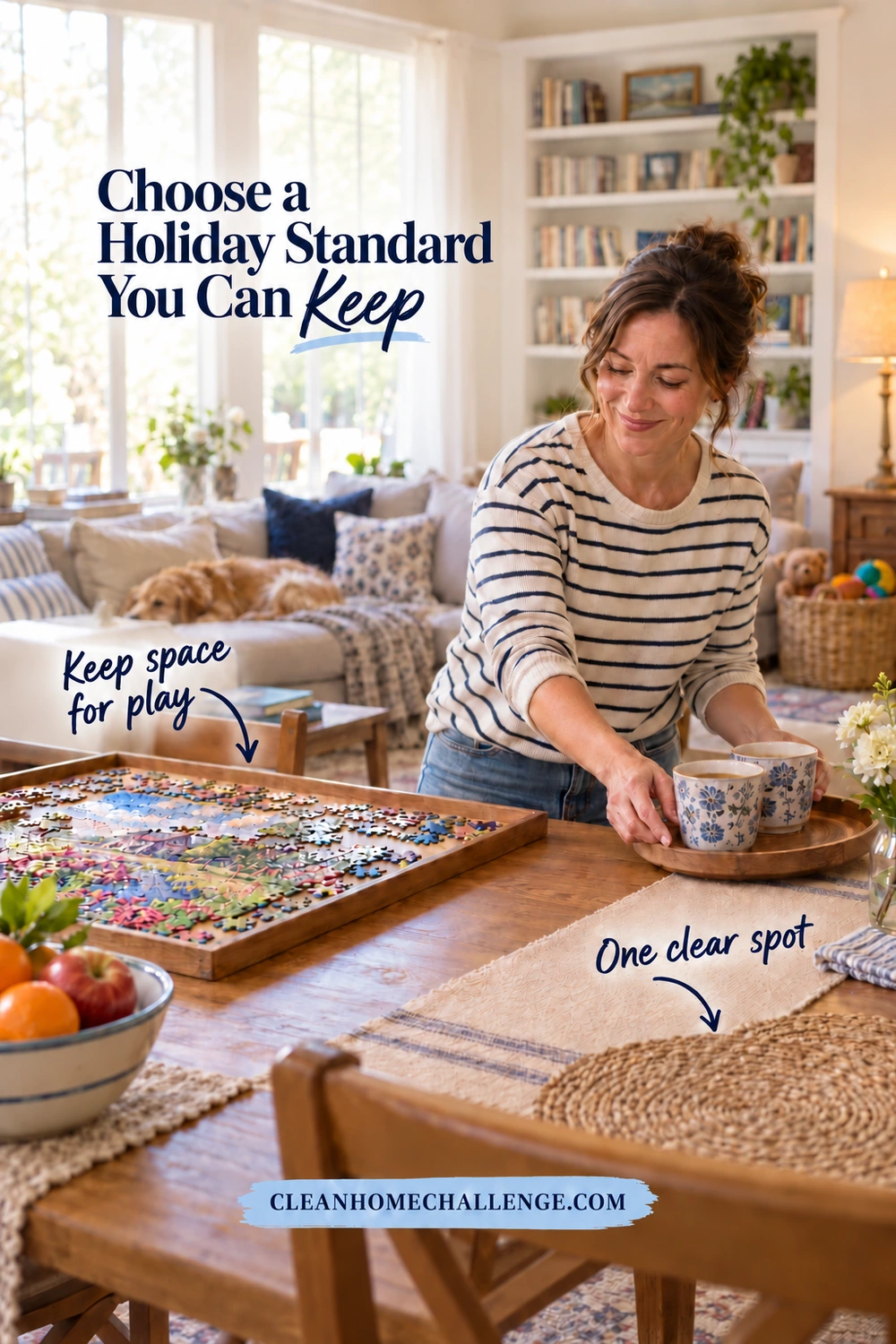
This leaves room for a blanket fort or an unfinished puzzle. Give ongoing play a defined footprint, such as one tray or one corner that does not block a walkway. Agree when that space will be checked again. A project can stay overnight when it is safe and the family can still use the room.
Make the first setup small
Spend one short session, perhaps 15 minutes, putting a few things where the work happens: an empty basket near the play area, a suitable mat near the entry, a place for bags, and washable cloths where adults can find them. Use containers you already own before buying an organizing system.
Keep cleaning products separate from children’s supplies and food. The American Academy of Pediatrics advises keeping cleaners in their original labeled containers and inaccessible to children. A portable cleaning caddy still needs secure storage between uses.
Name a few jobs that can wait: rearranging closets, polishing every window, sorting old photographs, or deep-cleaning an unused room. Put them on a later list instead of carrying them through each day.
Finally, ask everyone who shares the household to choose a useful contribution. An adult can own the lunchtime kitchen reset, including noticing it needs doing. A child can return their play materials with appropriate help. Clear ownership saves the person managing the home from also having to announce every step.
Build Three Small Daily Anchors
School-break days may start late, include childcare, or change around work and outings. Attach small resets to things that already happen rather than insisting on a fixed clock time. Breakfast, the main daytime meal, and the evening meal make useful starting points.
After breakfast: open the kitchen for the day
Allow roughly five to ten active minutes for the essentials:
- Put away breakfast food and clear used dishes.
- Wash the dishes you need next or load the dishwasher appropriately. If clean dishes are blocking the next load, put those away first.
- Clean the food-preparation area with a product and method suitable for the surface.
- Check today’s laundry need. Start a load only when there is enough time to move it through drying, or choose a later start.
- Put obvious loose items into their homes so the main route through the room is clear.
People who are ready can make their own beds and put clothes in the hamper. These small personal jobs do not need to hold up the whole household before a time-sensitive appointment.
After lunch: recover the busy part of the house
This is the holiday-specific anchor that a school-day routine often lacks. Put food away, clear plates, deal with crumbs where people ate, and return materials from the activity that has finished. Allow about five minutes for a small reset, or split it into two short passes.
Avoid packing away an active project merely because the clock says lunchtime. Move it onto its agreed tray, free the eating space, and continue later. If everyone is out all day, this anchor may simply become unpacking lunch containers when you return.
After the evening meal: set up the next use
Choose roughly ten minutes of work that helps the next morning: finish essential dishes, restore a usable counter, gather stray cups, return the main toy collection, and check the clothes or bag needed tomorrow. On a large meal night, dishes alone may use that time. Stop adding jobs because one corner looks better.
A family tidy routine works best when the finish is visible: the table is ready for breakfast, the blocks fit back in their bin, or the bathroom floor is clear. “Make the whole house tidy” is much harder to complete.
Missed the midday reset? Resume at the next anchor. Do not turn it into a debt that doubles the evening workload. If the same anchor fails for several days, shorten it or move it to a transition that actually happens in your home.

Contain Snacks, Crafts, and Outdoor Mess
A little setup can keep one activity from spreading into five rooms. Choose one boundary for each recurring mess, then make the return step easy enough to do while everyone is still nearby.
Give snacks a predictable home
Choose a practical eating spot, such as the kitchen table, a washable high-chair area, or an outdoor table. Keep plates and suitable cups within easy reach for family members who can use them safely. Offer manageable portions and refill as needed rather than leaving several open packages around the house.
After eating, return food, clear dishes, and clean crumbs and sticky patches. A tray can help carry several items without repeated trips. Use a clean cloth for eating surfaces; do not bring the bathroom cloth into the kitchen.
Put perishable snacks back in the refrigerator promptly. Under the FDA’s food-safety guidance, discard perishables left at room temperature for more than two hours, or one hour when temperatures exceed 90°F. A designated snack basket does not make yogurt, cut fruit, or other refrigerated foods suitable for all-day counter storage.
Set up crafts with a closing step
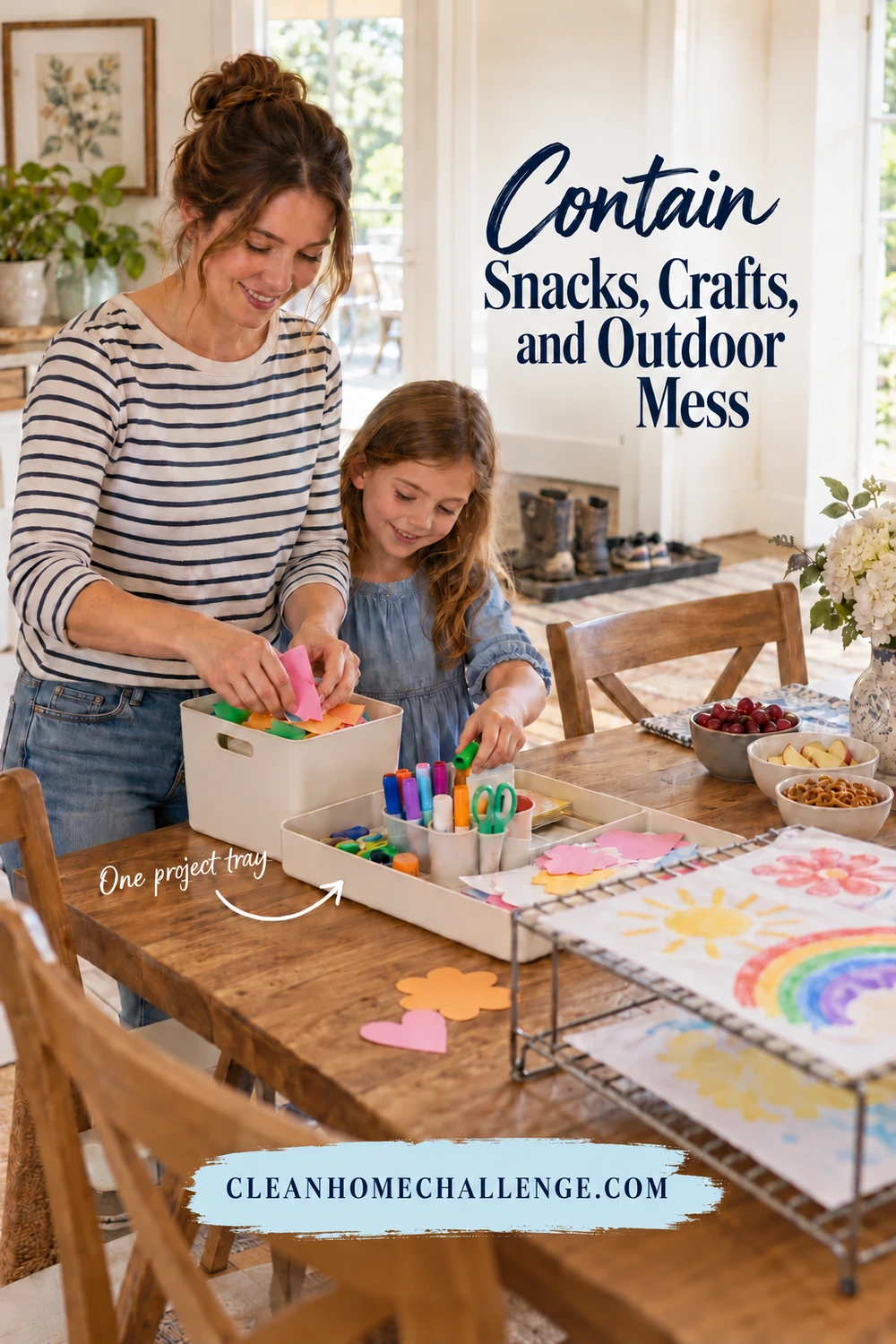
Before paint, dough, or glue comes out, protect the work surface with a covering compatible with its finish. Avoid adhesive tape on delicate finishes unless the manufacturer permits it. Put out only the supplies needed for that activity, with age-appropriate supervision for small parts and tools.
Have a place ready for drying artwork. At the end, cap supplies, lift loose scraps into the trash, put tools away, and clean the surface according to its care instructions. Move the finished work to the drying spot before wiping. An adult handles spills that need cleaning products or special treatment.
For recurring projects, store the current materials together in a shallow container. If cleanup needs a complicated sorting system, simplify the system before adding more reminders.
Unpack outside play at the door
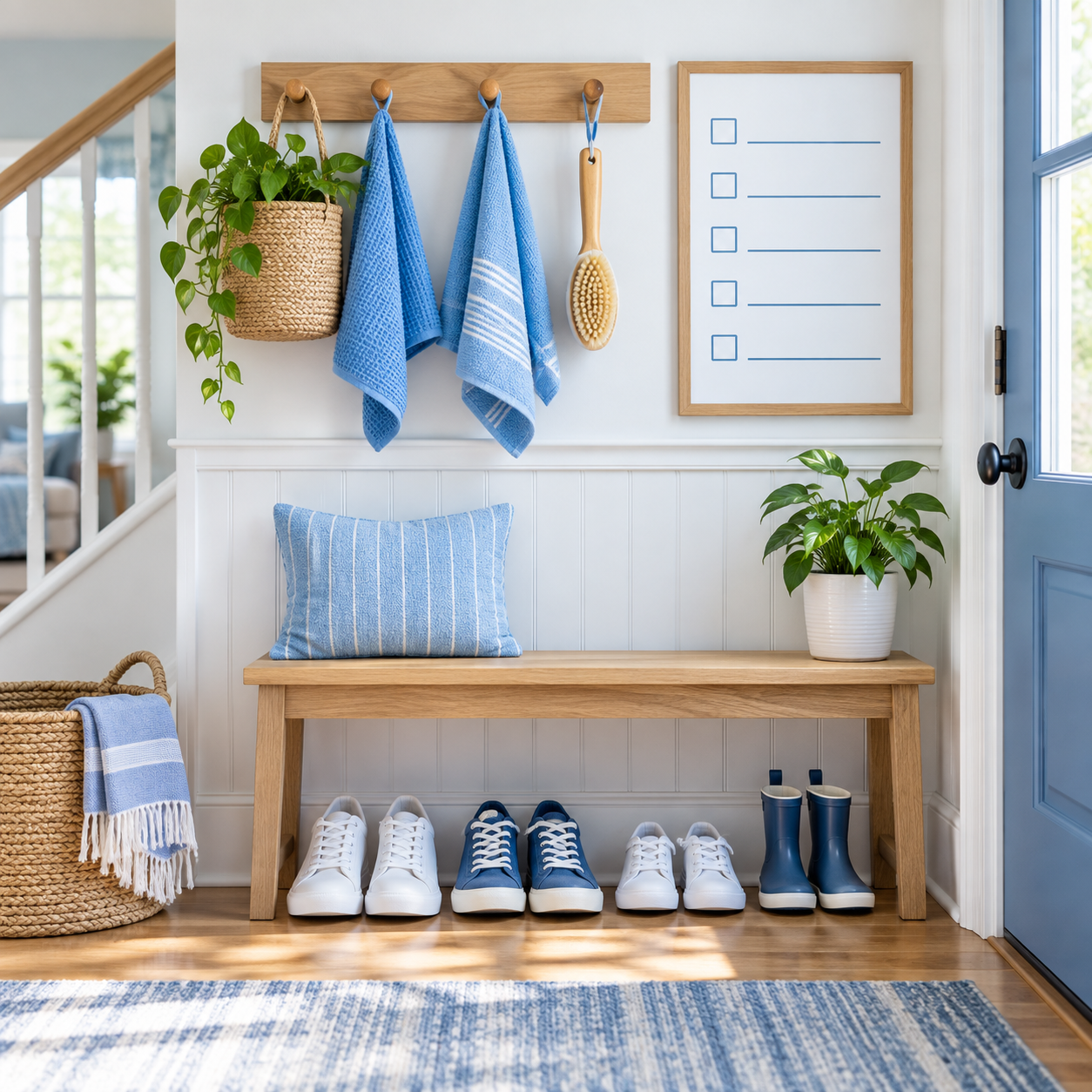
Give muddy shoes a mat or washable tray that sits clear of the exit. Arrange a reachable hook for coats and a separate place for outdoor toys. After a pool or beach trip, unpack the bag before settling into the next activity: remove food, rinse or clean items as their instructions allow, and spread wet towels or swimwear out to dry until laundering.
Deal promptly with wet or slippery floor mess. For tracked-in dry grit, sweep or vacuum with a tool suitable for the flooring. Spot-clean only the affected area using the floor manufacturer’s method, and keep people off wet patches until dry. One trip outside need not trigger a whole-house mop.
Give Children Clear, Safe Holiday Chores
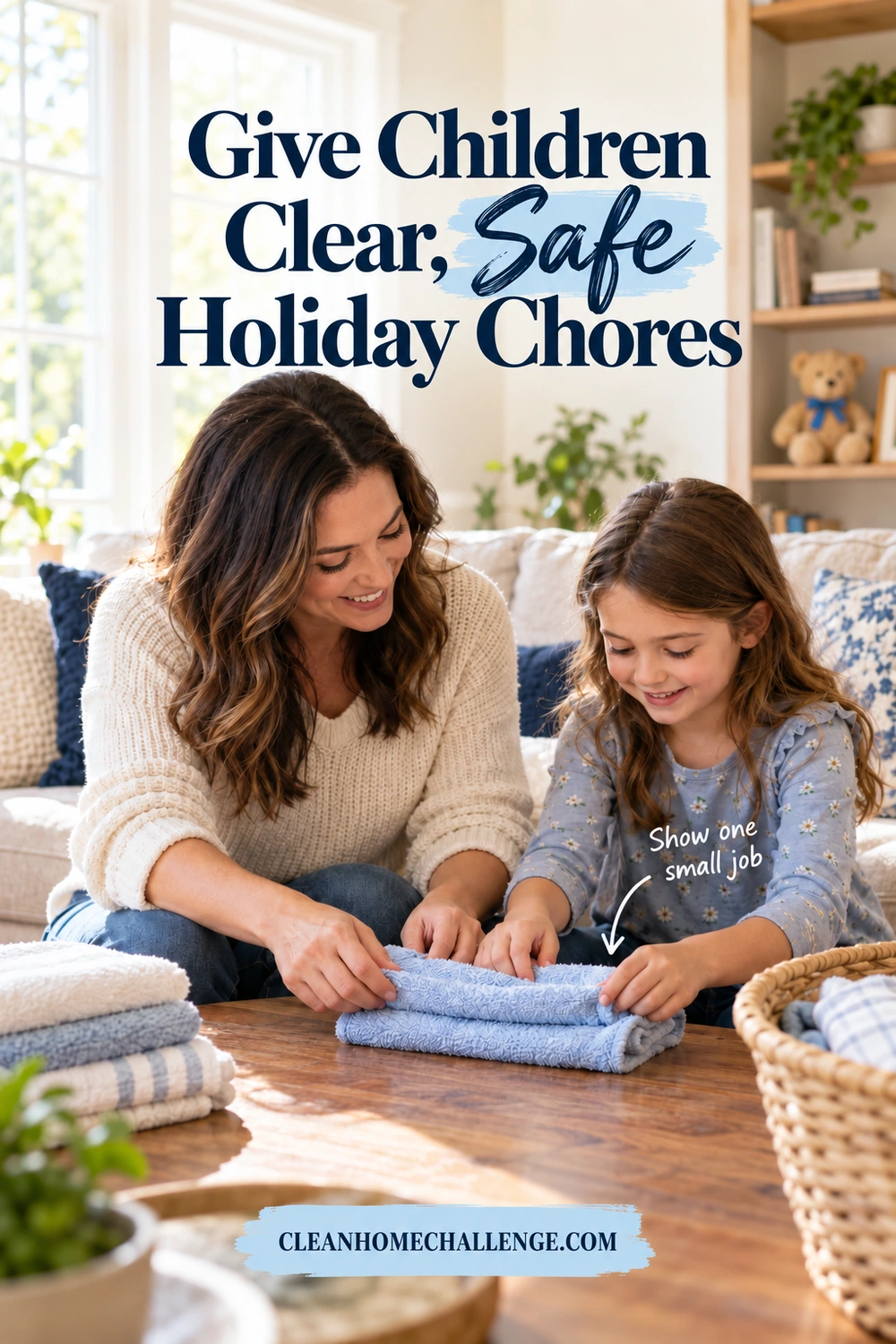
Children can contribute without being responsible for the adult cleaning load. Choose a job by the child’s current skills, reach, attention, and ability to follow instructions. Age ranges are only a starting point; a familiar, well-taught task is more useful than an ambitious list.
The American Academy of Pediatrics recommends realistic expectations, clear instructions, and introducing new responsibilities gradually. Build from something your child can already do, and stay available to help.
Choose from a small menu
- Working beside an adult: put large toys into an open bin, carry a lightweight unbreakable item, place clothes in a hamper, or match a few socks.
- Ready for a short sequence: clear their place using unbreakable dishes, return books to a shelf, fold small towels, or gather the supplies for tomorrow’s activity.
- Practiced and ready for more: put away clean clothes, sweep a small area with a suitable tool, or unload cooled, unbreakable dishwasher items after an adult removes sharp and fragile objects.
Keep chemical cleaning, laundry detergent handling, hot appliances, heavy lifting, high surfaces, broken glass, and bodily-fluid cleanup with adults. Do not give children laundry packets. The U.S. Consumer Product Safety Commission says to keep packets sealed in their original packaging, locked away and out of children’s sight and reach.
Show what finished looks like
Try “Put the cars in this bin, then park the bin under the shelf” instead of “Clean up in here.” Demonstrate once, work together, then let the child try with the support they need. A photograph of the finished shelf can serve as a reminder without requiring lots of reading.
Give a short heads-up before play ends and offer a bounded choice: “Would you like to collect the books or put the blocks away?” Keep the choice between two appropriate tasks. On a busy day, staying beside a child for one clear job may be more useful than calling instructions from another room.
For holiday chores, start with one personal responsibility and one shared contribution. Notice the useful effort: “The towels are ready for everyone now.” Resist refolding or rearranging acceptable work just for appearance. Correct a safety problem and teach a missing step, but let an ordinary folded towel be enough.
Keep Weekly Essentials on a Light Rotation
Daily anchors handle repeated use. Weekly work still matters, especially when bathrooms, floors, and towels are getting extra attention. Choose a small maintenance job on suitable days and leave large projects for a separate decision.
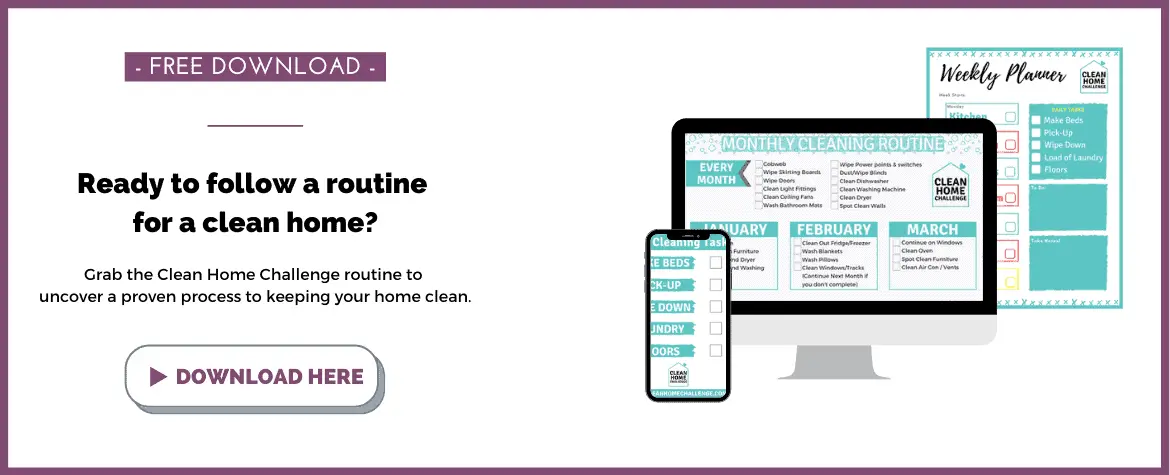
If you already follow the Clean Home Challenge weekly areas, keep that familiar order and shorten each visit:
- Monday, kitchen: check for forgotten food, clean a frequently used appliance exterior as its instructions allow, and wash the sink.
- Tuesday, bathrooms: clean the toilet, sink, and visibly dirty bathing surfaces; replace towels as needed. Use dedicated bathroom cloths and keep toilet-cleaning tools separate.
- Wednesday, bedrooms: put away ready-to-wear laundry, clear floor access, and change bedding when needed or due in your usual routine.
- Thursday, living areas: return finished activities, clean visibly marked surfaces, and vacuum the areas in use.
- Friday, floors: remove loose soil first, then clean appropriate hard floors using their care guidance. Work in small areas and allow them to dry.
- Saturday, laundry catch-up: finish drying and putting away the loads already underway, then wash the next necessary load.
- Sunday, check the coming week: look at outings, work, care arrangements, and essential supplies. Keep this a planning check rather than another large cleaning day.
Allow perhaps ten to twenty active minutes for the day’s selected task. A bathroom or laundry backlog may take longer, so choose one usable bathroom or finish one load rather than pretending the timer guarantees completion.
Clean for the mess you have
Regular cleaning and disinfection have different purposes. Routine surface cleaning removes dirt and germs; disinfecting is an additional step for situations that need it, such as illness. Follow CDC guidance on when to clean and disinfect, along with the product label and any household-specific advice. If disinfection is needed, observe the labeled wet contact time, ventilation, and protective equipment. Never mix cleaning products.
Choose cleaners compatible with each surface, keep children and pets away during the work, and put products away immediately afterward. Bathroom cleaning does not need to become a group activity just because everyone is home.
Let actual use adjust the rotation. A heavily used bathroom may need attention before Tuesday; a floor still in good condition may need only a small spot clean on Friday. The list should remind you what to check, not overrule what the house needs.

Use a Minimum Plan on Hard Days
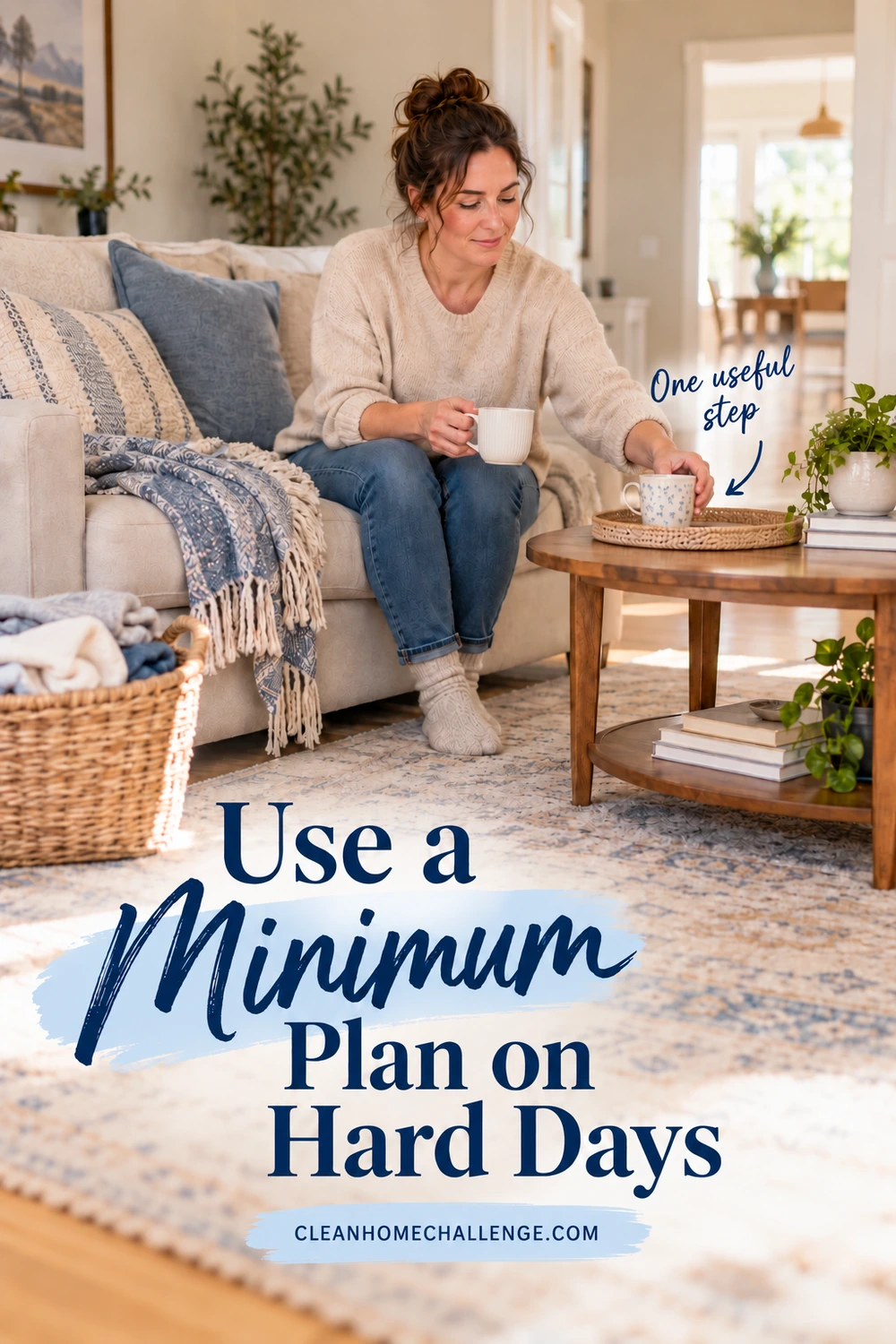
Some days offer very little cleaning time. Work deadlines, disrupted sleep, travel, or a difficult afternoon can reduce a routine to its essentials. Decide on a minimum plan before that day arrives so you do not have to work out priorities while already stretched.
Use this order, taking only the steps your household currently needs:
- Handle immediate hazards. Pick up a sharp object, clear a blocked path, or deal with a slippery spill. Keep children away while an adult does the unsafe part.
- Put food away and make eating possible. Remove leftover food, wash enough dishes for the next meal, and clean the area needed for preparation.
- Restore essential bathroom use. Address visible soiling, check soap and toilet paper, and make sure there is a clean, usable towel.
- Prepare one thing for tomorrow. Choose the necessary clothes, finish drying a load, or unpack the bag that contains tomorrow’s lunch container.
If you have only a few minutes, pick the highest-priority unfinished item. You can leave clean laundry in a basket temporarily. You cannot leave a dangerous spill because folding was earlier on the list.
Make the help request specific
Where another adult is available, hand over a complete piece of work: “Please put away the picnic food and wash the lunch containers.” A child who can manage their belongings might put shoes in the agreed place while you finish the kitchen. Avoid starting three jobs that all need you to supervise at once.
A seated task can help when standing is difficult: pair clean socks, sort a small stack of papers, or gather lightweight objects onto a tray within reach. Choose what suits your body; the minimum plan does not require carrying a full basket around the house.
Avoid the catch-up trap
Common trouble spots include cleaning the same play area after every toy, starting a closet sort during the only quiet half-hour, or beginning laundry you cannot dry. Set a finish point before you start. If it repeatedly takes too much effort, reduce the number of items in use or choose a simpler storage spot.
On the next easier day, resume your normal anchors and choose one overdue essential. You do not need to recreate every missed cleaning session. A useful reset is the one that lets the household function again.
Ease the House Back Into School Mode
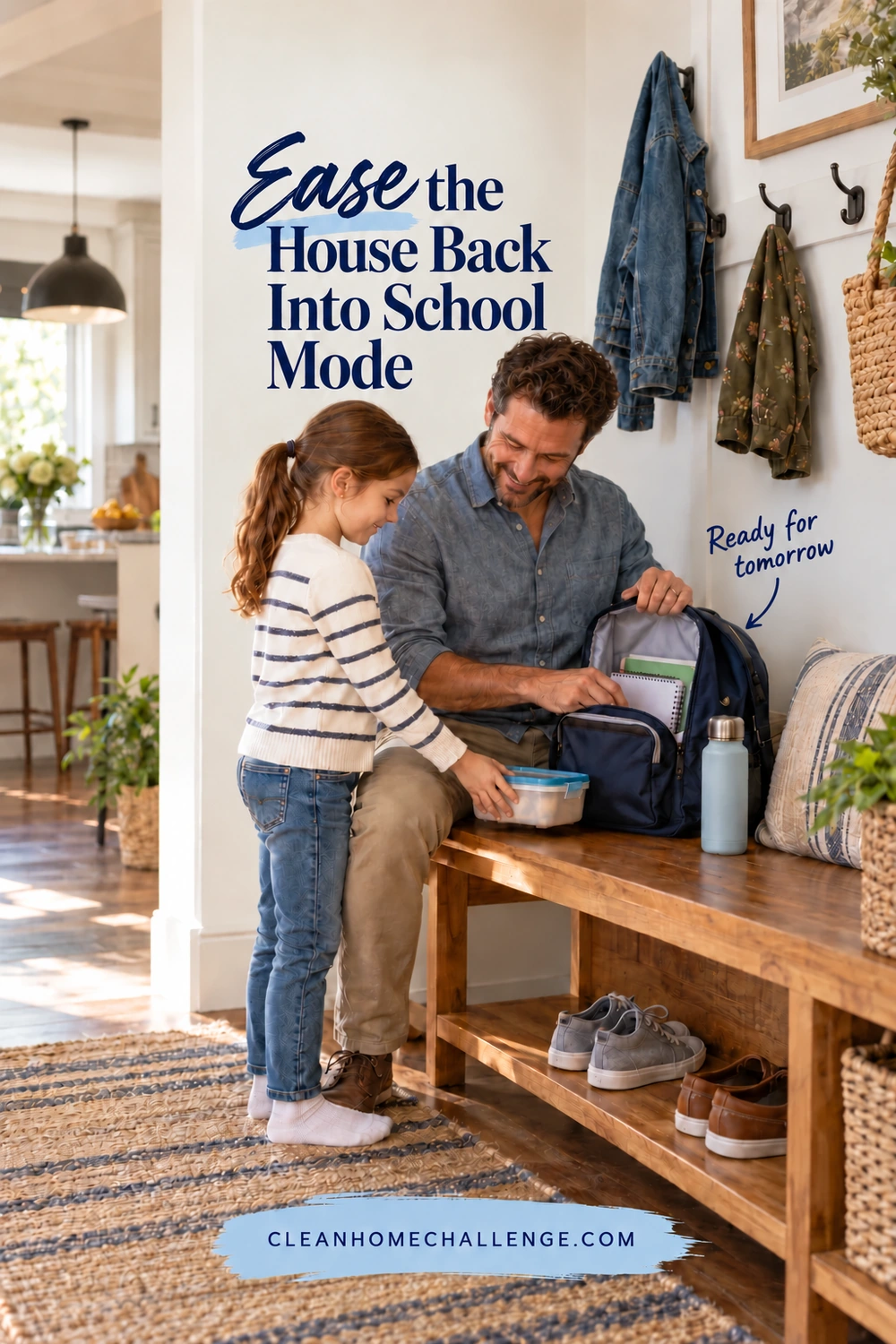
The last days of a break can fill quickly with appointments, activities, and work. Give the house a gradual handover to school days so the final evening stays manageable. Begin a few days ahead if you can; if you only have one evening, focus on what is needed for the next morning.
A few days before school returns
Check school clothes or uniforms, socks, shoes, and bags. Wash what is needed, allow it to dry completely, and put it where it will be used. Check the care instructions for lunch bags, reusable bottles, and food containers rather than assuming everything can go in the dishwasher.
Choose a time to finish or store larger holiday projects together. Photograph a creation if your child wants to remember it, then return materials to their ordinary homes. Keep any project that still fits comfortably in the space. The goal is to regain the surfaces and routes that school mornings need.
The day before
Set out the next day’s clothes, prepare the bag, and clear the breakfast area. Put shoes and essentials in their usual places. Check that necessary containers are clean and dry. Clear a place for incoming school papers before the first stack arrives.
Move the midday kitchen reset to whenever the household is actually home. Keep the evening preparation that helped during the break. A routine can change shape as family life changes without being started again from nothing.
Keep one change that worked
Ask a simple question: what made this holiday easier? Perhaps the craft tray kept the dining table usable, the doorway hooks caught wet towels, or everyone learned to clear their own snack dishes. Keep the useful change and let go of the rules that needed constant effort for little benefit.
A clean home with kids home will still look lived in. Your school holiday cleaning routine has done its job when the essential spaces work, the mess has a next step, and the family can move on with the day. Start with the next meal, one usable surface, and one clearly shared task. That is enough to begin.
CLEANERS CLUBHOUSE
Turn Small Daily Habits Into a Cleaner Home
Make cleaning feel more achievable by sharing simple routines and building habits that stick. The Cleaners Clubhouse includes the 7-Day Daily Habits Bootcamp, printable support and motivating monthly challenges.