
THIS POST MAY CONTAIN AFFILIATE LINKS. PLEASE READ MY DISCLOSURE FOR MORE INFO.
Summer brings open doors, extra laundry, sticky kitchen counters, sandy shoes, and towels that seem to multiply overnight. A summer cleaning checklist works best when it handles those real-life messes without turning every warm weekend into a deep-cleaning project. Start with the jobs that affect comfort and daily use, then spread the rest across the week.
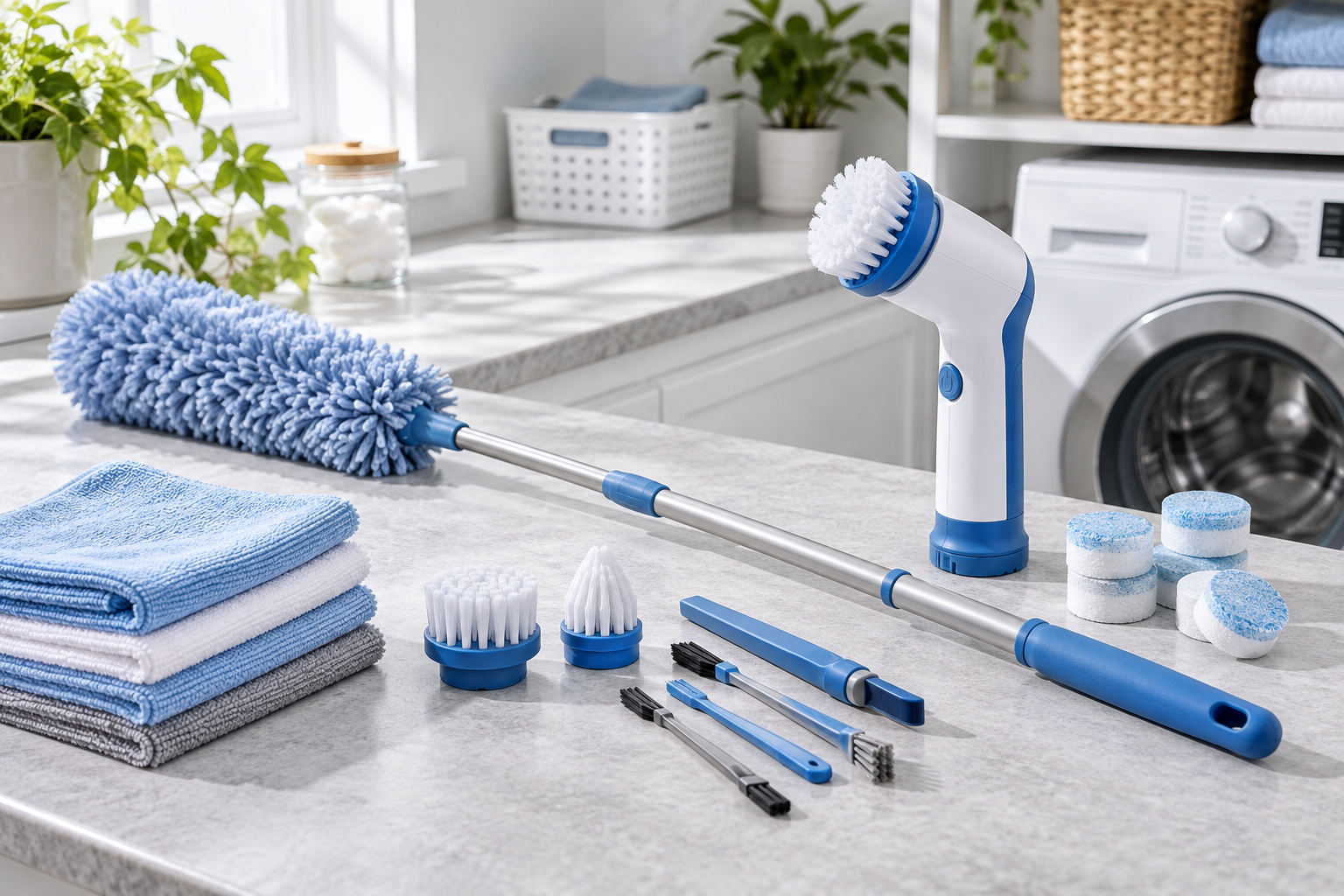
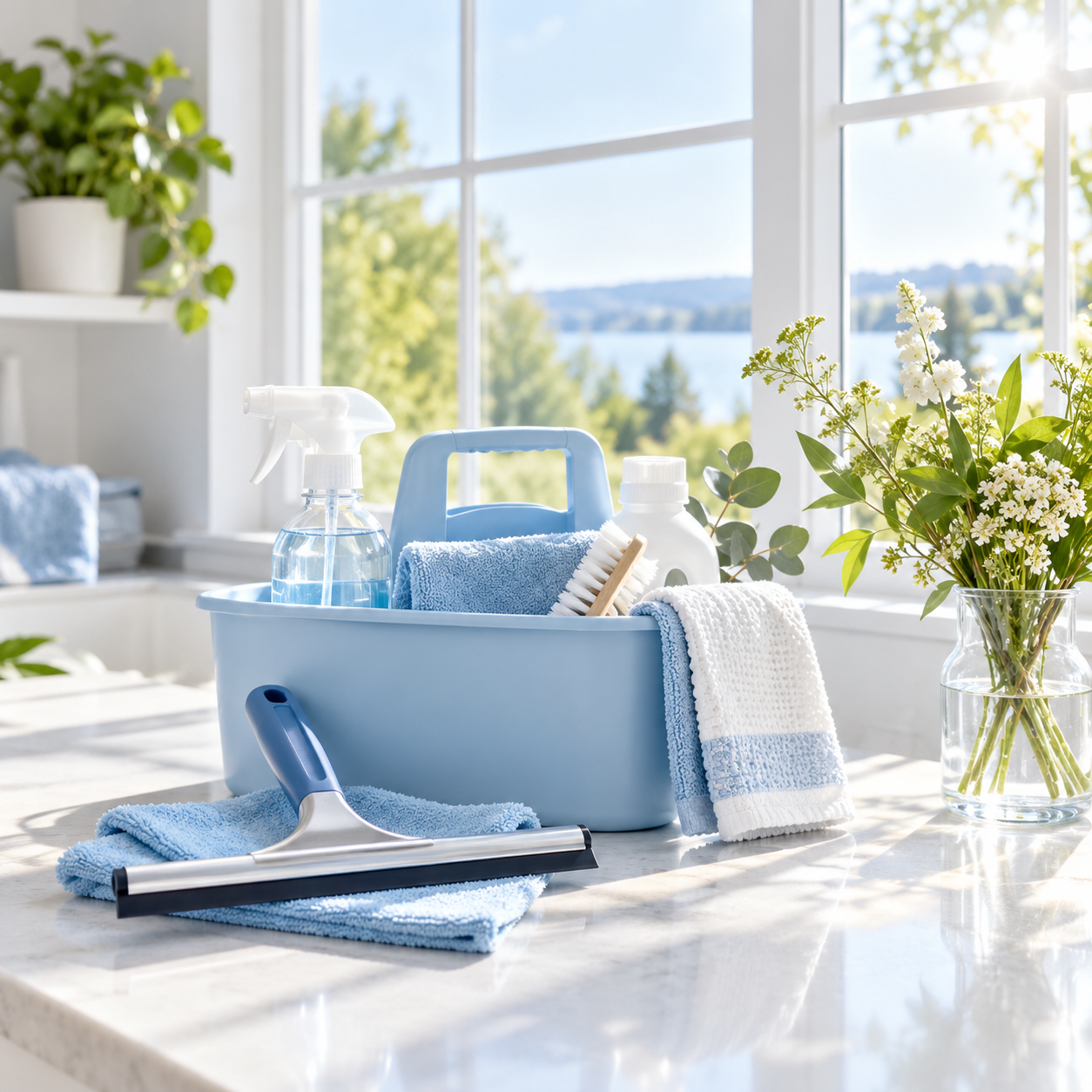
You will need a vacuum or broom, washable microfiber cloths, a compatible surface cleaner, a mop suited to your flooring, a laundry basket, and perhaps a squeegee. Follow each product label and the care instructions for appliances and finishes. A basic reset can take 30 minutes; the seasonal extras can be completed in short sessions.
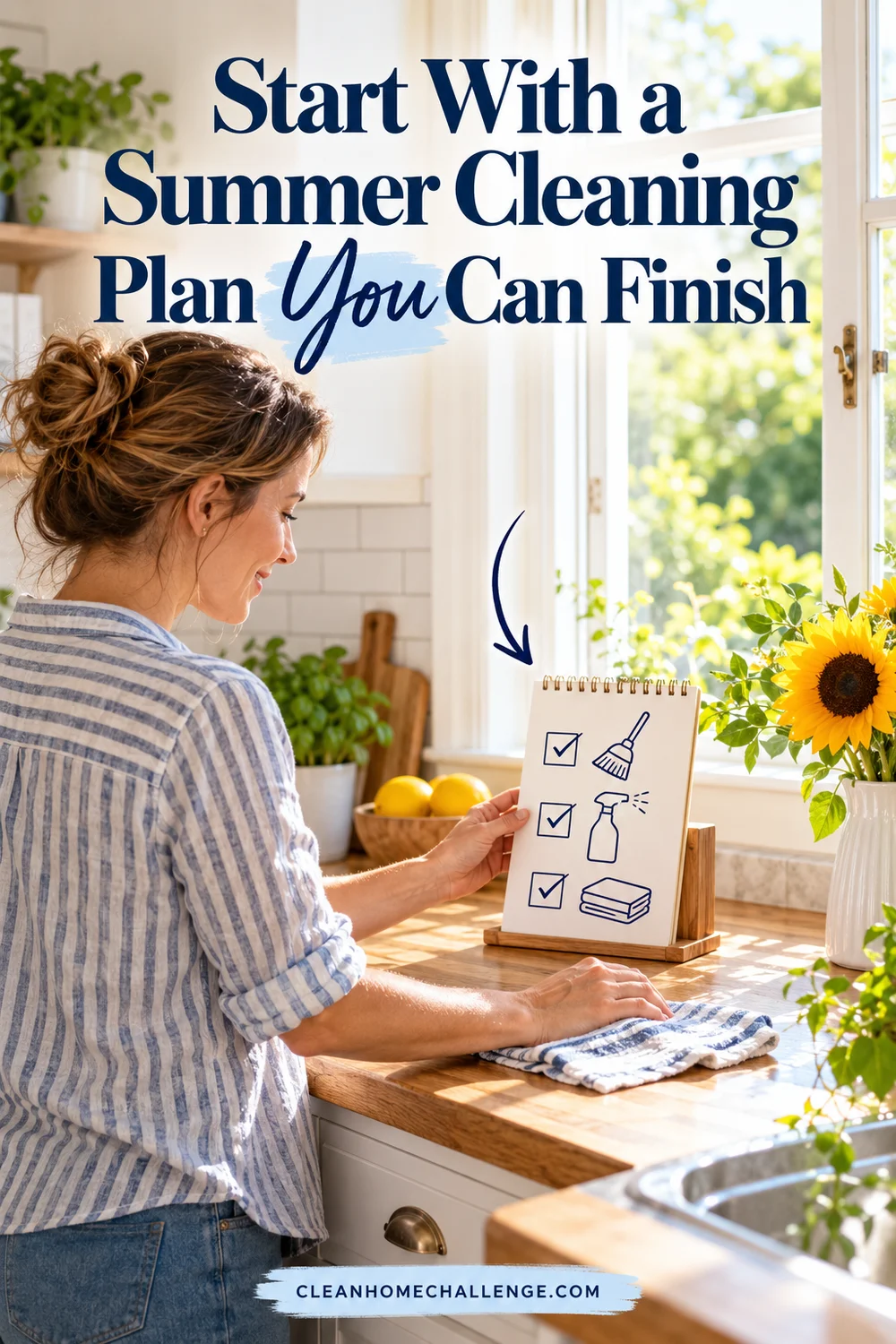
Start With a Summer Cleaning Plan You Can Finish
Pick three priorities for this week: one kitchen job, one moisture or cooling job, and one floor or laundry job. Write them down where the family can see them. The checklist below is a menu, not a demand to complete everything in one day.
| Frequency | Summer job | Smallest useful version |
|---|---|---|
| Daily | Clear food messes and wipe frequently used surfaces | Clean the eating area and one counter |
| Every few days | Dry the shower area and wash or dry used towels | Squeegee the wettest panel; spread towels out |
| Weekly | Vacuum entryways and high-traffic floors | Do the front mat and kitchen |
| Periodically | Check fan dust and accessible cooling filters | Put the next check on the calendar |
If a heatwave makes the house uncomfortable, work in the cooler part of the day and leave strenuous cleaning for later. Keep supplies in one easy-to-carry caddy and use one clean cloth for each room to avoid moving grime around.
Disclosure: This post may contain affiliate links. As an Amazon Associate, Clean Home Challenge earns from qualifying purchases. If you make a purchase through these links, we may earn a small commission at no extra cost to you. This helps us keep creating practical cleaning tips, routines and resources for busy families! 🧽
Reset the Kitchen for Hot Weather
Summer snacks and cold drinks can leave spills that become sticky quickly. Clear the counter, put away food, remove crumbs, then clean high-touch handles, the table, and the counter with a product appropriate to the surface. Follow the label for any rinse step on food-contact areas. Change cloths when dirty rather than wiping the whole kitchen with one loaded cloth.
Check the refrigerator for spills and forgotten leftovers while you are putting groceries away. Remove a small shelf's contents at a time, wipe with a compatible cleaner, dry, and return food promptly. A refrigerator thermometer is useful: FoodSafety.gov lists 40°F (4°C) or below for refrigeration. Do not leave perishable food sitting out for a leisurely full-fridge clean. FoodSafety.gov cold food storage chart.
Wash the trash can if there has been a leak, let it dry fully, and replace the liner. A five-minute counter and sink reset after dinner usually helps more than an occasional marathon scrub.

Clean Fans and Cooling Equipment Safely
Turn a fan off and unplug a portable model before wiping its accessible surfaces. Use a microfiber cloth to lift dust from the guard and blades where the manufacturer's instructions allow access. Support a stable step stool if a ceiling fan is within safe reach; leave high or awkward work to someone with appropriate equipment. Never clean a moving fan.
For an air conditioner, switch it off and check the owner's manual for the correct filter removal and cleaning method. Some filters are washable, while others must be replaced. Let a washable filter dry completely before reinstalling it. Avoid spraying liquids into the unit or opening electrical parts. If the manual calls for professional servicing, book that rather than trying to dismantle the system. The US Department of Energy distinguishes household filter care from contractor maintenance in its HVAC preventative maintenance guidance.
Add filter checks to the family calendar at the interval specified by the appliance maker; dusty use may call for more frequent checks. Keeping the vents and reachable areas clear makes this an easy summer habit.

Make Bathrooms Easier to Keep Dry
In humid weather, a bathroom can stay damp long after a shower. Wipe the sink and faucet, remove hair from the drain cover, then squeegee shower glass or tile where compatible. Spread bath mats and towels so they can dry, and run the bathroom exhaust fan according to your ventilation setup.
Look for a recurring leak, damp grout, or condensation instead of trying to cover a musty smell with fragrance. The US EPA recommends keeping indoor humidity below 60%, ideally 30–50% where possible, and fixing moisture sources. A small humidity gauge can help you see whether the room is actually drying. EPA guide to mold, moisture, and your home.
If there is visible mold, follow EPA guidance for the material and size of the area. Extensive growth, repeated water damage, or health concerns call for appropriate professional advice. Do not mix bleach with vinegar, ammonia, or other cleaners; follow the label, ventilate, and keep products away from children and pets.

Keep Laundry and Linens Fresh
Put damp swimwear and towels where they can dry until wash day instead of sealing them in a basket. Follow care labels for fabric, temperature, and drying. Avoid overloading the washer, use the measured amount of detergent, and remove the load promptly when the cycle ends. A closed washer full of wet clothes can pick up an unpleasant smell.
Give bath and beach towels space on a line or rack so air reaches the fabric. Store only when fully dry. Check the laundry hamper for trapped wet clothes, wipe a spill on the shelf, and clear lint from the dryer filter as the manufacturer instructs before the next load. If you use a dryer, follow its vent-maintenance guidance too.
For busy weeks, do one load from start to finish rather than starting three loads that need folding later. Keep a clean towel set ready so a forgotten load does not derail the evening.

Tackle Floors, Entryways, and Outdoor Tracked Dirt
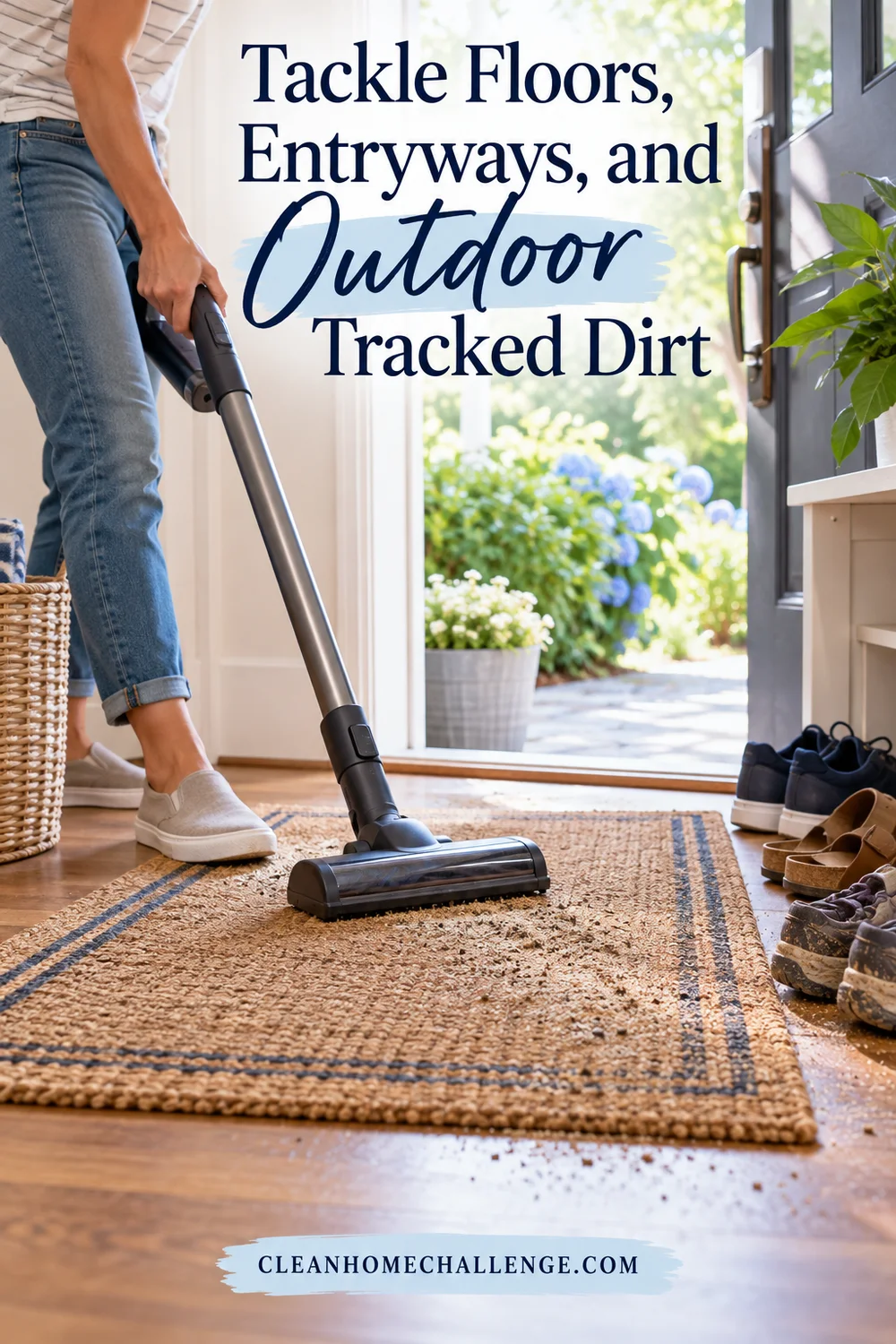
Shake out or vacuum entry mats, then vacuum the path from the door through the busiest rooms. Sand and grit are easier to remove dry. Place a practical shoe spot or basket near the entrance if that helps your family. Wipe muddy shoe marks only with a product approved for the floor finish.
Spot-clean sticky spills as they happen. On floor day, vacuum first and mop the areas that need it with a lightly damp, clean pad and the correct cleaner dilution. Change the pad when it becomes dirty. For a flat mop, use overlapping pull-back passes so the pad gathers soil rather than pushing it across the room. Keep timber and laminate especially dry according to their care instructions.
Do not assume vinegar or a homemade mix is safe for stone, wood, grout, or every floor coating. When uncertain, check the flooring manufacturer's instructions and test an inconspicuous spot.
A 30-Minute Summer Reset for Busy Days
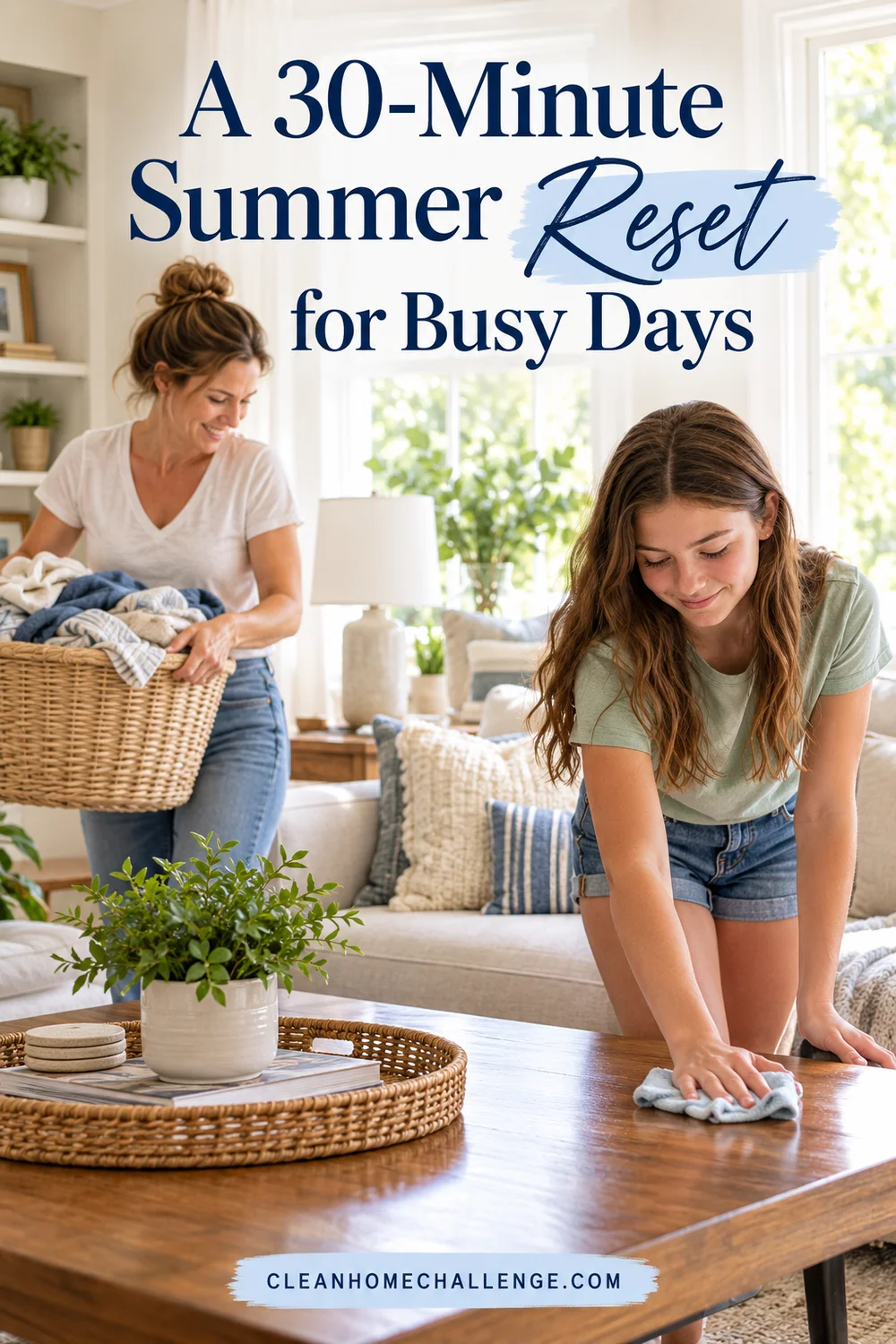
Set a timer and choose a narrow route through the house. Spend five minutes returning dishes and food to the kitchen; ten minutes clearing and wiping the eating area; ten minutes vacuuming the entry and main walkway; and five minutes putting damp towels in a drying spot and returning the cleaning supplies. Stop when the timer ends.
If you have only ten minutes, clear the table, wipe the busiest counter, and gather damp laundry. Children can put shoes or toys in a basket if the task suits their age. The goal is a home that feels easier to use tonight, not a room-by-room inspection.
If the seasonal list still feels large, the Cleaners Clubhouse has follow-along routines, printables, and the 7-Day Deep Clean Bootcamp to help you split larger work into manageable steps.
Keep the Result With Small Daily Habits
After meals, wipe the eating surface and put food away. After showers, help wet surfaces and towels dry. Before bed, return a few items to their homes and check tomorrow's laundry need. These small habits reduce the amount of buildup waiting for a weekend clean.
Use one weekly checkpoint for the jobs that do not need doing every day: entry mat, floors, fan dust, and the appliance filter schedule. A skipped day is simply a skipped day. Restart with the next useful action rather than trying to catch up on everything at once.
The most helpful summer checklist is the one your family can actually repeat: food areas clean enough to use, damp items drying, grit removed before it spreads, and cooling equipment cared for as its maker recommends.

CLEANERS CLUBHOUSE
Need Help Getting Through a Proper Deep Clean?
Follow the 7-Day Deep Clean Bootcamp when your home needs more than a quick tidy. The Cleaners Clubhouse breaks the work into achievable steps with printable support and seasonal cleaning guidance.