THIS POST MAY CONTAIN AFFILIATE LINKS. PLEASE READ MY DISCLOSURE FOR MORE INFO.
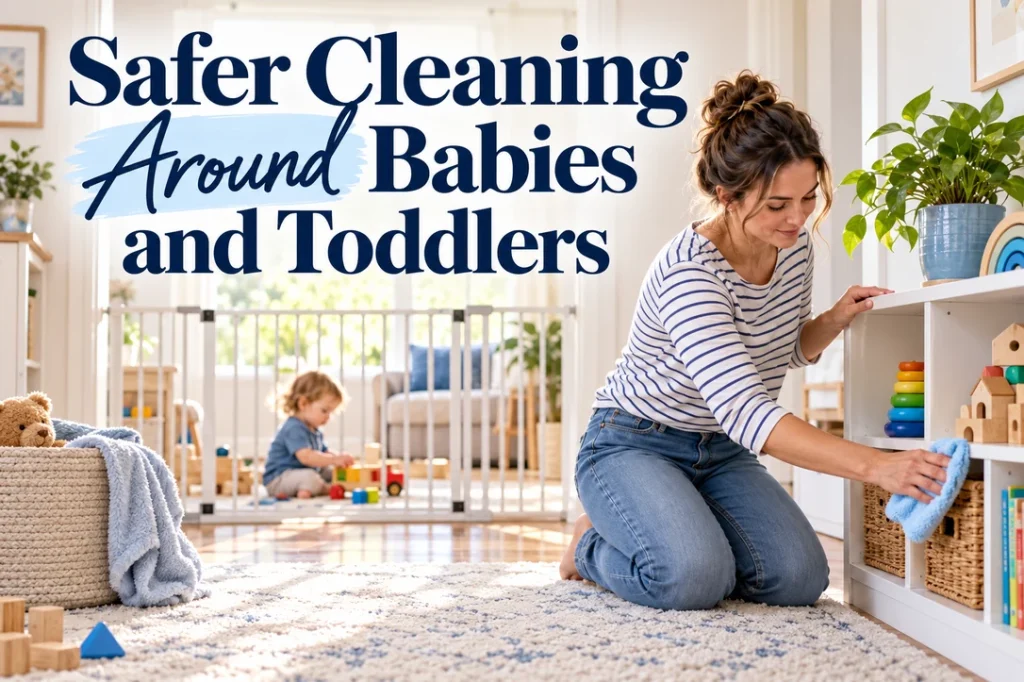
When a baby starts crawling, every floor and low surface suddenly feels important. Safer cleaning does not require a cupboard full of “baby-safe” sprays. It starts with keeping products out of reach, using the right method for the surface, and giving cleaned items time to dry before little hands return.
This guide covers practical everyday cleaning, toys and feeding items, and the occasions when sanitizing or disinfecting is appropriate. Always follow the product label and the item’s care instructions; a marketing claim such as “natural” is not a safety guarantee.
Disclosure: This post may contain affiliate links. As an Amazon Associate, Clean Home Challenge earns from qualifying purchases. If you make a purchase through these links, we may earn a small commission at no extra cost to you. This helps us keep creating practical cleaning tips, routines and resources for busy families! 🧽
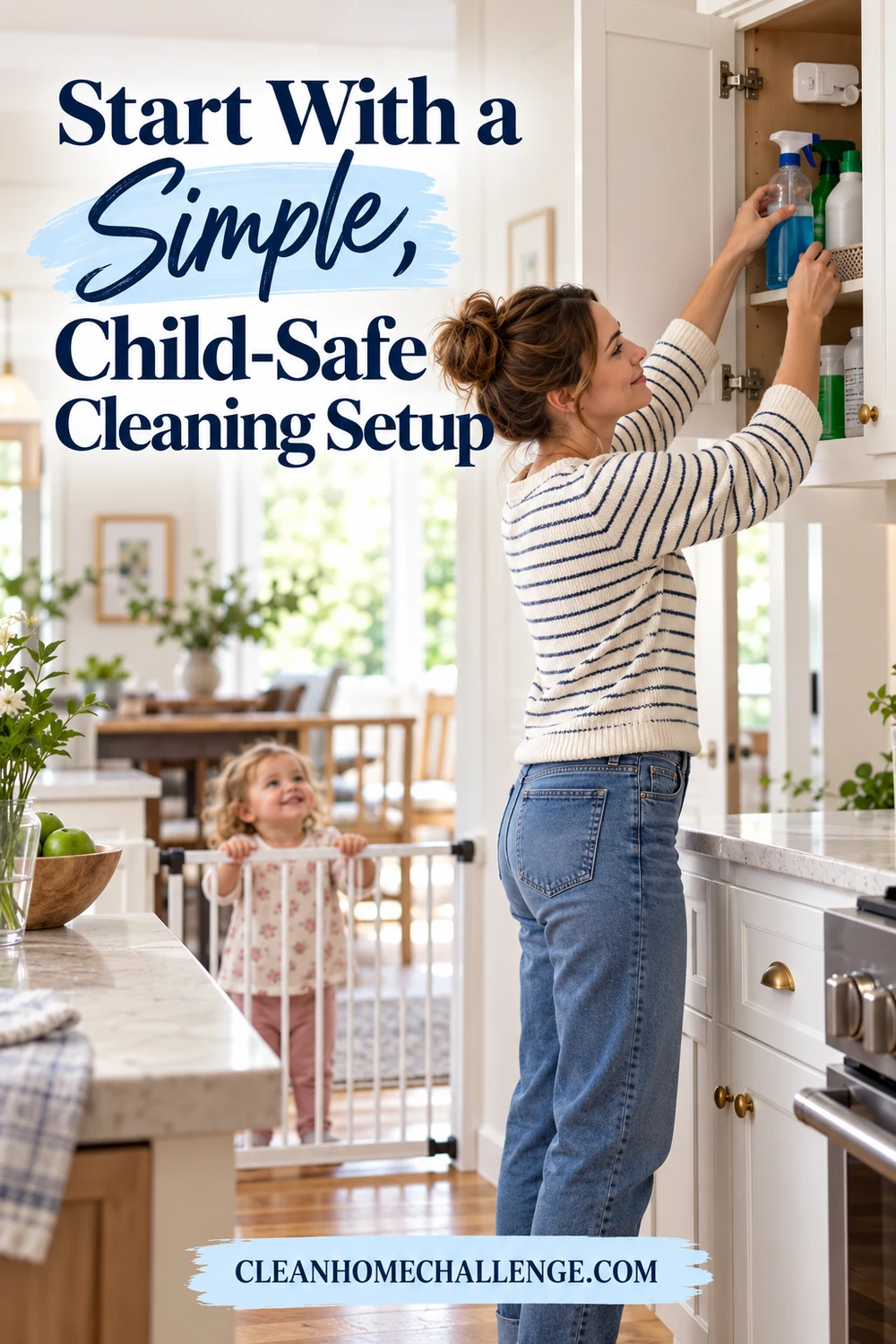
Start With a Simple, Child-Safe Cleaning Setup
Keep an ordinary detergent or cleaner appropriate for your surfaces, clean washable cloths, and a separate toilet or bathroom kit. Read each label before use: check the surface, dilution, ventilation, protective equipment, contact time, and whether a rinse is required. Choose fragrance-free products if fragrance bothers your household; an EPA Safer Choice label can help identify products reviewed against its ingredient criteria, but still follow their directions.
- Move your child to another supervised area while you use a product they could touch or inhale.
- Open a window or use ventilation when the label calls for it.
- Use only the amount directed; extra product can leave residue.
- Close the container immediately and put it back in secure storage.
- Let the surface dry, or rinse it if the label requires, before play resumes.
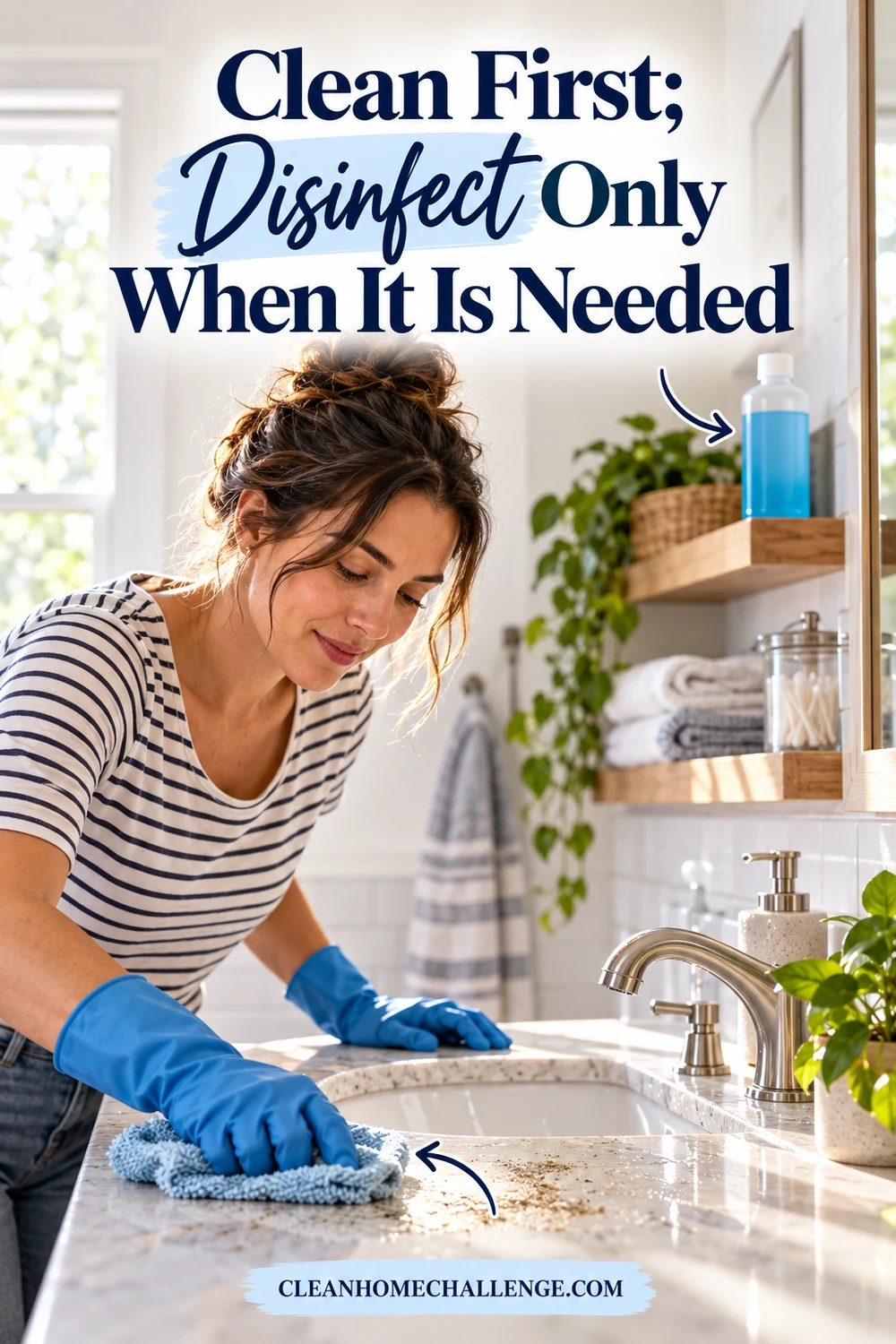
Clean First; Disinfect Only When It Is Needed
Routine cleaning with soap or detergent and water removes dirt and many germs from surfaces. Disinfecting uses a product with a specific germ-killing claim and is an additional step when someone is sick, after a body-fluid accident, or when guidance for a particular item calls for it. A disinfectant is not a shortcut around removing visible soil first.
Choose a product registered for the intended use and follow its full label, including how long the surface must remain wet. Keep children away during application and until the directions for drying or rinsing have been met. Do not let toddlers handle disinfectant wipes or spray bottles. Never mix cleaners, including bleach with another cleaning product.
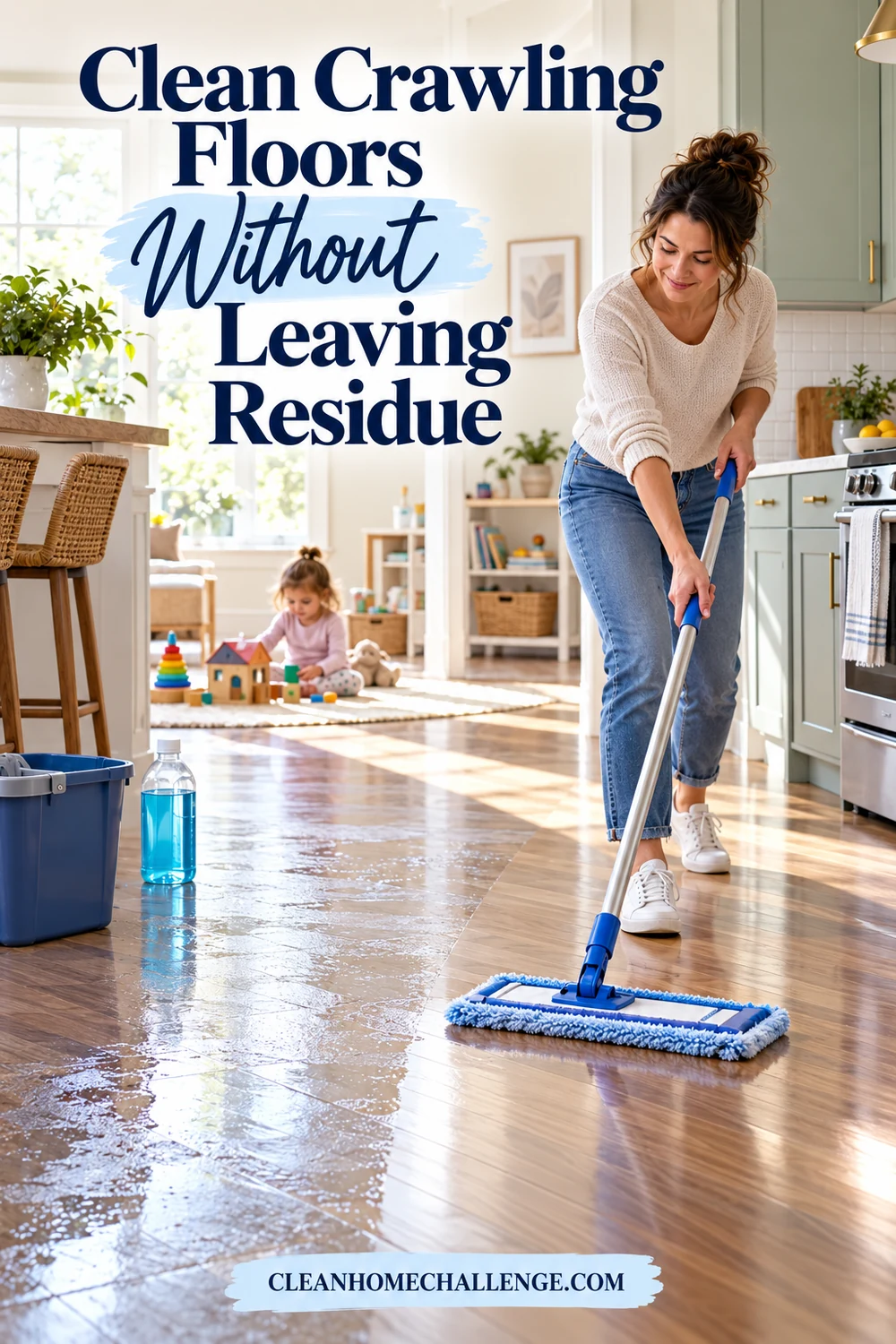
Clean Crawling Floors Without Leaving Residue
Vacuum or sweep first so grit cannot scratch the floor. Then use a clean mop pad and a floor cleaner that the flooring manufacturer approves, mixed at the label strength. Work in small sections, keep the floor only as wet as the material permits, and let it dry before your child crawls there. Change a dirty pad or bucket of water instead of spreading grime through the room.
For sealed wood, laminate, stone, and specialty finishes, check the manufacturer’s instructions before using vinegar, steam, or a homemade solution. If a floor feels sticky, first review the amount of cleaner used and its rinsing instructions; avoid adding another chemical on top of the residue.
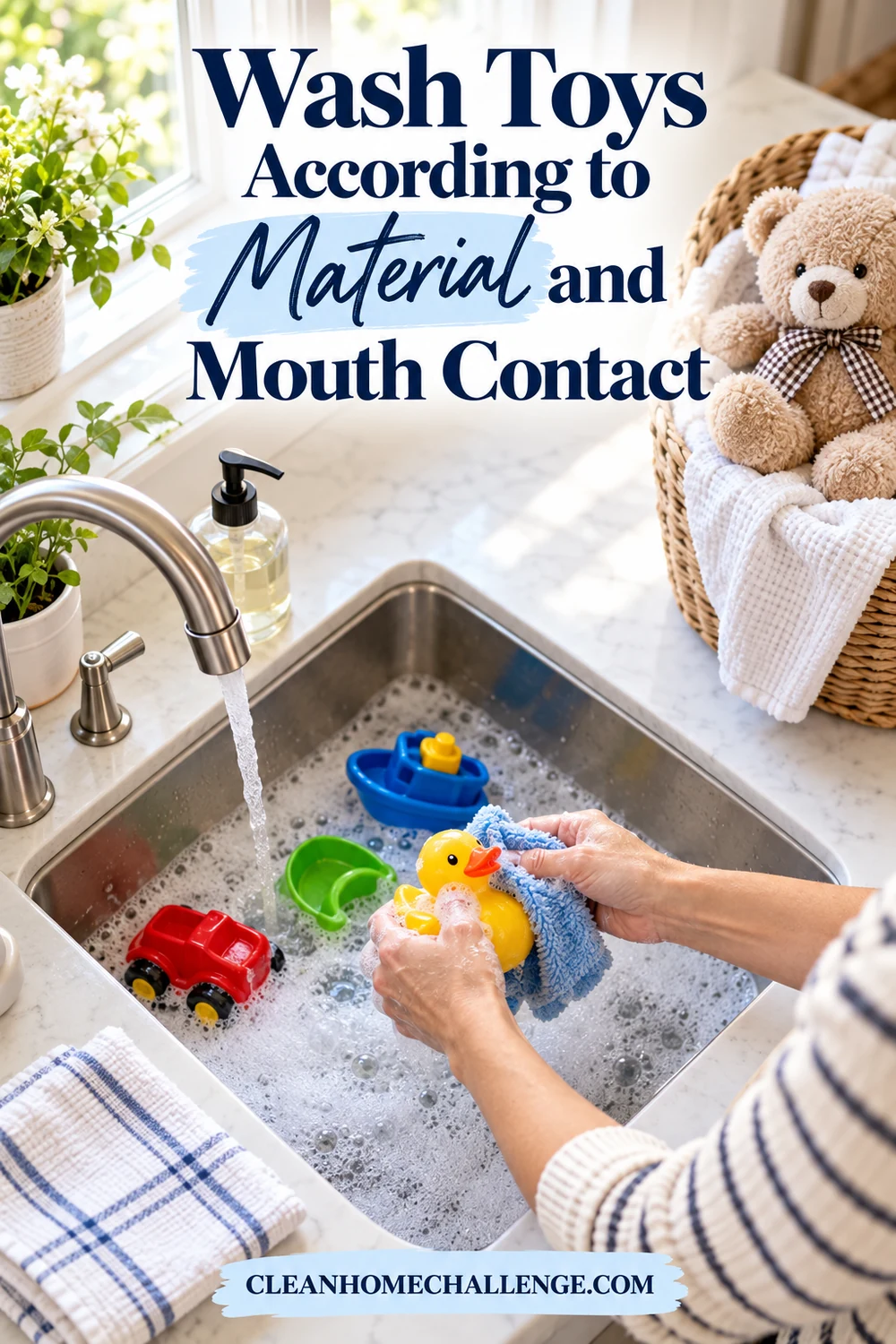
Wash Toys According to Material and Mouth Contact
Put a toy that has been mouthed aside for cleaning rather than returning it to the play basket. Wash hard, washable toys with soap and water, rinse well, and allow them to air-dry. Follow the manufacturer’s instructions for dishwasher-safe toys. For a soft toy, use its care label; machine wash and dry completely if allowed. Avoid soaking battery compartments, wood, or materials that trap moisture.
If an illness or the toy’s use calls for sanitizing or disinfecting, use a method suitable for that specific toy and follow the applicable product instructions. A surface disinfectant is not automatically suitable for an item that goes into a child’s mouth. Keep cleaned and used toys separate until they are dry.
Keep Bottles, Pacifiers, and Feeding Gear Separate
Infant feeding items need their own cleaning routine. Wash your hands, take bottle parts apart, rinse them, and wash according to the CDC’s feeding-item guidance using a clean basin or dishwasher when the manufacturer permits. Let pieces air-dry completely on a clean, unused surface before putting them away. The CDC has additional sanitizing recommendations for babies under two months, babies born prematurely, and babies with weakened immune systems; follow that guidance and your baby’s clinician’s advice.
Do not treat a household countertop spray as a bottle or pacifier cleaner. Follow the manufacturer’s directions for those items and any sanitizing equipment.

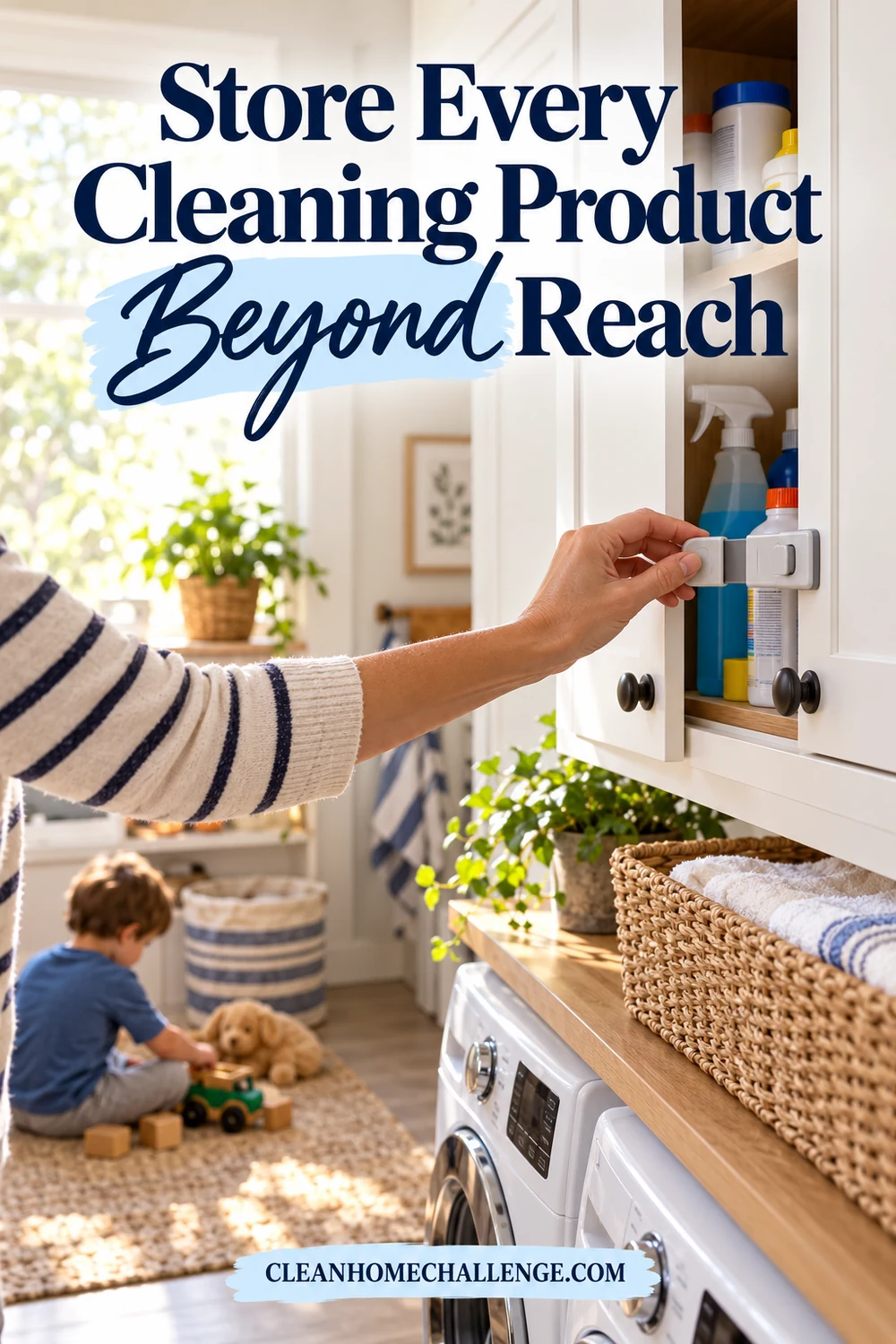
Store Every Cleaning Product Beyond Reach
Put cleaners, detergent pods, disinfectants, and concentrates in a locked cabinet or other secure place children cannot access. Keep products in their original labeled containers, with lids closed. Do not transfer a cleaner into a drink bottle, food jar, or unmarked spray bottle. Check the laundry area, bathroom, kitchen sink, cleaning caddy, and any bag you bring home from the store; low cupboards and temporarily unattended supplies are easy to overlook.
Child-resistant packaging is an extra safeguard, not a substitute for secure storage. If you suspect an exposure, contact your local poison center promptly and follow its instructions; in the US, Poison Help is 1-800-222-1222. If a child has severe symptoms, call emergency services.

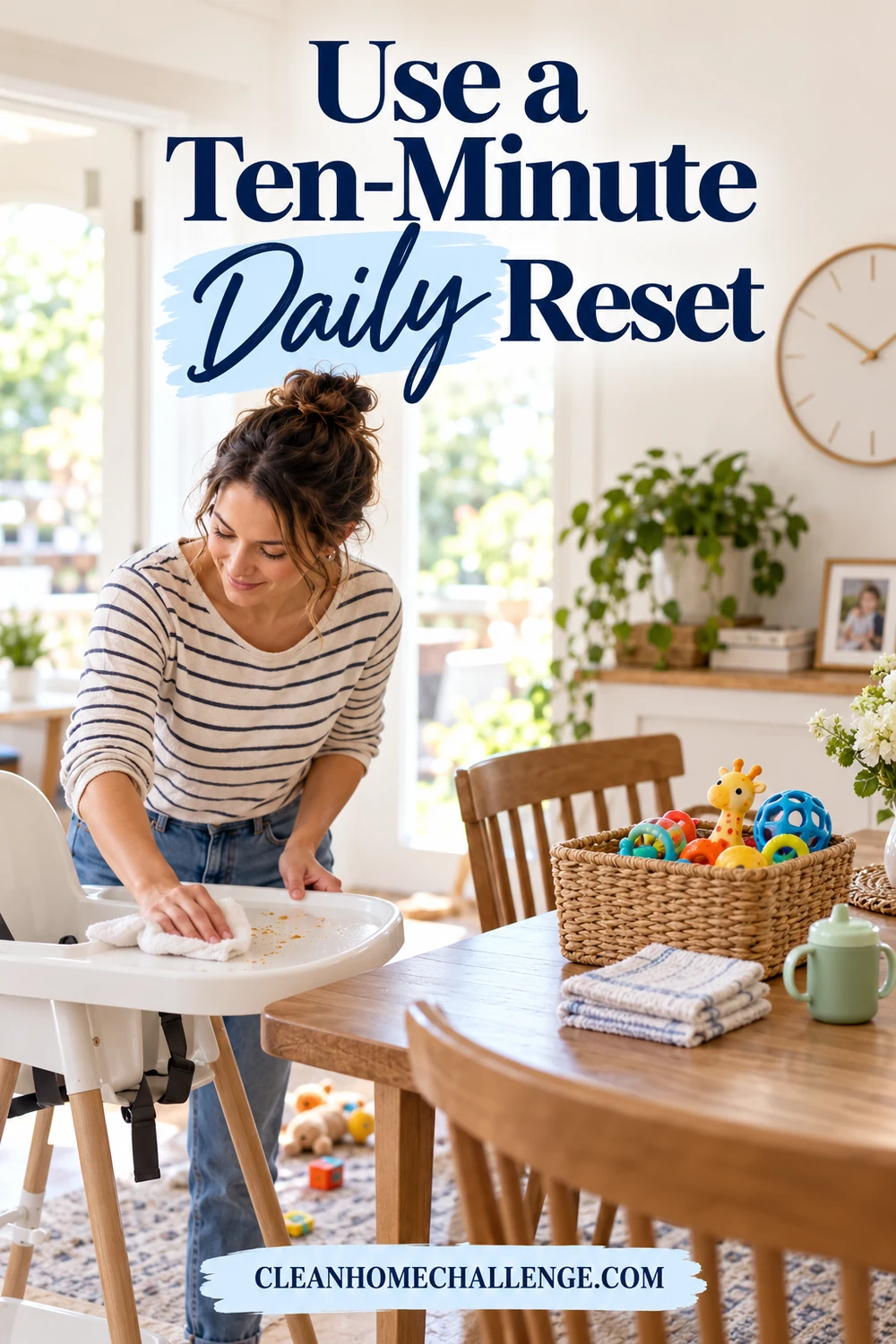
Use a Ten-Minute Daily Reset
You do not need to disinfect the whole house every day. A manageable reset can be as simple as putting away cleaning supplies, washing a few mouthed toys, wiping the high-chair tray according to its care instructions, and dealing with food spills on the floor. Add one laundry load or a quick bathroom wipe when time allows. Keep the routine small enough that it works on a busy day.
CLEANERS CLUBHOUSE
Build a Safer, Simpler Cleaning Routine
Clean confidently with practical guidance that helps you choose sensible products and use them correctly. The Cleaners Clubhouse combines safer cleaning support with realistic routines, worksheets and challenges.
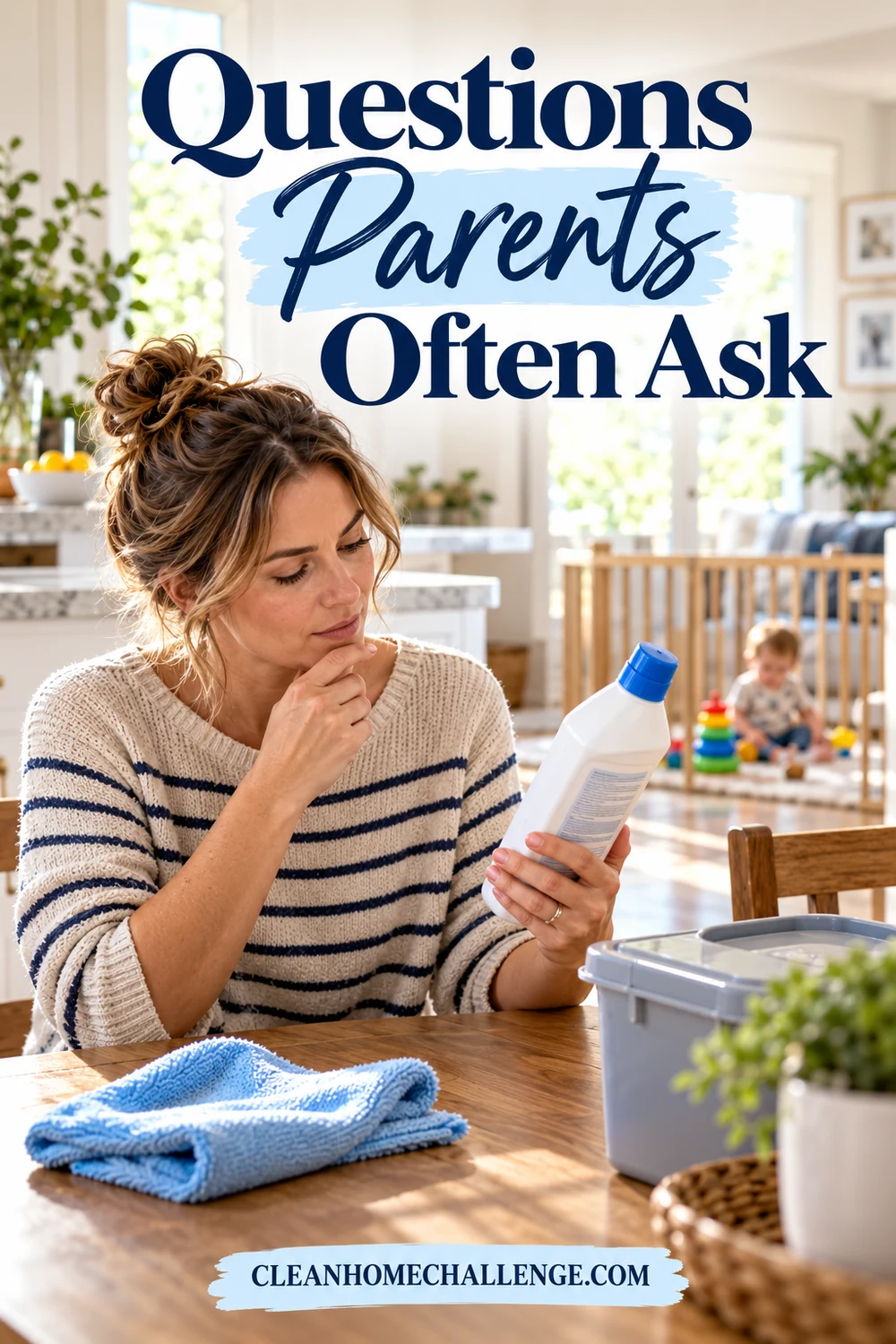
Questions Parents Often Ask
Is a natural cleaner automatically safe around a baby?
No. “Natural” does not tell you whether a product is safe for a child to handle, inhale, or taste. Check the full label, use it only on approved surfaces, and store it securely.
Should I disinfect the floor every day?
Routine cleaning is usually the starting point. Disinfect when the situation calls for it, such as illness or contamination, using a product labeled for the floor and following its contact-time and rinse instructions.
When can my toddler play on a cleaned surface?
After you have followed the product’s directions, including any required rinse, and the surface has dried. The label may give more specific instructions.
Make Safer Cleaning Easy to Repeat
Pick suitable products, clean the places your child actually uses, and make secure storage the last step every time. The best routine is one you can follow even when family life is busy.
Sources: CDC: When and How to Clean and Disinfect Your Home; CDC: How to Clean, Sanitize, and Store Infant Feeding Items; EPA: Disinfectants and Children; EPA Safer Choice; American Academy of Pediatrics: Cleaners, Sanitizers & Disinfectants.